

P1621 on 2013-2015 Dodge Challenger: O2 Sensor Reference Voltage Circuit Low Fixes
For the 2013-2015 Dodge Challenger, code P1621 is most often caused by a software glitch in the Powertrain Control Module (PCM). Before replacing any parts, check for available PCM updates from a Dodge dealer, as a simple reflash is the official fix described in multiple Technical Service Bulletins (TSBs), particularly TSB 18-084-16 for 5.7L models.
- Do not immediately replace the oxygen sensors. This code is rarely caused by a bad sensor on this vehicle.
- The most likely fix is a Powertrain Control Module (PCM) software update from a Dodge dealer, as specified in official TSBs like 18-084-16.
- If a software update doesn't fix it, the problem is almost certainly a short-to-ground in the O2 sensor wiring harness or, rarely, a failed PCM.
- This issue is also common on the 2013-2015 Dodge Charger and Chrysler 300 with the 5.7L V8.
What's Unique About the 2013-2015 Dodge CHALLENGER
What's unique about the Challenger from this era is that Dodge issued multiple Technical Service Bulletins (TSBs) directly addressing P1621. These bulletins, including the superseding TSB 18-084-16 for 5.7L engines, state that the code is frequently triggered by a software anomaly within the Powertrain Control Module (PCM). Unlike many other vehicles where this code would immediately point to a wiring or sensor fault, the most common and manufacturer-documented fix for these Challengers and their platform mates (Charger, 300) is a PCM software update.
Diagnostic Flowchart
Tap your situation to follow the diagnostic path that matches what you're seeing on this vehicle.
Symptoms You May Notice
- Check Engine Light (Malfunction Indicator Lamp) is on
- Reduced fuel economy
- Vehicle may fail an emissions test
- Potential for rough idle or hesitation during acceleration
- In some cases, the engine may stall or be hard to start, though this is less common for just P1621.
- Replacing one or more oxygen sensors. This is the most common mistake. The code points to a problem with the reference voltage circuit provided *by* the PCM, not necessarily the sensor itself. Always investigate the software and wiring first, as per the TSBs.
Most Likely Causes
- Powertrain Control Module (PCM) Software Requires Update 🔴 High Probability → Shop Engine Control Module (ECM) Manufacturer TSBs #18-052-15 REV A, #1807320, and the superseding #18-084-16 explicitly list this code as being resolved by a PCM software update for these specific vehicles, particularly those with the 5.7L engine.
How to confirm: A Dodge dealership or a qualified shop with a wiTECH scan tool can check the current software calibration ID against the latest available version mentioned in the TSBs. This is the only definitive way to confirm if the update is needed.
Typical fix: Reprogramming (reflashing) the PCM with the latest manufacturer software. A forum user with a 2014 Challenger R/T confirmed that after experiencing the code, the dealer performed the TSB reflash which permanently resolved the issue.
Est. part cost: $0 - Wiring Harness or Connector Issue 🟡 Medium Probability The O2 sensor wiring runs near hot exhaust components and can be susceptible to melting, chafing, or corrosion over time, leading to a short to ground. A common issue on Chrysler products is the harness rubbing against the engine block or starter motor, which can short the 5V reference wire.
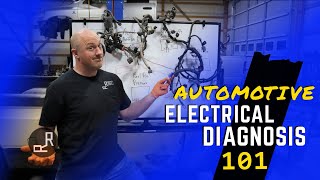
How to confirm: Visually inspect the O2 sensor wiring harnesses from the sensors to the PCM. Look for contact with the exhaust, engine block, or chassis components. Use a multimeter to check for continuity and shorts to ground on the reference voltage wire. 🎬 Watch: How to diagnose a 5V reference circuit with a multimeter.
Typical fix: Repairing the damaged section of the wire or cleaning/replacing the affected connector. This can involve re-routing the harness and securing it with ties to prevent future contact.
Est. part cost: $5-$50 - Faulty Powertrain Control Module (PCM) ⚪ Low Probability → Shop Engine Control Module (ECM)
How to confirm: This is diagnosed by exclusion. If the PCM software is up to date (confirmed via wiTECH) and all wiring and connectors have been verified as good, the PCM itself is the likely culprit.
Typical fix: Replacing the PCM and programming the new unit to the vehicle's VIN.
Est. part cost: $400-$800
Rare But Worth Checking
- Faulty Oxygen Sensor: → Shop Oxygen Sensor While uncommon for this specific code, an O2 sensor can develop an internal short that pulls the reference voltage down. A diagnostic video on a similar Chrysler product shows how a short on the *signal* circuit can bleed into the return circuit as the sensor heats up, causing this code and leading to misdiagnosis. A modern Challenger has four O2 sensors (two upstream, two downstream).
Diagnosis Steps
- Verify the code with a quality OBD-II scanner.
- Check for TSBs: This is the first and most important step. Inquire with a Dodge dealer or use a professional database to see if TSB #18-084-16 (for 5.7L) or other related software updates apply to your vehicle's VIN.
- Perform PCM Reflash: If an update is available, have the dealer or a qualified shop perform the PCM reflash. This resolves the issue in a majority of cases for this specific vehicle range.
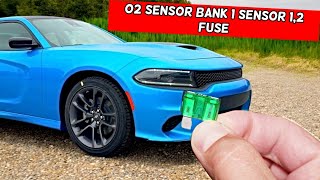
- Inspect PCM Fuses: Before diving into wiring, check the engine management fuses in the under-hood fuse box. On a Challenger, these are typically fuses F31, F34, and F37. 🎬 Watch: Locating and checking O2 sensor fuses on this platform.
- Inspect Wiring: If the code returns after the reflash, perform a thorough visual inspection of all four oxygen sensor wiring harnesses. Look for any signs of melting, chafing against the chassis or engine, or corrosion in the connectors. Pay close attention to where the harness may contact the engine block or exhaust manifolds, especially behind the starter motor.
- Test the Circuit: Using a multimeter, backprobe the O2 sensor connector to measure the reference voltage from the PCM with the key on, engine off. The voltage should be a steady 5 volts. If the voltage is low, disconnect the sensors one by one to see if the voltage returns to normal. If it does, that sensor is likely shorted internally.
- Isolate the Short: If the voltage remains low with all sensors disconnected, the short is in the wiring harness or the PCM itself. The 5V reference circuit is often shared with other sensors (e.g., fuel pressure, MAP); a short in any of these can also trigger this code.
- Diagnose PCM: If the wiring harness is confirmed to be free of shorts and the reflash has been performed, the PCM is the most likely failed component and may require replacement.
Parts You'll Likely Need
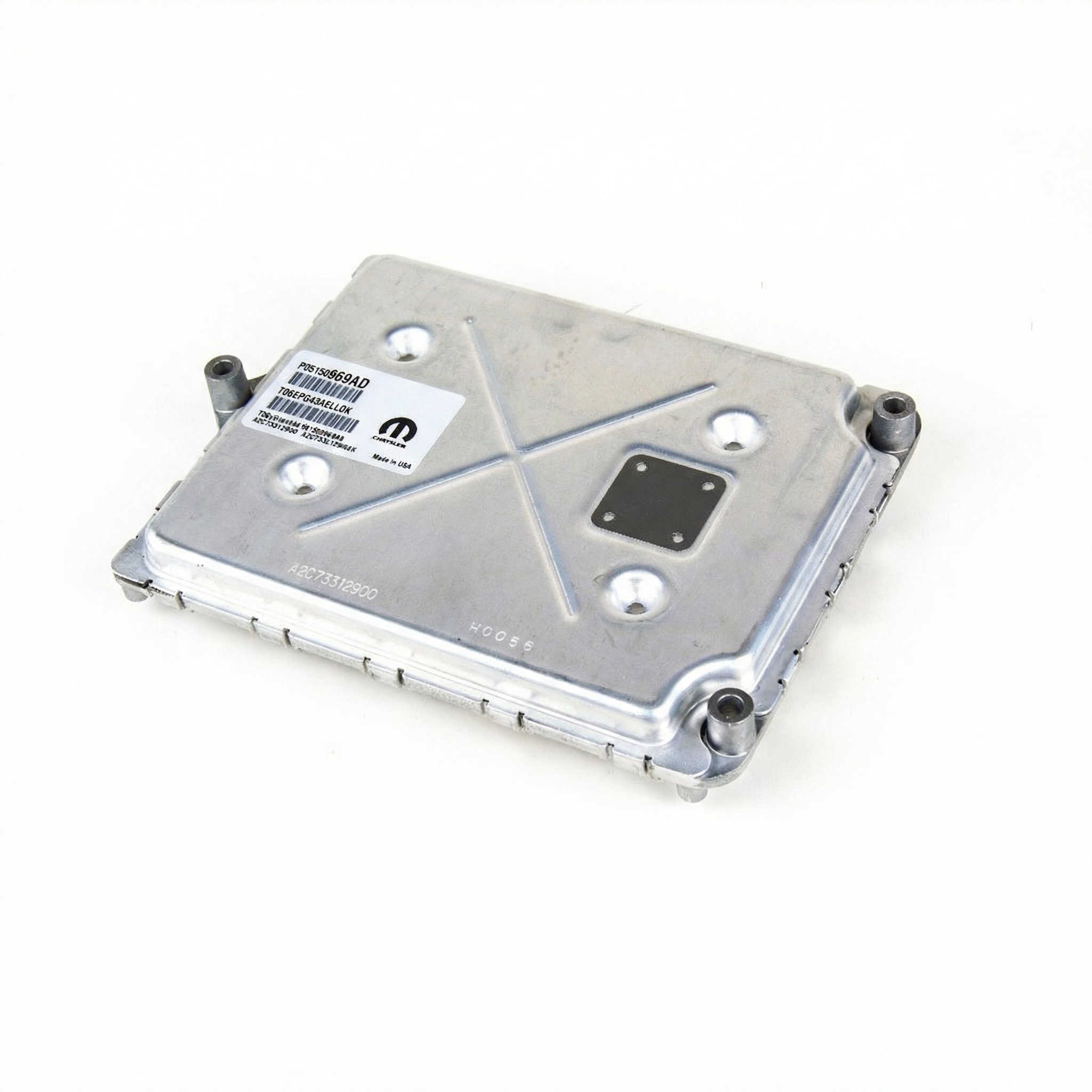
- Powertrain Control Module (PCM)
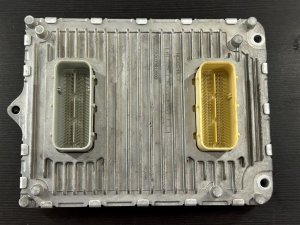
(OEM #68212718AF (for 2014 5.7L, check VIN for exact match))— This is the part to replace ONLY if a software reflash does not fix the issue and the wiring has been proven to be intact. It is the source of the reference voltage.
Trusted brands: Mopar (OEM)
OEM price range: $500-$800
Aftermarket price range: $300-$600
Related Codes That Often Appear With This One
- P1622 — This is for 'O2 Sensor Reference Voltage Circuit High' and is listed in the same TSBs as P1621, indicating a related software calibration issue. [Bulletin #18-052-15 REV A, 4]
- U0140 — 'Lost Communication With Body Control Module' is also listed in the same PCM software update TSBs, suggesting a broader software issue can cause multiple, seemingly unrelated codes. [Bulletin #18-052-15 REV A, 4]
- P0606 — 'Internal Control Processor' fault is another code addressed by the same PCM reflash, pointing directly to an internal PCM logic or software problem. [Bulletin #18-052-15 REV A, 4]
Technical Service Bulletins (TSBs) & Recalls
- 18-052-15 REV A: Lists P1621 as a code that can be resolved with a PCM software update.
- 1807320: Also mentions P1621 in the context of a PCM reflash.
- 18-052-15: The original version of the TSB, also citing P1621.
- 18-084-16: Supersedes previous bulletins and includes P1621 in a list of DTCs fixed by reprogramming the PCM for 2013-2015 vehicles with the 5.7L engine (Sales Codes EZC or EZH).
Platform-Specific Known Issues
- A known software glitch in the Powertrain Control Module (PCM) is the most common cause for this code on 2013-2015 models. Dodge released several Technical Service Bulletins (e.g., 18-084-16) to address this with a software update.
- This issue is not isolated to the Challenger; it is also documented for its platform mates, the Dodge Charger and Chrysler 300 with the same 5.7L engine.
Mechanic-Grade Diagnostic Values
- O2 Sensor 5V Reference Voltage — expected: Approximately 5.0 Volts DC (with sensor connector unplugged, key on, engine off). Failure: A reading significantly below 5.0V indicates a short to ground in the harness or PCM. If voltage returns to 5.0V only after disconnecting all sensors on the shared circuit, one of the sensors is shorted internally.
Scan Tool Commands That Help
- HPTuners / wiTECH: PCM Flash Recovery Procedure — This is a non-standard recovery method for a 'bricked' GPEC2 PCM (common in 2014 models) after a failed flash attempt. The procedure involves rapidly cycling the vehicle's ignition power and immediately initiating the 'write' function, which can cause the software to skip validation and force a new flash over OBD, potentially recovering the module.
Wiring & Ground Locations
- F31, F34, F37 — In the main under-hood fuse box (also called the TIPM).. These fuses supply power to the engine control module (PCM) and related engine management components. A blown or intermittent fuse here will cause various PCM-related codes, including potential reference voltage issues.
- 5V Reference Wire (e.g., Pink/Yellow) — In the engine harness, routed to all O2 sensors and potentially other sensors like the crankshaft position sensor or oil pressure sensor.. This wire carries the reference voltage from the PCM. A common failure point on Chrysler V8s is this harness rubbing against the back of the engine block or the starter motor, causing a short to ground that brings down the entire 5V reference circuit.
- Ground Distribution — Multiple points on the chassis and engine block. Specifics can be found in factory service manuals under 'Ground Distribution'.. The PCM and its sensor circuits rely on solid ground connections. While P1621 points to a low positive voltage, a poor ground can cause erratic sensor readings and place stress on the PCM's internal voltage regulators. Technicians can reference wiring diagrams for locations like G301, G302, etc.
Real Owner Repair Stories
- MHH Auto forum user (2014 Dodge Challenger 5.7L) — PCM was unresponsive ('bricked') after a failed flash attempt with HPTuners tuning software.
❌ Tried (didn't work) Disconnecting the battery., Standard re-attempt to flash the PCM.
✅ What actually fixed it A non-standard recovery method was used. By repeatedly cycling the push-to-start button (~10 times) and then immediately hitting the 'write' button in the software, the flash was forced to initiate, bypassing the initial validation check. This successfully erased and rewrote the PCM firmware, recovering the 'bricked' module without removing it from the vehicle.
Model Year Variations Within This Range
- 2013-2014 vs 2015: The PCM hardware is different. Earlier models (e.g., 2014) often use the GPEC2 controller, while later models (e.g., 2015) use the GPEC2A. This is critical because some recovery procedures for a failed flash, like cycling the ignition to force a write, are reported to work on the GPEC2 but will not work on the GPEC2A, which would require removal and bench flashing in boot mode.
Helpful Videos
We Have This Part in Stock

The information in this article is provided for general reference and educational purposes only. Vehicle specifications, procedures, and part compatibility can vary by production date, trim level, and region. Always consult your vehicle's factory service manual and verify part numbers before purchasing or performing repairs. Safety-critical components such as airbags, seat belts, and braking systems should be installed by a qualified professional.
- Dodge CHALLENGER:
- 🧭 Diagnostic Flowchart
- 🎬 Helpful Videos
- 🛍️ Shop This Part
- What's Unique About the 2013-2015 Dodge CHALLENGER
- Symptoms You May Notice
- Most Likely Causes
- Rare But Worth Checking
- Diagnosis Steps
- Parts You'll Likely Need
- Related Codes That Often Appear With This One
- Technical Service Bulletins (TSBs) & Recalls
- Platform-Specific Known Issues
- Mechanic-Grade Diagnostic Values
- Scan Tool Commands That Help
- Wiring & Ground Locations
- Real Owner Repair Stories
- Model Year Variations Within This Range
- 🎟️ Get 5% Off