

P1621 on 1999-2004 Ford Mustang: Immobilizer Fault, No-Start Causes and Fixes
On a 1999-2004 Mustang, P1621 with a flashing theft light and no-start is most often caused by a blown PCM fuse (a 30A maxi fuse in the engine bay). If the fuse is good, the next most likely cause is a faulty PATS transceiver ring around the ignition switch, a ~$40 part that doesn't require reprogramming.
- P1621 on a 1999-2004 Mustang means the anti-theft system has disabled the car.
- Before buying any parts, use a multimeter to test the 30-amp PCM fuse in the engine bay. This is the most common fix.
- Always try your spare key to rule out a bad key.
- The second most likely fix is replacing the PATS transceiver ring around the ignition, which is a simple DIY job that requires no programming.
- Do not replace the PCM unless you have definitively ruled out all fuses, wiring, the key, and the transceiver.
What's Unique About the 1999-2004 Ford Mustang
On the 'New Edge' Mustang (1999-2004), the PATS system components are distinct. The transceiver is in the steering column, the PCM is behind the passenger kick panel, and the control logic is often tied to the Generic Electronic Module (GEM) in the driver's footwell. Unlike some later Fords where the instrument cluster is the PATS module, this generation separates the components. A very common failure point on this platform is not a complex module but a simple blown PCM fuse, which mimics a PATS failure by preventing the PCM from communicating, causing a flashing theft light and a no-start condition.
Symptoms You May Notice
- Engine cranks but does not start.
- Rapidly flashing 'THEFT' light on the dashboard.
- After about a minute, the 'THEFT' light may flash a two-digit code (e.g., 1-6 for code 16, indicating a communication error).
- Odometer may display dashes ('- - - - - -') instead of mileage.
- Check Engine Light is on.
- A scanner may be unable to communicate with the PCM, leading to a misdiagnosis of a bad PCM.
- Replacing the PCM first. A blown fuse is far more common and exhibits the exact same symptoms, including the inability for a scanner to communicate with the PCM.
- Replacing the fuel pump. A no-start condition is often misdiagnosed as a fuel issue, but the flashing theft light is the key indicator that the problem is with the anti-theft system, which disables the fuel injectors.
Most Likely Causes
- Blown PCM Fuse 🔴 High Probability Wiring for components like the radio interference capacitor or other engine sensors can short to ground, blowing the main fuse that powers the engine computer. This power loss prevents the PCM from communicating with the PATS system, creating symptoms identical to a primary anti-theft failure.
How to confirm: Locate the main fuse box in the engine bay. Check the 30-amp maxi fuse for the PCM (may be labeled 'PCM' or 'EEC'). Do not just visually inspect it; use a multimeter to test for continuity. A reading of OL (Open Line) or no beep means the fuse is blown. A common location for this fuse is position 104 in the under-hood fuse box.
Typical fix: Replace the blown 30A maxi fuse. If it blows again, a short to ground in the PCM power circuit must be located and repaired. A common culprit is the wiring near the radio interference capacitor.
Est. part cost: $1-$5 - Faulty PATS Transceiver 🟡 Medium Probability The transceiver is an antenna ring around the ignition cylinder that reads the key chip. Over time, its internal electronics can fail due to heat cycles and vibration, preventing it from energizing and reading the key's transponder.
How to confirm: If fuses are good and a spare key doesn't work, the transceiver is the next likely part. A diagnostic scanner with PATS capability can confirm a lack of communication from the transceiver (codes like B1681). A DIY test is to simply replace it, as it's relatively inexpensive and easy to access.
Typical fix: Replace the PATS transceiver module. This part is located under the steering column shrouds and clips around the ignition lock cylinder. It does not require reprogramming. The replacement process involves removing the steering column covers, removing the ignition lock cylinder, and then swapping the transceiver.
Est. part cost: $30-$90 - Defective Transponder Key ⚪ Low Probability → Shop Door Lock Key The RFID chip embedded in the plastic head of the key can be damaged by drops or water, or simply fail internally.
How to confirm: The easiest way to confirm is to try starting the car with a known-good spare key. If the spare key works, the original key is faulty.
Typical fix: Have a new key cut and programmed to the vehicle by a locksmith or dealer with the appropriate tools. You typically need two working keys to program a third yourself, so if you only have one left, professional service is required.
Est. part cost: $70-$150 - Weak or Dead Vehicle Battery ⚪ Low Probability → Shop Vehicle Battery
How to confirm: Test the battery voltage with a multimeter. A healthy battery should read 12.4V or higher with the engine off. If the voltage drops significantly below 10V while cranking, it can cause communication errors between modules, triggering a false PATS fault.
Typical fix: Charge or replace the 12V battery.
Est. part cost: $150-$250
Rare But Worth Checking
- Faulty Powertrain Control Module (PCM): → Shop Engine Control Module (ECM) While rare, an internal failure of the PCM can cause this code. This is usually the last resort after all other possibilities (fuses, wiring, transceiver, key) have been exhausted. A PCM failure might also be accompanied by other communication codes.
- Damaged Wiring Harness: A break or short in the wires connecting the PATS transceiver to the GEM/PCM can cause a communication failure. This can be caused by previous repairs, chafing, or rodent damage. The wires run from the steering column down to the driver's or passenger's kick panel area.
Diagnosis Steps
- Observe the 'THEFT' light with the key in the 'ON' position. A rapid flash indicates a PATS failure.
- Try to start the vehicle with a known-good spare key to rule out a faulty key.
- Thoroughly check the PCM fuse in the engine bay fuse box (typically a 30A maxi fuse in position 104). Test it for continuity with a multimeter, do not just look at it.
- Check other related fuses in both the engine bay and interior fuse panels, such as the fuse for the PATS module itself.
- If fuses are good, inspect the vehicle's battery and clean the terminals. Ensure voltage is above 12.4V and does not drop below 10V during cranking.
- Remove the steering column shrouds and inspect the wiring and connector for the PATS transceiver ring around the ignition cylinder.
- If wiring looks good, the next most probable cause is a failed PATS transceiver. It can be replaced without needing to be programmed.
- If the issue persists, a more advanced scan tool (like FORScan) is needed to check for communication between the PATS module, PCM, and key. Look for specific body codes (B-codes) or network codes (U-codes).
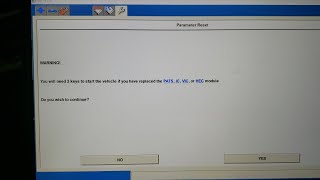
- If a module (PCM or GEM) is confirmed to be faulty, replacement will require a 'parameter reset' and key reprogramming procedure using a compatible scan tool.
Parts You'll Likely Need
- PCM Fuse — This is the most common cause of a no-start with a flashing theft light on this platform. The fuse blows due to an electrical short, cutting power to the engine computer.
Trusted brands: Bussmann, Littlefuse
OEM price range: $1-$5
Aftermarket price range: $1-$5 - PATS Transceiver Module
(OEM #F8SB-15607-AC)— This antenna ring reads the key chip and is a common failure point. It is a simple replacement that does not require reprogramming. This part number is shared across several Ford models from the era.
Trusted brands: Motorcraft, Standard Motor Products
OEM price range: $60-$90
Aftermarket price range: $30-$50
Related Codes That Often Appear With This One
- P1260 — P1260 ('Theft Detected, Vehicle Immobilized') is often stored alongside P1621. It confirms that the PATS system actively disabled the engine due to a security failure.
- U-codes (e.g., U1900, U0100) — Network communication codes like U1900 ('CAN Communication Bus Fault') or U0100 ('Lost Communication With ECM/PCM') can appear if the PCM is not powering on due to a blown fuse, reinforcing the misdiagnosis of a bad PCM when the fuse is the real issue.
- B1681 — This code means 'PATS Transceiver Signal Is Not Received'. If seen with P1621, it strongly points to a faulty PATS transceiver module or its wiring.
Mechanic-Grade Diagnostic Values
- PATS Transceiver Connector Pin 1 (RD/YE) to Ground — expected: Greater than 10 volts. Failure: Low or no voltage indicates a power supply issue to the transceiver.
- PATS Transceiver Connector Pin 2 (BK) to Ground — expected: Less than 5 ohms. Failure: High resistance or an open circuit (OL) indicates a bad ground connection for the transceiver.
- PATS Transceiver Connector Pins 3 (WH/LG) & 4 (GY/OG) to Ground (harness disconnected) — expected: Greater than 10,000 ohms. Failure: Low resistance to ground indicates a short in the communication wiring between the transceiver and the PCM/GEM.
Hidden / Shadow Codes Worth Checking
- Flash Code 11: Transceiver not connected or damaged. No signal detected. (see via Observe the 'THEFT' light flashing sequence after approximately one minute. It will flash once, pause, then flash once again.)
- Flash Code 12: Damaged transceiver antenna. (see via Observe the 'THEFT' light flashing sequence. It will flash once, pause, then flash twice.)
- Flash Code 13: Key is unprogrammed or has no chip. (see via Observe the 'THEFT' light flashing sequence. It will flash once, pause, then flash three times.)
- Flash Code 14: Key transponder has a problem (partial code received). (see via Observe the 'THEFT' light flashing sequence. It will flash once, pause, then flash four times.)
- Flash Code 15: Invalid key code received. (see via Observe the 'THEFT' light flashing sequence. It will flash once, pause, then flash five times.)
- Flash Code 16: CAN communication error between PATS and PCM. (see via Observe the 'THEFT' light flashing sequence. It will flash once, pause, then flash six times. This is often seen when the PCM fuse is blown.)
Scan Tool Commands That Help
- FORScan / Ford IDS: Parameter Reset — This function is required after replacing the PCM. It re-links the existing PATS module (in the GEM or cluster) and keys with the new engine computer, allowing the vehicle to start.
- FORScan / Ford IDS: Erase and Program Keys — Used when you have lost all keys or only have one key and need to program new ones. This function erases all existing keys from memory and allows you to program a minimum of two new keys to the system. This requires a 10-12 minute security access wait.
- FORScan / Ford IDS: Module Initialization — This may be required after replacing a GEM module or instrument cluster (on models where it contains PATS logic) to configure the new module to the vehicle.
Wiring & Ground Locations
- G203 / G204 — Located in the center console area, under the radio or shifter assembly.. This is a major interior ground point. A loose or corroded connection here can cause a multitude of electrical issues, including intermittent communication problems with the GEM/PATS module, mimicking a component failure.
- PATS Transceiver Connector (C2007) — Clipped onto the ignition lock cylinder, under the steering column shrouds.. This is the 4-pin connector for the transceiver ring. The pins for power, ground, and communication (TX/RX) can be tested here for voltage and continuity to diagnose the transceiver circuit.
- GEM Module — Located in the driver's side footwell, to the left of the interior fuse box.. On 1999-2004 Mustangs, the GEM often contains the PATS control logic. Water intrusion from a leaking windshield can corrode the module and its connectors, causing PATS failures.
- Engine to Chassis Ground — A braided cable running from the passenger side of the engine block (near the motor mount) to the chassis frame rail.. While less common to cause PATS-specific issues, a poor main engine ground can introduce electrical noise and voltage drops that affect all electronic modules, including the PCM, potentially leading to communication errors.
Real Owner Repair Stories
- YouTube user 'Abdullah auto electrician' (Suzuki Wagon R (demonstrates a universal principle)) — Flashing security light, no-start, and DTC P1621 'Immobilizer Communication Line Error'.
❌ Tried (didn't work) Replacing and reprogramming the immobilizer antenna (transceiver) multiple times.
✅ What actually fixed it The vehicle had been water-damaged. A blue multi-pin connector in the driver's kick panel area had a corroded pin for the immobilizer's ignition power feed. Cleaning the carbon from the connector pin restored power and fixed the communication error. - YouTube user 'Roundstone' (Unknown European vehicle) — Engine cutting out while driving, P1621 present. Later, P0193 (Fuel Pressure Too High) also appeared.
❌ Tried (didn't work) Replacing the ECU (PCM).
✅ What actually fixed it The actual fault was an internally shorted fuel rail pressure sensor. This sensor shared the same 5V reference circuit as the immobilizer components, and the short was pulling down the voltage, causing the P1621 code as a secondary symptom. Replacing the fuel rail pressure sensor resolved both codes.
Model Year Variations Within This Range
- 1999-2000 vs 2001-2004: The Generic Electronic Module (GEM) was updated in 2001. While the PATS functionality remained similar, the specific part number for the GEM module changed. When diagnosing issues potentially related to the GEM, it's crucial to use the correct part for the vehicle's specific year range as they are not always interchangeable.
Diagnostic Flowchart
Other Known Issues on This Vehicle
Issues unrelated to this code that are worth knowing about as an owner of this generation:
- Cracked Plastic Intake Manifold (4.6L GT) 🔴 High — Very common on 1996-2001 GT models with the all-composite intake. The plastic coolant crossover at the front of the manifold cracks, causing a major coolant leak. Ford later released a revised part with an aluminum crossover. (Ref: Subject of a class-action lawsuit which led to an extended warranty program (now expired).)
- Worn T-45 Manual Transmission Synchronizers/Forks 🟠 Medium → Shop Transmission Assembly — Common on 1996-2001 manual transmission models. The synchronizer rings, particularly for 3rd and 4th gear, can wear out, causing grinding shifts or being hard to get into gear. The 3-4 shift fork is also a known weak point.
- Leaking Heater Core 🟠 Medium — A fairly common issue across this generation. Symptoms include a sweet smell of coolant inside the cabin, a film on the inside of the windshield, and a damp passenger-side floorboard. The repair is labor-intensive as it requires removing the entire dashboard.
- Ignition System Misfires (Weak COPs) 🟡 Low — The Coil-On-Plug (COP) ignition coils can become weak over time, causing a subtle misfire or stumble under load, often around 1800-2000 RPM, without necessarily setting a check engine light immediately.
- Cracked Exhaust Manifolds (3.8L V6) 🟠 Medium — The V6 models are known to develop cracks in the factory cast iron exhaust manifolds, resulting in an audible ticking noise that is most prominent when the engine is cold.
Used vs. New Parts: Buying Guide for This Vehicle
When a used part is the smart pick: A used PATS transceiver from a junkyard is an excellent, low-cost diagnostic step and permanent fix. Since it does not require programming, a working unit from a donor car of the same era is a direct swap. A used PCM can also be an option, but it is more complex.
Donor-vehicle mileage cap: roughly under 150000 miles for the part to have meaningful remaining life.
What to inspect on the donor part:
- For a PATS transceiver, inspect the plastic housing for cracks and ensure the connector pins are clean and not bent.
- For a PCM, check the donor vehicle for signs of flood or fire damage. Inspect the PCM's large connector for any signs of corrosion or water intrusion.
- Ensure the part number on the donor PCM exactly matches the original. There are multiple variations even within the same model year.
OEM-only on this vehicle (don't cheap out):
- Transponder Keys: While cheaper aftermarket keys are available, many users report programming failures with them. It is highly recommended to use genuine Ford/Strattec keys (Part #597602) to avoid being stuck in a programming loop where the system cannot be finalized.
Aftermarket brands forum-validated for this vehicle:
- Standard Motor Products (SMP) for PATS transceiver.
- Strattec for replacement transponder keys (this is the OEM supplier).
Brands owners have reported issues with on this vehicle:
- Unbranded, low-cost transponder keys from online marketplaces like Amazon or eBay are frequently reported as failing to program correctly, which can leave the vehicle completely immobilized until two working keys are successfully paired.
Real Owner Stories
Aggregated from forums and TSBs cited above. Mileages and costs reflect what owners reported in those sources.
1999-2004 Ford Mustang
Symptoms: The 'THEFT' light was flashing rapidly and the car would crank but not start. A scanner was unable to communicate with the PCM, and the odometer showed only dashes.
What fixed it: Replacing the 30A PCM maxi fuse in the under-hood fuse box (position 104). The fuse had blown due to a short in the wiring near the radio interference capacitor.
Source hint: allfordmustangs.com threads describing P1621 / flashing theft light scenarios
1999-2004 Ford Mustang
Symptoms: The vehicle would not start and the THEFT light flashed a two-digit code (1-6) after one minute, indicating a communication error.
What fixed it: Replacing the PATS transceiver module (antenna ring) located around the ignition lock cylinder.
Source hint: corral.net owner discussions on PATS-related no-start conditions
1996-2001 Ford Mustang GT 4.6L
Symptoms: Major coolant leak originating from the front of the engine near the intake manifold.
What fixed it: Replacement of the all-composite plastic intake manifold with a revised version featuring an aluminum coolant crossover.
Source hint: vehicle_specific_issues: Cracked Plastic Intake Manifold (4.6L GT)
Related OBD-II Codes
Frequently Asked Questions
My 1999-2004 Mustang odometer shows dashes ('- - - - - -') and the THEFT light is flashing. Is my PCM dead?
Is there a specific TSB or recall for the cracked intake manifold on my 1996-2001 Mustang GT?
Can I replace the PATS transceiver (F8SB-15607-AC) myself, or does it require dealer programming?
Why does my 3.8L V6 Mustang have a ticking noise when cold?
I only have one working key for my Mustang. Can I program a second one myself?
Could a weak battery cause a P1621 or PATS 'THEFT' light error?
Helpful Videos

We Have This Part in Stock

The information in this article is provided for general reference and educational purposes only. Vehicle specifications, procedures, and part compatibility can vary by production date, trim level, and region. Always consult your vehicle's factory service manual and verify part numbers before purchasing or performing repairs. Safety-critical components such as airbags, seat belts, and braking systems should be installed by a qualified professional.
- Ford Mustang:
- 🧭 Diagnostic Flowchart
- 🎬 Helpful Videos
- 🛍️ Shop This Part
- What's Unique About the 1999-2004 Ford Mustang
- Symptoms You May Notice
- Most Likely Causes
- Rare But Worth Checking
- Diagnosis Steps
- Parts You'll Likely Need
- Related Codes That Often Appear With This One
- Mechanic-Grade Diagnostic Values
- Hidden / Shadow Codes Worth Checking
- Scan Tool Commands That Help
- Wiring & Ground Locations
- Real Owner Repair Stories
- Model Year Variations Within This Range
- Other Known Issues on This Vehicle
- Used vs. New Parts: Buying Guide for This Vehicle
- Real Owner Stories
- 1999-2004 Ford Mustang
- 1999-2004 Ford Mustang
- 1996-2001 Ford Mustang GT 4.6L
- Related OBD-II Codes
- Frequently Asked Questions
- 🎟️ Get 5% Off