

P1621 on 2017-2020 Genesis G80: Immobilizer & Key Not Detected Fixes
On a 2017-2020 Genesis G80, P1621 almost always indicates an immobilizer communication error, causing a 'Key Not Detected' message. The most common fix is replacing the key fob battery (a CR2032), which costs under $10. If that doesn't work, the vehicle's main battery may be weak or there could be a fault with the immobilizer antenna.
- P1621 on a 2017-2020 G80 means there's a smart key communication problem.
- Before doing anything else, spend a few dollars to replace the CR2032 battery in your key fob.
- If a new fob battery doesn't work, try your spare key. If that also fails, test the main car battery.
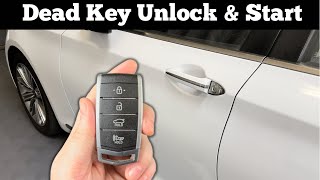
- As a temporary bypass, you can usually start the car by pressing the start button with the top of the dead key fob.
- Do not waste money on A/C or fuel system parts; this code is related to the anti-theft system on this car.
What's Unique About the 2017-2020 Genesis G80
For many brands, P1621 can mean anything from a transmission module failure on a GM to an O2 sensor fault on a Ram. Even within Hyundai's history, the code is ambiguous, sometimes pointing to the A/C relay or a fuel cut valve on older models like the Azera. However, on modern push-button start platforms like the G80 (DH), its predecessor the Hyundai Genesis (DH), and the contemporary Hyundai Palisade, the definition has standardized to mean an immobilizer or smart key communication error. The diagnosis, therefore, focuses entirely on the anti-theft and keyless entry system, not these other unrelated components.
Symptoms You May Notice
- Check Engine Light is on
- Blinking immobilizer warning light on the dashboard.
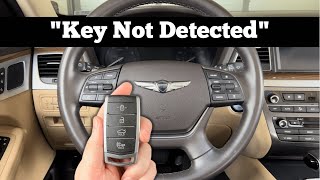
- "Key Not Detected" message on the instrument cluster
- Engine will not crank or start
- Engine cranks but does not fire (no spark or fuel injector pulse).
- Push-to-start button is unresponsive
- Vehicle may enter 'limp mode' if the engine is already running when the fault occurs
- Replacing the starter motor when the no-start is caused by the anti-theft system.
- Replacing the A/C relay or fuel pump based on outdated or incorrect code definitions for other vehicles.
Most Likely Causes
- Dead or Weak Key Fob Battery 🔴 High Probability → Shop Vehicle Battery Key fobs constantly emit a low-power signal and the battery (typically a CR2032) has a finite life of 1-3 years. This is the most common reason for the immobilizer system to fail to detect the key's signal.
How to confirm: Try using your spare key fob. If the spare key works perfectly, the battery in the primary fob is the culprit. Alternatively, a 'Key Not Detected' message is the most common symptom. You can also try the emergency start procedure; if it works, it strongly suggests a weak fob battery.
Typical fix: Replace the CR2032 coin battery inside the key fob. This is a simple DIY task.
Est. part cost: $2-$10 - Weak Main Vehicle 12V Battery 🟡 Medium Probability → Shop Vehicle Battery Modern vehicles have a high parasitic draw from various modules. A weak 12V battery can cause low voltage during startup, leading to communication errors between modules, which can falsely trigger an immobilizer code.
How to confirm: Test the vehicle's 12V battery with a multimeter or a battery tester. A reading below 12.4 volts at rest indicates a weak charge, and below 12.0 volts suggests a discharged or failing battery. Symptoms like slow cranking or dim interior lights are also indicators.
Typical fix: Recharge or replace the vehicle's 12V battery.
Est. part cost: $150-$350 - Key Fob Signal Interference ⚪ Low Probability → Shop Keyless Entry Transmitter
How to confirm: Remove other electronic devices like smartphones, gate openers, or other key fobs from your pocket or near the vehicle's center console. Try starting the car again.
Typical fix: Move interfering devices away from the key fob when starting the vehicle.
Est. part cost: $0 - Faulty Immobilizer Antenna ⚪ Low Probability → Shop Antenna
How to confirm: If a new fob battery and a healthy car battery don't solve the issue, and the backup start method (pressing the start button with the fob) works, the antenna that receives the key's signal may be faulty. This requires a professional scan tool to check communication status. The antenna is often a ring around the start button or located in the center console.
Typical fix: Replace the immobilizer antenna. For the G80, this is often referred to as the 'Smart Key Antenna Assembly'.
Est. part cost: $100-$150
Rare But Worth Checking
- Faulty Smart Key Fob: → Shop Keyless Entry Transmitter If the fob has been dropped, exposed to water, or if it fails to work even with a new battery, the internal transponder chip may be damaged. A replacement key will need to be programmed by a dealer or qualified locksmith.
- Faulty Body Control Module (BCM) or Smart Key Module (SMK): In very rare cases, the control module that manages the immobilizer system can fail. This is a last resort after all other possibilities (key, battery, antenna, wiring) have been ruled out by a professional using a Genesis-specific scan tool (GDS).
- Wiring or Connector Issue: A loose connection, corroded pin, or damaged wire between the immobilizer antenna and the control module can cause an intermittent or total loss of communication. This can sometimes be triggered by simply jostling the wires under the dash.
Diagnosis Steps
- Verify the active code is P1621 using an OBD-II scanner.
- Attempt to start the vehicle. Note if a 'Key Not Detected' message appears or if the immobilizer light is flashing.
- Replace the battery in the primary key fob with a new CR2032 battery.
- If the issue persists, try starting the vehicle with your spare key fob. If the spare works, the original fob is likely damaged.
- If neither key works, attempt the backup starting procedure: press and hold the brake, then press the engine start/stop button using the top of the key fob itself. If the car starts, it points to a weak signal issue (fob battery or antenna).
- Test the main 12V vehicle battery. Ensure it has a healthy charge (above 12.4V) and can hold a load. Voltage dropping below 9.6V during cranking can trigger false communication codes.
- Check for signal interference. Remove cell phones and other electronics from near the key and try again.
- If the vehicle still won't start, inspect the wiring and connectors for the immobilizer antenna around the start button and under the dash for any visible damage or looseness.
- If all else fails, a professional diagnosis with a Genesis-specific scan tool (GDS) is needed to check communication between the immobilizer module, BCM, and ECM.
Parts You'll Likely Need
- Key Fob Battery
(OEM #CR2032)— This is the most frequent cause of the 'Key Not Detected' message and P1621 code. It's a simple wear item.
Trusted brands: Energizer, Duracell, Panasonic
OEM price range: $5-$10
Aftermarket price range: $2-$8 - Smart Key Fob
(OEM #95440-B1200BLH, 95440-B1210)— If the key fob itself is damaged internally, it will need to be replaced and programmed to the vehicle. Programming requires dealer or locksmith equipment.
Trusted brands: OEM Genesis
OEM price range: $250-$400
Aftermarket price range: $100-$200 - Smart Key Antenna Assembly
(OEM #95420-B1150)— If the fob and car batteries are good, but the emergency start procedure is required, the antenna that receives the fob's signal may be faulty.
Trusted brands: Genuine Hyundai/Genesis
OEM price range: $110-$150
Related Codes That Often Appear With This One
- B1602 —
- B1603 —
- U0140 —
- U0100 —
Technical Service Bulletins (TSBs) & Recalls
- TSB 19-BE-004H: Provides the procedure for programming new smart keys and card keys using the GDS, which is necessary after replacing a key fob or immobilizer module.
Mechanic-Grade Diagnostic Values
- Vehicle Cranking Voltage — expected: > 9.6V. Failure: Voltage dropping below 9.6V during cranking can corrupt module self-tests and trigger false communication codes like P1621.
- Alternator Output Voltage (Engine Running) — expected: 13.5V - 14.8V. Failure: Voltage outside this range indicates a charging system problem that can lead to a low battery state and subsequent module communication errors.
Scan Tool Commands That Help
- Hyundai GDS (Global Diagnostic System) / G-Scan: Immobilizer Parameter Check — Used to check the status of the immobilizer system, including how many keys are programmed to the vehicle. This helps determine if the issue is with key recognition or the module itself.
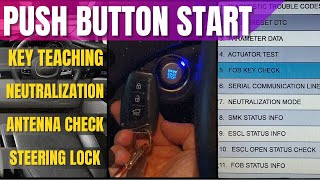
- Hyundai GDS (Global Diagnostic System): Key Teaching / Key Registration — This function is required to program new or existing keys to the vehicle's immobilizer module after replacing a key fob or the Smart Key Module. A PIN from a Hyundai/Genesis dealer is necessary.
- Hyundai GDS (Global Diagnostic System): Neutralization Mode — This function returns a module (like the ECM or Smart Key Module) to a 'virgin' state. It is necessary when attempting to install a used module from another vehicle, though success is not guaranteed and often not possible for security modules.
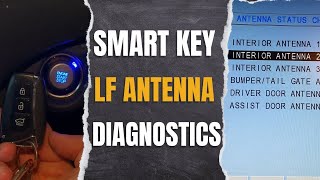
- Hyundai GDS (Global Diagnostic System) / G-Scan: Low Frequency Antenna Check — This is an active test to check the function of the various LF antennas inside and outside the car that detect the smart key. The scan tool will instruct the technician to place the key in specific locations (e.g., near the center console, in the trunk) to verify each antenna is working.
Wiring & Ground Locations
- Smart Key 3 Fuse — Located in the passenger compartment fuse box, which is in the driver's side panel bolster.. This 10A fuse provides power to the Smart Key Control Module. A blown fuse will cause a complete loss of communication and function, leading to a no-start and P1621.
Model Year Variations Within This Range
- 2018-2020: The rear bumper smart key antenna, part number 95420-B1150, is specified for G80 models produced from December 2, 2017, onwards. Earlier 2017 models may use a different part number for this specific antenna location.
Diagnostic Flowchart
Other Known Issues on This Vehicle
Issues unrelated to this code that are worth knowing about as an owner of this generation:
- ABS Module Electrical Short 🔴 High — Common enough to trigger a major recall (NHTSA 21V160000). Affects 2015-2016 Genesis and 2017-2020 G80 models. (Ref: Recall 21V160000. The ABS module can short circuit, creating a fire risk even when the vehicle is parked. Owners were advised to park outdoors until the recall repair (replacing the ABS module fuse) was completed.)
- Oil Leaks from Turbocharger Oil Feed Pipe (3.3T Engine) 🔴 High — Affects 2018-2020 G80 models with the 3.3L V6 turbocharged engine. The left turbo oil feed pipe can deteriorate and leak oil onto hot exhaust components. (Ref: Recall 24V191000 (expands upon 19V-538). This is a fire risk. The fix involves replacing the left turbocharger oil feed pipe.)
- Starter Solenoid Water Intrusion 🔴 High — Affects 2017-2019 G80 models. Water can enter the starter solenoid, causing an electrical short and potential engine compartment fire. (Ref: Recall 24V107000. The remedy is to install a relay kit in the engine junction box. Owners were advised to park outdoors.)
- Harsh/Delayed Shifting (8-Speed Automatic) 🟠 Medium — Some owners report harsh upshifts at low speeds or delayed engagement. This is noted in owner forums and addressed by TSBs. (Ref: TSB 21-AT-010HG addresses harsh shifting due to internal solenoids. TSB 20-AT-013HG addresses an issue where the car could slip into Neutral.)
- Infotainment System Freezing/Rebooting 🟡 Low — Owners report the central display screen freezing, becoming unresponsive, or rebooting, particularly when using Apple CarPlay or Android Auto. Newer models have recalls for similar software issues. (Ref: TSB 21-01-079HG addresses issues with Genesis Connected Services on some 2018 models, requiring a software update.)
- Potential for High Oil Consumption (5.0L V8) 🟠 Medium — While not a universal problem, some owners of the Tau 5.0L V8 report higher than expected oil consumption, which can be exacerbated by worn piston rings or valve guide seals over time. Regular oil level checks are crucial.
Used vs. New Parts: Buying Guide for This Vehicle
When a used part is the smart pick: For this repair, a used Smart Key Antenna is a reasonable choice. These are simple, durable components with low failure rates that are not coded to the vehicle. A used antenna from a reputable salvage yard is a cost-effective alternative to a new OEM part.
Donor-vehicle mileage cap: roughly under 100000 miles for the part to have meaningful remaining life.
What to inspect on the donor part:
- Ensure the part number (e.g., 95420-B1150, 95420-B1200) exactly matches the original part.
- Inspect the connector for any signs of corrosion, bent pins, or physical damage.
- Check the wiring pigtail for any cuts, abrasions, or signs of previous repair.
- Buy from a seller that offers a warranty or return policy.
OEM-only on this vehicle (don't cheap out):
- Smart Key Fob
- Smart Key Module (SMK)
- Body Control Module (BCM)
Brands owners have reported issues with on this vehicle:
- Used or aftermarket Smart Key Fobs and Smart Key Modules should be avoided. These components are electronically locked to the original vehicle's VIN for security. While 'neutralization' procedures exist, they are not always successful and can only be attempted with dealer-level tools. Buying a new OEM key fob or module and having it professionally programmed is the only reliable method.
Related OBD-II Codes
Frequently Asked Questions
My 2018 Genesis G80 3.3T has a 'Key Not Detected' message and won't start. Could this be related to the turbo oil leak recall?
I'm seeing a blinking immobilizer light on my 2017 G80. Is there a specific procedure for programming a new key if mine is dead?
Can I use a used Smart Key Antenna from a 2015 Hyundai Genesis to fix my 2018 G80?
My G80 won't crank and the push-to-start is unresponsive. Could the ABS module recall be the cause?
Is there an emergency way to start my Genesis G80 if the key fob battery is dead?
My 2019 G80 is having trouble starting and I'm worried about the starter solenoid. Is there a known issue?
Helpful Videos
We Have This Part in Stock


The information in this article is provided for general reference and educational purposes only. Vehicle specifications, procedures, and part compatibility can vary by production date, trim level, and region. Always consult your vehicle's factory service manual and verify part numbers before purchasing or performing repairs. Safety-critical components such as airbags, seat belts, and braking systems should be installed by a qualified professional.
- Genesis G80:
- 🧭 Diagnostic Flowchart
- 🎬 Helpful Videos
- 🛍️ Shop This Part
- What's Unique About the 2017-2020 Genesis G80
- Symptoms You May Notice
- Most Likely Causes
- Rare But Worth Checking
- Diagnosis Steps
- Parts You'll Likely Need
- Related Codes That Often Appear With This One
- Technical Service Bulletins (TSBs) & Recalls
- Mechanic-Grade Diagnostic Values
- Scan Tool Commands That Help
- Wiring & Ground Locations
- Model Year Variations Within This Range
- Other Known Issues on This Vehicle
- Used vs. New Parts: Buying Guide for This Vehicle
- Related OBD-II Codes
- Frequently Asked Questions
- 🎟️ Get 5% Off