

P1621 on 2007-2014 GMC Acadia: Control Module Memory Fault Causes and Fixes
P1621 on a GMC Acadia indicates an internal memory failure in a control module, most often the Transmission Control Module (TCM) or Engine Control Module (ECM). The most common fix is replacing the faulty module, which requires professional programming. Expect costs to range from $400 to over $1000.
- P1621 is a serious code indicating an internal memory failure in a key vehicle computer, usually the TCM or ECM.
- While you might be able to drive the vehicle, you risk sudden shifting problems, stalling, or a no-start condition.
- Before replacing an expensive module, always check the battery, its connections, and the module's main power/ground wires first.
- The most common fix is replacing the faulty module, which is not a DIY job as it requires professional programming.
- This issue is documented in GM Technical Service Bulletins, confirming it's a known problem.
What's Unique About the 2007-2014 Gmc ACADIA
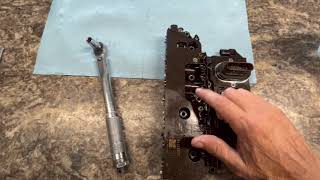
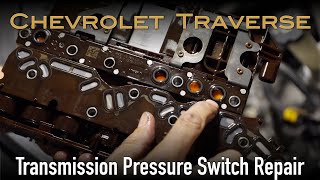
For the first-generation GMC Acadia and its platform mates (Buick Enclave, Chevy Traverse, Saturn Outlook), this code is frequently associated with the Transmission Control Module (TCM), which on these models is a Transmission Electro-Hydraulic Control Module (TEHCM). This unit is located inside the transmission, bolted to the valve body, making it susceptible to heat and contaminated fluid, which are primary drivers of failure. GM has issued Technical Service Bulletins (TSBs) acknowledging that code P1621 can be set in the TCM, sometimes alongside other module performance codes, confirming a known pattern of TCM failures on this platform.
Diagnostic Flowchart
Tap your situation to follow the diagnostic path that matches what you're seeing on this vehicle.
Generation note: The 2007-2014 range covers the first generation of the GMC Acadia, which ran until 2016. A facelift occurred in 2013, but the underlying GM Lambda platform and 6T70/6T75 transmission with its internal TCM are consistent across these years, making the issue common to the entire generation.
Symptoms You May Notice
- Check Engine Light (Malfunction Indicator Lamp) is on
- Erratic or harsh transmission shifting
- Vehicle enters 'limp mode' with reduced power
- Intermittent stalling
- No-start condition
- Traction control light may illuminate
- Erratic behavior of door locks or other electronics when hitting bumps
- Gear position indicator on the dashboard may go blank or display incorrectly.
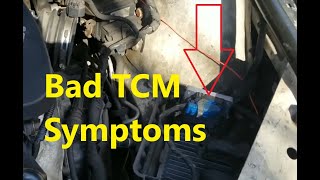
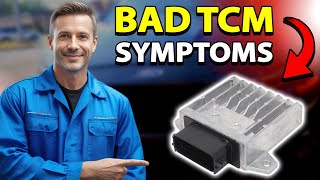
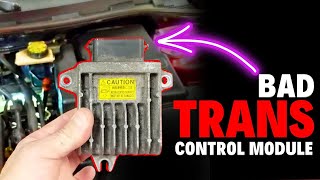
- Inability to shift out of Park. 🎬 Watch: 5 common symptoms that your TCM needs replacing fast.
- Replacing individual sensors (like O2 sensors) when the root cause is the control module itself.
- Condemning the entire transmission for a rebuild when the fault is purely electronic within the TCM/TEHCM.
Most Likely Causes
- Internal Failure of the Transmission Control Module (TCM/TEHCM) 🔴 High Probability → Shop Transmission Assembly The TCM is located inside the transmission on the valve body, constantly exposed to heat and vibration. Over time, this leads to failure of the internal electronics or pressure switch laminates, a notorious issue on the 6T70/6T75 transmission. TSB #PIP4653E directly points to the TCM as the location for a P1621 code.
How to confirm: A professional scan tool will confirm if the P1621 code is stored in the TCM. Diagnosis involves ruling out all external electrical issues first. The module is located by removing the driver's side transmission cover.
Typical fix: Replacement of the TCM/TEHCM, followed by programming to the specific vehicle's VIN.
Est. part cost: $200-$700 - Internal Failure of the Engine Control Module (ECM/PCM) 🟡 Medium Probability → Shop Engine Control Module (ECM) Like the TCM, the ECM can fail internally due to heat cycles and age. TSB #05-06-04-060A notes this code can be set in multiple modules. In some cases, a failing ECM can cause issues that mimic other problems, like providing a bad ground reference for sensors.
How to confirm: A scan tool will show the code stored in the ECM. A technician will verify all power, grounds, and communication lines to the ECM before condemning the module.
Typical fix: Replacement of the ECM and programming it to the vehicle.
Est. part cost: $300-$800 - Low Battery Voltage or Poor Connections 🟡 Medium Probability → Shop Vehicle Battery The GM Lambda platform is known for electrical sensitivity. A weak battery can cause numerous random codes, including module memory faults, during startup. Corroded battery terminals are a common sight and can cause intermittent voltage drops.
How to confirm: Test the battery's state of charge and perform a load test. Voltage should be above 12.4V. Inspect battery terminals and the main ground connection to the chassis for corrosion or looseness.
Typical fix: Clean battery terminals and cable ends or replace the battery if it fails a load test. Ensure the main ground cable is clean and tight.
Est. part cost: $150-$300 - Damaged Wiring or Poor Grounds ⚪ Low Probability Wiring harnesses, especially the one leading to the transmission, can become chafed or corroded. More commonly, the main engine-to-chassis ground straps can corrode or break, causing modules to search for a ground path through other circuits, leading to bizarre electrical behavior and fault codes.
How to confirm: Visually inspect the wiring harness to the TCM for damage. More importantly, inspect the main ground straps from the battery to the chassis and from the engine block to the frame for corrosion, looseness, or breakage.
Typical fix: Repair the damaged section of the wiring harness. Replace or clean and re-secure corroded or broken ground straps.
Est. part cost: $20-$100
Rare But Worth Checking
- Failed Reprogramming Attempt: If the code appeared immediately after an attempt to update or tune a module with an aftermarket device, the flash may have failed and corrupted the module's memory.
- Water Intrusion: On the Acadia and its platform mates, water can leak past a degraded windshield or sunroof drain and drip onto the Body Control Module (BCM) or junction block, causing widespread electrical chaos that could potentially trigger memory codes in other modules.
Diagnosis Steps
- Connect a professional-grade OBD-II scanner and check which module has stored the P1621 code (e.g., ECM, TCM). This is critical.
- Scan for any other codes, especially communication (U-codes) or other module integrity codes (P06xx). Note the presence of P0700, which points toward the TCM.
- Check and verify the battery's health. Ensure it has a full charge (over 12.4V) and passes a load test. Clean any corrosion from the terminals and cable ends.
- Inspect the main power and ground connections. Pay special attention to the braided ground strap from the engine/transmission to the chassis, as it is a known failure point. 🎬 Watch: How a bad ground causes electrical issues on this platform.
- Visually inspect the wiring harness connected to the module for any signs of chafing, melting, or corrosion, particularly on Acadias where the TCM harness enters the transmission side cover.
- If all external factors (power, ground, wiring) are good, and the code is stored in the TCM, the TCM/TEHCM itself is the most likely culprit.
- Consult a professional to confirm the diagnosis. Replacement requires programming with GM-specific software.
Parts You'll Likely Need
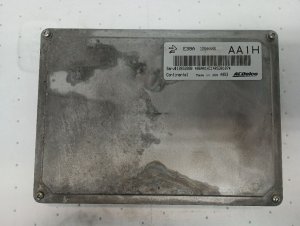
- Transmission Control Module (TCM/TEHCM)
(OEM #24261875 (This is an older number, often superseded. Always verify with VIN. Other examples include 24275868))— This is the most frequently cited location for the P1621 fault on this platform, as supported by TSB PIP4653E and numerous owner accounts.
Trusted brands: ACDelco, Dorman
OEM price range: $400-$700
Aftermarket price range: $200-$500 - Engine Control Module (ECM) — If the code is stored in the ECM and not the TCM, and all wiring/power/grounds are good, the ECM itself has likely failed internally.
Trusted brands: ACDelco
OEM price range: $400-$800
Aftermarket price range: $300-$600 - Engine Ground Strap/Cable — A corroded or broken main ground is a common, and often overlooked, cause of various electrical faults on these vehicles.
Trusted brands: GM Genuine, Standard Motor Products
OEM price range: $30-$60
Aftermarket price range: $15-$40
Related Codes That Often Appear With This One
- P0601 — Internal Control Module Memory Check Sum Error. This is another code indicating an internal module failure.
- P0603 — Internal Control Module Keep Alive Memory (KAM) Error. Related to memory retention issues.
- P0604 — Internal Control Module Random Access Memory (RAM) Error. Another internal module fault.
- P062F — Internal Control Module EEPROM Error. This is a specific memory type error within the module.
- U0101 — Lost Communication With TCM. This often accompanies a failed TCM, as other modules can no longer communicate with it.
- P0700 — Transmission Control System (MIL Request). This is a generic code set by the ECM when the TCM has detected a fault and requested the Check Engine Light to be turned on. It will always be present with a more specific TCM code like P1621.
Technical Service Bulletins (TSBs) & Recalls
- PIP4653E: Addresses DTC P1621 stored in the Transmission Control Module.
- 05-06-04-060A: Communicates information on multiple control module DTCs, including P1621, that can be shared in various modules.
Platform-Specific Known Issues
- GM Technical Service Bulletin #PIP4653E specifically notes that DTC P1621 may be found in the Transmission Control Module (TCM) on these vehicles.
- GM Technical Service Bulletin #05-06-04-060A discusses how P1621 and other control module codes can be set across multiple modules, indicating a known pattern of electronic module issues.
- The TCM (TEHCM) is located inside the transmission side cover, making it vulnerable to failure from constant exposure to heat and vibration.
Mechanic-Grade Diagnostic Values
- Battery Voltage at Module — expected: 12.4V or higher with engine off; 13.5V - 14.5V with engine running.. Failure: Low voltage can cause modules to set memory codes during startup.
- Module Ground Circuit Voltage Drop — expected: Less than 0.3V (300mV) between the module's ground pin and the negative battery terminal.. Failure: A reading higher than 0.3V indicates high resistance in the ground circuit, which can starve the module of a proper ground and cause internal errors.
- 5-Volt Reference Circuit at ECM (Connector X1) — expected: Approximately 5.0V on pins designated as '5-Volt Reference'.. Failure: A voltage that is significantly lower or higher than 5.0V points to a short or an internal ECM fault.
Scan Tool Commands That Help
- GM GDS2/Tech2: Replace and Reprogram — This function is mandatory after installing a new or used TCM/TEHCM or ECM. It overwrites any existing data and flashes the module with the correct VIN-specific calibration file from GM's servers.
- GM GDS2/Tech2: Service Fast Learn Procedure — After a new TEHCM is programmed, this procedure must be run. It allows the module to learn the clutch fill volumes and pressure adapts for smooth shifting. Failure to perform this can result in harsh shifts.
- GM GDS2/Tech2: Module Diagnostics / Vehicle DTC Information — This is the primary function to read codes from all vehicle modules. It is critical to use this to determine if the P1621 code is stored in the TCM, ECM, or another module.
- GM GDS2/Tech2: Control Functions — Allows a technician to command individual solenoids or components on and off to test their functionality, helping to rule out wiring or component issues before condemning a control module.
Wiring & Ground Locations
- Main Braided Ground Strap — Runs from the negative battery cable/terminal area down to a stud on the transmission housing.. This is a critical ground path for the powertrain. Corrosion or looseness here is a documented cause of widespread, intermittent electrical issues, including module faults that can trigger a P1621.
- G113 — Located on the left side of the engine, at an engine-to-transmission stud.. Provides a direct ground point between the engine and transmission, critical for the internally-mounted TCM (TEHCM).
- G110 — Located on the right front of the engine, mounted to the cylinder head.. Serves as a primary ground for various engine and transmission components listed in wiring diagrams.
- G305 — Located in the engine compartment, near the battery.. A key chassis ground point in the vicinity of the main power distribution center.
- Underhood Jumper Cable Ground Lug — A dedicated metal stud on the strut tower or firewall for jump-starting.. This point can be a source of poor ground connection if the factory paint on the threads was not fully removed, leading to intermittent electrical problems.
Real Owner Repair Stories
- AliExpress User Review / Guide (2011 GMC Acadia) — Flickering dashboard lights, intermittent radio static, occasional hesitation from the ECM.
❌ Tried (didn't work) Replacing fuel, Replacing spark plugs
✅ What actually fixed it The owner identified a faulty grounding path. The final fix was cleaning and securing the main braided copper ground strap that runs from the negative battery terminal area to the transmission housing.
"I Checked Everything" — The Actual Cause
- A common scenario for this code is that all wiring appears visually intact and tests for basic continuity may pass. However, the actual cause is a high-resistance ground connection at a major grounding point, like the main engine-to-chassis strap. This connection can become corroded over time, providing enough of a path to seem 'connected' but failing under electrical load, causing voltage drops that corrupt module memory.
OEM Part Supersession History
24237552, 24238735, 24239083, 24251029, 24256707, 24261875→Various, including 24275868, 24275870— Revisions to address internal component failures, particularly the pressure switch laminates and solenoid issues.
Heads up: TEHCMs are specific to vehicle year and calibration (Tag ID). You cannot swap modules between different years or models without causing immediate shifting problems or a no-start condition. The module MUST be programmed to the vehicle's VIN using GDS2.
Model Year Variations Within This Range
- 2007-2016: The TEHCM went through several hardware and software revisions (Gen 1 vs. Gen 2). While they may look similar, their internal logic and calibration are different. When replacing a TEHCM, the part number and calibration ID (Tag ID) must be correct for the vehicle's specific VIN and RPO codes (e.g., MH6, MY9). Using the wrong module will result in failure.
Helpful Videos
Used OEM Parts in Stock
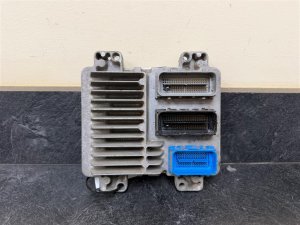
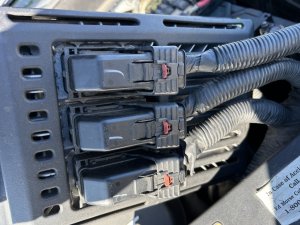
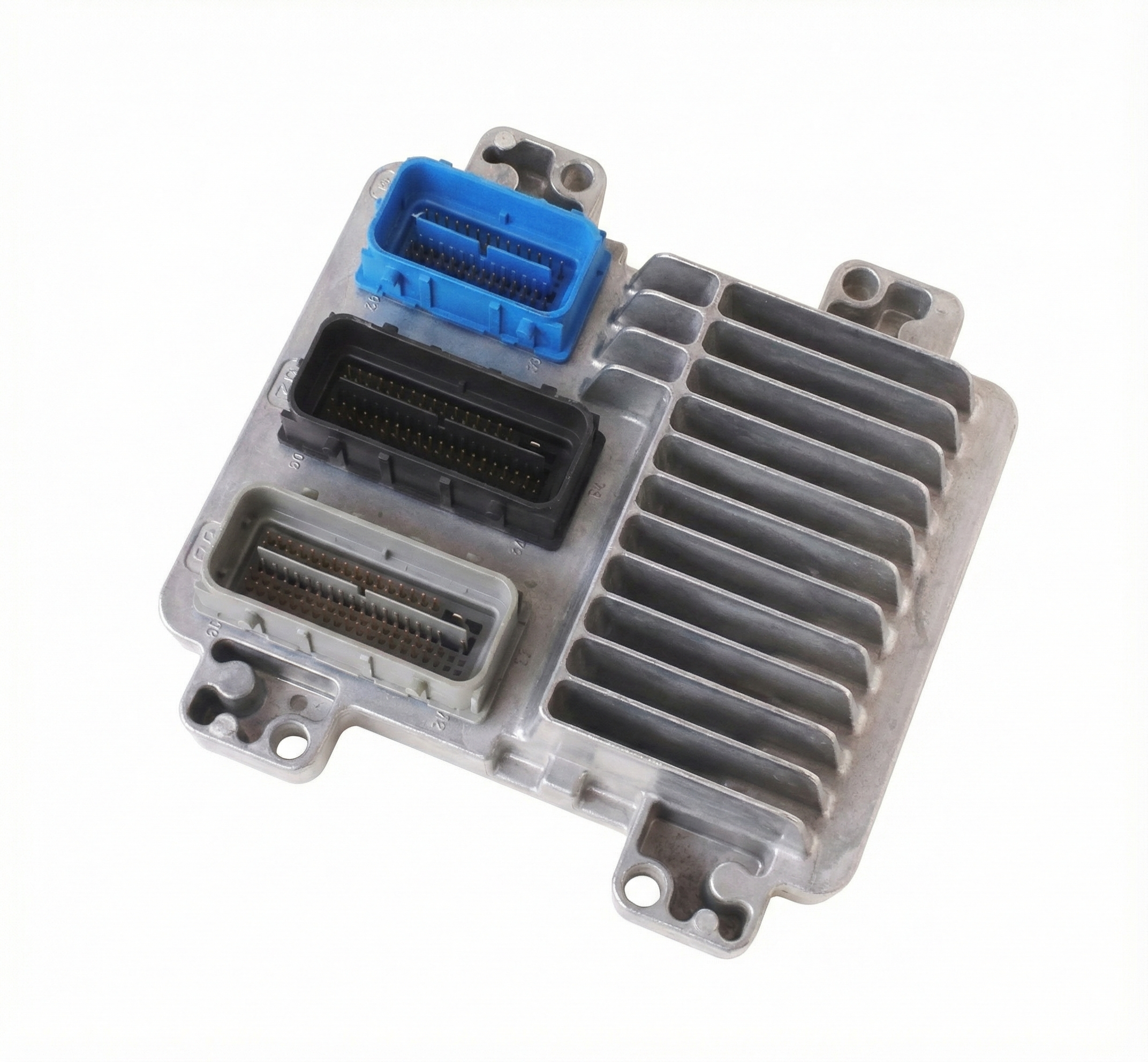
New Aftermarket Parts Available


The information in this article is provided for general reference and educational purposes only. Vehicle specifications, procedures, and part compatibility can vary by production date, trim level, and region. Always consult your vehicle's factory service manual and verify part numbers before purchasing or performing repairs. Safety-critical components such as airbags, seat belts, and braking systems should be installed by a qualified professional.
- Gmc ACADIA:
- 🧭 Diagnostic Flowchart
- 🎬 Helpful Videos
- 🛍️ Shop This Part
- What's Unique About the 2007-2014 Gmc ACADIA
- Symptoms You May Notice
- Most Likely Causes
- Rare But Worth Checking
- Diagnosis Steps
- Parts You'll Likely Need
- Related Codes That Often Appear With This One
- Technical Service Bulletins (TSBs) & Recalls
- Platform-Specific Known Issues
- Mechanic-Grade Diagnostic Values
- Scan Tool Commands That Help
- Wiring & Ground Locations
- Real Owner Repair Stories
- "I Checked Everything" — The Actual Cause
- OEM Part Supersession History
- Model Year Variations Within This Range
- 🎟️ Get 5% Off