

P1621 on 2010-2015 GMC Terrain: Control Module Memory Failure Causes and Fixes
P1621 on a GMC Terrain indicates an internal memory failure in a control module, most often the Powertrain (PCM) or Transmission (TCM) Control Module. The most common fix is replacing the faulty module and having it professionally programmed, which can cost between $400 and $1,000. TSB #PIP4653E specifically points to the TCM as a likely culprit on the 2010 model.
- P1621 means there is a fatal internal memory error in a control module, most likely the PCM or TCM.
- Before condemning an expensive module, always test the battery and charging system thoroughly, as low voltage can trigger this code.
- This is not a DIY-friendly repair. The replacement module must be programmed to your specific vehicle by a professional with the correct tools.
- On the 2010-2015 Terrain, be aware that the Transmission Control Module (TCM) is a known source for this code, not just the main engine computer.
- If you have used an aftermarket tuner, returning the vehicle to its stock programming should be your first step.
What's Unique About the 2010-2015 Gmc TERRAIN
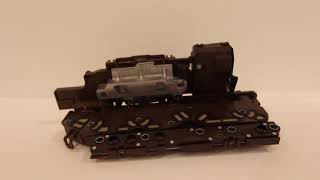
While P1621 is a general GM code for module memory failure, a manufacturer Technical Service Bulletin (TSB #PIP4653E) for the 2010 GMC Terrain specifically highlights that this code may be found in the Transmission Control Module (TCM). This is important because technicians might otherwise focus solely on the main engine computer (PCM). The issue is an internal electronic fault, not related to the common 2.4L engine oil consumption or timing chain problems seen on this platform, though those issues are prevalent. The Chevrolet Equinox, a platform mate, also experiences this P1621 code pointing to the TCM. For this generation, the TCM is a TEHCM (Transmission Electro-Hydraulic Control Module) located inside the transmission side cover, making replacement more labor-intensive than an external module.
Diagnostic Flowchart
Tap your situation to follow the diagnostic path that matches what you're seeing on this vehicle.
Symptoms You May Notice
- Check Engine Light (Malfunction Indicator Lamp) is on
- Vehicle may not start
- Engine may stall or hesitate intermittently
- Erratic or poor transmission shifting (if the TCM is the cause)
- Gear position indicator on the dashboard may go blank or show incorrect information
- Often, there are no noticeable drivability problems at all
- Replacing sensors or other engine components. This code points specifically to an internal module memory issue, not a faulty sensor. The diagnostic process in older GM manuals for this code is very short and points directly to module replacement. However, see edge cases where a faulty sensor can cause this code.
- Replacing the wrong module. Since P1621 can be set by either the PCM or TCM, it is critical to use a scan tool that can identify the source module. TSB #PIP4653E's focus on the TCM for the 2010 Terrain makes this distinction particularly important.
Most Likely Causes
- Internal Failure of a Control Module (PCM or TCM) 🔴 High Probability As referenced in GM TSBs #05-06-04-060A and #PIP4653E, internal memory faults can occur in various modules. Age and heat cycles can contribute to the degradation of electronic components within the sealed module, leading to memory corruption. TSB #PIP4653E specifically flags the TCM as a known issue for this code on the 2010 Terrain. The TCM is a TEHCM unit located inside the transmission, where it is subjected to significant heat and vibration.
How to confirm: A professional scan tool is needed to check which module is storing the P1621 code. If the code is present in the TCM and other causes are ruled out, the module itself is condemned. The diagnostic procedure in GM service information for this code is very direct and often leads to module replacement.
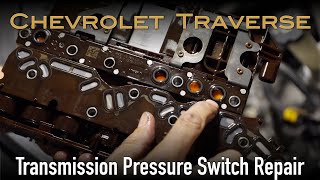
Typical fix: Replace the faulty control module (PCM or TCM) and program the new unit to the vehicle. For the 6-speed automatic transmission, the TCM is integrated with the valve body inside the transmission pan, requiring a more involved replacement. 🎬 See a mechanic's guide to understanding TEHCM and TCM replacements.
Est. part cost: $250-$600 - Low Battery Voltage or Weak Battery 🟡 Medium Probability → Shop Vehicle Battery Modern vehicles like the Terrain are highly sensitive to voltage. A weak or failing battery can cause modules to power up incorrectly, leading to failed memory self-tests during startup. A Reddit user with a 2018 Terrain reported numerous error codes and a no-start condition after a battery change, illustrating the platform's sensitivity to electrical system stability.
How to confirm: Test the battery's state of charge and health with a digital battery tester. Check the charging system output (alternator) to ensure it's between 13.7 and 14.7 volts when the engine is running. A parasitic drain test may also be necessary to find if a component is draining the battery when the vehicle is off.
Typical fix: Replace the vehicle's battery. If the drain persists, diagnose the source of the parasitic draw.
Est. part cost: $150-$250 - Corrupted Software from Aftermarket Tuning ⚪ Low Probability This is not specific to the vehicle but to user modification. Using an aftermarket handheld tuner (like a Bully Dog) to change the vehicle's performance parameters can sometimes corrupt the PCM's or TCM's memory if the process is interrupted or the tuner writes incompatible data.
How to confirm: Determine if the vehicle has had an aftermarket tune installed. The code may have appeared shortly after programming. The presence of non-factory software can often be detected with a dealer-level scan tool.
Typical fix: Use the same tuning device to restore the vehicle's factory stock program. If that fails, the module may need to be re-flashed by a dealer or replaced.
Est. part cost: $0-$150 (for a dealer re-flash)
Rare But Worth Checking
- Poor Power or Ground Connection to the Module:
Diagnosis Steps
- Verify battery health and charging system operation. Ensure battery voltage is above 12.4V with the key off and that the alternator charges correctly (13.7V-14.7V) when running. A low voltage condition can set this code erroneously.
- Use a professional-grade scan tool (like GM GDS2) to read codes from ALL modules (Engine, Transmission, Body, etc.). Identify which specific module has stored the P1621 code. This is the most critical step.
- Check all related fuses for the TCM/PCM. In the under-hood fuse block, check fuses #17, #44, #52, #53 and relay #66. In the passenger compartment fuse box, check fuse #25. 🎬 Watch: How to find and check your TCM fuses and relays.
- Check for available software updates for the affected module. A dealership or qualified shop can check for and perform a re-flash using GM's Service Programming System (SPS), which can sometimes resolve software corruption.
- If an aftermarket tune is installed, use the programmer to flash the vehicle back to its stock configuration. Clear the codes and see if P1621 returns.
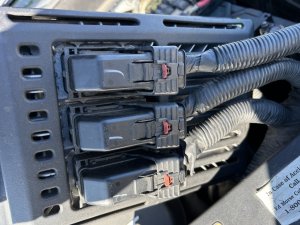
- Inspect the wiring harness and connectors for the affected module. Check for any signs of corrosion, damage, or loose pins. Verify clean and tight power and ground connections, specifically grounds G106/G107.
- If the code persists after the above steps and is isolated to a specific module, the control module has an internal hardware failure and must be replaced.
- Install the new module and have it professionally programmed to the vehicle's VIN and specific options. This step is mandatory for the vehicle to operate correctly.
Parts You'll Likely Need
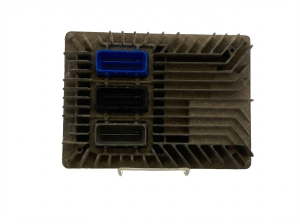
- Powertrain Control Module (PCM)
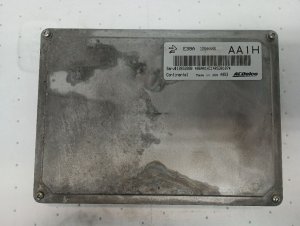
(OEM #e.g., 12646438, 12616889 (Varies by year/engine, always verify with VIN))— This is a common module to fail and set this code. It is the main computer for the engine and often integrates transmission functions.
Trusted brands: ACDelco (OEM)
OEM price range: $300-$650
Aftermarket price range: $200-$450 - Transmission Control Module (TCM)
(OEM #e.g., 24256960 (Varies by year/transmission, always verify with VIN))— TSB #PIP4653E specifically calls out the TCM as a possible source of this code on the 2010 Terrain. For the 6-speed automatic, this module is located inside the transmission as part of the TEHCM assembly. 🎬 Watch: Step-by-step repair for the 6T70 transmission control module.
Trusted brands: ACDelco (OEM)
OEM price range: $250-$500
Aftermarket price range: $150-$350
Related Codes That Often Appear With This One
- P0601 — This code means "Internal Control Module Memory Check Sum Error" and is a very similar internal fault. Both codes are mentioned together in TSB #05-06-04-060A, indicating they stem from the same type of module failure.
- P0603 — This code means "Internal Control Module Keep Alive Memory (KAM) Error". It is also an internal memory fault and is listed alongside P1621 in TSBs, pointing to a failing module.
- P0604 — This code means "Internal Control Module Random Access Memory (RAM) Error". Like the others, it's an internal memory fault mentioned in the same TSBs as P1621.
- P0700 — This code means "Transmission Control System Malfunction." It is a general fault code requested by the TCM and sent to the PCM to turn on the Check Engine Light. It almost always accompanies a more specific TCM code like P1621 when the TCM is the source of the problem.
Technical Service Bulletins (TSBs) & Recalls
- Bulletin #05-06-04-060A: An informational bulletin explaining that internal module failure codes like P1621, P0601, P0603, etc., can be set by various control modules and are not specific to just the PCM. It advises technicians to identify the correct module before replacement.
- Bulletin #PIP4653E: Specifically mentions that P1621 may be found in the Transmission Control Module (TCM) on the 2010 GMC Terrain, directing technicians to investigate the TCM as the source of the fault.
Platform-Specific Known Issues
- TCM Failure on 2010 Models: TSB #PIP4653E specifically addresses DTC P1621 (and others like P0601) being stored in the Transmission Control Module on 2010 GMC Terrain models. This bulletin guides technicians to confirm the code is in the TCM before proceeding with diagnostics, indicating it's a known failure point.
Mechanic-Grade Diagnostic Values
- TCM Power Supply Voltage — expected: 12.0V - 12.6V (measured at the TCM connector power supply pin with ignition on). Failure: Low or no voltage indicates a problem with the fuse, relay, or wiring.
- TCM Ground Circuit Resistance — expected: < 0.5 Ω (measured between the TCM connector ground pin and a clean chassis ground). Failure: High resistance indicates a corroded or loose ground connection (e.g., G106/G107).
- CAN Bus Network Resistance — expected: ~60 Ω (measured between Pin 6 and Pin 14 of the OBD-II port with the battery disconnected). Failure: 120 Ω indicates an open circuit or faulty terminating resistor. ~0 Ω indicates the CAN high and low lines are shorted together.
Scan Tool Commands That Help
- GM GDS2 / Techline Connect: Service Programming System (SPS) — This function is mandatory after replacing the TCM or PCM. It downloads the correct software and VIN-specific calibration to the new module, allowing it to communicate with the vehicle.
- GM GDS2: Module Diagnostics / Control Functions — Used to communicate directly with individual modules like the TCM to verify communication and retrieve module-specific data before condemning the part.
Wiring & Ground Locations
- Transmission Control Module (TCM/TEHCM) — Inside the transmission, mounted on the valve body. Accessible by removing the driver's side transmission cover.. This is the module most frequently at fault for P1621 on this platform, per TSB #PIP4653E. Its internal location makes it prone to heat failure and makes replacement labor-intensive.
- TCM/PCM Fuses — Under-hood fuse block: Fuses #17, #44, #52, #53 and Relay #66. Passenger compartment fuse box (side of center console): Fuse #25.. A blown fuse will cut power to the control module, causing it to be unresponsive and potentially setting communication or memory codes. This is a critical first check before module replacement.
- Grounds G106 / G107 — These are key engine/chassis ground points. While exact locations vary slightly, they are typically found on the engine block or frame rail in the engine bay.. A TSB for communication issues on this platform (PIP4990D) specifically calls out checking these grounds. A poor ground can cause voltage fluctuations and logic errors in the control modules, mimicking an internal failure.
Real Owner Repair Stories
- Chevrolet Forum User (2002 Chevrolet Silverado (similar GM architecture)) — P1621 code appeared, clock and seat memory resetting on startup.
❌ Tried (didn't work) Clearing the code.
✅ What actually fixed it The issue started immediately after installing a Bully Dog aftermarket programmer. Restoring the vehicle to its factory programming resolved the code, as the tuner had corrupted the module's memory. - YouTube video / Go-Parts article (GM Vehicle (specific model not cited, but principle applies)) — P1621 present along with engine stalling.
❌ Tried (didn't work) Replacing the ECU (PCM).
✅ What actually fixed it After weeks of stalling, a P0193 (Fuel Rail Pressure Sensor Circuit High Input) code also appeared. The live data showed impossibly high pressure readings. Replacing the faulty fuel rail pressure sensor resolved both the P0193 and the P1621 code, suggesting the erratic sensor data caused a logic error in the PCM that was flagged as a memory performance issue.
OEM Part Supersession History
e.g., 24234503, 24242391, 24252114→24256960— This is the service number for the T42 generation of TCMs used across many GM vehicles in this era. Newer numbers often contain updated hardware or firmware to address known issues.
Heads up: It is critical to verify the correct part number by VIN. While many numbers are interchangeable, the module requires specific programming for the Terrain's 6-speed transmission and engine combination. Ordering a pre-programmed module requires providing the vehicle's VIN.
Model Year Variations Within This Range
- 2010-2017: The 2010-2017 Terrain uses a 6-speed automatic transmission (e.g., 6T40/6T45/6T70). The TCM for these is an integrated TEHCM unit inside the transmission. Depending on the specific model year, the TCM may use a T42 or a later T87 style architecture. TSB #PIP4653E specifically calls out the 2010 model year as being prone to this failure in the TCM.
Helpful Videos

Used OEM Parts in Stock
New Aftermarket Parts Available

The information in this article is provided for general reference and educational purposes only. Vehicle specifications, procedures, and part compatibility can vary by production date, trim level, and region. Always consult your vehicle's factory service manual and verify part numbers before purchasing or performing repairs. Safety-critical components such as airbags, seat belts, and braking systems should be installed by a qualified professional.
- Gmc TERRAIN:
- 🧭 Diagnostic Flowchart
- 🎬 Helpful Videos
- 🛍️ Shop This Part
- What's Unique About the 2010-2015 Gmc TERRAIN
- Symptoms You May Notice
- Most Likely Causes
- Rare But Worth Checking
- Diagnosis Steps
- Parts You'll Likely Need
- Related Codes That Often Appear With This One
- Technical Service Bulletins (TSBs) & Recalls
- Platform-Specific Known Issues
- Mechanic-Grade Diagnostic Values
- Scan Tool Commands That Help
- Wiring & Ground Locations
- Real Owner Repair Stories
- OEM Part Supersession History
- Model Year Variations Within This Range
- 🎟️ Get 5% Off