

GMC Yukon Denali P1621: TCM Memory Failure Causes and Fixes (2007-2011)
On a 2007-2011 GMC Yukon Denali, P1621 almost always indicates an internal memory failure of the Transmission Control Module (TCM). The fix involves replacing the control module assembly (known as a TEHCM) inside the transmission pan, which is a complex job requiring professional programming and costs between $800 and $1500.
- P1621 on your Yukon Denali means the Transmission Control Module (TCM) has an internal memory error.
- The most common fix is to replace the entire TEHCM assembly, which is located inside the transmission oil pan.
- This is not a DIY-friendly repair. The new module MUST be professionally programmed to your vehicle's VIN to work.
- Expect symptoms like harsh shifting, getting stuck in gear (limp mode), or a Check Engine Light.
- Always use DEXRON-VI transmission fluid when performing this repair.
What's Unique About the 2007-2011 Gmc YUKON DENALI
On the GMT900 platform, which includes this Yukon Denali, GM integrated the Transmission Control Module (TCM) with the valve body and solenoids into a single unit called the TEHCM (Transmission Electro-Hydraulic Control Module). This entire assembly is located inside the transmission oil pan, submerged in hot DEXRON-VI fluid. While this design simplifies external wiring, it subjects the electronics to constant, extreme heat cycles and vibration, causing solder joints and internal components on the circuit board to degrade and fail. Therefore, P1621 on this truck is a strong indicator of a failed TEHCM, rather than a more easily accessible external module.
Diagnostic Flowchart
Tap your situation to follow the diagnostic path that matches what you're seeing on this vehicle.
Symptoms You May Notice
- Check Engine Light is on
- Harsh or erratic shifting
- Transmission getting stuck in one gear (limp mode, usually 3rd)
- Delayed engagement when shifting into Drive or Reverse
- Flaring RPMs between shifts
- Complete loss of reverse gear
- Vehicle may not start in severe cases of module failure
- Instrument cluster losing memory for settings (less common, but can be related to module communication issues)
- Service 4WD light may illuminate if communication is disrupted
- Replacing the Engine Control Module (ECM). P1621 is a generic memory code, but on this specific vehicle, TSBs direct diagnosis to the Transmission Control Module when the code is stored there, not the ECM.
- Replacing individual solenoids. While solenoid failure is common on the 6L80 transmission, P1621 points to a failure of the control module's brain (the TCM portion of the TEHCM), not the individual mechanical components it controls.
Most Likely Causes
- Internal Failure of the Transmission Control Module (TEHCM) 🔴 High Probability → Shop Transmission Assembly The TEHCM is located inside the transmission pan, where constant exposure to high-temperature fluid and vibration causes the electronics and solder joints to degrade and fail over time. This is a well-documented failure pattern for the 6L80 transmission.
How to confirm: After verifying stable battery voltage and clean ground connections to the transmission, a persistent P1621 code that cannot be cleared by a software re-flash points directly to an internal, un-repairable hardware fault in the TEHCM.
Typical fix: Replace the entire TEHCM assembly, which includes the TCM, solenoids, and pressure switches. The new module must be programmed to the vehicle.
Est. part cost: $400-$700 - Corrupted TCM Software 🟡 Medium Probability Can occur after an incomplete or failed programming attempt, especially with aftermarket tuners, or due to a significant voltage spike or drop during a write cycle. Using a handheld programmer that is not fully compatible is a known trigger.
How to confirm: Attempt to re-flash the TCM with the latest factory software using a GM-approved J2534 device and a stable power supply. If the re-flash fails repeatedly or the code returns immediately, the hardware has failed.
Typical fix: Reprogram the TCM. If this fails, the TEHCM must be replaced.
Est. part cost: $0 (if reprogramming is successful, only labor cost applies) - Poor Power or Ground Connection ⚪ Low Probability While less common for this specific code, corrosion or damage to the main transmission connector or related wiring can cause intermittent voltage drops that could theoretically corrupt a write-process or set false codes. TSB #05-06-04-060A notes that low voltage conditions can trigger this family of codes.
How to confirm: Inspect the main transmission case connector for corrosion or damage. Use a multimeter to verify stable battery voltage and a solid ground connection at the TCM harness pins. Ensure the vehicle battery is healthy and terminals are clean.
Typical fix: Clean or repair the affected wiring or connectors.
Est. part cost: $10-$50
Diagnosis Steps
- Scan the vehicle for all stored Diagnostic Trouble Codes (DTCs). Confirm P1621 is present and stored by the TCM, not another module.
- Note any other codes, especially P0700, other P06xx memory codes, or U-series communication codes.
- Check Battery Health: Ensure the battery is fully charged (>12.4V) and the terminals are clean. Low or fluctuating voltage is a known cause for setting false memory codes.
- Inspect the main transmission case connector (the round connector on the side of the transmission) for any signs of corrosion, bent pins, or fluid intrusion.
- If possible, verify that the TEHCM is receiving proper power and ground. This is an advanced step requiring wiring diagrams.
- Attempt a software re-flash. A GM dealer or qualified shop can try to update the TEHCM to the latest calibration using GM's SPS software and a J2534 passthrough device. If the process fails or the code returns, it confirms a hardware fault.
- If all external checks are good and a re-flash doesn't work, the TEHCM has failed internally and must be replaced.
Parts You'll Likely Need
- Transmission Electro-Hydraulic Control Module (TEHCM)
(OEM #24254900, Superseded by 24256939)— This is the complete assembly containing the faulty Transmission Control Module. It is the definitive fix for an internal memory error. The solenoids, TCM, and pressure switches are integrated and not serviced separately.
Trusted brands: ACDelco (OEM), Sonnax (Remanufactured), Street Smart Transmission (Remanufactured)
OEM price range: $600-$800
Aftermarket price range: $400-$600 - Automatic Transmission Fluid — The transmission pan must be dropped for the repair, requiring a drain and refill. Only DEXRON-VI is approved for this transmission. Using other fluids can damage the new TEHCM.
Trusted brands: ACDelco, Valvoline, Castrol
OEM price range: $8-$12 per quart
Aftermarket price range: $7-$10 per quart - Transmission Pan Gasket — The old gasket should never be reused. A new gasket is required to prevent leaks after the repair.
Trusted brands: ACDelco, Fel-Pro, Mahle
OEM price range: $30-$50
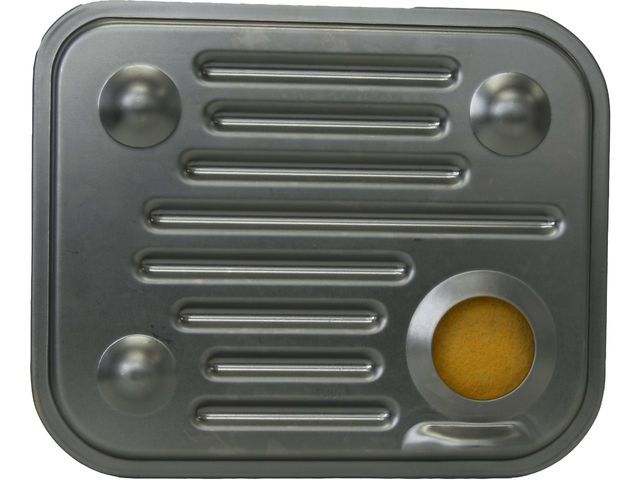
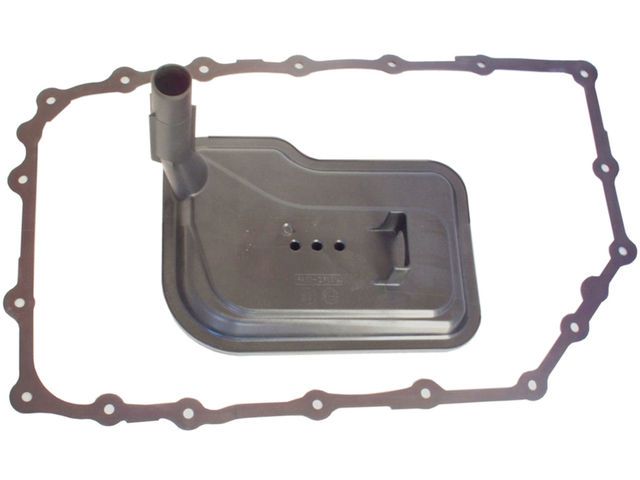
Aftermarket price range: $20-$40 - Transmission Filter — The filter should always be replaced when the pan is removed for service. A new filter plate/screen is often included with remanufactured TEHCMs.
Trusted brands: ACDelco, Wix, ATP
OEM price range: $25-$40
Aftermarket price range: $15-$30
Related Codes That Often Appear With This One
- P0601 — This is another internal control module memory error (Read Only Memory), often set alongside P1621 as noted in TSB #PIP4653E.
- P0603 — Indicates an internal control module Keep Alive Memory (KAM) error, related to memory retention.
- P0604 — Indicates an internal control module Random Access Memory (RAM) error, another memory-related fault.
- P0700 — This is a general transmission fault code. The TCM sets this code to tell the ECM to turn on the Check Engine Light.
- U0101 — This code for 'Lost Communication with TCM' may appear if the TEHCM has failed completely and is no longer communicating on the vehicle's data network.
Technical Service Bulletins (TSBs) & Recalls
- Bulletin #PIP4653E: Discusses P1621 and other codes (P0601, P0603, P0604, P062F) being stored in the Transmission Control Module, confirming the TCM as the location of the fault.
- Bulletin #05-06-04-060A: Notes that P1621 and a family of similar control module DTCs can be shared across multiple modules, reinforcing its nature as an internal module fault. It also warns that low voltage can be a cause.
Platform-Specific Known Issues
- The placement of the TEHCM inside the 6L80 transmission leads to a higher rate of failure due to prolonged exposure to heat, which is a known stressor for electronic components. This makes P1621 a relatively common code for this platform as these vehicles age.
- Owner forums for GMT900 trucks frequently discuss TEHCM failures, with many users reporting a diagnosis of P1621 leading to a TEHCM replacement. Experiences are shared across Yukon, Tahoe, Silverado, and Escalade communities.
Scan Tool Commands That Help
- GDS2 (Global Diagnostic System 2): Service Programming System (SPS) — Used to program a new or remanufactured TEHCM to the vehicle's VIN. This is a mandatory step after replacement. SPS is launched via the TIS2Web portal and requires a J2534 pass-thru device.
- GDS2 (Global Diagnostic System 2): Service Fast Learn Adapts — This procedure must be performed after TEHCM replacement and programming. It allows the TCM to learn the individual clutch fill volumes and pressure characteristics to ensure smooth shifting. The function is found under Module Setup for the TCM.
- GDS2 (Global Diagnostic System 2): Clear All Codes — After a successful repair and 'Fast Learn' procedure, all DTCs should be cleared. If P1621 returns immediately, it indicates a persistent hardware or programming issue.
Wiring & Ground Locations
- TCM Connector (80-Way) — This is the main connector for the TEHCM, located inside the transmission and accessed after dropping the pan. The external vehicle harness plugs into a pass-through connector on the transmission case.. Technicians may need to test for power and ground at the external connector pins before condemning the internal TEHCM. Key pins include Pin 10 (Battery Positive Voltage, Orange wire) and Pin 9 (Ground, Black/White wire).
- G103 — Located on the front of the passenger side (right) cylinder head.. This is a primary engine ground point. While wiring diagrams show the TCM has its own dedicated grounds, a poor engine ground can cause electrical noise and voltage fluctuations that may affect various modules, including the ECM and its communication with the TCM.
Real Owner Repair Stories
- Corvette Forum (2008 Corvette with 6L80) — Transmission went out, replaced with a unit from a 2011 vehicle. Car went into default/limp mode.
❌ Tried (didn't work) Attempting to flash the 2011 TEHCM with a Tech 2 scanner resulted in a 'no communication' error.
✅ What actually fixed it The forum concluded that the 2011 TEHCM is not directly compatible with the 2008 vehicle's electronics and cannot be easily reprogrammed for it. The fix requires using a TEHCM from the correct year range (2006-2009).
OEM Part Supersession History
24241350, 24252114 (and others)→24256939 (and subsequent revisions)— Early TEHCMs (Gen 1) were prone to pressure switch and solenoid failures under heat. Later revisions featured improved solenoids and better thermal tolerance.
Heads up: TEHCMs are year-specific. 2007-2009 units are generally interchangeable. However, a 2010 or 2011+ TEHCM (like PN 24256939) is NOT backward compatible with a 2007-2009 vehicle due to differences in internal logic and communication protocols with the ECM.24256939→24257213, 24259835, 24261870, 24264141, 24265259, 24267576, 24270598, 24275873, 24276637, 24287420— Continuous revisions by GM to improve reliability and address component failures.
Heads up: While these part numbers supersede each other for the 2011+ generation, they are not compatible with pre-2010 vehicles. Always verify the correct part number for the specific vehicle year.
Model Year Variations Within This Range
- 2007-2009: These models use a 'Gen 1' TEHCM. They are known for more frequent pressure switch and TCC solenoid failures. These modules are generally interchangeable within this year range.
- 2010-2011: GM introduced a revised TEHCM with different internal logic and software. A 2010 TEHCM is unique to that year, and a 2011 TEHCM is often specific to 2011-2013 models. These are not backward-compatible with 2007-2009 trucks. Attempting to install a newer TEHCM in an older truck will result in a no-communication or limp mode condition.
Helpful Videos

We Have This Part in Stock


The information in this article is provided for general reference and educational purposes only. Vehicle specifications, procedures, and part compatibility can vary by production date, trim level, and region. Always consult your vehicle's factory service manual and verify part numbers before purchasing or performing repairs. Safety-critical components such as airbags, seat belts, and braking systems should be installed by a qualified professional.
- Gmc YUKON DENALI:
- 🧭 Diagnostic Flowchart
- 🎬 Helpful Videos
- 🛍️ Shop This Part
- What's Unique About the 2007-2011 Gmc YUKON DENALI
- Symptoms You May Notice
- Most Likely Causes
- Diagnosis Steps
- Parts You'll Likely Need
- Related Codes That Often Appear With This One
- Technical Service Bulletins (TSBs) & Recalls
- Platform-Specific Known Issues
- Scan Tool Commands That Help
- Wiring & Ground Locations
- Real Owner Repair Stories
- OEM Part Supersession History
- Model Year Variations Within This Range
- 🎟️ Get 5% Off