

P1621 on 2012-2013 GMC Yukon Denali: Control Module Memory Failure Causes and Fixes
On a 2012-2013 Yukon Denali, P1621 almost always means the Transmission Control Module (TCM) has failed. This is not a DIY fix, as the module is inside the transmission and requires professional programming. Expect repair costs to range from $600 to $1,500. Before condemning the module, a thorough check of the battery, grounds, and the main transmission harness connector is critical.
- P1621 on a 2012-2013 Yukon Denali indicates a serious internal memory failure, almost always in the Transmission Control Module (TCM).
- This is not a DIY repair. The TCM is inside the transmission and the replacement part requires professional programming with GM-specific tools.
- Symptoms include a Check Engine Light, erratic shifting, and the transmission entering 'limp mode'.
- Before condemning the expensive module, always have a professional verify the battery and charging system are healthy and check the main transmission connector for issues.
What's Unique About the 2012-2013 Gmc YUKON DENALI
On this generation of Yukon Denali (GMT900 platform) with the 6-speed 6L80 automatic transmission, the Transmission Control Module (TCM) is not a separate, external box. It is integrated with the valve body and solenoids inside the transmission oil pan as a single unit called a TEHCM (Transmission Electro-Hydraulic Control Module). This location subjects the electronics to constant, extreme heat cycles and vibration, which is a primary reason for the high failure rate of internal components and solder joints that triggers code P1621. TSB PIP4653E specifically directs technicians to investigate the TCM when this code appears, confirming it's a known issue for this platform.
Diagnostic Flowchart
Tap your situation to follow the diagnostic path that matches what you're seeing on this vehicle.
Symptoms You May Notice
- Check Engine Light (Malfunction Indicator Lamp) is on
- Transmission may shift harshly or erratically
- Vehicle may get stuck in one gear (limp mode)
- Potential no-start condition or stalling
- Loss of communication with the TCM may be noted on a professional scan tool
- Loss of the gear indicator display (PRNDL) on the dashboard
- "Service Stabilitrak" or "Low Engine Power" messages on the DIC
- Replacing the Engine Control Module (ECM) first. While possible, TSBs and common experience point directly to the TCM on this platform.
- Replacing individual transmission solenoids. P1621 is an electronic memory fault of the control module itself, not a mechanical failure of the solenoids it controls. The solenoids are integrated into the TEHCM and are replaced as part of that assembly.
Most Likely Causes
- Internal Failure of the Transmission Control Module (TCM/TEHCM) 🔴 High Probability → Shop Transmission Assembly The TCM is located inside the transmission pan (as part of the TEHCM), where it is exposed to constant heat and vibration, leading to a higher rate of electronic failure, such as failed solder joints or internal ground faults. TSBs PIP4653E and 05-06-04-060A both point to internal module faults for this code.
How to confirm: Using a professional scan tool, confirm the P1621 code is stored in the TCM, often alongside P0700. If battery, ground, and wiring checks are good, the module is condemned. The failure is often heat-sensitive, appearing only after the vehicle has been driven for a while.
Typical fix: Replace the Transmission Electro-Hydraulic Control Module (TEHCM). The new module is located inside the transmission pan and must be programmed to the vehicle's VIN using GM-specific software.
Est. part cost: $300-$800 - Low or Unstable Battery Voltage 🟡 Medium Probability → Shop Vehicle Battery Modern control modules are highly sensitive to voltage. Low voltage during startup or operation can cause memory corruption or trigger false codes. During programming, a voltage drop of as little as 0.2V can cause the process to fail.
How to confirm: Perform a comprehensive battery and charging system test. Ensure voltage is stable and above 12.4V with the engine off. Also check for corroded ground connections, particularly G103 on the passenger side cylinder head, which is a known source of drivability issues.
Typical fix: Charge or replace the weak battery. Clean corroded terminals and all major power and ground connections to the frame and engine block.
Est. part cost: $150-$350 - Wiring or Connector Issue at the Transmission ⚪ Low Probability → Shop Transmission Assembly TSB 08-07-30-021H highlights that backed-out terminals or corrosion in the main 16-way transmission harness connector can cause a loss of GMLAN communication, setting codes like U0101 and mimicking a failed TCM.
How to confirm: Thoroughly inspect the main transmission case connector for corrosion, fluid intrusion, or pins that are not fully seated. The TSB provides a detailed diagnostic procedure for this specific issue.
Typical fix: Clean the connector with contact cleaner and apply dielectric grease. Repair the harness or reseat the pins as necessary.
Est. part cost: $10-$100
Rare But Worth Checking
- Corrupted Software from an Aftermarket Tuner: If the code appeared immediately after using a handheld performance programmer (e.g., Bully Dog), the device may have corrupted the TCM's memory during the flash process. Try flashing the vehicle back to the stock tune.
- Faulty Engine Control Module (ECM): → Shop Engine Control Module (ECM) TSB 05-06-04-060A mentions that P1621 can be set in multiple modules. While the TCM is the most common culprit for the Yukon, a faulty ECM is a remote possibility. A scan tool that can identify which module set the code is essential.
Diagnosis Steps
- Connect a professional scan tool to verify code P1621 and identify which module stored it (it will likely be the TCM).
- Check for any other DTCs, especially P0700 and other P06xx or U-series codes like U0101.
- Perform a complete battery and charging system test. Ensure voltage is stable and within specifications (above 12.4V at rest).
- Inspect all major power and ground connections for corrosion and tightness. On GMT900 trucks, pay special attention to G103 (front of passenger side cylinder head) and G108 (back side of cylinder heads) as they are known to cause issues.
- Inspect the main 16-way transmission harness connector on the side of the transmission for corrosion, damage, or backed-out pins, as noted in TSB 08-07-30-021H.
- If possible, have a professional attempt to re-flash the TCM with the latest GM calibration. If the re-flash fails or the code returns immediately, it confirms a hardware fault.
- If all external wiring and voltage checks are good, the Transmission Electro-Hydraulic Control Module (TEHCM) has failed and must be replaced and programmed.
Parts You'll Likely Need
- Transmission Electro-Hydraulic Control Module (TEHCM)
(OEM #24256861)— This is the most common point of failure for code P1621 on this platform. It contains the TCM, which suffers from an internal memory fault. Note: Part numbers can be superseded; always verify with VIN.
Trusted brands: ACDelco, Sonnax (Remanufactured), Dorman (Remanufactured)
OEM price range: $450-$800
Aftermarket price range: $300-$550 - Transmission Pan Gasket (6L80)
(OEM #24224781)— This must be replaced anytime the transmission pan is removed to access the TEHCM.
Trusted brands: ACDelco, Fel-Pro
OEM price range: $25-$50
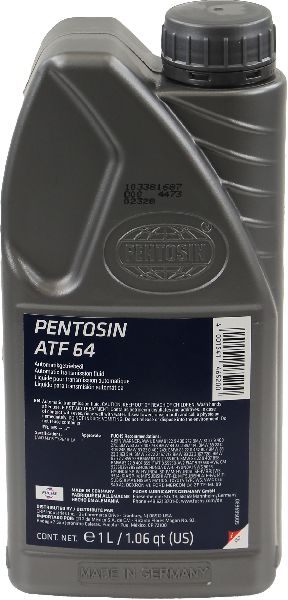
Aftermarket price range: $15-$30 - DEXRON-VI Automatic Transmission Fluid — The transmission fluid must be drained to access the TEHCM and will need to be refilled with the correct fluid type after the repair.
Trusted brands: ACDelco
OEM price range: $8-$12 per quart
Aftermarket price range: $7-$10 per quart - TEHCM Seal Kit (6L80)
(OEM #24236927)— This small seal is required to properly seal the new TEHCM to the valve body upon installation and is often sold separately.
Trusted brands: ACDelco
OEM price range: $10-$20
Aftermarket price range: $5-$15
Related Codes That Often Appear With This One
- P0700 — This is a generic code that the TCM sends to the ECM to request the Check Engine Light be turned on. It confirms the fault is transmission-related and will almost always accompany a P1621 set in the TCM.
- P0601 — This code means 'Internal Control Module Memory Check Sum Error' and is very similar to P1621. Seeing them together strongly indicates a failed module.
- P0603 — This code for 'Internal Control Module Keep Alive Memory (KAM) Error' also points to an internal memory fault within the control module.
- P0604 — This code for 'Internal Control Module Random Access Memory (RAM) Error' is another fault that points directly to an internal failure of the control module.
- U0101 — This code means 'Lost Communication With TCM'. It can appear alongside P1621 if the TCM is failing intermittently or has a severe internal fault that takes it offline from the CAN bus network.
Technical Service Bulletins (TSBs) & Recalls
- PIP4653E: Mentions that DTC P1621 may be stored in the Transmission Control Module.
- 05-06-04-060A: Discusses various control module DTCs, including P1621, that can be shared across multiple modules.
- 08-07-30-021H: Details how backed-out terminals in the 16-way transmission harness connector can cause GMLAN communication loss, mimicking a failed TCM.
Platform-Specific Known Issues
- TSB #PIP4653E directly links DTC P1621 to the Transmission Control Module, instructing technicians to confirm the code is set in the TCM.
- TSB #05-06-04-060A is a broader bulletin that includes P1621 as one of several internal control module memory codes that can affect multiple modules, confirming it's a known electronic failure pattern for GM.
Mechanic-Grade Diagnostic Values
- 6L80 TEHCM Shift Solenoid (On/Off type) Resistance — expected: 20-40 Ohms. Failure: A reading outside this range indicates a failed solenoid within the TEHCM assembly, requiring replacement of the unit.
- 6L80 TEHCM Pressure Control Solenoid (PWM type) Resistance — expected: 3-8 Ohms. Failure: A reading outside this range points to an internal TEHCM fault requiring replacement.
- TCM/TEHCM Power & Ground Pin Voltage Drop — expected: Less than 0.1V (100mV) between ground pins and the negative battery terminal.. Failure: A reading greater than 0.3V indicates a high-resistance ground connection that must be repaired before condemning the module.
- CAN Bus Network Resistance — expected: Approximately 60 Ohms when measured between Pin 6 (CAN-H) and Pin 14 (CAN-L) at the DLC with the battery disconnected.. Failure: A reading of 120 Ohms indicates one of the two terminating resistors (often in the ECM or BCM) is offline. An open or shorted reading indicates a wiring fault.
- Voltage During Module Programming — expected: Stable voltage above 12.0 Volts, maintained by a battery charger.. Failure: A voltage drop of as little as 0.2V can cause programming to fail and potentially damage the new module.
Scan Tool Commands That Help
- GDS2 / Tech2: Service Programming System (SPS) — This function is mandatory after installing a new TEHCM. It uses a J2534 pass-through device to connect to GM's servers and flash the module with the correct VIN-specific software and calibration.
- GDS2 / Tech2: Replace and Reprogram ECU — This is the specific option selected within the SPS workflow when a new module is being installed for the first time.
- GDS2 / Tech2: Transmission Adaptive Pressure Reset (Fast Learn) — This procedure must be performed after TEHCM replacement and programming to allow the new module to learn the hydraulic characteristics and clutch fill volumes of the specific transmission, ensuring smooth shifts.
- GDS2 / Tech2: Solenoid Cleaning Process — While not a direct fix for P1621 (an electronic fault), this function can be used to cycle solenoids and clear debris if there are accompanying shift quality complaints or solenoid performance codes.
Wiring & Ground Locations
- G103 — On the front of the passenger side cylinder head.. This is a major ground point for multiple modules. A poor connection here can cause various intermittent electrical issues and fault codes, mimicking module failure. It is a known trouble spot on GMT900 platforms.
- G108 — On the back side of the cylinder heads.. This ground is also cited by technicians as a common source of difficult-to-diagnose drivability problems. Checking its integrity is crucial before replacing expensive modules.
- G102 — On the left side of the engine block, below the exhaust manifold in the #3 cylinder area.. This ground serves the ignition coils, but poor engine grounds in general can create electrical noise and voltage stability problems for all modules, including the TCM.
- 16-Way Transmission Connector (X184/X1) — The main round electrical connector on the passenger side of the transmission case.. This is the sole interface for all power, ground, and communication signals to the internal TEHCM. Corrosion, fluid intrusion, or backed-out pins here will directly cause TCM communication loss and codes like P1621 and U0101.
Real Owner Repair Stories
- acadiaforum.net user (2011 GMC Acadia (shared platform and 6-speed TEHCM)) — Check Engine Light with code P1621.
❌ Tried (didn't work) Clearing the code (it returned immediately).
✅ What actually fixed it The owner took the vehicle to a GM dealer, who diagnosed a failed TEHCM. They replaced the TEHCM and programmed the new module, which resolved the code and all symptoms for a total cost of around $1,500. - BobIsTheOilGuy forum user (2011 GM LML w/ Allison 1000 (similar TEHCM concept)) — Vehicle went into limp mode, lost PRNDL gear indicator, multiple warning lights.
❌ Tried (didn't work) Resetting faults with a tuner and a Snap-On scanner (faults returned within 5 minutes).
✅ What actually fixed it The TEHCM was replaced with an upgraded part number (19431596) and programmed at a GM dealership. This resolved all issues.
OEM Part Supersession History
24252363, 24256670, 24257038, and others→24256861, which was later superseded by 19435614 and 19431596 in some applications.— GM frequently updates part numbers to reflect hardware revisions, software updates, or manufacturing changes aimed at improving reliability.
Heads up: Using a TEHCM from a different year, even if it's for a 6L80, can cause programming failure or a no-start condition. Always verify the correct, most current part number for the specific vehicle VIN before ordering.
Helpful Videos

We Have This Part in Stock

The information in this article is provided for general reference and educational purposes only. Vehicle specifications, procedures, and part compatibility can vary by production date, trim level, and region. Always consult your vehicle's factory service manual and verify part numbers before purchasing or performing repairs. Safety-critical components such as airbags, seat belts, and braking systems should be installed by a qualified professional.
- Gmc YUKON DENALI:
- 🧭 Diagnostic Flowchart
- 🎬 Helpful Videos
- 🛍️ Shop This Part
- What's Unique About the 2012-2013 Gmc YUKON DENALI
- Symptoms You May Notice
- Most Likely Causes
- Rare But Worth Checking
- Diagnosis Steps
- Parts You'll Likely Need
- Related Codes That Often Appear With This One
- Technical Service Bulletins (TSBs) & Recalls
- Platform-Specific Known Issues
- Mechanic-Grade Diagnostic Values
- Scan Tool Commands That Help
- Wiring & Ground Locations
- Real Owner Repair Stories
- OEM Part Supersession History
- 🎟️ Get 5% Off