

P1621 on 2007-2014 GMC Yukon XL: Control Module Memory Fault Explained
On a 2007-2014 GMC Yukon XL, code P1621 almost always indicates an internal failure of the Transmission Control Module (TCM). For models with the 6-speed 6L80 transmission, this module is located inside the transmission oil pan. The fix requires replacing and reprogramming the TCM, which is a job for a professional.
- P1621 on a 2007-2014 Yukon XL is a very specific code pointing to an internal memory failure in a control module.
- The most common culprit by far is the Transmission Control Module (TCM), which on 6-speed models is inside the transmission itself (TEHCM).
- While checking the battery and fuses is a good first step, the ultimate fix is almost always replacing and reprogramming the TCM.
- This is not a typical DIY repair due to the need for specialized programming tools and, in many cases, dropping the transmission pan.
What's Unique About the 2007-2014 Gmc YUKON XL
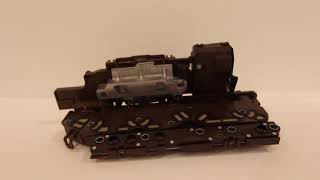
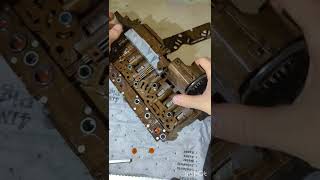
The GMT900 platform, which includes the 2007-2014 Yukon XL, has a well-documented history of this specific fault code pointing directly to the Transmission Control Module. While on other vehicles a P1621 code could be ambiguous, on this generation of Yukon, GM's own service bulletins (TSBs) guide technicians to suspect an internal TCM fault. For models equipped with the 6-speed 6L80 automatic transmission (common from 2009 onward), the TCM is integrated with the valve body into a single unit called the Transmission Electro-Hydraulic Control Module (TEHCM), located inside the transmission oil pan. 🎬 See a walkthrough of 6-speed TEHCM replacement basics This location makes it susceptible to heat and vibration, which are contributing factors to its failure.
Diagnostic Flowchart
Tap your situation to follow the diagnostic path that matches what you're seeing on this vehicle.
Symptoms You May Notice
- Check Engine Light is on
- Transmission may shift harshly or erratically
- Vehicle may enter "limp mode," stuck in a single gear (often 3rd gear for the 6L80)
- Possible intermittent no-start condition
- Gear position indicator (PRNDL) on the dash may be blank or incorrect
- Loss of communication with the TCM, potentially setting a U0101 code alongside P1621
- Replacing the entire transmission when only the internal control module (TEHCM) is faulty.
- Replacing the main engine computer (ECM/PCM) when the fault is in the separate Transmission Control Module (TCM). A forum user reported a dealer incorrectly replaced the PCM before the issue was traced to the TCM.
Most Likely Causes
- Internal Transmission Control Module (TCM) Failure 🔴 High Probability → Shop Transmission Assembly This is a known failure pattern for this platform, as documented by GM in Technical Service Bulletins #PIP4653E and #05-06-04-060A. For 6L80-equipped models, the TCM (as part of the TEHCM) is located inside the transmission pan, where it is exposed to significant heat cycles, a primary contributor to electronic failure.
How to confirm: After ruling out power/ground issues and fuses, the diagnosis is confirmed by the presence of code P1621, often with other internal module codes (like P0601, P0604, U0101). A professional scan tool will show the fault originating in the TCM.
Typical fix: Replace the Transmission Control Module (or the entire TEHCM assembly) and program the new module to the vehicle.
Est. part cost: $200-$500 - Low Battery Voltage or Charging System Issues ⚪ Low Probability → Shop Vehicle Battery
How to confirm: Test the battery voltage with a multimeter; it should be between 12.5 and 12.9 volts with the engine off. Check the alternator output while the vehicle is running (typically 13.7-14.7 volts). A weak battery can cause modules to store memory codes on startup.
Typical fix: Charge or replace the battery. Repair the charging system if necessary.
Est. part cost: $150-$300 - Poor Electrical Connection at the TCM ⚪ Low Probability Corrosion and vibration can affect connectors over time. A technician noted that excessive resistance in the main negative battery cable is a known cause of various electrical issues on these trucks. Key grounds for the TCM are shared with the ECM and are located on the engine block.
How to confirm: Visually inspect the main TCM fuse (Fuse #14 in the under-hood fuse box) and the TCM wiring harness and connector for any signs of corrosion, damage, or loose pins. Wiggle the connector while the vehicle is running to see if symptoms change.
Typical fix: Clean the connector pins and apply dielectric grease, or repair the damaged wiring harness. Replace blown fuses.
Est. part cost: $5-$50
Rare But Worth Checking
- Corrupted Memory from Aftermarket Programmer/Tuner:
Diagnosis Steps
- Verify the battery is fully charged and the charging system is working correctly. A low voltage supply can set spurious module codes.
- Check the TCM-related fuses in the under-hood fuse block (Fuse #14 and #19 are commonly associated with the TCM).
- Scan for all DTCs in all modules. Note if P1621 is accompanied by other internal module faults like P0601, P0604, or a U0101 communication code.
- Consult TSBs #PIP4653E and #05-06-04-060A, which confirm this code points to a TCM issue.
- Locate the Transmission Control Module (TCM). On models with the 4-speed 4L60-E/4L65E (2007-2008), it is an external module under the hood. On models with the 6-speed 6L80 (2009-2014), it is an internal part of the TEHCM, located inside the transmission oil pan.
- If external, inspect the TCM connector and wiring harness for any visible damage, corrosion, or loose connections. If internal, inspect the main 16-way transmission connector on the case.
- If the battery, fuses, and wiring (if accessible) are confirmed to be good, the fault is internal to the TCM/TEHCM.
- Replace the TCM/TEHCM. The new module must be programmed to the vehicle by a dealer or a qualified shop with the appropriate tools like GM's Service Programming System (SPS) via a J2534 device.
Parts You'll Likely Need
- Transmission Control Module (TCM/TEHCM)
(OEM #24256861 (Note: This is a common part number for the A50/T14 TCM used with Allison transmissions in HD trucks but is also cited in relation to other GM 6-speeds. Always verify the exact part number with your vehicle's VIN.))— This is the component that has failed its internal memory check, as confirmed by GM's own service bulletins for this specific code.
Trusted brands: ACDelco (OEM), Dorman (Remanufactured)
OEM price range: $350-$500
Aftermarket price range: $200-$400
Related Codes That Often Appear With This One
- P0700 — This is a generic code indicating the TCM has requested the Malfunction Indicator Lamp (MIL) be turned on. It's a gateway code that tells you to look for more specific codes within the TCM, such as P1621.
- U0101 — This code means "Lost Communication with TCM." It often appears with P1621 when the TCM is failing and intermittently dropping off the vehicle's communication network.
- P0601 — This code means "Internal Control Module Memory Check Sum Error." Both P1621 and P0601 point to an internal memory or processor fault within the same module, as noted in TSB #PIP4653E.
- P0604 — This code means "Internal Control Module Random Access Memory (RAM) Error." Like the others, it points to a critical internal failure of the control module.
Technical Service Bulletins (TSBs) & Recalls
- PIP4653E: Discusses DTCs including P1621 stored in the Transmission Control Module, indicating a module fault.
- 05-06-04-060A: Communicates information on control module DTCs like P1621 which point to internal module issues.
Platform-Specific Known Issues
- GM Technical Service Bulletin #PIP4653E directly states that DTC P1621 (along with P0601, P0603, P0604, or P062F) found in the Transmission Control Module indicates a fault with the module itself.
- GM Technical Service Bulletin #05-06-04-060A reinforces this, noting that P1621 is a control module diagnostic code that can appear in multiple modules but is commonly associated with internal faults.
- For models with the 6-speed 6L80 transmission, the TCM is integrated into the Transmission Electro-Hydraulic Control Module (TEHCM) inside the transmission pan. This is a very common failure point.
Mechanic-Grade Diagnostic Values
- 6L80 TEHCM Shift Solenoid Resistance — expected: 20-40 Ohms. Failure: A reading outside this range indicates a faulty solenoid within the TEHCM.
- 6L80 TEHCM Pressure Control Solenoid Resistance — expected: 3-8 Ohms. Failure: A reading outside this range points to a failure in the pressure control solenoid circuit inside the TEHCM.
- 6L80 TEHCM Pressure Switch Resistance (Closed) — expected: 0.7-1.9 Ohms. Failure: If the resistance does not fall within this range when the switch is closed, the TEHCM is likely bad.
- CAN Bus Network Integrity — expected: 60 Ohms. Failure: With the battery disconnected, measuring resistance across Pins 6 and 14 of the DLC should yield 60 Ohms. A different reading indicates a problem on the communication network.
Scan Tool Commands That Help
- GM Tech2 / GDS2 (via MDI or J2534): Service Programming System (SPS) — This function is required after installing a new or remanufactured TCM/TEHCM. It downloads the correct VIN-specific calibration from GM's servers and flashes it to the new module.
- High-End Scan Tool (Autel, Snap-on, etc.) or GDS2: Transmission Service Fast Learn — After programming a new TEHCM, the Fast Learn procedure must be performed while the vehicle is stationary. It allows the TCM to learn the clutch fill volumes and adaptive pressures, which is critical for proper shift quality.
- GM Tech2 / GDS2: View Captured Data / Freeze Frame — When P1621 is set, the module records the operating conditions at the time of the failure. Reviewing this data can provide context, such as whether the failure occurred when the vehicle was hot or during a specific gear shift.
Wiring & Ground Locations
- G101 — Located at the left front of the engine, lower block.. This is a primary ground point for the Engine Control Module (ECM) and the Transmission Control Module (TCM). A poor connection here can cause intermittent power loss or communication faults, potentially triggering memory codes.
- G103 — On the front of the passenger side (right) cylinder head.. This is another critical engine ground. On some diagrams, the main negative battery cable connects here, making it essential for the entire powertrain electrical system, including the TCM.
- G104 — On the left rear corner of the engine, mounted to the left cylinder head.. This ground strap, often running from the cylinder head to the firewall (G108), ensures the engine block has a solid ground reference to the chassis, which is vital for all engine-mounted modules like the TCM.
- Under-hood Fuse Block — On the driver's side of the engine bay.. Contains fuses critical for the TCM. Specifically, Fuse #14 (TCM-BATT) and Fuse #19 (TRANS IGN1) supply power to the module and should be checked before condemning the TCM.
- X184 (16-Way Connector) — On the side of the transmission case where the main vehicle harness connects.. This is the single point of connection for all power, ground, and communication lines to the internal TEHCM on 6L80 models. Corrosion or damaged pins here will directly cause TCM faults.
Real Owner Repair Stories
- Chevrolet Forum user 'treetop' (2002 Silverado (similar GMT800 platform, demonstrates the cause)) — Code P1621 appeared, clock, radio, and seat memory kept resetting.
❌ Tried (didn't work) Flashing the module back to the stock tune after the problem started.
✅ What actually fixed it The problem was caused by using a Bully Dog aftermarket programmer. The user concluded the programmer had corrupted the control module's memory, requiring module replacement. The advice given was to always flash back to stock before service and to ensure the programmer is correct for the vehicle.
OEM Part Supersession History
Varies by year (e.g., 24239647, 24249178)→Multiple revisions (e.g., 24256861, 24275873)— GM made several hardware and software revisions to the 6L80 TEHCM to address issues like pressure switch failures and to improve thermal tolerance.
Heads up: TEHCMs from different years or with different Tag IDs are not interchangeable. Installing the wrong TEHCM can result in a no-start condition, immediate limp mode, or programming failure. The correct part number must be verified by VIN.
Model Year Variations Within This Range
- 2007-2008: These models typically used the 4-speed 4L60-E or 4L65-E transmission, which has an external Transmission Control Module (TCM) located under the hood. Diagnosis involves checking the external module and its dedicated wiring harness.
- 2009-2014: These years predominantly used the 6-speed 6L80 transmission. On these models, the TCM is integrated into the Transmission Electro-Hydraulic Control Module (TEHCM) located inside the transmission oil pan. A P1621 code on these models almost always requires dropping the pan to replace the entire TEHCM assembly.
Helpful Videos


We Have This Part in Stock

The information in this article is provided for general reference and educational purposes only. Vehicle specifications, procedures, and part compatibility can vary by production date, trim level, and region. Always consult your vehicle's factory service manual and verify part numbers before purchasing or performing repairs. Safety-critical components such as airbags, seat belts, and braking systems should be installed by a qualified professional.
- Gmc YUKON XL:
- 🧭 Diagnostic Flowchart
- 🎬 Helpful Videos
- 🛍️ Shop This Part
- What's Unique About the 2007-2014 Gmc YUKON XL
- Symptoms You May Notice
- Most Likely Causes
- Rare But Worth Checking
- Diagnosis Steps
- Parts You'll Likely Need
- Related Codes That Often Appear With This One
- Technical Service Bulletins (TSBs) & Recalls
- Platform-Specific Known Issues
- Mechanic-Grade Diagnostic Values
- Scan Tool Commands That Help
- Wiring & Ground Locations
- Real Owner Repair Stories
- OEM Part Supersession History
- Model Year Variations Within This Range
- 🎟️ Get 5% Off