

P1621 on 2007-2009 Hummer H2: Control Module Memory Fault Causes and Fixes
On a 2007-2009 Hummer H2, code P1621 almost always indicates an internal memory failure in the Transmission Control Module (TCM). For 2008-2009 models, this is the TEHCM inside the transmission pan, a known high-failure part. This is not a DIY-friendly repair, as the module must be programmed after installation. Expect costs to range from $600 to over $1,300 for a professional replacement.
- P1621 on a 2007-2009 Hummer H2 is a serious code that points to an internal memory failure in a control module, most commonly the Transmission Control Module (TCM).
- Symptoms include a Check Engine Light, erratic shifting, and the transmission entering 'limp mode'.
- Before condemning the expensive TCM, always verify its power and ground circuits are functioning correctly, paying special attention to known H2 ground locations on the frame and under the dash.
- This is not a DIY repair. The replacement TCM must be professionally installed and programmed to the vehicle's VIN.
- For 2008-2009 models, the faulty part is the TEHCM, an assembly inside the transmission oil pan that is a known high-failure item due to heat exposure.
What's Unique About the 2007-2009 Hummer H2
The 2007-2009 H2 range spans a major powertrain update. The 2007 model uses a 6.0L V8 with a 4L65-E 4-speed transmission and an external TCM. The 2008-2009 models feature a 6.2L V8 with a 6L80 6-speed transmission, where the TCM is integrated into the valve body as a single unit called a TEHCM (Transmission Electro-Hydraulic Control Module), located inside the transmission oil pan. Despite the different hardware, both versions are susceptible to this internal module failure, as documented in TSBs that cover both configurations. The internal TEHCM in the 6L80 is a particularly well-documented failure point across the entire GM truck and SUV lineup from this era.
Diagnostic Flowchart
Tap your situation to follow the diagnostic path that matches what you're seeing on this vehicle.
Generation note: The 2007 H2 uses the 6.0L LQ4 V8 and 4L65-E 4-speed transmission with an external TCM. The 2008-2009 H2 was updated with the 6.2L L92 V8 and the 6L80 6-speed transmission, which uses an internal TEHCM. The P1621 code points to a failure in that specific module for both powertrain configurations, though the TEHCM in the 6L80 is known to be more failure-prone due to heat exposure inside the transmission.
Symptoms You May Notice
- Check Engine Light (Malfunction Indicator Lamp) is on
- Transmission may be stuck in one gear (limp mode)
- Harsh or erratic shifting
- Delayed engagement when shifting into Drive or Reverse
- Vehicle may not accelerate properly
- Potential no-start condition if the module fails to report Park/Neutral status
- Gear position indicator (PRNDL) on the dashboard may be blank or incorrect
- Replacing the entire transmission when only the control module is faulty.
- Replacing transmission solenoids or sensors when the code specifically points to a module processing error.
- Replacing the Powertrain Control Module (PCM) when the fault is in the separate TCM. On the GMT900 platform, TSBs specifically point to the TCM for this code.
Most Likely Causes
- Internal Transmission Control Module (TCM/TEHCM) Failure 🔴 High Probability → Shop Transmission Assembly As documented in GM TSBs PIP4653E and 05-06-04-060A, internal module failure is a known issue. For 2008-2009 models with the 6L80 transmission, the TEHCM is located inside the transmission pan, where constant heat cycles and vibration degrade electronic components, making this a very common failure. Aftermarket companies even offer remanufactured units with upgraded components to better resist heat.
How to confirm: After verifying all power and ground connections to the TCM are good, the diagnosis points to an internal module fault. A professional scan tool that can communicate with the TCM is required to confirm the code is stored in that specific module. If attempts to re-flash the module fail, it is condemned.
Typical fix: Replace the Transmission Control Module (or TEHCM assembly) and program it to the vehicle. For the 6L80, this involves dropping the transmission pan, replacing the unit, refilling with fluid, and performing the programming and a 'fast learn' adaptation procedure.
Est. part cost: $250-$700 - Poor Power or Ground Connection to TCM 🟡 Medium Probability Corrosion on wiring, loose connections at the module, or a failing fuse block can cause intermittent voltage drops, which can trigger memory fault codes. H2s are known to have grounding posts under the driver's side dash that can become loose or corroded, causing a wide range of electrical issues. On GMT900 platforms (which the 2008-2009 H2 is based on), grounds G103 and G104 are also critical for module function.
How to confirm: Perform a voltage drop test on the main power and ground wires at the TCM connector. A reading of more than 0.2-0.5 volts indicates excessive resistance in the circuit that needs to be repaired. Visually inspect known ground points on the frame and behind the driver's side dash for tightness and corrosion.
Typical fix: Clean or repair the corroded ground connection, fix the damaged wire, or replace the faulty connector.
Est. part cost: $5-$50 - Aftermarket Tuning/Programming Issues ⚪ Low Probability If an aftermarket programmer was used to change the vehicle's tune, a corrupted file or improper installation can cause the module to fail its internal checksum test.
How to confirm: The code appears immediately after programming the vehicle. The vehicle may also lose other memory functions like clock or seat positions.
Typical fix: Attempt to flash the vehicle back to the stock factory tune. If this resolves the issue, the aftermarket tune was the cause. In some cases, the module may be permanently damaged ('bricked') and require replacement.
Est. part cost: $0
Diagnosis Steps
- Scan the vehicle for codes and confirm that P1621 is present. Note which module stored the code (it will likely be the TCM).
- Check for any of the commonly associated P06xx, P0700, or U0101 codes.
- Inspect the battery and charging system. A weak battery or alternator can cause spurious module codes. Perform a load test on the battery; voltage should not drop below 10V during cranking and should be 13.7-14.7V when running.
- Visually inspect the TCM wiring harness and connectors for any signs of damage, corrosion, or loose pins. For 2008-2009 models, this includes the main round twist-lock connector on the transmission case.
- Locate and inspect key ground points. On the H2, check the ground posts under the driver's side dash and the main frame grounds (G100, G101, G103, G104) for corrosion and tightness.
- Using a multimeter, perform a voltage drop test on the power and ground circuits for the TCM. Ensure the module is receiving clean, stable power (approx. 12V) and has a solid ground connection.
- If an aftermarket programmer was used, flash the vehicle back to its stock tune and see if the code clears.
- If all wiring and power/ground circuits test good, the TCM/TEHCM itself is the most likely cause of the failure.
- Confirm the diagnosis with a professional shop before ordering a replacement, as the new module will require programming. 🎬 Watch: How to program a new GM TCM using SPS2.
Parts You'll Likely Need
- Transmission Control Module (TCM/TEHCM)
(OEM #24256861 (Common for 6L80 TEHCM, but always verify with VIN))— This is the most common point of failure for a P1621 code on this platform, as confirmed by GM TSBs and extensive owner reports. It contains the memory that fails the self-check.
Trusted brands: ACDelco (OEM), Dorman (offers remanufactured units with upgraded components), Sonnax (offers remanufactured units)
OEM price range: $450-$700
Aftermarket price range: $250-$500
Related Codes That Often Appear With This One
- P0700 — This is a generic code that the TCM sends to the main engine computer (ECM) to request the Check Engine Light be turned on. It indicates a fault has been stored in the TCM and will almost always accompany a specific TCM code like P1621.
- P0601 — This code means 'Internal Control Module Memory Check Sum Error' and is often listed with P1621 in GM service bulletins, strongly indicating a critical internal module failure.
- P0603 — This code for 'Internal Control Module Keep Alive Memory (KAM) Error' also points to a memory-related issue within a control module.
- P0604 — This code for 'Internal Control Module Random Access Memory (RAM) Error' is another fault that points directly to an internal processing failure in the module.
- U0101 — This code means 'Lost Communication with TCM'. It is often set alongside P1621 when the TCM fails internally and stops communicating on the vehicle's data network.
Technical Service Bulletins (TSBs) & Recalls
- PIP4653E: Discusses DTCs P0601, P0603, P0604, P062F or P1621 stored in the Transmission Control Module (TCM), indicating an internal fault.
- 05-06-04-060A: Communicates information on control module DTCs including P1621 which can be shared in multiple modules.
Platform-Specific Known Issues
- Per TSB #PIP4653E, DTC P1621 is often found stored in the Transmission Control Module, sometimes alongside codes P0601, P0603, P0604, or P062F, indicating an internal module fault that requires replacement.
- TSB #05-06-04-060A notes that P1621 is one of several control module codes that can be shared across multiple modules, but diagnosis on the H2 frequently points to the TCM.
- For the 2008-2009 H2 with the 6L80 transmission, the TEHCM (TCM) is located inside the transmission, mounted to the valve body. This design makes it prone to failure from heat and vibration, a widely documented issue on GMT900 platform vehicles.
Mechanic-Grade Diagnostic Values
- Battery Voltage (Engine Off) — expected: 12.4V or higher. Failure: Voltage below 12.4V may indicate a weak battery that can cause spurious module codes.
- Charging System Voltage (Engine Running) — expected: 13.7V - 14.7V. Failure: Voltage outside this range indicates a problem with the alternator or charging system, which can lead to module errors.
- Transmission Fluid Temperature for Fast Learn — expected: 160°F - 230°F (71°C - 110°C). Failure: Attempting the procedure outside this temperature range may cause it to fail or result in poor shift quality.
Scan Tool Commands That Help
- GM Tech2 / GDS2: Replace and Reprogram ECU / Module Setup — This is a mandatory step after installing a new TCM/TEHCM. It flashes the module with the vehicle's specific VIN and software calibration, without which the vehicle will not operate correctly.
- GM Tech2 / GDS2: Service Fast Learn Adapts — After programming a new TEHCM for the 6L80 transmission, this procedure must be performed. It allows the module to learn the hydraulic characteristics and clutch fill volumes to ensure smooth shifting.
- GM Tech2 / GDS2: Solenoid Automated Cleaning Process — If shift quality issues or solenoid performance codes are present alongside P1621, this function can be attempted before replacing the TEHCM to dislodge potential debris from the solenoids.
Wiring & Ground Locations
- TCM/TEHCM Location (2008-2009) — Inside the transmission oil pan, mounted to the valve body.. This internal location subjects the module to extreme heat and vibration, a primary cause of the electronic failure that leads to code P1621.
- ECM Location (2008) — Below the battery and underhood fuse block at the left side of the engine compartment.. While less common, an ECM failure can also set P1621. Knowing its location is necessary for inspection and testing of its connections.
- Dash Ground Posts — A vertical row of five ground posts located under the driver's side dash, against the left side chassis wall.. These are major ground points for many interior modules. A loose nut here is a known cause of various unexplained electrical problems on the H2.
- G101 / G106 — G101 is on the lower front of the engine block; it jumpers to G106 on the front center of the frame cross rail under the crank pulley.. According to wiring documents for similar GM platforms, G101 is a ground for the Engine Control Module and Transmission Control Module.
- G103 / G104 — On GMT900 trucks, G103 is on the front of the passenger side cylinder head, and G104 is on the rear of the driver's side cylinder head.. These grounds are critical for the ECM, TCM, and various sensors. Corrosion or a loose connection at these points is a common cause of module communication and performance issues.
Real Owner Repair Stories
- eBay Feedback Review (2009 Chevy 2500 LTZ (LMM Duramax, uses similar Allison TCM logic)) — Hard shifting, going in and out of limp mode, StabiliTrak/traction control lights, park assist off, power door locks not opening when put in park.
❌ Tried (didn't work) Not specified, but symptoms were severe enough to make the truck a 'lawn ornament'.
✅ What actually fixed it Replacing the TCM with a new, pre-programmed unit. The truck was reported to drive 'like Brand New Again' immediately after installation.
OEM Part Supersession History
24256861→19435614— This is a common supersession for the 6L80 TEHCM. The new part number often includes hardware or software revisions to improve reliability.
Heads up: GM TEHCMs are not interchangeable between different hardware generations (e.g., Gen 1 vs. Gen 2). The module must be correct for the vehicle's year and platform, then programmed with the specific VIN.
Model Year Variations Within This Range
- 2007: Uses a 4L65-E 4-speed transmission with an external TCM located on top of the left side of the dash, above the instrument panel fuse block. Diagnosis focuses on this external module and its wiring.
- 2008-2009: Uses a 6L80 6-speed transmission with the TCM integrated into the TEHCM, located inside the transmission oil pan. This makes replacement significantly more labor-intensive and prone to heat-related failure.
Helpful Videos
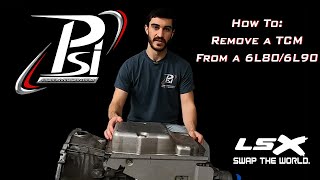
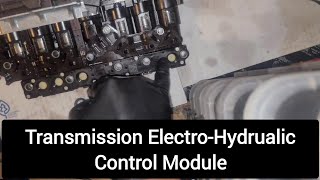
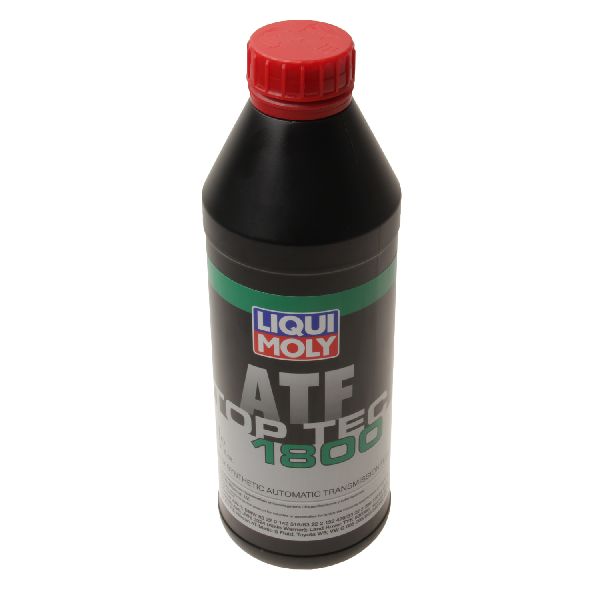
We Have This Part in Stock


The information in this article is provided for general reference and educational purposes only. Vehicle specifications, procedures, and part compatibility can vary by production date, trim level, and region. Always consult your vehicle's factory service manual and verify part numbers before purchasing or performing repairs. Safety-critical components such as airbags, seat belts, and braking systems should be installed by a qualified professional.
- Hummer H2:
- 🧭 Diagnostic Flowchart
- 🎬 Helpful Videos
- 🛍️ Shop This Part
- What's Unique About the 2007-2009 Hummer H2
- Symptoms You May Notice
- Most Likely Causes
- Diagnosis Steps
- Parts You'll Likely Need
- Related Codes That Often Appear With This One
- Technical Service Bulletins (TSBs) & Recalls
- Platform-Specific Known Issues
- Mechanic-Grade Diagnostic Values
- Scan Tool Commands That Help
- Wiring & Ground Locations
- Real Owner Repair Stories
- OEM Part Supersession History
- Model Year Variations Within This Range
- 🎟️ Get 5% Off