

P1621 on 2006-2010 Hummer H3: Control Module Memory Performance Causes and Fixes
On a 2006-2010 Hummer H3, code P1621 is most often caused by electrical issues like a weak battery, corroded battery terminals, or a bad relay in the fuse box. Before suspecting an expensive computer failure, thoroughly check the battery and all related connections. A new battery costs $150-$250, while cleaning connections is nearly free. Replacing the notoriously faulty OEM battery terminals with quality aftermarket ones is a highly recommended preventative measure.
- P1621 on an H3 is more likely an electrical problem than a failed computer.
- Start your diagnosis with the cheapest and easiest fixes: check the battery, clean the battery terminals, and inspect the PCM relay in the fuse box for corrosion.
- Do not replace the expensive Powertrain Control Module (PCM) until all power, ground, and wiring connections have been proven to be in perfect condition.
- If the vehicle enters 'Reduced Engine Power' mode, carefully inspect the wiring harness for any signs of rubbing or chafing against the engine.
- Replacing a PCM is not a DIY job for most people, as it requires professional programming tools to match the new module to your vehicle's VIN.
What's Unique About the 2006-2010 Hummer H3
While on many GM trucks of this era P1621 points directly to a failed Transmission Control Module (TCM), the Hummer H3 platform is more prone to underlying electrical issues that can trigger this code in the Powertrain Control Module (PCM). Owners and mechanics on forums like HummerForums.com and Hummer4x4Offroad.com frequently report problems with the original battery terminals, which are described as being made of cheap, crushable metal that fails to maintain a tight connection. This intermittent voltage loss, along with corroded fuse box relays and chafed wiring harnesses, can mimic a PCM failure. Therefore, diagnosis on an H3 should heavily focus on the electrical system's health before condemning any control module.
Symptoms You May Notice
- Check Engine Light is on
- Vehicle enters 'Reduced Engine Power' mode
- Engine stalling or running rough
- Intermittent no-start condition
- Unstable idle
- Traction control or stability control lights may illuminate
- Security light flashing (related to Passlock issue)
- Radio or clock resetting intermittently
- Replacing the PCM without first thoroughly checking the battery, terminals, grounds, and relays.
- Replacing the throttle body or accelerator pedal position sensor. While these parts cause similar 'Reduced Power Mode' symptoms, they typically set different codes (e.g., P2135, P1516).
Most Likely Causes
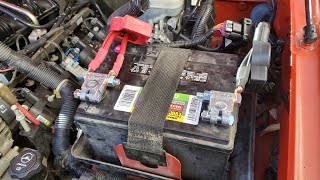
- Low Battery Voltage or Poor Battery Connections 🔴 High Probability → Shop Vehicle Battery The OEM battery terminal connectors on the H3 are a known weak point. They are made of a soft metal that easily deforms or crushes, making it impossible to maintain a tight, reliable connection, leading to intermittent voltage drops. This is a widely discussed failure point 🎬 Watch: How to replace those weak factory battery connectors. on owner forums.
How to confirm: Test the battery voltage with a multimeter; it should be above 12.4V with the engine off. Perform a load test on the battery. Visually inspect the battery terminals for corrosion or looseness. Attempt to wiggle the connectors by hand; any movement indicates a poor connection.
Typical fix: Clean the battery terminals and cable ends thoroughly. If the OEM connectors are corroded or won't tighten properly, replace them with high-quality aftermarket terminals (e.g., Stinger, military-style lead clamps). Replace the battery if it fails a load test.
Est. part cost: $15-$50 for terminals, $150-$250 for a new battery - Corroded Underhood Fuse Box Relay 🟡 Medium Probability → Shop Fuse Box The design of the underhood fuse box can allow moisture intrusion over time, leading to corrosion on the pins of critical relays, such as the PCM control relay. This interrupts power and can cause memory faults.
How to confirm: In the underhood fuse box, locate the PCM/Powertrain relay (typically position R77 or R81, check your cover diagram). Unplug this relay and inspect the male pins and the female sockets for green or white corrosion.
Typical fix: Clean the corroded pins and sockets with an electrical contact cleaner and a small brush. If corrosion is severe, replace the affected relay (ACDelco P/N: 15328866 is a common multi-purpose relay used). Apply dielectric grease to the new relay's pins to prevent future moisture damage.
Est. part cost: $10-$30 for a new relay - Chafed or Damaged Wiring Harness 🟡 Medium Probability Engine vibration and heat can cause wiring harnesses to rub against engine components, like the valve cover or other brackets, eventually wearing through the insulation and causing a short.
How to confirm: With the engine running, carefully wiggle wiring harnesses around the engine bay, particularly where they cross over the valve cover or are secured in tight spaces. Listen for any change in the engine's running condition. Visually inspect harnesses for signs of rubbing, exposed wires, or melted loom.
Typical fix: Repair the damaged section of wire using a solder and heat-shrink tubing. Secure the harness away from the component it was rubbing against using zip ties or new wire loom to prevent a recurrence.
Est. part cost: $5-$20 for repair materials - Internal Powertrain Control Module (PCM) Failure ⚪ Low Probability → Shop Engine Control Module (ECM)
How to confirm: This is a diagnosis of exclusion. If the battery, charging system, all power/ground connections, and wiring to the PCM have been verified as good, the module itself is the likely culprit. A professional scan tool is needed to confirm communication and check for other internal fault codes.
Typical fix: The PCM must be replaced and programmed to the vehicle's VIN using specialized equipment. This is typically a job for a dealership or a qualified repair shop. Some owners purchase used PCMs and send them to specialty tuners for programming.
Est. part cost: $200-$500 for a remanufactured PCM
Rare But Worth Checking
- Internal Transmission Control Module (TCM) Failure: → Shop Transmission Assembly While P1621 is often a TCM code on other GM trucks, it is considered a less common cause on the H3. However, if the vehicle is also experiencing erratic shifting or has a U0101 code (Lost Communication with TCM), the TCM should be investigated.
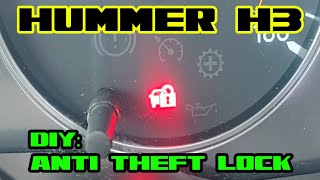
- Failing GM Passlock Security System: The H3 uses the GM Passlock system, which has a sensor in the ignition lock cylinder that is prone to failure. A failing sensor can cause an intermittent no-start condition with a flashing security light, which can be confused with a PCM-related no-start. While it doesn't typically set P1621 directly, the electrical chaos can sometimes be related. Some owners opt to have the Passlock feature programmed out of the PCM entirely.
Diagnosis Steps
- Connect an OBD-II scanner to confirm the P1621 code and check for any other stored codes.
- Test the battery. Ensure it is fully charged (above 12.4V) and passes a load test. H3s are known to be sensitive to voltage fluctuations.
- Inspect the battery terminals. Remove them and clean both the terminals and the battery posts thoroughly. Replace the terminals if they are the original OEM style, as they are a known failure point.
- Inspect the main engine and chassis ground connections for tightness and corrosion. A notable one to check is the ground strap from the engine to the frame.
- Open the underhood fuse box. Remove the PCM/Powertrain relay (position R77 or R81) and inspect its pins and socket for any signs of green or white corrosion. Clean as needed or replace the relay.
- Visually inspect the main engine wiring harness for any signs of chafing, especially where it runs over the top of the engine or near sharp metal brackets.
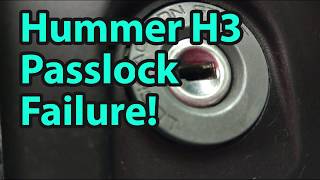
- If a no-start condition with a flashing security light is present, investigate the Passlock system. Try the '10-minute relearn' procedure or check the ignition cylinder wiring. 🎬 Watch: A quick 5-second fix for Passlock no-start issues.
- If all the above steps do not resolve the issue, use an advanced scan tool to determine which module (PCM or TCM) is storing the P1621 code.
- Perform a voltage drop test on the power and ground circuits for the identified module to ensure it is receiving stable power before condemning it.
- If all wiring and power/ground tests pass, the module itself is the likely cause and will need to be replaced and programmed.
Parts You'll Likely Need
- Battery Terminals — The original GM battery terminals are a known failure point on the H3, causing intermittent voltage issues that can trigger a false P1621 code.
Trusted brands: Stinger, Deka, Military Style Lead Terminals
OEM price range: $20-$40
Aftermarket price range: $15-$50 - Powertrain Control Module Relay
(OEM #ACDelco 15328866 (also GM 19116057, Delphi 15328866))— These relays in the underhood fuse box are susceptible to corrosion, which can interrupt power to the PCM and cause memory faults. This is a common multi-purpose relay used across many GM vehicles.
Related Codes That Often Appear With This One
- P0601 — This code means 'Internal Control Module Memory Check Sum Error'. Seeing it with P1621 strongly 🎬 See this walkthrough on fixing P0601 and reduced power mode. confirms that the control module has an internal fault and likely needs replacement.
- U0100 — This means 'Lost Communication With ECM/PCM'. If the PCM has an internal P1621 fault, it may stop communicating on the vehicle's data network, causing this code to be set in other modules.
- U0101 — This means 'Lost Communication with TCM'. This code points towards a problem with the Transmission Control Module or its wiring, which can sometimes be related to P1621.
Technical Service Bulletins (TSBs) & Recalls
- GM TSB 05-06-04-060A: Notes that P1621 is one of several codes related to internal control module faults that can appear in multiple different modules. Manufacturer TSB Bulletin #05-06-04-060A specifically communicates information to technicians regarding control module Diagnostic Trouble Codes (DTCs) including P1621, which can be shared across multiple modules.
Platform-Specific Known Issues
- Corrosion in the underhood fuse box, specifically affecting the PCM control relay in slot R77 or R81.
- Failure of the OEM wedge-style battery terminals, leading to widespread, difficult-to-diagnose electrical problems.
- Intermittent no-start conditions caused by the GM Passlock anti-theft system, which can be confused for a PCM failure.
Mechanic-Grade Diagnostic Values
- PCM Power/Ground Circuit Voltage Drop — expected: Less than 0.5V. Failure: A reading greater than 0.5V indicates excessive resistance in the power feed or ground circuit, which can cause the PCM to malfunction and set memory codes.
- Battery Voltage (Key ON, Engine OFF) — expected: 12.4V or higher. Failure: Voltage below 12.4V indicates a discharged or weak battery that can cause spurious module codes, including P1621, during startup.
- Charging System Voltage (Engine Running) — expected: 13.7V - 14.7V. Failure: Voltage outside this range points to a faulty alternator or Generator Battery Control Module, leading to unstable power supply for all vehicle modules.
- PCM Ignition 1 Voltage (at PCM Connector) — expected: Battery Positive Voltage (B+). Failure: Low or no voltage at the Ignition 1 Voltage pin (e.g., C1 Pin 13 or 19 on some models) indicates a problem in the circuit from the ignition switch or fuse box, starving the PCM of necessary power.
Scan Tool Commands That Help
- GM Tech 2 / GDS2 or high-end aftermarket: Crankshaft Position System Variation Learn (CASE Relearn) — This procedure is mandatory after replacing the Powertrain Control Module (PCM). It synchronizes the new PCM with the crankshaft position sensor's signal. Failure to perform this can result in misfire codes and poor engine performance.
- GM Tech 2 / GDS2: BCM/PCM Programming (SPS - Service Programming System) — When installing a new or used PCM or Body Control Module (BCM), it must be programmed with the vehicle's specific VIN and software calibration. The vehicle will not start or run correctly without this step.
- N/A - Manual Procedure: Security Relearn Procedure (Passlock) — After replacing a PCM or BCM, the Passlock anti-theft system may need to be relearned to recognize the new module. This often involves a 10-minute or 30-minute key-on procedure without a scan tool.
Wiring & Ground Locations
- G100 — In the engine compartment, mounted to the left front inner fender, behind the battery.. This is a primary chassis ground. Corrosion or looseness here can affect multiple systems and cause fluctuating voltage readings.
- G102 / G103 / G104 / G110 — Group of grounds located on the lower left side of the engine block, some near the starter.. These are the main engine block grounds. They provide the primary ground path for the PCM and many engine sensors. A poor connection here is a direct cause of erratic engine sensor data and can trigger PCM faults.
- G105 — On the left inner front wheel well, behind the battery.. Another critical chassis ground point near the battery and underhood fuse block.
- G120 — On the left lower inner wheel well, near the engine mount.. This ground connects the engine/transmission area to the chassis, and is critical for ensuring all modules have a stable ground reference.
- PCM Power Feed Wire — Runs within the main engine harness from the underhood fuse block to the PCM, often routed in the transmission tunnel area.. This harness is a known area for chafing against the transmission or engine block, which can cause an intermittent short-to-ground on the PCM's power supply, directly causing memory and performance codes like P1621.
Real Owner Repair Stories
- Hummer Forums user 'brinks' (2007 Hummer H3) — Reduced power mode, traction control issues, code P2101 (TAC related).
❌ Tried (didn't work) Cleaning the MAF sensor, Checking air filter, Checking vacuum hoses, Cleaning the throttle body
✅ What actually fixed it A shop found the low voltage power wire from the fuse box to the PCM had a short to ground within the main wiring harness. Instead of finding the exact chafe, they ran a new wire from the fuse box to the computer, soldering it in place, which resolved all issues. - YouTube channel 'H3 Humper' (2006 Hummer H3 with a 3.7L engine swapped from a 2008 model.) — Intermittent crank-no-start on the first try, but would start immediately on the second try.
❌ Tried (didn't work) Verifying fuel, air, spark, compression, and mechanical timing.
✅ What actually fixed it The previous owner had incorrectly installed the required intake camshaft position sensor for the 2006 computer. The sensor's position and air gap were wrong for the 3.7L head. The fix was to elongate the sensor mounting hole to correct its orientation and set the proper air gap (0.045"), sealing it with RTV. After a CASE relearn, the issue was solved. - Hummer Forums user 'finny' (Hummer H3) — Electrical issues, BCM problems, car immobilized after failed BCM replacement attempt by a local dealership.
❌ Tried (didn't work) Initial BCM replacement by a non-specialist dealer failed and bricked the vehicle.
✅ What actually fixed it The owner, an engineer, had to use the dealer's GM Tech 2 equipment himself to properly program the new BCM and get the vehicle to start. This highlights that even with the right part, programming by an experienced technician is critical.
"I Checked Everything" — The Actual Cause
- In a case with related electrical symptoms (P2101, reduced power), standard part swaps and cleaning did not work. The actual cause was a short-to-ground in a power wire deep within the main wiring harness running from the fuse box to the PCM. This type of fault is invisible to visual inspection and requires point-to-point wiring tests to find.
When the Usual Fixes Don't Work
- While P1621 is a module memory code, a significant number of confirmed fixes do not involve replacing the module itself. The most common resolutions reported by owners are correcting fundamental electrical issues: replacing faulty OEM battery terminals, cleaning corroded engine/chassis grounds (especially G102/G103 on the engine block), and replacing corroded relays in the underhood fuse box. One owner fixed a similar set of symptoms by finding and repairing a shorted power wire in the harness between the fuse box and the PCM. These cases strongly suggest that before condemning the expensive PCM, a thorough voltage drop test of its power and ground circuits is the most critical diagnostic step.
OEM Part Supersession History
12607096, 12603530, etc.→19210737 (and others)— Standard part evolution and software updates for the E67 PCM.
Heads up: The E67 PCM used in 2009+ V8 models has different internal tables for injector flow rates compared to pre-2009 models. Swapping PCMs between these ranges without proper tuning will cause running issues.15802491→25830695 (example for 2008)— Part revisions for the Body Control Module (BCM).
Heads up: BCMs are specific to year ranges (e.g., 2006-2008 vs 2009-2010). Using a BCM from the wrong year range will cause features to not work and may prevent the vehicle from starting. Part number 20987863 is listed for 2009+ models.
Model Year Variations Within This Range
- 2006 vs 2007-2010: The standard engine was a 3.5L I5 in 2006, which was replaced by a 3.7L I5 from 2007 onward. This change involves different engine components and potentially different PCM software calibrations.
- 2008-2010: A 5.3L V8 engine option was introduced in 2008. V8 models use a different variant of the E67 PCM compared to the I5 models and have different wiring harnesses and ground locations.
- 2006-2010: A recall was issued for the HVAC blower motor connector module, which could overheat across all model years. This points to a persistent vulnerability in the vehicle's electrical system that could contribute to the unstable voltage conditions that trigger P1621.
Diagnostic Flowchart
Used vs. New Parts: Buying Guide for This Vehicle
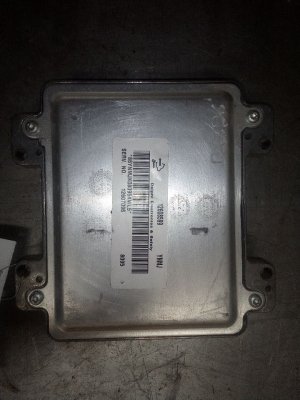
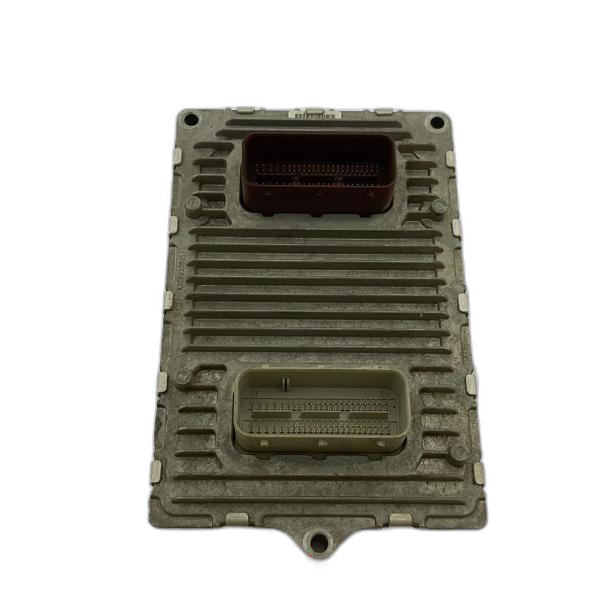
When a used part is the smart pick: A used PCM or BCM from a junkyard is a viable, cost-effective option, as these modules are generally robust. The key is that the part MUST be reprogrammed for your vehicle's VIN. A used underhood fuse box or wiring harness is also a good choice if the original is heavily corroded or damaged.
Donor-vehicle mileage cap: roughly under 150000 miles for the part to have meaningful remaining life.
What to inspect on the donor part:
- For PCMs/BCMs, ensure there is no physical damage, bent pins, or signs of water intrusion on the case or connectors.
- Check the donor vehicle's history if possible to avoid modules from flood or fire-damaged cars.
- For a fuse box, open it and inspect for any green/white corrosion on the bus bars or relay sockets. A clean fuse box is a much better starting point.
- When buying a used part online, purchase from a seller who offers a warranty and guarantees the module is programmable.
OEM-only on this vehicle (don't cheap out):
- Powertrain Control Module (PCM)
- Body Control Module (BCM)
Aftermarket brands forum-validated for this vehicle:
- For battery terminals, brands like Stinger, Deka, or generic 'military-style' lead clamps are highly recommended by owners over the OEM design.
- For relays, ACDelco (OEM) or Standard Motor Products (SMP) are reliable choices.
Brands owners have reported issues with on this vehicle:
- Avoid no-name, unbranded electronic modules from online marketplaces. While cheaper, they have a high failure rate and can often not be programmed correctly, leading to more diagnostic time and expense.
Real Owner Stories
Aggregated from forums and TSBs cited above. Mileages and costs reflect what owners reported in those sources.
2006-2010 Hummer H3
Symptoms: A host of 'unrelated gremlins' caused by voltage variations.
What fixed it: Replacing the stock battery terminals. The source states this is the 'first thing EVERY H3 owner should replace'.
Source hint: Multiple users on HummerForums.com as cited in the article's common causes.
2006-2010 Hummer H3
Symptoms: Persistent 'Reduced Power' issues that other attempted fixes did not solve.
What fixed it: The owner added a new, dedicated ground wire directly from the PCM's metal case to a bolt on the firewall, correcting a suspected insufficient factory ground path.
Source hint: HummerForums: Replaced throttle position sensor (Page 3)
2006-2010 Hummer H3
Symptoms: Classic H3 electrical gremlins like instrument cluster dials dying and lights flickering.
What fixed it: The forum thread confirms that replacing the OEM battery terminals is the common solution for these widespread GM electrical problems.
Source hint: Hummer4x4Offroad: Weird electrical issues again
2006-2010 Hummer H3
Symptoms: A failing Passlock ignition cylinder was causing no-start conditions.
What fixed it: The owner had the Passlock system permanently disabled via a custom PCM tune from a third-party service.
Source hint: Hummer4x4Offroad: Passkey can be defeated!
Related OBD-II Codes
Frequently Asked Questions
I keep hearing about bad battery terminals on the H3. Could this really cause a P1621 code and put my truck in 'Reduced Power' mode?
My security light is flashing along with the check engine light. Is this related to the P1621 code?
Where is the PCM relay located on my H3? I want to check it for corrosion.
Is there an official GM Technical Service Bulletin (TSB) for code P1621?
What kind of replacement battery terminals are recommended for the Hummer H3?
Besides the battery and relays, what else is a common cause for P1621 on an H3?
Helpful Videos
Used OEM Parts in Stock
New Aftermarket Parts Available

The information in this article is provided for general reference and educational purposes only. Vehicle specifications, procedures, and part compatibility can vary by production date, trim level, and region. Always consult your vehicle's factory service manual and verify part numbers before purchasing or performing repairs. Safety-critical components such as airbags, seat belts, and braking systems should be installed by a qualified professional.
- Hummer H3:
- 🧭 Diagnostic Flowchart
- 🎬 Helpful Videos
- 🛍️ Shop This Part
- What's Unique About the 2006-2010 Hummer H3
- Symptoms You May Notice
- Most Likely Causes
- Rare But Worth Checking
- Diagnosis Steps
- Parts You'll Likely Need
- Related Codes That Often Appear With This One
- Technical Service Bulletins (TSBs) & Recalls
- Platform-Specific Known Issues
- Mechanic-Grade Diagnostic Values
- Scan Tool Commands That Help
- Wiring & Ground Locations
- Real Owner Repair Stories
- "I Checked Everything" — The Actual Cause
- When the Usual Fixes Don't Work
- OEM Part Supersession History
- Model Year Variations Within This Range
- Used vs. New Parts: Buying Guide for This Vehicle
- Real Owner Stories
- 2006-2010 Hummer H3
- 2006-2010 Hummer H3
- 2006-2010 Hummer H3
- 2006-2010 Hummer H3
- Related OBD-II Codes
- Frequently Asked Questions
- 🎟️ Get 5% Off