

P1621 on 2005-2011 Hyundai Accent: A/C Relay, Fuel Cut, or Immobilizer Fault Guide
On a 2005-2011 Hyundai Accent, P1621 most often indicates a fault with the A/C compressor relay circuit, causing the air conditioning to fail. The easiest fix is swapping the A/C relay in the under-hood fuse box, which costs about $10-$25 for the part and is a 5-minute DIY job.
- P1621 on a 2005-2011 Accent almost always means your A/C has an electrical problem, not a major engine issue.
- The most likely culprit is a bad A/C relay (OEM Part # 95224-2D000) in the fuse box under the hood.
- Before buying any parts, try swapping the A/C relay with the horn relay to see if the problem moves. This is a free and effective diagnostic step.
What's Unique About the 2005-2011 Hyundai Accent
Unlike many other manufacturers where P1621 points to a complex anti-theft or module memory issue, on the Hyundai Accent (both the LC and MC generations), the code is most frequently tied to the simple A/C relay circuit. This is a straightforward electrical fault rather than a sophisticated module communication problem. While other definitions exist in generic databases, owner experiences and vehicle-specific repair data for the Accent consistently point to the A/C system. If your A/C stops working when this code appears, you can be reasonably confident it's not an immobilizer or fuel system crisis. The immobilizer-related fault on these cars typically presents with a flashing security light on the dash and a crank-no-start condition, which are not primary symptoms of this code on this platform.
Generation note: This year range covers two generations of the Hyundai Accent: the second generation (LC, 2005-2006) and the third generation (MC, 2006-2011). The most likely cause, a faulty A/C relay circuit, is a common issue for both generations. The A/C relay is located in the under-hood fuse box on both versions, often labeled simply "A/C".
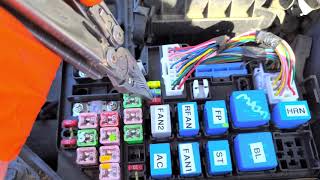
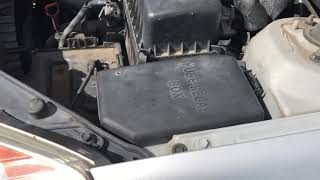
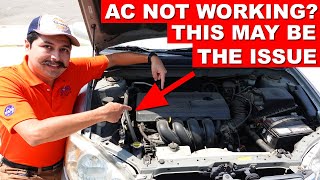
🎬 See exactly where the A/C fuse and relay are located.Symptoms You May Notice
- Air conditioning does not get cold or the compressor clutch does not engage.
- Check Engine Light is illuminated.
- No audible 'click' from the A/C compressor clutch engaging when the A/C button is pressed.
- In the rare case the code relates to the immobilizer, the engine may crank but fail to start, and a security warning light may flash on the dashboard.
- Replacing the A/C compressor: People may assume the compressor is bad when the actual problem is just a cheap relay or fuse preventing it from getting power.
- Unnecessarily recharging the A/C system: If the problem is purely electrical (bad relay), adding more refrigerant will not solve the issue and is a waste of money.
- Confusing it with an immobilizer issue: Generic code definitions can lead a technician down the wrong path, suspecting a complex anti-theft problem when the cause is a simple A/C component.
Most Likely Causes
- Faulty A/C Compressor Relay 🔴 High Probability → Shop A/C Compressor Relays are electro-mechanical switches that wear out over time from repeated use and heat cycles in the engine bay. The contacts inside can burn or fail, preventing power from reaching the compressor clutch.
How to confirm: Swap the A/C relay with an identical relay from a non-critical circuit (like the horn relay) in the fuse box. If the A/C starts working and the horn stops working, the relay is bad. The relay is located in the under-hood fuse box on the driver's side.
Typical fix: Replace the faulty relay with a new one. The OEM part number is often 95224-2D000.
Est. part cost: $10-$25 - Blown A/C Fuse 🟡 Medium Probability An electrical short or a failing compressor clutch coil can draw excess current, blowing the protective fuse.
How to confirm: Visually inspect the A/C fuse (typically a 10A fuse in the under-hood fuse box). Check for a broken filament inside the fuse. 🎬 Watch: Troubleshooting the A/C relay and fuses on an Accent.
Typical fix: Replace the blown fuse. If it blows again immediately, there is an underlying short circuit that needs to be diagnosed.
Est. part cost: $1-$5 - Wiring Harness Damage ⚪ Low Probability Wires can become corroded, frayed, or shorted due to vibration, heat, or moisture, particularly at the connector for the A/C relay or the compressor clutch.
How to confirm: Visually inspect the wiring leading to the A/C relay socket and the A/C compressor. Check for continuity and shorts using a multimeter. Pay close attention to the single-wire connector at the A/C compressor itself.
Typical fix: Repair or replace the damaged section of the wiring harness and/or connector.
Est. part cost: $5-$50
Rare But Worth Checking
- Faulty Engine Control Module (ECM): → Shop Engine Control Module (ECM) This is very rare. The ECM's internal driver for the A/C relay can fail. This should only be considered after all other possibilities (relay, fuse, wiring) have been exhaustively ruled out.
- Low Refrigerant Pressure: While not a direct cause of P1621, a low refrigerant charge will cause the A/C pressure switch to prevent the ECM from commanding the A/C relay on in the first place. This can sometimes be misdiagnosed. If the relay and fuse are good, it's worth checking system pressure before chasing complex electrical faults.
Diagnosis Steps
- Verify the symptom: Confirm that the Check Engine Light is on and the A/C is not blowing cold air.
- Scan the vehicle: Use an OBD-II scanner to confirm P1621 is the stored code.
- Inspect the A/C Fuse: Open the under-hood fuse box on the driver's side. Locate and inspect the 10A fuse labeled for the A/C. Replace if blown.
- Test the A/C Relay: In the same fuse box, locate the A/C relay (often a black, square relay). Swap it with the horn relay (which should be identical and located nearby). Test if the A/C now works and the horn does not. If so, the original A/C relay is faulty. 🎬 Watch: A quick guide to testing and replacing your relay.
- Purchase and Install New Relay: If the relay is confirmed bad, purchase a new one (OEM part # 95224-2D000 is a common fit) and install it.
- Check for Power: If a new relay and fuse do not solve the problem, use a multimeter to check for power and ground at the relay socket to determine if the issue is in the wiring or the ECM control signal.
- Inspect Compressor Connector: Check the single-wire connector at the A/C compressor for corrosion or damage.
- Clear Code: Once the repair is complete, clear the trouble code with the OBD-II scanner and verify that the A/C works and the code does not return.
Parts You'll Likely Need
- A/C Compressor Relay
(OEM #95224-2D000)— This is the most common failure point for code P1621 on this vehicle, causing the A/C compressor to not receive power.
Trusted brands: Hyundai (OEM), Kia (OEM), Standard Motor Products, WVE, Four Seasons
OEM price range: $15-$30
Aftermarket price range: $10-$20
Platform-Specific Known Issues
- Real-World Repair Story: A user on Mechanics Stack Exchange with a 2011 Accent reported the A/C compressor clutch would not engage, but they could hear the relay click. After extensive wiring checks, the root cause was discovered to be low refrigerant pressure, which prevented the system from fully engaging the compressor. This highlights the importance of checking A/C system pressure if the relay and fuse are confirmed to be good.
Mechanic-Grade Diagnostic Values
- A/C Compressor Clutch Coil Resistance — expected: 3.0 to 5.0 Ohms. Failure: A reading of infinite resistance (OL) indicates an open coil; a reading near zero indicates a shorted coil.
- A/C Relay Coil Resistance (across pins 85 and 86) — expected: 70 to 100 Ohms. Failure: A reading significantly outside this range, or showing an open (OL) or short (0 Ohms), indicates a faulty relay coil.
- A/C Relay Socket Voltage (Control Circuit) — expected: With the key on and A/C commanded ON, one pin of the control side of the socket should have 12V+ and the other should be pulled to ground by the ECM.. Failure: No ground signal from the ECM when commanded on points to an ECM or wiring fault. No 12V+ indicates a fuse or power supply issue.
Scan Tool Commands That Help
- Hyundai GDS (or equivalent professional scanner): Actuator Test: A/C Compressor Relay — This bidirectional command allows a technician to force the A/C relay to turn on and off directly from the scan tool. It is used to verify if the ECM can control the relay and if the relay itself is functioning, which helps isolate the fault between the control side and the load side of the circuit.
Wiring & Ground Locations
- Engine Compartment Relay & Fuse Box — Located on the driver's side of the engine compartment.. This box contains the A/C relay (often labeled 'A/C' or identified as K143 in diagrams) and the A/C fuse (typically 10A), which are the primary components to inspect for this code.
- G11 / G20 — G11 is located at the base of the left 'A' pillar. G20 is located near the engine compartment relay & fuse box.. These are primary ground points for various engine compartment components. A poor or corroded ground at G20 could potentially cause erratic electrical behavior, including issues with relay operation.
- K143 — This is the component identifier for the A/C compressor clutch relay in wiring diagrams for the MC generation (2006-2010) Accent.. Knowing this identifier helps locate the correct relay when referencing a factory wiring diagram for advanced diagnostics.
OEM Part Supersession History
9522429000, 9522429800, 9522405000→95224-2D000— Part consolidation and revision over time. The 95224-2D000 is a widely used multi-purpose 4-pin relay across many Hyundai and Kia models.
Heads up: The listed original part numbers are superseded and may no longer be available. 95224-2D000 is the correct, modern replacement and is fully compatible.
Model Year Variations Within This Range
- 2005-2006 (LC Generation): The fuse box layout and some wiring harness connectors may differ slightly from the later MC generation. However, the diagnostic principle for P1621 remains identical, focusing on the A/C relay, fuse, and wiring. Repair database AutoHex specifically confirms P1621 as 'A/C Relay - Open or Short Circuit' for the 2005 Accent (LC).
- 2006-2011 (MC Generation): Wiring diagrams for this generation identify the A/C relay as K143. While functionally the same, this specific identifier is useful for anyone using a factory service manual for deep diagnosis.
Diagnostic Flowchart
Other Known Issues on This Vehicle
Issues unrelated to this code that are worth knowing about as an owner of this generation:
- Premature Clutch Wear 🟠 Medium — Some owners report needing clutch replacement as early as 30,000-50,000 km, though this is highly dependent on driving style.
- Automatic Transmission Shifting Problems 🟠 Medium → Shop Transmission Assembly — Issues like delayed shifting, slipping, or entering limp mode can occur at higher mileage (approaching 200,000 km). Often caused by worn-out transmission fluid.
- Faulty Brake Light Switch 🟡 Low — A widespread issue leading to several recalls. A faulty switch can cause brake lights to not work, stay on, or prevent the shifter from moving out of Park. (Ref: NHTSA Recalls: 09V122000, 07V032000)
- Crankshaft Position Sensor Failure 🔴 High — A very common failure point that can cause intermittent stalling (especially when hot) or a no-start condition.
- Peeling Exterior Paint (Especially White) 🟡 Low — While warranty extensions were issued for later models, owners of this generation have also reported issues with paint, particularly white, peeling prematurely.
Used vs. New Parts: Buying Guide for This Vehicle
When a used part is the smart pick: For this specific repair, which most commonly involves the A/C relay, buying a used part is NOT recommended. The relay is an inexpensive wear item, and the cost saving is negligible compared to the risk of getting a part with little remaining life.
Donor-vehicle mileage cap: roughly under 10000 miles for the part to have meaningful remaining life.
What to inspect on the donor part:
- Not applicable for the relay. Always buy new.
OEM-only on this vehicle (don't cheap out):
- While not strictly 'OEM-only', using an OEM Hyundai/Kia relay (Part #95224-2D000) is highly recommended for guaranteed fitment and reliability. The cost difference is minimal.
Aftermarket brands forum-validated for this vehicle:
- Standard Motor Products (SMP)
- WVE
- Four Seasons
Brands owners have reported issues with on this vehicle:
- Avoid no-name, unbranded relays from online marketplaces. Poor quality internals can lead to premature failure or intermittent issues that are difficult to diagnose.
Real Owner Stories
Aggregated from forums and TSBs cited above. Mileages and costs reflect what owners reported in those sources.
2011 Hyundai Accent
Symptoms: The A/C compressor clutch would not engage, although the relay could be heard clicking. The Check Engine Light was on.
What fixed it: The issue was discovered to be low refrigerant pressure, which prevented the system from fully engaging the compressor despite the relay functioning.
Source hint: Mechanics Stack Exchange - 2011 Hyundai Accent AC compressor doesn't kick in
Related OBD-II Codes
Frequently Asked Questions
Where is the A/C relay located on my 2005-2011 Hyundai Accent?
What is the specific OEM part number for the A/C relay if I need to replace it?
Can I use the horn relay to test if my A/C relay is bad?
Are there any recalls for the 2005-2011 Accent that might be related to electrical issues?
Does the 2005-2011 Hyundai Accent have an inertia or fuel cut-off switch that triggers P1621?
What fuse should I check if my A/C compressor clutch isn't engaging?
Helpful Videos
Used OEM Parts in Stock
New Aftermarket Parts Available


The information in this article is provided for general reference and educational purposes only. Vehicle specifications, procedures, and part compatibility can vary by production date, trim level, and region. Always consult your vehicle's factory service manual and verify part numbers before purchasing or performing repairs. Safety-critical components such as airbags, seat belts, and braking systems should be installed by a qualified professional.
- Hyundai Accent:
- 🧭 Diagnostic Flowchart
- 🎬 Helpful Videos
- 🛍️ Shop This Part
- What's Unique About the 2005-2011 Hyundai Accent
- Symptoms You May Notice
- Most Likely Causes
- Rare But Worth Checking
- Diagnosis Steps
- Parts You'll Likely Need
- Platform-Specific Known Issues
- Mechanic-Grade Diagnostic Values
- Scan Tool Commands That Help
- Wiring & Ground Locations
- OEM Part Supersession History
- Model Year Variations Within This Range
- Other Known Issues on This Vehicle
- Used vs. New Parts: Buying Guide for This Vehicle
- Real Owner Stories
- 2011 Hyundai Accent
- Related OBD-II Codes
- Frequently Asked Questions
- 🎟️ Get 5% Off