

P1621 on 2007-2009 Pontiac Torrent: Control Module Memory Failure Causes and Fixes
On a 2007-2009 Pontiac Torrent, code P1621 indicates an internal memory performance error in a control module, most commonly the Transmission Control Module (TCM). This is a serious fault that typically requires professional replacement and programming of the module, with costs ranging from $600 to over $1,300. The TCM is often located inside the transmission, making it a labor-intensive repair.
- P1621 on a Pontiac Torrent is a serious code indicating an internal memory failure in a control module.
- The most likely culprit is the Transmission Control Module (TCM), as identified in manufacturer service bulletins.
- This is not a DIY-friendly repair; it requires professional diagnostic tools and the ability to program a new module to the vehicle.
- Do not waste money replacing external sensors; the problem is internal to the computer module itself.
- Symptoms include a Check Engine Light, erratic shifting, and potential no-start or stalling conditions.
What's Unique About the 2007-2009 Pontiac TORRENT
For the Pontiac Torrent and its GM siblings like the Chevy Equinox, this code is specifically called out in Technical Service Bulletins (TSBs) relating to control module failures. TSB #PIP4653E directly links P1621 to the Transmission Control Module (TCM), often appearing with other internal failure codes. This indicates a known issue where the control module itself, rather than an external sensor or wiring, is the point of failure. On many of these vehicles, particularly the 2008-2009 GXP trim with the 6-speed automatic transmission, the TCM is integrated into the valve body inside the transmission (known as a TEHCM), exposing it to constant heat and vibration, which contributes to its failure.
Diagnostic Flowchart
Tap your situation to follow the diagnostic path that matches what you're seeing on this vehicle.
Symptoms You May Notice
- Check Engine Light (Malfunction Indicator Lamp) is on
- Harsh, erratic, or delayed transmission shifting
- Vehicle may enter a reduced power mode ("Limp Mode"), sometimes stuck in 3rd gear.
- Inability to shift gears at all.
- Potential for the engine to stall or not start
- Other warning lights, such as for the traction control system (Stabilitrak), may illuminate.
- Loss of communication with the TCM when checked with a scan tool.
- Replacing external sensors like speed sensors or solenoids. This code is almost always an internal module fault, not a sensor issue.
- Replacing the entire transmission. The TCM is a serviceable electronic component. Unless there is a separate mechanical failure (like a broken wave plate, another common issue on these transmissions), the entire transmission does not need to be replaced. 🎬 See a mechanic explain TEHCM replacement for 6-speed transmissions.
Most Likely Causes
- Internal Transmission Control Module (TCM) Failure 🔴 High Probability → Shop Transmission Assembly As highlighted in TSB #PIP4653E, the TCM is a common point of failure for this code on this platform. Constant heat and vibration from being located inside the transmission (on 6-speed models) contribute to the eventual breakdown of the module's internal electronics and solder joints.
How to confirm: A professional technician will use a GM-specific scan tool (like a Tech 2 or GDS2) to confirm if the P1621 code is stored in the TCM. They will also check for related TSBs and rule out other causes. If the scan tool cannot communicate with the TCM at all (a U0101 code may also be present), it strongly points to a failed module.
Typical fix: Replace the Transmission Control Module (TEHCM) and program the new unit to the vehicle's VIN using the GM SPS2 software. This is often done by a dealership or a specialized transmission shop. The transmission pan must be removed to access the module.
Est. part cost: $200-$700 - Internal Engine Control Module (ECM/PCM) Failure 🟡 Medium Probability → Shop Engine Control Module (ECM) While less common than a TCM failure for this code, the ECM can also suffer from internal memory faults. TSB #05-06-04-060A notes that P1621 can be set in multiple different modules, including the ECM.
How to confirm: A scan tool will show the P1621 code originating from the ECM. The diagnostic process involves checking for software updates before condemning the module. A reflash is often attempted first.
Typical fix: First, attempt to re-flash or update the ECM software. If the code returns, the ECM must be replaced and programmed.
Est. part cost: $250-$800 - Low or Unstable Battery Voltage ⚪ Low Probability → Shop Vehicle Battery
How to confirm: Test the battery and charging system. A battery voltage below 12.0V at rest or significant voltage drops during cranking can corrupt the module's self-check process, sometimes triggering a false P1621.
Typical fix: Charge or replace the weak or failing battery. Clean any corrosion from the battery terminals and cable ends and ensure connections are tight.
Est. part cost: $100-$250
Rare But Worth Checking
- Corrupted Software from Aftermarket Tuning: If an aftermarket programmer was used on the vehicle, it may have corrupted the module's software, causing the P1621 code. Reverting to the stock factory tune may resolve the issue, but sometimes the module is permanently damaged and requires replacement.
- Wiring Harness or Connector Issues: Though less common for this specific code, damage or corrosion at the TCM connector can cause communication and power issues that could potentially lead to memory faults. A visual inspection of the harness and connector pins is a valid diagnostic step.
Diagnosis Steps
- Connect a professional scan tool capable of reading manufacturer-specific codes from all vehicle modules (ECM, TCM, BCM, etc.).
- Verify which module has stored the P1621 code. On this vehicle, it is most likely the TCM.
- Check for any other accompanying codes (e.g., P0700, P0601, U0101) and note them.
- Check for relevant Technical Service Bulletins (TSBs) for your vehicle's specific VIN, especially PIP4653E.
- Thoroughly test the vehicle's battery and charging system to ensure stable voltage (above 12.4V at rest) is being supplied to all modules.
- Inspect the wiring harness and connectors going to the affected module for any signs of damage, corrosion, or loose connections. Pay close attention to the main TCM connector if accessible.
- Using a factory-level scan tool, check for any available software updates for the affected module. If an update is available, perform the re-flash procedure.
- If no wiring issues are found, voltage is stable, and a software update does not fix the issue (or is not possible due to no-communication), the module is condemned. The faulty module must be replaced and programmed.
Parts You'll Likely Need
- Transmission Control Module (TCM)
(OEM #24256861 (Note: This is a common GM TCM part number for this era, but always verify with VIN before ordering).)— This is the most common cause of P1621 on the Pontiac Torrent, as confirmed by TSB #PIP4653E. The module fails internally and requires replacement.
Trusted brands: ACDelco (GM Genuine), Dorman (Remanufactured)
OEM price range: $400-$800
Aftermarket price range: $200-$500 - Engine Control Module (ECM) — If the code is stored in the ECM and not the TCM, and a software re-flash doesn't solve it, the ECM itself has failed and needs to be replaced.
Trusted brands: ACDelco
OEM price range: $450-$800
Aftermarket price range: $250-$500
Related Codes That Often Appear With This One
- P0700 — This code, 'Transmission Control System Malfunction,' is set by the TCM to tell the ECM to turn on the Check Engine Light. It's a general indicator that a transmission-specific code like P1621 is stored and is almost always present alongside it.
- P0601 — This code means 'Internal Control Module Memory Check Sum Error.' It is a very similar and severe fault, often listed alongside P1621 in GM service bulletins, pointing to a critical internal module failure.
- P0603 — This code means 'Internal Control Module Keep Alive Memory (KAM) Error.' It also points to a memory-related issue within a control module.
- P0604 — This code means 'Internal Control Module Random Access Memory (RAM) Error.' Like the others, it indicates a serious internal problem with the module's memory processing.
- U0101 — This code means 'Lost Communication With TCM'. If the TCM fails completely, other modules on the network will report that they can no longer communicate with it. This often accompanies a P1621 as the module dies.
Technical Service Bulletins (TSBs) & Recalls
- PIP4653E: Addresses P1621 and other internal faults specifically within the Transmission Control Module.
- 05-06-04-060A: Informs technicians that P1621 is part of a family of codes that can be set in various control modules due to internal memory errors.
Platform-Specific Known Issues
- TSB #PIP4653E specifically addresses DTCs P0601, P0603, P0604, P062F, or P1621 being stored in the Transmission Control Module, indicating a known issue requiring module inspection and potential replacement.
- TSB #05-06-04-060A is a broader bulletin communicating that codes like P1621 can be shared across multiple modules, reinforcing that this is an internal control module fault.
- Special Coverage 14404A: While not directly for P1621, this covers a common related failure in the 6T70/75 transmission: a broken 3-5-R wave plate. Debris from this failure can contaminate the fluid and potentially affect the valve body and TCM. If you have shifting issues, it's crucial to determine if it's the TCM or this mechanical fault.
Mechanic-Grade Diagnostic Values
- Voltage at TEHCM connector Pin 1 (typically Pink wire) to chassis ground with Key On, Engine Off. — expected: ~12.6 Volts (Battery Voltage). Failure: Voltage significantly below battery voltage or 0V indicates a problem with the power supply wire or the relevant fuse.
- Resistance between TEHCM connector Pin 16 (typically Black wire) and a clean chassis ground point. — expected: < 1.0 Ohm. Failure: Higher resistance (O.L. or several ohms) indicates a poor ground connection, often at a location like G101 or G107.
- Shift Solenoid Resistance (TEHCM removed) — expected: Shift Solenoids: 5-7 ohms. Pressure Control Solenoids: 3.5-4.5 ohms.. Failure: Readings outside of these ranges indicate a failed solenoid winding within the TEHCM.
Hidden / Shadow Codes Worth Checking
- P1621-37: Invalid Serial Data Received. This symptom byte specifies a data integrity or memory checksum failure within the control module. (see via GM GDS2 (Global Diagnostic System 2) or equivalent high-end professional scan tool.)
Scan Tool Commands That Help
- GDS2 / Techline Connect (SPS2): Replace and Reprogram — This function is mandatory after installing a new or used TCM/TEHCM. It flashes the module with the vehicle-specific VIN and the latest factory software.
- GDS2 / Tech 2: Fast Learn Procedure — After a transmission repair or TEHCM replacement, this procedure commands the TCM to quickly learn clutch fill volumes and pressure characteristics for smooth shifting.
- GDS2 / Tech 2: Solenoid Valve Control (Output Control) — Allows a technician to individually command each solenoid on and off to verify its mechanical and electrical function during diagnosis, often used with a bench-testing pressure plate.
Wiring & Ground Locations
- G101 — At the left front corner of the vehicle, near the front of the engine compartment.. This is a primary ground point that serves the Transmission Control Module (TCM). A poor connection here can cause low voltage, communication errors, and trigger false module codes like P1621.
- G107 — On the upper left front side of the 3.6L engine (GXP models).. This is a main engine ground. A loose or corroded connection here can affect the entire engine management system and create electrical noise that may interfere with module operation.
- ECM (Engine Control Module) — Mounted on top of the battery cover in the engine compartment.. If P1621 is stored by the ECM instead of the TCM, knowing its location is critical for inspecting its connectors and power/ground wires.
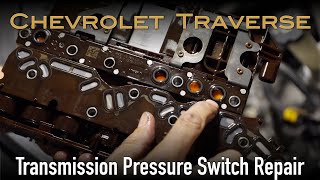
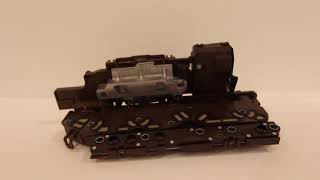
- TCM (Transmission Control Module / TEHCM) — For 6-speed automatic models (6T70/75), the TCM is a TEHCM (Transmission Electro-Hydraulic Control Module) located inside the transmission, bolted to the valve body. For base models with the 5-speed automatic, the TCM is a separate module located in the engine compartment.. This is the module that most commonly fails and sets the P1621 code on this platform. Accessing it requires removing the transmission side cover.
Real Owner Repair Stories
- Chevrolet Forum user (2002 Chevrolet Silverado) — P1621 code appeared, clock and seat memory positions kept resetting.
❌ Tried (didn't work) Initial diagnosis was confusing.
✅ What actually fixed it The issue started immediately after installing an aftermarket engine programmer. The advice was to revert the vehicle's software back to the factory programming, as the aftermarket tune likely corrupted the PCM's memory, triggering the P1621 memory performance fault.
OEM Part Supersession History
24256861 (TEHCM for 6T70/75)→This part number is part of a family of compatible TEHCMs. Other interchangeable numbers include 19435614, 24252363, 29545535, 25798353, 24256670, and 24287420, among others. Always verify the correct part for the specific application and calibration.— Part revisions and updates to address reliability issues.
Heads up: While mechanically interchangeable, a replacement TEHCM must be programmed with the correct VIN-specific software using GM's Service Programming System (SPS) to function. For a time, GM placed part number 24256861 on restriction, requiring technicians to call the Technical Assistance Center (TAC) before ordering to help diagnose root causes.
Model Year Variations Within This Range
- 2007-2009 (Base Models): Base models were typically equipped with a 3.4L V6 engine and a 5-speed automatic transmission. On these models, the TCM is a separate module located in the engine compartment, not an integrated TEHCM inside the transmission.
- 2008-2009 (GXP Trim): The GXP trim featured a 3.6L V6 engine and the 6T70 6-speed automatic transmission. This transmission uses a TEHCM (Transmission Electro-Hydraulic Control Module), which combines the TCM, valve body, and solenoids into one unit inside the transmission. This TEHCM is the component most commonly associated with P1621 failures on this platform due to its location and heat exposure.
Helpful Videos
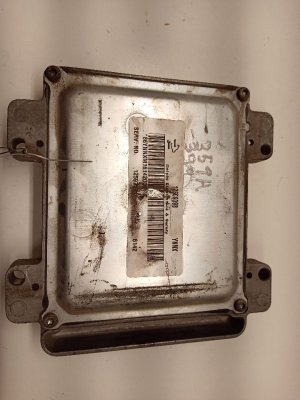
Used OEM Parts in Stock
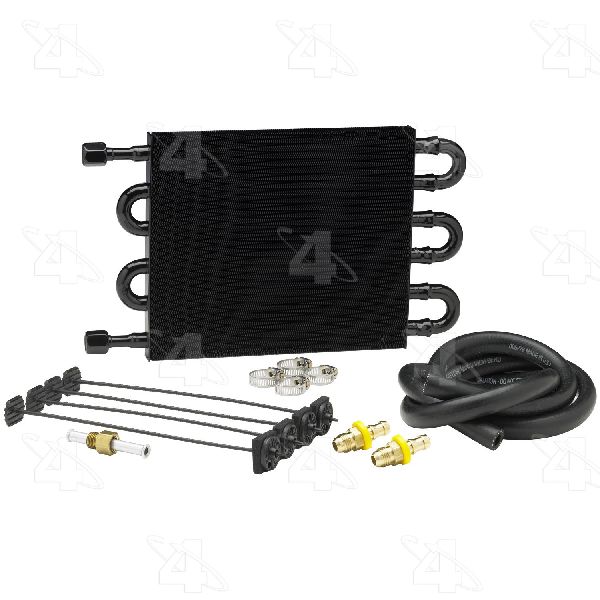
New Aftermarket Parts Available

The information in this article is provided for general reference and educational purposes only. Vehicle specifications, procedures, and part compatibility can vary by production date, trim level, and region. Always consult your vehicle's factory service manual and verify part numbers before purchasing or performing repairs. Safety-critical components such as airbags, seat belts, and braking systems should be installed by a qualified professional.
- Pontiac TORRENT:
- 🧭 Diagnostic Flowchart
- 🎬 Helpful Videos
- 🛍️ Shop This Part
- What's Unique About the 2007-2009 Pontiac TORRENT
- Symptoms You May Notice
- Most Likely Causes
- Rare But Worth Checking
- Diagnosis Steps
- Parts You'll Likely Need
- Related Codes That Often Appear With This One
- Technical Service Bulletins (TSBs) & Recalls
- Platform-Specific Known Issues
- Mechanic-Grade Diagnostic Values
- Hidden / Shadow Codes Worth Checking
- Scan Tool Commands That Help
- Wiring & Ground Locations
- Real Owner Repair Stories
- OEM Part Supersession History
- Model Year Variations Within This Range
- 🎟️ Get 5% Off