

P1621 on 1994-1998 Saab 900: A/C Relay Circuit Fault Causes and Fixes
On a 1994-1998 Saab 900, code P1621 means there is an electrical fault in the A/C compressor relay circuit, which will cause the air conditioning to stop working. The most common fix is replacing the A/C relay itself, which is an inexpensive and simple DIY job.
- P1621 on a 1994-1998 Saab 900 is an A/C electrical circuit fault, not an immobilizer issue as it is on many other cars.
- The most common symptom is the A/C failing to blow cold air, with the compressor not engaging.
- Start your diagnosis by checking the A/C fuse and swapping the A/C relay (in the engine bay) with a known-good one.
- This is a minor issue that does not affect the car's drivability.
- The fix is usually a simple and inexpensive relay replacement, a task easily performed by a DIYer.
What's Unique About the 1994-1998 Saab 900
Unlike many other manufacturers who use P1621 for immobilizer or internal ECU memory errors, Saab designated this code on the NG900 and first-gen 9-3 specifically for the A/C relay circuit. For example, on many Suzuki vehicles, P1621 indicates an immobilizer communication line error that results in a no-start condition. On the Saab, the engine's Motronic control system actively monitors the output to the A/C relay, and if it doesn't see the expected electrical state, it sets this code and disables the A/C compressor. Diagnosis is straightforward and focuses entirely on the A/C electrical system, starting from the relay in the engine bay.
Symptoms You May Notice
- Air conditioning (A/C) system does not work; compressor will not engage.
- A/C button light may illuminate, but no cold air is produced.
- Check Engine Light is illuminated.
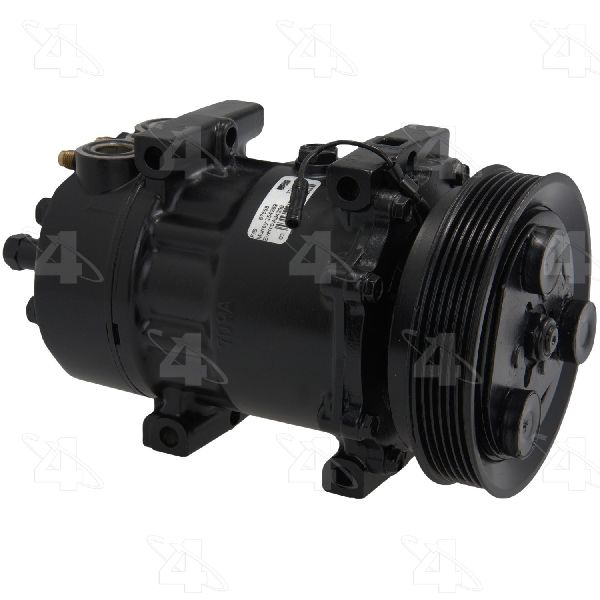
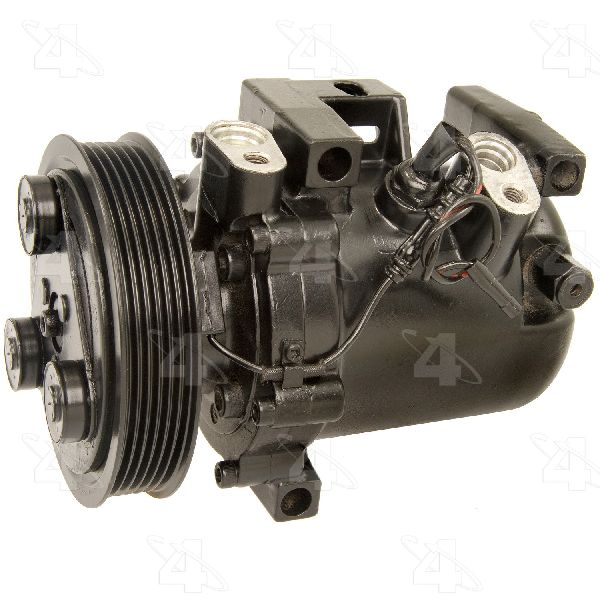
- Replacing the A/C compressor: While a bad compressor clutch coil can cause an electrical issue, the P1621 code itself points to the control circuit, which should be diagnosed first. A good test is to jump the relay socket to see if the compressor clutch engages manually.
- Recharging the A/C system: This code is purely electrical. While low refrigerant is a common reason for A/C not working, it will not set a P1621 code.
Most Likely Causes
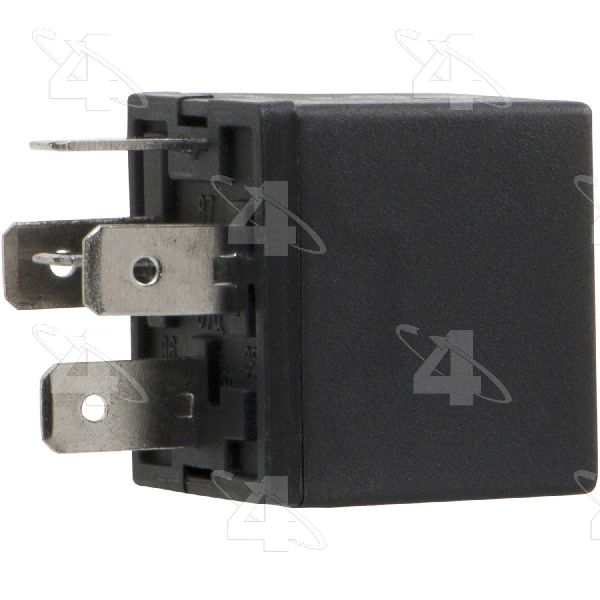
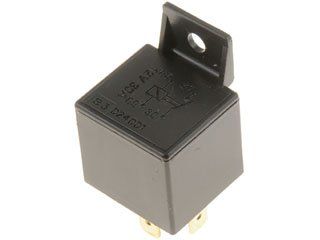
- Faulty A/C Relay 🔴 High Probability Relays are electromechanical switches that wear out over time from repeated cycling and exposure to engine bay heat. The A/C relay on the NG900 is a standard 'ice cube' style relay that is known to be a common failure point.
How to confirm: The easiest test is to swap the A/C relay with an identical relay from a non-critical system (like the horn) in the engine bay fuse/relay box. If the A/C now works and the other system does not, the relay is bad. A multimeter can also be used to test the relay's coil and switch contacts directly.
Typical fix: Replace the A/C relay with a new unit. 🎬 Watch: A complete walkthrough of rebuilding the Saab 900 A/C
Est. part cost: $10-$25 - Wiring Harness Issue 🟡 Medium Probability Over time, wiring can become brittle, and connections can corrode or loosen, especially in the engine bay environment. The signal wire from the ECU to the relay is a potential point of failure.
How to confirm: Inspect the wiring between the engine bay relay box and the engine control module for any visible damage, corrosion, or loose pins at the connectors. Check for continuity on the control wire from the ECU connector (Pin 33 or 40, see 'Vehicle Specific Issues') to the relay socket using a multimeter.
Typical fix: Repair the damaged section of wiring or clean/tighten the connector.
Est. part cost: $5-$50 for wiring supplies - Blown Fuse ⚪ Low Probability A short circuit in the A/C system (e.g., a failing compressor clutch coil) can cause the fuse to blow as a protective measure. While less common for this specific code, it's a basic check that should not be overlooked.
How to confirm: Visually inspect the fuse for the A/C system in the vehicle's fuse box. Use a multimeter to test the fuse for continuity. The main fuse box is located at the end of the dashboard by the driver's door.
Typical fix: Replace the blown fuse. If it blows again immediately, further diagnosis is needed to find the underlying short circuit.
Est. part cost: $1-$5
Rare But Worth Checking
- Faulty Engine Control Module (ECM/Motronic): → Shop Engine Control Module (ECM) This is very rare. The internal driver circuit in the ECM that controls the A/C relay can fail. This should only be considered after all other possibilities (relay, wiring, fuses) have been exhaustively ruled out by testing the signal directly at the ECU pin.
Diagnosis Steps
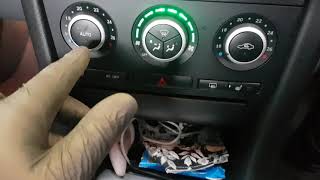
- Verify the A/C system is turned ON from the climate control panel inside the car.
- Check the A/C related fuses in the main fuse panel, located inside the end of the dashboard on the driver's side. Replace if blown.
- Locate the A/C relay (marked as relay 156 in diagrams) in the main relay box in the engine bay, near the bulkhead.
- Perform a 'swap test': Swap the A/C relay with an identical, known-good relay from a non-essential system (e.g., the horn relay). Clear the codes and see if the A/C works. If it does, the original relay is faulty.
- If the swap test fails, use a test light or multimeter to check for power and ground at the relay socket. With the key on and A/C commanded on, you should have power on both the load and control sides of the socket.
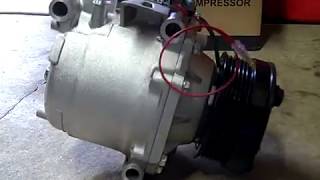
- If the relay clicks but the compressor does not engage, consider jumping the load-side terminals of the relay socket (terminals 30 and 87) to manually send power to the compressor clutch. 🎬 See how to test and replace the A/C compressor If the clutch engages, the problem lies within the relay's control circuit.
- If the relay does not click, the signal from the Engine Control Module (ECM) may be missing. This requires checking the continuity of the signal wire between the ECM connector and the relay socket. Be aware of the ECU pin variation (see Vehicle Specific Issues).
- If a Saab Tech 2 or compatible scan tool with bidirectional control is available, command the 'AC RELAY' function on and listen for the relay to click. This directly tests the ECM's ability to control the circuit.
Parts You'll Likely Need
- A/C Compressor Relay
(OEM #9522411)— This is the most common failure point for a P1621 code, as relays are consumable parts that fail over time.
Trusted brands: Bosch, Hella, Standard Motor Products, Wehrle
OEM price range: $20-$40
Aftermarket price range: $10-$25
Related Codes That Often Appear With This One
- P1622 — P1622 is the companion code for the A/C relay circuit, indicating a short to B+ (battery positive), whereas P1621 can be for a short to ground or an open circuit. They are often listed together in service manuals as they relate to the same circuit and have the same symptom of a non-working A/C. 🎬 Watch: Troubleshooting a similar A/C relay open circuit code
Technical Service Bulletins (TSBs) & Recalls
- Cross-Model Control Module DTCs: While specific to a different model, manufacturer TSB Bulletin #05-06-04-060A notes that DTC P1621 is among a group of control module codes that can be shared across multiple modules, emphasizing the importance of verifying which module is reporting the fault during diagnosis.
Platform-Specific Known Issues
- ECU Pin Variation for A/C Relay Control Signal: A key diagnostic detail is that the ECU pin for the A/C relay control signal changed during the NG900's production run. On early models (approx. 1994-1995) using the Bosch Motronic 2.10.2 system, the signal wire is connected to pin 40 of the ECU. On later models (approx. 1996-1998) and the subsequent first-generation Saab 9-3, which use the Motronic 2.10.3 system, the signal wire is connected to pin 33. This is critical information for anyone performing advanced diagnosis by testing for the signal directly at the ECU connector.
Mechanic-Grade Diagnostic Values
- A/C Compressor Clutch Coil Resistance — expected: 3.0 to 5.0 Ohms. Failure: A reading outside this range (e.g., open circuit/infinite resistance or a dead short/near-zero resistance) indicates a faulty clutch coil.
- A/C Relay Coil Resistance (Pins 85 & 86) — expected: Approximately 60 Ohms. Failure: A significantly different reading suggests the relay's internal coil is faulty. This value is based on the main relay but is a good guideline for similar relays in the vehicle.
- A/C Clutch Coil Circuit Voltage Drop — expected: 1.0 Volt or less. Failure: With the engine running and A/C on, place one multimeter lead on the battery's positive post and the other on the positive wire at the clutch coil connector. A reading higher than 1.0V indicates excessive resistance in the power feed circuit.
Scan Tool Commands That Help
- Saab Tech 2 (or equivalent): ACTIVATE -> AC RELAY — This command directly tells the Motronic ECU to energize the A/C relay. Listening for the relay to 'click' when this command is sent is the fastest way to confirm if the ECU driver, wiring, and relay coil are functioning. If the relay clicks but the compressor doesn't engage, the problem is on the load side of the relay. If it doesn't click, the problem is in the control circuit (ECU, wiring, or relay coil).
Wiring & Ground Locations
- G2 — Behind the battery on the left-hand wheel housing.. This is a primary chassis ground point. A poor connection here can cause widespread, intermittent electrical issues across the vehicle.
- G25 — Main battery ground connection on the gearbox.. This is the primary engine/drivetrain ground. A faulty ground here can affect sensor readings and ECU operation.
- G7S — Engine ground point designated for signals.. This is a critical ground reference for the engine control module. A poor connection can cause incorrect sensor readings and faulty ECU output signals, potentially affecting the A/C relay control.
- G33P — Power ground point located below the A-pillar in the cabin on the left-hand side.. This point grounds multiple in-cabin components, including various switches. A fault here could potentially affect the signal from the A/C control panel to the ECU, although it's a less direct cause.
OEM Part Supersession History
9522411→N/A— This is a standard multi-purpose relay. While the OEM number may no longer be actively produced, it is cross-referenced by multiple aftermarket manufacturers.
Heads up: No incompatibilities are known. This is a standard 5-pin 'ice cube' relay. The Bosch equivalent, 0332209159, is a widely used and reliable replacement.
Model Year Variations Within This Range
- 1994-1998: The ECU pin that controls the A/C relay changed mid-cycle. Early models (~1994-1995, Motronic 2.10.2) use Pin 40. Later models (~1996-1998, Motronic 2.10.3) use Pin 33. This is the most critical variation for advanced electrical diagnosis.
Diagnostic Flowchart
Used vs. New Parts: Buying Guide for This Vehicle
When a used part is the smart pick: A used A/C relay from a junkyard is a very low-risk, cost-effective option, especially for diagnosis. A used ECU is also a viable and common repair for Saabs, as they are often plug-and-play on this model, but should only be considered after confirming the ECU is faulty.
Donor-vehicle mileage cap: roughly under 100000 miles for the part to have meaningful remaining life.
What to inspect on the donor part:
- For a relay, inspect for clean, straight, non-corroded pins.
- Check the plastic relay housing for any signs of cracking, melting, or heat discoloration.
- For an ECU, ensure the connector pins are not bent or corroded and the outer case is not physically damaged or dented.
Aftermarket brands forum-validated for this vehicle:
- Bosch
- Hella
- Standard Motor Products (SMP)
- KAE (Kaehler Automotive Equipment)
- Wehrle
Related OBD-II Codes
Frequently Asked Questions
I'm testing the A/C relay signal on my 1995 Saab 900. Which pin on the ECU should I check?
My 1997 Saab 900 has a P1621 code. Is the ECU pin for the A/C relay the same as on earlier models?
What's the easiest way to test the A/C relay on my NG900 without a multimeter?
Does this P1621 A/C problem also affect the first-generation Saab 9-3?
I need to buy a new A/C relay. Are there any aftermarket brands that are known to be reliable for this Saab?
I saw online that P1621 can mean an immobilizer failure. Is that the case for my Saab 900?
Helpful Videos
We Have This Part in Stock


The information in this article is provided for general reference and educational purposes only. Vehicle specifications, procedures, and part compatibility can vary by production date, trim level, and region. Always consult your vehicle's factory service manual and verify part numbers before purchasing or performing repairs. Safety-critical components such as airbags, seat belts, and braking systems should be installed by a qualified professional.
- Saab 900:
- 🧭 Diagnostic Flowchart
- 🎬 Helpful Videos
- 🛍️ Shop This Part
- What's Unique About the 1994-1998 Saab 900
- Symptoms You May Notice
- Most Likely Causes
- Rare But Worth Checking
- Diagnosis Steps
- Parts You'll Likely Need
- Related Codes That Often Appear With This One
- Technical Service Bulletins (TSBs) & Recalls
- Platform-Specific Known Issues
- Mechanic-Grade Diagnostic Values
- Scan Tool Commands That Help
- Wiring & Ground Locations
- OEM Part Supersession History
- Model Year Variations Within This Range
- Used vs. New Parts: Buying Guide for This Vehicle
- Related OBD-II Codes
- Frequently Asked Questions
- 🎟️ Get 5% Off