

P1621 on 2007-2010 Saturn VUE: Control Module Memory Failure Causes and Fixes
On a 2007-2010 Saturn VUE, code P1621 almost always indicates an internal failure of the Transmission Control Module (TCM). The fix requires replacing and programming the TCM, which is located inside the transmission. This is a complex job for a professional shop, typically costing between $800 and $1,500.
- P1621 on a 2007-2010 VUE means the Transmission Control Module (TCM) has an internal memory failure.
- This is a very common problem for this platform due to the TCM's location inside the hot transmission.
- Symptoms are severe and include harsh shifting, getting stuck in gear, or a no-start condition.
- The fix is to replace the TCM (as part of the TEHCM assembly) and have the new one professionally programmed. This is not a DIY-friendly job.
- Do not replace the ECM or the entire transmission before confirming the TCM is the root cause.
What's Unique About the 2007-2010 Saturn VUE
The second-generation Saturn VUE (2008-2010) shares its platform and 6T70/6T75 6-speed automatic transmission with other GM vehicles like the Chevrolet Equinox, GMC Acadia, and Saturn Outlook. On these models, the Transmission Control Module (TCM) is integrated into a single unit with the valve body and solenoids inside the transmission, called the Transmission Electro-Hydraulic Control Module (TEHCM). This location subjects the electronics to constant, extreme heat cycles and vibration from being submerged in hot transmission fluid, which is the leading theory for the high rate of internal electronic and solder joint degradation that causes memory failures and triggers the P1621 code. Manufacturer service bulletins, specifically PIP4653E, directly link P1621 to this known TEHCM issue on this family of vehicles.
Diagnostic Flowchart
Tap your situation to follow the diagnostic path that matches what you're seeing on this vehicle.
Generation note: The 2007-2010 range covers the second generation of the Saturn VUE (2008-2010) and the final year of the first generation (2007). However, this issue primarily pertains to the second-generation models equipped with the 6-speed automatic transmission (6T70/6T75) where the TCM is located inside the transmission. First-generation models use different transmissions and control module setups.
Symptoms You May Notice
- Check Engine Light is on
- Transmission may get stuck in one gear (limp mode)
- Harsh or erratic shifting, with jolts or bangs between gears.
- Failure to shift or delayed engagement into Drive or Reverse.
- Flaring RPMs between shifts (engine revs up without accelerating).
- Vehicle may not start
- Reduced engine power
- Service Traction Control or Stabilitrak warning lights may illuminate.
- Loss of reverse gear.
- Replacing the entire transmission when only the control module is faulty. TSB PIP4653E specifically advises against this.
- Replacing the Engine Control Module (ECM) before properly diagnosing the Transmission Control Module (TCM).
- Replacing individual shift solenoids when the code points to a module memory failure, not a solenoid performance issue.
Most Likely Causes
- Internal Transmission Control Module (TCM) Failure 🔴 High Probability → Shop Transmission Assembly The TCM is part of the TEHCM, located inside the transmission oil pan, bolted to the valve body. This subjects the module to constant high temperatures and vibration, leading to the degradation of internal electronic components and solder joints over time. This is a well-documented failure point on GM's 6T70/6T75 transmissions.
How to confirm: A professional technician will use an advanced scan tool to confirm the P1621 code is stored in the TCM. They will check for communication with the module and attempt to re-flash the software. If the code returns immediately, the module is unresponsive, or the programming fails, the TEHCM is condemned. TSB PIP4653E specifically advises this diagnostic path.
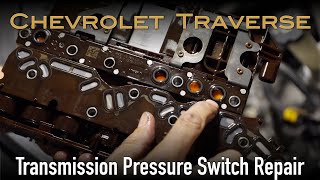
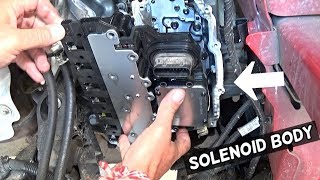
Typical fix: Replace the Transmission Electro-Hydraulic Control Module (TEHCM) and program the new unit to the vehicle. This is a major repair requiring removal of the transmission pan and valve body cover. 🎬 Watch: A step-by-step walkthrough of the solenoid body assembly replacement.
Est. part cost: $200-$550 - Poor Power or Ground Connection to TCM ⚪ Low Probability While not unique to this platform, wiring harnesses can chafe against the chassis or other components over time, leading to shorts or open circuits. Connectors can also become corroded or have unseated pins.
How to confirm: Inspect the vehicle's main battery terminals, engine-to-chassis ground straps, and the specific power and ground circuits at the transmission pass-through connector for corrosion, looseness, or damage. A voltage drop test can be performed on these circuits. TSBs for platform mates, like PIC4740F, point to checking for unseated pins in the main transmission connector.
Typical fix: Clean or repair corroded terminals, tighten loose connections, or repair damaged wiring.
Est. part cost: $5-$50
Rare But Worth Checking
- Failing Engine Control Module (ECM): → Shop Engine Control Module (ECM) While P1621 on this platform almost always points to the TCM, GM service bulletin #05-06-04-060A notes that this code family can be set in multiple modules. If the TCM is replaced and the code persists, the ECM should be investigated as a very rare secondary possibility.
- Low System Voltage: A weak battery or failing alternator can cause voltage drops during startup that may corrupt a module's self-test and trigger a false P1621 code. TSB #05-06-04-060A advises repairing any low voltage conditions before condemning a control module. This should be checked before performing expensive repairs.
Diagnosis Steps
- Connect a professional-grade OBD-II scanner to confirm the presence of P1621 and note any other stored codes, especially P0700, P0601, or P0604.
- Verify which module stored the code. On this vehicle, it is most likely the Transmission Control Module (TCM).
- Check the battery and charging system. Ensure battery voltage is above 12.4V and the alternator is charging correctly (typically 13.5-14.8V). Low voltage can cause spurious module errors and should be ruled out first.
- Inspect all power and ground connections to the TCM. Check for any corrosion or damage at the main transmission electrical connector. Check for chafed wiring harnesses near the transmission.
- Attempt to clear the codes and see if P1621 returns immediately. An immediate return strongly suggests a hard internal fault.
- If possible with the scan tool, attempt to re-flash or update the TCM software. If the procedure fails or the code returns, the module is faulty.
- If all wiring and power/grounds are confirmed good, and the code persists, the TCM (as part of the TEHCM) is the confirmed point of failure and must be replaced.
Parts You'll Likely Need
- Transmission Control Module (TCM/TEHCM)
(OEM #24256861 (ACDelco Professional))— This is the component that contains the memory that has failed, as indicated by the P1621 code. Due to its location inside the transmission, it is prone to heat-related failure. This part number is widely referenced for the 6T70/6T75 family of transmissions.
Trusted brands: ACDelco (OEM), Dorman
OEM price range: $350-$550
Aftermarket price range: $200-$400 - Transmission Fluid and Gaskets — When replacing the internal TEHCM, the transmission fluid must be drained and the valve body cover gasket and connector gasket should be replaced to prevent leaks. DEXRON-VI is the specified fluid.
Trusted brands: ACDelco
OEM price range: $80-$150
Aftermarket price range: $50-$100
Related Codes That Often Appear With This One
- P0700 — This is a generic code that means the TCM has requested the Malfunction Indicator Lamp (Check Engine Light) be turned on. It almost always accompanies a more specific transmission code like P1621.
- P0601 — This code means 'Internal Control Module Memory Check Sum Error'. Seeing it with P1621 strongly confirms an internal failure of the control module.
- P0604 — This code means 'Internal Control Module Random Access Memory (RAM) Error'. Like P0601, it points directly to an internal failure of the control module.
- U0101 — This code means 'Lost Communication With TCM'. It can be set if the TCM fails completely, causing it to stop communicating on the vehicle's data network.
Technical Service Bulletins (TSBs) & Recalls
- PIP4653E: Discusses DTCs P0601, P0603, P0604, P062F or P1621 stored in the Transmission Control Module and advises against replacing the entire transmission for this code.
- 05-06-04-060A: Mentions that control module DTCs like P1621 can be shared in multiple modules and points towards internal module faults, advising to check for low voltage conditions first.
- 14404A: While not directly for P1621, this TSB addresses the common 3-5-R wave plate failure in the same 6T70 transmission, which can present with overlapping symptoms.
Platform-Specific Known Issues
- The 6-speed automatic transmissions (6T70/6T75) used in the second-generation VUE have a known high failure rate of the internal Transmission Electro-Hydraulic Control Module (TEHCM) due to heat soak. This is documented in GM Technical Service Bulletins.
- A separate known issue on these transmissions is the failure of the 3-5-R wave plate, which causes shifting flares and loss of gears. While this is a mechanical failure, a user on SaturnFans.com reported a dealer initially diagnosing a TCM code before identifying the wave plate. It's important to distinguish between the electronic failure of P1621 and the mechanical failure of the wave plate, though symptoms can overlap.
Mechanic-Grade Diagnostic Values
- TCM/TEHCM Ground Circuit Resistance — expected: Less than 0.5 Ω between the TCM ground pin and a known good chassis ground.. Failure: High resistance indicates a poor ground connection, which can cause various communication and module errors.
- CAN Bus High Voltage (Key On) — expected: Approximately 2.5V to 3.5V.. Failure: Voltage outside this range, or a signal that is biased high (e.g., stuck at 4.2V), can indicate a module is shorting the network.
- CAN Bus Low Voltage (Key On) — expected: Approximately 1.5V to 2.5V.. Failure: Voltage outside this range indicates a fault on the data network.
- TCM/TEHCM Power Supply Voltage — expected: Should be equal to battery voltage (approx. 12.6V with key on, engine off).. Failure: Low or no voltage points to a problem in the supply circuit (fuse, relay, wiring) rather than the module itself.
Hidden / Shadow Codes Worth Checking
- U0101 (in other modules): If a used (junkyard) TEHCM is installed, the ECM and BCM may log a U0101 'Lost Communication With TCM' code. This occurs because the other modules are still looking for the original VIN-matched TEHCM. It confirms a VIN mismatch that must be resolved by programming. (see via A professional scan tool like GM GDS2 or Tech2 will show codes stored in all vehicle modules, not just the one that triggered the Check Engine Light.)
Scan Tool Commands That Help
- GM GDS2 / Techline Connect: Service Programming System (SPS) — This is a mandatory, non-optional step when replacing the TEHCM. The new module is shipped blank and must be flashed with the correct software and programmed with the vehicle's VIN to function.
- GM GDS2 / Techline Connect: Transmission 'Fast Learn' or 'Adaptation Reset' — After a new TEHCM is programmed via SPS, this procedure must be run. It allows the new module to learn the specific characteristics and clutch fill volumes of the transmission for smooth shifting.
- Third-party Cloning Service: Module Cloning — Some specialized services can clone the data from the original, failing TEHCM (if it's still able to communicate) to a new or refurbished unit. This can sometimes bypass the need for SPS programming at a dealership, creating a 'plug-and-play' replacement.
Wiring & Ground Locations
- G105 — On a transmission stud, often described as being on the left rear side of the engine compartment.. This is a primary ground point shared by the ECM and TCM. Corrosion or looseness here is a very common cause of communication and module performance issues on this GM platform. A poor ground can cause voltage instability that could potentially trigger a memory code.
- Transmission Harness Connector (14-way) — The main external electrical connector on the side of the transmission case where the vehicle harness connects to the internal TEHCM.. This is the single point of failure for all power, ground, and data signals going to the TEHCM. TSBs for platform mates frequently cite poor pin fit (tension), corrosion, or backed-out pins in this connector as a cause for transmission codes and communication loss.
- Ignition Coil Ground Wire (3.6L V6) — A user with a 2008 3.6L V6 found a broken ground wire for the rear bank of ignition coils that routed near the power steering pump reservoir.. While not directly for the TCM, this is a documented case of a brittle ground wire in the same engine bay, highlighting that checking all major ground points for integrity is a critical diagnostic step before condemning expensive modules.
Real Owner Repair Stories
- acadiaforum.net user (2011 GMC Acadia (platform mate with 6T75 transmission)) — Check Engine Light with code P1621.
❌ Tried (didn't work) Clearing the code (it returned immediately).
✅ What actually fixed it The owner took the vehicle to a GM dealer. The dealer diagnosed a failed TEHCM, replaced it, and programmed the new module. The total cost was approximately $1,500 and this resolved the code and all symptoms. - Corvette Forum user (2008 Chevrolet Corvette (with related 6L80 transmission)) — Transmission went into limp mode after a transmission swap.
❌ Tried (didn't work) Attempting to flash a 2011 TEHCM with a Tech 2 scanner in the 2008 vehicle resulted in a 'no communication' error.
✅ What actually fixed it The final conclusion was that the TEHCM from a 2011 model was not electronically compatible with the 2008 vehicle's systems, even though it physically fit. This highlights a critical trap: TEHCMs are often year-specific and not interchangeable.
OEM Part Supersession History
Multiple, including 24235754→24256861— Part revision and consolidation by the manufacturer.
Heads up: While 24256861 is the most common service part, it has also been referenced with alternate/superseding numbers like 19434406 and 19431596. It is critical to verify the correct part number by VIN before ordering, as there are electronic incompatibilities between model years.24256861→19434406 (listed as Manufacturer Part Number in some catalogs)— Part revision or change in supplier/numbering scheme.
Heads up: Many part numbers are listed as interchangeable with 24256861, including 24256670, 24252363, 29545535, and 24259874. Always confirm with a dealer or trusted parts supplier using the vehicle's VIN.
Model Year Variations Within This Range
- 2008-2010: While the 6T70/6T75 transmission was used across these years, the internal TEHCM electronics may not be cross-compatible. As seen in related GM platforms, a TEHCM from a later model year may not program or function correctly in an earlier model year vehicle, even if it physically fits. Sourcing the correct part number for the specific model year and VIN is essential.
- 2007 vs. 2008-2010: The 2007 Saturn VUE is a first-generation model and uses different powertrains (e.g., Honda V6 with a 5-speed auto, or a 4-speed auto with the Ecotec). The P1621 TEHCM failure is specific to the second-generation (2008-2010) models equipped with the GM 6-speed (6T70/6T75) automatic transmission.
Helpful Videos

We Have This Part in Stock


The information in this article is provided for general reference and educational purposes only. Vehicle specifications, procedures, and part compatibility can vary by production date, trim level, and region. Always consult your vehicle's factory service manual and verify part numbers before purchasing or performing repairs. Safety-critical components such as airbags, seat belts, and braking systems should be installed by a qualified professional.
- Saturn VUE:
- 🧭 Diagnostic Flowchart
- 🎬 Helpful Videos
- 🛍️ Shop This Part
- What's Unique About the 2007-2010 Saturn VUE
- Symptoms You May Notice
- Most Likely Causes
- Rare But Worth Checking
- Diagnosis Steps
- Parts You'll Likely Need
- Related Codes That Often Appear With This One
- Technical Service Bulletins (TSBs) & Recalls
- Platform-Specific Known Issues
- Mechanic-Grade Diagnostic Values
- Hidden / Shadow Codes Worth Checking
- Scan Tool Commands That Help
- Wiring & Ground Locations
- Real Owner Repair Stories
- OEM Part Supersession History
- Model Year Variations Within This Range
- 🎟️ Get 5% Off