

P1622 on 2013-2015 Dodge Charger: O2 Sensor Reference Voltage High Fixes
On a 2013-2015 Dodge Charger, code P1622 is most often caused by a software glitch in the engine computer. The primary fix is a dealer-performed software update (reflash) as outlined in several Technical Service Bulletins. This code rarely appears alone, often clustering with P0606, P0300, and P1621.
- P1622 on a 2013-2015 Charger is almost always part of a software glitch.
- Before replacing any parts, your first step should be to have a Dodge dealer check for and perform any available PCM software updates, especially if other codes like P0606 or P0300 are present.
- Do not replace the O2 sensors as a first step; this is a common misdiagnosis and is unlikely to fix the problem.
- If a software update doesn't work or isn't available, the next step is to inspect the O2 sensor wiring for damage, particularly shorts or moisture intrusion.
What's Unique About the 2013-2015 Dodge CHARGER
For this specific generation of Dodge Charger (LD), particularly those with the 5.7L engine, the P1622 code is very frequently a software issue rather than a hardware failure. Manufacturer Technical Service Bulletins (TSBs), such as the comprehensive #18-084-16 which supersedes earlier versions, confirm that this code often appears in a cluster with other DTCs like P0300 (Misfire) and P0606 (Internal Control Processor). The official fix is to reprogram the PCM with updated software, not to replace any parts initially.
Diagnostic Flowchart
Tap your situation to follow the diagnostic path that matches what you're seeing on this vehicle.
Symptoms You May Notice
- Check Engine Light is on
- Decreased fuel economy
- Rough or unstable idle
- Engine bucking or hesitation at low speeds
- Engine misfires
- Engine may run rough when shifting gears at low speed
- Replacing the oxygen sensors. Technicians and owners may see the 'O2 Sensor' code definition and immediately replace the sensors. On this platform, this is rarely the fix, as the problem lies with the reference voltage supplied by the computer, not the sensor's reading itself.
Most Likely Causes
- Engine Control Module (ECM/PCM) Software Requires Update 🔴 High Probability → Shop Engine Control Module (ECM) Multiple manufacturer TSBs (#18-084-16, #18-052-15, #18-073-20) were issued for this exact problem, confirming a software anomaly is the root cause for a cluster of codes including P1622, especially on 5.7L models.
How to confirm: A Dodge dealership or a qualified shop with access to FCA's software (wiTECH) can check your vehicle's VIN to see if it's eligible for a software update per the TSBs.
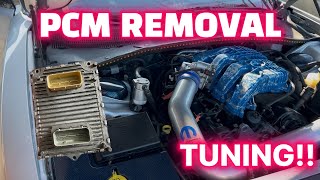
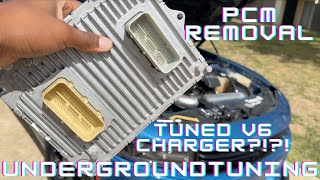
Typical fix: Reprogramming (flashing) the PCM with the latest software version. The TSB repair procedure specifies maintaining stable battery voltage (between 13.2 and 13.5 volts) during the flash process.
Est. part cost: $0 - Wiring or Connector Issue 🟡 Medium Probability The O2 sensor wiring harness runs close to hot exhaust components and is exposed to the elements, making it susceptible to melting, chafing, or corrosion. Water intrusion into a connector, especially after driving through heavy rain or puddles, is also a reported cause.
How to confirm: Visually inspect the O2 sensor wiring harness (especially for Bank 1, the driver's side) and connectors for damage. A multimeter can be used to check for a short to power in the reference voltage wire. Unplugging, cleaning, and drying the connectors is a common diagnostic step.
Typical fix: Repair the damaged section of the wiring harness or clean/replace the connector. Applying dielectric grease can help prevent future moisture issues.
Est. part cost: $10-$50 - Faulty Powertrain Control Module (PCM) ⚪ Low Probability → Shop Engine Control Module (ECM) While less common than a software issue, an internal hardware failure in the PCM can cause incorrect voltage on the reference circuit. The presence of code P0606 (Internal Control Processor) alongside P1622 strongly points to this possibility, though even this combination is often fixed by a reflash.
How to confirm: This is typically a diagnosis of exclusion. If the software is up-to-date and all wiring and sensors test good, the PCM is the likely culprit. This requires professional diagnosis.
Typical fix: Replace and reprogram the Powertrain Control Module. The Federal Emissions Warranty may cover the PCM for up to 8 years or 80,000 miles.
Est. part cost: $500-$1000
Rare But Worth Checking
- Faulty Oxygen (O2) Sensor: → Shop Oxygen Sensor While this is an O2 sensor-related code, the fault is with the reference voltage *from* the PCM, not the signal *from* the sensor. However, an internal short within an O2 sensor could theoretically disrupt the reference circuit. This should only be considered after software and wiring have been ruled out.
Diagnosis Steps
- Scan the vehicle for all diagnostic trouble codes. Note if P1622 appears with the common cluster of codes (P1621, P0606, P0300, P219A, U0140).
- If the cluster of codes is present, contact a Dodge dealership or qualified shop to check if your vehicle's VIN is covered by TSB #18-084-16 or a related software update. If so, have the PCM reprogrammed. Ensure a battery charger is used to keep voltage between 13.2 and 13.5 volts during the flash.
- If P1622 appears alone, perform a thorough visual inspection of the O2 sensor wiring harnesses and connectors, particularly on Bank 1 (driver's side), looking for any signs of melting, chafing, or corrosion.
- If wiring appears intact, use a multimeter to check the reference voltage on the O2 sensor connector. The PCM sets the code when voltage is seen above 3.7V. If the voltage is high, the issue is in the wiring or PCM.
- If wiring is confirmed to be good (no shorts to power) and the voltage is still high, the PCM is the most likely point of failure. Check if the vehicle is still under the Federal Emissions Warranty (8 years/80,000 miles), which may cover PCM replacement.
- Only consider replacing an O2 sensor if all other steps have been exhausted and a specific sensor can be proven to have an internal short. 🎬 Watch: Step-by-step guide for replacing O2 sensors on a 5.7L Hemi
Parts You'll Likely Need
- PCM Software Update — This is the most common fix documented by Dodge in multiple Technical Service Bulletins for a cluster of codes that includes P1622.
Trusted brands: Mopar (dealer service)
OEM price range: $175-$350 - Powertrain Control Module (PCM)
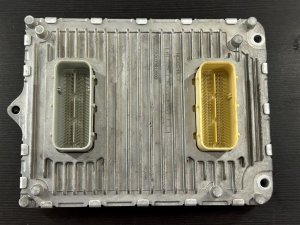
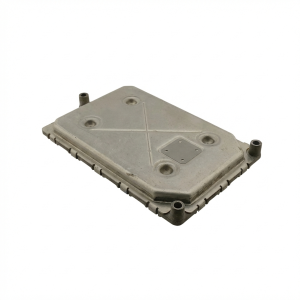
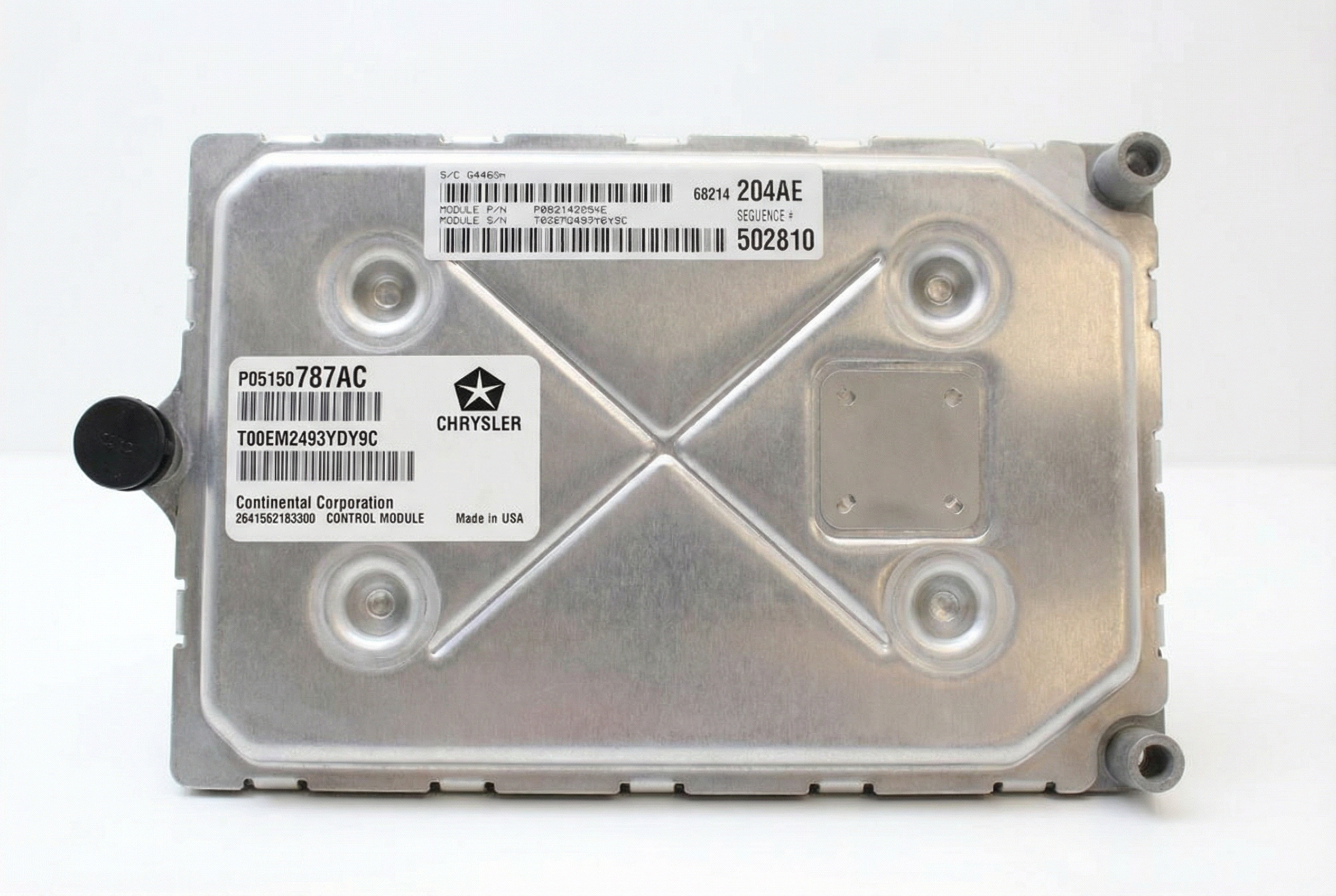
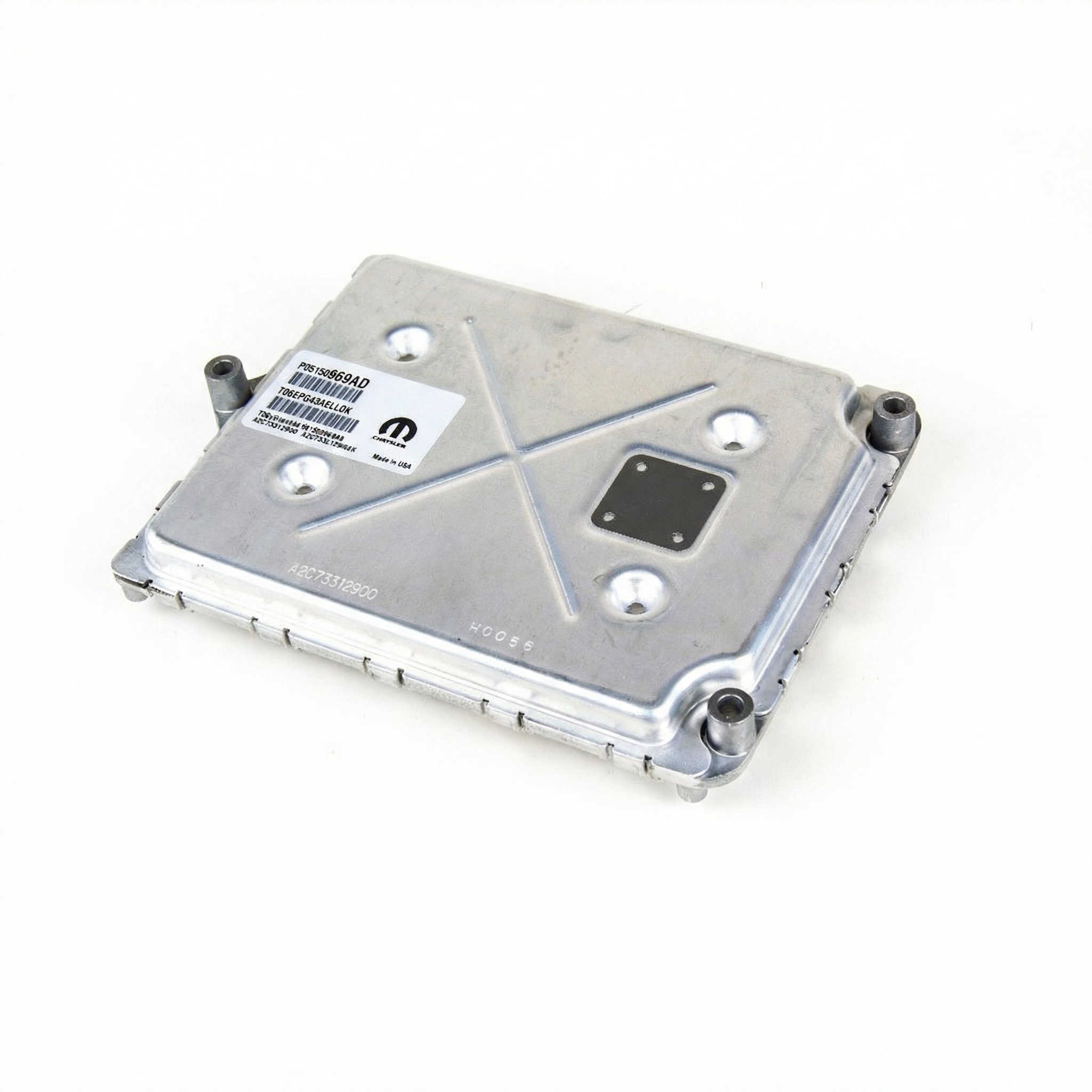
(OEM #05150797AC, 68212707AH, P68212703 (for 2014 5.7L models, always verify with VIN))— In cases where a software update does not fix the issue or if code P0606 is present and wiring is confirmed good, an internal hardware failure of the PCM is the likely cause.
Trusted brands: Mopar
OEM price range: $600-$1000
Aftermarket price range: $400-$700
Related Codes That Often Appear With This One
- P1621 — O2 Sensor Reference Voltage Circuit Low. This code is the counterpart to P1622 and is listed in the same TSBs, indicating a general instability in the reference circuit addressed by the software update.
- P0606 — Internal Control Processor. Its appearance with P1622 strongly points to an internal PCM software or hardware problem, as noted in TSB #18-084-16.
- P0300 — Multiple Cylinder Misfire. An incorrect air-fuel ratio caused by the O2 sensor circuit fault can lead to misfires. This is also mentioned in the relevant TSBs.
- P219A — Bank 1 Air-Fuel Ratio Imbalance. This code is directly related to the fuel mixture problem that a faulty O2 sensor reference voltage would cause and is included in the TSB fix.
- U0140 — Lost Communication With Body Control Module. Its inclusion in the TSBs suggests a broader electronic module communication issue that is resolved by the PCM reflash.
- P219B — Bank 2 Air-Fuel Ratio Imbalance. Like P219A, this code is also listed in TSB #18-084-16 as being resolved by the PCM software update.
Technical Service Bulletins (TSBs) & Recalls
- 18-084-16: Supersedes previous bulletins and lists P1622 as a code resolved by a PCM software update for 2013-2015 Chargers with the 5.7L engine.
- 18-052-15 REV A: An earlier bulletin, also recommending a PCM reflash for P1622 and other codes on 2014 models.
- 18-073-20: A later TSB from 2020 that also includes P1622 in a list of codes related to sensor circuit issues fixed by a PCM flash, extending coverage to 2015 Police Package vehicles.
- 18-052-15: The original version of the bulletin, superseded by Rev A.
Platform-Specific Known Issues
- A well-documented software issue causes the PCM to incorrectly set P1622 along with a host of other seemingly unrelated trouble codes. This was addressed by Dodge via TSB #18-084-16, which supersedes several previous bulletins for 2013-2015 5.7L models.
Mechanic-Grade Diagnostic Values
- O2 Sensor Reference Voltage Fault Threshold — expected: Below 3.7 Volts. Failure: The PCM sets code P1622 if it detects a voltage above 3.7V for more than 9 seconds.
- O2 Sensor Signal Circuit Voltage (Sensor Disconnected) — expected: Approximately 5.0 Volts. Failure: Voltage significantly lower than 5.0V indicates a problem in the wiring or PCM.
- O2 Sensor Signal Circuit Voltage (Jumpered to Return Circuit) — expected: Drops from 5.0V to approximately 2.5 Volts. Failure: Voltage does not drop, indicating an open in the signal or return circuit.
- O2 Sensor Heater Element Resistance — expected: Typically between 5 and 6 ohms. Failure: Resistance is out of specification (open or shorted), which can sometimes affect sensor reference readings.
Scan Tool Commands That Help
- wiTECH: Reprogram PCM — This is the primary repair step outlined in TSBs #18-052-15 and #18-084-16 to resolve the software glitch causing P1622 and its associated codes.
- wiTECH: PCM Replaced — This function, found under the WCM/WIN module view, must be performed after reprogramming the PCM to transfer the vehicle's security (secret key) information to the updated module.
- wiTECH or equivalent professional scan tool: O2 Sensor Heater Actuation — Used as a diagnostic step to verify the integrity and operation of the O2 sensor heater circuit, which can help rule out the sensor itself as a cause.
Wiring & Ground Locations
- PCM — Right rear of the engine compartment.. This is the source of the O2 sensor reference voltage and where the fault is ultimately detected and stored. All related wiring terminates here.
- Bank 1 O2 Sensors (1/1 and 1/2) — Driver's side exhaust, before and after the catalytic converter.. Forum reports and diagnostic logic point to the Bank 1 sensor circuit as the common location for wiring faults or connector issues related to P1622.
- G901a — Left front of the engine compartment.. This is a major engine compartment ground. A poor ground connection here can cause floating voltages and unpredictable electrical issues in various engine sensors, including the O2 reference circuit.
Real Owner Repair Stories
- RamForum.com user 'UNBROKEN' (2012 Ram R/T (5.7L Hemi with similar electronics to 2013-2015 Charger)) — Check Engine Light with code P1622 appeared after driving in heavy rain for a week.
❌ Tried (didn't work) Visual inspection for burned wires (none found)., Clearing the code (it would return).
✅ What actually fixed it The issue was diagnosed as water intrusion into the O2 sensor connectors on Bank 1 (driver's side). The fix was to unplug the connectors, clean them, let them dry completely, apply dielectric grease to the seals, and reconnect.
OEM Part Supersession History
05150797AC→68212707AB, 68212707AH— Standard hardware and software revisions to improve performance and fix bugs.
Heads up: While multiple part numbers exist for the 2014 model year, they are generally interchangeable when programmed correctly. However, it is critical to verify the correct part number for a specific vehicle's VIN and options before ordering.
Model Year Variations Within This Range
- 2013-2015: The 2015 model year marked a significant facelift for the Charger (LD platform). While the 5.7L engine and P1622 code issue persist, electrical modules and wiring harnesses can differ from the 2013-2014 models. TSB #18-073-20 specifically calls out 2014-2015 models, indicating the software fix was adapted for the refreshed platform.
Helpful Videos

We Have This Part in Stock

The information in this article is provided for general reference and educational purposes only. Vehicle specifications, procedures, and part compatibility can vary by production date, trim level, and region. Always consult your vehicle's factory service manual and verify part numbers before purchasing or performing repairs. Safety-critical components such as airbags, seat belts, and braking systems should be installed by a qualified professional.
- Dodge CHARGER:
- 🧭 Diagnostic Flowchart
- 🎬 Helpful Videos
- 🛍️ Shop This Part
- What's Unique About the 2013-2015 Dodge CHARGER
- Symptoms You May Notice
- Most Likely Causes
- Rare But Worth Checking
- Diagnosis Steps
- Parts You'll Likely Need
- Related Codes That Often Appear With This One
- Technical Service Bulletins (TSBs) & Recalls
- Platform-Specific Known Issues
- Mechanic-Grade Diagnostic Values
- Scan Tool Commands That Help
- Wiring & Ground Locations
- Real Owner Repair Stories
- OEM Part Supersession History
- Model Year Variations Within This Range
- 🎟️ Get 5% Off