

P1622 on 2010-2014 Ford Transit Connect: Immobilizer or Thermostat Fault?
P1622 on a 2010-2014 Transit Connect has two possible meanings. If your van won't start, it's likely an immobilizer (anti-theft) issue with the key or antenna. If it runs but has temperature problems, it's likely a failed electronic thermostat housing, a common issue on this platform.
- P1622 has two different meanings for this van. Your main symptom is the key to diagnosis.
- If the van won't start and the theft light flashes, it's an anti-theft (PATS) problem. Try your spare key first.
- If the van runs but the temperature gauge is wrong or it overheats, it's an electronic thermostat problem.
- Do not buy any parts until you have determined if you have a 'no-start' problem or a 'cooling' problem.
- Fixing an immobilizer issue may require professional programming for new keys or modules.
What's Unique About the 2010-2014 Ford Transit Connect
The confusion for P1622 on the 2010-2014 Transit Connect stems from Ford using this code for two distinct systems. While most Fords use P1622 exclusively for the PATS anti-theft system, the 2.0L Duratec engine platform—shared with the Ford Focus and Escape of the same era—also uses an electronically controlled thermostat. It appears Ford assigned the same code to a fault in this thermostat's control circuit, creating a situation where the vehicle's primary symptom (no-start vs. cooling issue) is the most important first clue. 🎬 Watch: A quick guide to understanding the P1622 engine code. This dual-meaning is not unique to the Transit Connect but applies to other vehicles on the Ford C1 platform with this engine.
Symptoms You May Notice
- Engine will not start or cranks but fails to fire (Immobilizer issue)
- Theft light on the dashboard is flashing rapidly or stays on (Immobilizer issue).
- Check Engine Light is on
- Engine temperature gauge reads zero, drops to cold suddenly, or behaves erratically (Thermostat issue).
- Engine overheats or takes a very long time to warm up (Thermostat issue)
- Cooling fans run constantly at high speed, even when the engine is cold (Thermostat issue).
- Reduced fuel economy (Thermostat issue)
- Vehicle enters 'limp mode' with reduced power (Can occur with either fault).
- Replacing the starter or battery when the engine won't crank, without first checking the PATS theft light.
- Replacing a standard, non-electronic thermostat when the vehicle is equipped with the electronically controlled version.
- Assuming it's an immobilizer issue and replacing keys when the vehicle starts but has cooling problems.
- Clearing the code and assuming the problem is fixed. If the fault is with the PATS system, the code may be historic, but if it returns, a parameter reset may be needed.
Most Likely Causes
- Failed Electronic Thermostat Assembly 🔴 High Probability → Shop Integrated Thermostat Housing Assembly The internal heating element in the electronically controlled thermostat can fail, creating an open or short circuit that the PCM detects. This is a common failure mode for this type of thermostat on the 2.0L Duratec engine.
How to confirm: Check for other cooling system codes. If the main symptom is temperature-related and not a no-start, this is the likely cause. A mechanic can test the heater circuit for proper resistance or voltage. The entire housing is typically replaced as the heater is integrated.
Typical fix: Replace the entire thermostat housing assembly. The heater is integrated and not sold separately.
Est. part cost: $50-$150 - Faulty Key Transponder 🟡 Medium Probability The RFID chip in the ignition key can be damaged, fail over time, or lose its programming, preventing the PATS system from identifying it.
How to confirm: Try starting the vehicle with a spare key. If the spare key works, the original key is faulty. The theft light will typically flash rapidly if the key is not recognized. Note that a cloned key may not work for this test; the system needs to see a second, uniquely programmed key.
Typical fix: The faulty key must be replaced and the new key programmed to the vehicle using a special scan tool or by a locksmith/dealer. At least two unique keys are required to be programmed for the system to function.
Est. part cost: $70-$200 - Defective PATS Transceiver (Antenna Ring) 🟡 Medium Probability The transceiver is a ring around the ignition lock cylinder that reads the key chip. It can fail electrically, preventing it from powering up and reading the key. This is a common failure point in the PATS system.
How to confirm: This requires a diagnostic scan tool capable of reading Ford PATS data to see if the transceiver is communicating. A no-start condition with a known good key points towards the transceiver or its wiring. The part is relatively inexpensive and sometimes replaced as a diagnostic step.
Typical fix: Replace the PATS transceiver ring. This part is located around the ignition switch and is often accessible after removing the steering column shrouds.
Est. part cost: $40-$100
Rare But Worth Checking
- Wiring Harness Damage: A break or short in the wiring to either the thermostat heater or the PATS transceiver can cause this code. On PATS-related issues, a bad CAN bus communication line between the instrument cluster and PCM is a possible culprit. This should be checked before replacing more expensive components.
- Instrument Cluster or PCM Failure: On many Fords, including this platform, the instrument cluster (IC) is a critical part of the PATS immobilizer system. A failure within the cluster or the PCM can cause a P1622 immobilizer fault. This is rare and should be the last thing to consider after all other possibilities are exhausted. A parameter reset of both the IC and PCM is required when one is replaced.
Diagnosis Steps
- Identify the Primary Symptom: Does the vehicle fail to start (possible immobilizer issue) or does it run but have cooling/temperature gauge problems (possible thermostat issue)? This is the most critical first step.
- If No-Start: Check the theft light on the dashboard. Is it flashing rapidly when you try to start the engine? If so, this confirms a PATS immobilizer fault. Try a spare, uniquely programmed key. If the spare works, the original key is bad. If the spare also fails, the issue is likely the transceiver antenna or wiring.
- If Cooling Issue: Check the temperature gauge and observe fan behavior. If the gauge is dead, drops suddenly, and/or the fans run constantly, suspect the thermostat circuit. Inspect the wiring and connector at the thermostat housing for any visible damage or corrosion.
- Scan for Other Codes: Use an OBD-II scanner to check for any other related codes. Body codes (B-codes) like B1600 or B1681 point to PATS, while other Powertrain codes (P-codes) like P0128 or P1285 point to the cooling system.
- Test the Suspected Component: For the immobilizer, use a multimeter to test the transceiver connector wiring based on known values. For the thermostat, check for voltage at the heater connector with the key on.
- Perform Parameter Reset (PATS Issue): If work has been done on the electrical system, a stored P1622 code might be resolved by performing a parameter reset of the Instrument Cluster and PCM using a Ford-specific scan tool, then cycling the ignition several times. 🎬 See this walkthrough of the Ford PATS key relearn procedure.
- Confirm the Fix: After replacing a part, clear all DTCs and perform a drive cycle or several key cycles to ensure the code does not return.
Parts You'll Likely Need
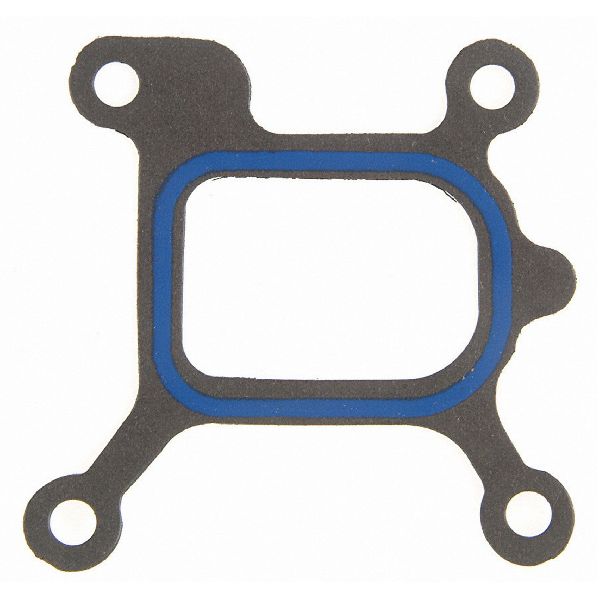
- Thermostat Housing Assembly
(OEM #3M4Z-8575-B (supercedes 3m4z8575a, 3m4z8575ab))— If the code is due to the 'MAP Cooling Thermostat Circuit' fault, the internal heater has likely failed, requiring replacement of the entire assembly. This part is for the 2.5L but is often cross-referenced for the 2.0L as well; confirm fitment.
Trusted brands: Motorcraft, Gates, Victor Reinz (gasket)
OEM price range: $100-$180
Aftermarket price range: $50-$120 - PATS Transceiver Antenna
(OEM #1825185 (Example from a later model, confirm fitment))— If the code is due to an 'Immobilizer' fault and a spare key doesn't work, the transceiver ring that reads the key is a common point of failure.
Trusted brands: Motorcraft
OEM price range: $60-$100
Aftermarket price range: $40-$70 - Transponder Key — If the immobilizer issue is isolated to a single key, the transponder chip inside has failed. A new key must be purchased and programmed. Note that you need at least two working, unique keys for the system to operate correctly.
Trusted brands: Motorcraft
OEM price range: $120-$200
Aftermarket price range: $70-$100
Related Codes That Often Appear With This One
- B1600 — If P1622 is an immobilizer issue, it may be accompanied by B1600 (PATS Ignition Key Transponder Signal Is Not Received), reinforcing a key or transceiver fault.
- B1681 — Another common PATS code, B1681 (PATS Transceiver Signal Not Received), points directly to a problem with the antenna ring around the ignition or its wiring.
- P0128 — If P1622 is a thermostat issue, it might be seen with P0128 (Coolant Thermostat Temperature Below Regulating Temperature), indicating the thermostat is stuck open or not being controlled correctly.
- P1285 — Cylinder Head Over Temperature Sensed. This code can appear alongside the thermostat-related P1622, indicating the engine is getting dangerously hot.
Platform-Specific Known Issues
- source — A thread on the Ford Transit Forum from 2010 discusses P1622 as 'Immobilizer ID Does Not Match'. A user suggests that if electrical work was done, the code could be historical and advises performing a parameter reset of the Instrument Cluster (IC) and PCM, then cycling the ignition 3-5 times to resolve it.
- source — On the Ford Owners Club forum, a user with a 2014 Connect describes the temperature gauge suddenly dropping to cold. Another user correctly diagnoses this as a symptom of a failing electronic thermostat going to full flow prematurely, recommending replacement of the integrated housing assembly.
Mechanic-Grade Diagnostic Values
- PATS Transceiver Power Supply Wire (RD/YE) Voltage — expected: Greater than 10 volts with key ON or OFF. Failure: Voltage below 10V indicates a power supply issue to the transceiver.
- PATS Transceiver Ground Wire (BK) Resistance — expected: Less than 5 ohms resistance to a known good ground. Failure: Resistance greater than 5 ohms indicates a poor ground connection, which is a common PATS issue.
- PATS Transceiver Receive (RX) Wire (WH/LG) Resistance to Ground — expected: Greater than 10,000 ohms. Failure: A low resistance reading (e.g., a user reported a faulty PCM causing a 1,500 ohm reading) indicates a short in the circuit or within the PCM itself.
- PATS Transceiver Transmit (TX) Wire (GY/OG) Resistance to Ground — expected: Greater than 10,000 ohms. Failure: A low resistance reading indicates a short in the circuit or within the PCM.
Hidden / Shadow Codes Worth Checking
- B1681: PATS Transceiver Signal Not Detected. This code is not hidden but is a critical body code that strongly points to a failure of the transceiver antenna or its wiring, rather than the key. (see via A scan tool capable of reading Ford-specific Body Control Module (BCM) or Instrument Cluster (IC) codes.)
- B1600 / B1601: Non-PATS Key or Unprogrammed Key Detected. These codes indicate the system is reading a key, but the key is either damaged, not a transponder key, or not programmed to the vehicle. (see via A scan tool capable of reading Ford-specific Body Control Module (BCM) or Instrument Cluster (IC) codes.)
- B1213: Less than 2 keys programmed to the system. This can cause issues and indicates the PATS memory needs to be properly set with at least two unique keys. (see via A scan tool capable of reading Ford-specific Body Control Module (BCM) or Instrument Cluster (IC) codes.)
Scan Tool Commands That Help
- Ford IDS (or equivalent professional scanner): Parameter Reset — This function is required to re-link the Instrument Cluster and the PCM after one of them has been replaced. It synchronizes their security data. It may also resolve a persistent P1622 code after other electrical work.
- Ford IDS (or equivalent professional scanner): Ignition Key Code Erase — Used before programming new keys, especially when replacing the PCM or Instrument Cluster, to ensure no old key data remains. A minimum of two keys must then be programmed.
- Ford IDS (or equivalent professional scanner): PATS Key Programming — Required when adding new keys, especially in an 'all keys lost' situation or when only one working key is available.
- Ford IDS (or equivalent professional scanner): Wait for Cluster Reset (Technician Procedure) — After performing a 'Parameter Reset', the technician must wait for the instrument cluster gauges to do a full sweep or 'flutter' before cycling the ignition. Turning the key off too quickly can cause the reset to fail, requiring another 10-minute security access wait.
Wiring & Ground Locations
- PATS Transceiver Connector — At the transceiver ring located around the ignition lock cylinder, under the steering column shrouds.. This connector is the interface between the key reader and the rest of the vehicle. Testing the pins here is a primary diagnostic step for a P1622 no-start. The wires are: Pin 1 (RD/YE) for power, Pin 2 (BK) for ground, Pin 3 (WH/LG) for signal receive, and Pin 4 (GY/OG) for signal transmit.
Real Owner Repair Stories
- MHH Auto forum user 'keanu' (2006 Ford C-Max 2.0d (shares C1 platform and PATS architecture)) — Car starts immediately after synchronizing the PCM and instrument cluster, but if the key is removed for one minute, it will not start again and throws code P1622.
❌ Tried (didn't work) Replacing the instrument cluster., Repeatedly re-syncing the modules would only provide a temporary fix.
✅ What actually fixed it The diagnosis pointed to a bad CAN communication line between the instrument cluster and the PCM, or a faulty PCM that was failing to retain the security pairing. The user noted slight oxidation on the PCM, suggesting it was the likely point of failure. - Ford Transit Forum user 'bancroftlocksmiths' (Ford Transit (Connect implied by forum section)) — User had a P1622 code read during a tuning session, but no active symptoms.
❌ Tried (didn't work) Just clearing the code without understanding the cause.
✅ What actually fixed it The advice was that the code could be historic from previous electrical work. The proper procedure if the code returns and causes a fault is to perform a 'Parameter Reset' of the Instrument Cluster and PCM, clear the codes, and then re-test. This suggests the code can be stored without an active fault present.
OEM Part Supersession History
3m4z8575a, 3m4z8575ab→3M4Z-8575-B— Standard part revision and improvement by the manufacturer.
Diagnostic Flowchart
Other Known Issues on This Vehicle
Issues unrelated to this code that are worth knowing about as an owner of this generation:
- Automatic Transmission Failure 🔴 High — Commonly reported, particularly in the 2012 model year, but affects the generation. Can occur around 80,000 miles. Problems include slipping, harsh shifting, or complete failure. (Ref: A recall was issued for later models (2013-2021) for a shifter cable issue that could cause rollaway, but not directly for the internal failures seen in this generation.)
- Worn / Rusted Rear Door Hinges 🟠 Medium — Very common due to the vehicle's use as a work van. Hinges rust, wear, and break, causing doors to sag, scrape, or fail to close properly.
- Dirty or Failing Throttle Body 🟠 Medium — Carbon buildup can cause the throttle body to stick, leading to stalling, sluggish acceleration, or a no-throttle situation. Often triggers codes like P2111 or P2135.
- Sliding Door Latch/Lock/Wiring Problems 🟠 Medium — Owners report issues with sliding door latches failing, child locks getting stuck, and the wiring harness that runs along the track breaking from repeated use.
- Clogged Fuel Injectors 🟡 Low — The 2.0L engine can be prone to clogged fuel injectors, leading to misfires, rough idling, and poor performance.
Used vs. New Parts: Buying Guide for This Vehicle
When a used part is the smart pick: A used PATS transceiver (antenna ring) is generally a safe bet, provided the part number matches your original exactly. It is a simple electronic component without significant mechanical wear.
Donor-vehicle mileage cap: roughly under 150000 miles for the part to have meaningful remaining life.
What to inspect on the donor part:
- For a PATS transceiver, ensure the plastic housing is not cracked or broken.
- Check that the electrical connector pins are clean, straight, and free of corrosion.
- Verify the part number on the used component is an exact match to the one being replaced.
OEM-only on this vehicle (don't cheap out):
- Instrument Cluster: Strongly recommend OEM or a specialist cloning service. A used cluster will bring the donor vehicle's mileage and requires dealer-level programming to work at all; mileage correction is difficult and legally restricted.
- Transponder Keys: Must be new (OEM or quality aftermarket) or professionally 'unlocked'. Standard used keys cannot be reprogrammed to a different vehicle.
Aftermarket brands forum-validated for this vehicle:
- Thermostat Assembly: Gates, Motorcraft (OEM)
Brands owners have reported issues with on this vehicle:
- For the electronic thermostat, avoid no-name, unbranded units from online marketplaces as the integrated heater element is a critical component prone to premature failure.
Real Owner Stories
Aggregated from forums and TSBs cited above. Mileages and costs reflect what owners reported in those sources.
2014 Ford Transit Connect
Symptoms: The temperature gauge suddenly dropping to cold.
What fixed it: Replacement of the integrated thermostat housing assembly.
Source hint: Ford Owners Club forum
2010 Ford Transit Connect
Symptoms: Code P1622, 'Immobilizer ID Does Not Match', appeared after electrical work was performed on the vehicle.
What fixed it: Performing a parameter reset of the Instrument Cluster (IC) and PCM, then cycling the ignition 3-5 times.
Source hint: Ford Transit Forum from 2010
Related OBD-II Codes
Frequently Asked Questions
My 2012 Transit Connect won't start and the theft light is flashing fast. Is it the key?
The temperature gauge on my 2014 Transit Connect suddenly dropped to cold and the cooling fans are on full blast. Is this related to code P1622?
I had the battery replaced and now my van has a P1622 code but seems to run fine. What's going on?
My mechanic says I need a new thermostat for my 2011 Transit Connect. Can I just replace the sensor part?
I lost my only key. Can I just buy a new one and have a locksmith program it to fix my P1622 no-start issue?
Helpful Videos
![What is P1622 Engine Code [Quick Guide]](https://img.youtube.com/vi/pjCCd2Qjr_Q/mqdefault.jpg)
Used OEM Parts in Stock
New Aftermarket Parts Available


The information in this article is provided for general reference and educational purposes only. Vehicle specifications, procedures, and part compatibility can vary by production date, trim level, and region. Always consult your vehicle's factory service manual and verify part numbers before purchasing or performing repairs. Safety-critical components such as airbags, seat belts, and braking systems should be installed by a qualified professional.
- Ford Transit Connect:
- 🧭 Diagnostic Flowchart
- 🎬 Helpful Videos
- 🛍️ Shop This Part
- What's Unique About the 2010-2014 Ford Transit Connect
- Symptoms You May Notice
- Most Likely Causes
- Rare But Worth Checking
- Diagnosis Steps
- Parts You'll Likely Need
- Related Codes That Often Appear With This One
- Platform-Specific Known Issues
- Mechanic-Grade Diagnostic Values
- Hidden / Shadow Codes Worth Checking
- Scan Tool Commands That Help
- Wiring & Ground Locations
- Real Owner Repair Stories
- OEM Part Supersession History
- Other Known Issues on This Vehicle
- Used vs. New Parts: Buying Guide for This Vehicle
- Real Owner Stories
- 2014 Ford Transit Connect
- 2010 Ford Transit Connect
- Related OBD-II Codes
- Frequently Asked Questions
- 🎟️ Get 5% Off