

OBD-II Code P1628: A Comprehensive Guide for Diagnosis and Repair
What P1628 means, why it triggers, and how to fix it for good
- P1628 indicates a fault on the 5-volt reference circuit, meaning a single shorted sensor or chafed wire brings down the entire network.
- Manufacturer definitions vary wildly: Chrysler/Jeep models experience 5V circuit shorts, while BMWs trigger this code for a mechanical throttle actuator failure.
- Scan for companion codes like P2127 (pedal) or P0340 (camshaft) first, as they pinpoint exactly which branch of the 5-volt circuit to test.
- Stop driving immediately; P1628 triggers a sudden 'limp mode' that cuts engine power to 20-30%, creating a severe hazard in active traffic.
- Never replace a sensor without testing it first; unplugging sensors one by one while monitoring voltage with a multimeter isolates the true short in minutes.
What Does P1628 Mean?

Your car's main computer, the Powertrain Control Module (PCM), detected a problem with a specific electrical circuit. This circuit provides a steady 5-volt signal to power several important engine sensors. The code means the voltage on this 'Sensor Reference 2' circuit is unstable, erratic, or jumping around. This corrupts the data the PCM receives from those sensors, leading to poor engine performance and stalling.
Technical definition: The official SAE/OBD-II definition is 'Sensor Reference Voltage 2 Circuit Erratic'. The Powertrain Control Module (PCM) recognizes the secondary 5-volt supply circuit's voltage varies too much or too quickly. The PCM uses this regulated 5V signal as a stable reference to interpret return signals from various sensors. When the reference is unstable, all sensor readings on that circuit become unreliable.
Can I Drive With P1628?
No, recommended Driving is not recommended. The primary risk is that the engine stalls or enters 'limp mode' with severely reduced power at any moment, creating a significant safety hazard in traffic. Short-distance, low-speed driving to a repair shop is possible, but the unpredictable nature of the fault makes it unsafe. Continued driving with an intermittent fault puts extra stress on the drivetrain.
Common Causes

- Wiring harness issues (short or open circuit) (Very Common) — This is the most frequent cause. Wires sustain damage from heat, vibration, rubbing against metal brackets, or rodent chewing. A wire in the 5-volt reference circuit shorts to ground, shorts to another wire, or breaks, causing unstable voltage.
- Faulty sensor on the 5-volt circuit (Common) — Multiple sensors share this 5-volt power supply. If one sensor internally shorts out, it pulls down the voltage for the entire circuit. Common culprits include the Manifold Absolute Pressure (MAP), Accelerator Pedal Position (APP), or Camshaft Position (CMP) sensors.
- Poor electrical connections and corrosion (Common) — Moisture leaking into the engine bay seeps into fuse boxes, connector plugs, or the PCM. This causes corrosion on pins and terminals, creating poor connections and erratic voltage readings. Road salt heavily accelerates this process.
- Improperly installed aftermarket accessories (Uncommon) — Accessories tapping into vehicle wiring, like remote starters, alarms, or pedal commanders, draw too much power from the 5-volt reference circuit if installed incorrectly, creating voltage drops the PCM interprets as a fault.
- Faulty Powertrain Control Module (PCM) (Less Common) — The PCM itself fails and stops providing a stable 5-volt reference signal. Check this only after ruling out all wiring and sensor issues.
- Failing/Weak Battery or Charging System Issues (Rare) — A bad battery does not directly cause a P1628 code, but low system voltage during startup triggers unpredictable behavior in sensitive electronics. Test the battery and charging system if you experience a slow crank alongside this code.
Symptoms

- Engine enters 'Limp Mode' — The vehicle severely limits power and acceleration to protect the engine. The Electronic Throttle Control (ETC) or 'lightning bolt' light flashes on the dashboard.
- Engine stalls or has difficulty starting — The engine stalls unexpectedly while driving or requires multiple crank attempts because a critical sensor isn't receiving the correct voltage.
- Poor engine performance — You experience hesitation during acceleration, rough idling, or a surging sensation as the PCM struggles with unreliable sensor data.
- Check Engine Light is on — The light stays illuminated as long as the fault is present.
- Other trouble codes are present (scan-tool only — no driver-felt sign) — Because the 5-volt circuit powers multiple sensors, you see other sensor-specific codes (APP, MAP, or CMP) alongside P1628. These pinpoint which sensors share the affected circuit.
Diagnostic Flowchart
Tap your situation to follow the diagnostic path that matches what you're seeing on this code.
Common Fixes & Costs
- Repairing Damaged Wiring — Parts: $10-$50, Labor: $250-$800, ~2.5 hr book time (Professional)
- Replacing a Faulty Sensor (MAP, Camshaft, or APP)
— Parts: $50-$250, Labor: $50-$150, ~0.5 hr book time
(DIY)
Ram 1500 / Dodge Grand Caravan (3.6L): OEM (Alt: Standard Motor Products AS446)
Ram/Jeep/Dodge (3.6L): OEM (Alt: Standard Motor Products PC909)
Ram 1500 (2013-2017): OEM (Alt: Dorman 699-209) - Cleaning or Securing Ground Connections — Parts: $0-$10, Labor: $100-$250, ~1.0 hr book time (DIY)
- Replacing a Faulty Throttle Actuator (BMW)
— Parts: $400-$900, Labor: $200-$400, ~2.5 hr book time
(Professional)
BMW M3 (E9X S65 Engine): OEM (Alt: VDO A2C53046176) - Replacing the Powertrain Control Module (PCM)
— Parts: $800-$1500, Labor: $100-$250, ~1.5 hr book time
(Professional)
Ram 1500 (3.6L, 2015): OEM (Alt: Programmed remanufactured units (e.g., Flagship One))
Used vs. New Parts: Buying Guide
When a used part is worth it: For easily accessible, bolt-on electronic parts like an Accelerator Pedal Sensor or a MAP sensor, a used OEM part from a reputable recycler saves money. These parts have low failure rates.
Donor-vehicle mileage cap: roughly under 100000 miles for the part to have meaningful remaining life.
Donor quality checklist:
- Verify the exact part number matches your original part; small variations lead to incompatibility.
- For PCMs, it is critical to get the matching key and security module (SKIM) from the same donor vehicle to avoid programming issues.
- Ask for parts from vehicles in regions without heavy road salt to minimize the risk of corrosion on connectors.
Decision logic:
- If The part is a simple sensor (APP, MAP, Cam) and the new OEM part is over $150. → Buy a used OEM part. The cost savings are significant and the risk is low.
- If The part is the PCM and you can get the matching key and security module from the same donor car. → A used PCM set is a viable, though complex, option for an advanced DIYer to avoid dealership programming.
- If The part is a BMW Throttle Actuator. → Favor a new or professionally rebuilt unit with a warranty. Used units have a high likelihood of containing the same worn internal gears that cause the failure.
Warranty tradeoff: Used parts from recyclers typically come with a 30-90 day warranty. New aftermarket parts often have a 1-year to limited lifetime warranty. New OEM parts carry a 12-month warranty.
Worst-case if a used part fails: 500-1200 if a used PCM fails after installation, requiring repeat labor and the purchase of another unit.
What Happens If You Wait — Timeline
- 0-1 month: Intermittent Check Engine Light and ETC light. The vehicle occasionally enters limp mode or stalls, but a restart temporarily fixes it. (MPG impact: 0-5%% · Added cost: $0-50 in wasted fuel)
- 1-4 months: The frequency of stalling and limp mode increases, making the vehicle unsafe to drive. A noticeable drop in fuel economy occurs as the PCM uses default values due to untrustworthy sensor data. (MPG impact: 5-15%% · Added cost: $50-200 in wasted fuel)
- 4-12 months: The intermittent short puts thermal stress on the PCM's internal 5-volt regulator. Persistently incorrect sensor readings lead to a rich fuel mixture, potentially damaging the catalytic converter. (MPG impact: 10-20%% · Added cost: $250-800 (risk of early catalytic converter damage))
- 12+ months: Constant electrical stress permanently damages the PCM's internal driver for the 5V reference circuit. What was once a wiring issue now requires a PCM replacement. (MPG impact: 15-25%+% · Added cost: $1000-2500 (PCM replacement + potential catalytic converter failure))
Cost of Not Fixing It
- Immediate: Unpredictable stalling or entering limp mode, creating a significant safety hazard in traffic. Vehicle may be left stranded. (Added cost: 0)
- 0-3 months: Poor fuel economy due to incorrect air/fuel mixture calculations. Increased stress on the drivetrain from harsh shifting in limp mode. (Added cost: 50-200)
- 3-12 months: Potential damage to the catalytic converter from a persistently rich or lean fuel mixture. A failing catalytic converter is a very expensive repair. (Added cost: 1200-2800)
- 12+ months: An intermittent short in the wiring harness eventually causes damage to the Powertrain Control Module (PCM) itself, turning a wiring repair into a PCM replacement. (Added cost: 800-1500)
Diagnosis Steps

- Check for Other Codes
Use an OBD-II scanner to read all stored trouble codes. P1628 rarely appears alone. Codes for specific sensors (like P2127 for the pedal or P0340 for a cam sensor) provide a roadmap, pointing to exactly which part of the circuit is failing.
Tools: OBD-II Scanner (Beginner) - Test the 5-Volt Reference at a Sensor
Disconnect an easily accessible sensor on the affected circuit (the MAP sensor is ideal). With the ignition on, use a multimeter set to DC volts to check the voltage at the 5-volt reference wire terminal. It must read a steady 4.8-5.2 volts. If it reads low, zero, or fluctuates, the circuit is compromised.
Tools: Multimeter (Intermediate) - Isolate the Faulty Sensor
If the voltage is bad, leave your multimeter connected to the reference wire of the first unplugged sensor. Unplug the other sensors on that same circuit one by one. If the voltage jumps back to a steady 5 volts after unplugging a specific sensor, that sensor is internally shorted and causing the problem.
Tools: Multimeter, Vehicle Wiring Diagram (Intermediate) - Visual Inspection and 'Wiggle Test'
Inspect the engine wiring harness around the sensors using the 5-volt reference. Look for chafed, burnt, or pinched wires. With the engine running, gently wiggle sections of the harness and connectors while a helper watches for engine hesitation or a flickering check engine light. This pinpoints intermittent loose connections.
Tools: Flashlight, Helper (optional) (Beginner) - Check for Shorts or Opens in the Harness
If unplugging all sensors doesn't restore the 5V reading, the wiring is faulty. Disconnect the PCM and all sensors on the circuit. Use a multimeter in resistance (Ohms) mode to check for continuity from the PCM connector to each sensor connector. A reading of Over-Limit (OL) indicates a broken wire. Check for continuity between the 5V reference wire and ground; a reading below 1,000 ohms indicates a short to ground.
Tools: Multimeter, Vehicle Wiring Diagram (Advanced) - Analyze Live Data with a Scan Tool
Monitor the live data PIDs for the sensors on the affected circuit (e.g., 'APP Sensor 1 Voltage'). Watch for readings that are erratic, frozen, or unresponsive. A normal APP sensor shows a smooth voltage increase from idle (~0.5V) to wide-open throttle (>4.0V). Erratic jumps indicate a fault.
Tools: Advanced OBD-II Scan Tool (Advanced) - [PRO TIP] Use an Oscilloscope to Catch Intermittent Faults
For intermittent faults, backprobe the 5-volt reference wire at a sensor with an oscilloscope. A good circuit shows a perfectly flat line at 5 volts. If the circuit shorts to ground, the voltage line becomes 'hashy' or drops to zero intermittently as you drive or wiggle the harness. This provides definitive proof of a wiring issue.
Tools: Oscilloscope, Backprobe Pins (Professional) - [PRO TIP] Perform a Voltage Drop Test on Ground Circuits
Set your multimeter to a low DC voltage scale (2V). With the key on, connect the positive lead to the battery's negative terminal and the negative lead to the ground wire terminal at a sensor connector. A good ground reads less than 0.1 volts (100mV). Higher readings indicate excessive resistance requiring cleaning.
Tools: Multimeter (Professional)
When This Code Triggers (Freeze-Frame Conditions)
- Engine Coolant Temp: 180-205°F (Fully warmed up after driving for 10-15 minutes.)
- RPM: 1200-2500 (During light acceleration or steady-state cruising.)
- Engine Load: 25-50% (The fault often occurs under moderate engine load, not at idle or full throttle.)
- Vehicle Speed: 25-60 mph (Often triggers during city or highway driving, especially when hitting a bump or making a turn, which moves the wiring harness.)
Related Codes
- P0652 — 'Sensor Reference Voltage 'B' Circuit Low' indicates voltage is too low, while P1628 means it's erratic. Having both strongly suggests an intermittent short to ground in the wiring harness.
- P0642 — 'Sensor Reference Voltage 'A' Circuit Low' points to a fault on the primary 5V circuit. Seeing P1628 with P0642 confirms a widespread voltage supply problem stemming from the PCM or a major harness issue.
- P2127 — 'Throttle/Pedal Position Sensor/Switch 'E' Circuit Low'. Because the accelerator pedal sensor is on the faulty 5-volt circuit, P1628 appears with it. Direct initial diagnostic tests to the APP sensor connector.
- P0340 — 'Camshaft Position Sensor 'A' Circuit Malfunction'. Getting this code alongside P1628 suggests starting your diagnosis at the camshaft sensor, its connector, and the harness leading to it.
Climate & Environmental Factors
- Humidity and Moisture: Heavy rain and puddles force water into connectors, fuse boxes, and the PCM. This moisture promotes corrosion on electrical terminals, leading to increased resistance and erratic voltage signals.
- Cold Weather: Plastic wiring insulation and connector housings become brittle and susceptible to cracking in freezing temperatures. Temperature cycling also promotes condensation inside connectors.
- Road Salt: Salty spray is highly corrosive to exposed electrical connections and ground straps, significantly accelerating the degradation of electrical circuits.
How to Talk to a Mechanic About This Code
Say this: "I have a P1628 code causing intermittent stalling. I want to authorize one hour of diagnostic time specifically to test the 5-volt reference circuit and related wiring harnesses for a short or open, rather than immediately replacing sensors."
This signals you understand P1628 is a circuit fault, not necessarily a component fault. It directs the technician to perform electrical diagnosis first, preventing them from simply replacing all the sensors that have codes.
Avoid saying:
- 'Just fix whatever's wrong'
- 'My check engine light is on, can you look at it?' (too vague, invites upsells)
- 'Replace the accelerator pedal sensor' (Don't suggest a specific repair unless you have definitively diagnosed it)
Questions to ask before authorizing the repair:
- Did you find the short-to-ground or open circuit with a multimeter or oscilloscope?
- Can you show me the test results or the damaged section of the wiring harness?
- If it's a sensor, what test did you perform to confirm it was internally shorted?
- What is the warranty on this electrical diagnosis and repair?
Where to Take It: Dealer vs Independent vs Chain
- Dealer:
Recommended for specific cases like BMW or if the vehicle is still under warranty. Otherwise, a qualified independent shop is more cost-effective.
Best for: Vehicles under warranty, Manufacturer-specific P1628 meanings (e.g., BMW Throttle Actuators), Complex, hard-to-find wiring issues where factory diagrams are essential
Downsides: Highest labor rates, May default to replacing entire harnesses instead of repairing a single wire, increasing cost (Typical cost: +50% vs. baseline) - Independent Shop:
Best fit, provided you choose a shop with proven electrical diagnostic skills. Look for ASE certifications and positive reviews mentioning electrical problem solving.
Best for: Out-of-warranty Chrysler/Dodge/Jeep vehicles with the common 5V reference issue, Shops with a strong reputation for electrical diagnostics
Downsides: Quality and expertise vary greatly. A shop that isn't skilled in electrical work struggles and resorts to guessing. (Typical cost: +0% vs. baseline) - Chain Shop:
AVOID for initial diagnosis. P1628 requires a level of electrical troubleshooting that is typically beyond the scope of these shops.
Best for: Simple, confirmed part replacements (e.g., if you have already diagnosed a bad MAP sensor yourself)
Downsides: Technician skill is highly variable; often not equipped for complex electrical diagnosis., High risk of incorrect diagnosis, leading to unnecessary replacement of multiple sensors. (Typical cost: -10% vs. baseline)
When to Walk Away From the Repair
If the estimated repair cost exceeds 40-50% of the car's private-party value, sell or trade it in.
- Car worth $5000, fix is $2200: Walk away. The repair cost is nearly half the car's value, and other age-related issues are likely.
- Car worth $15000, fix is $1200: Fix it. The repair cost is well within a reasonable percentage of the vehicle's value.
- Car worth $3000, fix is $400: Fix it. A $400 repair for a simple sensor replacement is a good investment to keep the car running.
What Scan Tool You Need for This Code
Minimum: A scanner that reads and clears codes and displays live data streams for engine sensors.
A $20 reader only shows the code (P1628). To diagnose it, you must watch live voltage readings from affected sensors to see the 'erratic' behavior in real-time. Without live data, you are flying blind.
Budget: BlueDriver Pro / Autel MaxiAP AP200 (~$60) — These Bluetooth dongles connect to your smartphone and provide the essential live data streaming needed to monitor sensor voltages. You can graph the 5V reference circuit to see dropouts as they happen.
Mid-range: Foxwell NT510 Elite / Innova 5610 (~$150) — These handheld scanners offer robust live data, including manufacturer-specific PIDs. Some offer bidirectional controls to test components.
Professional: Autel MaxiCOM MK808S / XTOOL D7 (~$350-500) — Provides full bidirectional control, comprehensive live data graphing, and a faster platform for diagnostics. Essential for a serious DIYer tackling complex electrical issues.
Rent vs buy: Rent a basic reader from an auto parts store for free just to confirm the codes. However, to properly diagnose P1628, you must monitor live data while performing wiggle tests, making a budget-friendly scanner a worthwhile investment.
How to Clear the Code After You Fix It
- Use an OBD-II scan tool to clear all diagnostic trouble codes.
- Perform a pedal re-learn procedure if the accelerator pedal was replaced.
- Perform the specific drive cycle recommended by the manufacturer to set the readiness monitors.
Drive cycle (~20 minutes): A general OBD-II drive cycle includes: 1) Cold start and idle for 2-3 minutes. 2) Drive in stop-and-go city traffic for 10 minutes with several accelerations and decelerations. 3) Drive at a steady speed (55-60 mph) on a highway for 5-10 minutes. 4) Let the vehicle cool down completely.
Readiness monitors affected: Comprehensive Component Monitor, Misfire Monitor, Catalyst Monitor, Oxygen (O2) Sensor Monitor
Before emissions retest: drive at least 50 miles to fully set monitors.
Watch out for:
- Simply disconnecting the battery clears the codes but resets all readiness monitors, guaranteeing an emissions test failure until the drive cycle completes.
- The code returns immediately or intermittently if the root cause (usually a wiring short) was not correctly identified and fixed.
Will This Fail Emissions / State Inspection?
Yes — this code typically fails an OBD-II emissions inspection.
- California: An active Check Engine Light results in an automatic smog check failure. All OBD-II readiness monitors must also be 'Ready', requiring significant driving after a repair to complete the drive cycle.
- New York: The NYS DMV inspection includes an On-Board Diagnostics (OBD-II) scan. A P1628 code and the associated Check Engine Light cause an automatic failure.
- Texas: In the 17 counties requiring emissions testing, an active trouble code like P1628 is an automatic failure. The Malfunction Indicator Lamp (MIL) must illuminate with the key on and turn off when the engine is running.
Most Commonly Affected Vehicles
- Ram 1500 (2012-2017) — Very common on the 3.6L V6. Often presents as an intermittent issue triggered by bumps, causing limp mode. The wiring harness frequently chafes near engine components.
- Dodge Avenger, Durango, Grand Caravan (2008-2014) — The 3.6L V6 engine is frequently associated with this code. Technicians often find bad connections in the harness after unnecessarily replacing the pedal assembly and throttle body.
- Jeep Cherokee, Wrangler (2014-2018) — Often appears with accelerator pedal (P2127) codes. The wiring harness for the 5V circuit frequently rubs and shorts on aluminum motor mount brackets.
- Chrysler Town & Country (2008-2016) — Often points to an erratic 5V reference signal affecting multiple engine sensors. Frequently seen alongside code P0652 (Sensor Reference Voltage Low).
- Ford Focus, Transit Connect (2012-2018) — Ford defines this code as 'Module Ignition Supply Input Malfunction'. It relates to the power supply going TO a control module, not the 5V sensor circuit coming FROM it.
- Chevrolet Silverado, Matiz (1999-2009) — GM defines P1628 as 'ECT Pull-Up Resistor'. This points to a specific fault in the Engine Coolant Temperature sensor circuit, rather than a general 5V supply.
- Hyundai Tucson (2005-2009) — Hyundai defines P1628 as 'A/C Condenser Fan Circuit - Open or Short Circuit', pointing to a problem with the fan relay or wiring, unrelated to the 5V sensor reference circuit.
- BMW M3, M5, M6 (E9X, E6X) (2005-2013) — BMW defines P1628 as 'Throttle Valve Actuator Bank 1 Spring Test Malfunction'. This points to a mechanical failure within the electronic throttle body assembly on S65 and S85 engines.
- Volkswagen GTI, Jetta (2010-2017) — VW defines P1628 as 'Missing Message from Steering Angle Sensor'. This is a communication error on the CAN bus network, not a 5V reference circuit fault.
Manufacturer-Specific Notes
- Chrysler/Dodge/Jeep/Ram: P1628 is almost always 'Sensor Reference Voltage 2 Circuit Erratic' and points to a problem on the secondary 5-volt supply circuit. The Electronic Throttle Control (ETC) light flashing is a very common symptom.
- Ford: Ford defines P1628 as 'Module Ignition Supply Input Malfunction.' Diagnosis must focus on the ignition module power supply or fuse box connections, not the 5V sensor circuit.
- GM (Chevrolet/Buick/Cadillac): P1628 relates to an 'ECT Pull-Up Resistor,' which is part of the Engine Coolant Temperature sensor circuit.
- BMW: P1628 means 'Throttle Valve Actuator Bank 1 Spring Test Malfunction,' pointing to a specific issue with the electronic throttle body's internal mechanics on performance models.
- Volkswagen: P1628 is a network communication code: 'Missing Message from Steering Angle Sensor.' This fault is unrelated to the 5V sensor reference circuit.
Real Owner Stories
2017 Ram 1500 3.6L at 244,000 miles with intermittent stalling
The truck intermittently entered limp mode with the ETC light flashing, often after hitting a bump. Restarting temporarily cleared the issue. Multiple sensor codes appeared alongside P1628.
Outcome: The owner discovered two corroded pins on the PCM connector, caused by water dripping from a plastic shroud onto the wiring harness. Replacing the PCM resolved the issue.
Lesson: Multiple sensor codes appearing with P1628 strongly point to a common circuit problem (wiring or PCM), not multiple failed sensors. Check for water intrusion paths above the PCM.
2014 Jeep Wrangler JK with sudden limp mode
The Jeep suddenly went into limp mode with the throttle warning light on. Codes P1628 and P2127 (APP Sensor) were stored. The fault happened specifically while turning.
Outcome: A wiring harness near the steering column rubbed against a bolt, wearing through the insulation on a yellow and red wire. Repairing the wire permanently fixed the problem.
Lesson: If a fault triggers during a physical action like turning or hitting a bump, the root cause is almost certainly a wiring harness rubbing against a component. A 'wiggle test' confirms this.
2010 Dodge Grand Caravan 3.3L with a 1.5-year-long intermittent stalling issue
The vehicle intermittently surged and entered limp mode, setting code P1628. The problem was chronic and stumped previous shops.
Outcome: The technician traced the problem to a bad connection within the wiring harness itself. Repairing the faulty section resolved the long-standing issue.
Lesson: Do not assume the PCM is the culprit until all other possibilities are exhausted. Replacing an expensive PCM without confirming the wiring is intact is a costly misdiagnosis.
BMW E92 M3 with limp mode and P1628 code
The car went into limp mode with multiple warning lights. A scan revealed code P1628, 'Throttle Valve Actuator Spring Test Malfunction'.
Outcome: The issue is caused by worn plastic gears inside the actuator. A throttle adaptation reset was needed with a BMW-specific scan tool to clear the code after replacement.
Lesson: On BMWs, P1628 points to a specific failure of the throttle actuators. Simply replacing the part is not enough; a post-installation calibration is required.
How to Prevent This Code From Triggering
- Apply Dielectric Grease to Connectors (During any sensor replacement or major service) — Applying a thin layer of non-conductive dielectric grease to connector seals and terminals blocks moisture and oxygen, preventing the corrosion that leads to poor connections and erratic voltage.
- Inspect and Secure Wiring Harnesses (Every oil change) — Visually check that wiring harnesses are properly secured in their clips and are not rubbing against engine brackets, hoses, or the chassis. Re-securing a loose harness prevents chafing.
- Keep Engine Bay Clean and Use Rodent Deterrents (As needed / Seasonally) — Rodents are attracted to the warmth of engine bays and the soy-based insulation on modern wires. Keeping the area clean and using deterrents prevents them from chewing on the 5V reference circuit wires.
- Clean Battery Terminals and Main Ground Points (Annually) — Corrosion on battery terminals and chassis grounds creates unwanted resistance. Poor system-level grounding contributes to unpredictable behavior in sensitive electronics like the PCM.
Frequently Asked Questions
Can a bad battery cause a P1628 code?
A bad battery or failing alternator causes strange electrical problems, but rarely triggers P1628 directly. However, very low system voltage during cranking triggers sensitive electronic faults. Ensure your battery and charging system are healthy first.
What is the 'lightning bolt' light on my dashboard?
On Chrysler, Dodge, and Jeep vehicles, the 'lightning bolt' symbol is the Electronic Throttle Control (ETC) warning light. It illuminates with code P1628 because throttle control sensors share the faulty 5-volt circuit. This indicates the vehicle is entering limp mode.
Why did the code disappear and then come back?
This is a classic sign of an intermittent electrical problem, highly common with P1628. A loose wire, corroded pin, or failing sensor acts up only under specific conditions like hitting a bump or temperature changes. The underlying fault remains and requires diagnosis.
Is it expensive to fix code P1628?
Repair costs vary widely based on the root cause. A simple sensor replacement costs under $200, while finding and repairing a hidden wiring short exceeds $800 in labor. Proper diagnosis prevents wasting money on unnecessary parts.
Can I just replace the sensor that has a related code?
No, replacing the sensor rarely fixes the problem if P1628 is also present. The root cause is typically the shared wiring or a poor connection bringing down the entire circuit. Always perform voltage tests before replacing parts.
What is a common misdiagnosis for P1628?
The most common misdiagnosis is sequentially replacing every sensor showing a fault code. Because P1628 indicates a shared circuit fault, the actual problem is usually the wiring connecting these components. Technicians often find a chafed harness only after replacing multiple expensive parts.
My mechanic can't find the problem because it's intermittent. What should I do?
Pay close attention to exactly when the fault occurs, such as during turns, over bumps, or at specific temperatures. This provides valuable clues for your mechanic to replicate the issue. Diagnosing intermittent faults requires patience and advanced tools like an oscilloscope.
Can P1628 cause transmission problems?
P1628 is not a transmission fault, but it indirectly affects shifting. When the PCM enters limp mode, it alters shift points, causes harsh shifting, or limits gear selection to protect the engine. Fixing the electrical issue restores normal transmission behavior.
What does 'Sensor Reference Voltage 2' mean?
This refers to a secondary 5-volt circuit provided by the PCM to power a specific group of sensors. Automakers use multiple isolated circuits so a single short doesn't disable every sensor on the vehicle. P1628 specifically points to a voltage fluctuation on circuit number 2.
Key Takeaways
- P1628 indicates a fault on the 5-volt reference circuit, meaning a single shorted sensor or chafed wire brings down the entire network.
- Manufacturer definitions vary wildly: Chrysler/Jeep models experience 5V circuit shorts, while BMWs trigger this code for a mechanical throttle actuator failure.
- Scan for companion codes like P2127 (pedal) or P0340 (camshaft) first, as they pinpoint exactly which branch of the 5-volt circuit to test.
- Stop driving immediately; P1628 triggers a sudden 'limp mode' that cuts engine power to 20-30%, creating a severe hazard in active traffic.
- Never replace a sensor without testing it first; unplugging sensors one by one while monitoring voltage with a multimeter isolates the true short in minutes.
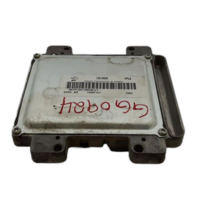
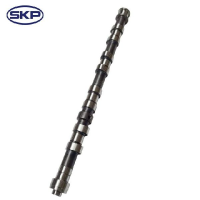
Shop the Parts Behind P1628
Below are the parts most often responsible for code P1628, ranked by how frequently each one is the actual culprit (per the diagnosis above). Tap any to see what we have for your vehicle.


The information in this article is provided for general reference and educational purposes only. Vehicle specifications, procedures, and part compatibility can vary by production date, trim level, and region. Always consult your vehicle's factory service manual and verify part numbers before purchasing or performing repairs. Safety-critical components such as airbags, seat belts, and braking systems should be installed by a qualified professional.
- 🧭 Diagnostic Flowchart
- 🛍️ Shop This Part
- What Does P1628 Mean?
- Can I Drive With P1628?
- Common Causes
- Symptoms
- Common Fixes & Costs
- Used vs. New Parts: Buying Guide
- What Happens If You Wait — Timeline
- Cost of Not Fixing It
- Diagnosis Steps
- When This Code Triggers (Freeze-Frame Conditions)
- Related Codes
- Climate & Environmental Factors
- How to Talk to a Mechanic About This Code
- Where to Take It: Dealer vs Independent vs Chain
- When to Walk Away From the Repair
- What Scan Tool You Need for This Code
- How to Clear the Code After You Fix It
- Will This Fail Emissions / State Inspection?
- Most Commonly Affected Vehicles
- Manufacturer-Specific Notes
- Real Owner Stories
- 2017 Ram 1500 3.6L at 244,000 miles with intermittent stalling
- 2014 Jeep Wrangler JK with sudden limp mode
- 2010 Dodge Grand Caravan 3.3L with a 1.5-year-long intermittent stalling issue
- BMW E92 M3 with limp mode and P1628 code
- How to Prevent This Code From Triggering
- Frequently Asked Questions
- Can a bad battery cause a P1628 code?
- What is the 'lightning bolt' light on my dashboard?
- Why did the code disappear and then come back?
- Is it expensive to fix code P1628?
- Can I just replace the sensor that has a related code?
- What is a common misdiagnosis for P1628?
- My mechanic can't find the problem because it's intermittent. What should I do?
- Can P1628 cause transmission problems?
- What does 'Sensor Reference Voltage 2' mean?
- Key Takeaways
- 🎟️ Get 5% Off