

P1629 on 2009 Cadillac SRX: Theft System Communication Failure Causes and Fixes
On a 2009 Cadillac SRX, code P1629 indicates a theft deterrent communication failure, almost always causing a no-start condition. The most likely causes are wiring issues near the ECM or a poor connection at the transmission's X1 connector, as documented in GM Technical Service Bulletins. These are known failure points that should be inspected before replacing any modules.
- P1629 on a 2009 SRX means the anti-theft system has disabled the engine due to a communication failure, resulting in a no-start condition.
- Do not immediately replace expensive modules. The problem is most often a wiring or connector issue, as documented in GM service bulletins.
- Diagnosis should start by inspecting specific wiring circuits near the ECM (per TSB PIC5460B) and the transmission X1 connector (per TSB PIC4740E).
- This is a complex electrical fault, and professional diagnosis is highly recommended due to the need for advanced diagnostic tools and potential module programming.
What's Unique About the 2009-2009 Cadillac SRX
The 2009 SRX is the final model year of the first generation, which shares its Sigma platform and Class 2 serial data network with the Cadillac CTS and STS. This architecture is known for specific electrical vulnerabilities. General Motors issued multiple Technical Service Bulletins (TSBs) that directly link P1629 and its common symptoms—like a no-crank condition or a key stuck in the ignition—to specific wiring circuits (CKT 5290, CKT 1807) and connectors (Transmission X1). This makes diagnosis more direct than on other vehicles, as the problem is often not a failed module but a specific, documented wiring or connector fault that affects multiple platform mates.
Diagnostic Flowchart
Tap your situation to follow the diagnostic path that matches what you're seeing on this vehicle.
Symptoms You May Notice
- Engine will not crank or start.
- Key is stuck in the ignition lock cylinder.
- Check Engine Light is on.
- Security indicator light is on or flashing.
- Multiple other warning lights may be present (e.g., StabiliTrak, Service Theft Deterrent).
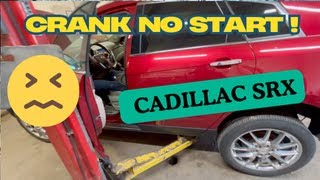
- Engine cranks but will not fire. 🎬 Watch: Diagnosing a crank but no start condition on an SRX.
- Replacing the ignition key or key fob. P1629 points to a module-to-module communication failure, not a key recognition issue.
- Replacing the fuel pump. The engine doesn't start because the ECM is actively disabling the fuel injectors as a security measure, not because the pump has failed.
- Replacing the starter. The engine may not crank because the ECM is not enabling the starter relay due to the security fault.
Most Likely Causes
- Wiring Fault in ECM Power or Data Circuits 🔴 High Probability TSB #PIC5460B specifically identifies the Ignition 1 Power Feed (CKT 5290) and the Class 2 data line (CKT 1807, often a purple wire) to the ECM as common failure points that cause a no-crank condition with P1629. The harness can chafe or break near the engine or underhood fuse block, leading to an open or short.
How to confirm: Using a multimeter, check for battery voltage at the ECM fuse in the underhood fuse block. If voltage is good, trace and test the integrity of the specified power (CKT 5290) and data (CKT 1807) wires between the fuse block and the ECM connector for opens or shorts. This requires a wiring diagram to 🎬 See this guide on diagnosing and repairing GM data lines. identify the correct pins.
Typical fix: Repair or replace the damaged section of the wiring harness. This often involves soldering in a new section of wire and protecting it with heat shrink and loom.
Est. part cost: $10-$50 - Corroded or Damaged Transmission Connector (X1) 🟡 Medium Probability → Shop Transmission Assembly TSB #PIC4740E documents that poor connections at the main transmission X1 connector can cause a loss of communication between multiple modules, triggering P1629 along with many other codes. The connector is a large, lever-lock style plug on the driver's side of the transmission, making it vulnerable to moisture, vibration, and road debris.
How to confirm: Disconnect the X1 connector on the driver's side of the transmission and inspect for any green or white corrosion, bent pins, or pins that are not fully seated. Perform a 'tug test' by gently pulling on each wire at the back of the connector to ensure it is securely locked in place, as a side load can create a poor connection.
Typical fix: Clean the connector terminals with an electrical contact cleaner and a small brush. If terminals are bent, loose, or severely corroded, they may need to be replaced or re-pinned. Apply dielectric grease before reconnecting to prevent future corrosion.
Est. part cost: $10-$30 - Failed Engine Control Module (ECM) ⚪ Low Probability → Shop Engine Control Module (ECM) While less common than wiring issues, the ECM can fail internally, preventing it from communicating with other modules. This is particularly true if the unit has been subjected to water damage or excessive vibration.
How to confirm: This is a diagnosis of exclusion. The ECM should only be suspected after all wiring, connectors, power, and ground circuits have been thoroughly tested and confirmed to be good, as recommended by TSB #PIC5460B. A professional may use a scan tool to 'ping' the module to see if it responds on the network.
Typical fix: Replace the ECM. The new module will require programming by a dealer or a qualified shop with GM-specific software (like ACDelco TDS) to input the vehicle's VIN and perform a security relearn procedure.
Est. part cost: $150-$600
Rare But Worth Checking
- Faulty Ignition Switch: → Shop Ignition Switch A failing ignition switch can cause intermittent power loss to various control modules, leading to a communication breakdown that triggers P1629 and can also cause the key to get stuck.
- Faulty Powertrain or Main Relay: An intermittent or failed relay that supplies power to the ECM can mimic the symptoms of a wiring fault and should be checked as part of the diagnostic process. TSB #PIC5460B explicitly mentions this possibility.
- Poor ECM Ground Connection: A loose, frayed, or corroded main ground strap for the engine/ECM can cause a host of unpredictable electrical issues, including communication codes like P1629. The ground is typically located on the engine block.
Diagnosis Steps
- Scan for all stored trouble codes in all modules. Pay close attention to any 'U' (network) codes that are present alongside P1629, as they are a critical clue.
- Check the battery and charging system to ensure stable voltage (above 12.4V), as low voltage can cause communication errors.
- Following TSB #PIC5460B, check the ECM-related fuses in the underhood fuse block.
- Test the Ignition 1 Power Feed (CKT 5290) and Class 2 Data line (CKT 1807, purple wire) for proper voltage and continuity between the fuse block and the ECM connector.
- Following TSB #PIC4740E, locate and disconnect the transmission X1 connector on the driver's side of the transmission. Thoroughly inspect for corrosion, moisture, and unseated or damaged pins. Perform a wire tug test on the connector.
- If wiring and connectors are good, test the main and powertrain relays that supply power to the ECM by swapping with a known-good relay.
- Inspect the main ECM ground connection on the engine block for tightness and corrosion.
- If all other steps fail to identify the fault, the ECM itself may be faulty. This should be the last resort.
Parts You'll Likely Need
- Engine Control Module (ECM)
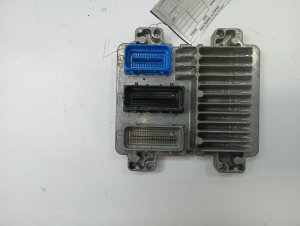
(OEM #12636659, 12625453)— This part is only needed if all wiring and connector issues have been ruled out, but it is the final component in the diagnostic chain for this code.
Trusted brands: ACDelco (GM Original Equipment), Cardone (Remanufactured), Dorman (Remanufactured)
OEM price range: $400-$800
Aftermarket price range: $150-$400 - Connector Pins/Terminals — Often the fix is not a major component but repairing the damaged wiring or terminals in the ECM or transmission X1 connector. These are typically sourced from a dealer parts department or specialized connector supplier.
Trusted brands: ACDelco
OEM price range: $5-$20
Aftermarket price range: $2-$10
Related Codes That Often Appear With This One
- U0100 — This code means 'Lost Communication With ECM' and frequently appears with P1629, indicating a broader network problem as cited in both TSB #PIC5460B and #PIC4740E.
- U1000 — A generic Class 2 communication failure code. Its presence with P1629 reinforces that the root cause is a network or wiring issue, not an isolated component.
- U-codes (U0109, U0121, U0140, U2100, etc.) — A wide range of U-prefix codes appearing with P1629 strongly suggests a fault at a major network junction, such as the transmission X1 connector mentioned in TSB #PIC4740E, which can disrupt communication for the ABS, fuel pump, and other modules.
Technical Service Bulletins (TSBs) & Recalls
- PIC5460B: Addresses a no-crank/key-stuck condition with P1629, pointing to specific power (CKT 5290) and data wire (CKT 1807) faults to the ECM.
- PIC4740E: Links P1629 and other communication codes to faults within the transmission X1 connector, recommending inspection for corrosion and unseated pins.
Platform-Specific Known Issues
- TSB #PIC5460B directly addresses a 'no crank' or 'key stuck in ignition' concern with code P1629, pointing to a wiring problem with the Ignition 1 Power Feed (CKT 5290) or the Class 2 data line (CKT 1807) to the ECM.
- TSB #PIC4740E identifies the transmission X1 connector as a common source of communication failures that can log P1629 along with numerous other codes due to corrosion or unseated terminals. The TSB advises a 'tug test' on each wire.
Mechanic-Grade Diagnostic Values
- Class 2 Serial Data Line (CKT 1807) Voltage — expected: The bus is active at a nominal 7.0 volts and inactive at ground potential (0V). It transmits data via voltage pulses.. Failure: A steady voltage significantly different from 7V (e.g., 10V or 12V) or a line stuck at 0V indicates a short to power or ground, or a faulty module pulling the bus down.
- EC Ignition Relay Feedback Parameter (Scan Tool) — expected: Should read Battery Voltage.. Failure: If the parameter is not at battery voltage, it indicates a problem with the Ignition 1 Power Feed (CKT 5290) or the ECM fuse, as per TSB #PIC5460B.
Scan Tool Commands That Help
- Tech 2 / GDS2: Module Status / Class 2 Message Monitor — When P1629 is present with U-codes, this function can be used to see which modules are actively communicating on the network and which have dropped off, helping to isolate the source of the communication loss.
- Tech 2 / GDS2: Security Relearn / BCM/PCM Relearn — This function is required after replacing the ECM, BCM, or ignition key components to synchronize the security passwords between the modules. Failure to perform this will result in a persistent P1629 and no-start condition.
- Tech 2 / GDS2 with Data Bus Diagnostic Tool: Detected State / Measured Voltage — This specialized tool actively queries modules to see which are responding and analyzes the bus voltage to identify faults like opens or shorts, providing a more advanced diagnosis than just reading codes.
- Manual Procedure (No Scan Tool): 30-Minute Security Relearn Procedure — If an ECM is replaced without access to a dealer scan tool, this manual procedure can be used to make the vehicle learn the new module. It involves cycling the ignition key to 'ON' for three consecutive 10-minute intervals.
Wiring & Ground Locations
- G101 — On the lower left front of the engine block.. This is a primary ground for the Engine Control Module (ECM) and Transmission Control Module (TCM). A poor connection here can cause unpredictable voltage differentials and communication errors like P1629 and various U-codes.
- G103 — On the cowl at the left rear of the engine compartment, above the brake booster.. This ground serves the Body Control Module (BCM) and the Remote Control Door Lock Receiver (RCDLR). Since the security signal originates from these modules, a bad ground here can directly interrupt the password signal to the ECM, causing P1629.
- Transmission Connector X1 — The main 16-pin electrical connector located on the driver's side of the transmission case.. This is a major junction for communication between the ECM and TCM. TSB #PIC4740E specifically identifies it as a common point of failure for corrosion and unseated pins that disrupt the network and cause P1629.
- Splice Pack JX200 / SP208 — Located under the instrument panel, near the base of the steering column (JX200) or under the right side of the instrument panel (SP208).. The Class 2 data lines from multiple modules meet at a splice pack. A fault here can take down the entire network. A technician can remove the comb from the splice pack to isolate individual module circuits and test them one by one to find which one is shorting the data line.
OEM Part Supersession History
12625453→12636659, 12639300, 12678512— Standard part evolution for hardware/software updates and consolidation of part numbers.
Heads up: Part number 12636659 is listed for multiple GM vehicles (e.g., Chevy Colorado) but requires vehicle-specific programming for the 2009 Cadillac SRX to function correctly. Ordering a pre-programmed unit requires providing the vehicle's VIN.
Helpful Videos


We Have This Part in Stock

The information in this article is provided for general reference and educational purposes only. Vehicle specifications, procedures, and part compatibility can vary by production date, trim level, and region. Always consult your vehicle's factory service manual and verify part numbers before purchasing or performing repairs. Safety-critical components such as airbags, seat belts, and braking systems should be installed by a qualified professional.
- Cadillac SRX:
- 🧭 Diagnostic Flowchart
- 🎬 Helpful Videos
- 🛍️ Shop This Part
- What's Unique About the 2009-2009 Cadillac SRX
- Symptoms You May Notice
- Most Likely Causes
- Rare But Worth Checking
- Diagnosis Steps
- Parts You'll Likely Need
- Related Codes That Often Appear With This One
- Technical Service Bulletins (TSBs) & Recalls
- Platform-Specific Known Issues
- Mechanic-Grade Diagnostic Values
- Scan Tool Commands That Help
- Wiring & Ground Locations
- OEM Part Supersession History
- 🎟️ Get 5% Off