

P1629 on 2006-2011 Cadillac STS: Theft Signal Not Received Causes and Fixes
On a 2006-2011 Cadillac STS, code P1629 almost always points to a communication failure between the theft deterrent module and the engine computer, often caused by corroded or unseated pins in the transmission's main X1 electrical connector on the driver's side. Inspecting and cleaning or repairing this specific connector is the most common and well-documented fix.
- P1629 on your STS means the engine is not getting the security 'OK' to start, so it cranks but won't run.
- Before suspecting expensive modules, inspect the large electrical connector on the transmission (X1) for corrosion or loose wires, as this is a known issue per a GM service bulletin.
- This code is almost always accompanied by communication codes (U-prefix). Solving the communication problem will solve the P1629.
- Do not replace the fuel pump or ignition key; the problem lies in the communication between security and engine control modules.
- Any replacement of the RCDLR or ECM will require professional programming to function.
What's Unique About the 2006-2011 Cadillac STS
While P1629 relates to the theft system on many GM vehicles, the 2006-2011 STS is specifically called out in a Technical Service Bulletin (TSB PIC4740E) for a wiring issue that causes this code. The problem is frequently not the theft module itself, but rather a loss of communication due to corrosion in the main transmission harness connector (X1). This large, black, lever-lock style connector is located on the driver's side of the transmission, making it susceptible to moisture and vibration, which leads to a communication breakdown that triggers P1629 along with a host of other U-series communication codes.
Diagnostic Flowchart
Tap your situation to follow the diagnostic path that matches what you're seeing on this vehicle.
Symptoms You May Notice
- Engine cranks but will not start
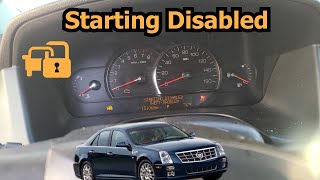
- "SECURITY" light or a lock symbol is illuminated on the instrument panel
- "Service Theft Deterrent System" message may appear on the Driver Information Center (DIC)
- Multiple other trouble codes, especially U-codes (communication codes), are present
- In some cases, the key may become stuck in the ignition
- Erratic gauge behavior or other warning lights (Traction Control, ABS) may appear due to the network communication failure
- Replacing the ignition key or ignition switch. While these are part of the theft system, the P1629 code points specifically to a communication failure, not a key recognition issue.
- Replacing the fuel pump. The engine cranks but won't start because the ECM is actively disabling the fuel injectors, not because the pump has failed.
- Replacing the battery or alternator without diagnosing the communication fault that is causing the no-start and potential charging system warnings.
Most Likely Causes
- Corroded or Unseated Pins in Transmission X1 Connector 🔴 High Probability → Shop Transmission Assembly A specific GM Technical Service Bulletin (PIC4740E) identifies this as a common failure point on the 2006-2011 STS. The connector's location on the driver's side of the transmission can expose it to moisture, leading to corrosion and loss of communication between essential modules. The TSB specifically advises inspecting the connections for the CAN bus lines.
How to confirm: Visually inspect the pins inside the large, black X1 electrical connector on the driver's side of the transmission. Disconnect it and look for any green or white corrosion, moisture, or pins that are backed out. Gently tug on each wire to ensure it is fully seated. TSB PIC4740E suggests paying close attention to terminals 1, 2, 3, 4, 11, 12, 13, and 14.
Typical fix: Clean the connector and pins with an electrical contact cleaner and a small brush. Apply dielectric grease upon reassembly to prevent future moisture intrusion. If corrosion is severe, the affected terminals or the entire connector pigtail may need to be replaced.
Est. part cost: $10-$60 - Faulty Remote Control Door Lock Receiver (RCDLR) 🟡 Medium Probability → Shop Keyless Entry Receiver The RCDLR is the module responsible for sending the fuel enable password. Like any electronic module, it can fail internally, though this is less common than the wiring issue.
How to confirm: This requires a bi-directional scan tool to check for communication with the RCDLR. If the module is powered and grounded but not communicating and the wiring (especially the X1 connector) is confirmed to be good, the module is likely faulty. If the DTC resets immediately after performing the relearn procedure, the RCDLR is considered faulty.
Typical fix: Replace the RCDLR module. A programming or 'relearn' procedure is required after installation so it can communicate with the ECM.
Est. part cost: $100-$250 - Wiring Harness Damage ⚪ Low Probability Wiring for the Class 2 Serial Data line (often a purple wire on GM vehicles) can become chafed, broken, or shorted at various points between the RCDLR and the ECM, not just at the X1 connector.
How to confirm: Perform a continuity and resistance check on the serial data wire between the RCDLR and the ECM connectors. This should only be done after the X1 connector has been ruled out.
Typical fix: Repair the damaged section of the wire, ensuring a solid, weather-proof connection.
Est. part cost: $5-$20
Rare But Worth Checking
- Faulty Engine Control Module (ECM): → Shop Engine Control Module (ECM) While less common, the ECM can fail internally and be unable to receive or process the password from the RCDLR. This is usually considered only after all other possibilities (wiring, RCDLR) have been eliminated. Diagnostic procedure states that if the code resets after performing the relearn procedure, the RCDLR is faulty, not the ECM.
Diagnosis Steps
- Scan for All Codes: Use an OBD-II scanner capable of reading GM-specific codes. Document all codes present. Per GM diagnostics, all 'U' (communication) codes must be addressed before diagnosing P1629.
- Inspect TSB-Indicated Connector: Locate the large, black, lever-lock X1 electrical connector on the driver's side of the transmission. Disconnect it carefully.
- Check for Corrosion/Damage: Thoroughly inspect both halves of the connector for green/white powder (corrosion), bent pins, or signs of moisture intrusion. Pay special attention to pins 1, 2, 3, 4, 11, 12, 13, and 14 as suggested by TSB PIC4740E.
- Perform a 'Tug Test': Gently pull on each individual wire going into the back of the connector to ensure the terminal is securely locked in place. A loose terminal can cause an intermittent connection.
- Clean or Repair Connector: If corrosion is found, clean it using electrical contact cleaner and a small brush. Apply dielectric grease to the seal before reconnecting. If pins are badly damaged or terminals are loose, a connector repair kit (pigtail) may be needed.
- Check RCDLR and ECM Power/Ground: If the connector is clean and secure, verify that the Remote Control Door Lock Receiver (RCDLR) and Engine Control Module (ECM) are receiving proper battery voltage and have a solid ground connection.
- Test Serial Data Line: If all else fails, check the continuity of the Class 2 serial data wire (often a purple wire) between the RCDLR and the ECM. An open or short in this wire will prevent the password signal from reaching the ECM.
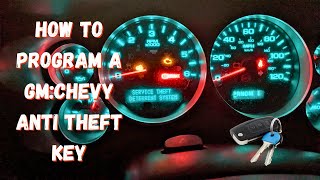
- Module Replacement: Only after confirming all wiring is intact should you consider replacing the RCDLR or, as a last resort, the ECM. Note that replacement modules require special programming to work with your vehicle. 🎬 Watch: How to program the anti-theft system after a module swap.
Parts You'll Likely Need
- Transmission Harness Connector Repair Kit — This is the most common failure point identified in GM's service bulletin for this code on this vehicle. Corrosion or loose terminals in the X1 connector are frequent culprits. A pigtail kit allows for replacement of a damaged connector body or terminals.
Trusted brands: ACDelco (e.g., PT2311 - verify fitment as it's a multi-use connector), Dorman
OEM price range: $40-$80
Aftermarket price range: $20-$50 - Remote Control Door Lock Receiver (RCDLR)
(OEM #15912937 (Verify by VIN, may vary by year))— If wiring is confirmed to be good, the module that generates the security password may have failed. Requires programming after installation.
Trusted brands: ACDelco, GM Genuine Parts
OEM price range: $150-$250
Aftermarket price range: $100-$180
Related Codes That Often Appear With This One
- U0073 — Indicates a general Control Module Communication Bus 'A' Off error, directly related to the wiring issue described in TSB PIC4740E.
- U0100 — Means 'Lost Communication With ECM/PCM,' which can be set in other modules when the X1 connector issue is present.
- U0101 — Signifies 'Lost Communication with TCM,' which is highly likely given the fault is at the transmission's main connector.
- U0121 — Indicates 'Lost Communication with Anti-Lock Brake System (ABS) Control Module,' pointing to a widespread network communication problem originating at the X1 connector.
- P0700 — A generic code indicating the Transmission Control Module (TCM) has stored a fault, which is highly likely if its main connector is compromised.
Technical Service Bulletins (TSBs) & Recalls
- PIC4740E: Addresses a no-communication condition with the TCM/ECM that sets P1629 and other codes, pointing to an inspection of the transmission X1 connector. It specifically advises checking terminals 1, 2, 3, 4, 11, 12, 13, and 14.
Platform-Specific Known Issues
- Technical Service Bulletin PIC4740E explicitly notes that a loss of communication with the TCM or ECM, setting P1629 and numerous U-codes, can be caused by unseated or corroded terminals in the transmission X1 connector.
Mechanic-Grade Diagnostic Values
- GM Class 2 Serial Data Line Voltage — expected: The bus should show voltage pulses switching between an active (dominant) state of approximately 7.0-7.5 volts and an inactive (recessive) state of 0 volts (ground).. Failure: A line stuck at 0V indicates a short to ground or an open circuit. A line stuck at a constant voltage (e.g., 7V or 12V) indicates a short to power or a failed module pulling the bus high. Any voltage that does not cleanly switch between ~0V and ~7V suggests a problem. The logical decision point for high/low is 3.5V.
Hidden / Shadow Codes Worth Checking
- P1630: Theft Deterrent Password Learn Mode. This may be seen during a relearn procedure. (see via GM-specific scan tool like a Tech 2.)
- P1631: Theft Deterrent Incorrect Password. This indicates the password from the RCDLR did not match what the ECM expected. (see via GM-specific scan tool like a Tech 2.)
- U-Codes (e.g., U0100, U0140): Loss of communication codes with other modules. The diagnostic procedure for P1629 explicitly states that all U-codes must be diagnosed and fixed *before* addressing P1629, as they indicate the root communication fault. (see via Most comprehensive OBD-II scanners.)
Scan Tool Commands That Help
- Tech 2 / GDS2: Special Functions > Programming > Program Theft Deterrent System Components — This function is required after replacing the RCDLR or ECM to initiate the security password relearn process, allowing the modules to synchronize.
- Tech 2 / GDS2: Data Display (for RCDLR, BCM, ECM) — To monitor the status of the serial data line and check for communication activity between modules. A lack of data from the RCDLR would point towards a wiring, ground, or module issue. The Tech 2 offers full bidirectional control to test various body and powertrain functions.
- Manual Procedure (No Scan Tool): 30-Minute Security Relearn Procedure — After replacing a theft system component (like the RCDLR), if you do not have a scan tool. It involves three 10-minute cycles of turning the ignition ON and waiting for the security light to turn off.
Wiring & Ground Locations
- RCDLR (Remote Control Door Lock Receiver) — Located under the rear speaker shelf in the trunk area.. This is the module that generates and sends the fuel enable password to the ECM. Its power, ground, and data line connections are critical.
- G101 (Ground) — Located near the left front strut tower, at the bottom of the inside fender well.. This is a primary ground point for the Engine Control Module (ECM) and Transmission Control Module (TCM). A poor connection here can directly cause communication failures.
- G103 (Ground) — Located on the cowl at the left rear of the engine compartment, above the brake booster.. This ground serves the Body Control Module (BCM) and the Remote Control Door Lock Receiver (RCDLR). Since the BCM acts as a gateway for the security signal, this ground is essential.
- Main Engine-to-Frame Ground Strap — A large, heavy-gauge strap connecting the engine block to the vehicle's frame. The exact location can vary but is typically low on the engine block near the transmission.. On vehicles with a rear-mounted battery like the STS, a corroded or broken engine ground strap can cause the starter motor to seek a ground path through sensitive communication circuits, inducing voltage drops and data corruption that can trigger P1629 and other U-codes.
"I Checked Everything" — The Actual Cause
- A common diagnostic dead-end occurs when technicians verify power and ground at the individual modules (ECM, RCDLR) and check the X1 connector, finding no obvious faults. The hidden cause can be a high-resistance or broken main engine-to-frame ground strap. Because the battery is in the rear, the starter's high current draw seeks an alternate path to ground through smaller wires and data lines, causing a massive voltage drop across the network and preventing modules from communicating correctly. A voltage drop test between the engine block and the negative battery terminal during cranking would reveal this issue.
When the Usual Fixes Don't Work
- While the TSB pointing to the transmission X1 connector is the most common fix, it is not the only one. In cases where cleaning the X1 connector does not resolve the issue, the next most likely cause is a faulty ground connection, not necessarily a failed module. Technicians report that a corroded main engine block ground strap can produce the same symptoms, as it creates instability across the entire vehicle electrical system during cranking. Before replacing the RCDLR or ECM, all primary power and ground connections for the main vehicle systems should be load-tested.
Model Year Variations Within This Range
- 2008-2011: The Cadillac STS received a mid-cycle refresh for the 2008 model year, which included updated interior electronics and exterior styling. While the fundamental theft deterrent architecture (RCDLR -> BCM -> ECM) remained the same, wiring diagrams and module locations should always be verified for the specific year, as minor changes to connectors or harness routing are possible.
Helpful Videos
We Have This Part in Stock




The information in this article is provided for general reference and educational purposes only. Vehicle specifications, procedures, and part compatibility can vary by production date, trim level, and region. Always consult your vehicle's factory service manual and verify part numbers before purchasing or performing repairs. Safety-critical components such as airbags, seat belts, and braking systems should be installed by a qualified professional.
- Cadillac STS:
- 🧭 Diagnostic Flowchart
- 🎬 Helpful Videos
- 🛍️ Shop This Part
- What's Unique About the 2006-2011 Cadillac STS
- Symptoms You May Notice
- Most Likely Causes
- Rare But Worth Checking
- Diagnosis Steps
- Parts You'll Likely Need
- Related Codes That Often Appear With This One
- Technical Service Bulletins (TSBs) & Recalls
- Platform-Specific Known Issues
- Mechanic-Grade Diagnostic Values
- Hidden / Shadow Codes Worth Checking
- Scan Tool Commands That Help
- Wiring & Ground Locations
- "I Checked Everything" — The Actual Cause
- When the Usual Fixes Don't Work
- Model Year Variations Within This Range
- 🎟️ Get 5% Off