

P1629 on 2000-2005 Chevrolet Monte Carlo: Theft System No-Start Causes and Fixes
On a 2000-2005 Monte Carlo, P1629 almost always means the Passlock sensor inside the ignition lock cylinder has failed, causing a no-start and flashing security light. The most common fix is replacing the ignition lock cylinder and performing a 30-minute security relearn procedure, which is a DIY-friendly job. A common but less reliable workaround is to bypass the sensor with a resistor of a specific value.
- P1629 on your Monte Carlo is an anti-theft code, not a fuel or engine failure. The car thinks it's being stolen.
- The most likely cause is a worn-out Passlock sensor inside the ignition lock cylinder where you put your key.
- Before replacing parts, try the 30-minute security relearn procedure. It's free and may solve the problem temporarily, confirming the diagnosis.
- Replacing the ignition lock cylinder is a common DIY repair. You must perform the 30-minute relearn procedure after installation for the car to start.
- Do not waste money on a new key; the security component is not in the key for this system.
What's Unique About the 2000-2005 Chevrolet Monte Carlo
The 2000-2005 Monte Carlo uses the GM Passlock II anti-theft system, which was notoriously prone to failure. Unlike systems with a chip in the key, the security component is a Hall effect sensor and magnet assembly inside the ignition lock housing itself. Over time, the sensor or its delicate wiring fails from normal wear and tear of rotating the key, leading to an intermittent but eventually permanent no-start condition that has stranded many owners. This specific failure mode is one of the most common non-maintenance issues for this generation of Monte Carlo and its GM W-body platform mates.
Symptoms You May Notice
- Engine cranks but will not start.
- Engine starts and runs for a few seconds, then immediately stalls.
- Flashing "Security" light on the instrument cluster during the no-start event.
- Intermittent no-start condition that becomes more frequent over time.
- In some cases, the instrument panel may not power up correctly or lights will be dim when the fault occurs.
- Replacing the fuel pump. The engine isn't getting fuel because the PCM is turning the injectors off, not because the pump is bad.
- Replacing the key. The Passlock II system does not use a transponder chip in the key; the security sensor is in the ignition cylinder housing. A new key will not solve this problem.
Most Likely Causes
- Failed Ignition Lock Cylinder (Passlock Sensor) 🔴 High Probability → Shop Ignition Switch The Passlock II sensor integrated into the ignition lock cylinder is a very common failure point on this platform due to wear and tear over many ignition cycles. The internal contacts and wiring are fragile.
How to confirm: The presence of a flashing security light during a crank-no-start condition is the primary indicator. If a temporary security relearn procedure allows the car to start, it strongly points to a failing sensor. The issue is often intermittent at first.
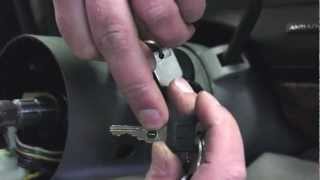
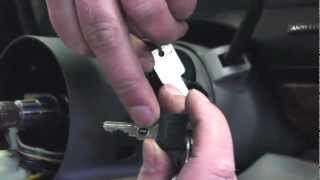
Typical fix: Replace the ignition lock cylinder 🎬 Watch: A step-by-step guide to replacing the ignition lock cylinder. and perform the 30-minute security relearn procedure 🎬 Watch: How to correctly perform the 30-minute security relearn. to sync the new part with the BCM. An alternative, but less recommended fix, is to measure the resistance of the sensor when it's working and solder a fixed resistor into the circuit to bypass the sensor permanently.
Est. part cost: $40-$120 - Damaged Wiring 🟡 Medium Probability The three thin wires (typically yellow, orange/black, and black) running from the ignition lock cylinder down the steering column can break or chafe from the tilt-wheel mechanism or simple age, causing an intermittent connection.
How to confirm: Visually inspect the wiring harness coming from the ignition lock cylinder. Wiggle the harness while trying to start the car. Test for continuity on all three wires between the BCM connector and the ignition cylinder connector.
Typical fix: Repair the broken or shorted wire(s). In some cases, a new ignition switch pigtail connector may be needed if the connector itself is damaged.
Est. part cost: $5-$30 - Faulty Body Control Module (BCM) ⚪ Low Probability → Shop Body Control Module While less common than the Passlock sensor, the BCM can fail internally, preventing it from reading the sensor or communicating with the PCM. This can sometimes manifest as other strange electrical issues.
How to confirm: This is typically diagnosed by exclusion. If a new ignition lock cylinder and verified wiring do not solve the problem, the BCM is the next likely suspect. A professional scan tool is needed to check for communication errors with the BCM and to see if it's receiving a signal from the Passlock sensor.
Typical fix: Replace the Body Control Module. This requires programming the new module to the vehicle's VIN and options, which usually requires a dealer or specialized shop with a Tech 2 scanner.
Est. part cost: $100-$250
Rare But Worth Checking
- Faulty Powertrain Control Module (PCM): → Shop Engine Control Module (ECM) Extremely rare for this specific code. The PCM is usually just following the BCM's command to disable fuel. Only consider this after all other possibilities, including wiring and the BCM, have been thoroughly ruled out.
Diagnosis Steps
- Verify the code P1629 is present with a scanner. Note any other 'B' or 'U' codes, especially B2960.
- Observe the symptoms. Confirm the engine cranks but won't start (or starts and stalls) and that the 'Security' light is flashing on the dash.
- Attempt the 30-minute security relearn procedure. This is a necessary step for new parts and can sometimes temporarily resolve an intermittent fault.
- 30-Minute Relearn: Turn the key to 'ON' (engine off). The security light will be on or flashing. Wait approximately 10-11 minutes until the light turns off solid.
- Turn the key 'OFF' for 10-20 seconds.
- Repeat the ON (10 min) and OFF (10 sec) steps two more times for a total of three cycles (approx. 30-35 minutes total).
- After the third cycle, turn the key off, then attempt to start the engine. If it starts, the system has relearned. If the problem returns later, the fault is almost certainly a failing part (usually the lock cylinder).
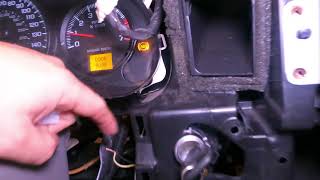
- If the relearn does not work, inspect the wiring. Remove the steering column shrouds and locate the small 3-wire harness from the ignition lock cylinder. Check for chafed or broken wires, especially near the tilt-wheel pivot point.
- If wiring is intact, the most likely cause is the ignition lock cylinder. Replace the ignition lock cylinder.
- After installing the new cylinder, you MUST perform the 30-minute relearn procedure again for the car to learn the new sensor's value and allow the engine to start.
Parts You'll Likely Need
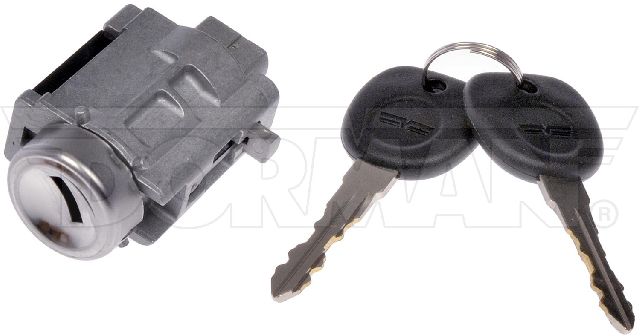
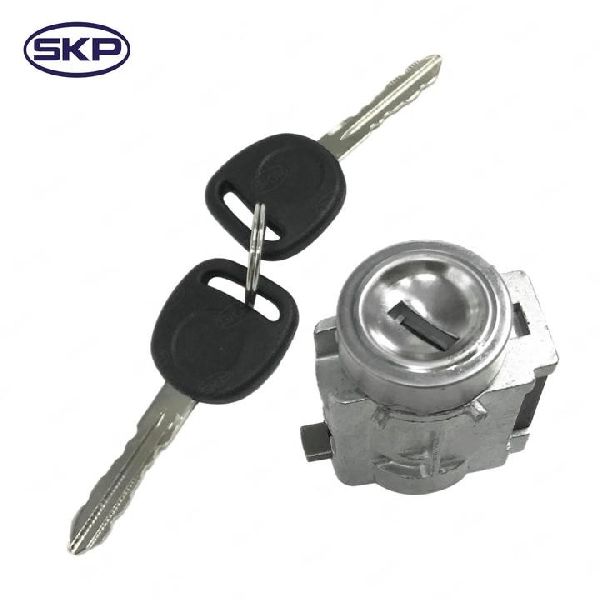
- Ignition Lock Cylinder
(OEM #ACDelco D1462G (supersedes 15795321))— This is the most common failure point. The part contains the Passlock sensor that wears out, causing the P1629 code and a no-start condition.
Trusted brands: ACDelco (OEM), Dorman (e.g., 924-719), Standard Motor Products (e.g., US286L)
OEM price range: $70-$120
Aftermarket price range: $40-$80
Related Codes That Often Appear With This One
- B2960 — This is a Body Control Module code that often accompanies P1629. It specifically means 'Security System Sensor Data Incorrect but Valid', pointing directly at a problem with the Passlock sensor's signal being erratic or out of range.
- P1631 — This code for 'Theft Deterrent Start Enable Signal Not Correct' can also appear, indicating the password sent by the BCM to the PCM was incorrect, which is another symptom of the same Passlock system failure.
Technical Service Bulletins (TSBs) & Recalls
- While no specific TSB number is consistently cited for P1629 alone, numerous GM bulletins address intermittent no-start and stalling related to the Passlock system, often instructing technicians to check wiring and the ignition lock cylinder.
Platform-Specific Known Issues
- This model was subject to GM recall #14V355000 for unintended ignition key rotation, where a heavy keychain could cause the switch to turn off while driving. The fix was a key insert, not a new cylinder. This is a separate issue from the P1629 fault, which is caused by wear of the Passlock sensor.
- A common, though not officially recommended, workaround for a failed Passlock sensor is the 'resistor bypass'. This involves measuring the resistance value of the yellow signal wire when the system is working correctly and then permanently soldering a resistor of that value between the signal and ground wires, tricking the BCM into thinking the key is always correct. This permanently disables the Passlock feature. 🎬 See how to perform a permanent resistor bypass on this system.
Mechanic-Grade Diagnostic Values
- Passlock Sensor Signal Wire Voltage — expected: Approximately 4.7-5.0V with key in 'ON' position before crank. Voltage should then drop to a steady, lower value during 'START' (crank).. Failure: If the voltage is not present at 'ON', does not drop during 'CRANK', or is erratic, the sensor or its wiring is faulty.
- Passlock Sensor Resistor Value (for bypass) — expected: There are 15 possible resistance values ranging from 392 Ohms to 11.8K Ohms. A common value used in bypass tutorials is a 2.2K Ohm (2200 Ohm) resistor, but the correct value must be measured from a working sensor for a no-relearn bypass.. Failure: This is not a failure value, but the value needed to perform a permanent bypass of the sensor. The value is measured between the yellow signal wire and the black (or orange/black) ground wire from the ignition cylinder side of the harness with the key in the 'RUN' position.
- BCM Power Supply to Passlock Sensor — expected: Should be 9.0V or higher between the Red/White (or White) power wire and the Black ground wire at the sensor connector with the key in 'ON' or 'CRANK'.. Failure: If voltage is low or absent, it indicates a wiring problem between the BCM and the sensor, a bad BCM ground, or a faulty BCM itself.
Scan Tool Commands That Help
- GM Tech 2: View BCM Data Stream — A Tech 2 scanner can display the Passlock data voltage the BCM is receiving in real-time. This allows a technician to see if the voltage is erratic, incorrect, or absent, confirming a fault in the sensor or wiring without having to back-probe wires.
- GM Tech 2: BCM/PCM Relearn Procedure — After replacing a BCM or PCM, a scan tool can initiate the security relearn process, which is faster than the manual 30-minute procedure.
Wiring & Ground Locations
- Body Control Module (BCM) — Located under the driver's side of the dashboard, to the far left, above the parking brake lever.. The BCM is the module that reads the Passlock sensor data and sends the fuel enable password to the PCM. All relevant wiring originates or terminates here.
- G201 / G203 — Main interior ground points located under the instrument panel, to the right of the steering column on the support bracket.. A poor ground at G201 or G203 can cause the BCM to malfunction, leading to incorrect readings from the Passlock sensor or communication failures with the PCM, mimicking other faults.
- BCM Connector C2, Pin A3 (Yellow Wire) — This is the specific pin on the grey 24-pin BCM connector that receives the signal from the Passlock sensor.. This is the terminal point for testing the yellow signal wire's continuity from the ignition cylinder. A break in this wire is a common cause of P1629.
- BCM Connector C1, Pin A7 (Black Wire) — This is a ground pin on the pink 24-pin BCM connector that provides the ground reference for the Passlock sensor.. This is the terminal point for testing the ground circuit for the Passlock sensor. A fault here will prevent the sensor from working correctly.
Real Owner Repair Stories
- YouTube user 'Big Slick' (2005 Chevrolet Classic (mechanically similar to Monte Carlo)) — Constant need to perform the security relearn procedure to start the car, indicating a permanent hardware fault.
❌ Tried (didn't work) Repeated 30-minute relearn procedures only provided a temporary fix.
✅ What actually fixed it The owner permanently bypassed the Passlock II system by soldering a 2.2K Ohm (2200 Ohm) resistor between the yellow signal wire (BCM side) and the black ground wire. After installing the resistor, a final 10-minute relearn was performed, which permanently resolved the no-start issue. - Chevrolet Forum user (2002 Impala (W-Body platform mate)) — Intermittent no-start with security light, along with other BCM-related issues that were worse in higher ambient temperatures.
❌ Tried (didn't work) Replaced BCM with a new ACDelco unit., Replaced ignition switch., Replaced Passlock sensor (ignition lock cylinder).
✅ What actually fixed it The user suspected a bad ground connection at the G201 ground splice pack as the final possibility after replacing all common hardware components. The resolution was not posted, but the story is valuable as it shows a case where replacing all the usual parts did not solve the problem, pointing towards a wiring or ground fault.
OEM Part Supersession History
GM 89022365→ACDelco D1462G— Part number consolidation and update.
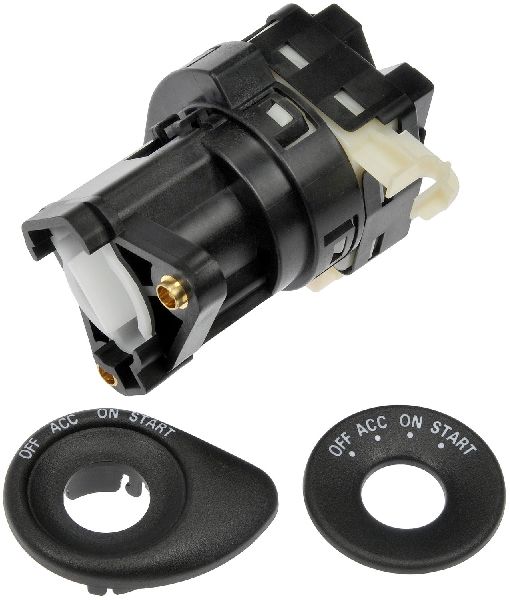
Heads up: D1462G is the ignition lock *housing* which contains the Passlock sensor. It is often sold without the mechanical lock cylinder itself. Aftermarket kits like the Dorman 924-719 often bundle the housing and a new lock cylinder together.
Diagnostic Flowchart
Other Known Issues on This Vehicle
Issues unrelated to this code that are worth knowing about as an owner of this generation:
- Intake Manifold Gasket Failure (3.1L/3.4L V6) 🔴 High — Extremely common, often occurs between 60,000 and 150,000 miles. Failure allows coolant to mix with engine oil, which can lead to catastrophic engine damage if not addressed.
- Upper Intake Manifold (Plenum) Failure (3.8L V6) 🔴 High — Very common. The plastic plenum can degrade or crack, especially around the EGR stovepipe, causing a vacuum leak or internal coolant leak that can hydro-lock the engine.
- Faulty Instrument Cluster Gauges 🟠 Medium — Widespread issue where gauges (speedometer, tachometer, etc.) become erratic, get stuck, or stop working entirely due to failed stepper motors inside the cluster. (Ref: GM had a special coverage adjustment for some vehicles, but it has long since expired. Not a formal recall.)
- 4T65-E Transmission Shift Solenoid/Pressure Control Solenoid Failure 🟠 Medium → Shop Transmission Assembly — Common on higher-mileage vehicles. Can cause harsh shifting, slipping, or a 'Max Adapt' or 'Long Shift' error (P1811), often when the transmission is hot. (Ref: Multiple TSBs exist, such as 08-07-30-016, related to various shift quality issues.)
- Premature Brake Rotor Warping 🟡 Low — Frequently reported by owners. The original equipment rotors are often cited as being prone to warping, causing a pulsation or vibration when braking.
- Plastic Coolant Elbow Failure (3.8L V6) 🟡 Low — The plastic heater hose elbows located on the tensioner bracket become brittle and crack, causing a coolant leak on the passenger side of the engine. A very common but inexpensive fix.
Used vs. New Parts: Buying Guide for This Vehicle
When a used part is the smart pick: A used Body Control Module (BCM) from a junkyard can be a cost-effective option, provided you get it from a vehicle with the exact same options. However, it will require the 30-minute security relearn procedure to sync with your vehicle's PCM and ignition.
Donor-vehicle mileage cap: roughly under 150000 miles for the part to have meaningful remaining life.
What to inspect on the donor part:
- For a BCM, inspect the connector pins for any signs of corrosion or water damage.
- For an ignition lock cylinder, ensure the key turns smoothly without binding. However, buying used is highly discouraged as it is a primary wear item.
- Verify the donor vehicle was not in a flood.
OEM-only on this vehicle (don't cheap out):
- While not strictly OEM-only, using a very cheap, unbranded ignition lock cylinder is a significant risk for premature failure. Sticking to OEM (ACDelco) or reputable aftermarket brands is strongly advised for this critical part.
Aftermarket brands forum-validated for this vehicle:
- Dorman (often praised for fixing OEM design flaws).
- Standard Motor Products (SMP).
- ACDelco (Original Equipment).
Brands owners have reported issues with on this vehicle:
- Unnamed, 'white-box' parts from online marketplaces have a high reported failure rate on forums. The small cost savings are not worth the risk of being stranded again.
Real Owner Stories
Aggregated from forums and TSBs cited above. Mileages and costs reflect what owners reported in those sources.
2000-2005 Chevrolet Monte Carlo
Symptoms: The car had a flashing security light and would not start. Performing the 30-minute relearn procedure only provided a temporary solution.
What fixed it: Replacing the ignition lock cylinder.
Source hint: Monte Carlo Forum - 'Security Light/Car Won\'t Start'
2002 Chevrolet Monte Carlo
Symptoms: The engine would start and then stall immediately, accompanied by a flashing security light.
What fixed it: The consensus fix was the ignition lock cylinder followed by the mandatory relearn procedure.
Source hint: Chevrolet Forum - '2002 Monte Carlo Security issue P1629'
Related OBD-II Codes
Frequently Asked Questions
My 2003 Monte Carlo won't start and the security light is flashing. What's the first thing I should try?
I heard about GM recall #14V355000 for the ignition on my Monte Carlo. Is that related to the P1629 code?
Is it true I can just solder a resistor in to fix my Monte Carlo's P1629 problem for good?
My 2004 Monte Carlo starts and then dies immediately. Is this a symptom of the P1629 Passlock issue?
I'm replacing the ignition lock cylinder on my Monte Carlo. Can I just install it and go?
The mechanic says my BCM is bad, but I think it's the ignition switch. How can I be sure?
Does this P1629 problem also happen on the Chevy Impala or Pontiac Grand Prix from the same years?
Helpful Videos

We Have This Part in Stock


The information in this article is provided for general reference and educational purposes only. Vehicle specifications, procedures, and part compatibility can vary by production date, trim level, and region. Always consult your vehicle's factory service manual and verify part numbers before purchasing or performing repairs. Safety-critical components such as airbags, seat belts, and braking systems should be installed by a qualified professional.
- Chevrolet Monte Carlo:
- 🧭 Diagnostic Flowchart
- 🎬 Helpful Videos
- 🛍️ Shop This Part
- What's Unique About the 2000-2005 Chevrolet Monte Carlo
- Symptoms You May Notice
- Most Likely Causes
- Rare But Worth Checking
- Diagnosis Steps
- Parts You'll Likely Need
- Related Codes That Often Appear With This One
- Technical Service Bulletins (TSBs) & Recalls
- Platform-Specific Known Issues
- Mechanic-Grade Diagnostic Values
- Scan Tool Commands That Help
- Wiring & Ground Locations
- Real Owner Repair Stories
- OEM Part Supersession History
- Other Known Issues on This Vehicle
- Used vs. New Parts: Buying Guide for This Vehicle
- Real Owner Stories
- 2000-2005 Chevrolet Monte Carlo
- 2002 Chevrolet Monte Carlo
- Related OBD-II Codes
- Frequently Asked Questions
- 🎟️ Get 5% Off