

P1629 on 2000-2006 GMC Yukon: Theft System No-Start Causes and Fixes
This code means the anti-theft system has disabled the engine, causing a no-start or start-and-stall. The most common cause is a failed Passlock sensor inside the ignition lock cylinder housing. Replacing the ignition lock cylinder and performing a 30-minute relearn procedure is the most likely fix. A permanent bypass using a resistor is also a common and effective solution.
- P1629 means your Yukon's anti-theft system has locked you out, causing a no-start or start-and-stall condition.
- Before spending any money, try the 30-minute security relearn procedure. This can sometimes fix temporary glitches.
- The most common failed part is the Passlock sensor, which is sold as part of the ignition lock cylinder housing.
- Do not immediately assume the fuel pump or starter is bad; they are likely being disabled by the security system.
- After replacing the ignition lock cylinder, the 30-minute relearn procedure is mandatory for the truck to recognize the new part.
What's Unique About the 2000-2006 GMC Yukon
The 2000-2006 GMC Yukon uses the GM Passlock II anti-theft system. Unlike systems that use a chip in the key, Passlock relies on a Hall effect sensor and magnet within the ignition lock cylinder housing to verify a correct key turn. This system is notoriously unreliable across the entire GMT800 platform (which includes the Yukon, Tahoe, Silverado, Sierra, and Escalade) for the sensor and its associated thin-gauge wiring failing over time, leading to a very high incidence of this specific no-start problem.
Symptoms You May Notice
- Engine cranks but will not start
- Engine starts and immediately dies (stalls within 1-2 seconds)
- Engine does not crank at all
- The 'Security' light is illuminated solid or is flashing on the instrument cluster
- Replacing the fuel pump because the engine isn't getting fuel. The fuel pump is intentionally disabled by the PCM as part of the anti-theft response.
- Replacing the starter because the engine won't crank. The crank signal can also be disabled by the theft system, though this is less common with Passlock II than fuel cut.
- Replacing the PCM. This is very rarely the cause of the issue and is an expensive misdiagnosis.
Most Likely Causes
- Faulty Ignition Lock Cylinder / Passlock Sensor 🔴 High Probability → Shop Ignition Switch The Passlock sensor is integrated into the ignition lock cylinder housing and is the most common failure point on GM vehicles of this era. Wear and tear from years of use causes the sensor's internal components or wiring to fail, stopping it from sending the correct signal.
How to confirm: After confirming the battery is healthy and fuses are good, the persistence of the security light and P1629 code after attempting a relearn procedure points strongly to a failed sensor.
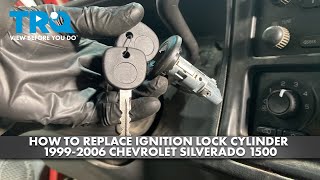
Typical fix: Replace the ignition lock cylinder housing, which contains the new Passlock sensor. 🎬 Watch: Step-by-step guide to replacing the ignition lock cylinder housing. An ignition system relearn procedure must be performed after replacement.
Est. part cost: $40-$150 - Worn or Damaged Ignition Switch 🟡 Medium Probability → Shop Ignition Switch The ignition switch is the electrical component that the lock cylinder acts upon. Its internal contacts can wear out, creating an open or intermittent circuit for the Passlock signal or other critical power feeds to the BCM/PCM.
How to confirm: If replacing the lock cylinder does not solve the issue, the ignition switch is the next logical component to test and replace. A multimeter can be used to check for continuity through the switch in its various positions.
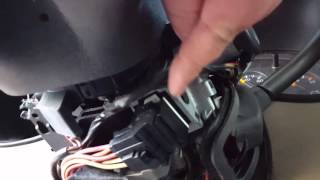
Typical fix: Replace the ignition switch located on the steering column. This part is separate from the lock cylinder. The ACDelco D1426D (GM #15242754) is a common replacement part. 🎬 See this walkthrough for replacing the electrical ignition switch.
Est. part cost: $30-$80 - Broken or Chafed Wiring ⚪ Low Probability The small-gauge wires (typically yellow, black, and orange/black) that run from the Passlock sensor down the steering column can break or chafe from repeated use of the tilt-steering function, causing an intermittent or total loss of signal.
How to confirm: Visually inspect the wiring harness coming from the ignition lock cylinder for any signs of damage, especially where it flexes with the tilt column. Test for continuity on the yellow and black wires.
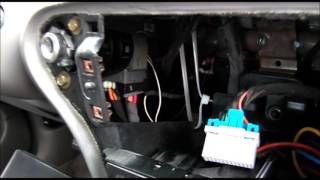
Typical fix: Repair the broken wire(s) using solder and heat shrink tubing. Some owners opt to perform a permanent resistor bypass at this stage. 🎬 Watch: How to perform a permanent Passlock 2 resistor bypass.
Est. part cost: $1-$10 - Low Battery Voltage ⚪ Low Probability Low system voltage during cranking can cause communication errors between the Body Control Module (BCM) and PCM, scrambling the security handshake and triggering the code.
How to confirm: Test the battery with a multimeter; it should read at least 12.4 volts at rest. Load test the battery to ensure it's healthy under load.
Typical fix: Charge or replace the vehicle's battery. A security relearn procedure may be necessary after the battery is restored.
Est. part cost: $150-$250
Rare But Worth Checking
- Faulty Body Control Module (BCM): → Shop Body Control Module While possible, a faulty BCM is much less common than sensor or wiring failure. It would typically be accompanied by other seemingly unrelated electrical issues in the vehicle, as the BCM controls many body functions.
Diagnosis Steps
- Verify the complaint: Confirm the 'Security' light is on or flashing and the engine either won't start or starts and immediately stalls.
- Check Battery Health: Ensure the battery has a full charge (12.4V+). A weak battery can cause module communication errors.
- Attempt a Security Relearn Procedure: Before replacing parts, try the 30-minute relearn. Turn the key to 'ON' (don't start) and wait for the Security light to turn off (approx. 10 minutes). Turn the key 'OFF' for 5 seconds. Repeat this process two more times for a total of three 10-minute cycles. If the vehicle starts, the issue may have been a temporary glitch.
- Inspect Wiring: Remove the steering column shrouds and visually inspect the thin wires (usually a set of three: yellow, black, and sometimes orange/black) coming from the ignition lock cylinder. Check for any breaks, chafing, or poor connections, especially near the tilt-column pivot point.
- Test or Bypass the Passlock Sensor: If the relearn fails and wiring looks good, you have two main options. Option A is to replace the ignition lock cylinder housing. Option B is to perform a permanent bypass. To do this, cut the yellow signal wire and solder a resistor (values can range from 500 to 10,000 Ohms, but a 2.2k Ohm resistor is commonly used) between the BCM-side of the yellow wire and the black ground wire. After the bypass, a final 30-minute relearn procedure is required for the BCM to learn the new fixed resistance value.
- Replace the Ignition Lock Cylinder Housing: If you prefer a direct repair over a bypass, replace the lock cylinder housing (e.g., Dorman 924-719). This part contains the new Passlock sensor.
- Perform Post-Replacement Relearn: After installing the new lock cylinder, you MUST perform the 30-minute relearn procedure for the BCM to learn the new sensor's value.
- Consider the Ignition Switch: If the problem persists after replacing/bypassing the lock cylinder, the electrical ignition switch (e.g., ACDelco D1426D) is the next most likely culprit.
Parts You'll Likely Need
- Ignition Lock Cylinder Housing
(OEM #15822350, 25832354)— This housing contains the Passlock sensor, which is the most common component to fail and trigger a P1629 code.
Trusted brands: ACDelco, Dorman (p/n 924-719), Standard Motor Products (p/n US-286L)
OEM price range: $80-$150
Aftermarket price range: $40-$100 - Ignition Switch
(OEM #15242754, 12450251)— If the Passlock sensor is not the cause, the electrical switch it connects to is the next most likely failure point due to worn internal contacts.
Trusted brands: ACDelco (p/n D1426D), Dorman (p/n 924-715), Wells (p/n 1S6002)
OEM price range: $50-$90
Aftermarket price range: $30-$60 - Resistor for Bypass — For owners choosing the permanent bypass fix, a simple resistor is needed. A 2.2k Ohm (2200 Ohm), 1/2 watt resistor is commonly cited and used.
Trusted brands: N/A - Generic electronic component
OEM price range: N/A
Aftermarket price range: <$1
Related Codes That Often Appear With This One
- P1626 — P1626 is another GM theft code. While P1629 often means no signal was received, P1626 means an incorrect or invalid signal was received. They point to the same set of potential failures in the Passlock system.
- B2960 — This is a Body Control Module (BCM) code that often accompanies powertrain theft codes. It specifically points to an issue with the Passlock sensor data being incorrect, directly corroborating the P1629 fault.
- U-series codes (e.g., U0100, U0140) — The presence of network communication codes alongside P1629 can point to a broader electrical issue, such as a wiring harness problem or a failing module that is disrupting the vehicle's data bus.
Technical Service Bulletins (TSBs) & Recalls
- TSB #PIC4740E: While for newer models, it highlights a known GM issue where communication DTCs (like P1629) can be caused by poor connections at the main transmission harness connector (X1), showing a pattern of connector-related electrical faults in GM trucks.
- TSB #PIC5460B: Also for newer GM cars, but relevant in principle. It links P1629 to no-crank conditions and points to checking the ECM's power feed and data lines, reinforcing the need to check wiring
Platform-Specific Known Issues
- The GM Passlock II anti-theft system used in this generation of Yukon is widely known for causing no-start issues as the vehicles age. The problem is extensively documented by owners on forums dedicated to GMT800 trucks.
- Many owners on forums like TahoeYukonForum.com and GM-Trucks.com opt for the permanent resistor bypass rather than replacing the failure-prone lock cylinder again.
Mechanic-Grade Diagnostic Values
- Passlock Sensor Resistance Value — expected: 500 to 10,000 Ohms (workable range for bypass), with 2.2k Ohms being a very common value. The actual value varies per vehicle.. Failure: An open circuit (infinite resistance) or a reading outside the BCM's learned +/- 10% tolerance indicates a failed sensor or wire.
- Passlock Data Voltage (at BCM) — expected: A specific voltage between 0.86V and 4.28V, which is unique to the installed lock cylinder. A GM Tech 2 can read this value directly.. Failure: A reading of 0V or 5V, or a voltage that does not match the value learned by the BCM, indicates a fault.
- System Voltage During Relearn — expected: Must remain above 12.0 volts for the entire 30-minute procedure.. Failure: Voltage dropping below 12.0V can cause the relearn procedure to fail.
- GMLAN Bus Resistance — expected: Approximately 60 ohms when measured across pins 6 and 14 of the DLC with the battery disconnected.. Failure: A reading significantly different from 60 ohms (e.g., 120 ohms or open) indicates a break in the communication bus wiring or a problem with a terminating resistor in a module like the ECM or EBCM.
Hidden / Shadow Codes Worth Checking
- B2960: Security System Sensor Data Incorrect but Valid. This is a Body Control Module (BCM) code that directly points to a problem with the Passlock sensor's signal. It is a crucial code that confirms the fault is at the ignition cylinder, not further down the line. (see via A scan tool capable of reading Body Control Module (BCM) codes, not just powertrain (P-codes). A GM Tech 2 or equivalent professional scanner is ideal.)
Scan Tool Commands That Help
- GM Tech 2: View Passlock Data Stream — To monitor the live 'Passlock Data Voltage' and 'Passlock Code' status. This allows a technician to see in real-time if the BCM is receiving a valid, invalid, or no signal from the ignition cylinder when the key is turned, confirming if the sensor is the root cause.
- GM Tech 2: Automated Relearn Procedure — After replacing a BCM or ignition lock cylinder, a Tech 2 can initiate the security relearn procedure, which takes about 10 minutes instead of the manual 30-minute method. The tool also provides confirmation of success or failure.
Wiring & Ground Locations
- Passlock Sensor Wires — In a 3-wire harness originating from the ignition lock cylinder housing, routed down the steering column.. These are the primary wires carrying the security signal. The Yellow wire is the signal wire to the BCM, and the Black or Orange/Black wire is the ground. These wires, particularly the yellow one, are prone to breaking or chafing from tilt-steering use, causing an open or short.
- BCM Connectors — The Body Control Module is typically located under the driver's side of the dashboard, to the left of the steering column.. The yellow Passlock signal wire terminates at one of the BCM connectors. A poor pin fitment or corrosion at this connector can mimic a failed sensor. A wiring diagram for the specific year is needed to identify the exact pin location (e.g., Pin B6 in connector C2 on some models).
- G201 / G203 — These are major interior ground points, typically located on the lower left and right A-pillars, behind the kick panels.. The BCM and other interior modules rely on these grounds. A loose or corroded ground at G201 (driver side) can cause a host of intermittent electrical issues, including communication problems that could trigger a P1629.
Real Owner Repair Stories
- the12volt.com forum user (General GM vehicle with Passlock II) — Start and stall, security light on.
❌ Tried (didn't work) Considering complex bypass modules.
✅ What actually fixed it A permanent resistor bypass. The user measured the resistance of the working sensor, then cut the yellow signal wire and soldered in a matching resistor between the BCM-side of the yellow wire and the black ground wire. This permanently sends the 'correct' signal to the BCM, eliminating the failure-prone sensor from the circuit.
Model Year Variations Within This Range
- 2003-2006: Starting in 2003, GM began integrating the BCM more deeply into the GMLAN serial data bus. While the Passlock II system's principle remained the same, diagnosing communication issues on these later models may also require checking the integrity of the high-speed GMLAN network (Pins 6 & 14 at the DLC), as a bus-wide communication fault can prevent the BCM from sending its signal to the PCM, triggering a P1629.
Diagnostic Flowchart
Other Known Issues on This Vehicle
Issues unrelated to this code that are worth knowing about as an owner of this generation:
- Instrument Cluster Gauge Failure 🟠 Medium — Extremely common, especially on 2003-2006 models. Gauges (speedometer, tachometer, etc.) become erratic, get stuck, or stop working entirely due to faulty stepper motors on the circuit board. (Ref: While no specific recall, this is a widely documented failure. GM extended warranty coverage for some vehicles, but that has since expired.)
- 4L60E Automatic Transmission Failures 🔴 High → Shop Transmission Assembly — Common, particularly over 100,000 miles. The 3-4 clutch pack is a notorious weak point, leading to loss of 3rd and 4th gears. Other issues include failed shift solenoids and torque converter clutch (TCC) problems.
- Cracked Dashboard Top 🟡 Low — Very common across all GMT800 trucks and SUVs, especially in warmer climates. The top dash panel develops cracks, often starting near the passenger airbag or defroster vents.
- Intermediate Steering Shaft Clunk 🟡 Low — A frequent complaint where a clunking or popping noise is heard and felt through the steering wheel, especially at low speeds. It's caused by a lack of grease in the splines of the collapsible intermediate shaft. (Ref: GM issued several TSBs over the years with updated parts and lubrication procedures.)
- Fuel Pump Failure 🟠 Medium — The in-tank fuel pump module is prone to failure, leading to a crank-no-start condition. The fuel level sending unit, part of the same module, also fails frequently, causing an inaccurate fuel gauge reading.
- ABS Activation at Low Speeds 🟠 Medium — Commonly caused by corrosion buildup under the front wheel speed sensors, which increases the air gap between the sensor and the hub's reluctor ring. This causes the ABS to activate unnecessarily at low speeds, just before a stop.
Used vs. New Parts: Buying Guide for This Vehicle
When a used part is the smart pick: A used ignition switch can be a viable option if sourced from a low-mileage vehicle. Since it is a mechanical and electrical wear item, lower usage implies more remaining life. A used BCM is physically compatible but is NOT a plug-and-play solution and should generally be avoided.
Donor-vehicle mileage cap: roughly under 80000 miles for the part to have meaningful remaining life.
What to inspect on the donor part:
- For an ignition switch, check for smooth key operation in the donor vehicle if possible.
- Inspect wiring pigtails for any signs of cuts, amateurish splices (especially from remote start installations), or heat damage.
- Avoid parts from vehicles with signs of water leaks or flood damage, as this is detrimental to any electronic component.
OEM-only on this vehicle (don't cheap out):
- Body Control Module (BCM): A used BCM is VIN-locked to its original vehicle. Installing a used one without professional reprogramming tools will guarantee a no-start condition and a P1629 code. It is not a DIY-friendly part to source from a junkyard.
Aftermarket brands forum-validated for this vehicle:
- ACDelco (OEM)
- Dorman (For lock cylinder housings and ignition switches)
- Standard Motor Products (SMP)
Brands owners have reported issues with on this vehicle:
- Unnamed, no-brand 'white box' electronic parts from online marketplaces. While cheap, their internal components often have poor tolerances and high failure rates, potentially causing the same issue to return quickly.
Real Owner Stories
Aggregated from forums and TSBs cited above. Mileages and costs reflect what owners reported in those sources.
2000-2006 GMC Yukon
Symptoms: The vehicle had a no-start condition caused by the Passlock II anti-theft system, which is a widely documented problem as these trucks age.
What fixed it: Owner opted for the permanent resistor bypass rather than replacing the failure-prone lock cylinder again.
Source hint: vehicle_specific_issues (citing TahoeYukonForum.com and GM-Trucks.com)
1999-2007 GMT800 Truck
Symptoms: Engine would crank but not start, or start and immediately stall, with the security light illuminated.
What fixed it: Diagnosed a faulty Passlock sensor inside the ignition housing. The issue was resolved by replacing the ignition lock cylinder housing and then performing the required 30-minute relearn procedure.
Source hint: GM-Trucks.com
2000-2006 GMC Yukon
Symptoms: Experienced an intermittent no-start condition where the security light would flash. The problem was traced to the wiring in the steering column.
What fixed it: Found a broken yellow wire in the harness coming from the ignition lock cylinder. Repaired the wire with solder and heat shrink tubing.
Cost: $1-$10
Source hint: common_causes (Broken or Chafed Wiring)
Related OBD-II Codes
Frequently Asked Questions
My Yukon won't start and the security light is on. Is there anything I can try before buying parts?
What is the permanent resistor bypass for the Passlock system I've read about online?
If I replace the ignition lock cylinder myself, will the truck start right away?
What specific wires should I check for damage in the steering column for a P1629 code?
I replaced the lock cylinder, but the problem is still there. What's the next most likely part?
Does this P1629 Passlock issue affect other GM trucks besides the Yukon?
Helpful Videos
We Have This Part in Stock


The information in this article is provided for general reference and educational purposes only. Vehicle specifications, procedures, and part compatibility can vary by production date, trim level, and region. Always consult your vehicle's factory service manual and verify part numbers before purchasing or performing repairs. Safety-critical components such as airbags, seat belts, and braking systems should be installed by a qualified professional.
- GMC Yukon:
- 🧭 Diagnostic Flowchart
- 🎬 Helpful Videos
- 🛍️ Shop This Part
- What's Unique About the 2000-2006 GMC Yukon
- Symptoms You May Notice
- Most Likely Causes
- Rare But Worth Checking
- Diagnosis Steps
- Parts You'll Likely Need
- Related Codes That Often Appear With This One
- Technical Service Bulletins (TSBs) & Recalls
- Platform-Specific Known Issues
- Mechanic-Grade Diagnostic Values
- Hidden / Shadow Codes Worth Checking
- Scan Tool Commands That Help
- Wiring & Ground Locations
- Real Owner Repair Stories
- Model Year Variations Within This Range
- Other Known Issues on This Vehicle
- Used vs. New Parts: Buying Guide for This Vehicle
- Real Owner Stories
- 2000-2006 GMC Yukon
- 1999-2007 GMT800 Truck
- 2000-2006 GMC Yukon
- Related OBD-II Codes
- Frequently Asked Questions
- 🎟️ Get 5% Off