

P1629 on 2011-2014 Hyundai Sonata: A/C Fan Relay Circuit Causes and Fixes
On a 2011-2014 Sonata, P1629 means there's a problem with the A/C condenser fan circuit, NOT the anti-theft system. This usually causes the A/C to blow warm at idle. The most likely fix is a bad cooling fan relay in the engine bay fuse box, which is an inexpensive and easy part to replace. In some cases, a failed fan control resistor/module can also trigger this code.
- P1629 on a 2011-2014 Sonata is for the A/C condenser fan circuit, not a no-start anti-theft issue.
- The most common symptom is the A/C blowing warm when the car is not moving.
- The most likely cause is a simple, inexpensive cooling fan relay located in the engine bay fuse box.
- A simple DIY test is to swap the cooling fan relay with the horn relay to see if the problem moves.
- Always check the 40A 'C/FAN' fuse before replacing any parts.
What's Unique About the 2011-2014 Hyundai Sonata
Unlike many other manufacturers like GM where P1629 is a critical anti-theft code that prevents the engine from starting, on Hyundai vehicles it is a much less severe code related to the A/C system. Owners of the YF generation Sonata (2011-2014) may experience this issue as the car ages. The system uses two relays for low and high fan speeds, and diagnosing the issue often involves simple component swaps within the fuse box before moving to more complex parts like the fan resistor. The platform mate, the 2011-2015 Kia Optima with the 2.4L engine, shares this exact cooling system design and failure pattern.
Symptoms You May Notice
- Check Engine Light is on
- Air conditioning blows warm or not cold when the vehicle is stopped or moving at low speeds
- A/C works fine at highway speeds but gets warm at idle
- Engine temperature may run higher than normal in stop-and-go traffic
- The radiator/condenser fan does not turn on when the A/C is activated
- The radiator/condenser fan runs continuously, even when the engine is off.
- Recharging the A/C system with refrigerant. While low refrigerant can cause the A/C to blow warm, it won't typically set the P1629 code or stop the fan from running when commanded.
- Replacing the A/C compressor. This is an expensive repair that is unrelated to the fan control circuit fault indicated by P1629.
Most Likely Causes
- Faulty A/C Condenser Fan Relay 🔴 High Probability → Shop A/C Condenser Relays are electromechanical switches that wear out over time with repeated use. They are a common failure point in many automotive electrical circuits and are exposed to heat and vibration in the engine bay fuse box.
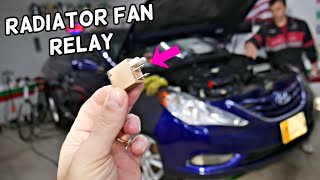
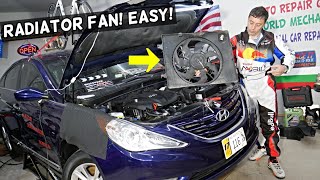
How to confirm: Locate the two cooling fan relays ('C/FAN LOW' and 'C/FAN HIGH') in the engine compartment fuse box. Swap the suspected bad relay with an identical known-good relay, such as the horn relay. 🎬 Watch: How to locate and replace the cooling fan relay. If the fan starts working and the horn stops, the relay is bad.
Typical fix: Replace the faulty relay with a new one. The OEM part is a multi-purpose relay.
Est. part cost: $10-$25 - Failed Cooling Fan Resistor (or Fan Control Module) 🟡 Medium Probability This component controls the fan speed and is a known failure point on both the Sonata and its platform-mate, the Kia Optima. It is mounted on the fan shroud and is subject to heat and vibration, which can cause internal components to burn out.
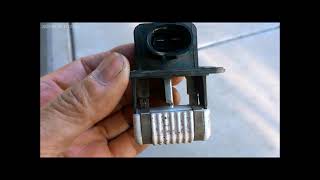
How to confirm: The resistor is located on the fan shroud, often behind a small plastic cover. Visually inspect the connector and the resistor itself for signs of burning, melting, or corrosion. A YouTube video by 'AutoFun' shows a clear example of a burnt-out resistor on a Kia Optima, which is a similar procedure. If there is power going into the resistor but no signal coming out to the fan, it has failed.
Typical fix: Replace the cooling fan resistor. It is typically held on by a single screw. Be sure to 🎬 See this walkthrough for fixing the cooling fan control module. inspect the wiring connector for damage, as it may need to be replaced as well.
Est. part cost: $20-$60 - Blown C/FAN Fuse 🟡 Medium Probability
How to confirm: Inspect the 40A 'C/FAN' J-case fuse in the engine compartment fuse box. A visual inspection will show if the internal metal strip is broken. Use a multimeter to test for continuity if unsure.
Typical fix: Replace the blown fuse. If it blows again, there is an underlying short circuit in the fan motor or wiring that must be diagnosed.
Est. part cost: $5-$10 - Failed Cooling Fan Assembly ⚪ Low Probability The fan motor itself can wear out from age and use, leading to a direct failure or a short that blows the fuse or damages the control resistor.
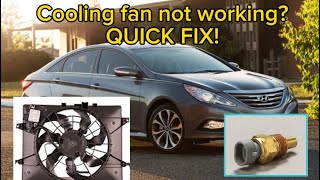
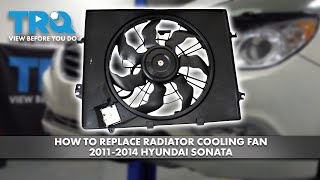
How to confirm: After confirming the relays, resistor, and fuse are good, test for power and ground at the fan motor connector. If power is present but the fan doesn't spin, the fan assembly is likely faulty. You can also try applying 12V directly to the fan motor 🎬 Watch: Step-by-step guide to replacing the radiator cooling fan. to see if it spins.
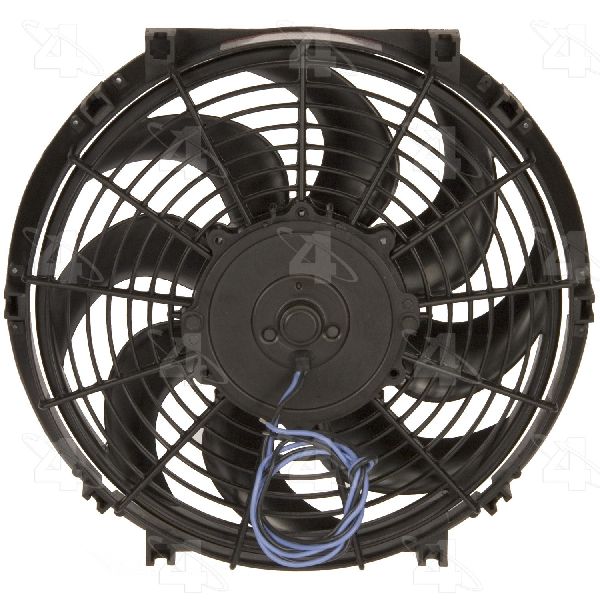
Typical fix: Replace the entire cooling fan assembly, which includes the motor, shroud, and fan blades.
Est. part cost: $150-$300
Rare But Worth Checking
- Damaged Wiring or Connectors: The wiring harness leading to the fan assembly, resistor, or fuse box can become damaged from heat, vibration, or impact, causing an open or short circuit. A common failure point is the connector at the fan control resistor, which can melt. This should be checked if all other components test good.
- Faulty Engine Control Module (ECM): → Shop Engine Control Module (ECM) This is the least likely cause. The internal driver circuit within the ECM that controls the fan relay could fail. All other possibilities should be exhaustively ruled out before considering ECM replacement.
Diagnosis Steps
- Verify the symptom: Turn on the A/C and check if the cooling fan on the radiator turns on. If it does not, proceed with diagnosis.
- Inspect the engine compartment fuse box. Locate the 40A J-case fuse labeled 'C/FAN'. Remove and inspect it for damage. Replace if blown.
- Locate the cooling fan relays, typically labeled 'C/FAN LOW' and 'C/FAN HIGH'.
- Swap the 'C/FAN LOW' relay with an identical relay from a non-critical circuit (e.g., the horn relay). Test if the fan now works. If it does, the original relay is faulty and needs replacement.
- If relays and fuses are good, inspect the cooling fan resistor (also called a control module). It's mounted on the fan shroud. Check its connector for melting or burn marks, a common issue.
- Using a multimeter, check for power going into the resistor and signal coming out. If power goes in but not out, the resistor has failed.
- If the resistor is good, inspect the wiring and connector at the cooling fan assembly for any signs of damage, corrosion, or melting.
- Using a multimeter, check for 12V power at the fan connector when the A/C is on. If power is present but the fan is not running, the fan motor/module assembly has failed.
- If all components and wiring appear good, the issue may be with the ECM, which requires professional diagnosis.
Parts You'll Likely Need
- Multi-Purpose Relay
(OEM #95224-2D000 (replaces 95230-37500))— This is the most common failure point for a P1629 code. It's an electromechanical switch that wears out over time.
Trusted brands: Hyundai OEM, Standard Motor Products (RY-710), Bosch
OEM price range: $15-$30
Aftermarket price range: $8-$20 - Cooling Fan Resistor / Control Module
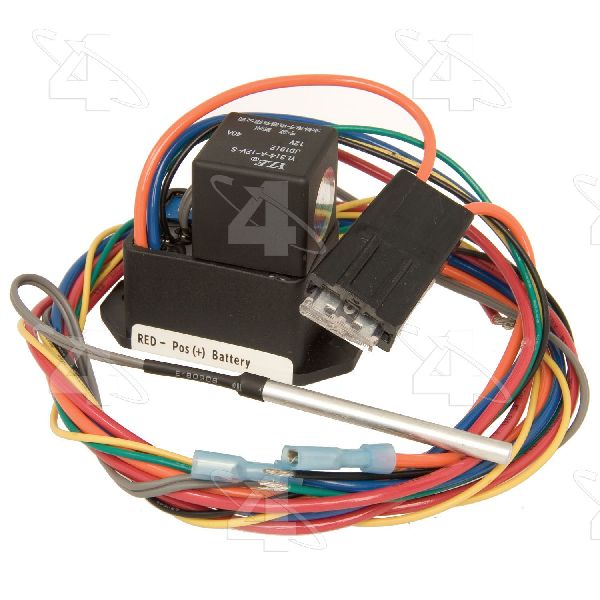
(OEM #25385-A6000)— This part regulates fan speed and is a very common failure point, often showing visible signs of burning on the connector or module itself.
Trusted brands: Hyundai OEM, Dorman, Four Seasons
OEM price range: $40-$70
Aftermarket price range: $20-$50 - Cooling Fan Assembly
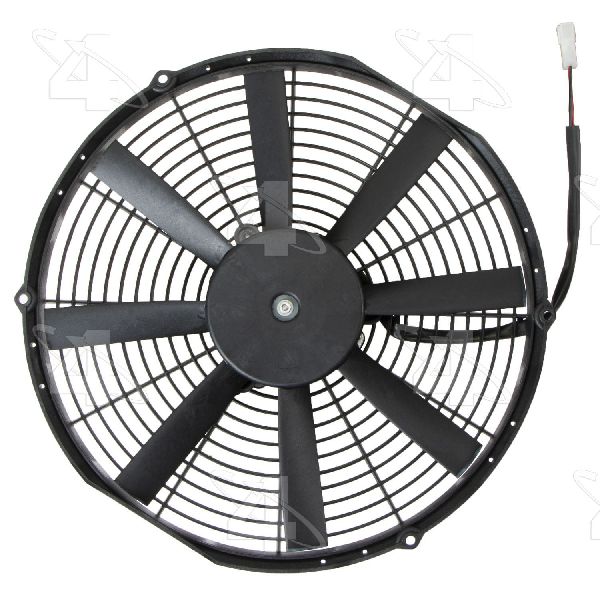
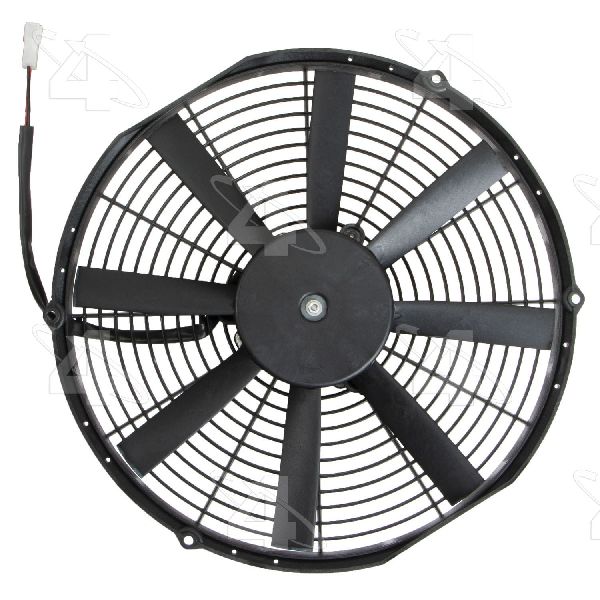
(OEM #25380-4R500 (replaces 25385-4R500))— If the fuse, relay, and resistor are good, the fan motor itself is the next most likely component to have failed.
Trusted brands: Hyundai OEM, TYC, Four Seasons
OEM price range: $250-$400
Aftermarket price range: $150-$300
Related Codes That Often Appear With This One
- P0480 — P0480 is a generic code for 'Fan 1 Control Circuit Malfunction'. It often appears with P1629 as both relate to the cooling fan system.
- P0533 — This code for 'A/C Refrigerant Pressure Sensor 'A' Circuit High' can occur if the condenser fan isn't running, causing pressure in the high side of the A/C system to build up excessively.
Platform-Specific Known Issues
- The cooling fan resistor/module is a particularly high-failure item on this platform and its Kia Optima sibling. Owners often report finding the electrical connector to this part is melted or burnt, indicating a poor connection or failing module.
Mechanic-Grade Diagnostic Values
- Cooling Fan Resistor Resistance — expected: Approximately 0.5 Ohms. Failure: A reading of infinity (open circuit) or significantly higher resistance indicates a failed resistor.
- Voltage at Fan Resistor Input — expected: Approximately Battery Voltage (12V+) with A/C on. Failure: No voltage indicates a problem upstream (fuse, relay, wiring).
- Voltage at Fan Motor Connector — expected: Varying voltage depending on commanded fan speed (if PWM controlled) or stepped voltage (if resistor based), present when A/C is on.. Failure: Voltage present but fan not spinning points to a failed fan motor. No voltage points to a problem with the resistor, relays, or wiring.
Scan Tool Commands That Help
- Hyundai GDS (Global Diagnostic System): Actuation Test for Cooling Fan — After checking fuses and relays, a technician can use the OEM scan tool to command the cooling fan ON at different speeds (low/high or variable). This bypasses the temperature sensors and A/C pressure switches to directly test the functionality of the ECM's control circuit, the fan relays, the resistor, and the fan motor itself. If the fan activates with the scan tool, the problem lies with an input sensor (like ECT or A/C pressure sensor) rather than the fan circuit components.
- Hyundai GDS (Global Diagnostic System): Data Analysis / Live Data — To monitor the Engine Coolant Temperature (ECT) sensor reading and the A/C system pressure. This helps verify if the ECM has the correct inputs to command the fan on. For example, if the ECT is high but the fan isn't commanded on in the live data, it could point to an ECM logic issue.
Wiring & Ground Locations
- C/FAN HI Relay & C/FAN LOW Relay — Located in the engine compartment junction block (fuse box). The lid diagram will show their specific positions.. These relays are the primary switches controlled by the ECM to send power to the fan assembly. A failure in either relay or its socket/wiring is a direct cause of P1629.
- C/FAN Fuse (40A) — Located in the engine compartment junction block, typically a larger J-case or cartridge fuse.. This is the main fuse protecting the entire cooling fan circuit. If it's blown, nothing in the circuit will have power.
- Ground Points (e.g., G04, G02) — Multiple engine and chassis ground points exist. Key grounds for the engine harness are typically located on the cylinder head, engine block, and near the battery on the inner fender. A wiring diagram is needed to trace the specific ground for the fan circuit.. A poor or corroded ground connection for the fan motor or the relay control circuit can cause high resistance, leading to intermittent operation, slow fan speed, or complete failure, potentially triggering a circuit malfunction code.
- Fan Resistor Connector — On the cooling fan shroud assembly.. This connector is a known weak point. It can melt from high resistance caused by a failing resistor or a poor terminal connection, creating an open circuit and triggering P1629.
OEM Part Supersession History
25385-07550→25385-A6000— Part number consolidation and likely minor design revision for reliability.
Heads up: The parts are interchangeable, but 25385-A6000 is the current recommended replacement.
Diagnostic Flowchart
Other Known Issues on This Vehicle
Issues unrelated to this code that are worth knowing about as an owner of this generation:
- Theta II GDI Engine Failure 🔴 High — Widespread across 2011-2014 models. Metal debris from factory machining can lead to connecting rod bearing failure, engine knocking, and eventual seizure. (Ref: Multiple recalls (e.g., NHTSA #15V568, #17V226) and a class-action lawsuit settlement led to extended warranties and engine replacement programs.)
- Degrading Steering Column Coupler 🟠 Medium → Shop Steering Column — Very common. The flexible rubber coupler in the electronic power steering column disintegrates over time, causing a noticeable 'clicking' or 'clunking' sound when turning the steering wheel. (Ref: Hyundai issued TSB #14-ST-002-1 regarding this issue. The part is inexpensive but labor can be significant.)
- Peeling White Paint 🟡 Low — Common on vehicles with white or pearl-white factory paint. The paint can bubble and peel off in large sheets, particularly on the roof and hood. (Ref: Hyundai extended the paint warranty to 10 years/unlimited miles for affected vehicles after public reporting and class-action lawsuits.)
- Transmission Temperature Sensor Failure 🟠 Medium → Shop Transmission Assembly — A known issue where the internal transmission temperature sensor fails, which can cause harsh shifting, delayed engagement, or other transmission performance problems. (Ref: Hyundai has a Technical Service Bulletin addressing this issue.)
- Excessive Oil Consumption 🟠 Medium — Many owners of the 2.4L GDI engine report high oil consumption between changes, which can be exacerbated by carbon buildup. (Ref: Hyundai issued TSB 21-EM-003H and subsequent revisions to provide guidelines for oil consumption testing and potential repairs, including combustion chamber cleaning.)
Used vs. New Parts: Buying Guide for This Vehicle
When a used part is the smart pick: A complete used cooling fan assembly from a low-mileage donor car can be a cost-effective choice if your fan motor has failed, as you get the shroud, motor, and resistor together. Used relays are generally not recommended as they are inexpensive new and a common wear item.
Donor-vehicle mileage cap: roughly under 60000 miles for the part to have meaningful remaining life.
What to inspect on the donor part:
- Check the fan resistor connector on the donor assembly for any signs of melting, browning, or corrosion.
- Spin the fan blades by hand; they should move freely with no grinding or excessive resistance.
- Inspect the wiring harness for any cracks, brittleness, or previous repairs.
- If possible, ask the dismantler if the donor vehicle had front-end damage; avoid parts from cars with heavy front impacts.
Aftermarket brands forum-validated for this vehicle:
- TYC: Often cited as a decent quality aftermarket replacement for the entire fan assembly. Some users report it is quieter than the original OEM fan.
- Dorman: A common aftermarket source for the fan resistor (902-706). While some reviews mention potential weld quality issues, it is a widely available and used alternative.
Brands owners have reported issues with on this vehicle:
- No-name, unbranded parts sold at unusually low prices on marketplace sites should be avoided, especially for the fan assembly or resistor, as these are known failure points and quality is critical for proper cooling.
Real Owner Stories
Aggregated from forums and TSBs cited above. Mileages and costs reflect what owners reported in those sources.
2006 Hyundai Sonata
Symptoms: Intermittent fan operation; owner was attempting to test the signal from the ECM to the fan control module.
What fixed it: Diagnostic process focused on the fan control module and ECM signal verification.
Source hint: Hyundai Forums - 'Testing the Cooling Fan Control Module'
2012 Kia Optima 2.4L
Symptoms: Vehicle overheating; visual inspection revealed a clearly burnt-out cooling fan module/resistor.
What fixed it: Replacement of the cooling fan resistor/module located on the fan shroud.
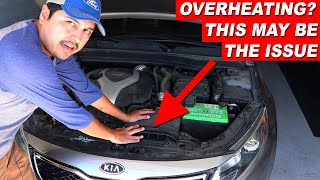
Source hint: AutoFun on YouTube - 'Overheating KIA? Cooling Fan Module Fix'
Related OBD-II Codes
Frequently Asked Questions
My 2011-2014 Sonata's A/C is warm at idle but cold on the highway; is this related to P1629?
Is there a specific TSB for the engine failure issues mentioned in the context for my 2.4L GDI?
Can I test the cooling fan relays myself using other parts in the fuse box?
I see a 40A fuse in my engine bay; is that for the cooling fan?
Is the cooling fan resistor failure common on the Kia Optima as well?
What should I look for when inspecting the cooling fan resistor on my Sonata?
Helpful Videos
We Have This Part in Stock

The information in this article is provided for general reference and educational purposes only. Vehicle specifications, procedures, and part compatibility can vary by production date, trim level, and region. Always consult your vehicle's factory service manual and verify part numbers before purchasing or performing repairs. Safety-critical components such as airbags, seat belts, and braking systems should be installed by a qualified professional.
- Hyundai Sonata:
- 🧭 Diagnostic Flowchart
- 🎬 Helpful Videos
- 🛍️ Shop This Part
- What's Unique About the 2011-2014 Hyundai Sonata
- Symptoms You May Notice
- Most Likely Causes
- Rare But Worth Checking
- Diagnosis Steps
- Parts You'll Likely Need
- Related Codes That Often Appear With This One
- Platform-Specific Known Issues
- Mechanic-Grade Diagnostic Values
- Scan Tool Commands That Help
- Wiring & Ground Locations
- OEM Part Supersession History
- Other Known Issues on This Vehicle
- Used vs. New Parts: Buying Guide for This Vehicle
- Real Owner Stories
- 2006 Hyundai Sonata
- 2012 Kia Optima 2.4L
- Related OBD-II Codes
- Frequently Asked Questions
- 🎟️ Get 5% Off