

P1629 on 2002-2012 Jeep Liberty: Anti-Theft SKIM Failure Causes and Fixes
On a 2002-2012 Jeep Liberty, code P1629 means the engine's computer (PCM) isn't getting the 'OK' signal from the anti-theft system (SKIM). This causes a 'start and stall' issue. The most likely causes are a bad key, a failed SKIM module around the ignition, or wiring issues.
- P1629 on a Jeep Liberty means the anti-theft system has disabled the engine, causing a 'start and immediately stall' condition.
- Before attempting any complex repairs, try starting the vehicle with a spare key to rule out a bad key transponder.
- Ensure the battery is fully charged and the terminals are clean, as low voltage is a common cause of module communication errors.
- Replacing the SKIM module or PCM requires special programming tools, making this a job best left to a professional or a specialized service.
What's Unique About the 2002-2012 Jeep Liberty
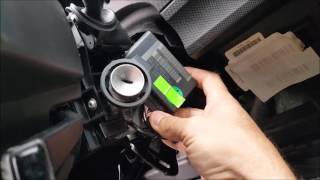
The Jeep Liberty uses a straightforward but sensitive Sentry Key Immobilizer System (SKIS), which was standard on all Liberty models by 2006. Unlike some manufacturers where this code is often a wiring issue in a distant harness, on the Liberty, the problem is very frequently localized to the key, the SKIM module itself (the ring around the ignition switch), or the PCM. The classic 'start, run for 2 seconds, then die' symptom is a hallmark of this system's operation on Chrysler products of this era. The system is designed to be difficult to bypass; 🎬 Watch: Everything to know about the Chrysler SKIM system if it detects tampering or multiple failed start attempts, it can enter a full lockdown mode that requires a dealer reset.
Generation note: This guide covers the Jeep Liberty KJ (2002-2007) and KK (2008-2012) generations. The anti-theft system is conceptually the same, though later KK models may refer to the module as the Wireless Ignition Node (WIN). The symptoms and diagnostic principles are consistent across both generations. The SKIM module part numbers differ between generations.
Symptoms You May Notice
- Engine starts and then immediately stalls (within 2-3 seconds).
- Engine cranks but will not start at all.
- The red 'security' light on the instrument cluster stays on or flashes after the initial bulb check.
- Key fob may not lock/unlock doors intermittently (can be a related electrical issue).
- Replacing the fuel pump. The 'start and stall' symptom can be mistaken for a fuel delivery problem, but the fuel pump is actually being shut off intentionally by the PCM.
- Replacing the ignition switch. While the ignition switch can cause a no-start, it typically won't cause the specific 'start for 2 seconds then stall' symptom associated with a SKIM failure.
- Replacing the Crankshaft Position Sensor. While a failing crank sensor can cause stalling, it usually presents different symptoms and codes, and won't typically be accompanied by the security light.
Most Likely Causes
- Faulty Key Transponder 🔴 High Probability The transponder chip embedded in the plastic head of the key can be damaged from being dropped, exposed to strong magnetic fields, or can fail electronically over time. Using a non-transponder key copy will also trigger this code.
How to confirm: Try starting the vehicle with a known-good spare key. If the vehicle starts and runs normally with the spare key, the original key is faulty. This is the single most important and easiest diagnostic step.
Typical fix: Replace the faulty key. A new key must be cut and programmed to the vehicle's SKIM/PCM by a dealership or an automotive locksmith with the proper equipment.
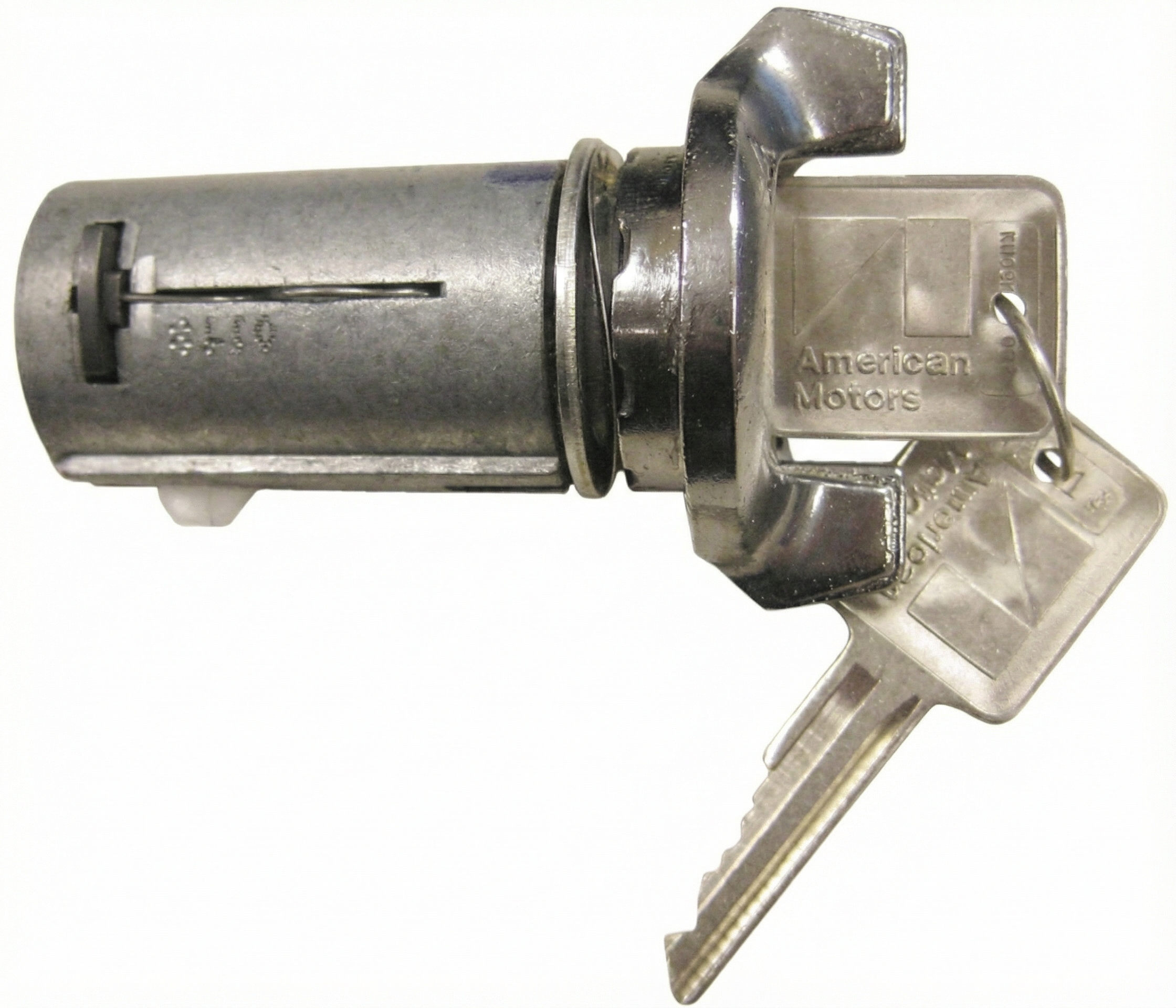
Est. part cost: $100-$250 - Failed Sentry Key Immobilizer Module (SKIM) 🟡 Medium Probability The SKIM is an electronic module located around the ignition lock cylinder. Like any electronic component, it can fail with age, causing it to stop reading the key's transponder chip correctly or fail to communicate with the PCM.
How to confirm: If a spare key doesn't work, the next step is to diagnose the SKIM itself. This requires a scan tool that can read data from the body control module and see if it's communicating with the PCM. A mechanic can check for signals on the PCI bus wire between the SKIM and PCM.
Typical fix: Replace the SKIM module. The new module must be programmed to recognize the vehicle's existing keys and sync with the PCM. This requires a dealer-level scan tool.
Est. part cost: $80-$200 - Poor Battery Voltage or Bad Connections 🟡 Medium Probability
How to confirm: Test the battery voltage with a multimeter; it should be at least 12.4V at rest. Clean any corrosion from the battery terminals and ensure the clamps are tight. A weak battery can cause communication errors between modules, leading to a no-start or intermittent stalling.
Typical fix: Charge or replace the battery. Clean or replace corroded battery terminals.
Est. part cost: $100-$250 - Wiring or Connector Issue ⚪ Low Probability The wiring harness in the steering column can be subject to stress from the tilt/telescope functions, potentially leading to chafed or broken wires over time.
How to confirm: Visually inspect the wiring and connector going to the SKIM module at the ignition cylinder. Check for any chafed wires or loose pins. A wiring diagram and multimeter would be needed to test for continuity on the PCI bus wire between the SKIM and the PCM. One owner on an Edmunds forum traced a similar stalling issue to a poorly crimped wire in a harness.
Typical fix: Repair the damaged section of the wiring harness or clean/replace the faulty connector.
Est. part cost: $10-$100
Rare But Worth Checking
- Failed Powertrain Control Module (PCM): → Shop Engine Control Module (ECM) While rare, the PCM itself can fail in a way that prevents it from receiving or processing the signal from the SKIM. This should be considered a last resort after all other possibilities have been exhausted.
- Aftermarket Remote Starter Interference: Improperly installed aftermarket remote start systems are a known cause of SKIM-related issues. These systems often use a bypass module that 'tricks' the SKIM, and if this module fails or is wired incorrectly, it can cause a P1629 code and a no-start condition.
Diagnosis Steps
- Check for a solid or flashing red security light on the dashboard. This is the primary indicator of an anti-theft issue.
- Try to start the vehicle with a different, known-good key. If it starts and runs, the first key is bad. This is the most crucial first step.
- If a spare key doesn't work, check the vehicle's battery. Ensure it has a full charge (12.4V+) and that the terminals are clean and tight.
- If the battery is good, scan for codes in all modules (PCM, BCM/SKIM). Note any 'U' (communication) codes, as they point towards a wiring or module failure.
- Inspect the wiring and connector at the SKIM module around the ignition cylinder for damage. Look for chafed wires or loose pins in the steering column area.
- If wiring appears intact, the issue is likely a failed SKIM module or, less commonly, the PCM. Professional diagnosis with a dealer-level scan tool is required to confirm which module has failed.
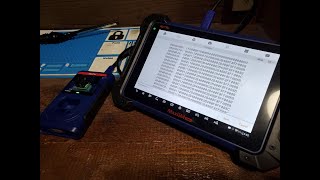
- As a final solution, a SKIM delete service can program the PCM to bypass the immobilizer entirely. 🎬 See how to perform a SKIM delete from the PCM This is an option for those who want to eliminate the system permanently.
Parts You'll Likely Need
- Sentry Key Immobilizer Module (SKIM)
(OEM #05026071AR (KK, 2008-2012), 56040659AJ (KJ, 2002-2007))— This module is the reader for the anti-theft chip in the key and is a common failure point in the system. Part numbers vary by generation.
Trusted brands: Mopar
OEM price range: $80-$200
Aftermarket price range: $50-$150 - Transponder Key — The chip in the key can fail, preventing it from sending the correct code to the SKIM module.
Trusted brands: Mopar, JMA, Ilco, Strattec
OEM price range: $120-$250
Aftermarket price range: $70-$150
Related Codes That Often Appear With This One
- U0100 — This code means 'Lost Communication With ECM/PCM'. If seen with P1629, it reinforces that there is a network or communication breakdown in the system.
Platform-Specific Known Issues
- Owner Experience: Start-Stall with Security Light: An owner on an Edmunds.com forum described the classic P1629 scenario on their 2002 Liberty: 'When trying to start my 2002 Jeep Liberty, it stalls about 2 seconds after turning over... Approximately 3 seconds after the car dies, the light for the wrong key illuminates.' This highlights the exact sequence of events many owners experience.
Mechanic-Grade Diagnostic Values
- PCI Bus Voltage (2002-2007 KJ Models) — expected: A fluctuating voltage that averages around 1.0V with Key On, Engine Off. A lab scope will show the voltage toggling up to 7.0-7.5V.. Failure: A bus voltage shorted to ground (0V) or shorted to power (5V or 12V) will cause a total loss of communication.
- CAN C Bus Voltage (2008-2012 KK Models) — expected: With Key On, Engine Off: CAN High (WT/BK wire) should be ~2.53V and CAN Low (WT/LB wire) should be ~2.25V.. Failure: Voltages that are identical (e.g., 2.45V on both) can indicate the high and low lines are shorted together.
- CAN C Bus Resistance (2008-2012 KK Models) — expected: With the battery disconnected, resistance between CAN High and CAN Low pins at the DLC should be approximately 60 Ohms.. Failure: A reading of ~120 Ohms indicates one of the two terminating resistors is missing or disconnected. A reading of 0 Ohms indicates a short circuit.
Scan Tool Commands That Help
- Chrysler DRB III: Program Ignition Keys — Used to program new or additional transponder keys into the SKIM module's memory. This function is located under 'Theft Alarm' -> 'SKIM' -> 'Miscellaneous' and requires the vehicle's 4-digit PIN.
- Chrysler DRB III / wiTECH: Module Scan — After replacing or reprogramming a module like the PCM or SKIM, a 'Module Scan' should be performed to read and clear any consequential Diagnostic Trouble Codes (DTCs) that may have been set in other vehicle modules during the process.
- Chrysler DRB III: SKIM Status / Read VIN — To verify if the SKIM is communicating and to read the VIN stored within it. This helps confirm if a used module is present and if it matches the vehicle.
Wiring & Ground Locations
- PCI Bus Wire (KJ: 2002-2007) — Pin 2 at the Data Link Connector (DLC) under the driver's side dash. The wire is typically White with a Violet tracer or Yellow with a Violet tracer.. This is the single data wire used for communication between the SKIM and the PCM. A short or open on this wire is a direct cause of code P1629.
- SKIM/WIN Connector — The connector plugs directly into the immobilizer module/ring around the ignition lock cylinder, under the steering column shrouds.. This connector provides power, ground, and the data line to the immobilizer module. A loose connection or damaged pin here will prevent the module from functioning.
- G200 / G201 (Grounds) — Located under the left end of the dashboard, often behind the driver's side kick panel.. These are primary dashboard and instrument panel ground points. A poor connection here can cause intermittent power loss or communication issues for the SKIM/WIN and instrument cluster, leading to security system faults.
- Engine-to-Firewall Ground Straps — Braided ground straps running from the rear of the cylinder heads to studs on the firewall.. While primarily for engine grounding, a poor connection here can introduce electrical noise and unstable ground references for the entire vehicle, potentially disrupting sensitive module communications.
Real Owner Repair Stories
- Jeep KJ and KK Liberty Forum (2006 Jeep Liberty KJ) — Intermittent no-start, clicking relays, security light on, severe corrosion on battery terminals.
❌ Tried (didn't work) Repeatedly cleaning battery terminals, replacing terminal clamps.
✅ What actually fixed it The owner found a dangling and corroded engine-to-firewall ground strap. After cleaning the contact points on the firewall and engine block and securely reattaching the strap, the intermittent no-start and electrical issues were resolved. - JK-Forum.com (Jeep Wrangler (similar Chrysler system)) — Aftermarket remote start would initiate, but the engine would shut down after 15 seconds, mimicking a SKIM failure.
❌ Tried (didn't work) Assuming the remote start unit was faulty.
✅ What actually fixed it The issue was traced to the remote start's immobilizer bypass module. The bypass module, which is supposed to trick the SKIM into thinking a valid key is present, was either wired incorrectly or had failed, causing the PCM to shut down the engine. Correcting the bypass module installation resolved the issue.
OEM Part Supersession History
56040659AJ→5026221AQ— Standard part revision and replacement for the SKIM module used in the KJ generation.
Heads up: Applies to 2002-2007 Jeep Liberty (KJ).05026071AR→68209837AA— Standard part revision and replacement for the WIN module used in the KK generation.
Heads up: Applies to 2008-2012 Jeep Liberty (KK).
Model Year Variations Within This Range
- 2002-2007 (KJ): Uses the Sentry Key Immobilizer Module (SKIM) which communicates with the PCM over a single-wire J1850 PCI data bus. Diagnostic focus is on the PCI bus wire (Pin 2 at DLC) and SKIM-specific part numbers.
- 2008-2012 (KK): Uses a Wireless Ignition Node (WIN) which integrates the immobilizer, ignition switch, and remote entry receiver. It communicates with the PCM over a two-wire CAN bus network. Diagnostics involve checking CAN High and CAN Low voltages and resistance (approx. 60 ohms).
Diagnostic Flowchart
Other Known Issues on This Vehicle
Issues unrelated to this code that are worth knowing about as an owner of this generation:
- Power Window Regulator Failure 🔴 High — Extremely common on KJ (2002-2007) models. The plastic clips and drive mechanism are notoriously brittle and fail frequently, causing the window to drop into the door.
- Front Lower Ball Joint Failure 🔴 High — Common on 2002-2006 KJ models, leading to a loss of steering control. This was the subject of a major safety recall. (Ref: NHTSA Campaign ID: 06V288000 (Recall F23))
- 3.7L PowerTech Engine Issues 🟠 Medium — Prone to several issues, including dropped valve seats (especially after overheating), oil sludge buildup from infrequent oil changes, and stuck hydraulic lash adjusters causing ticking noises.
- Fuel Filler Neck / Rollover Valve Issues 🟠 Medium — Some 2005-2007 models experience fuel spilling out during refueling due to a malfunctioning rollover valve or saturated vapor canister.
- Totally Integrated Power Module (TIPM) Failure 🔴 High — More prevalent on the KK (2008-2012) generation, a failing TIPM can cause a wide range of bizarre electrical issues, including crank-no-start, stalling, horn or lights activating randomly, and fuel pump issues.
- Sky Slider Sunroof Failure 🟠 Medium — The large fabric sunroof on 2008-2010 KK models is prone to mechanical failure, noise, and water leaks from clogged drain tubes.
Used vs. New Parts: Buying Guide for This Vehicle
When a used part is the smart pick: A used part is only a viable, cost-effective option if you acquire the complete, matched set from a single donor vehicle: the Powertrain Control Module (PCM), the SKIM/WIN module, and the corresponding transponder key(s). Installing just one of these used parts will not work as they are all VIN-locked together.
Donor-vehicle mileage cap: roughly under 150000 miles for the part to have meaningful remaining life.
What to inspect on the donor part:
- Verify the donor vehicle was running before it was decommissioned.
- Inspect connectors on all modules for corrosion, bent pins, or damage.
- Ensure you get ALL keys from the donor vehicle, not just one.
- Label the parts as a matched set immediately upon removal.
OEM-only on this vehicle (don't cheap out):
- Powertrain Control Module (PCM)
- SKIM / Wireless Ignition Node (WIN)
Aftermarket brands forum-validated for this vehicle:
- While new aftermarket modules exist, they often have reliability issues. The most reliable non-dealer fix is a SKIM-delete service performed on the original or a used OEM PCM by a reputable programming service like All Computer Resources.
Brands owners have reported issues with on this vehicle:
- Unbranded, no-name SKIM/WIN modules from online marketplaces should be avoided due to high failure rates and programming difficulties.
Real Owner Stories
Aggregated from forums and TSBs cited above. Mileages and costs reflect what owners reported in those sources.
2002 Jeep Liberty
Symptoms: When trying to start the vehicle, it stalls about 2 seconds after turning over. Approximately 3 seconds after the car dies, the light for the wrong key illuminates.
What fixed it: The issue was traced to the Sentry Key Immobilizer System (SKIS) failing to recognize the key or communicate with the PCM.
Source hint: Edmunds Car Forums - 'Jeep Liberty Starting and Stalling Problems'
2002 Jeep Liberty
Symptoms: The vehicle experienced a stalling issue similar to an immobilizer failure.
What fixed it: The owner traced the stalling issue to a poorly crimped wire in a wiring harness.
Source hint: Edmunds Car Forums - 'Jeep Liberty Starting and Stalling Problems'
Related OBD-II Codes
Frequently Asked Questions
My 2002 Jeep Liberty starts but dies after 2 seconds and then the red light comes on. Is this a known issue?
Can I use a used SKIM module from a junkyard for my 2008-2012 Jeep Liberty?
Is there a recall for the stalling issue on my 2002-2006 Jeep Liberty?
Could my 2010 Jeep Liberty's 'crank-no-start' be related to the TIPM instead of the key?
How can I tell if my Jeep Liberty key is the problem?
Is there a way to permanently bypass the P1629 error on my Jeep?
Helpful Videos

We Have This Part in Stock

The information in this article is provided for general reference and educational purposes only. Vehicle specifications, procedures, and part compatibility can vary by production date, trim level, and region. Always consult your vehicle's factory service manual and verify part numbers before purchasing or performing repairs. Safety-critical components such as airbags, seat belts, and braking systems should be installed by a qualified professional.
- Jeep Liberty:
- 🧭 Diagnostic Flowchart
- 🎬 Helpful Videos
- 🛍️ Shop This Part
- What's Unique About the 2002-2012 Jeep Liberty
- Symptoms You May Notice
- Most Likely Causes
- Rare But Worth Checking
- Diagnosis Steps
- Parts You'll Likely Need
- Related Codes That Often Appear With This One
- Platform-Specific Known Issues
- Mechanic-Grade Diagnostic Values
- Scan Tool Commands That Help
- Wiring & Ground Locations
- Real Owner Repair Stories
- OEM Part Supersession History
- Model Year Variations Within This Range
- Other Known Issues on This Vehicle
- Used vs. New Parts: Buying Guide for This Vehicle
- Real Owner Stories
- 2002 Jeep Liberty
- 2002 Jeep Liberty
- Related OBD-II Codes
- Frequently Asked Questions
- 🎟️ Get 5% Off