

P1634 on 2000-2005 Cadillac DeVille: Ignition Switch Circuit Causes and Fixes
This code means the engine's computer detected low voltage from the ignition switch. The most common cause is a failing ignition switch, a well-known issue on these cars. Replacing the switch is the typical fix, costing around $80 for the part. Before replacing, always check the 'IGN 0' and 'PCM (IGN)' 10A fuses first.
- P1634 on your DeVille almost always points to a bad ignition switch.
- This code can cause a dangerous stalling condition while driving; do not ignore it.
- Before buying parts, check the simple things first: the 10-amp 'IGN 0' and 'PCM (IGN)' fuses under the hood and the battery's condition.
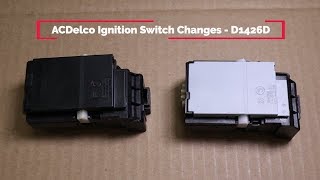
- The part that needs replacing is the electronic switch (ACDelco D1426D), not the mechanical key cylinder. Look for the updated version with a grey cover.
- This repair is manageable for a DIYer with basic tools and patience.
What's Unique About the 2000-2005 Cadillac DeVille
The 2000-2005 DeVille, built on the GM G platform, was part of a massive GM recall (NHTSA 14V355000) related to the ignition key and switch. A heavy keychain could cause the key to rotate out of the 'Run' position, shutting off the engine while driving. This highlights the sensitivity and known failure points within the ignition system of this specific vehicle generation. While the recall focused on the key, the underlying component is the ignition switch, which is the primary cause of a P1634 code due to internal contact wear and corrosion.
Symptoms You May Notice
- Engine stalls while driving, as if the key was turned off.
- Intermittent no-start or no-crank condition.
- Vehicle may start normally after failing once.
- No Check Engine Light on the dashboard (code is stored as history).
- Other electrical accessories may malfunction intermittently or flicker.
- A faint burning plastic smell may be noticeable near the steering column.
- Key feels loose or is hard to turn.
- Replacing the starter motor when a no-crank condition is present. The starter on the Northstar V8 is very difficult to access, so it's critical to diagnose this code first.
- Replacing the ignition lock cylinder. The lock cylinder is the mechanical part the key fits into; the ignition switch is the separate electronic part behind it that actually fails and causes P1634.
Most Likely Causes
- Failing Ignition Switch 🔴 High Probability → Shop Ignition Switch The ignition switch is a known high-failure part on this platform, subject to wear and internal corrosion on its electrical contacts over time. It was also the subject of a major safety recall, underscoring its weakness.
How to confirm: Check for voltage drop at the PCM connector's 'Ignition 1' input wire (Pink wire at C1-19) when the key is ON. A simpler method is to rule out other causes (fuses, battery); if they are fine, the switch is the most likely culprit. A wiggle test of the key in the ignition may reproduce the stalling or electrical flickering. A voltage drop test across the switch terminals should show less than 0.5V; a higher reading indicates internal resistance.
Typical fix: Replace the electronic ignition switch module located behind the key lock cylinder. The updated ACDelco part (D1426D) features a grey cover to distinguish it from the original all-black, failure-prone version.
Est. part cost: $60-$100 - Blown or Cracked Fuse 🟡 Medium Probability
How to confirm: Check the 'IGN 0' and 'PCM (IGN)' 10-amp fuses, typically located in the underhood fuse block. A fuse may have a hairline crack causing an intermittent connection, even if it looks good at a glance.
Typical fix: Replace the blown or suspect fuse.
Est. part cost: $1-$5 - Weak Battery or Poor Connections ⚪ Low Probability → Shop Vehicle Battery
How to confirm: Test the battery voltage; it should be above 12.4V with the engine off. During cranking, it should not drop below 9.6V. Clean the battery terminals and check the main ground connections for corrosion or looseness. A low battery can cause numerous erratic electrical codes.
Typical fix: Charge or replace the battery and clean all terminal connections.
Est. part cost: $150-$250 - Damaged Wiring ⚪ Low Probability
How to confirm: Visually inspect the wiring harness between the steering column and the PCM. Check for chafed, broken, or corroded wires, particularly near the connectors. A forum post mentions checking a splice in the pink (PNK) wire as a potential point of failure for intermittent issues. This requires a wiring diagram and multimeter for continuity testing.
Typical fix: Repair or replace the damaged section of the wiring harness.
Est. part cost: $10-$100
Rare But Worth Checking
- Failing Powertrain Control Module (PCM): This is extremely rare. The PCM is a robust component. Before condemning the PCM, all other possibilities, especially the ignition switch and wiring, must be exhaustively ruled out. A shop once quoted over $800 for this repair when the actual fault was likely the switch.
Diagnosis Steps
- Check for other stored DTCs. Address any communication (U-codes) or system voltage codes first.
- Inspect the underhood fuse block. Carefully check the 'IGN 0' and 'PCM (IGN)' 10A fuses. Replace if blown or cracked.
- Verify battery health. Ensure the battery has a full charge (12.4V+) and that the terminals are clean and tight. Check that voltage does not drop below 9.6V during cranking.
- If fuses and battery are good, the ignition switch is the most probable cause.
- For advanced diagnosis: Using a wiring diagram, back-probe the Pink 'Ignition 1' voltage wire at PCM connector C1, pin 19, with the key in the 'ON' position. The voltage should be stable and within 0.5 volts of battery voltage. A significant drop, fluctuation, or a difference of more than 2 volts compared to the 'Ignition 0' wire (C1-18) points to a bad switch or wiring.
- Perform a 'wiggle test' by wiggling the key and wiring harness at the steering column while monitoring voltage to see if you can trigger the fault.
- Inspect the wiring harness from the steering column to the PCM for any visible damage, especially if other electrical issues are present.
Parts You'll Likely Need
- Ignition Switch
(OEM #15242754)— This is the electronic switch that fails, causing the voltage drop that triggers code P1634. It is the most common point of failure for this issue.
Trusted brands: ACDelco (D1426D), Standard Motor Products (US-341)
OEM price range: $75-$100
Aftermarket price range: $60-$85
Related Codes That Often Appear With This One
- U1255 — U1255 is a Class 2 Communication Malfunction. An intermittent power loss from a failing ignition switch can disrupt communication between modules, causing this code to appear alongside P1634.
Platform-Specific Known Issues
- NHTSA Recall 14V355000 was issued because a heavy keychain could cause the ignition switch to move out of the 'Run' position, stalling the engine. This highlights the known weakness in the ignition system.
- The updated ACDelco replacement ignition switch (D1426D) has a grey plastic cover on one side, while the original failure-prone part is all black. This was an internal revision to improve contact durability and prevent corrosion/burning that caused the voltage drop.
Mechanic-Grade Diagnostic Values
- Voltage difference between PCM C1-19 (Ignition 1) and C1-18 (Ignition 0) — expected: Less than 2.0 volts with engine running. Failure: A difference greater than 2.0 volts for 5 seconds will set the code.
- Voltage drop across any single wire or switch — expected: Less than 0.5 volts. Failure: A reading greater than 0.5 volts indicates excessive resistance in the wire, connection, or switch contacts.
- Battery Voltage, Engine Off — expected: 12.4V - 12.7V. Failure: Below 12.4V indicates a discharged or failing battery.
- Alternator Output Voltage, Engine Running — expected: 13.5V - 14.5V. Failure: A reading below 13.2V or above 14.8V suggests a charging system problem.
Scan Tool Commands That Help
- Tech II / High-End Scan Tool: Freeze Frame / Failure Records — When P1634 is stored as a HISTORY code, Freeze Frame data can reveal the specific operating conditions (engine speed, temperature, etc.) when the fault occurred. This can help determine if the voltage drop happens under specific loads or conditions. A forum user noted this can help identify which of the two voltage inputs was low at the time of the fault.
Wiring & Ground Locations
- Powertrain Control Module (PCM) — Located inside the air filter housing in the engine compartment, behind the driver's side headlight. The intake air is routed over the PCM to cool it.. This is where the critical voltage comparison occurs. The C1 connector (often black) contains pins 18 (Ignition 0) and 19 (Ignition 1) that must be tested for voltage discrepancies.
- G103 — Located on the cowl at the left rear of the engine compartment, above the brake booster.. This is a major ground point for the Body Control Module (BCM) and Data Link Connector (DLC). A poor connection here can cause widespread communication and electrical issues that could mimic or accompany a P1634 code.
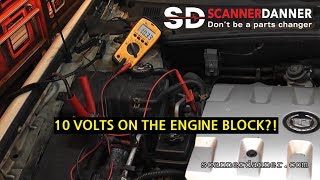
- Engine Block to Chassis Ground — A main ground cable runs from the engine block (often near the alternator or on the lower right side) to the vehicle's frame.. A corroded or loose main engine ground can cause intermittent no-start conditions and bizarre electrical behavior, symptoms that overlap heavily with a failing ignition switch. This should be checked if P1634 is present with a no-crank symptom.
- SP205 (Splice Pack) — Located near the Data Link Connector (DLC) under the driver's side dashboard.. This is a central hub for the Class 2 Serial Data line. While not directly causing P1634, a fault here can cause the accompanying U1255 communication code. Intermittent power from the ignition switch can disrupt modules communicating through this splice pack.
Real Owner Repair Stories
- YouTube user 'Fix It with Jeff' (2001 Cadillac DeVille) — Intermittent no-crank, no-start. Gauges acted weird, fuel pump would stay running after a failed start attempt. Problem started after hitting a bump.
❌ Tried (didn't work) Initially suspected the battery, which read 11.8V., Disassembled part of the dashboard suspecting the key/lock cylinder.
✅ What actually fixed it The main engine ground wire had disconnected from the alternator/engine block. Wiggling the cable allowed the car to start. The final fix was replacing the broken engine-to-chassis ground cable. - GM-Trucks.com forum user 'stagrlee' (2004 Chevrolet Tahoe Z71 (uses the same ignition switch)) — No-start condition after installing a new ignition switch.
❌ Tried (didn't work) Replacing the ignition switch with a new ACDelco D1426D purchased from Amazon.
✅ What actually fixed it The user discovered there was a bad batch of counterfeit or faulty D1426D switches being sold online. He confirmed the part was bad with a voltmeter. Purchasing the same part number from a dealership parts counter resolved the no-start issue.
OEM Part Supersession History
Unknown, original part has all-black plastic covers.→GM 15242754 / ACDelco D1426D— The original switch design was prone to internal corrosion and burning of the contacts, leading to high resistance and voltage drop. The updated part uses different contact materials (reportedly tungsten-based) to improve durability and prevent this failure.
Heads up: The updated part is visually identified by a grey plastic cover on one side. Be cautious of counterfeit parts online; a forum user reported receiving a bad batch of D1426D switches that were pinned out incorrectly and caused a no-start. Always buy from a reputable source.
Diagnostic Flowchart
Other Known Issues on This Vehicle
Issues unrelated to this code that are worth knowing about as an owner of this generation:
- Northstar Head Gasket Failure (Pulled Head Bolts) 🔴 High — Very common on pre-2004 models, typically between 50,000 and 100,000 miles. The issue is caused by torque-to-yield head bolts stripping the threads in the aluminum block.
- Rear Air Suspension Failure 🟠 Medium — Common as the vehicle ages. Rubber air springs develop leaks, causing the rear of the car to sag and the air compressor to run constantly and eventually burn out.
- Engine Oil Leaks 🟠 Medium — Northstar engines are notorious for oil leaks, particularly from the lower crankcase half-case seal (resembling a main seal leak) and valve covers. This is a persistent issue across many model years.
- Excessive Oil Consumption & Carbon Buildup 🟠 Medium — Models from 2000-2002 can suffer from carbon buildup on the piston rings, leading to oil consumption and potential engine knock or pinging due to increased heat.
- Water Pump Failure 🟠 Medium — A leaking water pump is a common cause of overheating on the 2000-2002 DeVille, which can exacerbate head gasket problems if not addressed quickly.
Used vs. New Parts: Buying Guide for This Vehicle
When a used part is the smart pick: Buying a used ignition switch for this vehicle is STRONGLY DISCOURAGED. The original part has a very high failure rate due to a design defect. A used part is likely to have the same wear and corrosion issues and will fail soon, if it works at all.
What to inspect on the donor part:
- If you absolutely must buy used, only consider a part pulled from a donor vehicle that is confirmed to be the UPDATED version (with the grey side cover).
- Even then, there is no way to know the remaining life of the internal contacts.
OEM-only on this vehicle (don't cheap out):
- Ignition Switch
Aftermarket brands forum-validated for this vehicle:
- ACDelco (D1426D) - This is the OEM supplier and the recommended part.
- Standard Motor Products (US-341) - Widely regarded as a reliable OEM-equivalent alternative.
Brands owners have reported issues with on this vehicle:
- No-name or unbranded parts from online marketplaces like Amazon or eBay should be avoided. There are documented cases of counterfeit or out-of-spec parts being sold that do not work correctly.
Real Owner Stories
Aggregated from forums and TSBs cited above. Mileages and costs reflect what owners reported in those sources.
2000-2005 Cadillac DeVille 4.6L Northstar V8
Symptoms: The engine stalls while driving, as if the key was turned off. This can happen if the ignition switch is jarred or moves out of the 'Run' position, sometimes due to a heavy keychain.
What fixed it: The official remedy is the replacement of the electronic ignition switch module with an updated part.
Source hint: NHTSA Recall 14V355000
1998 Cadillac DeVille 4.6L Northstar V8
Symptoms: The vehicle stored a P1634 trouble code.
What fixed it: The issue was identified as the PCM detecting a voltage difference of more than 2 volts between the Ignition 1 and Ignition 0 circuits, pointing to a faulty ignition switch or related wiring.
Source hint: 2CarPros Forum: A 2013 thread '1998 cadillac deville has a p1634 code'
Related OBD-II Codes
Frequently Asked Questions
Is there a recall for the ignition switch problem on my 2000-2005 DeVille?
I'm replacing the ignition switch for code P1634. Is there an updated part I should buy?
My car stalls but the Check Engine Light isn't on. Is that normal for a P1634 code?
What fuses should I check first before assuming the ignition switch is bad?
What exactly causes the P1634 code to set on this Cadillac?
Could a weak battery cause a P1634 code on my DeVille?
Helpful Videos
We Have This Part in Stock


The information in this article is provided for general reference and educational purposes only. Vehicle specifications, procedures, and part compatibility can vary by production date, trim level, and region. Always consult your vehicle's factory service manual and verify part numbers before purchasing or performing repairs. Safety-critical components such as airbags, seat belts, and braking systems should be installed by a qualified professional.
- Cadillac DeVille:
- 🧭 Diagnostic Flowchart
- 🎬 Helpful Videos
- 🛍️ Shop This Part
- What's Unique About the 2000-2005 Cadillac DeVille
- Symptoms You May Notice
- Most Likely Causes
- Rare But Worth Checking
- Diagnosis Steps
- Parts You'll Likely Need
- Related Codes That Often Appear With This One
- Platform-Specific Known Issues
- Mechanic-Grade Diagnostic Values
- Scan Tool Commands That Help
- Wiring & Ground Locations
- Real Owner Repair Stories
- OEM Part Supersession History
- Other Known Issues on This Vehicle
- Used vs. New Parts: Buying Guide for This Vehicle
- Real Owner Stories
- 2000-2005 Cadillac DeVille 4.6L Northstar V8
- 1998 Cadillac DeVille 4.6L Northstar V8
- Related OBD-II Codes
- Frequently Asked Questions
- 🎟️ Get 5% Off