

P1634 on 2015 Chrysler 200: TCM Internal Watchdog Performance Explained
Code P1634 on a 2015 Chrysler 200 almost always indicates a software glitch in the Transmission Control Module (TCM). The most common fix is a software update performed by a Chrysler dealer, which is often covered by a Technical Service Bulletin (TSB). In some cases, if the software flash fails or the code returns, the TCM itself has failed and requires replacement.
- P1634 on a 2015 Chrysler 200 indicates an internal error in the Transmission Control Module (TCM).
- The most probable cause is a software glitch. Your first step should be to ask a Chrysler dealer to check for and apply any available TCM software updates (TSBs).
- Do not replace expensive hardware like the transmission or internal solenoids before ruling out a software or electrical issue.
- This repair is not DIY-friendly because it requires dealer-level scan tools for both diagnosis and software programming.
- If a software update doesn't fix it, the TCM itself likely needs to be replaced.
What's Unique About the 2015-2015 Chrysler 200
The 2015 Chrysler 200 was one of the first models to feature the new ZF 9-speed automatic transmission, designated 9HP48 or 948TE by FCA. Early production models were known for widespread software-related issues. Consequently, many transmission-related trouble codes, including P1634, are often due to software bugs rather than hardware failure. Chrysler released several Technical Service Bulletins (TSBs) to resolve these issues by reprogramming the TCM with updated software that included 'garage shift improvements' and better downshift response.
Diagnostic Flowchart
Tap your situation to follow the diagnostic path that matches what you're seeing on this vehicle.
Symptoms You May Notice
- Check Engine Light illuminated
- Service Transmission warning message on the dash
- Vehicle enters 'limp mode' (stuck in a single gear, reduced power)
- Erratic or harsh shifting, especially 2-1 or 3-1 downshifts when stopping.
- Transmission may not shift out of Park 🎬 See what happens when a Chrysler 200 won't move in gear
- In some cases, a "Service AWD" light may appear.
- Sudden, unexpected shift to Neutral.
- Complete loss of power or stalling after starting.
- Replacing the entire transmission when only a TCM software update or replacement is needed.
- Replacing shift solenoids or other internal transmission components when the code specifically points to a module-level internal fault.
- Replacing the battery without addressing the underlying TCM software issue, only to have the code return.
Most Likely Causes
- TCM Software Requires Update 🔴 High Probability As an early model with the 9-speed transmission, the factory software had bugs. Chrysler issued multiple TSBs (e.g., 21-015-16, 21-021-15) specifically to fix this and other codes via a software flash. These updates addressed shift quality, downshift delays, and specific DTCs like P1634.
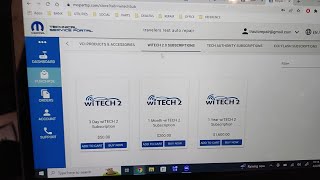
How to confirm: A Chrysler dealer or a properly equipped independent shop can check the current software version on the TCM against the latest available version using a wiTECH scan tool. 🎬 Watch: How to program a Chrysler module using wiTECH A technician may also see a lightning bolt icon next to the TCM in the scan tool's topology view, indicating an available flash.
Typical fix: Reprogramming (flashing) the TCM with the latest manufacturer software. This is the first and most crucial step.
Est. part cost: $0 (software only) - Failing Transmission Control Module (TCM) 🟡 Medium Probability → Shop Transmission Assembly If a software update does not resolve the code, or if the module is unresponsive during the flash attempt, it may have an internal hardware failure. This is the default diagnosis if software and wiring are ruled out.
How to confirm: This is typically diagnosed by exclusion. If the software is up-to-date and all power/ground connections to the TCM are verified as good, the module itself is condemned. The code P1634 specifically points to an internal processor error.
Typical fix: Replace the Transmission Control Module and program the new unit to the vehicle using a dealer-level scan tool.
Est. part cost: $280-$810 - Low Battery Voltage or Poor Electrical Connection ⚪ Low Probability → Shop Vehicle Battery Modern vehicles are sensitive to voltage fluctuations. A weak battery, failing alternator, or poor ground connection can cause modules to malfunction and set internal fault codes, especially during startup.
How to confirm: Perform a full charging system test. Load test the battery and check the alternator's output voltage. Inspect the TCM connectors and main chassis grounds for corrosion or looseness. Some owners report this code appearing after a battery disconnect or a no-start event.
Typical fix: Replace the failing battery, alternator, or repair the faulty wiring/connections.
Est. part cost: $150-$400
Diagnosis Steps
- Connect a professional scan tool (ideally wiTECH) capable of reading manufacturer-specific codes from all vehicle modules.
- Check for any Technical Service Bulletins (TSBs) related to the VIN and trouble codes. For P1634, TSBs 21-015-16 and 21-021-15 are highly relevant.
- If a software update is available, perform the TCM re-flash. CRITICAL: Connect a dedicated, stable power supply to the vehicle to maintain battery voltage between 13.2V and 13.5V during the entire process. A voltage drop can permanently damage the TCM.
- After the update, perform the TCM "VIN Verification" and "PROXI Configuration Alignment" routines as instructed by the TSB. This ensures the TCM is correctly integrated with the other vehicle modules.
- Clear all DTCs and perform a test drive, including several shift cycles, to see if the code returns.
- If the code returns or no update was available, thoroughly inspect the TCM's wiring harness and connectors for any signs of damage, corrosion, or loose pins. Pay close attention to power and ground circuits.
- Test the vehicle's battery and charging system under load to rule out unstable voltage as the cause.
- If all previous steps fail to resolve the issue, the Transmission Control Module (TCM) is faulty and requires replacement. The new module will also require programming to the vehicle.
Parts You'll Likely Need
- Transmission Control Module (TCM)
(OEM #68249840AB (example, verify by VIN))— This is the part that fails if a software update and electrical checks do not resolve the P1634 code. The code itself points to an internal failure of this module.
Trusted brands: Mopar
OEM price range: $600-$900
Aftermarket price range: $280-$500 (Remanufactured)
Related Codes That Often Appear With This One
- U0401-00 — Implausible Data Received From ECM/PCM. This code often appears with TCM faults as communication between the engine and transmission controllers is disrupted. 🎬 Watch: Diagnosing multiple module codes on a 2015 Chrysler 200 It is listed in the same TSBs as P1634.
- P1DAD-00 — Input Shaft-Output Shaft Direction Correlation. This is another transmission-related code that Chrysler addressed in the same software updates as P1634.
- P0887-00 — TCM Power Control Circuit High. This code, indicating a power supply issue to the TCM, is also mentioned in TSBs alongside P1634.
- P0701 — Transmission Control System Range/Performance. This is a more general transmission system fault that can be triggered by the specific internal TCM error indicated by P1634.
Technical Service Bulletins (TSBs) & Recalls
- 21-015-16: Addresses P1634-00 by recommending a TCM software update for shift enhancements on 2015 Chrysler 200 and Jeep Cherokee.
- 21-021-15 REV-E: Also lists P1634-00 as a code resolved by a TCM software update, superseding earlier revisions.
- 21-018-17 REV-B: Confirms the same P1634 issue and software fix applies to the Ram ProMaster City, a platform mate.
Platform-Specific Known Issues
- The 2015 Chrysler 200 was subject to several recalls and numerous TSBs for its ZF 9HP48 9-speed automatic transmission, with issues ranging from software glitches causing poor shifting to mechanical failures. The P1634 code is a hallmark symptom of the widespread software issues that affected these early-production transmissions across multiple car brands.
Mechanic-Grade Diagnostic Values
- Battery Voltage During TCM Flash — expected: Maintain between 13.2V and 13.5V. Failure: Dropping below 13.2V or exceeding 13.5V can interrupt the flash and potentially damage the TCM.
- Transmission Temperature for Quick Learn — expected: Minimum of 60°C (140°F). Failure: The Quick Learn procedure may not run or complete successfully if the transmission is not at operating temperature.
- Solenoid Supply Circuit Voltage — expected: Approximately 12 volts. Failure: No voltage or significantly lower voltage indicates an open or short in the supply circuit from the TCM.
- Solenoid Supply Circuit Resistance to TCM — expected: Below 3.0 Ohms. Failure: Resistance above 3.0 Ohms indicates high resistance or an open in the wiring between the transmission assembly and the TCM.
Hidden / Shadow Codes Worth Checking
- P1634-00: TCM Internal Watchdog Performance. The '-00' is a symptom byte used by FCA that often indicates a general or primary fault type without more specific sub-fault information. Its presence in TSBs confirms it's the standard format for this code. (see via A professional scan tool like wiTECH or a high-end aftermarket scanner that can read manufacturer-specific codes.)
Scan Tool Commands That Help
- wiTECH: PROXI Configuration Alignment — This procedure is required after replacing the TCM to synchronize the new module with the vehicle's existing configuration stored in the Body Control Module (BCM). Failure to perform this can result in a flashing odometer and communication errors.
- wiTECH: VIN Verification — This function must be run after a TCM flash or replacement to write the vehicle's VIN into the module, ensuring it is recognized by the rest of the vehicle's network.
- wiTECH or capable aftermarket scanner: Quick Learn — Must be performed after replacing the TCM/valve body or clearing adaptation memory cells. This procedure resets and relearns the clutch adaptive values to ensure proper shift quality. It should not be performed if active DTCs are present.
- wiTECH: Valve Body Solenoid Learn — This is a specific learn procedure required only when the valve body or TCM assembly has been replaced to match the module's electrical system with the physical solenoids.
Wiring & Ground Locations
- Transmission Control Module (TCM) — Located on the transaxle itself. It is accessed by raising the vehicle and removing the driver's side (left) front wheel.. This is the module setting the internal fault code. Physical access is required for replacement and to inspect its connectors for damage or corrosion.
- TCM Fused B(+) Circuit — Pin 1 of the TCM connector, fed by a Red/Yellow wire.. A stable power supply is critical for module operation. Verifying battery voltage at this pin can rule out power supply issues as a cause for the internal fault.
- TCM Sensor Ground — Pin 25 of the TCM connector, a Yellow/White wire.. A poor ground can cause erratic module behavior and internal faults. Verifying continuity to a known good chassis ground from this pin is a key electrical check.
Real Owner Repair Stories
- Reddit user in r/MechanicAdvice (2015 Chrysler 200) — No start, then started after disconnecting/reconnecting battery. Immediately went into limp mode (stuck under 20 mph) with Check Engine and Traction Control lights on. Codes P1634 and P0701 were present.
❌ Tried (didn't work) Restarting the car cleared the limp mode temporarily, but the check engine light and codes remained.
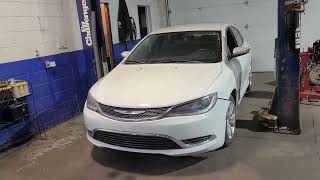
✅ What actually fixed it The user did not post a final confirmed fix, but the symptoms strongly point to a software glitch triggered by the power interruption. The community consensus was that a TCM software flash at the dealer was the necessary next step, which aligns with the TSBs for this code. - YouTube channel 'Wrenching With Kenny' (2015 Chrysler 200 with 230,800 miles) — Towed in, believed to need a new transmission. Multiple warning lights, would not accelerate, 'hit a wall'. Codes for implausible vehicle speed, internal electrical failure, and lost communication with various modules were present.
❌ Tried (didn't work) Clearing codes (they came right back)., Performing a battery disconnect to reset modules.
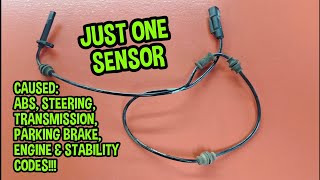
✅ What actually fixed it The root cause was found to be a faulty left rear wheel speed (ABS) sensor. Although not directly related to P1634, the bad sensor data flooded the CAN bus network, causing communication failures in multiple modules, including the TCM, leading to limp mode and transmission-related codes. Replacing the single ABS sensor allowed all codes to be cleared and restored normal vehicle operation.
When the Usual Fixes Don't Work
- While the vast majority of P1634 cases are resolved with a software flash or TCM replacement, there are documented instances where the root cause is external to the TCM. In one detailed case involving a 2015 Chrysler 200 with numerous speed-related codes including transmission faults, the ultimate cause was a single faulty ABS wheel speed sensor. The bad data from this sensor disrupted the entire vehicle network, causing the TCM and other modules to report errors and enter a fail-safe mode. This highlights the importance of a full-system vehicle scan, as focusing only on the TCM could lead to a misdiagnosis.
Helpful Videos
We Have This Part in Stock

The information in this article is provided for general reference and educational purposes only. Vehicle specifications, procedures, and part compatibility can vary by production date, trim level, and region. Always consult your vehicle's factory service manual and verify part numbers before purchasing or performing repairs. Safety-critical components such as airbags, seat belts, and braking systems should be installed by a qualified professional.
- Chrysler 200:
- 🧭 Diagnostic Flowchart
- 🎬 Helpful Videos
- 🛍️ Shop This Part
- What's Unique About the 2015-2015 Chrysler 200
- Symptoms You May Notice
- Most Likely Causes
- Diagnosis Steps
- Parts You'll Likely Need
- Related Codes That Often Appear With This One
- Technical Service Bulletins (TSBs) & Recalls
- Platform-Specific Known Issues
- Mechanic-Grade Diagnostic Values
- Hidden / Shadow Codes Worth Checking
- Scan Tool Commands That Help
- Wiring & Ground Locations
- Real Owner Repair Stories
- When the Usual Fixes Don't Work
- 🎟️ Get 5% Off