

OBD-II Code P1644: A Manufacturer-Specific Malfunction
The Ultimate Guide to Diagnosing and Fixing P1644 on Ford, Suzuki, Jaguar, GM, and More
- Verify your vehicle's specific P1644 definition before diagnosing; it means 'Fuel Pump Driver Module' on a Ford, but 'O2 Sensor Heater' on a Jaguar.
- Inspect the Fuel Pump Driver Module (FPDM) above the spare tire on 2004-2011 Ford trucks, as galvanic corrosion here causes over 90% of Ford P1644 codes.
- Check the immobilizer module under the dash for water damage if you have a 2008-2022 Suzuki with a crank-no-start condition and a flashing security light.
- Do not replace the in-tank fuel pump on a Ford without first testing the FPDM duty cycle and fuel rail pressure with an advanced scan tool.
What Does P1644 Mean?
P1644 is a manufacturer-specific code with definitions that vary entirely by brand. For Ford, Lincoln, and Peugeot, the Powertrain Control Module (PCM) detects a fault in the fuel pump speed control circuit, usually pointing to a failed Fuel Pump Driver Module (FPDM). For Suzuki, Jaguar, or GM, this code indicates failures in completely different systems, such as the anti-theft immobilizer, oxygen sensors, or traction control network.
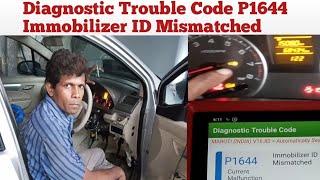
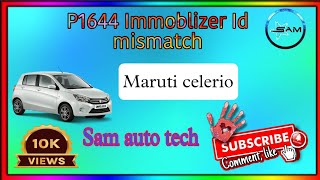
Technical definition: For Ford, Lincoln, Mercury, and Peugeot, P1644 is 'Fuel Pump Speed Control Circuit Malfunction', indicating incorrect voltage, signal frequency, or lost communication on the fuel pump control circuit. For GM, it is 'Traction Control Delivered Torque Output Circuit', meaning improper voltage was detected for over 10 seconds. For Suzuki, it is 'Immobilizer ID Mismatched', indicating the key transponder ID fails to match the immobilizer module. 🎬 See this breakdown of the Suzuki immobilizer ID mismatch error. For BMW, it means 'Throttle Valve Adaptation, Lower Mechanical Stop Not Adapted'.
Can I Drive With P1644?
Yes, But With Caution. Do not drive for extended periods. On Ford or Peugeot vehicles, this fuel delivery problem causes sudden engine stalling, creating a significant traffic hazard. On Jaguars, it increases emissions and damages the catalytic converter over time (an $800-$2500 repair). On GM or BMW vehicles, it disables traction control or causes rough idling, requiring prompt attention.
Common Causes
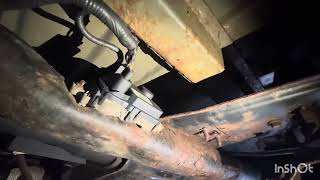
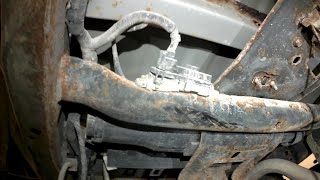
- Failed Fuel Pump Driver Module (FPDM) (Very Common) — The most frequent cause on Ford trucks and SUVs. The module mounts directly to the steel frame where moisture and road salt cause galvanic corrosion, cracking the aluminum housing and destroying the internal circuit board.
- Immobilizer System Malfunction (Water Intrusion) (Common) — On Suzuki models, water enters the cabin and corrodes the Immobilizer Control Module (or BCM) connector pins, causing a communication failure with the key's transponder.
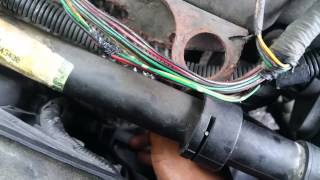
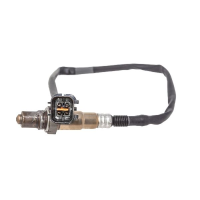
- Faulty Oxygen Sensor Heater Circuit (Common) — On Jaguar models, P1644 indicates a broken heater element inside the Bank 1 upstream oxygen sensor, preventing it from reaching operating temperature quickly. 🎬 Watch: How to replace the oxygen sensor on Jaguar models.
- Corroded or Damaged Wiring/Connectors (Common) — Wires and electrical plugs connecting the FPDM, immobilizer module, or O2 sensor fray or corrode, interrupting the PCM signal and triggering the code.
- Low Battery Voltage (Less Common) — On Mercedes-Benz and Chrysler/Dodge vehicles, low voltage during startup prevents the Transmission Control Module (TCM) from verifying its software version, triggering an 'incorrect configuration' fault.
- Failed Fuel Pump (Less Common) — The fuel pump develops an electrical short or fails mechanically, damaging the FPDM or causing abnormal control circuit readings.
- Blown Fuse or Faulty Relay (Less Common) — A blown fuse or stuck relay in the fuel pump, BCM, or TCM circuits interrupts power and triggers the code.
- Dirty or Faulty Electronic Throttle Body (Less Common) — On BMWs, heavy carbon buildup prevents the throttle body from completing its self-test or 'adaptation' procedure successfully.
- Faulty Powertrain Control Module (PCM) (Rare) — The main engine computer fails to send or receive signals. This is extremely rare and requires ruling out all wiring and peripheral modules first.
Symptoms
- Engine Stalls or Hesitates — The engine stalls unexpectedly under load or during acceleration. This is the primary symptom for Ford vehicles with a failing FPDM.
- Engine Cranks but Does Not Start — The engine turns over but receives no fuel. On Suzuki models, a flashing security light always accompanies this symptom.
- Check Engine Light On — The Malfunction Indicator Lamp (MIL) illuminates on the dashboard.
- Reduced Engine Power — The vehicle feels sluggish and lacks acceleration due to inadequate fuel delivery or a disabled throttle body.
- Traction Control Light On / System Disabled — On GM vehicles, the traction control warning light illuminates and the system disables itself.
- Fluctuating Fuel Rail Pressure (scan-tool only — no driver-felt sign) — Live data shows erratic fuel rail pressure, often accompanied by the fuel pump audibly cycling on and off at idle.
Diagnostic Flowchart
Tap your situation to follow the diagnostic path that matches what you're seeing on this code.
Common Fixes & Costs
- Replace Fuel Pump Driver Module (FPDM)
— Parts: $60-$150, Labor: $100-$200, ~0.8 hr book time
(DIY)
Ford F-150 (2004-2008): OEM 4L3Z-9D370-A (Alt: {'Dorman (OE Fix)': '590-001', 'Standard Motor Products': 'FPM100'}) - Replace Upstream Oxygen Sensor (Jaguar)
— Parts: $70-$150, Labor: $100-$200, ~1.0 hr book time
(Intermediate)
Jaguar X-Type (2002-2008, Bank 1): OEM C2S51801 (Alt: {'Denso': '234-9016', 'Bosch': '15627'}) - Clean/Replace Immobilizer Module (Suzuki) — Parts: $150-$400, Labor: $150-$300, ~1.5 hr book time (Professional)
- Repair Damaged Wiring or Connectors — Parts: $20-$50, Labor: $100-$300, ~2.0 hr book time (Intermediate)
- Replace Fuel Pump Assembly — Parts: $250-$600, Labor: $300-$600, ~3.0 hr book time (Professional)
- Flash Transmission Control Module (Dodge/Chrysler) — Parts: $0, Labor: $150-$250, ~1.0 hr book time (Professional)
DIY vs Professional
- Replace Fuel Pump Driver Module (Ford) — Beginner: Yes
Tools: Socket wrench with 8mm and 10mm sockets, safety glasses. - Replace Upstream Oxygen Sensor (Jaguar) — Beginner: No, recommended for intermediate DIYers.
Tools: 22mm O2 sensor socket, socket extensions, universal joints, penetrating oil, torque wrench. - Clean/Replace Immobilizer Module (Suzuki) — Beginner: Cleaning: Yes. Replacement: No.
Tools: Trim removal tools, socket set, electronics contact cleaner.
Used vs. New Parts: Buying Guide
When a used part is worth it: A used electronic module (like an FPDM) from a low-mileage, non-corroded donor is cost-effective if the part number matches exactly. Never buy used oxygen sensors.
Donor-vehicle mileage cap: roughly under 60000 miles for the part to have meaningful remaining life.
Donor quality checklist:
- Verify the exact OEM part number matches; superseded parts often fail to communicate.
- For FPDMs, strictly avoid donors from the Rust Belt or coastal areas.
- Ensure the salvage yard offers at least a 30-day warranty.
Decision logic:
- If The part is a Ford FPDM → Buy a new aftermarket 'OE Fix' part (like Dorman 590-001). It includes improved mounting hardware to prevent future corrosion, solving the original design flaw for under $100.
- If The part is a Jaguar O2 Sensor → Always buy new from a reputable brand like Bosch or Denso. Used sensors have an unknown remaining lifespan.
- If The part is an electronic module requiring programming → Favor a new part or a specialized remanufacturing service. Used modules are often locked to the donor vehicle's VIN and impossible to reprogram.
Warranty tradeoff: Used salvage parts carry a 30-90 day warranty. New aftermarket parts offer 1-year to lifetime warranties. New OEM parts carry a 1-2 year warranty.
Worst-case if a used part fails: $300-$600 if a used electronic module fails after installation, requiring repeat labor and programming costs.
What Happens If You Wait — Timeline
- 0-2 months (Ford FPDM Failure): Intermittent hesitation or stumbling occurs under load. The module's case cracks and moisture enters, but it may not set a code initially. (MPG impact: 0-5%% · Added cost: $0)
- 2-4 months (Ford FPDM Failure): Stalling becomes frequent. The engine cranks for a long time before starting, and severe bucking occurs during acceleration. P1644 or P0191 is stored. (MPG impact: 5-15%% · Added cost: $50-$150 (in wasted fuel and potential towing))
- 4+ months (Ford FPDM Failure): Complete failure. The engine cranks but will not start because the fuel pump receives no power. The vehicle requires towing. (MPG impact: 100% (undriveable)% · Added cost: $150-$300 (for towing))
- 0-3 months (Jaguar O2 Sensor Failure): Check Engine Light illuminates for P1644. The O2 sensor heater breaks, making the sensor slow to enter 'closed loop' operation. (MPG impact: 5-10%% · Added cost: $25-$75 (in wasted fuel))
- 3-9 months (Jaguar O2 Sensor Failure): The ECU runs a rich fuel mixture to compensate for inaccurate sensor feedback. This drops MPG significantly and begins overheating the catalytic converter. (MPG impact: 15-25%% · Added cost: $150-$400 (in wasted fuel))
- 9+ months (Jaguar O2 Sensor Failure): Constant overheating melts the internal structure of the catalytic converter. Code P0420 appears, acceleration drops, and the exhaust smells like sulfur. (MPG impact: 20-40%% · Added cost: $1500-$3000 (for new catalytic converter))
Cost of Not Fixing It
- Immediate: Ford/Peugeot: Sudden engine stalling in traffic creates a major safety hazard and leaves you stranded. (Added cost: $150-$300 (for towing))
- 1-6 months: Jaguar: A rich fuel mixture drops fuel economy by 10-20% and overheats the catalytic converter. (Added cost: $50-$150 (in wasted fuel))
- 6+ months: Jaguar: Continued overheating destroys the catalytic converter's internal structure, triggering a P0420 code. (Added cost: $1200-$2500 (for catalytic converter replacement))
- Ongoing: All variants: The vehicle automatically fails state emissions inspections due to the active Check Engine Light. (Added cost: $50-$100 (in repeat inspection fees))
Diagnosis Steps
- Verify the Code's Meaning and Check for TSBs
Use the vehicle's make, model, and year to confirm the specific definition of P1644. Search for Technical Service Bulletins (TSBs) related to this code, as known issues (like Ford's FPDM corrosion) have specific, documented fixes.
Tools: OBD-II Scanner, Vehicle-Specific Service Manual (Beginner) - Perform a Targeted Visual Inspection
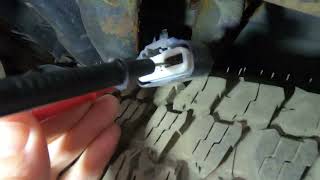
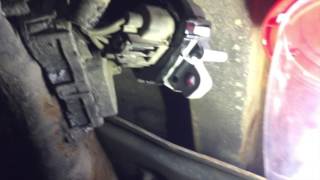
Locate the primary component based on the code's definition. On Ford F-150s, inspect the FPDM on the rear frame rail near the spare tire for cracks and heavy corrosion. For Suzukis, inspect the immobilizer module under the dash for water damage.
Tools: Flashlight, Safety Glasses (Beginner) - Check Fuses and Relays
Locate the fuse box using your owner's manual. Test the fuses and relays related to the system in question (Fuel Pump, BCM, TCM). Swap a suspect relay with a known-good identical relay to rule it out quickly.
Tools: Fuse Puller, Multimeter (Beginner) - Test the Circuit for Power and Ground
Using a multimeter and a wiring diagram, check for proper voltage and ground at the connector of the suspect component (e.g., FPDM, Oxygen Sensor, TCM). This confirms the module receives the necessary power to operate.
Tools: Multimeter, Vehicle-Specific Wiring Diagram (Intermediate) - Check Fuel Pressure (Ford/Peugeot)
Connect a fuel pressure gauge to the engine's fuel rail Schrader valve. On a 2004-2008 Ford F-150, pressure should be 35-45 PSI with the key on, engine off (KOEO). Low or zero pressure points to a failed FPDM or fuel pump.
Tools: Fuel Pressure Gauge (Intermediate) - [ADVANCED] Analyze FPDM Live Data (Ford)
Monitor FPDM-related PIDs with a scan tool. The 'Fuel Pump Command' (FPC) duty cycle from the PCM should be 5-51%. The 'Fuel Pump Monitor' (FPM) duty cycle from the FPDM should be a steady 50%. An FPM reading of 75% indicates the module detected an open/short in the pump circuit.
Tools: Advanced Scan Tool (Advanced) - [ADVANCED] Test O2 Sensor Heater Resistance (Jaguar)
Disconnect the Bank 1 upstream O2 sensor. Measure the resistance between the two heater circuit pins on the sensor side. A healthy heater element reads between 2 and 30 Ohms. Infinite resistance (open circuit) confirms the sensor requires replacement.
Tools: Multimeter, Wiring Diagram (Advanced) - [PRO TIP] Scope the FPDM Control Signal (Ford)
Back-probe the 'Fuel Pump Command' (FPC) wire at the FPDM with an oscilloscope. You should see a clean Pulse-Width Modulated (PWM) square wave. If the signal is perfect but the pump fails to run correctly, the FPDM is dead.
Tools: Oscilloscope, Wiring Diagram (Advanced) - Perform Throttle Body Adaptation (BMW)
If diagnosing a BMW, clean the throttle body and perform a manual adaptation reset: Turn ignition OFF. Press the accelerator pedal to the floor. Turn ignition ON (do not start) and hold for 60 seconds. Turn ignition OFF, release the pedal, and wait 2 minutes.
Tools: None (Intermediate)
When This Code Triggers (Freeze-Frame Conditions)
- Engine Coolant Temp: 170-210°F (The fault frequently triggers after the engine reaches normal operating temperature.)
- Engine RPM: 1500-3000 RPM (Often triggered during steady-state cruising or light to moderate acceleration.)
- Engine Load: 25-50% (Sets when the engine is under a moderate load, demanding consistent fuel delivery.)
- Vehicle Speed: 40-65 mph (Occurs at highway or city cruising speeds, rarely during idle or hard acceleration.)
Related Codes
- P1645 — On Peugeot and Citroen vehicles, this code for 'Fuel Pump Resistor Switch Circuit Malfunction' often appears alongside P1644.
- P0191 — This code for 'Fuel Rail Pressure Sensor Circuit Range/Performance' is frequently triggered by the erratic fuel delivery of a failing Ford FPDM.
- P0602 — This 'Control Module Programming Error' appears alongside P1644 on Chrysler/Dodge vehicles when the transmission module has a software mismatch.
- B1029 — On Suzuki vehicles, this BCM code for 'Immobilizer Antenna Circuit Malfunction' is often the root cause for the PCM storing a P1644.
Climate & Environmental Factors
- Road Salt / High Humidity (Rust Belt/Coastal Areas): Road salt and moisture accelerate galvanic corrosion between the Ford FPDM's aluminum housing and the steel frame, cracking the module. Aftermarket kits use rubber spacers to prevent this.
- Heavy Rainfall: On Suzuki models, heavy rain leaks into the cabin and damages the Body Control Module (BCM) or immobilizer unit located under the dashboard.
How to Talk to a Mechanic About This Code
Say this: "{'for_ford': "I have a P1644 code on my Ford and suspect it's the Fuel Pump Driver Module. I'd like a diagnosis that tests the FPDM and monitors live data for fuel pressure before replacing any parts.", 'for_jaguar': "I'm getting a P1644 code on my Jaguar, pointing to the Bank 1 upstream O2 sensor. Can you schedule a diagnostic to confirm the sensor's heater circuit failed before ordering a replacement?", 'for_suzuki': 'My Suzuki has a P1644 code with a crank-no-start and a flashing security light. I need a diagnosis of the immobilizer system. Do you have the specialized tools to test the key and immobilizer module?'}"
This language directs the technician to the most likely cause for your specific vehicle, preventing them from wasting time on incorrect diagnostic paths (like checking the fuel pump on a Jaguar).
Avoid saying:
- My check engine light is on, can you just fix it?
- I think it's the fuel pump, can you give me a price to replace it?
- Just do whatever you think is necessary.
Questions to ask before authorizing the repair:
- Can you show me the failed part and explain why it failed (e.g., the corrosion on the FPDM)?
- If a module needs replacement, does the estimate include the cost of programming it to my vehicle?
- For a Ford FPDM replacement, will you use a kit with spacers to prevent future corrosion?
- What is the warranty on the parts and labor for this specific repair?
Where to Take It: Dealer vs Independent vs Chain
- Dealer:
Best for: Vehicles under warranty., Complex programming-related fixes (Suzuki immobilizer, Dodge TCM re-flash)., Recalls or Technical Service Bulletins (TSBs) related to P1644.
Downsides: Significantly higher labor rates and parts costs., May default to replacing an entire assembly when a smaller component or re-flash suffices. (Typical cost: +40% vs. baseline) - Independent Shop:
The best fit for most P1644 scenarios, especially on Ford and Jaguar. For programming-intensive makes like Suzuki or Dodge, ensure the shop has the necessary software.
Best for: Out-of-warranty vehicles with well-known P1644 causes (Ford FPDM, Jaguar O2 sensor)., Owners seeking better value and direct communication with the technician., Diagnosing electrical issues with more flexibility than dealers.
Downsides: Quality varies greatly; vet shops based on reviews and ASE certifications., May lack the expensive, specialized tools for programming certain modules. (Typical cost: +0% vs. baseline) - Chain Shop:
AVOID for P1644 diagnosis and repair. The complexity and manufacturer-specific nature of this code are a poor match for the chain shop business model.
Best for: Simple, unrelated maintenance like oil changes or tires.
Downsides: Technician skill varies dramatically., High risk of misdiagnosing a nuanced code like P1644 (e.g., selling a fuel pump when the FPDM is the issue). (Typical cost: -10% vs. baseline)
When to Walk Away From the Repair
If the estimated repair cost exceeds 40-50% of the car's private-party value, seriously consider selling or trading it in instead of repairing it.
- Car worth $5000, fix is $200: Fix it. The repair for a common Ford FPDM issue is a small fraction of the vehicle's value.
- Car worth $3000, fix is $1100: Borderline. This represents over 35% of the car's value for a potential Suzuki immobilizer module replacement. Get a second opinion to ensure it's not a cheaper key issue.
- Car worth $3500, fix is $1500: Walk away. A $1500 repair for a Dodge TCM approaches 43% of the car's value. It is not a financially sound investment on an older vehicle.
What Scan Tool You Need for This Code
Minimum: A scanner that reads manufacturer-specific codes, shows code definitions, and displays live data streams (PIDs). A generic $20 reader is insufficient.
A basic code reader only shows 'P1644', which is useless as the meaning varies by manufacturer. For a Ford, you need live fuel pressure data. For a Suzuki, you need to scan the Body Control Module.
Budget: BlueDriver Pro or ANCEL FD500 (for Ford) (~$99) — BlueDriver connects to your phone and reads specific codes and live data for most brands. The ANCEL FD500 gives deep access to Ford-specific modules, ideal for the FPDM issue.
Mid-range: Foxwell NT710 or Innova 5610 (~$250-350) — These handheld scanners offer bidirectional controls, allowing you to command components like the fuel pump to turn on for testing. They provide full system access to read codes from the BCM or TCM.
Professional: Autel MaxiCOM MK808S or XTOOL D7 (~$450-600) — These professional-grade tablet scanners offer full bidirectional control, advanced service functions, and ECU coding capabilities required for a DIY fix on a Suzuki immobilizer or Dodge TCM.
Rent vs buy: You can borrow a basic OBD-II scanner from auto parts stores for free. However, these loaner tools are often basic code readers and insufficient to diagnose P1644 properly. You will likely need to buy a more advanced scanner.
How to Clear the Code After You Fix It
- Reconnect the battery if disconnected during repair.
- Use an OBD-II scan tool to clear P1644 and any related fault codes.
- Perform a complete OBD-II drive cycle to reset readiness monitors.
Drive cycle (~30 minutes): A generic drive cycle requires a cold start, 3 minutes of idling, 15 minutes of mixed stop-and-go city driving, followed by 10 minutes of steady highway cruising at 55 mph.
Readiness monitors affected: Catalyst Monitor, O2 Sensor Monitor, Fuel System Monitor
Before emissions retest: drive at least 100 miles to fully set monitors.
Watch out for:
- Disconnecting the battery clears the code but resets all readiness monitors to 'Not Ready', guaranteeing an automatic emissions test failure.
- Failing to drive under the correct steady-state conditions prevents the monitors from completing their self-tests.
Will This Fail Emissions / State Inspection?
Yes — this code typically fails an OBD-II emissions inspection.
- California: An active P1644 code is an automatic failure. A full OBD-II drive cycle must be completed to set all readiness monitors before re-testing.
- New York: Vehicles fail the NYVIP3 inspection if the MIL is on. 2001 and newer vehicles also fail if more than one readiness monitor is 'Not Ready'.
- Texas: An illuminated Check Engine light and a stored P1644 code result in an automatic failure during the required OBD-II test.
Most Commonly Affected Vehicles
- Ford F-150 (2004-2008) — Extremely common issue. The FPDM mounts directly to the steel frame crossmember, causing severe galvanic corrosion. TSB 07-24-02 addresses this.
- Ford Expedition, Explorer, Mustang (2004-2011) — Shares a similar FPDM design and mounting location to the F-150, making the module highly prone to corrosion failure.
- Suzuki Ertiga, Alto, Swift, Grand Vitara (2008-2022) — P1644 means 'Immobilizer ID Mismatched'. This is a common communication failure between the key's transponder and the anti-theft system, frequently caused by water intrusion.
- Dodge / Chrysler Charger, Magnum, 300, Grand Cherokee (2005-2014) — Indicates an 'Incorrect Variant/Configuration' error in the TCM for the Mercedes-Benz NAG1 transmission. Triggered by incorrect programming or low battery voltage.
- Jaguar S-Type, X-Type, XJ8 (2002-2008) — Points to a 'HO2S Control Malfunction' for the upstream oxygen sensor on Bank 1. This is an emissions fault, not a fuel pump issue.
- Chevrolet / GM CTS, Escalade, various trucks and SUVs (2005-2015) — Indicates 'Traction Control Delivered Torque Output Circuit'. This communication issue between the PCM and Electronic Brake Control Module disables traction control.
- BMW Various models (E46, E90, etc.) (2002-2010) — Means 'Throttle Valve Adaptation, Lower Mechanical Stop Not Adapted'. The electronic throttle body failed its self-test, often requiring cleaning and an adaptation reset.
- Toyota Models with Stop & Start System (2014-2020) — Indicates a malfunction in the starter control circuit within the Stop & Start system ECU, often triggered by a faulty relay.
Manufacturer-Specific Notes
- Ford, Lincoln, Mercury: The code almost exclusively points to a faulty Fuel Pump Driver Module (FPDM) destroyed by frame corrosion. The aftermarket Dorman 590-001 part is the standard, improved fix.
- Jaguar: Ignore the fuel system entirely. P1644 indicates a failed heater circuit in the Bank 1 upstream oxygen sensor.
- Suzuki / Maruti: This code means 'Immobilizer ID Mismatched' and causes a crank-no-start with a flashing security light. It requires inspecting the immobilizer module for water damage.
- Chrysler / Dodge: P1644 means 'Incorrect Variant/Configuration' on NAG1 transmissions. DO NOT use a scan tool to 'Initialize' the TCM, as this bricks the module. It requires a software re-flash.
- General Motors (GM): The definition is 'Traction Control Delivered Torque Output Circuit', indicating a communication failure that disables traction and stability control.
- BMW: This code means the throttle body failed its adaptation test due to carbon buildup. Cleaning the throttle body and performing a manual adaptation reset usually fixes it.
Real Owner Stories
2008 Ford F-150 4.6L at 117K miles
The truck suddenly started bucking severely when trying to accelerate. No Check Engine Light was on initially. The owner heard the fuel pump cycling on and off erratically at idle.
Outcome: Correctly diagnosed a failing Fuel Pump Driver Module (FPDM). Purchased a new Dorman module for $98 and replaced it in 30 minutes. The truck ran perfectly afterward.
Lesson: A failing FPDM on a Ford doesn't always throw a code immediately. Severe, rhythmic bucking under acceleration is a classic sign. Checking live fuel pressure data confirms the diagnosis before replacing parts.
2001 Suzuki Vitara at 122K km
Engine cranked but immediately died. The security/immobilizer light flashed continuously on the dashboard.
Outcome: A specialized locksmith diagnosed a failing transponder chip in the key. They programmed a new master key and reset the immobilizer system, permanently fixing the no-start condition.
Lesson: On a Suzuki with P1644 and a flashing security light, the problem is the anti-theft system. Don't replace the ECU; the issue is often a cheaper fix like a faulty key transponder requiring a locksmith.
2005 Mercury Mariner
Car ran terribly, shook, sputtered, and smelled rich. The check engine light showed P1644 and P0191 (Fuel Rail Pressure Sensor).
Outcome: The combination of a fuel control code (P1644) and a fuel pressure code (P0191) strongly pointed to a failed FPDM. The owner replaced the corroded FPDM, resolving all codes.
Lesson: When P1644 appears with P0191 on a Ford-family vehicle, the FPDM is the root cause. The FPDM's failure to control the pump causes the erratic pressure readings that trigger P0191.
How to Prevent This Code From Triggering
- For Ford Owners: Proactively install an FPDM spacer kit (Once, especially if you live in the Rust Belt or coastal areas) — A kit with rubber standoffs creates an air gap, preventing the direct aluminum-to-steel contact that causes galvanic corrosion. This prevents future failure on a working module.
- Apply dielectric grease to critical electrical connectors (Anytime a connector is unplugged for service) — For components exposed to the elements, dielectric grease seals out moisture and oxygen, preventing pin corrosion that causes intermittent signals.
- For Suzuki Owners: Check for water leaks into the cabin (Annually or after heavy rain) — The immobilizer module under the dash is highly susceptible to water damage from leaking windshield seals. Fixing leaks early prevents the destruction of sensitive electronics.
- Address engine misfires, and oil/coolant leaks immediately (As needed) — For the Jaguar variant, contaminants like unburnt fuel, oil, or coolant quickly destroy the O2 sensor element, causing the heater circuit fault.
Frequently Asked Questions
Why does the P1644 code have so many different meanings?
The SAE reserves P1xxx codes for manufacturer-specific functions. This allows carmakers to create codes for unique systems, leading to completely different definitions for the same number across brands.
What is a Fuel Pump Driver Module (FPDM)?
It is a module that receives commands from the main engine computer to precisely control fuel pump speed using a pulse-width modulated signal. This improves efficiency over older systems that ran the pump at full speed constantly.
How do I prevent the FPDM from failing again on my Ford?
Quality aftermarket replacement modules include rubber standoffs to create an air gap between the module and the steel frame. This prevents the direct aluminum-to-steel contact that causes galvanic corrosion.
Can I just swap the immobilizer module on my Suzuki?
No. The key transponder, immobilizer module, and Engine Control Module are a matched, programmed set. A new module requires specialized dealer programming to sync with your vehicle. Always inspect and clean the existing module's contacts for water damage before replacing it.
What are the most common misdiagnosis mistakes for P1644?
The biggest mistake is failing to verify the code's definition for your specific vehicle make. For example, replacing a fuel pump on a Jaguar when the code actually refers to an oxygen sensor. On Fords, mechanics often mistakenly replace the expensive in-tank fuel pump instead of the easily accessible FPDM.
Can a bad battery cause a P1644 code?
Yes, specifically on Mercedes-Benz and Chrysler/Dodge vehicles. Low battery voltage during startup interrupts the Transmission Control Module's software verification self-check, triggering an 'Incorrect Configuration' fault.
Is it safe to clear the code and keep driving?
Clearing the code without fixing the root cause guarantees it will return. If the cause is a failing Ford FPDM, ignoring it leaves you stranded when the engine stalls. For traction control or oxygen sensor variants, the vehicle remains drivable but requires prompt repair to prevent catalytic converter damage.
Key Takeaways
- Verify your vehicle's specific P1644 definition before diagnosing; it means 'Fuel Pump Driver Module' on a Ford, but 'O2 Sensor Heater' on a Jaguar.
- Inspect the Fuel Pump Driver Module (FPDM) above the spare tire on 2004-2011 Ford trucks, as galvanic corrosion here causes over 90% of Ford P1644 codes.
- Check the immobilizer module under the dash for water damage if you have a 2008-2022 Suzuki with a crank-no-start condition and a flashing security light.
- Do not replace the in-tank fuel pump on a Ford without first testing the FPDM duty cycle and fuel rail pressure with an advanced scan tool.
Helpful Videos
Shop the Parts Behind P1644
Below are the parts most often responsible for code P1644, ranked by how frequently each one is the actual culprit (per the diagnosis above). Tap any to see what we have for your vehicle.


The information in this article is provided for general reference and educational purposes only. Vehicle specifications, procedures, and part compatibility can vary by production date, trim level, and region. Always consult your vehicle's factory service manual and verify part numbers before purchasing or performing repairs. Safety-critical components such as airbags, seat belts, and braking systems should be installed by a qualified professional.
- 🧭 Diagnostic Flowchart
- 🎬 Helpful Videos
- 🛍️ Shop This Part
- What Does P1644 Mean?
- Can I Drive With P1644?
- Common Causes
- Symptoms
- Common Fixes & Costs
- DIY vs Professional
- Used vs. New Parts: Buying Guide
- What Happens If You Wait — Timeline
- Cost of Not Fixing It
- Diagnosis Steps
- When This Code Triggers (Freeze-Frame Conditions)
- Related Codes
- Climate & Environmental Factors
- How to Talk to a Mechanic About This Code
- Where to Take It: Dealer vs Independent vs Chain
- When to Walk Away From the Repair
- What Scan Tool You Need for This Code
- How to Clear the Code After You Fix It
- Will This Fail Emissions / State Inspection?
- Most Commonly Affected Vehicles
- Manufacturer-Specific Notes
- Real Owner Stories
- 2008 Ford F-150 4.6L at 117K miles
- 2001 Suzuki Vitara at 122K km
- 2005 Mercury Mariner
- How to Prevent This Code From Triggering
- Frequently Asked Questions
- Why does the P1644 code have so many different meanings?
- What is a Fuel Pump Driver Module (FPDM)?
- How do I prevent the FPDM from failing again on my Ford?
- Can I just swap the immobilizer module on my Suzuki?
- What are the most common misdiagnosis mistakes for P1644?
- Can a bad battery cause a P1644 code?
- Is it safe to clear the code and keep driving?
- Key Takeaways
- 🎟️ Get 5% Off