

OBD-II Code P1651: Manufacturer-Specific Circuit Malfunction
What P1651 means, why it triggers, and how to fix it
- Always look up the manufacturer-specific definition for P1651, as it means a cooling fan fault on a GM but a power steering issue on a Ford.
- Replace the $15-$40 cooling fan relay first if you drive a General Motors vehicle, as this is the number one cause of P1651.
- Test the battery on 2013-2014 Nissan Sentras before replacing the starter, as TSB NTB14-051a proves low voltage triggers this code and a no-start condition.
- Stop driving immediately if P1651 disables your cooling fan, because overheating the engine turns a $50 relay fix into a $3,000 cylinder head replacement.
- Inspect the circuit's dedicated 10A to 30A fuse before buying any parts, as a blown fuse instantly triggers this circuit malfunction code.
What Does P1651 Mean?
P1651 is a manufacturer-specific code, meaning its definition changes depending on your vehicle's make. The Powertrain Control Module (PCM) detects an electrical fault in a specific circuit. This is often the cooling fan relay, power steering pressure switch, or ACIS valve, making manufacturer-specific identification the mandatory first step.
Technical definition: The formal definition of P1651 varies by manufacturer. Common definitions include: General Motors: Fan 1 Relay Control Circuit Malfunction. Ford/BMW: Power Steering Pressure (PSP) Switch Input Malfunction. Lexus/Toyota: VSV (Vacuum Switching Valve) for ACIS Circuit Malfunction. Nissan: Starter Motor Relay, Fan 1 Relay, or Throttle Control Motor Circuit. Volkswagen: Data Bus Powertrain Missing Messages.
Can I Drive With P1651?
Yes, But With Caution. Driving is possible, but strongly discouraged if the code relates to the cooling fan (common in GM vehicles). Continuing to drive without a working fan causes the engine to overheat, leading to catastrophic damage like a warped cylinder head or blown head gasket. This turns a $50 relay fix into a $3,000 engine repair. If the code causes a no-start condition (Nissan) or severe performance issues (Lexus), the vehicle is not driveable.
Common Causes
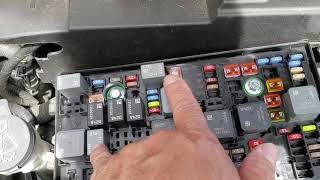
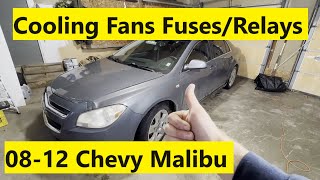
- Failed Cooling Fan Relay (GM) (Very Common) — On General Motors vehicles, this is the number one cause. 🎬 Watch: Locate and check your Chevy Malibu cooling fan relay. The relay is a small electronic switch controlling power to the engine's cooling fan, and its internal coil burns out from repeated use and engine heat.
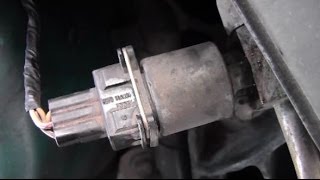
- Faulty Power Steering Pressure (PSP) Sensor (Ford/BMW) (Very Common) — For Ford and BMW vehicles, a bad PSP sensor is a frequent trigger. This sensor tells the computer when the power steering system is under load to adjust engine idle speed. These sensors frequently fail internally or leak fluid. 🎬 See how to replace a faulty power steering pressure switch.
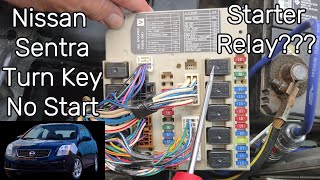
- Low Battery Voltage (Nissan) (Common) — On 2013-2014 Nissan Sentras, a weak or dead battery triggers P1651, which disables the starter relay and causes a no-start condition. The issue is low voltage, not a faulty starter, as documented in TSB NTB14-051a. 🎬 Watch: Diagnosing Nissan Sentra no-start issues and battery voltage faults.
- Blown Fuse (Common) — A blown fuse for the affected circuit instantly causes this code. Always check the dedicated circuit fuse before replacing expensive parts.
- Damaged or Corroded Wiring (Common) — A wire in the specific circuit is broken, shorted to ground, or has a loose connection. This includes rodent chew marks on harnesses located under the intake manifold.
- Faulty ACIS Vacuum Switching Valve (Lexus) (Common) — On non-US market Lexus models, this code points to a failure of the VSV controlling the Acoustic Control Induction System (ACIS). This valve sits under the intake manifold, making it difficult to access.
- Shorted Oxygen Sensor (Nissan) (Less Common) — On specific Nissan models, a short circuit in an oxygen sensor's wiring unexpectedly blows a shared fuse, triggering P1651 and preventing the engine from revving past 2500 RPM.
- Faulty Seat Belt Switch (Pontiac) (Less Common) — On certain Pontiac models, a failed driver-side seat belt buckle switch triggers this specific code.
- Failed Powertrain Control Module (PCM) (Rare) — The internal driver circuit controlling the component fails, requiring PCM repair or replacement. Consider this only after exhausting all wiring and component tests.
Symptoms
- Check Engine Light On — The PCM illuminates the Malfunction Indicator Lamp (MIL) on the dashboard.
- Engine Overheating (GM) — If the code is for a cooling fan circuit, the fan fails to activate. The engine temperature rises rapidly and overheats when stopped or moving slowly in traffic.
- Engine Stalls or Rough Idle (Ford) — The engine stalls or idles roughly when turning the steering wheel at low speeds, as the PCM fails to compensate for the extra power steering pump load.
- No Crank / No Start (Nissan) — On 2013-2014 Nissan Sentras, this code disables the starter relay and prevents the engine from cranking due to low battery voltage.
- Poor Engine Performance or RPM Limit (Lexus) — The engine feels sluggish or refuses to rev past a specific limit (typically 4500 RPM) due to ACIS valve failure.
- Air Conditioning Not Working — The vehicle disables the A/C compressor if a cooling fan fault is detected to prevent engine overheating and reduce load.
- Freeze Frame Data Logged (scan-tool only — no driver-felt sign) — The vehicle's computer stores a snapshot of sensor data from the exact moment the fault occurred.
Diagnostic Flowchart
Tap your situation to follow the diagnostic path that matches what you're seeing on this code.
Common Fixes & Costs
- Replace Cooling Fan Relay (GM) — Parts: $15-$40, Labor: $50-$80, ~0.5 hr book time (DIY)
- Replace Power Steering Pressure Sensor (Ford) — Parts: $30-$80, Labor: $100-$150, ~1 hr book time (DIY)
- Charge or Replace Battery and Clear Codes (Nissan) — Parts: $150-$250, Labor: $50-$100, ~0.5 hr book time (DIY)
- Repair Damaged Wiring — Parts: $5-$50, Labor: $100-$300, ~2.0 hr book time (Intermediate)
- Replace ACIS Vacuum Switching Valve (Lexus) — Parts: $75-$200, Labor: $800-$1200, ~7 hr book time (Professional)
Used vs. New Parts: Buying Guide
When a used part is worth it: For simple, robust components like cooling fan relays, a used part from a reputable salvage yard is a reasonable alternative. Used parts are not recommended for sensors like the PSP switch, as their failure is age-related.
Donor-vehicle mileage cap: roughly under 100000 miles for the part to have meaningful remaining life.
Donor quality checklist:
- Verify the part number is an exact match.
- For relays, inspect the terminals for corrosion or discoloration from overheating.
- Choose parts from vehicles with documented low mileage.
Decision logic:
- If The part is a simple relay and costs under $50 new → Buy new for peace of mind and a warranty.
- If The part is a sensor (e.g., PSP switch) or an electronic module → Buy a new OEM or quality aftermarket part, as used electronics carry a high risk of premature failure.
- If Budget is the absolute primary concern for a simple relay → A used part is acceptable, but test it before leaving the salvage yard.
Warranty tradeoff: Used parts come with a 30-day exchange warranty. New aftermarket parts offer a 1-year to limited lifetime warranty. New OEM parts carry a 12-month manufacturer's warranty.
Worst-case if a used part fails: $100-$200 if a used part fails shortly after installation, requiring repeat diagnosis and labor.
What Happens If You Wait — Timeline
- Immediate (GM Fan Fault): Check Engine Light on. In stop-and-go traffic, engine temperature rises above normal. Fan does not activate. (MPG impact: 0-1%% · Added cost: $0)
- First Overheating Event (5-10 minutes in traffic): Temperature gauge enters the red zone. A/C stops working as the PCM reduces load. Steam appears from under the hood. (MPG impact: 1-3%% · Added cost: $200-$500)
- 15-30+ minutes of continued driving while overheating: Severe overheating occurs. Coolant boils over. The aluminum cylinder head warps, causing a permanent head gasket failure. (MPG impact: N/A% · Added cost: $1,500-$3,000)
- Ignoring severe overheating and continuing to drive: Catastrophic engine failure. The warped head causes coolant to mix with engine oil, destroying bearings. The engine block cracks or seizes. (MPG impact: N/A% · Added cost: $4,000-$8,000)
Cost of Not Fixing It
- Immediate (GM Fan Fault): Engine overheats in traffic, leading to warped cylinder heads or a blown head gasket. (Added cost: $2000-$4000)
- Immediate (Ford PSP Fault): Engine stalls when parking or at low speeds, creating a safety hazard and damaging the power steering pump. (Added cost: $500-$1000)
- 1-3 months (Lexus ACIS Fault): Reduced engine performance and fuel economy. Potential for carbon buildup in the intake manifold. (Added cost: $50-$200)
- Ongoing: Automatic failure of any state emissions inspection, leading to fines and inability to legally register the vehicle. (Added cost: $50-$500)
Diagnosis Steps
- Identify the Code's Meaning for Your Vehicle
Use a search engine or service manual to find the specific definition of P1651 for your car's make, model, and year. Diagnosis is impossible without this step.
Tools: Internet access, OBD-II scanner (Beginner) - Inspect Fuses and Relays
Check the fuse box for blown fuses related to the circuit (e.g., 'FAN 1', 'PSP'). If the fault is a relay, swap it with an identical relay from a non-critical circuit (like the horn) to see if the problem moves.
Tools: Owner's manual, fuse puller, needle-nose pliers (Beginner) - Visual Inspection
Inspect the wiring harness and connector going to the component. Look for burnt wires, melted plastic connectors, rodent chew marks, or corrosion on the pins.
Tools: Flashlight (Beginner) - Test GM Fan Relay Coil Resistance
Disconnect the relay. Using a multimeter set to Ohms, measure resistance between terminals 85 and 86. A good relay coil reads between 70 and 90 Ohms. Infinite resistance (OL) means the coil is open; near zero means it is shorted. Replace the relay in either failure case.
Tools: Multimeter (Intermediate) - Verify Sensor Signal Voltage (Ford/BMW PSP)
Back-probe the 3-wire PSP sensor connector with the key on. You need a 5V reference wire, a ground wire (near 0V), and a signal wire (0.5-1.0V at idle). Unplug the sensor; the signal wire voltage at the harness connector must jump to 5V. If it does, the wiring is good, and the sensor is faulty.
Tools: Multimeter with back-probe pins (Advanced) - Monitor Ford PSP PID Data
Connect a scan tool and monitor the Power Steering Pressure PID. With the engine idling, voltage sits under 1.0V. As you turn the steering wheel, voltage rises smoothly. If voltage is stuck high (5V), stuck low (0V), or ignores steering input, the sensor or circuit is bad.
Tools: OBD-II Scan Tool with Live Data (Advanced) - Test Lexus ACIS VSV Resistance
Disconnect the VSV connector. Measure resistance across the valve's two terminals. Expected resistance is typically 33-45 Ohms at 68°F (20°C). A reading outside this range or showing an open circuit (OL) confirms a faulty VSV.
Tools: Multimeter (Advanced) - Test Circuit Integrity (Continuity)
Check for continuity on the signal and ground wires from the PCM connector to the component connector to identify broken wires. Check for a short to ground by testing for continuity between the signal wire and a known good ground.
Tools: Multimeter, vehicle-specific wiring diagram (Advanced) - Load Test the Circuit
Standard continuity tests miss high-resistance faults. Disconnect the component and PCM. Connect a headlamp bulb to the battery positive and the power feed wire at the component connector. Connect the ground wire to battery negative. A brightly glowing bulb confirms the circuit carries a load.
Tools: Headlamp bulb with test leads, wiring diagram (Advanced) - Verify PCM Command
Use a bi-directional scan tool to command the circuit on and off (e.g., 'Command Fan 1 On'). If the PCM sends the command, the circuit tests good, but the component fails to activate, the component is dead. If the PCM fails to send the command, the PCM requires replacement.
Tools: Bi-directional scan tool (Advanced)
When This Code Triggers (Freeze-Frame Conditions)
- Engine Coolant Temp: 210-230°F (99-110°C) (When the PCM commands the fan on due to high temperature but detects a circuit fault.)
- RPM: 600-800 (At idle, when turning the steering wheel (for Ford PSP switch faults).)
- Engine Load: 15-30% (During idle or low-speed driving when the fault is detected.)
- Vehicle Speed: 0 mph (Triggers when stationary in traffic, causing temperatures to rise (for fan circuit faults).)
Related Codes
- P1652 — On GM vehicles, this is the Fan 2 Relay Control Circuit. If P1651 and P1652 appear together, it strongly points to a shared blown fuse or ground issue for the fan control relays.
- P0480 — The generic OBD-II code for 'Fan 1 Control Circuit Malfunction'. On a GM car, P1651 is the manufacturer-specific version of P0480.
- P0550 / P0552 / P0553 — Generic codes for the Power Steering Pressure Sensor circuit. P0552 (Low Input) or P0553 (High Input) appearing alongside P1651 pinpoints the electrical fault on Ford/BMW vehicles.
- U1000-U1999 — On Mazda vehicles where P1651 indicates a 'Loss of VTD (Pass Lock) Communication', U-series codes identify which other modules lost contact with the anti-theft system.
Climate & Environmental Factors
- High Heat: Prolonged exposure to high engine bay temperatures accelerates relay failure. Heat increases electrical resistance within the relay's coil, leading to burnout.
- Humidity and Moisture: Water intrusion causes corrosion on relay terminals, fuse box contacts, and electrical connectors. This corrosion creates high resistance, triggering circuit malfunction codes.
- Temperature Cycling: Frequent swings from hot to cold cause materials to expand and contract, leading to solder joint failure inside the PCM and hairline cracks in wiring.
How to Talk to a Mechanic About This Code
Say this: "I have a P1651 code on my [Vehicle Make/Model]. My research indicates this is for the [Fan Relay Circuit / Power Steering Pressure Switch]. I need a diagnostic appointment to confirm the fault is in that specific circuit and get a quote for the repair."
This signals you are an informed customer. It focuses the technician's time on the most probable cause, saving money on exploratory labor and preventing unnecessary repairs.
Avoid saying:
- 'My check engine light is on, can you just fix it?'
- 'I think it's the relay, just replace it.' (without diagnosis)
- 'Do whatever you think is best.'
Questions to ask before authorizing the repair:
- Can you confirm the specific failure? Was the relay itself tested, or was the wiring found to be faulty?
- For a GM fan fault: Did you verify the PCM is commanding the relay on?
- For a Ford PSP fault: Did you check the sensor's voltage with a scan tool to see if it responds to steering input?
- Will you provide me with the freeze-frame data stored with the code?
Where to Take It: Dealer vs Independent vs Chain
- Dealer:
Take the vehicle to a dealer for complex, make-specific versions of P1651 (Lexus, Nissan TSB, VW) or if the vehicle is under warranty.
Best for: Vehicles under warranty., Complex manufacturer-specific issues like a Nissan no-start (TSB NTB14-051a) or VW CAN bus faults., Labor-intensive jobs like the Lexus ACIS valve replacement.
Downsides: Highest labor rates, often 1.5x to 2x more than independent shops., May recommend replacing an entire assembly when only a small component has failed. (Typical cost: +50% vs. baseline) - Independent Shop:
Take the vehicle to an independent shop for the most common versions of this code (GM and Ford). A trustworthy local mechanic handles this effectively.
Best for: Out-of-warranty vehicles., Common P1651 faults like the GM fan relay or Ford PSP switch., Customers seeking a balance between cost and quality.
Downsides: Quality varies widely. Vet shops based on reviews and ASE certifications., May lack access to the latest manufacturer-specific TSBs. (Typical cost: +0% vs. baseline) - Chain Shop:
Avoid chain shops for initial diagnosis. Acceptable only for replacing a simple, pre-diagnosed part like a relay.
Best for: Simple part swaps AFTER a proper diagnosis has been made elsewhere.
Downsides: Technician skill varies greatly., High pressure to upsell is common., Not equipped for in-depth electrical diagnosis. (Typical cost: -10% vs. baseline)
When to Walk Away From the Repair
If the estimated repair cost exceeds 40-50% of the car's private-party value, consider selling or trading in the vehicle.
- Car worth $3000, fix is $1500: Walk away. The repair cost is 50% of the car's value. This is a classic scenario for the expensive Lexus ACIS valve repair on an older model.
- Car worth $6000, fix is $250: Fix it. A common GM fan relay or Ford PSP sensor repair is a small fraction of the vehicle's value.
- Car worth $2000, fix is $4000: Walk away. This represents the 'cost of not fixing' a GM fan relay fault, where overheating caused catastrophic engine damage.
What Scan Tool You Need for This Code
Minimum: A code reader that reads manufacturer-specific 'P1' codes and displays live sensor data.
A cheap code reader only shows 'manufacturer-specific fault'. You need live data to watch the Ford PSP sensor voltage, or bi-directional control to command the GM fan relay on and off.
Budget: BlueDriver Pro or XTOOL A30D (~$70-90) — Connects to your phone to read manufacturer-specific codes, show freeze-frame data, and graph live data to diagnose the Ford PSP sensor.
Mid-range: Foxwell NT510 Elite or XTOOL D7 (~$160-350) — Offers bi-directional control. You can command the GM fan 'on' from the scan tool to instantly see if the PCM, wiring, and relay are working.
Professional: Autel MaxiCOM MK900BT or MK808S (~$500-700) — Provides full bi-directional control and OEM-level diagnostic functions. Essential for diagnosing complex CAN bus issues seen on VWs.
Rent vs buy: For a one-time diagnosis, major auto parts stores offer a free loaner tool program. You pay a deposit, fully refunded upon return.
How to Clear the Code After You Fix It
- Reconnect any disconnected components.
- Use an OBD-II scan tool to select the 'Clear Codes' or 'Erase DTCs' function.
- Perform a drive cycle to allow the vehicle's readiness monitors to complete.
Drive cycle (~20 minutes): Cold start the vehicle. Let it idle for 2-3 minutes. Drive in mixed city/highway conditions, including steady speeds and stop-and-go traffic, for 15-20 minutes. The goal is to allow the engine to reach and maintain normal operating temperature.
Readiness monitors affected: Comprehensive Component Monitor (CCM), Evaporative System Monitor, Catalyst Monitor
Before emissions retest: drive at least 50 miles to fully set monitors.
Watch out for:
- Disconnecting the battery clears the code but resets all readiness monitors, causing an immediate emissions test failure.
- If the underlying electrical fault is not repaired, the code returns as soon as the PCM re-runs the diagnostic test.
Will This Fail Emissions / State Inspection?
Yes — this code typically fails an OBD-II emissions inspection.
- California: An illuminated Check Engine Light results in an automatic failure of the smog check. All OBD-II readiness monitors must be in a 'Ready' state.
- New York: The NYVIP3 program includes an OBD-II scan for vehicles 1996 and newer. A P1651 code causes an automatic failure.
- Texas: In the 17 counties requiring emissions testing, a vehicle with an active P1651 code fails the OBD-II portion of the test.
Most Commonly Affected Vehicles
- Pontiac Grand Prix (1997-2003) — Prone to failures in the Fan 1 Relay Control Circuit, especially on 3.8L V6 models, causing overheating.
- Chevrolet Captiva, Malibu, Cruze (2008-2016) — Commonly sets P1651 for a Fan 1 Relay Control Circuit fault. The relay is a known failure point.
- Oldsmobile Intrigue (1998-2002) — Experiences P1651 due to a faulty fan relay control circuit or the relay itself.
- Ford Mustang, F-150, Explorer (1996-2010) — Frequently triggered by a failing Power Steering Pressure (PSP) switch. The switch fails electrically or develops a fluid leak.
- Lexus LS430 / GS430 (2001-2006) — Points to a failure of the ACIS vacuum switching valve on non-USDM models. Located under the intake manifold, causing the engine to hit a 4500 RPM limit.
- Nissan Sentra (2013-2014) — Triggered by a weak battery, causing a no-start condition. Addressed in Technical Service Bulletin NTB14-051a.
- BMW 3 Series / 5 Series (1999-2006) — Indicates a Power Steering Pressure (PSP) switch input malfunction, identical to Ford symptoms.
- Volkswagen Golf, Passat (2008-2014) — Indicates a CAN data bus communication issue, where modules on the network fail to communicate.
Manufacturer-Specific Notes
- General Motors: Defines P1651 as 'Fan 1 Relay Control Circuit'. This is the most common application of this code and a widely known failure pattern.
- Ford: Uses P1651 for 'Power Steering Pressure Switch Input Fault'. The sensor frequently leaks power steering fluid directly into the electrical connector.
- Lexus/Toyota: Points to a 'VSV For ACIS Circuit Malfunction', a valve controlling intake runner length, typically restricted to models outside the US market.
- Nissan: Means 'Starter Motor Relay' on 2013-2014 Sentras, requiring a battery charge per TSB NTB14-051a. On other models, it refers to a Throttle Control Motor Circuit.
- Mazda: Relates P1651 to the anti-theft system, meaning 'Loss of VTD (Pass Lock) Communication'.
- Pontiac: Indicates a 'Driver Side Seat Belt Buckle Switch Circuit Malfunction' on specific models.
- Harley Davidson: Means 'Check Engine Light Output Low or Open', indicating a problem with the dashboard light's circuit itself.
- Volkswagen: Means 'Data Bus Powertrain Missing Messages', indicating a communication network problem between control modules.
Real Owner Stories
1998 Pontiac Grand Prix - Overheating, P1651
Cooling fans refused to turn on, causing the engine to overheat. The Check Engine Light was on with code P1651.
What they tried:
- Replaced the coolant temperature sensor.
- Swapped all three fan relays with new ones.
- Checked all related fuses.
Outcome: A broken and shorted green wire was found between the Fan 1 Relay in the under-hood fuse box and the PCM. After running a new wire, the fans worked correctly.
Lesson: Do not assume the component is bad. A relay swap is a good first step, but if it fails, the fault is in the wiring between the relay socket and the PCM. Continuity testing is essential.
2003 Lexus LS430 (Japanese Spec) - RPM limit, P1651
Sudden loss of power during hard acceleration, with the engine refusing to rev past 4500 RPM. The Check Engine and VSC lights were on.
What they tried:
- Scanned the codes, revealing P1651, defined as 'VSV for ACIS Circuit Malfunction'.
Outcome: The owner confirmed the ACIS vacuum switching valve failed. The valve is located under the intake manifold, resulting in a repair cost of over £300 for a £60 part.
Lesson: On non-US market Lexus vehicles, P1651 points to the ACIS valve. The inability to rev past 4500 RPM is a classic sign. Expect high labor costs due to the part's location.
2013-2014 Nissan Sentra - No-start condition, P1651
Vehicle refused to crank or start. After a jump start, the car ran but stored the P1651 code.
What they tried:
- Initially suspected a bad starter or starter relay.
Outcome: The root cause was a weak battery. Nissan TSB NTB14-051a confirms low battery voltage causes the ECM to set P1651 and disable the starter relay. The fix was replacing the battery and clearing codes.
Lesson: On specific Nissan models, P1651 is a direct result of low battery voltage. Always test the battery first in a no-crank situation before replacing the starter.
How to Prevent This Code From Triggering
- Keep Battery Terminals Clean and Secure (Every 6 months) — Corroded battery terminals increase electrical resistance, causing voltage drops that trigger codes like P1651 in sensitive Nissan systems.
- Clean Engine Bay and Electrical Connectors (Annually) — Cleaning dirt and oil prevents buildup that traps heat and moisture. Use electronics-safe cleaner on connectors to prevent high-resistance corrosion.
- Inspect and Clean Power Steering System (for Ford/BMW) (Every 30,000 miles) — Contaminated power steering fluid degrades seals and damages the PSP sensor. Flush the fluid when it appears dark to prevent sensor failure.
Frequently Asked Questions
Why does the meaning of code P1651 change for different cars?
Codes starting with 'P1' are not standardized by the SAE. Each car manufacturer uses them to report specific issues not covered by generic 'P0' codes, leading to different definitions.
Can I just replace the part mentioned in the definition to fix the code?
Replacing the part is a common fix, but it is not guaranteed. The problem is often the wiring to the part, a blown fuse, or the PCM itself.
What is a common misdiagnosis when dealing with P1651?
A frequent mistake is replacing expensive components without checking basics. On a GM vehicle, shops replace the entire fan assembly when the fault is a $15 relay. On a Nissan Sentra, shops replace the starter when the true cause is a weak battery.
My car is overheating. Is P1651 the cause?
If you drive a General Motors vehicle, yes. P1651 points to a problem with the cooling fan relay circuit, preventing the fan from turning on in traffic.
The code only appears when I accelerate hard. What causes that?
On Lexus models, P1651 is for the ACIS system, which only activates above 4100 RPM. A fault in that valve or wiring is only detected when the PCM tries to activate the system under heavy acceleration.
What is the ACIS system on a Lexus and what does it do?
ACIS stands for Acoustic Control Induction System. It uses a valve to change the length of the air's path inside the intake manifold. It uses a long path for low-end torque and a short path for high-RPM horsepower.
Can I temporarily bypass the cooling fan relay to prevent overheating?
You can bypass the relay using a jumper wire in the fuse box to run the fan continuously in an emergency. This wears out the fan motor faster and drains the battery if left connected with the engine off. Replace the faulty component as soon as possible.
Why did P1651 appear right after I replaced my car battery?
Disconnecting the battery causes temporary communication glitches between modules when power is restored. Clear the code and see if it returns. On specific Nissans, a low battery is the direct cause of P1651.
How can I find out what P1651 means for my specific car?
Search online for 'P1651' followed by your car's make, model, and year. Automotive forums and technical service bulletins are the best sources for this exact definition.
Will clearing the code make the problem go away?
No. Clearing the code only turns the check engine light off temporarily. The PCM re-runs its diagnostic test, and the light returns immediately if the electrical fault remains.
Key Takeaways
- Always look up the manufacturer-specific definition for P1651, as it means a cooling fan fault on a GM but a power steering issue on a Ford.
- Replace the $15-$40 cooling fan relay first if you drive a General Motors vehicle, as this is the number one cause of P1651.
- Test the battery on 2013-2014 Nissan Sentras before replacing the starter, as TSB NTB14-051a proves low voltage triggers this code and a no-start condition.
- Stop driving immediately if P1651 disables your cooling fan, because overheating the engine turns a $50 relay fix into a $3,000 cylinder head replacement.
- Inspect the circuit's dedicated 10A to 30A fuse before buying any parts, as a blown fuse instantly triggers this circuit malfunction code.
Helpful Videos


Shop the Parts Behind P1651
Below are the parts most often responsible for code P1651, ranked by how frequently each one is the actual culprit (per the diagnosis above). Tap any to see what we have for your vehicle.



The information in this article is provided for general reference and educational purposes only. Vehicle specifications, procedures, and part compatibility can vary by production date, trim level, and region. Always consult your vehicle's factory service manual and verify part numbers before purchasing or performing repairs. Safety-critical components such as airbags, seat belts, and braking systems should be installed by a qualified professional.
- 🧭 Diagnostic Flowchart
- 🎬 Helpful Videos
- 🛍️ Shop This Part
- What Does P1651 Mean?
- Can I Drive With P1651?
- Common Causes
- Symptoms
- Common Fixes & Costs
- Used vs. New Parts: Buying Guide
- What Happens If You Wait — Timeline
- Cost of Not Fixing It
- Diagnosis Steps
- When This Code Triggers (Freeze-Frame Conditions)
- Related Codes
- Climate & Environmental Factors
- How to Talk to a Mechanic About This Code
- Where to Take It: Dealer vs Independent vs Chain
- When to Walk Away From the Repair
- What Scan Tool You Need for This Code
- How to Clear the Code After You Fix It
- Will This Fail Emissions / State Inspection?
- Most Commonly Affected Vehicles
- Manufacturer-Specific Notes
- Real Owner Stories
- 1998 Pontiac Grand Prix - Overheating, P1651
- 2003 Lexus LS430 (Japanese Spec) - RPM limit, P1651
- 2013-2014 Nissan Sentra - No-start condition, P1651
- How to Prevent This Code From Triggering
- Frequently Asked Questions
- Why does the meaning of code P1651 change for different cars?
- Can I just replace the part mentioned in the definition to fix the code?
- What is a common misdiagnosis when dealing with P1651?
- My car is overheating. Is P1651 the cause?
- The code only appears when I accelerate hard. What causes that?
- What is the ACIS system on a Lexus and what does it do?
- Can I temporarily bypass the cooling fan relay to prevent overheating?
- Why did P1651 appear right after I replaced my car battery?
- How can I find out what P1651 means for my specific car?
- Will clearing the code make the problem go away?
- Key Takeaways
- 🎟️ Get 5% Off