

OBD-II Code P1676: A Manufacturer-Specific Communication Failure
What P1676 means, why it triggers, and how to fix it across different makes
- P1676 definitions vary drastically by brand: it means a Traction Control communication failure on Hondas, an immobilizer fault on Hyundais, and an injector coding error on Mazdas.
- Replacing the $50 electrical portion of the ignition switch fixes the vast majority of P1676 codes on 1998-2004 Honda and Acura models.
- Stop driving Honda or Acura vehicles with this code immediately, as the underlying electrical failure causes sudden engine stalling at highway speeds.
- Basic $20 code readers cannot diagnose P1676; you need a bidirectional scanner capable of reading ABS and Immobilizer modules to pinpoint the exact communication failure.
What Does P1676 Mean?
P1676 is a manufacturer-specific code with entirely different definitions depending on your car's brand. On Honda and Acura vehicles, it signals a communication breakdown between the Powertrain Control Module (PCM) and the Anti-lock Brakes/Traction Control (ABS/TCS) computer. On Hyundai or Kia, it points to an anti-theft immobilizer failure. On Mazda diesels, it indicates incorrect fuel injector coding, while on European models like Peugeot, it flags an alternator control fault.
Technical definition: For Honda/Acura, P1676 means 'FPTDR Signal Line Failure,' indicating the PCM lost the torque reduction signal from the ABS/TCS unit. For Hyundai/Kia, it is 'Immobilizer-Smartra Message Error.' For Volkswagen, it is 'Drive by Wire - MIL Circuit Electrical Malfunction.' For Mazda diesels, it means 'Fuel Injector Code Mistakenly Programmed.'
Can I Drive With P1676?
No — Do Not Drive. This code causes the engine to stall or shut off unexpectedly while driving, creating a major safety hazard at high speeds or in traffic. Do not drive the vehicle until the issue is repaired to prevent accidents.
Common Causes
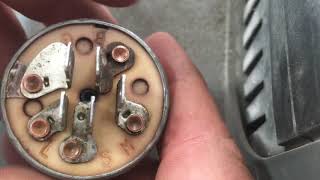
- Faulty Ignition Switch (Honda/Acura) (Very Common) — The electrical portion of the ignition switch wears out on 1998-2004 Honda and Acura models, causing a momentary power loss to key modules. This power flicker disrupts communication and causes sudden engine stalling.
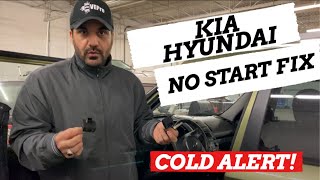
- Faulty SMARTRA Immobilizer Module (Hyundai/Kia) (Very Common) — The anti-theft module fails to recognize the key or communicate with the PCM, immediately cutting fuel and spark to prevent 🎬 See how to handle Kia and Hyundai immobilizer no-start issues. the engine from starting.
- Damaged Wiring or Poor Connections (Common) — The single communication wire connecting the PCM to the ABS/TCS module (or immobilizer) frays, corrodes, or shorts to ground. Loose pins in the computer connectors also interrupt the signal.
- Incorrect Module Programming (Uncommon) — Replacing a control module or fuel injector without programming the specific variant codes into the PCM causes a permanent communication mismatch, especially on Mazda and Mitsubishi vehicles.
- Faulty ABS/TCS Control Unit (Less Common) — The Anti-lock Brake/Traction Control module fails internally and stops sending the required torque reduction signal to the PCM.
- Low Battery Voltage or Alternator Issues (Uncommon) — A weak battery or failing alternator drops system voltage, causing unpredictable communication errors across the CAN bus, particularly on Citroën and Peugeot models.
- Faulty Powertrain Control Module (PCM) (Rare) — The main engine computer fails and cannot process incoming signals. This is a last-resort diagnosis.
- Aftermarket Accessories Interference (Rare) — Improperly installed remote starters or alarms introduce electrical noise onto the CAN bus, disrupting module communication.
Symptoms
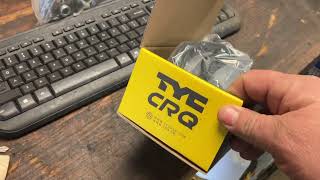
- Engine Stalls or Shuts Off While Driving — The car suddenly dies at a stoplight or while moving, often without warning. This is 🎬 Watch this Acura stalling and restart failure diagnostic walkthrough. the classic symptom of a failing ignition switch on Honda/Acura models.
- Car Cranks But Does Not Start — On Hyundai or Kia vehicles, the engine turns over but fails to start because the anti-theft immobilizer does not recognize the key.
- Check Engine Light is On — The primary indicator that the PCM has stored a communication trouble code.
- ABS and/or TCS Light is On — Because the code relates to the ABS/TCS system on Hondas, the warning lights for these systems illuminate simultaneously.
- Hesitation or Transmission Shifting Issues — The automatic transmission shifts harshly because the engine computer isn't receiving the torque reduction request it needs from the TCS system.
Diagnostic Flowchart
Tap your situation to follow the diagnostic path that matches what you're seeing on this code.
Common Fixes & Costs
- Replace Ignition Switch (Electrical Portion)
— Parts: $30-$90, Labor: $100-$250, ~1.2 hr book time
(Intermediate)
Honda Accord (1998-2002), Acura TL (1999-2003), Acura CL (2001-2003): OEM 35130-S84-A01 (Alt: Standard Motor Products (US-512), Beck Arnley (201-1805))
Honda Odyssey (1999-2004): OEM 35130-S0X-A01 (99-00), 35130-S0X-A02 (01-04) (Alt: Standard Motor Products (US-563)) - Reprogram or Replace SMARTRA Immobilizer Module (Hyundai/Kia)
— Parts: $150-$400, Labor: $100-$200, ~1.0 hr book time
(Professional)
Hyundai Santa Fe (2007-2012): OEM 95420-2L700 or 95420-0W500 (Alt: OEM or used/refurbished only.) - Repair Wiring Harness — Parts: $10-$50, Labor: $200-$600, ~2.5 hr book time (Professional)
- Replace ABS/TCS Control Unit — Parts: $250-$1,200, Labor: $150-$250, ~1.5 hr book time (Professional)
- Replace Powertrain Control Module (PCM) — Parts: $800-$1,500, Labor: $100-$200, ~1.0 hr book time (Professional)
Used vs. New Parts: Buying Guide
When a used part is worth it: For the most common fix (Honda/Acura ignition switch), buying new is strongly recommended as the part is inexpensive and a known wear item. For expensive parts like an ABS/TCS Control Unit, a used part from a low-mileage vehicle offers significant savings.
Donor-vehicle mileage cap: roughly under 60000 miles for the part to have meaningful remaining life.
Donor quality checklist:
- Verify the exact part number matches; modules can be physically identical but internally different.
- Purchase from a reputable seller that offers at least a 90-day warranty.
- Ensure the donor vehicle was not scrapped due to flood or fire damage.
Decision logic:
- If The part is a known wear item like an ignition switch → Buy new. The low cost of a new part outweighs the risk and labor of replacing a used part that may fail soon.
- If The part is an expensive electronic module (ABS, PCM) and budget is a primary concern → A used part is a viable option, but be aware it requires professional programming to work with your vehicle's VIN and security system.
- If The vehicle is critical for daily use and reliability is paramount → Buy new (OEM or high-quality aftermarket) to get the longest life and best warranty.
Warranty tradeoff: Used parts typically come with a 30-90 day warranty covering the part only. New aftermarket parts often have a 1-year to limited lifetime warranty. New OEM parts carry a 1-year warranty.
Worst-case if a used part fails: $300-$800 if a used electronic module is defective or requires programming that fails, forcing you to pay for diagnostic and labor costs twice.
What Happens If You Wait — Timeline
- 0-1 month: An intermittent fault begins in the ignition switch. The car stalls once without warning, or the ABS/TCS light flickers briefly. The P1676 code is stored but may not trigger the Check Engine Light immediately. (MPG impact: 0%% · Added cost: $0)
- 1-3 months: The internal contacts in the ignition switch degrade further. Stalling becomes more frequent, happening once or twice a week. The Check Engine Light is consistently on, and the car becomes unreliable. (MPG impact: 1-2%% · Added cost: $50-$200)
- 3-6 months: The ignition switch fails regularly. The car stalls almost daily, making it a significant safety hazard. The constant power interruptions put severe stress on the vehicle's electronic modules. (MPG impact: 3-5%% · Added cost: $300-$600)
- 6+ months: Catastrophic failure. A severe voltage spike from the faulty ignition switch damages the Powertrain Control Module (PCM) or ABS control module. The initial $300 repair becomes a $1,500+ module replacement. (MPG impact: N/A% · Added cost: $1200-$2500)
Cost of Not Fixing It
- Immediate: For Honda/Acura, the primary risk is sudden engine stalling while driving, which is a major safety hazard. For Hyundai/Kia, the vehicle fails to start, leaving you stranded. (Added cost: $0)
- 0-3 months: Continued intermittent power interruptions from a faulty ignition switch put stress on other electronic modules, including the expensive PCM or ABS controller. (Added cost: $0-$200)
- 3+ months: Ignoring the fault leads to catastrophic failure of a secondary component. A voltage spike damages the processor in the PCM or ABS module, turning a sub-$300 repair into a $1500+ replacement. (Added cost: $1200-$2500)
Diagnosis Steps
- Scan All System Modules for Codes
Use a professional-grade OBD-II scanner to read codes from all modules (Engine, ABS, Transmission, Body). P1676 is often accompanied by other codes that provide critical context. For example, a TCS code 31 on a Honda confirms the fault is on the ABS/TCS side.
Tools: Professional OBD-II Scanner (Beginner) - Perform the 'Key Wiggle Test' (Honda/Acura)
With the engine running, gently wiggle the key in the ignition without turning it off. If the engine stumbles, stalls, or dashboard lights flicker, the ignition switch is the culprit. This diagnostic shortcut saves hours of electrical testing.
Tools: None (Beginner) - Analyze Live Data for Immobilizer Faults (Hyundai/Kia)
Using a capable scan tool, access the live data stream for the immobilizer module. Watch 'Key Status' and 'ECM Status'. If the scan tool shows zero keys learned or the key status is 'Invalid' when a known good key is used, it confirms a communication issue with the SMARTRA module.
Tools: Professional OBD-II Scanner with live data (Advanced) - Inspect Fuses and Battery Terminals
Check all fuses related to the PCM, ABS, and TCS systems. Ensure battery terminals are clean and tight, as poor connections cause system-wide voltage drops that trigger communication faults.
Tools: Fuse puller or needle-nose pliers, Battery terminal cleaner (Beginner) - Visually Inspect the Wiring Harness
Inspect the wiring harness between the relevant modules (e.g., PCM and ABS/TCS control unit). Look for signs of damage, chafing, corrosion, or loose connectors where the harness rubs against the chassis.
Tools: Flashlight, Inspection mirror (Intermediate) - Test the Signal Wire for Continuity
Disconnect the connectors from both the PCM and the ABS/TCS module. Use a multimeter set to Ohms to check for continuity on the signal wire between the two connectors. A healthy wire shows less than 0.5 Ohms. An 'OL' reading indicates a broken wire.
Tools: Multimeter, Vehicle-specific wiring diagram (Advanced) - Check the Signal Wire for Shorts to Ground and Power
With modules disconnected, check for continuity between the signal wire and a good chassis ground. You should see infinite resistance ('OL'). Any continuity indicates a short to ground. Next, turn the key on and check for voltage between the signal wire and ground; any voltage indicates a short to power.
Tools: Multimeter, Vehicle-specific wiring diagram (Advanced) - [PRO TIP] Check for Voltage Drop on Power/Ground Wires
With the system on, measure the voltage drop between the battery positive post and the power pin at the module connector, and between the battery negative post and the ground pin. A drop exceeding 0.3 volts indicates high resistance in the power or ground circuit.
Tools: Multimeter (Professional) - [PRO TIP] Analyze the Signal with an Oscilloscope
Back-probe the signal wire at the PCM with the engine running. You should see a clean digital square wave pattern. A flat line, noisy signal, or distorted waveform definitively points to a wiring problem or a failed sending module.
Tools: Oscilloscope, Back-probe kit (Professional)
When This Code Triggers (Freeze-Frame Conditions)
- Engine Coolant Temp: 175-205°F (80-96°C) (The engine is at full operating temperature.)
- Engine RPM: 1200-2800 RPM (The code sets during steady-state driving, not at idle or during heavy acceleration.)
- Vehicle Speed: 30-60 mph (48-97 kph) (Occurs at city or highway cruising speeds when the TCS system is active and monitoring.)
- System Voltage: 12.0-14.5V (The fault usually occurs when system voltage is normal; a low voltage reading points to a charging system issue as the root cause.)
Related Codes
- P1678 — On Honda/Acura, both P1676 and P1678 point to a failure on the FPTDR signal line. A specific diagnostic tree in the service manual uses both codes to differentiate between a PCM fault and a wiring/ABS module fault.
- TCS DTC 31 — This is the Honda-specific code from the ABS/TCS module that corresponds to the P1676 engine code. It specifically means 'Engine Retard Command Signal Failure' and confirms the problem is on the TCS side of the communication link.
- P0740 — This transmission code for the torque converter clutch solenoid appears alongside P1676 on Hondas. Diagnostic procedures advise fixing communication codes like P1676 first, as the communication fault triggers false transmission codes.
- U0121 — This is a generic 'Lost Communication With Anti-Lock Brake System (ABS) Control Module' code. While P1676 is a manufacturer-specific code for this fault on Hondas, U0121 is the standardized SAE equivalent.
Climate & Environmental Factors
- High Humidity / Road Salt: Moisture and salt accelerate corrosion on wiring harnesses and connector pins. This degrades the FPTDR signal wire where it is exposed in the engine bay, leading to an open circuit or short.
- Extreme Temperature Cycles: Repeated expansion and contraction from hot/cold cycles stress the internal solder joints of electronic components. This causes micro-fractures in the electrical portion of the ignition switch, leading to intermittent power loss.
How to Talk to a Mechanic About This Code
Say this: "I have a P1676 code and need a diagnostic. For my [Make/Model], this code is brand-specific. If it's a Honda/Acura with stalling, please start with the ignition switch 'key wiggle test'. If it's a Hyundai/Kia with a crank-no-start, please confirm you can diagnose and program immobilizer systems."
This signals you have done research and directs the technician to the most common, well-documented fixes first. It prevents them from starting a broad, expensive diagnostic process and helps avoid misdiagnosis of costly modules.
Avoid saying:
- 'My check engine light is on, can you look at it?'
- 'Just fix whatever is wrong.'
- 'The internet said it's the computer, how much to replace it?'
Questions to ask before authorizing the repair:
- Can you explain exactly what my P1676 code means for this specific vehicle?
- (For Honda) Did you perform the 'key wiggle test' and what was the result? If it passed, what were the continuity readings on the signal wire?
- (For Hyundai) Can you show me the live data from the scan tool indicating the key or immobilizer module has failed?
- What is the warranty on the parts and labor for this specific repair?
Where to Take It: Dealer vs Independent vs Chain
- Dealer:
Best for: Hyundai/Kia immobilizer programming and module replacement., Vehicles still under warranty., Complex diagnostics on European makes (VW, Citroën).
Downsides: Highest labor rates., Defaults to replacing expensive modules rather than attempting a wiring or component-level repair. (Typical cost: +50% vs. baseline) - Independent Shop:
Best for Honda/Acura ignition switch issues. For other makes, verify they have advanced diagnostic tools and experience with your specific brand's electrical systems.
Best for: Honda/Acura P1676 with stalling symptoms (ignition switch)., Out-of-warranty vehicles where cost is a factor., Shops that specialize in your vehicle's make (e.g., Honda specialist).
Downsides: Quality and diagnostic tool capability vary widely; vet shops by asking if they handle complex electrical and security system diagnostics., Lacks the specific software for programming new modules. (Typical cost: +0% vs. baseline) - Chain Shop:
AVOID. P1676 requires specific expertise that is beyond the scope of chain repair shops.
Best for: Not recommended for this type of repair.
Downsides: Technicians are not equipped or trained for complex, manufacturer-specific electronic diagnostics., High risk of misdiagnosis, leading to unnecessary replacement of parts like the battery or alternator. (Typical cost: -10% vs. baseline)
When to Walk Away From the Repair
If the estimated repair cost exceeds 40-50% of the car's private-party value, you should seriously consider not fixing it.
- Car worth $3500, fix is $300: Fix it. This is a low-cost repair (likely a Honda ignition switch) on an older vehicle, which is well below the threshold.
- Car worth $5000, fix is $1800: Borderline. A repair cost of 36% (e.g., a failed ABS module) warrants getting a second opinion or considering a used part before proceeding.
- Car worth $2500, fix is $1500: Walk away. The repair cost is 60% of the car's value. It is not economical to invest this much into an old vehicle.
What Scan Tool You Need for This Code
Minimum: A scanner that reads manufacturer-specific codes from modules beyond the engine, such as the ABS/TCS and Immobilizer systems.
A basic $20 code reader only pulls generic engine codes and cannot access the ABS or immobilizer modules. This makes it impossible to diagnose the root cause, as you won't see the corresponding TCS code on a Honda or the key status on a Hyundai.
Budget: BlueDriver Pro (~$100) — Reads and clears enhanced codes from ABS, SRS, and transmission systems for most major brands. This is enough to see the corresponding TCS code on a Honda, confirming the area of the fault.
Mid-range: Foxwell NT510 Elite / XTOOL D7 (~$150-350) — Offers brand-specific software and crucial bidirectional controls. Most importantly for P1676, it accesses the immobilizer's live data stream on a Hyundai/Kia to check 'Key Status', which is essential for diagnosis.
Professional: Autel MaxiCOM MK808 / Launch X431 series (~$500-1200) — Provides full bidirectional control, all OEM-level diagnostic functions, and key/module programming capabilities. These tools are necessary if you need to replace and program a new immobilizer module, PCM, or ABS controller.
Rent vs buy: For a one-time diagnosis on a Honda, a free rental scanner from an auto parts store is sufficient if it reads ABS codes. For a Hyundai/Kia immobilizer issue or any potential module replacement, you need to go to a shop with a professional-level tool; renting is not an option for programming.
How to Clear the Code After You Fix It
- Ensure the repair is complete and all connectors are secure.
- Use a compatible OBD-II scan tool to erase the Diagnostic Trouble Codes (DTCs) from the PCM and other affected modules (like ABS/TCS).
- Perform the specific drive cycle for your vehicle to allow the readiness monitors to run.
Drive cycle (~20 minutes): For a typical Honda/Acura: 1. Start from a cold start. 2. Idle for 2-3 minutes. 3. Drive at a steady speed of 55 mph for 3-5 minutes. 4. Decelerate without braking for 30 seconds. 5. Repeat steady driving and deceleration 2-3 times.
Readiness monitors affected: Comprehensive Component Monitor, Misfire Monitor
Before emissions retest: drive at least 50 miles to fully set monitors.
Watch out for:
- Disconnecting the battery clears the code but resets all readiness monitors to 'Not Ready,' causing an immediate emissions test failure.
- If the underlying problem is not fixed, the P1676 code returns almost immediately after starting the car.
- Some readiness monitors, like the EVAP monitor, take several days of normal driving to complete after a reset.
Will This Fail Emissions / State Inspection?
Yes — this code typically fails an OBD-II emissions inspection.
- California: An illuminated Check Engine Light results in an automatic smog check failure. After repairs, a drive cycle must be completed to set the readiness monitors before a retest is possible.
- New York: Vehicles model year 1996 and newer are subject to an OBD-II inspection. An illuminated Malfunction Indicator Lamp is an automatic failure.
- Texas: In counties requiring emissions testing, an illuminated Check Engine Light is an automatic failure.
Most Commonly Affected Vehicles
- Honda Odyssey (1999-2004) — Extremely prone to ignition switch failure and wiring issues causing P1676 and stalling.
- Honda Accord (V6) (1998-2002) — The electrical portion of the ignition switch (Part No. 35130-S84-A01) is a very common failure item leading to this code and stalling.
- Acura TL (1999-2003) — Frequently experiences P1676 due to faulty ignition switches, which causes dangerous stalling.
- Acura CL (2001-2003) — Shares the same platform and electrical architecture as the affected Accord and TL models, making it susceptible to the same ignition switch failures.
- Honda Pilot (2003-2004) — Uses a similar PCM and ABS/TCS communication setup, which develops the same FPTDR signal line fault.
- Hyundai Santa Fe (2007-2012) — On these models, P1676 typically indicates an 'Immobilizer-Smartra Message Error,' preventing the engine from starting.
- Kia Forte (2010-2013) — Often logs P1676 for an immobilizer communication failure, resulting in a crank-no-start condition.
- Volkswagen Various (e.g., Jetta, Passat, CC) (2006-2015) — P1676 indicates an 'EPC Warning Lamp Circuit Malfunction' or a 'Drive by Wire MIL Circuit Electrical Malfunction,' pointing to an issue in the instrument cluster or its wiring.
- Chevrolet / Pontiac Various (e.g., Malibu, Venture, Grand Am) (1998-2004) — On some older GM models, P1676 points to an 'EVAP Purge Solenoid Control Circuit Malfunction' or a generic 'Driver 4 Line 6' fault.
Manufacturer-Specific Notes
- Honda / Acura: The most common cause is a faulty ignition switch, not a module or wiring failure. Wiggling the key while the engine is running is a highly effective diagnostic test.
- Mazda: On Mazda diesel vehicles (Skyactiv-D), P1676 means 'Fuel injector code mistakenly programmed.' It has nothing to do with communication and is fixed by correctly programming the new injector codes into the PCM.
- Hyundai / Kia: P1676 almost always means 'Immobilizer-Smartra Message Error,' indicating a problem with the anti-theft system communication to the PCM. This results in a classic 'crank-no-start' condition.
- Mitsubishi: This code means 'Variant Coding' or 'Coding Incomplete.' It appears after replacing an Engine Control Module (ECM) or Transmission Control Module (TCM) without programming it with the specific information for that vehicle.
- Citroën / Peugeot: P1676 points to a 'Controlled alternator control' fault, indicating a problem with the communication between the BSI (Body Systems Interface) and the alternator. The alternator charges, but the control signal is lost.
- Saab: For some Saab models, P1676 indicates 'Injector Circuit Open / Short To Ground Or B+.' This points to a problem with the fuel injector wiring harness or a failed injector, often accompanied by a misfire code like P0303.
Real Owner Stories
2002 Acura TL with 150K+ miles experiencing random stalling
The car stalled intermittently while driving or idling, then cranked but did not restart immediately. Dashboard lights flickered, and the radio reset.
What they tried:
- Tested the battery and alternator, which passed.
- Considered replacing the expensive PCM or ABS module.
- Performed the 'key wiggle test' and found that jiggling the key in the ignition replicated the stall.
Outcome: Replaced the electrical portion of the ignition switch (Part No. 35130-S84-A01). The part cost $50 and the repair took one hour. The stalling and P1676 code were completely resolved.
Lesson: For early 2000s Honda/Acura models with stalling and P1676, always suspect the ignition switch first. It is a cheap part and a highly common failure that saves you from a costly misdiagnosis.
2009 Hyundai Tucson with a 'crank, no-start' condition
The vehicle cranked but would not start, and the immobilizer warning light on the dash did not illuminate. The shop pulled code P1676 'Smartra message error'.
What they tried:
- Confirmed the battery and charging system were good.
- Used a scan tool to check the immobilizer module status, which read 'Key: Not Check', indicating the system wasn't reading the key.
- Checked for bad ground or power connections to the module.
Outcome: The issue was traced to a faulty SMARTRA immobilizer module. The module was replaced and the keys reprogrammed by a locksmith with specialized equipment.
Lesson: On a Hyundai with P1676 and a crank/no-start symptom, the problem is in the anti-theft system. Do not waste time on fuel or spark issues until you confirm the immobilizer recognizes the key.
2006 Citroën C3 with poor idle and persistent P1676
The car had a rough idle, and even after replacing all ignition components, the P1676 code returned. The code definition for this car is 'Controlled alternator control fault'.
What they tried:
- Checked the alternator output, which showed a steady 14.3V, suggesting the alternator was charging correctly.
- Considered replacing the alternator but hesitated due to cost.
- Tested the communication line between the alternator and the Body Systems Interface (BSI).
Outcome: The root cause was a broken communication wire between the alternator and the BSI. Even with correct voltage output, losing the control signal sets the code. Repairing the wire fixed the issue.
Lesson: P1676 is extremely manufacturer-specific. On Peugeot/Citroën, it points to the alternator's communication, not its charging ability. The communication circuit itself must be verified.
How to Prevent This Code From Triggering
- Lighten your keychain (Daily habit) — A heavy keychain puts constant downward force on the ignition lock cylinder and the internal contacts of the electrical switch, accelerating wear and causing the most common P1676 failure on Hondas.
- Avoid forcing the key in the ignition (Daily habit) — Turning the key aggressively damages the delicate internal components of the electrical ignition switch, leading to premature failure.
- Ensure battery terminals are clean and tight (Every oil change) — Corroded or loose battery terminals create high resistance, leading to system-wide voltage drops that cause communication errors between sensitive electronic modules.
- Apply dielectric grease to key electrical connectors (During major service or repairs) — Dielectric grease seals out moisture and oxygen from electrical connections, preventing the corrosion that leads to communication faults.
Frequently Asked Questions
Can I just clear the P1676 code and keep driving?
No. The code will almost certainly return immediately. Because it causes the engine to stall while driving, it is a serious safety risk that needs to be addressed promptly.
Is fixing a P1676 code expensive?
It depends entirely on the cause and your vehicle's make. For a Honda with a bad ignition switch, the repair is relatively inexpensive (typically under $300). However, if a control module like the ABS unit or PCM needs replacement, the cost exceeds $1,200.
Why does a problem with my brakes (ABS/TCS) make my engine stall?
Your car's Traction Control System (TCS) requests the engine computer (PCM) to reduce power to stop the wheels from spinning. When the dedicated communication line for this request fails, the PCM gets confused. On some vehicles, this confusion causes the engine to shut down as a fail-safe.
Can a bad battery cause a P1676 code?
While not a primary cause, a very weak battery or a failing alternator causes low voltage and erratic electrical behavior. This leads to communication errors between modules, especially on European makes where P1676 points to alternator issues.
I have a Mazda, not a Honda. What does P1676 mean for me?
For many Mazda diesel vehicles, P1676 means your fuel injectors are not programmed correctly to the engine computer. This usually happens after an injector has been replaced. A technician with a compatible scan tool needs to perform the 'Fuel Injector Code Program' procedure.
What is a common misdiagnosis for P1676 on a Honda?
A very common mistake is immediately blaming and replacing the ABS/TCS module or the PCM, which are expensive parts. Technicians should always rule out the much cheaper failure: the electrical portion of the ignition switch. The 'key wiggle test' is a crucial first step.
My Hyundai cranks but won't start and shows P1676. What's the problem?
On Hyundais, P1676 indicates a communication failure with the SMARTRA immobilizer anti-theft system. The car cranks but the computer prevents starting because it isn't receiving the correct 'permission' signal from your key. The issue is typically the key, the antenna, or the SMARTRA module itself.
What does P1676 mean on a VW?
On a Volkswagen, P1676 points to an electrical malfunction in the 'Drive by Wire' or EPC warning light circuit itself, located in the instrument cluster. It means the PCM detected a problem with the warning light's circuit, not necessarily the system the light represents.
Key Takeaways
- P1676 definitions vary drastically by brand: it means a Traction Control communication failure on Hondas, an immobilizer fault on Hyundais, and an injector coding error on Mazdas.
- Replacing the $50 electrical portion of the ignition switch fixes the vast majority of P1676 codes on 1998-2004 Honda and Acura models.
- Stop driving Honda or Acura vehicles with this code immediately, as the underlying electrical failure causes sudden engine stalling at highway speeds.
- Basic $20 code readers cannot diagnose P1676; you need a bidirectional scanner capable of reading ABS and Immobilizer modules to pinpoint the exact communication failure.
Helpful Videos
Shop the Parts Behind P1676
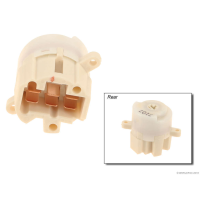
Below are the parts most often responsible for code P1676, ranked by how frequently each one is the actual culprit (per the diagnosis above). Tap any to see what we have for your vehicle.
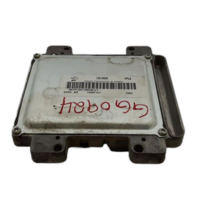

The information in this article is provided for general reference and educational purposes only. Vehicle specifications, procedures, and part compatibility can vary by production date, trim level, and region. Always consult your vehicle's factory service manual and verify part numbers before purchasing or performing repairs. Safety-critical components such as airbags, seat belts, and braking systems should be installed by a qualified professional.
- 🧭 Diagnostic Flowchart
- 🎬 Helpful Videos
- 🛍️ Shop This Part
- What Does P1676 Mean?
- Can I Drive With P1676?
- Common Causes
- Symptoms
- Common Fixes & Costs
- Used vs. New Parts: Buying Guide
- What Happens If You Wait — Timeline
- Cost of Not Fixing It
- Diagnosis Steps
- When This Code Triggers (Freeze-Frame Conditions)
- Related Codes
- Climate & Environmental Factors
- How to Talk to a Mechanic About This Code
- Where to Take It: Dealer vs Independent vs Chain
- When to Walk Away From the Repair
- What Scan Tool You Need for This Code
- How to Clear the Code After You Fix It
- Will This Fail Emissions / State Inspection?
- Most Commonly Affected Vehicles
- Manufacturer-Specific Notes
- Real Owner Stories
- 2002 Acura TL with 150K+ miles experiencing random stalling
- 2009 Hyundai Tucson with a 'crank, no-start' condition
- 2006 Citroën C3 with poor idle and persistent P1676
- How to Prevent This Code From Triggering
- Frequently Asked Questions
- Can I just clear the P1676 code and keep driving?
- Is fixing a P1676 code expensive?
- Why does a problem with my brakes (ABS/TCS) make my engine stall?
- Can a bad battery cause a P1676 code?
- I have a Mazda, not a Honda. What does P1676 mean for me?
- What is a common misdiagnosis for P1676 on a Honda?
- My Hyundai cranks but won't start and shows P1676. What's the problem?
- What does P1676 mean on a VW?
- Key Takeaways
- 🎟️ Get 5% Off