

OBD-II Code P1680: Mastering the Engine Control Signal Fault
An Expert Guide to What P1680 Means, Why It Triggers, and How to Fix It for Good
- For 2004 GM vehicles like the Trailblazer, P1680 usually indicates a failed accelerator pedal sensor requiring a $150-$350 replacement, not a bad computer.
- Mazda RX-8 owners must stop driving immediately if P1680 appears, as it signals a failing Metering Oil Pump that will destroy the engine within 100 miles.
- On manual Chrysler and Dodge vehicles, a P1680 code paired with a no-start condition points directly to a faulty $30 clutch pedal position switch.
- Volkswagen models logging P1680 are locked in 'Limp-Home Mode' due to a throttle fault, requiring a new throttle body and a mandatory software adaptation using a VCDS scanner.
What Does P1680 Mean?
P1680 is a manufacturer-specific code with entirely different definitions depending on your car brand. For General Motors, it signals a fault with the gas pedal sensor or the main engine computer (PCM), triggering 'Reduced Engine Power' mode. For Volkswagen, it indicates the car is locked in 'Reset-Resistant Limp-Home Mode' due to a throttle control failure. For Mazda, it points to a failing Metering Oil Pump, which is fatal for rotary engines if ignored. On Chrysler vehicles, it usually means a broken clutch switch on manual transmissions, or it acts as a harmless informational code triggered by a recent battery disconnect.
Technical definition: Because P1680 is manufacturer-specific, there is no universal SAE definition. The exact definitions are: General Motors (GM): 'Accelerator Pedal Position (APP) Sensor Malfunction' or 'Internal Control Module Malfunction (Driver 5 Fault)'; Volkswagen: 'Reset-Resistant Limp-Home Mode Active'; Mazda: 'Metering Oil Pump (MOP) Malfunction'; Chrysler/Dodge/Jeep: 'Clutch Released Switch Circuit'; BMW: 'Electronic Throttle Control Monitor Level 2/3 ADC Processor Fault'.
Can I Drive With P1680?
Yes, But With Caution. Driving is possible but highly restricted on most vehicles. For GM and Volkswagen, the car enters a 'limp mode' with severely reduced engine power, limiting speed to under 40 MPH and making highway driving dangerous. For a Mazda RX-8, continuing to drive risks rapid, catastrophic engine failure due to a lack of apex seal lubrication. On Chrysler vehicles, it is often a harmless informational code, but if it accompanies a no-start condition, you are stranded.
Common Causes
- Faulty Accelerator Pedal Position (APP) Sensor (GM) (Very Common) — The accelerator pedal position sensor has failed, sending erratic voltage signals to the PCM. This is the primary cause for 2004-era Chevy Trailblazers and GMC Envoys. 🎬 Watch: How to fix Reduced Engine Power on GM trucks.
- Faulty Throttle Body Assembly (Volkswagen) (Very Common) — The electronic throttle body motor or internal position sensor has failed, forcing the VW engine control module to lock the vehicle in limp mode for safety.
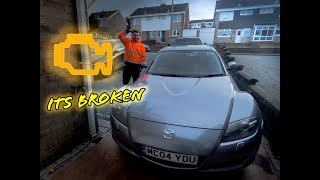
- Faulty Metering Oil Pump (MOP) (Mazda RX-8) (Very Common) — The Metering Oil Pump (MOP) is failing mechanically or electrically, starving the rotary engine's apex seals of critical lubrication. 🎬 See this walkthrough on resolving RX-8 limp mode and MOP issues.
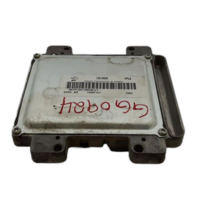
- Faulty Powertrain Control Module (PCM) (GM) (Common) — The Powertrain Control Module (PCM) requires a software update or complete replacement due to an internal processor fault, as outlined in GM TSB 04-06-04-038.
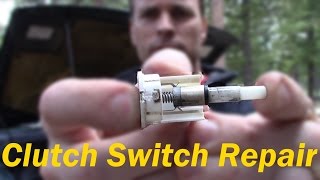
- Faulty Clutch Pedal Position Switch (Chrysler/Dodge) (Common) — The clutch pedal position switch has failed internally, preventing the engine computer from verifying the clutch is pressed, which disables the starter.
- Battery Recently Disconnected (Chrysler/Dodge/Jeep) (Less Common) — The battery was disconnected within the last 50 engine starts. The PCM flags P1680 simply to note that its volatile memory was recently cleared.
- Weak or Failing Battery (Less Common) — Low system voltage during engine cranking causes the PCM to fail its internal self-checks, triggering a false P1680 internal module error.
- Damaged Wiring or Connectors (Less Common) — The wiring harness leading to the APP sensor, throttle body, or MOP has chafed wires, pushed-out pins, or severe corrosion causing signal dropouts.
- Faulty Engine Cooling Fan Clutch (GM 4.2L) (Uncommon) — An internal short circuit in the electronic cooling fan clutch back-feeds voltage into the 5-volt reference circuit shared by the APP sensor, tricking the PCM into setting a P1680.
Symptoms
- Reduced Engine Power ('Limp Mode') — The vehicle limits speed to 30-40 MPH and accelerates extremely slowly. This is the defining symptom for GM and Volkswagen vehicles.
- Check Engine Light is on — The Malfunction Indicator Lamp (MIL) illuminates immediately when the fault is detected.
- Engine will not start — On manual transmission Chrysler/Dodge vehicles, the starter will not engage because the computer cannot verify the clutch is depressed.
- Flashing Traction Control Light — On GM vehicles, the powertrain fault disables the traction control system, causing the 'Service Traction' warning to illuminate.
- Cruise control does not work — The PCM disables cruise control for safety due to unreliable throttle, pedal, or clutch switch signals.
Diagnostic Flowchart
Tap your situation to follow the diagnostic path that matches what you're seeing on this code.
Common Fixes & Costs
- Replace the Accelerator Pedal Assembly (GM) — Parts: $60-$200, Labor: $95-$150, ~1.0 hr book time (Intermediate)
- Replace the Throttle Body Assembly (Volkswagen) — Parts: $150-$400, Labor: $100-$200, ~1.2 hr book time (Intermediate)
- Replace the Metering Oil Pump (Mazda RX-8) — Parts: $200-$400, Labor: $1800-$2500, ~12.5 hr book time (Professional)
- Reprogram or Replace the PCM (GM) — Parts: $250-$500, Labor: $150-$250, ~1.5 hr book time (Professional)
- Replace the Clutch Pedal Position Switch (Chrysler/Dodge) — Parts: $15-$50, Labor: $50-$100, ~0.8 hr book time (DIY)
- Perform Throttle Body Adaptation/Relearn (Volkswagen) — Parts: $0, Labor: $50-$150, ~0.5 hr book time (Professional)
Used vs. New Parts: Buying Guide
When a used part is worth it: A used GM Accelerator Pedal Assembly from a reputable salvage yard is a cost-effective fix for older, high-mileage vehicles.
Donor-vehicle mileage cap: roughly under 100000 miles for the part to have meaningful remaining life.
Donor quality checklist:
- Ensure the part number matches exactly, as superseded numbers have different internal electronics.
- Inspect the connector pins for corrosion or bent terminals.
- Verify the donor vehicle wasn't scrapped for an electrical fire or flood damage.
Decision logic:
- If The part is a Mazda RX-8 Metering Oil Pump → Buy new OEM only. The risk of engine destruction from a failed used pump is too high.
- If The part is a GM Accelerator Pedal Assembly → A used part with a 90-day warranty is an acceptable risk to save money.
- If The part is a GM Powertrain Control Module (PCM) → Buy a professionally refurbished and pre-programmed unit. Used PCMs require expensive dealer reprogramming anyway.
Warranty tradeoff: Used parts carry a 30-90 day warranty covering the part only. New OEM parts carry a 1-year warranty.
Worst-case if a used part fails: $200-$400 in repeat labor if a used electronic part fails shortly after installation.
What Happens If You Wait — Timeline
- Immediate (Mazda RX-8): The Metering Oil Pump stops lubricating the apex seals. The clock is ticking on engine life, even if no symptoms are felt. (MPG impact: 0%% · Added cost: $5,000 - $8,000+ (Impending engine failure cost).)
- Immediate (GM/VW): The vehicle enters 'Limp Mode'. Speed is limited to 30-40 mph, making the car unsafe for highway use. (MPG impact: 15-30%% · Added cost: $75-$200 (Towing costs).)
- 1-100 miles (Mazda RX-8): Apex seals scrape against the rotor housing without lubrication. Micro-scoring occurs, and irreversible damage begins. (MPG impact: 5-10%% · Added cost: $8,000+ (Engine replacement is now guaranteed).)
- 1-4 weeks (GM/VW): Continued driving in limp mode forces high engine RPMs at low speeds, putting severe strain on the transmission. (MPG impact: 20-40%% · Added cost: $100-$300 (Wasted fuel).)
- 100+ miles (Mazda RX-8): Catastrophic failure. Apex seals shatter, destroying the rotor housings. The engine loses compression and dies permanently. (MPG impact: 100% (vehicle does not run)% · Added cost: $8,000+ (Full engine replacement required).)
Cost of Not Fixing It
- Immediate: GM and VW vehicles enter 'Limp Mode,' severely restricting speed and making highway driving dangerous. (Added cost: $75-$200 for towing.)
- 0-1 Month (Mazda RX-8): Driving with a failed Metering Oil Pump causes rapid, irreversible destruction of the rotary engine's apex seals. (Added cost: $5,000 - $8,000+ for engine replacement.)
- 1-6 Months (GM/VW): Driving in limp mode forces high RPMs at low speeds, destroying the transmission and catalytic converters. (Added cost: $1,500 - $3,000 for transmission replacement.)
Diagnosis Steps
- Identify Your Vehicle's Specific P1680 Meaning
Search '[Your Car's Make] P1680 meaning' to determine if you are diagnosing a gas pedal (GM), throttle body (VW), oil pump (Mazda), or clutch switch (Chrysler).
Tools: Internet access (Beginner) - Scan for Companion Codes
Read all stored codes. P2138 (GM) confirms a bad gas pedal, P1684 (Mazda) confirms a bad oil pump, and P0833 (Chrysler) confirms a bad clutch switch.
Tools: OBD-II Scanner (Beginner) - Test the Battery and Charging System
Verify the battery reads 12.4V+ (engine off) and 13.7V-14.7V (engine running). Low voltage triggers false P1680 internal module errors, especially in cold weather.
Tools: Multimeter (Beginner) - Test the Accelerator Pedal Position (APP) Sensor Voltage (GM)
Back-probe the APP sensor signal wires with the key on, engine off. As you press the pedal, one voltage must smoothly increase (0.5V to 4.5V) while the other decreases (4.5V to 0.5V). Any dropouts confirm a bad sensor.
Tools: Multimeter with back-probe pins (Advanced) - Scan Tool Live Data Analysis (GM)
Monitor 'APP Sensor 1' and 'APP Sensor 2' PIDs on a scan tool. The sum of the two voltages must remain exactly 5.0V throughout the pedal's travel. Deviations indicate a failing sensor or wiring issue.
Tools: OBD-II Scan Tool with Live Data (Advanced) - Test the Clutch Switch (Chrysler/Dodge)
Check the clutch switch for continuity. It must show near 0 ohms when pressed and infinite ohms when released (or vice versa depending on the exact model year).
Tools: Multimeter (Intermediate) - Check the Metering Oil Pump (Mazda RX-8)
Measure the resistance of the MOP motor and position sensor at the connector using the factory service manual pinout. Out-of-spec resistance confirms a failed pump assembly.
Tools: Multimeter, Service Manual (Advanced) - [PRO TIP] Advanced APP Sensor Scope Test (GM)
Graph the two APP sensor signal voltages simultaneously on a 5-second sweep. Look for micro-glitches or noise invisible to a standard multimeter that trigger the P1680.
Tools: Automotive Oscilloscope, Back-probe pins (Professional) - [PRO TIP] GM 5-Volt Reference Circuit Load Test
Monitor the 5V reference PID while commanding the cooling fan clutch to 50% duty cycle. A voltage spike or drop confirms an internally shorted fan clutch is back-feeding the circuit.
Tools: Bi-directional Scan Tool (Professional) - [ADVANCED] Mazda MOP Stepper Motor Test
Observe the MOP stepper motor count during the key-on self-test. A normal sweep registers 52-60 steps; 61+ steps confirms a mechanical bind inside the pump.
Tools: Mazda-specific Scan Tool (Advanced)
When This Code Triggers (Freeze-Frame Conditions)
- Engine Coolant Temp: 175-205°F (Engine is at normal operating temperature.)
- Vehicle Speed: 25-60 mph (Typically occurs during city or highway driving, not at idle.)
- Engine Load: 25-50% (The engine is under light to moderate acceleration.)
- System Voltage: < 11.5V (If voltage drops during cranking, it triggers a false P1680.)
Related Codes
- P2138 — On GM vehicles, P2138 confirms the fault is in the Accelerator Pedal Position (APP) sensor. If present with P1680, replace the pedal assembly and ignore the PCM.
- P1684 — On Mazdas, P1684 points specifically to the Metering Oil Pump's position sensor. Seeing both codes confirms the entire MOP assembly must be replaced.
- P0833 — On Chrysler vehicles, P0833 indicates a hard electrical fault in the clutch switch circuit. This proves the P1680 is not just a harmless battery disconnect code.
- P0102 — On GM vehicles, P0102 (MAF Circuit Low) can appear with P1680 if a shorted cooling fan clutch pulls down the shared 5-volt reference circuit.
Climate & Environmental Factors
- Extreme Cold Weather: Temperatures below 0°F severely drop battery voltage during cranking, tricking the PCM into failing its internal self-check and setting a false P1680 code.
- High Humidity and Road Salt: Moisture and salt accelerate corrosion on chassis ground points and exposed connectors, causing the intermittent voltage drops that trigger P1680.
How to Talk to a Mechanic About This Code
Say this: "I have a [Your Car's Make/Model] with a P1680 code. The specific symptom is [e.g., 'Reduced Engine Power' mode]. Based on my research, this often points to the [e.g., Accelerator Pedal Sensor, Metering Oil Pump]. I need a diagnostic to confirm the faulty component before authorizing parts replacement."
This language directs the technician to a logical starting point, saving diagnostic time and preventing them from suggesting unrelated repairs like a blind PCM replacement.
Avoid saying:
- 'My check engine light is on, I have no idea what's wrong.'
- 'Just fix whatever it needs.'
- 'A guy at the parts store said I need a new computer.'
Questions to ask before authorizing the repair:
- For GM: Did you test the Accelerator Pedal Position (APP) sensor voltages per TSB 04-06-04-038 before concluding it's the PCM?
- For Mazda: How did you confirm the Metering Oil Pump is bad? Did you check its stepper motor count?
- For VW: Do you have the VCDS tool to perform the mandatory Throttle Body Adaptation after replacement?
- Can you provide a written estimate breaking down parts and labor?
Where to Take It: Dealer vs Independent vs Chain
- Dealer:
Necessary for GM PCM programming. A good backup for VW issues if an independent specialist isn't available.
Best for: Vehicles under warranty., Complex jobs requiring proprietary software, like PCM programming for GM.
Downsides: Highest labor rates., Quick to replace entire assemblies rather than diagnose wiring faults. (Typical cost: +50% vs. baseline) - Independent Shop:
Best overall fit for GM and Chrysler, provided the shop is well-equipped.
Best for: Out-of-warranty vehicles., Common P1680 fixes like a GM accelerator pedal or a Chrysler clutch switch.
Downsides: May lack manufacturer-specific tools for complex adaptations. (Typical cost: +0% vs. baseline) - Chain Shop:
AVOID. The risk of misdiagnosis and unnecessary parts replacement is very high.
Best for: Simple maintenance like oil changes or tires.
Downsides: High pressure to upsell., Lacks the diagnostic expertise required for P1680. (Typical cost: -10% vs. baseline)
What Scan Tool You Need for This Code
Minimum: A scanner that graphs live data streams for sensor voltages. A basic code reader is insufficient for diagnosing P1680.
You cannot diagnose a faulty GM accelerator pedal or VW throttle body without seeing the live voltage signals. A basic reader forces you to guess which part is bad.
Budget: BlueDriver Pro (~$99) — Connects to your smartphone and graphs live data for the multiple accelerator pedal sensor signals on a GM vehicle.
Mid-range: Foxwell NT510 Elite / ANCEL VD500 Pro (~$180) — Offers manufacturer-specific software. The ANCEL includes the crucial 'Throttle Position Adaptation' function needed for VWs.
Professional: Autel MaxiCOM MK808 (~$500) — Performs bidirectional 'actuation tests'. For GM, this allows you to command the fan clutch to engage, diagnosing the rare short circuit issue.
Rent vs buy: Buy at least a budget-level live data scanner. Renting a basic reader from a parts store will not provide the voltage data needed for GM, Mazda, or VW diagnosis.
How to Clear the Code After You Fix It
- Reconnect the battery if it was disconnected.
- Use an OBD-II scan tool to erase the DTCs.
- Perform a complete drive cycle to reset readiness monitors.
- Re-scan to ensure P1680 has not returned.
Drive cycle (~20 minutes): Start the engine cold and idle for 3 minutes with the A/C and rear defroster on. Accelerate to 55 mph and hold steady for 5 minutes. Coast down to 20 mph without braking. Accelerate back to 55 mph for 5 minutes, then decelerate and park.
Readiness monitors affected: Catalyst (CAT) monitor, Oxygen (O2) Sensor monitor, Evaporative (EVAP) System monitor
Before emissions retest: drive at least 50 miles to fully set monitors.
Watch out for:
- Clearing the code without performing a drive cycle leaves monitors 'Not Ready', causing an automatic emissions failure.
- On VWs, clearing the code does not exit limp mode; a throttle adaptation is required.
- On Chryslers, the code clears itself after 50 warm-up cycles if triggered by a battery swap.
Will This Fail Emissions / State Inspection?
Yes — this code typically fails an OBD-II emissions inspection.
- California: An illuminated Check Engine Light is an automatic failure. All readiness monitors must be 'Ready' before a re-test.
- New York: The vehicle fails immediately with an active P1680. After clearing, you must complete a drive cycle to reset monitors.
- Texas: Vehicles 2001 and newer will fail if the Check Engine Light is on or if more than one readiness monitor is 'Not Ready'.
Most Commonly Affected Vehicles
- GMC Envoy (2004) — Highly prone to P1680 due to faulty Accelerator Pedal Position sensors and PCM software issues covered under GM TSB 04-06-04-038.
- Chevrolet Trailblazer (2004) — Shares the 4.2L engine platform with the Envoy and suffers from the exact same APP sensor and PCM faults.
- Mazda RX-8 (2004-2008) — P1680 almost exclusively points to a failure of the Metering Oil Pump (MOP), a critical component for engine survival.
- Volkswagen Jetta, Golf, Beetle (2000-2010) — Logs P1680 to indicate 'Reset-Resistant Limp-Home Mode Active,' usually caused by a failing throttle body.
- Dodge Neon / SRT-4 (2003-2005) — Frequently logs P1680 for a broken clutch pedal position switch or as a harmless informational code after a battery swap.
- BMW 3 Series / 5 Series (1999-2006) — Sets P1680 for an internal processor fault in the DME (engine computer), often triggered by low battery voltage.
- Buick Rainier (2004) — Included in GM service bulletin 04-06-04-038 for P1680 related to the PCM and accelerator pedal.
- Oldsmobile Bravada (2004) — The final model year shares the GM 4.2L platform and is covered under the same TSB for the P1680 fault.
- Ford Focus (2005-2007) — P1680 indicates an internal PCM failure, often appearing alongside transmission or sensor-related codes.
- SAAB 900, 9-3 (1996-2002) — Points to a fault in the control circuit for the secondary air injection relay or the A/C compressor relay.
Manufacturer-Specific Notes
- Chrysler/Dodge/Jeep: P1680 is famous for being an 'informational' code. If you recently disconnected the battery and have no symptoms, clear the code. It simply means the memory was wiped.
- General Motors: TSB 04-06-04-038 dictates the exact repair path for 2004 models. You must test the accelerator pedal sensor first. If it passes, the PCM must be reprogrammed or replaced based on the VIN.
- Mazda: This code is a death sentence for the RX-8 engine if ignored. The metering oil pump lubricates the apex seals; driving with a failed pump destroys the engine in under 100 miles.
- Volkswagen: P1680 triggers 'Reset-Resistant Limp-Mode'. Even if you replace the faulty throttle body and clear the codes, the car remains in limp mode until a software adaptation is performed.
Real Owner Stories
2004 GMC Envoy in Limp Mode
The 'Reduced Engine Power' light illuminated intermittently, forcing the driver to coast to a stop. A parts store scan showed P1680 and suggested a $500 PCM replacement.
Outcome: The APP sensor failed the voltage sweep test. Replacing the $80 pedal assembly permanently fixed the issue, avoiding an expensive and unnecessary computer replacement.
Lesson: Never replace a GM PCM for P1680 without first testing the accelerator pedal sensor and checking for a shorted fan clutch.
2005 Dodge Neon No-Start
The car refused to crank, and the OBD scanner showed P1680. The owner initially suspected a dead starter or battery.
Outcome: The switch showed infinite resistance even when pressed. A $30 replacement switch restored the starting circuit immediately.
Lesson: On a manual Chrysler product, a P1680 paired with a no-start symptom points directly to a failed clutch switch.
2006 Mazda RX-8 Ignored Warning
The Check Engine Light came on with code P1680. The car drove fine, so the owner assumed it was a minor sensor glitch and kept driving.
Outcome: At 150 miles post-code, the engine lost all compression and died on the highway. The failed Metering Oil Pump had starved the apex seals, requiring an $8,000 engine replacement.
Lesson: P1680 on an RX-8 is a critical emergency. Stop driving immediately to save the engine.
How to Prevent This Code From Triggering
- Keep Battery Terminals and Grounds Clean (Every 12 months) — Corrosion creates unwanted electrical resistance, causing the low voltage conditions that trigger false internal module faults like P1680.
- Add Rotary-Specific Premix Oil (Mazda RX-8) (Every fuel fill-up) — Adding 2-stroke premix oil to the fuel tank provides supplemental lubrication for the apex seals, reducing stress on the stock Metering Oil Pump.
- Check and Maintain Oil Level (Mazda RX-8) (At every fuel fill-up) — The rotary engine consumes oil via the MOP. Running the oil low starves the pump, causing mechanical failure and triggering P1680.
Frequently Asked Questions
What are the most common misdiagnosis mistakes for P1680?
For GM, mechanics mistakenly replace the PCM before testing the accelerator pedal sensor. For Chrysler, owners waste time diagnosing a harmless code triggered by a battery swap. For Mazda, owners misdiagnose the issue as bad ignition coils, leading to engine failure.
Can I just clear the P1680 code?
You can clear it, but it will return immediately on GM, Mazda, and VW vehicles if the hard fault remains. On Chrysler vehicles, clearing it often works if the code was just an informational flag from a recent battery disconnect.
Why is the Metering Oil Pump repair so expensive on an RX-8?
The pump itself costs around $200-$400, but it is buried on the front passenger side of the engine block. Mechanics must remove multiple engine components to access it, resulting in 10-12 hours of labor. This pushes the total repair cost well over $2,000.
My GM truck is in 'Reduced Engine Power' mode. Is it safe to drive?
It is safe only for limping the vehicle a short distance off the road or to a nearby shop. The system severely limits acceleration to prevent powertrain damage. It is highly dangerous to drive in this mode on highways or in heavy traffic.
What does 'Driver 5' mean with P1680 on a Chevy Trailblazer?
'Driver 5' is internal GM scan tool terminology referring to a specific self-check circuit inside the Powertrain Control Module (PCM). It indicates the PCM detected a voltage error while monitoring the Accelerator Pedal Position (APP) sensor circuits.
Can a bad ground cause a P1680 code?
Yes, a corroded or loose ground wire starves the PCM of a stable voltage reference. This causes the computer's internal self-tests to fail, triggering a false P1680 code. Always clean the main PCM ground points before replacing the module.
Do I need to perform a 'relearn' procedure after fixing a P1680?
Replacing a Volkswagen throttle body strictly requires a 'Throttle Body Adaptation' using a VCDS scan tool to exit limp mode. Replacing a GM PCM requires dealer-level security programming. Chrysler clutch switches and GM accelerator pedals are plug-and-play.
Can aftermarket modifications or tunes cause a P1680 code?
Yes, aftermarket PCM tunes alter the software's internal self-diagnostics and voltage thresholds. This frequently triggers false P1680 memory or processor faults. Revert the vehicle to its stock factory tune to see if the code clears before replacing hardware.
Key Takeaways
- For 2004 GM vehicles like the Trailblazer, P1680 usually indicates a failed accelerator pedal sensor requiring a $150-$350 replacement, not a bad computer.
- Mazda RX-8 owners must stop driving immediately if P1680 appears, as it signals a failing Metering Oil Pump that will destroy the engine within 100 miles.
- On manual Chrysler and Dodge vehicles, a P1680 code paired with a no-start condition points directly to a faulty $30 clutch pedal position switch.
- Volkswagen models logging P1680 are locked in 'Limp-Home Mode' due to a throttle fault, requiring a new throttle body and a mandatory software adaptation using a VCDS scanner.
Helpful Videos

Shop the Parts Behind P1680
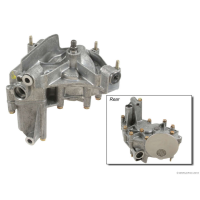
Below are the parts most often responsible for code P1680, ranked by how frequently each one is the actual culprit (per the diagnosis above). Tap any to see what we have for your vehicle.




The information in this article is provided for general reference and educational purposes only. Vehicle specifications, procedures, and part compatibility can vary by production date, trim level, and region. Always consult your vehicle's factory service manual and verify part numbers before purchasing or performing repairs. Safety-critical components such as airbags, seat belts, and braking systems should be installed by a qualified professional.
- 🧭 Diagnostic Flowchart
- 🎬 Helpful Videos
- 🛍️ Shop This Part
- What Does P1680 Mean?
- Can I Drive With P1680?
- Common Causes
- Symptoms
- Common Fixes & Costs
- Used vs. New Parts: Buying Guide
- What Happens If You Wait — Timeline
- Cost of Not Fixing It
- Diagnosis Steps
- When This Code Triggers (Freeze-Frame Conditions)
- Related Codes
- Climate & Environmental Factors
- How to Talk to a Mechanic About This Code
- Where to Take It: Dealer vs Independent vs Chain
- What Scan Tool You Need for This Code
- How to Clear the Code After You Fix It
- Will This Fail Emissions / State Inspection?
- Most Commonly Affected Vehicles
- Manufacturer-Specific Notes
- Real Owner Stories
- 2004 GMC Envoy in Limp Mode
- 2005 Dodge Neon No-Start
- 2006 Mazda RX-8 Ignored Warning
- How to Prevent This Code From Triggering
- Frequently Asked Questions
- What are the most common misdiagnosis mistakes for P1680?
- Can I just clear the P1680 code?
- Why is the Metering Oil Pump repair so expensive on an RX-8?
- My GM truck is in 'Reduced Engine Power' mode. Is it safe to drive?
- What does 'Driver 5' mean with P1680 on a Chevy Trailblazer?
- Can a bad ground cause a P1680 code?
- Do I need to perform a 'relearn' procedure after fixing a P1680?
- Can aftermarket modifications or tunes cause a P1680 code?
- Key Takeaways
- 🎟️ Get 5% Off