

P1682 on 2004-2007 Buick Rainier: Ignition Circuit Fault Causes and Fixes
On a 2004-2007 Buick Rainier, code P1682 is almost always caused by a fault in the underhood fuse box, not the ignition switch. A broken internal wire or a bad relay is the most common culprit, leading to stalling or a no-start condition. The fix often involves repairing or replacing the entire fuse box. This is a well-documented issue across the entire GM GMT360 platform.
- P1682 on a Buick Rainier indicates a serious electrical problem that can cause the engine to stall unexpectedly.
- Do not immediately replace the ignition switch. The most probable cause on this specific vehicle platform is a fault within the underhood fuse box.
- Start your diagnosis by swapping the powertrain and run/crank relays—it's a cheap and easy potential fix.
- If relays are not the issue, the underhood fuse box must be inspected for internal breaks or external corrosion before any other parts are replaced.
- Due to the risk of stalling, do not drive the vehicle until this issue has been properly diagnosed and repaired.
What's Unique About the 2004-2007 Buick Rainier
The Buick Rainier is built on General Motors' GMT360 platform, which it shares with the Chevrolet Trailblazer, GMC Envoy, Isuzu Ascender, and Saab 9-7X. On these vehicles, the P1682 code has a notorious and specific cause: the Underhood Fuse Box (UBEC). While a faulty ignition switch is a common cause for this code on other vehicles, on the GMT360 platform, the fuse box itself is the weak point. Internal, thin 20-gauge solid copper wires are known to break from years of heat cycles and vibration, causing intermittent connections that trigger the code, especially when the engine is hot. Many owners mistakenly replace the ignition switch first, only to have the problem persist.
Symptoms You May Notice
- Engine cranks but will not start
- Engine stalls unexpectedly, often after warming up and will not restart until it cools down
- Intermittent no-start condition
- Check Engine Light is illuminated
- Multiple other warning lights (ABS, Traction Control) may appear simultaneously
- Reduced Engine Power message may display
- Replacing the ignition switch when the actual fault is in the underhood fuse box.
- Replacing the battery, as the intermittent no-start can be mistaken for a weak battery.
- Replacing the Mass Airflow (MAF) sensor, as a related TSB notes that P0101 can sometimes appear with P1682 due to the same fuse box connector issue.
Most Likely Causes
- Faulty Underhood Fuse Box (UBEC) 🔴 High Probability → Shop Fuse Box The GMT360 platform is known for this issue. An internal 20-gauge copper wire is prone to breaking from heat cycles and vibration, causing an intermittent open circuit. This failure is often heat-sensitive, causing stalling when hot and a no-start until the engine bay cools. Corrosion or poor pin tension on the underside connectors can also be a cause. Manufacturer Bulletin #PIT5643 highlights the possibility of arcing or corrosion specifically on terminal 51 of the X3 connector at the UBEC when diagnosing P1682.
How to confirm: Visually inspect the fuse box for corrosion. More definitively, remove the fuse box, disconnect the large connectors underneath, and inspect for burnt or corroded pins, particularly at connector X3, position H6, as noted in TSB 21-NA-032. The ultimate confirmation is to disassemble the fuse box by drilling out the plastic rivets and inspecting the internal wiring for a physical break.
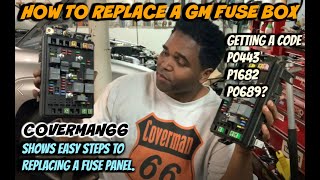
Typical fix: Repair the broken internal wire with a new section of 20-gauge wire and solder. If the box or its connectors are severely corroded or melted, the entire UBEC must be replaced. 🎬 Watch this step-by-step GM fuse box replacement guide Note that this part may be discontinued by the manufacturer, making a used part from a junkyard or a repair the only options.
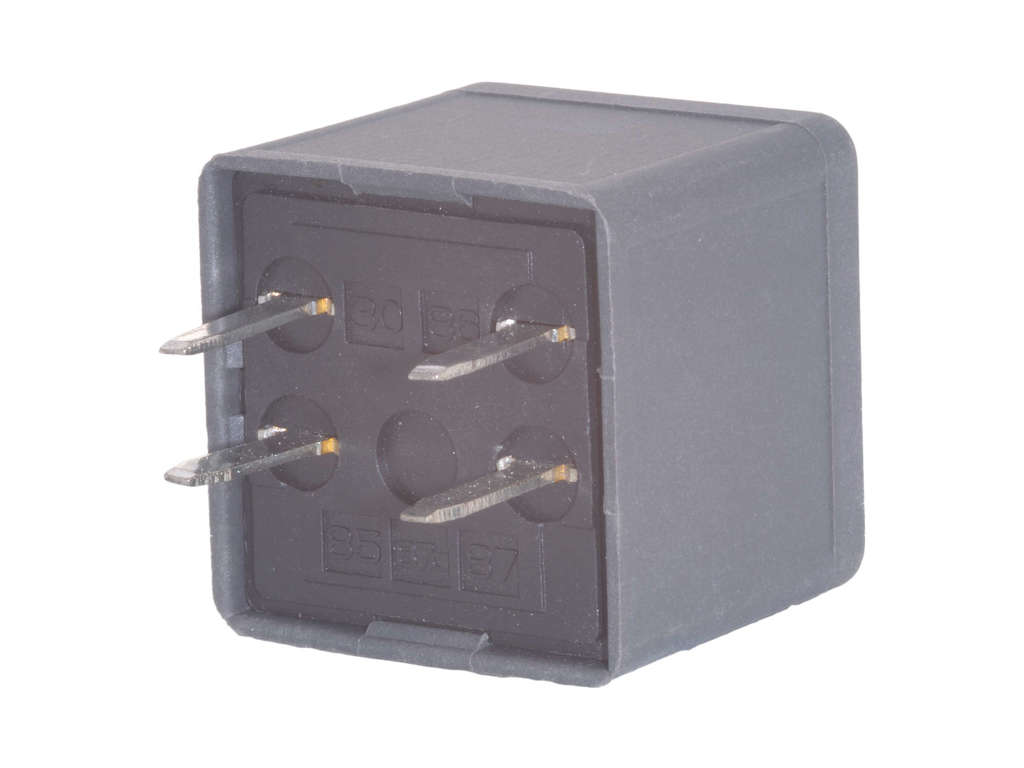
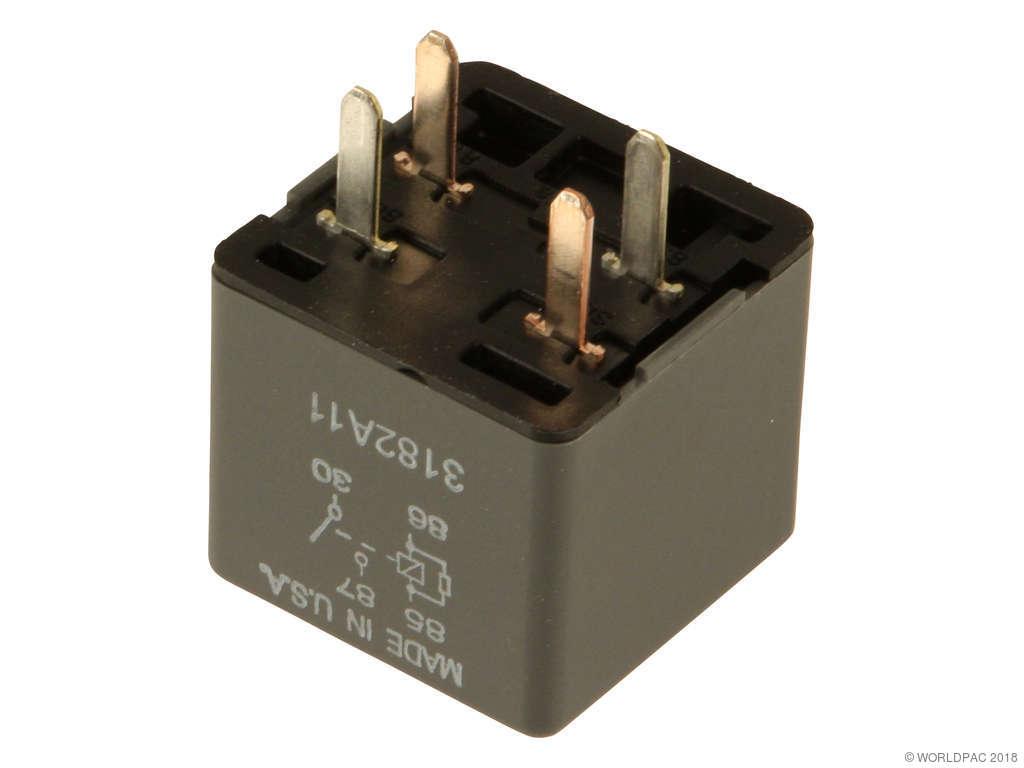
Est. part cost: $5 (for wire repair) - $450+ - Faulty Powertrain or Run/Crank Relay 🟡 Medium Probability → Shop Wiring Relay Relays are mechanical switches that wear out over time. A failing relay can create an intermittent connection or fail completely, causing the voltage drop that triggers P1682.
How to confirm: Swap the 'PWR/TRN' (Powertrain) or 'RUN/CRNK' (Run/Crank) relay in the underhood fuse box with an identical, known-good relay from a non-critical system (like the horn or rear defogger). If the problem is resolved, the relay was faulty.
Typical fix: Replace the faulty relay.
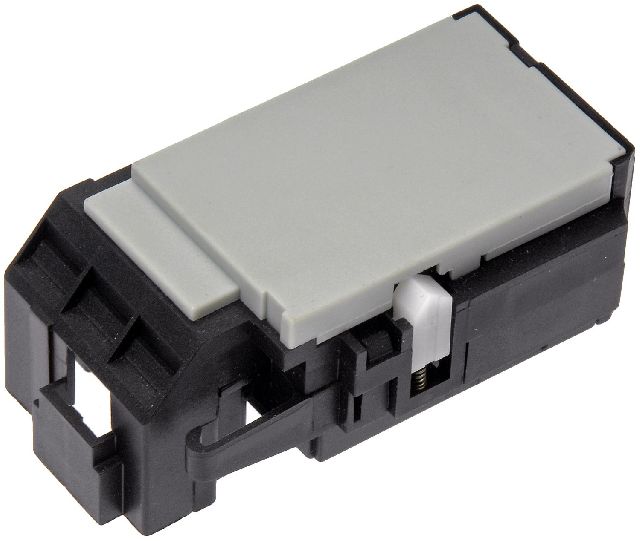
Est. part cost: $10-$30 - Faulty Ignition Switch ⚪ Low Probability → Shop Ignition Switch While a common cause on many cars, it's more often a misdiagnosis on this platform. The electrical part of the switch can wear out, causing it to send incorrect voltage signals to the ECM and fuse box.
How to confirm: Using a wiring diagram and a multimeter, back-probe the ignition switch connector to verify that the correct circuits (e.g., the Pink wire) have proper voltage in each key position (Accessory, Run, Crank).
Typical fix: Replace the electrical portion of the ignition switch.
Est. part cost: $30-$80
Rare But Worth Checking
- Damaged Wiring Harness: Check for chafed or melted wires near the fuse box, steering column, or where the harness passes through the firewall. This can cause a short or open circuit that mimics other failures. TSB 21-NA-032 specifically points to a compromised crimp connection at the UBEC connector X3, pin H6.
- Faulty Engine Control Module (ECM): → Shop Engine Control Module (ECM) This is very rare. The ECM is generally reliable. Before condemning the ECM, all other possibilities (fuse box, relays, wiring, ignition switch) must be exhaustively ruled out. An ECM failure would likely be accompanied by other communication codes (U-codes).
Diagnosis Steps
- Read the codes with an OBD-II scanner to confirm P1682 is present, and note any other codes like P0689 or P0101.
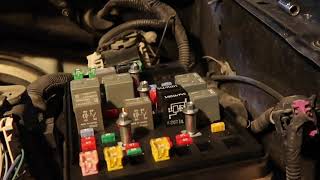
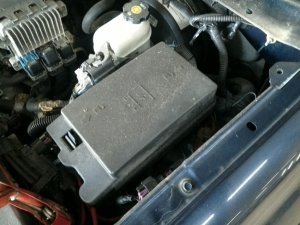
- Locate the underhood fuse box. Identify the Powertrain (PWR/TRN) and Run/Crank (RUN/CRNK) relays.
- Swap these relays with identical known-good relays from non-essential circuits. Clear the code and see if the issue returns. If not, replace the faulty relay.
- If the problem persists, especially if it is heat-related (stalls when hot), the fuse box is the primary suspect. Disconnect the battery.
- Unbolt and carefully lift the underhood fuse box. Disconnect the large electrical connectors on the bottom by releasing their locking tabs.
- Thoroughly inspect the male and female pins of these connectors for any signs of green or white corrosion, or black/burnt marks indicating a poor connection. Pay special attention to connector X3, pin H6.
- If connectors look clean, the next step is to inspect the internal fuse box wiring. This is an advanced step. Carefully drill out the heads of the plastic rivets holding the fuse box layers together. 🎬 See how to safely disassemble the fuse block
- Separate the layers and look for a thin (often 20-gauge) solid copper wire that has snapped. This is a known failure point and the break may be very fine.
- If a broken wire is found, use solder and a new piece of wire to bridge the break securely. Ensure no metal shavings from drilling remain in the box.
- If the fuse box and relays are confirmed to be good, the next step is to test the ignition switch circuits for correct voltage outputs using a multimeter.
- If all else fails, inspect the wiring harness for damage between the fuse box, ignition switch, and ECM before considering a faulty ECM.
Parts You'll Likely Need
- Underhood Fuse Box (UBEC)
(OEM #15120875, 15197529)— This is the most common failure point on the GMT360 platform for code P1682 due to internal broken wires or corrosion. The part is often discontinued, so repair or a salvaged part may be necessary.
Trusted brands: ACDelco (OEM)
OEM price range: $250-$450
Aftermarket price range: N/A - Ignition Switch
(OEM #D1485F)— Though less common than the fuse box, a faulty ignition switch is the next logical component to fail in this circuit and is a common misdiagnosis.
Trusted brands: ACDelco, Standard Motor Products
OEM price range: $60-$100
Aftermarket price range: $30-$60 - Automotive Relay
(OEM #15141659 (example, verify by specific relay))— A failing powertrain or run/crank relay can cause an intermittent voltage drop, triggering the code. This is an inexpensive and easy first diagnostic step.
Trusted brands: ACDelco, Bosch
OEM price range: $15-$30
Aftermarket price range: $10-$20
Related Codes That Often Appear With This One
- P0689 (Engine/Powertrain Control Module Power Relay Control Circuit Low)
- P0101 (Mass Air Flow (MAF) Sensor Performance)
- P0443 (EVAP System Purge Control Valve Circuit)
- P2176 (Throttle Actuator Control System - Idle Position Not Learned)
Technical Service Bulletins (TSBs) & Recalls
- GM TSB 21-NA-032: Notes that a compromised connection within the UBEC connector X3 at position H6 can cause P1682, sometimes accompanied by a P0101 MAF code. It advises against replacing the MAF sensor and instead inspecting the wire connection.
- Bulletin #PIT6486: Provides instructions for addressing a no crank, no start condition specifically when P1682 is present.
- Bulletin #19NA276: Provides repair information for customer concerns regarding a potential reduced engine power message and/or engine stall with DTCs P1682 and/or P0689.
- Bulletin #PI1422: Addresses intermittent crank/no start conditions, particularly in cold climate conditions, where DTC P1682 is found set as current or in history.
Platform-Specific Known Issues
- The underhood fuse box on the GMT360 platform (which includes the Rainier) is highly susceptible to internal wire breakage due to heat and vibration, making it the primary cause of P1682.
- The failure is characteristically heat-sensitive, often causing the vehicle to stall after reaching operating temperature and refusing to restart until the fuse box has cooled down.
Mechanic-Grade Diagnostic Values
- Voltage difference between 'Ignition 1 Voltage' and 'EC Ignition Relay Feedback' on a scan tool — expected: Less than 3.0 Volts. Failure: A difference greater than 3.0 Volts for more than 1 second will set the code.
- Resistance in the ignition voltage circuit to the ECM — expected: Less than 5 Ohms. Failure: A resistance of 5 Ohms or greater in the circuit can cause the DTC to set.
- Standard 12V Relay Coil Resistance — expected: 50 to 120 Ohms. Failure: A reading outside this range between pins 85 and 86 indicates a faulty relay coil.
Scan Tool Commands That Help
- Tech2 / GDS2 or equivalent professional scan tool: Viewing 'Ignition 1 Voltage' and 'EC Ignition Relay Feedback' (or 'Engine Controls Ignition Relay Feedback') live data PIDs. — This is the primary diagnostic step to confirm the fault. It allows the technician to see the voltage discrepancy between the two ignition circuits as the ECM sees it, confirming which circuit is dropping out.
Wiring & Ground Locations
- Underhood Fuse Block (UBEC) — In the engine compartment on the driver's side.. This is the central hub for the two ignition circuits. Internal breaks, corrosion, or faulty relays within this box are the number one cause of P1682 on this platform.
- Rear Fuse Block (MBEC) — Located under the driver's side rear seat.. While less commonly the cause for P1682, it's part of the vehicle's overall power distribution and can be a source of other electrical issues. It's important to distinguish it from the UBEC.
- G102 — Located at the left rear of the engine.. This is the ground for the ignition coils. While not a direct cause for P1682, a poor ground here can cause other ignition-related symptoms.
- G103 — Located on the cowl in the engine compartment, above the brake booster.. This is a critical ground point for the Body Control Module (BCM), Instrument Panel Cluster (IPC), and the Data Link Connector (DLC). A poor connection here can cause widespread, confusing electrical issues that could be misdiagnosed.
- G105 — Located at the left front of the engine compartment, often behind cooling fan relays.. Grounds several front-end components. A poor ground here can contribute to general electrical instability.
Real Owner Repair Stories
- YouTube user in 'TRAILBLAZER SS CODE P1682 FIXED' (2007 Chevrolet Trailblazer SS) — Vehicle would stall at red lights or stop signs, or just die intermittently. Would have to wait 10 minutes before it would restart and drive normally.
❌ Tried (didn't work) Initially suspected the fuel pump, but could hear it priming.
✅ What actually fixed it The owner replaced the entire underhood fuse box with a new one from the dealership, which resolved the stalling and cleared the P1682 code. - YouTube user in 'Crank But Wont Start! Replacing A GM Fuse Box' (Chevrolet Trailblazer SS) — Crank but no start condition, with codes P1682, P0689, and P0443 present.
❌ Tried (didn't work) The video focuses directly on the known common failure.
✅ What actually fixed it The owner replaced the entire underhood fuse box. The video provides a step-by-step guide on the replacement process, emphasizing it as the known fix for this combination of codes. - NHTSA ODI #11467986 — An owner reported that their engine stalled multiple times while driving. The underhood fuse box was found to be loose and threw code P1682. The engine would cut off while maintaining power to the dash and other components.
OEM Part Supersession History
15197529→Discontinued— End of life for the vehicle platform.
Heads up: This part number is specific to certain 2004 models. It is critical to match the part number from your existing fuse box when sourcing a replacement. Using a part with a different number, even if it looks identical, may result in incompatibility.15120875→Discontinued— End of life for the vehicle platform.
Heads up: Another common part number for this platform. Always verify compatibility by matching the part number from the original unit.
Model Year Variations Within This Range
- 2005: For 2005 models, the underhood fuse box is engine-specific. A fuse box from a 4.2L I6 engine is NOT compatible with a 5.3L or 6.0L V8 engine from the same year, and vice-versa. The V8 models used a different electrical architecture.
Diagnostic Flowchart
Other Known Issues on This Vehicle
Issues unrelated to this code that are worth knowing about as an owner of this generation:
- Rear Air Suspension Failure 🔴 High — Very common. The rubber air springs develop dry rot and cracks, causing leaks. The onboard air compressor then runs excessively to compensate and eventually burns out.
- Cooling Fan Clutch Failure 🟠 Medium — Common failure item. The clutch can seize or fail to engage, causing a loud roaring noise, loss of power, and potential overheating.
- Instrument Cluster Malfunction 🟠 Medium — Widespread across many GM vehicles of this era. Gauges (speedometer, tachometer, etc.) become erratic or stop working due to faulty stepper motors on the circuit board.
- Driver's Door Module Failure 🟠 Medium — Common enough to warrant a recall. Water can intrude into the driver's door module, causing corrosion and failure of power windows/locks, and in rare cases, a fire risk. (Ref: NHTSA Recalls: 12V399000, 14V701000, 15V519000)
- Headlamp Driver Module (HDM) Failure 🔴 High — Common failure leading to sudden loss of low-beam headlights while driving. (Ref: NHTSA Recall: 14V755000)
- Cracked Exterior Door Handles 🟡 Low — The plastic door handles, particularly on the exterior, are known to become brittle and break with regular use.
Used vs. New Parts: Buying Guide for This Vehicle
When a used part is the smart pick: Since new OEM fuse boxes are discontinued, a used part from a salvage yard is often the only viable option besides attempting a complex internal repair. This is a smart choice if the donor part is inspected carefully.
Donor-vehicle mileage cap: roughly under 120000 miles for the part to have meaningful remaining life.
What to inspect on the donor part:
- CRITICAL: Inspect the underside connectors. There should be absolutely no signs of green or white powdery corrosion, or any blackened/melted plastic around the pins.
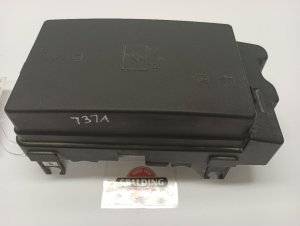
- Check the fuse box cover. A donor vehicle with a well-sealed, intact cover is less likely to have suffered water intrusion.
- Look for a donor vehicle from a dry climate if possible to minimize the chance of corrosion.
- Verify the part number on the side of the used fuse box EXACTLY matches your original part number.
OEM-only on this vehicle (don't cheap out):
- Underhood Fuse Box (UBEC) - Aftermarket versions are not available, so a good used OEM part or repairing the original are the only options.
Aftermarket brands forum-validated for this vehicle:
- For relays: ACDelco (OEM), Bosch, Standard Motor Products.
- For ignition switch: ACDelco (OEM), Standard Motor Products (SMP).
Brands owners have reported issues with on this vehicle:
- Unbranded, 'white box' relays or ignition switches are often of poor quality and can fail quickly, leading to a repeat of the original problem.
Real Owner Stories
Aggregated from forums and TSBs cited above. Mileages and costs reflect what owners reported in those sources.
2006 GMC Envoy 5.3L (GMT360 Platform)
Symptoms: Random quit with no restart; the vehicle experienced a 'random quit' and would not restart, throwing codes P1682, P0689, and P0443.
What fixed it: Repair of the well-known fuse box internal wire break.
Source hint: GMTNation.com - '2006 Envoy 5.3 Random QUIT NO RESTART WITH P1682, P0689, P0443'
Related OBD-II Codes
Frequently Asked Questions
My 2006 Rainier stalls when it gets hot but starts fine after cooling down. Is this related to P1682?
Does GM TSB 21-NA-032 apply to the P1682 code on my vehicle?
Can I just swap a relay to fix the P1682 code on a Buick Rainier?
Is the P1682 code caused by the same issue that triggers the Driver's Door Module recall?
I have a P1682 and my ABS and Traction Control lights just came on. Are they related?
If I need to replace my underhood fuse box (UBEC) for P1682, can I buy a new one from Buick?
Helpful Videos
Used OEM Parts in Stock
New Aftermarket Parts Available


The information in this article is provided for general reference and educational purposes only. Vehicle specifications, procedures, and part compatibility can vary by production date, trim level, and region. Always consult your vehicle's factory service manual and verify part numbers before purchasing or performing repairs. Safety-critical components such as airbags, seat belts, and braking systems should be installed by a qualified professional.
- Buick Rainier:
- 🧭 Diagnostic Flowchart
- 🎬 Helpful Videos
- 🛍️ Shop This Part
- What's Unique About the 2004-2007 Buick Rainier
- Symptoms You May Notice
- Most Likely Causes
- Rare But Worth Checking
- Diagnosis Steps
- Parts You'll Likely Need
- Related Codes That Often Appear With This One
- Technical Service Bulletins (TSBs) & Recalls
- Platform-Specific Known Issues
- Mechanic-Grade Diagnostic Values
- Scan Tool Commands That Help
- Wiring & Ground Locations
- Real Owner Repair Stories
- OEM Part Supersession History
- Model Year Variations Within This Range
- Other Known Issues on This Vehicle
- Used vs. New Parts: Buying Guide for This Vehicle
- Real Owner Stories
- 2006 GMC Envoy 5.3L (GMT360 Platform)
- Related OBD-II Codes
- Frequently Asked Questions
- 🎟️ Get 5% Off