

P1682 on 2008-2014 Cadillac CTS: Ignition Circuit Fault Causes and Fixes
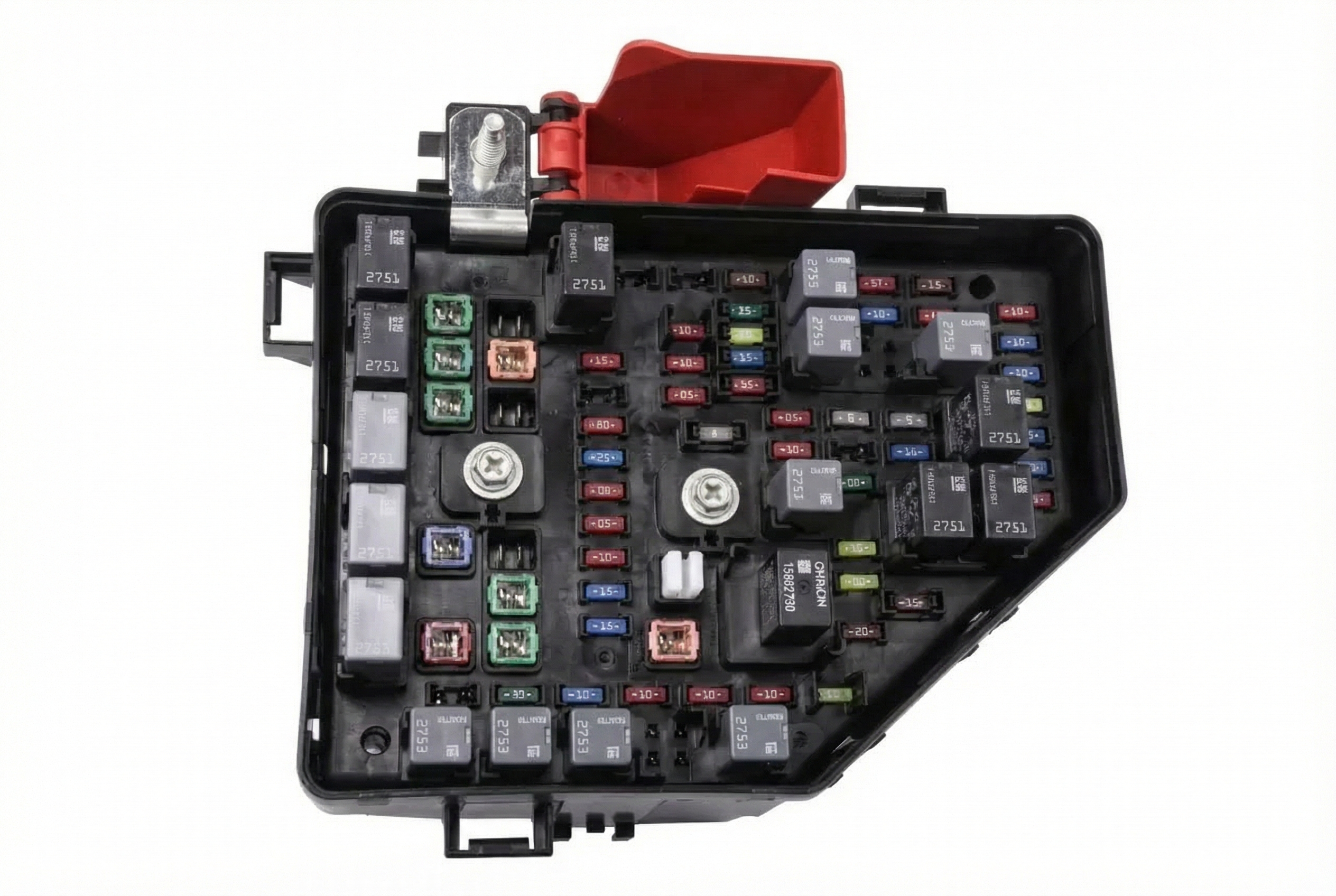
On a 2008-2014 Cadillac CTS, code P1682 is most often caused by a faulty relay in the underhood fuse box (either the powertrain relay or the run/crank relay) or a poor connection at the fuse block terminals. Swapping the suspect relay with a known good one is a quick and inexpensive first diagnostic step. A poor connection or 'fretting corrosion' at the fuse block is also a very common cause that requires inspection.
- P1682 indicates a voltage mismatch between two ignition circuits feeding the engine computer.
- Do not immediately assume the ECM is bad; this is a rare cause.
- Start your diagnosis with the easiest and cheapest parts: check the fuses and swap the powertrain and run/crank relays.
- Carefully inspect the underhood fuse block for any signs of corrosion or loose terminals, as this is a known issue.
- If the vehicle cranks but won't start, P1682 is a strong indicator of an electrical power delivery problem, not a mechanical one.
What's Unique About the 2008-2014 Cadillac CTS
The second-generation Cadillac CTS, built on the GM Sigma II platform, uses a dual-circuit design to provide redundant power verification to the ECM. This design is intended as a failsafe but can be a point of failure. The issue is rarely the expensive ECM itself but is almost always found in the supporting power delivery components like relays, fuses, or the fuse block terminals. These terminals are known to suffer from 'fretting corrosion,' a condition where micro-vibrations cause oxidized debris to build up, creating high resistance. This is a well-documented issue across many GM platforms of the era and is addressed in GM Technical Service Bulletin #09-06-03-004G, which recommends using a specific dielectric grease (Nyogel 760G) to prevent recurrence.
Symptoms You May Notice
- Engine will crank but not start
- Engine will not crank at all
- Check Engine Light is on
- Reduced Engine Power mode is activated
- Engine stalls intermittently, sometimes when hot
- Engine does not turn off when the key is removed
- Various warning lights on the instrument cluster, such as 'Service Traction Control' or 'Service StabiliTrak'
- Key may become stuck in the ignition
- Replacing the battery or alternator without checking the specific ignition circuits.
- Replacing the starter motor when a 'crank-no-start' symptom is present.
- Replacing the ECM before verifying power and ground signals from the relays and fuse block.
- Replacing the Mass Airflow (MAF) sensor. TSB 21-NA-032 explicitly states that P1682 can set with P0101 (MAF code) due to a shared wiring issue, but the MAF sensor is not the root cause.
Most Likely Causes
- Faulty Powertrain or Run/Crank Relay 🔴 High Probability → Shop Wiring Relay Relays are electromechanical switches that wear out over time. They are a very common failure point for this code across many GM vehicles.
How to confirm: Locate the powertrain (labeled 'PWR/TRN') and run/crank relays in the underhood fuse box. Swap the suspect relay with an identical one from a non-essential circuit (like the horn or rear defogger) and see if the car starts and the code clears.
Typical fix: Replace the faulty relay. It is inexpensive and simply plugs into the fuse box. The common part is a standard 5-pin gray relay.
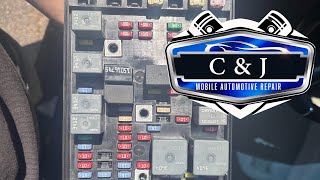
Est. part cost: $10-$30 - Poor Connection at Fuse Block (Fretting Corrosion) 🔴 High Probability The terminals that hold the fuses and relays in the Underhood Bussed Electrical Center (UBEC) can lose tension or develop fretting corrosion, leading to high resistance or an open circuit. This is a widely documented GM issue, and a resistance of just 5-6 ohms 🎬 See how a mobile mechanic repairs these fuse box terminals. in the circuit can trigger the code.
How to confirm: Disconnect the battery. Unbolt and lift the fuse block to inspect the large connectors on the underside. Look for any signs of discoloration, burn marks, or corrosion on the pins and terminals. Wiggling the powertrain relay while attempting to start may temporarily establish a connection.
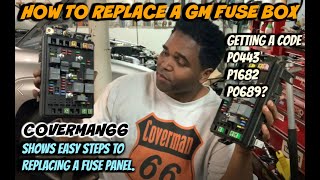
Typical fix: Cleaning the terminals and applying a small amount of dielectric grease (specifically Nyogel 760G as recommended by GM TSB #09-06-03-004G) can be a lasting repair. If terminals are burnt or have lost tension, the fuse block itself may need to be replaced. 🎬 Watch this walkthrough on replacing a GM fuse box.
Est. part cost: $10 for cleaning supplies/grease, $200-$500 for a fuse block replacement - Blown Fuse 🟡 Medium Probability A short circuit in an associated system or a voltage spike can cause a fuse to blow as designed to protect the circuit.
How to confirm: Visually inspect the fuses related to the ECM, ignition, and powertrain circuits (e.g., 'ECM', 'IGN', 'PWR/TRN'). Use a multimeter or test light to confirm continuity across each fuse.
Typical fix: Replace the blown fuse. If the new fuse blows immediately, there is an underlying short circuit that must be diagnosed.
Est. part cost: $1-$5 - Faulty Ignition Switch ⚪ Low Probability → Shop Ignition Switch
How to confirm: This requires more in-depth electrical testing of the ignition switch's output circuits using a multimeter and a wiring diagram to ensure it is sending correct voltage signals in each key position. While a common cause on other GM models, it's less frequently the primary culprit for the CTS compared to relays and the fuse block.
Typical fix: Replace the ignition switch, which is typically located in the steering column.
Est. part cost: $40-$150
Rare But Worth Checking
- Wiring Harness Damage: An open or short in the wiring between the fuse block and the ECM can cause this code. TSB 21-NA-032 points to a compromised wire crimp inside the X3 connector at the fuse block on some GM vehicles, which can be difficult to see without disassembly. Water intrusion into headlamp assemblies has also been known to short circuits that feed the fuse block, causing this code intermittently in wet weather, as noted in TSB PIT5546G.
- Faulty Engine Control Module (ECM): → Shop Engine Control Module (ECM) This is the least likely cause. The ECM should only be suspected after all other possibilities—relays, fuses, wiring, and the fuse block—have been thoroughly ruled out. Often, other communication codes (U-codes) will be present if the ECM is failing.
Diagnosis Steps
- Connect a scan tool and verify that P1682 is present. Note any other codes, especially P0685, P0689, or P0101, and diagnose them first if present.
- Check the battery. Ensure it is fully charged and passes a load test. A weak battery can cause numerous electrical issues, but is not the direct cause of P1682.
- Locate the underhood fuse block (UBEC). Identify the fuses and relays for the powertrain ('PWR/TRN') and run/crank circuits. Your owner's manual will have a diagram.
- Inspect the relevant fuses (often labeled 'ECM', 'IGN', 'CRNK') for being blown. Replace if necessary.
- Swap the powertrain relay and run/crank relay with an identical, known-good relay (GM P/N 13500114 or equivalent) from a non-critical system. Attempt to start the vehicle. If it starts, the relay you moved is faulty.
- If relays and fuses are good, disconnect the battery. Unbolt and lift the fuse block to inspect the large connectors on the bottom side for signs of corrosion, discoloration (from heat), or loose-fitting pins (fretting). This is a very common failure point.
- If the problem persists, use a scan tool that can display live data. Monitor the 'Ignition 1 Voltage' and 'EC Ignition Relay Feedback' parameters. The circuit showing significantly lower voltage (more than a 3V difference) is the one with the fault.
- Based on the scan tool data, trace the wiring for the faulty circuit from the fuse block to the ECM, checking for opens, shorts, or high resistance with a multimeter. Pay close attention to the connector pins at the fuse block.
- If all wiring and components test good, the final possibility is a fault within the Engine Control Module (ECM) itself, though this is rare.
Parts You'll Likely Need
- Powertrain Relay / Run-Crank Relay
(OEM #13500114)— This is the most common failure point for code P1682. These relays control the two ignition voltage signals that the ECM monitors. This part number is a widely used multi-purpose relay in GM vehicles.
Trusted brands: ACDelco, Standard Motor Products, Bosch
OEM price range: $20-$40
Aftermarket price range: $10-$25 - Automotive Fuse — A blown fuse in one of the ignition circuits will cause a voltage mismatch and set this code.
Trusted brands: Bussmann, Littlefuse
OEM price range: $1-$5
Aftermarket price range: $1-$5
Related Codes That Often Appear With This One
- P0685 — This code relates to the ECM/PCM Power Relay Control Circuit. Since P1682 involves the powertrain relay, a fault in the relay's control circuit can trigger both codes.
- P0689 — This code indicates a low voltage condition in the ECM/PCM Power Relay Sense Circuit. It is directly related to the power monitoring that also triggers P1682 and often points to the same root causes like a bad relay or fuse block connection.
- P0101 — This MAF sensor code can appear with P1682 not because the MAF is faulty, but because a wiring issue in the fuse block (specifically connector X3, pin H6 on some models) affects both circuits. Do not replace the MAF sensor if P1682 is also present.
Technical Service Bulletins (TSBs) & Recalls
- TSB #09-06-03-004G: Addresses intermittent no-start and various electrical issues caused by fretting corrosion on connector terminals. It recommends applying Nyogel 760G dielectric lubricant as a corrective action.
- TSB 21-NA-032: While for newer trucks, it's relevant as it describes how a compromised wire crimp in a fuse block connector (X3-H6) can cause P1682 and P0101 simultaneously, highlighting the importance of inspecting the fuse block wiring itself.
- TSB PIT5546G: Documents how water intrusion into headlamp assemblies can backfeed voltage into switched ignition fuses, causing modules to stay awake and setting codes like P1682.
Platform-Specific Known Issues
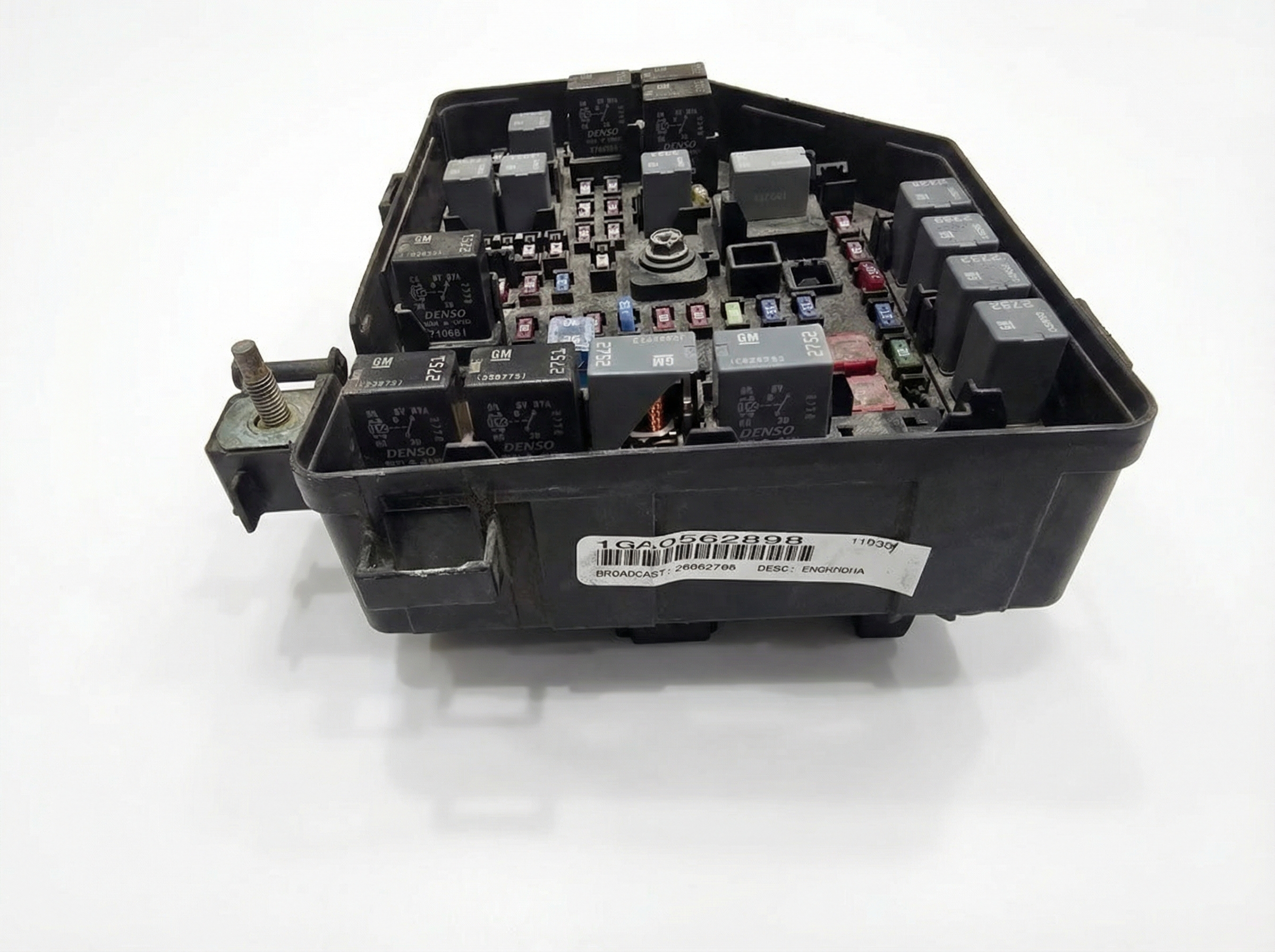
- Underhood Fuse Block (UBEC) Terminal Fretting: → Shop Fuse Box The most prevalent issue for P1682 on this platform is not the components themselves, but the connections to them. The terminals within the UBEC, particularly for the powertrain relay, are susceptible to fretting corrosion. This creates high resistance, leading to a voltage drop that the ECM detects as a fault. The fix often involves cleaning the terminals and applying dielectric grease, or in severe cases, replacing the fuse block. This is documented in GM service bulletins and is a known issue across their vehicle lineup from this era.
Mechanic-Grade Diagnostic Values
- Voltage difference between 'Ignition 1 Voltage' and 'EC Ignition Relay Feedback' on a scan tool — expected: Less than 3.0 Volts. Failure: A difference greater than 3.0 Volts for more than 1 second will set the code.
- Resistance in either Ignition 1 voltage circuit — expected: Less than 5.0 Ohms. Failure: A resistance of 5.0 Ohms or greater is sufficient to cause the DTC to set.
- System Voltage (Key On) — expected: Greater than 12.4 Volts. Failure: Diagnosis of P1682 should not be attempted if system voltage is below 9V, as it can cause erroneous codes. The DTC will not run if system voltage is below 5.23V.
Scan Tool Commands That Help
- GDS2 / Tech2: Output Control: Powertrain Relay ON/OFF — Use this bidirectional command with the key on, engine off to manually activate and deactivate the powertrain relay. You should hear or feel the relay click with each command, which helps confirm if the ECM's control over the relay is functional.
Wiring & Ground Locations
- Underhood Fuse Block (UBEC) — Located on the passenger side of the engine compartment.. This is the central hub for the powertrain and run/crank relays and fuses. The majority of P1682 faults originate here, either from faulty relays or, more commonly, from poor connections (fretting) at the relay terminals or in the main connectors underneath.
- G102 — On the right front of the engine compartment for a 2011 CTS. On other GM models, it may be at the left rear of the engine.. This is a primary ground point for the Engine Control Module (ECM). A poor ground here can cause a host of electrical issues, including erratic voltage readings that could contribute to a P1682 code.
- UBEC Connectors (e.g., X3) — Large multi-pin connectors on the underside of the Underhood Fuse Block.. These connectors are the interface between the vehicle's wiring harness and the fuse block. They are a known point of failure due to fretting corrosion or loose retaining bolts. TSB 21-NA-032 specifically points to a bad crimp at pin H6 of the X3 connector on some GM models as a cause for P1682.
Real Owner Repair Stories
- YouTube user 'coverman66' (GM vehicle (Trailblazer SS) with similar fuse box design) — Car would stall when hot and then crank but not start. Codes P1682 and P0689 were present.
❌ Tried (didn't work) Initial diagnosis pointed towards a possible bad ECM or relay.
✅ What actually fixed it The entire underhood fuse box was replaced. The owner noted this is a common problem where the fuse panel overheats and causes internal connection failures, leading to the stall and no-start condition. - YouTube user 'Chad Barnes' (2008 Pontiac G6 with 2.4L Ecotec engine) — Intermittent no-start which eventually became a permanent crank-no-start. Code P1682 was present.
❌ Tried (didn't work) Checking grounds and basic connections.
✅ What actually fixed it After disassembling the underhood fuse block, the owner found that the female terminals for one of the relays were spread apart and not making a solid connection. Squeezing the terminals back together to ensure a tight fit on the relay pins solved the problem permanently.
OEM Part Supersession History
Multiple (e.g., 12135034, 12193606, 19116057)→13500114— Part consolidation and potential design updates over many years and vehicle models.
Heads up: While 13500114 is the correct and widely used gray 5-pin relay for this application, always verify the part number with a VIN. In some rare cases, an incorrect cross-reference in a parts store system could lead to being given a physically different relay.
Model Year Variations Within This Range
- 2008-2014: While the diagnostic principle for P1682 remains the same, the physical layout and labeling of fuses/relays in the underhood and trunk fuse boxes may have minor variations between early (2008-2009) and later (2010-2014) models of the second-generation CTS. Always refer to the owner's manual or fuse box lid for the specific vehicle year.
Diagnostic Flowchart
Used vs. New Parts: Buying Guide for This Vehicle
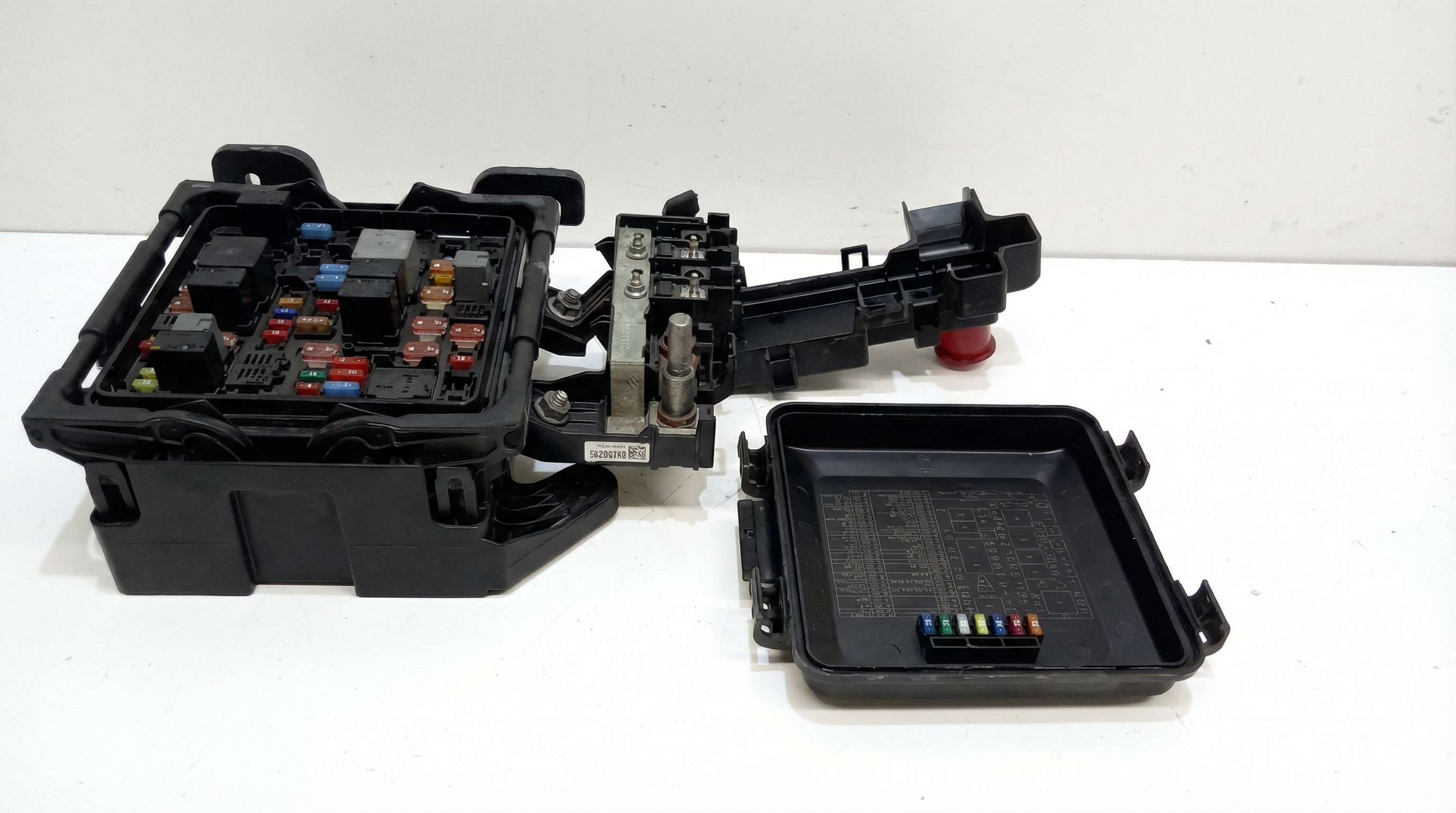
When a used part is the smart pick: A used Underhood Fuse Block (UBEC) from a junkyard can be a cost-effective solution, as a new OEM unit can be expensive. The part does not require programming, making it a direct swap. Relays are inexpensive new, so buying used is not recommended.
Donor-vehicle mileage cap: roughly under 80000 miles for the part to have meaningful remaining life.
What to inspect on the donor part:
- Inspect the donor vehicle for signs of front-end collision or water damage. Avoid any fuse block from a car with a flooded interior or engine bay.
- Remove a few relays and fuses to inspect the terminals. Look for bright, clean metal. Avoid any unit with signs of white/green corrosion, black burn marks, or melted plastic.
- Check the underside where the main harness connectors plug in. The plastic should be clean and free of discoloration from heat or moisture.
- If possible, choose a donor vehicle from a dry climate to minimize the risk of pre-existing corrosion.
OEM-only on this vehicle (don't cheap out):
- Engine Control Module (ECM) - While rarely the cause, if the ECM must be replaced, a new or professionally remanufactured unit programmed to the vehicle's VIN is required.
Aftermarket brands forum-validated for this vehicle:
- Relays: ACDelco (OEM), Standard Motor Products (SMP), Bosch.
- Fuse Block: Dorman may offer a replacement, but an OEM unit (new or used) is generally preferred for fit and quality.
Brands owners have reported issues with on this vehicle:
- Unknown, no-name brand electrical components from online marketplaces should be avoided due to potential quality control issues.
Real Owner Stories
Aggregated from forums and TSBs cited above. Mileages and costs reflect what owners reported in those sources.
2010 Chevrolet Camaro
Symptoms: Displayed 'Engine power reduced' message, car would not start, and code P1682 was present.
What fixed it: The problem was traced to a faulty connector for the IGN/TRN relay in the engine fuse compartment, which is a common fuse block connection failure.
Source hint: Camaro5.com - Thread 'P1682, "Engine power reduced", won't start'
Chevrolet Trailblazer SS
Symptoms: Engine would crank but not start, with codes P1682, P0689, and P0443 present.
What fixed it: The entire underhood fuse block was replaced due to internal heat-related failures causing the issue.
Source hint: YouTube/Jaggieman - Video 'Crank But Wont Start! Replacing A GM Fuse Box(code p1682, p0689, p0443)'
Newer GM Trucks
Symptoms: Codes P1682 and P0101 (Mass Air Flow Sensor) appeared simultaneously.
What fixed it: The cause was identified as a compromised wire crimp in the X3-H6 connector of the fuse block, which required repairing the wiring connection.
Source hint: TSB 21-NA-032
General GM Vehicle
Symptoms: Various control modules would stay awake after turning the car off, draining the battery and setting codes like P1682.
What fixed it: The root cause was water leaking into a headlamp assembly, which backfed voltage into switched ignition fuses. The fix involved repairing the water leak and any resulting electrical damage.
Source hint: TSB PIT5546G
Related OBD-II Codes
Frequently Asked Questions
My 2011 CTS cranks but won't start and has code P1682. What's the very first, easiest thing I should try?
I swapped the relays and the P1682 code is still there. What's the next most likely problem on these Cadillacs?
Is there an official GM procedure for fixing the fuse block corrosion issue?
My key is stuck in the ignition and I'm seeing a 'Service StabiliTrak' light along with the P1682 code. Are these related?
A mechanic wants to replace the whole fuse block for over $400. Is there a cheaper fix?
I have a 2010 Camaro with P1682. Is the diagnostic information for the CTS relevant to my car?
Helpful Videos

We Have This Part in Stock

The information in this article is provided for general reference and educational purposes only. Vehicle specifications, procedures, and part compatibility can vary by production date, trim level, and region. Always consult your vehicle's factory service manual and verify part numbers before purchasing or performing repairs. Safety-critical components such as airbags, seat belts, and braking systems should be installed by a qualified professional.
- Cadillac CTS:
- 🧭 Diagnostic Flowchart
- 🎬 Helpful Videos
- 🛍️ Shop This Part
- What's Unique About the 2008-2014 Cadillac CTS
- Symptoms You May Notice
- Most Likely Causes
- Rare But Worth Checking
- Diagnosis Steps
- Parts You'll Likely Need
- Related Codes That Often Appear With This One
- Technical Service Bulletins (TSBs) & Recalls
- Platform-Specific Known Issues
- Mechanic-Grade Diagnostic Values
- Scan Tool Commands That Help
- Wiring & Ground Locations
- Real Owner Repair Stories
- OEM Part Supersession History
- Model Year Variations Within This Range
- Used vs. New Parts: Buying Guide for This Vehicle
- Real Owner Stories
- 2010 Chevrolet Camaro
- Chevrolet Trailblazer SS
- Newer GM Trucks
- General GM Vehicle
- Related OBD-II Codes
- Frequently Asked Questions
- 🎟️ Get 5% Off