

P1682 on 2006-2011 Cadillac DTS: Ignition Circuit Fault Causes and Fixes
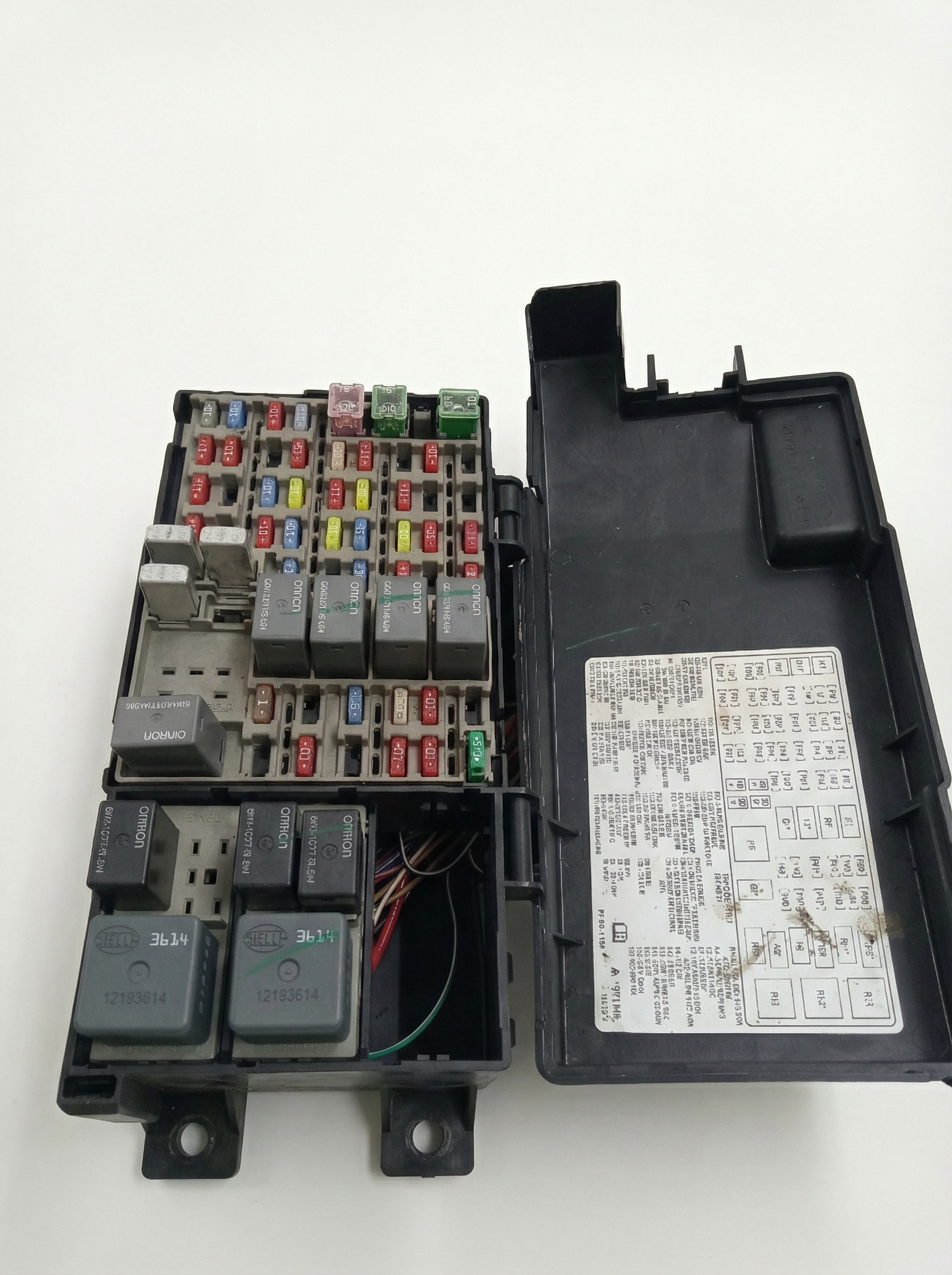
On a 2006-2011 Cadillac DTS, code P1682 most often points to a faulty fuse, relay, or a poor connection in the underhood fuse box (UBEC) related to the ignition or ECM circuits. A crank-no-start condition is a common symptom. Start by inspecting and swapping the powertrain relay (sometimes labeled 'PWR/TRN' or 'Engine Controls Ignition Relay') and checking the 15-amp ECM crank fuse.
- P1682 on your DTS means the ECM sees a problem with its own power supply, which can cause a no-start or stalling.
- Before suspecting expensive parts, your first checks should be the powertrain relay and the 15-amp ECM crank fuse in the underhood fuse box.
- A simple relay swap is a free and effective diagnostic step.
- The fuse may be bad even if it looks fine; replace it with a new one to be sure.
- Do not immediately assume the ignition switch is bad, as this is a common misdiagnosis for this code on this car.
What's Unique About the 2006-2011 Cadillac DTS
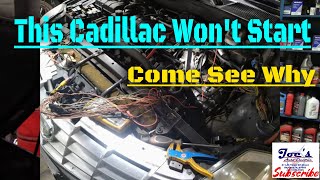
The 2006-2011 Cadillac DTS, particularly with the Northstar V8, is known to have issues within the underhood fuse box (also called the Underhood Bussed Electrical Center or UBEC) that can trigger this specific code. While an ignition switch can be a cause, a faulty fuse, a bad powertrain relay, or a poor terminal connection within the fuse box itself is a more common and vehicle-specific point of failure for the P1682 code on this platform. Technicians have documented cases where a fuse that was not visibly blown was internally faulty, or where high resistance (6 ohms or more) in a circuit within the fuse block itself was enough to set the code. There are also documented cases of wiring harness chafing below the throttle body causing intermittent shorts and no-start conditions that could be related.
Symptoms You May Notice
- Engine will not start (cranks but does not fire)
- Engine will not crank at all (no-crank, no-start)
- Engine stalls unexpectedly
- Reduced engine power mode is activated
- Check Engine Light is on
- Difficulty starting the engine
- Rough or unstable idle
- PRNDL indicator light may not show the vehicle is in Park
- Replacing the ignition switch when the actual problem is a simple fuse, relay, or loose connection in the fuse box.
- Replacing the Mass Airflow (MAF) sensor when a P0101 code appears alongside P1682. GM TSB #21-NA-032 explicitly states that a compromised connection in the UBEC can cause both codes to set simultaneously.
Most Likely Causes
- Faulty Powertrain/Ignition Relay 🔴 High Probability → Shop Wiring Relay Relays are mechanical components with a finite lifespan that wear out over time. Given the age of these vehicles, relay failure is common and directly impacts the ignition voltage circuits monitored by the ECM. They are a frequent and inexpensive first part to check.
How to confirm: Locate the powertrain or ignition relay in the underhood fuse box. A quick and easy test is to swap it with an identical relay from a non-critical circuit (like the horn or rear defogger) and see if the car starts or the code clears.
Typical fix: Replace the faulty relay.
Est. part cost: $15-$40 - Faulty Fuse or Poor Fuse Connection 🔴 High Probability The underhood fuse box on the DTS can develop poor internal connections. The specific 'ECM crank fuse' (15 amp) has been identified as a common culprit, sometimes failing internally without appearing blown. The terminals in the fuse box can also lose tension or corrode, creating high resistance.
How to confirm: Locate the ECM/crank fuse in the underhood fuse box. Visually inspect it. Even if it looks good, test it with a multimeter for continuity or swap it with a known-good fuse of the same rating. Wiggle the fuse while testing for power at the ECM to see if the connection is loose. A resistance of 6 ohms or more in the circuit is enough to cause the DTC.
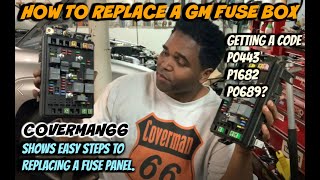
Typical fix: Replace the faulty fuse. If the fuse terminal in the box is loose or corroded, the terminal may need to be re-tensioned or the fuse box may need to be repaired or replaced. 🎬 Watch: Step-by-step guide to replacing a faulty GM fuse box.
Est. part cost: $1-$5 - Wiring Harness Issue 🟡 Medium Probability Engine bay heat and vibration can cause wires to become brittle or chafe over time, leading to an open or short circuit. A documented case on a DTS showed that wiggling the harness could make the problem appear and disappear. A specific area of concern is the harness that runs under the throttle body and near the transmission, where multiple wires can rub through and short.
How to confirm: Visually inspect the wiring harness between the underhood fuse box and the ECM for any signs of damage, chafing, or corrosion, paying close attention to the area below the throttle body. With the key on, carefully wiggle sections of the harness to see if it affects scan tool voltage readings or causes the engine to stall.
Typical fix: Repair or replace the damaged section of the wiring harness.
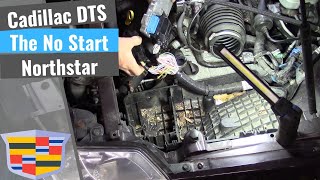
Est. part cost: $5-$100 for repair, significantly more for harness replacement - Faulty Ignition Switch ⚪ Low Probability → Shop Ignition Switch While a possible cause, it is often misdiagnosed. The ignition switch contains electrical contacts that can wear out, causing an incorrect voltage signal to be sent. However, on this platform, the fuse box and relays are more frequent culprits. One owner on a forum reported replacing the switch did resolve their P1682 code, but the issue was accompanied by a P0615 (Starter Relay Circuit). 🎬 Watch: A real-world diagnosis of a DTS with code P1682.
How to confirm: This requires using a multimeter to back-probe the ignition switch connector and verify that the correct voltages are present on the output wires in each key position (Accessory, On, Start) according to the service manual.
Typical fix: Replace the ignition switch.
Est. part cost: $50-$150
Rare But Worth Checking
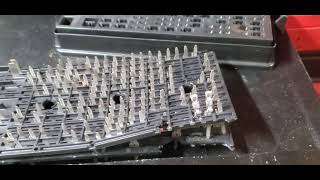
- Faulty Underhood Fuse Box (UBEC): → Shop Fuse Box In some cases, the internal circuitry of the fuse box itself can fail due to corrosion or cracked solder joints. This is more severe than a single loose terminal. GM has issued TSBs for other models like the GMC Acadia and Chevy Traverse for this exact issue, where a specific terminal pin (X3-H6 or X3-51) inside the fuse block connector is the root cause. While no TSB is specific to the DTS, 🎬 See how to repair internal fuse box connections on a DTS. the failure pattern is common across GM platforms. Replacement of the entire fuse box may be necessary if multiple circuits are affected or if terminals are badly burnt.
- Faulty Engine Control Module (ECM): → Shop Engine Control Module (ECM) This is the least likely cause and should only be considered after all other possibilities have been thoroughly ruled out. It is often accompanied by other communication codes (U-codes).
Diagnosis Steps
- Check the battery to ensure it is fully charged and has passed a load test. A weak battery can cause numerous electrical codes.
- Scan for any other trouble codes. If codes like P0685, P0689, or P0690 are present, diagnose them first as they are directly related to the ECM power supply.
- Locate the underhood fuse box. Find the powertrain relay (may be labeled PWR/TRN) and the ECM/crank fuse (typically a 15-amp fuse).
- Swap the powertrain relay with an identical relay from a different, non-critical circuit (e.g., horn) and attempt to start the vehicle. If it starts, the relay was the issue.
- Inspect the ECM/crank fuse. Replace it with a new one, even if it appears intact, as internal failures have been noted on this platform.
- Check for a tight fit on the fuse and relay. A loose connection can cause high resistance and trigger this code.
- If the issue persists, use a scan tool to monitor 'Ignition 1 Voltage' and 'EC Ignition Relay Feedback Signal'. The values should be nearly identical (less than a 3-volt difference). A large discrepancy points to a circuit problem.
- Inspect the wiring harness between the fuse box and the ECM, especially under the throttle body, for any visible damage, chafing, or corrosion.
- If equipped with tools, check for high resistance in the circuits. A reading of 6 ohms or greater in the ignition circuits at the fuse block can set the code.
- If all other steps fail, consider a more in-depth inspection of the fuse box terminals (may require removal) or proceed with testing the ignition switch circuits.
Parts You'll Likely Need
- Mini Fuse — The 15-amp ECM crank fuse is a primary suspect and can fail internally without being visibly blown.
Trusted brands: ACDelco, Bussmann
OEM price range: $1-$5
Aftermarket price range: $1-$5 - Powertrain Control Relay
(OEM #GM 13500114)— This relay supplies power to one of the ignition circuits monitored by the ECM and is a common failure point due to age and wear.
Trusted brands: ACDelco, Standard Motor Products, Hella
OEM price range: $12-$25
Aftermarket price range: $8-$20 - Ignition Switch
(OEM #GM 22887691 (Superseded part number))— A less common but possible cause if fuses, relays, and wiring are confirmed to be good.
Trusted brands: ACDelco, Standard Motor Products
OEM price range: $100-$175
Aftermarket price range: $50-$120
Related Codes That Often Appear With This One
- P0685 — This code relates to the ECM/PCM Power Relay Control Circuit, which is closely related to the power supplies monitored by P1682.
- P0689 — This code indicates a low voltage condition in the ECM/PCM Power Relay Sense Circuit, pointing to the same group of potential power supply issues. Seeing P1682 and P0689 together strongly suggests a fault in the underhood fuse box or its related relays.
- P0101 — This Mass Airflow (MAF) sensor code can be triggered by the same electrical fault as P1682. TSB 21-NA-032 warns technicians not to replace the MAF sensor if P1682 is also present, as the root cause is likely a bad terminal connection in the fuse box.
Technical Service Bulletins (TSBs) & Recalls
- TSB #21-NA-032: While not for the DTS specifically, this GM bulletin is highly relevant. It warns that P1682 and P0101 (MAF Sensor) can set together due to a compromised wire connection (terminal X3-H6) in the underhood fuse block (UBEC) on other GM vehicles. This highlights a known failure pattern.
- TSB #19-NA-276 & PIT5643: These bulletins for other GM models (like the GMC Acadia) also point to poor terminal connections in the fuse block as the cause for P1682 and P0689, providing specific repair instructions and part numbers for terminated leads.
- TSB Bulletin #PIP5729: This bulletin notes that customers may comment that the SES lamp is illuminated or was illuminated and turned off. Technicians may find P1682 (Ignition 1 Switch Circuit 2) active or stored in history, potentially alongside codes P0101, P0689, P16A7, or P16BC.
Platform-Specific Known Issues
- The underhood fuse box on the 2006-2011 DTS is a known weak point for the circuit related to P1682, with issues ranging from poor terminal contact to internal corrosion.
- A wiring harness located under the throttle body is susceptible to chafing and shorts over time.
Mechanic-Grade Diagnostic Values
- Voltage difference between 'Ignition 1 Voltage' and 'EC Ignition Relay Feedback' scan tool PIDs — expected: Less than 3.0 Volts. Failure: A difference greater than 3.0 Volts for more than one second will set the DTC.
- Resistance in the Ignition 1 or EC Ignition Relay Feedback circuit — expected: Less than 6.0 Ohms. Failure: A resistance of 6.0 Ohms or greater in the circuit, including within the underhood fuse block, is sufficient to cause the DTC.
- Voltage at the affected ignition circuit input pin at the ECM connector (back-probed) — expected: Close to battery voltage (B+). Failure: A reading below 9 volts on one circuit while the other reads battery voltage is a definitive failure.
Scan Tool Commands That Help
- Tech2 / GDS2 or equivalent: Monitor PIDs: 'Ignition 1 Voltage' and 'EC Ignition Relay Feedback Signal' — This is the primary diagnostic step to confirm the fault the ECM is seeing. With Key On, Engine Off, both values should be nearly identical to battery voltage. A large discrepancy confirms which circuit is failing.
- Tech2 / GDS2 or equivalent: Output Controls: Command Powertrain Relay and/or Run/Crank Relay ON/OFF — After identifying a faulty circuit via PID monitoring, this bidirectional command allows a technician to test the control side of the relay circuit and the relay's functionality without physically removing it.
Wiring & Ground Locations
- F23 (Underhood Fuse Block) — In the underhood fuse box (UBEC) in the engine compartment.. For 2005-2007 models, this fuse is labeled 'Engine Control Module (ECM), Crank' and is one of the two primary fused ignition feeds to the ECM. A fault in this fuse or its terminals is a direct cause of P1682.
- UBEC Connector X3 — On the underside of the Underhood Fuse Block (UBEC).. On many similar GM platforms, a specific pin in this connector (often Pin 51 or H6) is known for fretting corrosion and creating high resistance, which directly causes P1682. While not explicitly documented for the DTS in search results, this is a very high probability failure point given the shared architecture.
- G103 — Located at the left rear of the engine compartment on the cowl, often above the brake booster.. This ground point serves multiple modules, including the Body Control Module (BCM) and the Data Link Connector (DLC). While not a direct engine ground, a poor connection here can cause a wide range of bizarre electrical issues and communication problems that could potentially mimic or accompany a P1682 fault.
Real Owner Repair Stories
- ScannerDanner Forum User (2009 Cadillac DTS) — No crank, no start. Codes P1682 and P0615 present.
❌ Tried (didn't work) Dealer replaced the starter, which did not fix the issue.
✅ What actually fixed it Replacing the ignition switch cleared the P1682 code. The P0615 no-crank issue required further diagnosis. - YouTube user 'The Lo-fi Mofo' (2008 Pontiac G6 (different vehicle, same GM code logic)) — Intermittent crank-no-start with code P1682, which eventually became a permanent no-start.
❌ Tried (didn't work) Visual inspection of fuses., Replacing the relay.
✅ What actually fixed it The run/crank relay was very loose in its socket in the fuse block. Wiggling the relay allowed the car to start. The final fix was to access the back of the fuse block and re-tension the female terminal for the relay pin to ensure a tight connection. - YouTube user 'Car Faults' (GMC vehicle (different vehicle, same GM code logic)) — Reduced engine power mode, check engine light on with P1682.
❌ Tried (didn't work) Checking if the fuse was blown (it was not).
✅ What actually fixed it The 15-amp fuse labeled 'ECM throttle count' had a poor connection in the fuse box. Wiggling the fuse would make the problem appear and disappear. The fix was to address the loose terminal connection within the fuse box. - YouTube user 'Fix It Rich' (2017 Chevy Express Van (different vehicle, same GM code logic)) — Intermittent crank-no-start with codes P0689 and P1682.
❌ Tried (didn't work) Swapping the ignition relay., Inspecting the relay contacts (they appeared clean).
✅ What actually fixed it Voltage drop tests confirmed the fault was internal to the underhood fuse panel. Replacing the entire fuse panel assembly resolved the issue.
Model Year Variations Within This Range
- 2008-2011: The fuse layout in the rear underseat fuse block was changed for the 2008 model year. However, the primary components for P1682 (ECM, underhood fuse block, powertrain relays) are located in the engine bay and are believed to be consistent across the 2006-2011 range.
- 2009-2011: Bluetooth for hands-free calling was added as a feature starting around the 2009 model year. This is unrelated to the P1682 fault but notes a change in vehicle electronics.
Diagnostic Flowchart
Used vs. New Parts: Buying Guide for This Vehicle
When a used part is the smart pick: For the Underhood Fuse Box (UBEC). A used UBEC from a reputable salvage yard can be a cost-effective solution, as a new unit can be expensive. It is a viable option if the donor vehicle was not in a front-end collision and the part can be thoroughly inspected.
Donor-vehicle mileage cap: roughly under 100000 miles for the part to have meaningful remaining life.
What to inspect on the donor part:
- Inspect the underside of the used UBEC meticulously. Look for any signs of melting, arcing (black spots), or corrosion on the connector pins.
- Ensure all plastic tabs and clips are intact for a secure installation.
- If possible, choose a part from a vehicle from a dry, salt-free climate to minimize the risk of corrosion.
- Verify the part number matches your original UBEC exactly.
OEM-only on this vehicle (don't cheap out):
- Engine Control Module (ECM) - Due to programming requirements (VIN locking), an ECM should be sourced new or from a specialized rebuilder who can prepare it for your specific vehicle.
Aftermarket brands forum-validated for this vehicle:
- Relays: ACDelco (OEM), Standard Motor Products (SMP), Hella
Brands owners have reported issues with on this vehicle:
- Avoid unbranded, no-name relays and fuses from online marketplaces, as their quality and durability can be highly questionable and lead to repeat failures.
Real Owner Stories
Aggregated from forums and TSBs cited above. Mileages and costs reflect what owners reported in those sources.
2009 Cadillac DTS
Symptoms: The car would not start after being parked for 30 minutes. It was a no-crank, no-start condition. Codes P1682 and P0615 were present.
What fixed it: I replaced the ignition switch and the p1682 went away.
Source hint: ScannerDanner Forum - '2009 Cadillac DTS No crank no start'
Related OBD-II Codes
Frequently Asked Questions
My 2009 DTS won't start and has a P1682 code. What's the easiest thing to check first?
I checked the 15-amp ECM/crank fuse and it looks fine, but the P1682 code is still there. Could it still be the fuse?
Are there any known wiring problems on the 2006-2011 DTS that cause P1682?
I saw TSBs mentioned for other GM cars. Do they apply to my Cadillac DTS?
Could a bad ignition switch cause the P1682 code on my DTS?
My Buick Lucerne has a P1682 code. Is this article relevant?
Helpful Videos
Used OEM Parts in Stock
New Aftermarket Parts Available


The information in this article is provided for general reference and educational purposes only. Vehicle specifications, procedures, and part compatibility can vary by production date, trim level, and region. Always consult your vehicle's factory service manual and verify part numbers before purchasing or performing repairs. Safety-critical components such as airbags, seat belts, and braking systems should be installed by a qualified professional.
- Cadillac DTS:
- 🧭 Diagnostic Flowchart
- 🎬 Helpful Videos
- 🛍️ Shop This Part
- What's Unique About the 2006-2011 Cadillac DTS
- Symptoms You May Notice
- Most Likely Causes
- Rare But Worth Checking
- Diagnosis Steps
- Parts You'll Likely Need
- Related Codes That Often Appear With This One
- Technical Service Bulletins (TSBs) & Recalls
- Platform-Specific Known Issues
- Mechanic-Grade Diagnostic Values
- Scan Tool Commands That Help
- Wiring & Ground Locations
- Real Owner Repair Stories
- Model Year Variations Within This Range
- Used vs. New Parts: Buying Guide for This Vehicle
- Real Owner Stories
- 2009 Cadillac DTS
- Related OBD-II Codes
- Frequently Asked Questions
- 🎟️ Get 5% Off