

P1682 on 2010-2016 Cadillac SRX: Ignition Circuit Fault Causes and Fixes
P1682 on a 2010-2016 Cadillac SRX almost always points to a faulty powertrain relay or, more commonly, a failing underhood fuse box with a poor internal connection. Before replacing any expensive parts, try swapping the powertrain relay with an identical one from the same fuse box. If that works, you've found the issue for under $20. If the problem is intermittent or wiggling the relays helps, the fuse box itself is the likely culprit.
- P1682 means the ECM has detected a voltage difference between its two primary ignition power sources.
- The most common cause on a 2010-2016 SRX is NOT the ignition switch, but a faulty relay or a bad connection in the underhood fuse box.
- The easiest first step is to swap the powertrain relay with an identical one. This is a free and fast diagnostic test.
- If wiggling the relay in its socket affects the vehicle's ability to start, the entire fuse box likely needs to be replaced.
- Do not drive the vehicle with this code, as the engine could stall at any time, posing a serious safety risk.
What's Unique About the 2010-2016 Cadillac SRX
For this generation of Cadillac SRX and other contemporary GM vehicles built on the Theta Premium platform, code P1682 is very frequently caused by a problem in the underhood fuse box, not the ignition switch itself. These fuse boxes, sometimes called Underhood Bussed Electrical Centers (UBECs), are known to develop internal corrosion or loose terminal connections for the relays and fuses. This can be due to heat, vibration, or moisture intrusion over time. Owners often chase this problem by replacing the ignition switch or relays, only to find the root cause was a poor connection inside the fuse box assembly.
Symptoms You May Notice
- Engine will not crank or start.
- Engine starts and immediately stalls.
- Engine stalls while driving, sometimes intermittently.
- Reduced Engine Power message on the dashboard.
- Check Engine Light is on.
- Multiple other warning lights may appear, such as for the traction control or ABS system.
- A single, audible click when trying to start, but the engine does not turn over.
- Intermittent electrical issues that may seem unrelated.
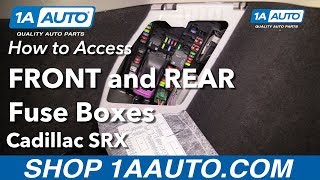
- Replacing the ignition switch when the actual problem is a poor connection at the relay socket within the underhood fuse box. 🎬 Watch: How to access the fuse boxes on your SRX
- Replacing the ECM when the fault lies in the fuse box or a simple relay.
- Replacing the Mass Airflow (MAF) sensor. Some GM TSBs note that a wiring fault in the fuse box can cause a P0101 MAF code to appear alongside P1682, but the MAF sensor is not the root cause.
Most Likely Causes
- Faulty Underhood Fuse Box (UBEC) 🔴 High Probability → Shop Fuse Box These fuse boxes are known to develop poor internal connections and loose relay sockets over time due to vibration, heat, and thermal cycling. This is a well-documented issue on this GM platform.
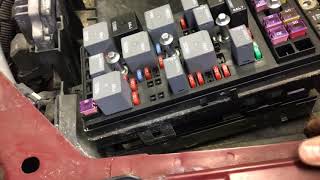
How to confirm: With the key on, wiggle the powertrain and run/crank relays in the fuse box. If wiggling causes the vehicle to start or symptoms to appear/disappear, the fuse box is faulty. A more thorough diagnosis involves checking for corrosion or loose pins on the large connectors on the underside of the fuse box.
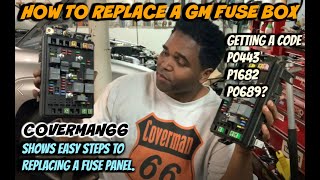
Typical fix: Replacement of the entire underhood fuse box assembly. 🎬 See this walkthrough on replacing a GM fuse box This is a plug-and-play part that does not require programming.
Est. part cost: $250-$400 - Faulty Powertrain or Run/Crank Relay 🟡 Medium Probability → Shop Wiring Relay Relays are electromechanical switches that wear out over time. This is a common failure point in any vehicle and is the first, most inexpensive part to check for this code.
How to confirm: Swap the suspect relay with an identical one from a non-critical circuit in the same fuse box (e.g., the horn relay). If the problem moves or is resolved, the relay is bad.
Typical fix: Replace the faulty relay.
Est. part cost: $10-$30 - Poorly Seated or Blown Fuse 🟡 Medium Probability Vibrations can cause fuses to become loose in their sockets, creating a poor connection that mimics a blown fuse. In some cases, a fuse can have an internal fracture that isn't visible.
How to confirm: Visually inspect and physically reseat all fuses related to the ECM, ignition (IGN), and powertrain (PWR/TRN). Check for a loose fit. Test the fuse with a multimeter, even if it looks good.
Typical fix: Reseat or replace the fuse.
Est. part cost: $1-$5 - Faulty Ignition Switch ⚪ Low Probability → Shop Ignition Switch While less common than fuse box issues for this specific code on the SRX, the ignition switch contains mechanical contacts that can wear out. This was a more common cause on older GM models.
How to confirm: This requires more advanced diagnostics, testing for proper voltage output on specific wires at the back of the switch during key cycles. This is typically done after ruling out the easier causes.
Typical fix: Replace the ignition switch.
Est. part cost: $50-$150
Rare But Worth Checking
- Wiring Harness Damage: An open or short in the wiring between the fuse box and the ECM can cause this code. This is rare but can happen due to physical damage, corrosion, or chafing. A break in the wire can be difficult to locate.
- Faulty Engine Control Module (ECM): → Shop Engine Control Module (ECM) This is the least likely cause. The ECM should only be suspected after every other possibility, including all wiring, has been meticulously checked and confirmed to be good.
Diagnosis Steps
- Check for other diagnostic trouble codes. If P0685, P0689, P0690, or P0101 are present, diagnose them first as they are more specific and often point to the same root cause.
- Open the underhood fuse box. Locate the Powertrain (PWR/TRN) or Engine Controls (ECM) relay and the Run/Crank relay.
- Swap the Powertrain relay with an identical relay from a non-essential system (like the horn or fog lamps). Attempt to start the vehicle. If it starts and runs, the original relay was faulty.
- If swapping the relay does not work, inspect the fuses labeled ECM, IGN, and PWR/TRN. Remove them, check for a tight fit in their sockets, and test them for continuity with a multimeter.
- With the key in the 'ON' position, carefully wiggle the powertrain relay. If you hear clicks or the dashboard lights flicker, or if the vehicle now starts, it is a strong indication of a bad connection inside the fuse box.
- If the above steps fail, inspect the large electrical connectors on the underside of the fuse box for any signs of corrosion, backed-out pins, or damage. This is a common failure point.
- If all power and ground circuits to and from the fuse box test good, you may then proceed to test the ignition switch circuit following the service manual procedure.
- As a final step, if all wiring, relays, and the fuse box are confirmed to be in good working order, the ECM may be the issue, though this is rare.
Parts You'll Likely Need
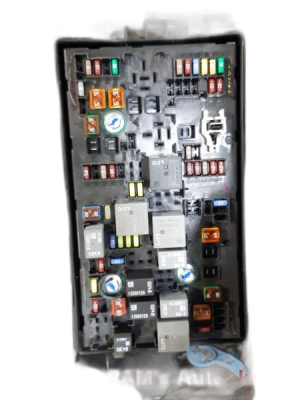
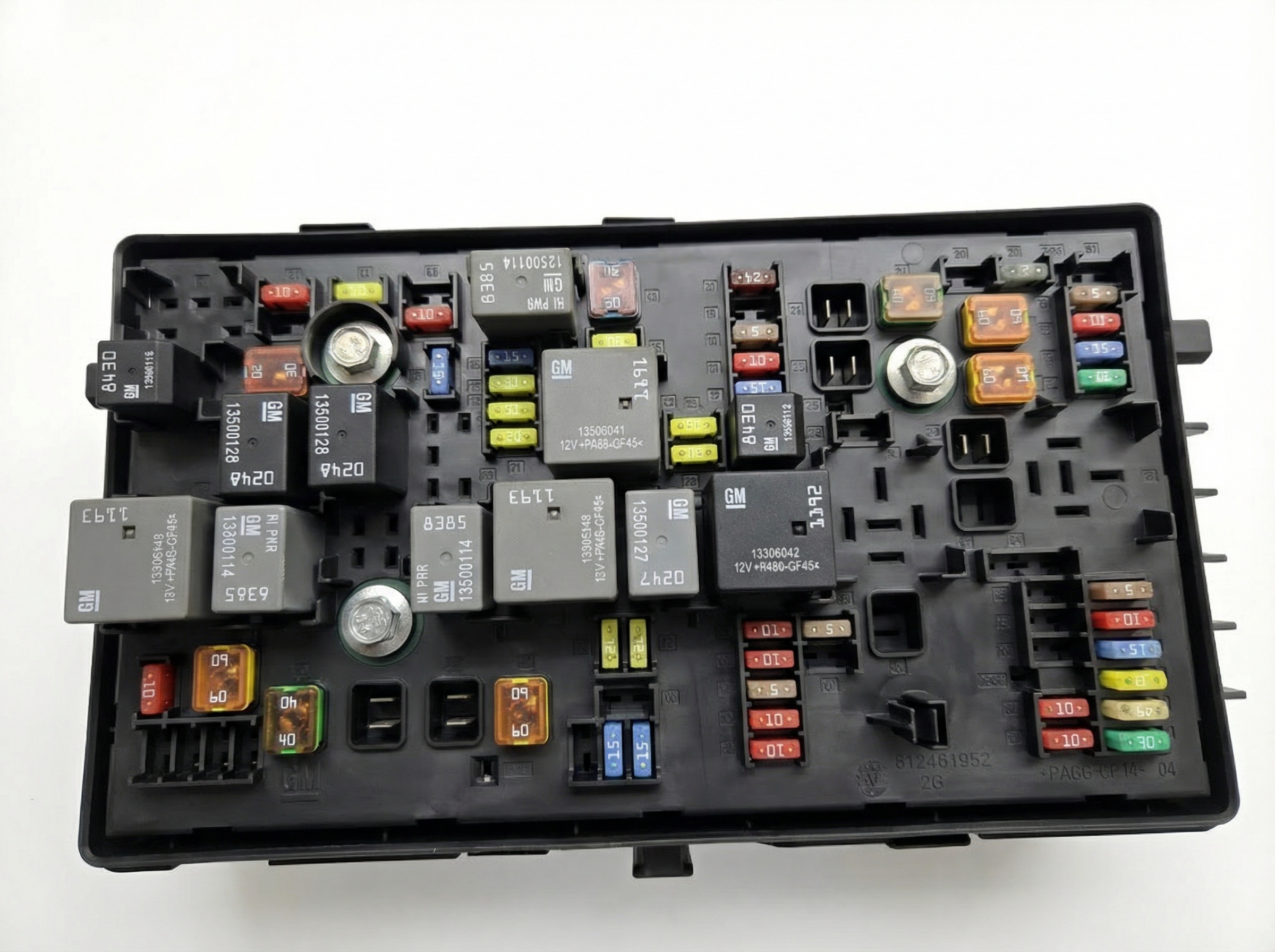
- Underhood Fuse Box / UBEC
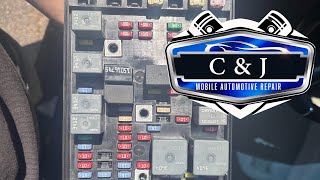
(OEM #20934802 (example for 2012 SRX, verify by VIN))— This is the most common root cause due to known issues with internal connections and loose relay sockets on this GM platform. 🎬 Watch a mobile mechanic repair a faulty GM fuse box
Trusted brands: ACDelco GM Original Equipment
OEM price range: $300-$450
Aftermarket price range: $250-$400 - Powertrain Relay / Run-Crank Relay
(OEM #13500114 (common GM multi-use relay))— This is the first part to check and replace, as it's inexpensive and a common failure point that directly causes the P1682 code.
Trusted brands: ACDelco, Bosch, Standard Motor Products
OEM price range: $20-$40
Aftermarket price range: $10-$25
Related Codes That Often Appear With This One
- P0689 — This code ('ECM/PCM Power Relay Sense Circuit Low') is directly related to the powertrain relay circuit and often appears with P1682, pointing strongly to a relay or fuse box issue.
- P0690 — This code ('ECM/PCM Power Relay Sense Circuit High') is the counterpart to P0689 and also points directly to the powertrain relay circuit, strengthening the diagnosis of a fuse box or relay fault.
- P0685 — This code ('ECM/PCM Power Relay Control Circuit/Open') indicates a problem with the control side of the powertrain relay, which is monitored by the ECM and directly related to P1682.
- P0101 — This code ('Mass Air Flow (MAF) Sensor Performance') can appear with P1682 due to a compromised wire or terminal in the underhood fuse box that affects both circuits. GM TSB 21-NA-032 specifically warns against replacing the MAF sensor when these codes appear together.
Technical Service Bulletins (TSBs) & Recalls
- TSB 21-NA-032: While for newer trucks, this TSB is highly relevant as it describes the same failure pattern. It addresses P1682 setting with P0101 due to a compromised connection within the Underhood Bussed Electrical Center (UBEC), specifically at connector X3, pin H6. It explicitly warns technicians NOT to replace the MAF sensor.
- TSB PI0745B: A GM bulletin regarding intermittent electrical issues for components routed through the instrument panel fuse block, which can present similar symptoms, though not directly citing P1682.
- TSB Bulletin #PIP5729: A manufacturer service bulletin notes that customers may comment on an SES lamp being illuminated or having turned off, with DTC P1682 (Ignition 1 Switch Circuit 2) active or stored in history, potentially alongside codes P0101, P0689, P16A7, or P16BC.
Platform-Specific Known Issues
- Intermittent Stalling and No-Start Due to Fuse Box Failure: Owners on forums frequently report that a P1682 code is accompanied by intermittent stalling, often when the vehicle is warm. The root cause is almost always traced back to the underhood fuse box developing an internal open circuit or a poor connection at the relay terminals. A YouTube video by 'Money Saving DIY' on a similar GM platform (Chevy Traverse) details this exact failure mode and the fuse box replacement that fixed it. Another video by 'Coverman66' on a Trailblazer also identifies the fuse box as the culprit for stalling when hot.
- Reddit User Experience with P1682 on a 2014 SRX: A user on Reddit's r/Cadillac forum posted about a 2014 SRX they were purchasing that threw a P1682 code right at the dealership. Commenters correctly pointed towards a failing ignition switch or a related electrical issue as the likely cause, highlighting that this is a known problem area that can lead to a 'rabbit hole' of diagnostics if not addressed correctly.
Mechanic-Grade Diagnostic Values
- Voltage difference between 'Ignition 1 Voltage' and 'Engine Controls Ignition Relay Feedback' scan tool parameters. — expected: Less than 3.0 Volts. Failure: A difference greater than 3.0 Volts for more than 1 second will set the DTC.
- Resistance in the ignition voltage circuit or underhood fuse block. — expected: Less than 6 ohms. Failure: A resistance of 6 ohms or greater in the circuit can cause the DTC to set.
- System Voltage (required for DTC to run) — expected: Greater than 6.0 Volts. Failure: Below this voltage, the test may not run, potentially masking the problem.
Scan Tool Commands That Help
- GDS2 / Tech2: Observing 'Ignition 1 Voltage' and 'Engine Controls Ignition Relay Feedback' parameters. — This is the primary diagnostic step to confirm which of the two ignition circuits is dropping voltage. The 'Ignition 1 Voltage' corresponds to the Run/Crank relay circuit, while the 'Engine Controls Ignition Relay Feedback' corresponds to the Powertrain relay circuit.
Wiring & Ground Locations
- Underhood Fuse Block (UBEC) — In the engine compartment, typically on the driver's side near the firewall.. This is the central hub for the powertrain and run/crank relays. Internal corrosion, cracked solder joints, or loose terminal sockets within this block are the most common cause of P1682 on this platform.
- G103 / G101 — G103 is often located on the cowl in the left rear of the engine compartment. G101 is often at the left front of the engine on the lower block. Locations vary slightly by year and engine.. These are primary ground points for the Engine Control Module (ECM) and Body Control Module (BCM). A poor ground connection at these locations can cause erratic voltage readings and trigger various electrical fault codes, including P1682.
- UBEC Connectors (e.g., X3) — Large multi-pin connectors on the underside of the Underhood Fuse Block.. As identified in TSB 21-NA-032 for similar platforms, a compromised terminal or poor wire crimp (specifically pin H6 in connector X3) can cause P1682. The entire connector should be inspected for corrosion or backed-out pins.
Real Owner Repair Stories
- YouTube channel 'Car Faults' (GM Vehicle (Chevrolet Malibu), applicable to SRX due to shared system design.) — Check engine light on, intermittent stalling. When the specific fuse was wiggled, the engine would stall and the code would reappear.
❌ Tried (didn't work) Searching for a fuse specifically named 'Ignition 1 Switch Circuit 2' (it does not exist).
✅ What actually fixed it The problem was a loose connection for the 15A fuse labeled 'ECM Throttle Cont' in the underhood fuse box. Wiggling the fuse caused the symptoms and the code to appear and disappear. The ultimate fix is to repair the loose terminal in the fuse box or replace the fuse box itself. - YouTube channel 'The Lo-fi Mofo' (2008 Pontiac G6 (similar GM electrical architecture)) — Intermittent no-start that became a permanent no-start, P1682 code stored.
❌ Tried (didn't work) Initial visual inspection of fuses and relays.
✅ What actually fixed it The female terminal socket for the powertrain relay inside the underhood fuse box had spread apart, causing a poor connection. The technician was able to see the spread terminals after disassembling the fuse box. Squeezing the terminal back together provided a temporary fix, confirming the fuse box was the root cause.
OEM Part Supersession History
Varies by year and options→Varies, for example, part number 84509531 was replaced by 84237808, which was then replaced by 84084525, and finally by the current part 85134219 for some GM applications.— Revisions are common to address internal connection issues, improve durability, or consolidate parts.
Heads up: It is critical to match the fuse box part number exactly or use a VIN-verified supersession. A fuse box from a vehicle with different options (e.g., with/without HID headlights) may physically fit but will cause other systems to malfunction.
Diagnostic Flowchart
Used vs. New Parts: Buying Guide for This Vehicle
When a used part is the smart pick: A used Underhood Fuse Box (UBEC) is a very smart and cost-effective choice for this repair, as long as the part number is an exact match. Unlike many other modules, a used fuse box from a vehicle with identical options is typically plug-and-play and does not require programming.
Donor-vehicle mileage cap: roughly under 80000 miles for the part to have meaningful remaining life.
What to inspect on the donor part:
- Verify the part number on the used fuse box is identical to the original.
- Inspect the underside connectors for any signs of corrosion, water damage (white or green powder), or bent pins.
- Check the relay and fuse sockets on top for any signs of melting, discoloration, or widened terminals.
- If possible, source the part from a vehicle in a dry climate to reduce the risk of internal corrosion.
- Ensure the donor vehicle was not involved in a front-end collision that could have cracked the fuse box housing.
OEM-only on this vehicle (don't cheap out):
- Underhood Fuse Box (UBEC) - While used OEM is good, avoid no-name aftermarket fuse boxes. Stick with a used OEM part or a new ACDelco GM Original Equipment part.
Aftermarket brands forum-validated for this vehicle:
- ACDelco (for new parts)
- Bosch (for relays)
- Standard Motor Products (for relays)
Brands owners have reported issues with on this vehicle:
- Unbranded, no-name fuse box assemblies from online marketplaces are risky due to questionable internal build quality and potential for immediate or premature failure.
Real Owner Stories
Aggregated from forums and TSBs cited above. Mileages and costs reflect what owners reported in those sources.
2014 Cadillac SRX
Symptoms: A P1682 code appeared right at the dealership during purchase.
What fixed it: Commenters on the forum pointed towards a failing ignition switch or a related electrical issue as the likely cause, highlighting it as a known problem area.
Source hint: Reddit r/Cadillac forum
Chevy Traverse (platform-mate)
Symptoms: Intermittent stalling, often when the vehicle is warm, accompanied by a P1682 code and other warning lights like traction control and ABS.
What fixed it: Replacement of the entire underhood fuse box resolved the issue.
Source hint: YouTube - 'Fixing P1682, traction control and ABS going off, 2013- 2014 Chevy Traverse, fuse box replace'
GM Truck (similar platform issue)
Symptoms: Vehicle set a P1682 code.
What fixed it: The owner initially replaced the ignition switch, but a follow-up comment noted the problem returned, suggesting the root cause was actually the more common failure: the fuse box.
Source hint: GM-Trucks.com - 'How-To: Ignition Switch Replacement/P1682 Repair.'
2016 Chevrolet Equinox LT 2.4L (platform-mate)
Symptoms: A classic crank-no-start condition with a P1682 code stored.
What fixed it: The symptoms point directly to the common relay or fuse box issue shared with the Cadillac SRX.
Source hint: Reddit r/MechanicAdvice - 'P1682 code Chevy 2016 Equinox LT 2.4'
Related OBD-II Codes
Frequently Asked Questions
My 2012 SRX won't start and just clicks once. Is the P1682 code pointing to the starter?
I have a P1682 and a P0101 code at the same time. Should I replace my MAF sensor?
Is the underhood fuse box really the most common cause for P1682 on the SRX?
If I replace the underhood fuse box myself, does it need to be programmed by the dealer?
What is the easiest and cheapest thing to check first for a P1682 code?
My SRX stalls intermittently when it gets hot. Could this be related to the P1682 code?
I was told the ignition switch is the problem. Is this likely?
Helpful Videos

We Have This Part in Stock

The information in this article is provided for general reference and educational purposes only. Vehicle specifications, procedures, and part compatibility can vary by production date, trim level, and region. Always consult your vehicle's factory service manual and verify part numbers before purchasing or performing repairs. Safety-critical components such as airbags, seat belts, and braking systems should be installed by a qualified professional.
- Cadillac SRX:
- 🧭 Diagnostic Flowchart
- 🎬 Helpful Videos
- 🛍️ Shop This Part
- What's Unique About the 2010-2016 Cadillac SRX
- Symptoms You May Notice
- Most Likely Causes
- Rare But Worth Checking
- Diagnosis Steps
- Parts You'll Likely Need
- Related Codes That Often Appear With This One
- Technical Service Bulletins (TSBs) & Recalls
- Platform-Specific Known Issues
- Mechanic-Grade Diagnostic Values
- Scan Tool Commands That Help
- Wiring & Ground Locations
- Real Owner Repair Stories
- OEM Part Supersession History
- Used vs. New Parts: Buying Guide for This Vehicle
- Real Owner Stories
- 2014 Cadillac SRX
- Chevy Traverse (platform-mate)
- GM Truck (similar platform issue)
- 2016 Chevrolet Equinox LT 2.4L (platform-mate)
- Related OBD-II Codes
- Frequently Asked Questions
- 🎟️ Get 5% Off