

P1682 on 2004-2012 GMC Canyon: Ignition Circuit Fault Causes and Fixes
On a 2004-2012 GMC Canyon, code P1682 is most often caused by a failing ignition switch or a corroded ground wire connection (splice pack) near the battery. A faulty ignition switch is a common wear item, while bad grounds are a well-known issue on this platform causing various electrical problems. Expect to pay $40-$100 for a new switch.
- P1682 is a critical code that can cause your truck to stall or not start; do not drive until it is fixed.
- The most likely causes on a 2004-2012 Canyon are a bad ignition switch or a corroded ground splice pack near the battery.
- Before replacing any parts, inspect the ground splice pack (SP-105) on the driver's side fender for corrosion; this is a well-known, inexpensive fix.
- Also, try wiggling the key in the ignition to see if you can replicate the fault, which would point to a bad ignition switch.
- Check that all fuses and relays in the underhood fuse box are pressed in securely.
What's Unique About the 2004-2012 GMC Canyon
The first-generation GMC Canyon and its sibling, the Chevy Colorado, are known for specific electrical weak points that directly relate to the P1682 code. While a failing ignition switch is a common cause on many GM vehicles, these trucks are particularly susceptible to poor ground connections at factory splice packs located in the engine bay. Corrosion in these ground points, especially the one near the battery (SP-105) which serves the run/crank relay circuit, can create the exact voltage discrepancy that triggers this code. This makes checking the grounds a critical, platform-specific diagnostic step that often gets overlooked. Furthermore, internal failures of the underhood fuse block due to cracked copper traces or corroded terminals are a well-documented, though more complex, cause on this platform and similar GM trucks.
Symptoms You May Notice
- Check Engine Light is on
- Engine cranks but will not start
- Engine stalls intermittently, sometimes when hitting a bump or when the engine gets hot
- Reduced engine power message may appear
- Other warning lights (ABS, Traction Control) may illuminate randomly
- Difficulty turning the key in the ignition
- No crank, no start condition in some cases
- A single click from the engine bay when trying to start
- Replacing the battery without proper diagnosis. While a weak battery can cause many electrical issues, P1682 specifically points to a voltage *discrepancy* between two powered circuits, not necessarily low overall voltage.
- Replacing the starter motor. A 'crank, no start' symptom might lead one to suspect the starter, but if the engine is turning over, the starter is likely working. The P1682 code indicates the ECM is not allowing the engine to run due to an ignition circuit plausibility check.
Most Likely Causes
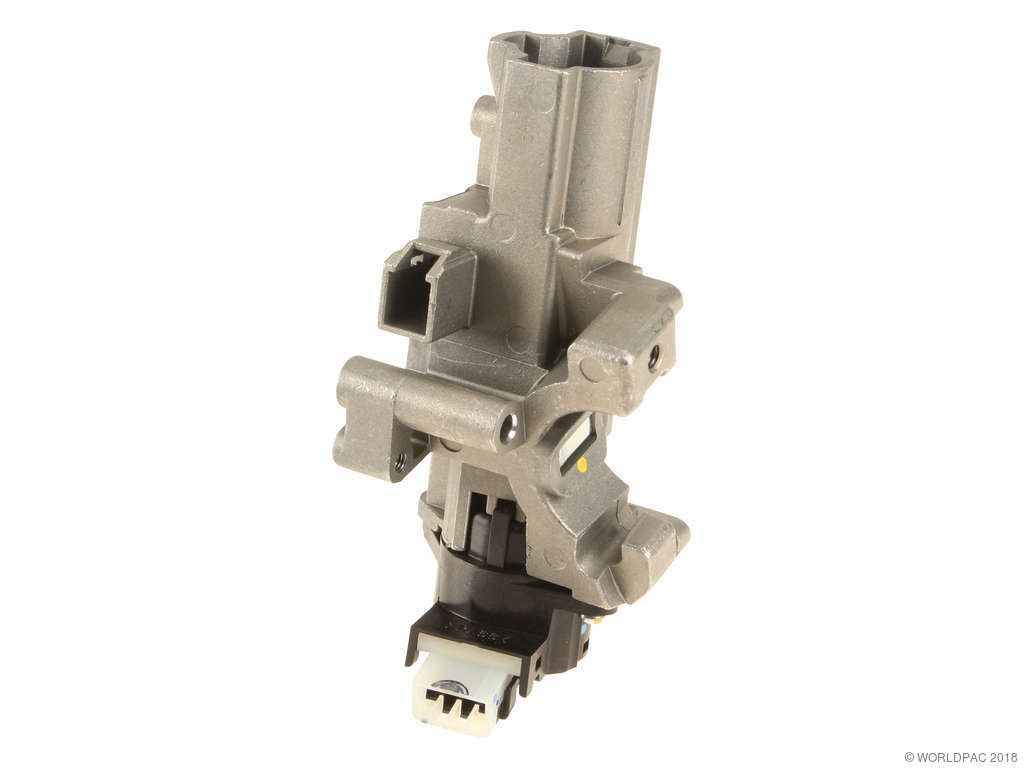
- Faulty Ignition Switch 🔴 High Probability → Shop Ignition Switch The ignition switch is a mechanical part with electrical contacts that wear out over time from repeated use. It's a very common failure point on many GM vehicles of this era, including the Canyon/Colorado platform.
How to confirm: With the key in the 'ON' position, try wiggling the key in the ignition. If this causes the engine to stall, the dash lights to flicker, or reproduces other electrical symptoms, the switch is almost certainly faulty. A more definitive test involves using a multimeter to check for consistent voltage on the output circuits of the switch as the key is turned.
Typical fix: Replace the ignition switch assembly. This part is located in the steering column and requires removing the column shrouds for access.
Est. part cost: $40-$100 - Corroded or Loose Ground Splice Pack (SP-105) 🔴 High Probability This platform uses ground splice packs that are not well-sealed from the elements and are a notorious failure point. SP-105, located on the driver's side inner fender near the battery and ABS module, grounds the run/crank relay, which is directly related to the P1682 code. Heat and moisture cause corrosion inside the unsealed connector.
How to confirm: Locate the ground splice pack (a black plastic box with multiple black wires going into it, bolted to the fender). Unbolt it, open the comb-like connector, and inspect for green or white corrosion, or burnt-looking terminals. These bad grounds can cause a host of seemingly unrelated electrical issues.
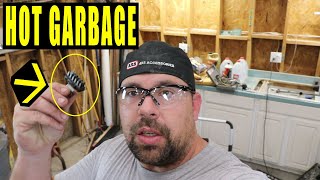
Typical fix: The best permanent fix is to cut off the problematic splice pack entirely. Strip the wires, solder them all together along with a new pigtail wire, and secure them to the chassis with a new, clean ring terminal. Applying dielectric grease to the new connection will help prevent future corrosion. 🎬 Watch this guide to fixing common Chevy Colorado ground issues.
Est. part cost: $0-$15 - Poor Connection at Underhood Fuse Block 🟡 Medium Probability → Shop Fuse Box The underhood fuse block on many GM trucks of this era can develop internal connection issues due to heat cycles and vibration. The internal metal traces or the pins connecting the multi-layered board can crack or corrode, causing intermittent open circuits, especially when hot.
How to confirm: With the engine off, open the underhood fuse block and press down firmly on all fuses and relays to ensure they are fully seated. Inspect the terminals for the 'ECM', 'IGN', and 'RUN/CRANK' relays and fuses for any signs of corrosion or heat damage. If the problem happens when the engine is hot, it points more strongly to an internal fuse block issue. In some cases, the entire fuse block must be disassembled to find a cracked internal trace.
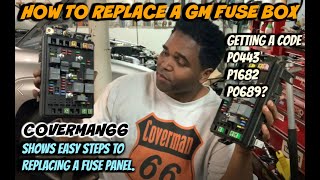
Typical fix: Reseat loose fuses/relays. If a specific terminal is loose or corroded, it may require cleaning or twisting the pins slightly for a tighter fit. In many documented cases, the entire fuse block needs to be replaced with a new or salvaged unit to resolve internal breaks. 🎬 See how to replace a GM fuse box to fix P1682.
Est. part cost: $0-$250 - Failing Powertrain or Run/Crank Relay ⚪ Low Probability → Shop Wiring Relay Relays are electromechanical switches that can fail after many cycles. While less common than the switch or grounds, a failing relay is a simple and inexpensive part to rule out.
How to confirm: The simplest test is to swap the suspect relay (e.g., the Run/Crank relay, #61) with an identical relay from a non-critical circuit (like the horn or fog lamps) in the fuse box. If the problem goes away, the relay is bad.
Typical fix: Replace the faulty relay.
Est. part cost: $10-$30
Rare But Worth Checking
- Wiring Harness Damage: An open or short in the wiring between the ignition switch, fuse block, and ECM can cause this code. This is less common than component failure but should be considered if the above steps don't resolve the issue. A user on Hummer4x4Offroad.com found a similar issue was caused by the harness rubbing against a bolt.
- Faulty Engine Control Module (ECM): → Shop Engine Control Module (ECM) This is the least likely cause. The ECM should only be considered after all other possibilities, including wiring and especially the fuse block itself, have been thoroughly ruled out.
Diagnosis Steps
- Read the freeze frame data to see the conditions under which the code was set. Note the engine temperature, as failures when hot can point to the fuse block.
- Check for other stored codes. If codes like P0689 are present, it points more strongly to a relay or fuse block issue.
- Perform a visual inspection of the battery terminals and main ground connections. Ensure they are clean and tight.
- Locate and inspect the ground splice pack SP-105 on the driver's side inner fender. Unbolt it and check for corrosion. This is a very common failure point.
- Open the underhood fuse block. Firmly press on all fuses and relays to ensure they are seated.
- Swap the Run/Crank relay (Relay #61) with an identical relay (e.g., Horn) to test for a faulty relay.
- With the key in the 'ON' position, gently wiggle the key in the ignition cylinder. If this action can reproduce the stall or no-start condition, the ignition switch is the likely culprit.
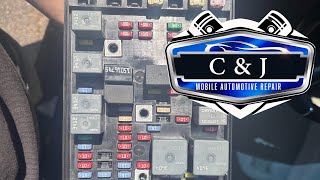
- If the above steps do not identify the issue, inspect the connections at the bottom of the underhood fuse block for corrosion or damage. If the issue is heat-related, the fuse block itself may have an internal fault. 🎬 Watch a mobile mechanic perform a professional fuse box repair.
- As a final step, use a multimeter or scan tool to test the two ignition voltage circuits at the ECM connector to confirm the voltage discrepancy, as detailed in the service manual.
Parts You'll Likely Need
- Ignition Switch
(OEM #15795321)— This is a high-wear mechanical component and a very common cause of P1682 across many GM vehicles.
Trusted brands: ACDelco (D1462G), Standard Motor Products (US971)
OEM price range: $70-$120
Aftermarket price range: $40-$80 - Ground Splice Repair Components (Ring Terminal, Solder) — The factory ground splice packs are a known weak point on this platform, and repairing them is a common fix for various electrical issues, including P1682.
OEM price range: $N/A
Aftermarket price range: $5-$15 - Run/Crank Relay
(OEM #19116057 (ACDelco 15-8411))— A failing relay can directly cause the voltage discrepancy seen by the ECM. It's an inexpensive part to replace as a diagnostic step.
Trusted brands: ACDelco, Bosch
OEM price range: $20-$40
Aftermarket price range: $10-$25
Related Codes That Often Appear With This One
- P0689 — This code means 'ECM/PCM Power Relay Control Circuit Low'. It often appears with P1682 because both codes can be triggered by the same root cause, such as a bad powertrain relay, a poor connection at the underhood fuse block, or an internal fuse block fault.
Technical Service Bulletins (TSBs) & Recalls
- Bulletin #PIT5546G: This manufacturer bulletin notes that a P1682 code may be set alongside a no crank condition, a crank no start, or an inability to program the engine control module. In some cases, the engine may continue to run even with the ignition off.
- Bulletin #PIP5729: A manufacturer service bulletin states that technicians may find DTC P1682 (Ignition 1 Switch Circuit 2) active or stored in history, potentially accompanied by codes P0101, P0689, P16A7, or P16BC.
- Bulletin #19NA276: This bulletin provides repair information for a potential "reduced engine power" message or engine stall when DTCs P1682 and/or P0689 are set.
- Bulletin #21NA032: This record provides repair information to correct a customer concern where P1682 is set specifically after a Mass Air Flow (MAF) sensor replacement.
Platform-Specific Known Issues
- The ground splice packs (SP-105 and SP-106) in the engine bay are prone to corrosion and causing a multitude of electrical problems. SP-105, near the battery, is directly tied to the Run/Crank relay and is a primary suspect for P1682. Many owners on forums like 355nation.net and coloradofans.com document this as the fix for their P1682 and other electrical gremlins.
- While less common on the Canyon than on other GM trucks like the Trailblazer or Traverse, internal failure of the underhood fuse block due to cracked circuit board traces is a known cause of this code, especially with heat-related symptoms.
Mechanic-Grade Diagnostic Values
- Voltage difference between 'Ignition 1 Voltage' and 'EC Ignition Relay Feedback' on a scan tool — expected: Less than 3.0 Volts. Failure: A difference greater than 3.0 Volts for more than one second. A real-world failure on a 2009 Colorado showed the failing circuit at 4.2V.
- Resistance of the Ignition 1 voltage circuit — expected: Less than 5.0 Ohms. Failure: A resistance of 5.0 Ohms or greater in the circuit can cause the DTC to set.
- Voltage at the PCM1 fuse in the underhood fuse block (fed by Run/Crank relay) — expected: Battery Positive Voltage (B+) with key ON. Failure: No voltage or significantly low voltage (e.g., 4.2V) indicates a problem with the relay's connection inside the fuse block.
Scan Tool Commands That Help
- Tech2 / GDS2 or equivalent professional scan tool: Live Data Monitoring: 'Ignition 1 Voltage' and 'EC Ignition Relay Feedback' (or similar name) — This is the primary diagnostic method to confirm the voltage discrepancy reported by the ECM. Observing these two parameters live while wiggling the key or tapping on relays can pinpoint an intermittent fault.
- Tech2 / GDS2 or equivalent professional scan tool: Output Controls: Fuel Pump Command — If the fuel pump cannot be commanded ON via the scan tool, it can indicate that the ECM itself is not properly powered, which is a symptom related to the P1682 fault condition.
Wiring & Ground Locations
- G105 / SP-105 — On the driver's side inner fender, near the battery and ABS module. It is a black plastic box with multiple black wires entering it, bolted to the chassis.. This ground splice pack provides the ground path for the Run/Crank relay (#61). Corrosion inside this unsealed pack creates high resistance, causing a voltage drop on one of the two circuits the ECM monitors, directly triggering P1682.
- Underhood Fuse Block (UBEC) Connectors — Underneath the main fuse block in the engine bay. The block is held in by tabs and bolts, and large connectors plug into its underside.. The female terminals for the Run/Crank relay and ECM fuses are located within the fuse block. Corrosion or loss of tension in these terminals can cause high resistance and intermittent power loss, leading to P1682. The issue is often heat-sensitive.
- Underhood Fuse Block Internal Traces — Inside the multi-layered circuit board of the fuse block itself.. A thin, solid copper wire trace connecting the relay terminal to the fuse terminal can crack from vibration and heat cycles. This creates an open circuit that is often invisible without disassembling and inspecting the fuse block's internal layers.
Real Owner Repair Stories
- YouTube channel 'Phillip Bailey' (2009 Chevrolet Colorado) — No crank, no start. P1682 code was current. Scan tool showed ignition voltage at only 4.2V.
❌ Tried (didn't work) Initial check showed no power to the PCM1 fuse.
✅ What actually fixed it The terminals for the run/crank relay inside the underhood fuse block were compromised and oxidized, causing high resistance. Twisting the relay pins provided a temporary fix, but the final recommendation was to replace the entire underhood fuse block. - YouTube channel 'C&J's Mobile Automotive LLC' (2007 GMC Envoy (similar GM platform)) — Stalling and shutting off when warm, then no start. Codes P1682 and P0689.
❌ Tried (didn't work) Relay swap did not fix the issue, confirming the relay itself was good.
✅ What actually fixed it The underhood fuse box was disassembled by drilling out the plastic rivets. A cracked copper trace on the internal circuit board was discovered. The trace was repaired with solder, which resolved the issue. - YouTube channel 'Coverman66' (Chevrolet Trailblazer SS (similar GM platform)) — Crank but no start, engine would shut down when hot. Codes P1682, P0689.
❌ Tried (didn't work) Considered ECM or relay issues.
✅ What actually fixed it Replaced the entire underhood fuse box. This is a known issue on the platform where heat causes internal connection problems in the fuse box. - NHTSA ODI #11699625: An owner reported that their vehicle began showing "Engine Power Reduced" randomly without warning, causing the vehicle to jerk and lose acceleration suddenly. The P1682 code (Ignition 1 Circuit/Relay failure) appeared every time this occurred.
When the Usual Fixes Don't Work
- While replacing the ignition switch is a very common fix, some owners have reported the P1682 code returning months later. In one case, a user replaced the switch twice before realizing the problem was likely intermittent and further down the line, possibly in the fuse block or wiring, as clearing the code would temporarily allow the truck to start. This highlights that the ignition switch is not always the final root cause, even if its replacement seems to work at first.
OEM Part Supersession History
15216929, 19149940, 88964357→15795321— Part consolidation and potential design updates by the manufacturer.
Heads up: The replacement part 15795321 is the current housing which includes the ignition switch and Pass Lock sensor.N/A→25933296— This is the listed part number for a 2008 model year.
Heads up: Fuse block part numbers can be specific to year and trim level. Always verify with VIN before ordering. For example, a BCM (sometimes integrated or confused with the fuse box) part number 15926781 is listed for 2007-2011 models.
Model Year Variations Within This Range
- 2007-2011: The Body Control Module (BCM) part number is listed as 15926781 for these years, suggesting potential electronic differences from the earliest 2004-2006 models. While the root cause of P1682 is often in the underhood electrical center, BCM changes can affect diagnostics.
Diagnostic Flowchart
Used vs. New Parts: Buying Guide for This Vehicle
When a used part is the smart pick: A used underhood fuse block (UBEC) from a salvage yard is a reasonable choice, as a new OEM unit can be expensive (over $250). Since the failure mode is often internal corrosion or cracked traces, a used part from a dry climate or low-mileage donor is a cost-effective solution.
Donor-vehicle mileage cap: roughly under 120000 miles for the part to have meaningful remaining life.
What to inspect on the donor part:
- Inspect the underside connectors for any signs of green or white corrosion or melted/burnt plastic.
- Choose a donor vehicle that does not show signs of being in a flood or having other major electrical problems.
- If possible, open the cover and check for obvious corrosion on the tops of the relays and fuses.
- Avoid fuse blocks from vehicles with significant front-end damage near the battery or fuse block area.
OEM-only on this vehicle (don't cheap out):
- While not strictly 'OEM-only', using a genuine GM or ACDelco replacement for the Underhood Fuse Block is highly recommended for reliability if buying new.
Aftermarket brands forum-validated for this vehicle:
- ACDelco (for ignition switch and relays)
- Standard Motor Products (for ignition switch)
Brands owners have reported issues with on this vehicle:
- Unbranded, generic electrical components (relays, switches) from online marketplaces are generally not recommended due to inconsistent quality control.
Real Owner Stories
Aggregated from forums and TSBs cited above. Mileages and costs reflect what owners reported in those sources.
Chevy Colorado
Symptoms: P1682 code and a multitude of other electrical problems and gremlins.
What fixed it: The corroded ground splice pack (SP-105) was repaired by cutting off the problematic connector, soldering the ground wires together, and securing them to the chassis with a new ring terminal.
Source hint: YouTube video titled 'Chevy Colorado ground issues and how to fix them.'
GM Trailblazer
Symptoms: Vehicle would crank but not start, and would stall when it got hot. Codes P1682 and P0689 were present.
What fixed it: The entire underhood fuse block was replaced to resolve the issue, which was caused by an internal fault in the block that manifested with heat.
Source hint: YouTube video titled 'Crank But Wont Start! Replacing A GM Fuse Box(code p1682, p0689, p0443)'
Related OBD-II Codes
Frequently Asked Questions
Where is the ground splice pack SP-105 that is known to cause P1682 on my GMC Canyon?
My Canyon stalls, but only when the engine gets hot. Could this be related to the P1682 code?
How can I test the ignition switch on my 2004-2012 Canyon without any special tools?
What is the best way to permanently fix the corroded SP-105 ground pack?
What's the easiest way to check if the Run/Crank relay is bad?
Besides the Check Engine Light, what other symptoms are common with a P1682 on a GMC Canyon?
Helpful Videos
We Have This Part in Stock


The information in this article is provided for general reference and educational purposes only. Vehicle specifications, procedures, and part compatibility can vary by production date, trim level, and region. Always consult your vehicle's factory service manual and verify part numbers before purchasing or performing repairs. Safety-critical components such as airbags, seat belts, and braking systems should be installed by a qualified professional.
- GMC Canyon:
- 🧭 Diagnostic Flowchart
- 🎬 Helpful Videos
- 🛍️ Shop This Part
- What's Unique About the 2004-2012 GMC Canyon
- Symptoms You May Notice
- Most Likely Causes
- Rare But Worth Checking
- Diagnosis Steps
- Parts You'll Likely Need
- Related Codes That Often Appear With This One
- Technical Service Bulletins (TSBs) & Recalls
- Platform-Specific Known Issues
- Mechanic-Grade Diagnostic Values
- Scan Tool Commands That Help
- Wiring & Ground Locations
- Real Owner Repair Stories
- When the Usual Fixes Don't Work
- OEM Part Supersession History
- Model Year Variations Within This Range
- Used vs. New Parts: Buying Guide for This Vehicle
- Real Owner Stories
- Chevy Colorado
- GM Trailblazer
- Related OBD-II Codes
- Frequently Asked Questions
- 🎟️ Get 5% Off