

P1682 on 2002-2009 GMC Envoy: Causes and Fixes for Stalling and No-Start
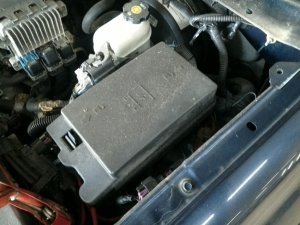
On a 2002-2009 GMC Envoy, code P1682 is almost always caused by a faulty Underhood Fuse Box (UBEC) with an internal broken trace. This leads to stalling or a crank-no-start condition. The fix is to replace or repair the fuse box, which is a plug-and-play part. This issue is endemic to the entire GM GMT360 platform.
- P1682 on a GMC Envoy almost always points to a problem with the Underhood Fuse Box or the ignition switch.
- If you also have code P0689, the fuse box is the primary suspect.
- The most common symptom is the engine stalling when hot and not restarting until it cools down.
- Do not replace the ECM unless all other possibilities have been professionally diagnosed and eliminated.
- Replacing the fuse box is a plug-and-play job, but you must match the part number exactly for your engine type (I6 or V8).
What's Unique About the 2002-2009 GMC Envoy
The GMC Envoy and its GM GMT360 platform-mates (like the Chevy Trailblazer, Buick Rainier, and Saab 9-7X) are well-known for a specific failure inside the Underhood Fuse Box that triggers this code. The fuse box is a multi-layered circuit board, and a thin, 20-gauge solid copper trace inside can develop a hairline crack over time due to heat cycles and vibration. This crack interrupts power to the powertrain relay's control circuit, causing the classic P1682 symptoms of stalling when hot and refusing to restart until the engine bay cools down.
Symptoms You May Notice
- Engine stalls while driving, often when hot.
- Engine cranks but will not start.
- Intermittent no-start condition.
- Vehicle may restart after cooling down for 30-60 minutes.
- Check Engine Light is on.
- "Reduced Power" message may appear on the dash.
- Instrument cluster may display multiple warnings simultaneously (e.g., traction control, ABS).
- Replacing the Engine Control Module (ECM). An ECM failure is very rare and should only be considered after all other possibilities have been exhausted. Owners often replace the ECM only to find the same issue persists because the root cause is the fuse box supplying it with power.
- Replacing the Mass Airflow (MAF) Sensor. Unstable voltage from the P1682 fault can sometimes cause other codes, like P0101 for the MAF sensor, to appear. The root cause is the electrical issue, not the MAF sensor itself.
- Replacing the Fuel Pump. Because the symptoms include a 'crank but no start' condition, owners may mistakenly suspect a bad fuel pump. However, the P1682 code points directly to an electrical power discrepancy, not a fuel delivery problem.
Most Likely Causes
- Faulty Underhood Fuse Box (UBEC) 🔴 High Probability → Shop Fuse Box These vehicles use a multi-layered fuse box where an internal 20-gauge copper trace is known to crack from heat cycles and vibration, interrupting power to the powertrain relay. This is a widely documented design flaw.
How to confirm: When the no-start condition is present, check for power at the powertrain relay socket (often #46) in the fuse box. If key-on power is missing on the control side of the relay circuit, the fuse box has an internal break. This is often confirmed when codes P1682 and P0689 are present together. The box can be disassembled for visual confirmation by drilling out the plastic/aluminum rivets holding the layers together.
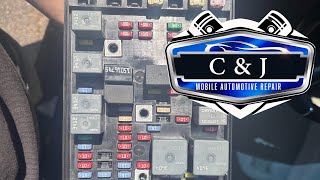
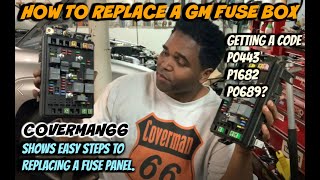
Typical fix: Replace the entire Underhood Fuse Box with a new or used unit that has an identical part number. This is a plug-and-play part and does not require programming. 🎬 Watch: A complete guide to replacing the underhood fuse box. Alternatively, the original box can be disassembled and the broken trace repaired by soldering a new piece of 20-gauge copper wire in its place, though this is an advanced DIY repair. 🎬 Watch: How to disassemble and repair the internal fuse box trace.
Est. part cost: $75-$250 for a used unit, $300+ for a new one. - Faulty Ignition Switch 🟡 Medium Probability → Shop Ignition Switch The ignition switch was a common failure point on many GM vehicles of this era due to wear on its internal contacts.
How to confirm: When the fault occurs, check for voltage on the 'ECM1' and 'IGN E' fuses in the underhood fuse box. If voltage is low or absent, trace back to the pink wire at the ignition switch connector. If voltage is low coming out of the switch, the switch is bad. A simple test is to gently wiggle the key in the ignition while the engine is running (in Park); if this causes stalling or flickering dash lights, the switch is likely worn.
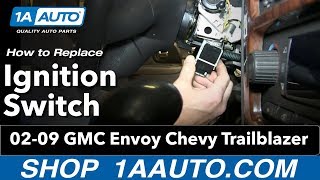
Typical fix: Replace the ignition switch. This part is located in the steering column and requires removing the column shrouds. 🎬 See this step-by-step walkthrough for replacing the ignition switch.
Est. part cost: $40-$150 - Bad Powertrain or Run/Crank Relay ⚪ Low Probability → Shop Wiring Relay
How to confirm: Swap the powertrain relay (often labeled 'PWR/TRN' or relay #46) with an identical relay from a non-essential circuit in the same fuse box (like the horn or rear defogger). If the vehicle starts and runs, the relay was the problem.
Typical fix: Replace the faulty relay.
Est. part cost: $15-$30
Rare But Worth Checking
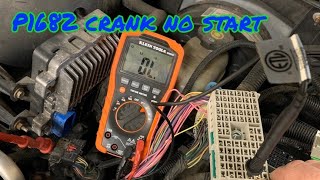
- Wiring Issue: A wire could be frayed or have a poor connection in the harness between the ignition switch, fuse box, and ECM. In one documented case, the yellow signal wire between the fuse box (connector D1) and the ECM had a break, causing a crank-no-start with P1682.
- Poor Ground Connection: A loose or corroded main engine or chassis ground can cause fluctuating voltages that may trigger this code. Check the main ground straps for tightness and corrosion, particularly G103 on the cowl and G105 at the front of the engine compartment.
Diagnosis Steps
- Scan for codes. Confirm if P1682 is present, and look specifically for P0689 appearing alongside it, as this pair strongly indicates the common fuse box failure.
- If the vehicle is in a no-start state, try swapping the powertrain relay (e.g., #46) with an identical relay from a non-critical circuit (e.g., horn). If the vehicle starts, the relay is bad.
- If the relay swap doesn't work, use a multimeter to check for 12V power at the designated power input pins of the powertrain relay socket with the key in the 'ON' position. Refer to a wiring diagram for your specific vehicle.
- If power is missing at the relay socket's control pin, the Underhood Fuse Box is almost certainly the cause due to the known internal break. A resistance of 6 Ω or more in this circuit is enough to set the code.
- If power IS present at the relay socket, the issue may be the ignition switch. Check for voltage at the 'ECM1' and 'IGN E' fuses. If voltage is low, test the output voltage from the pink wire at the ignition switch's electrical connector.
- As a final, advanced step, you can remove and disassemble the fuse box by drilling out the four corner rivets to visually inspect the internal copper traces for a hairline crack.
- If all power sources and the fuse box check out, inspect the wiring harness (specifically the yellow signal wire) for damage and check main engine/chassis ground connections for tightness and corrosion.
Parts You'll Likely Need
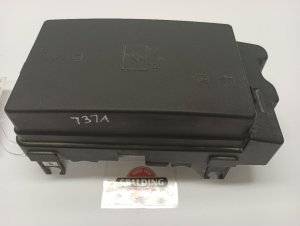
- Underhood Fuse Box (UBEC)
(OEM #Varies by year/engine. Must match original. Ex: 15141559, 15210962.)— This is the most common failure point for this code on the Envoy platform due to a known issue with internal broken traces.
Trusted brands: ACDelco (OEM), Dorman
OEM price range: $300-$500
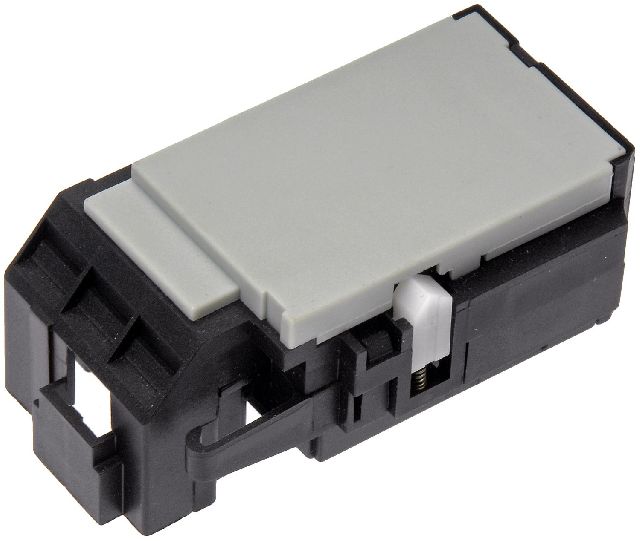
Aftermarket price range: $200-$400 - Ignition Switch
(OEM #e.g., ACDelco D1485F (GM 25733005), superseded by 22887691.)— This is the second most likely cause if the fuse box is confirmed to be good. Internal contacts wear out over time.
Trusted brands: ACDelco, Standard Motor Products
OEM price range: $80-$150
Aftermarket price range: $40-$90
Related Codes That Often Appear With This One
- P0689 — This code means 'Engine Controls Relay Feedback Circuit Low Voltage.' Since P1682 is often caused by a loss of power to this exact relay due to a broken trace in the fuse box, these two codes almost always appear together and strongly point to a faulty fuse box.
Technical Service Bulletins (TSBs) & Recalls
- While no TSB is specific to the Envoy's P1682 broken trace, GM has issued related bulletins for other SUVs with similar codes. For example, TSB #19-NA-276 for the GMC Acadia addresses P1682/P0689 caused by a corroded terminal (pin 51) in the underhood fuse block, showing a pattern of fuse box issues across GM platforms.
- Manufacturer TSB Bulletin #21NA032 notes that DTC P1682 can sometimes be set following a Mass Air Flow (MAF) sensor replacement, while Bulletin #PIP5729 indicates that P1682 (Ignition 1 Switch Circuit 2) may be stored in history alongside P0101, P0689, P16A7, or P16BC.
- Manufacturer TSB Bulletin #PIT5546G describes conditions where P1682 is set alongside a no-crank or crank-no-start condition, or even a situation where the engine continues to run with the ignition off.
Platform-Specific Known Issues
- The Underhood Fuse Box on the GMT360 platform (Envoy, Trailblazer, etc.) is known to fail internally, causing a hairline crack in a circuit trace that powers the powertrain relay. This is the number one cause of code P1682 on these trucks.
- The failure is often heat-sensitive, causing the engine to stall after it warms up and only allowing a restart after the fuse box cools down for 30-60 minutes.
Mechanic-Grade Diagnostic Values
- Voltage difference between Ignition 1 and EC Ignition Relay Feedback circuits — expected: Less than 3.0 Volts. Failure: A difference greater than 3.0 Volts for more than a second will set the code.
- Resistance in the Ignition 1 voltage circuit or UBEC trace — expected: Less than 5-6 Ohms. Failure: A resistance of 6 Ω or greater is sufficient to cause the DTC to set.
- Voltage at ECM1 and IGN E fuses (underhood) — expected: Battery Voltage (12V+). Failure: Low or no voltage when the fault is active points towards an ignition switch or upstream wiring issue.
Scan Tool Commands That Help
- Tech2 / High-End Scan Tool: Live Data Monitoring: 'Ignition 1 Voltage' and 'EC Ignition Relay Feedback' — This is the primary diagnostic step. With the key on, engine off, both parameters should display battery voltage. A significant discrepancy between them confirms the fault the ECM is seeing and helps isolate the problem circuit.
Wiring & Ground Locations
- Underhood Fuse Box (UBEC) — Driver's side of the engine compartment, near the firewall.. This is the most common failure point. An internal 20-gauge copper trace that provides power to the powertrain relay control circuit cracks, causing intermittent power loss.
- G103 — On the cowl in the left rear of the engine compartment, above the brake booster.. This is a major ground point for the Body Control Module (BCM), Instrument Panel Cluster (IPC), and Data Link Connector (DLC). A poor connection here can cause widespread electrical issues that could mimic or contribute to a P1682 fault.
- G105 — Left front of the engine compartment, often behind the cooling fan relays.. Grounds various components in the front of the vehicle. While less directly related to the ECM's ignition circuits, ensuring all major grounds are clean and tight is a critical step in diagnosing any electrical fault.
- ECM Connector C1, Pin 19 — At the Engine Control Module (ECM).. This is one of the Ignition 1 Voltage circuit inputs to the ECM. According to service information for similar GM models, this pin should have B+ voltage with the ignition on. A lack of voltage here points to an issue upstream (fuse, relay, UBEC, or wiring).
- UBEC Connector D1 — One of the large multi-pin connectors on the underside of the Underhood Fuse Box.. In a documented case, the yellow signal wire in this connector, which runs to the ECM, had a break, causing a P1682 code. This highlights the importance of checking wiring beyond just the fuse box itself.
Real Owner Repair Stories
- YouTube user 'BLK_WILL_ SS' (Chevrolet Trailblazer SS (GMT360 platform-mate)) — Engine would stall at red lights or stop signs when hot. Would have to wait 10 minutes for it to restart. Eventually became a crank-no-start. Code P1682 was present.
❌ Tried (didn't work) Initially suspected a bad fuel pump, but could hear it priming.
✅ What actually fixed it Replacing the entire underhood fuse box solved the stalling and no-start issue. - YouTube user 'Shaun's Garage' (2009 Chevrolet Trailblazer) — Crank but no start, code P1682.
❌ Tried (didn't work) Confirmed all power wires to the powertrain relay had good resistance.
✅ What actually fixed it The yellow signal wire between the fuse box (connector D1) and the ECM had a break in it somewhere in the harness. The user ran a new bypass wire to fix the connection, and the vehicle started. - YouTube user 'suben sevi' (2007 Trailblazer SS) — Turned over but would not crank when the engine was hot. After cooling down, it would start fine. Code P1682 was present. The issue progressed to the engine shutting off while driving when hot.
❌ Tried (didn't work) Replaced ignition switch, Replaced battery, Replaced Powertrain and Starter relays
✅ What actually fixed it Disassembled the underhood fuse box and found a broken 20-gauge copper wire trace inside. The trace would make contact when cold but separate when hot. Repairing the broken trace by soldering in a new piece of wire resolved all symptoms.
Documented NHTSA Reports
- An owner reported in NHTSA ODI #11699625 that their vehicle began showing a "Engine Power Reduced" message randomly without warning, causing the vehicle to jerk and lose acceleration suddenly, with code P1682 appearing every time.
When the Usual Fixes Don't Work
- While the cracked trace inside the fuse box is the cause in over 90% of cases for the GMC Envoy and its platform mates, there are documented instances where the fix was something else. In one case involving a 2009 Trailblazer, after extensive testing, the fault was traced to a broken yellow signal wire in the harness between the fuse box and the ECM. In another case on a different GM vehicle (Pontiac G6), the same code was caused by a loose female terminal for the run/crank relay, where simply tightening the pin socket in the fuse box solved the problem without replacing the entire unit. These cases underscore the importance of performing full electrical diagnostics if a fuse box swap does not resolve the issue.
OEM Part Supersession History
e.g., 25733005 (Ignition Switch)→22887691— Unknown, likely an internal design revision to improve durability.
Heads up: The new part number is a direct replacement for the old one.Varies (Underhood Fuse Box)→Varies— GM used many different fuse box part numbers throughout the 2002-2009 production run based on engine and options.
Heads up: You MUST replace the fuse box with one that has the identical OEM part number. A box from a V8 will not work in an I6 truck, and vice-versa, even if it physically fits.
Model Year Variations Within This Range
- 2002-2009: The primary variation is the Underhood Fuse Box (UBEC), which is different between the 4.2L I6 and the 5.3L/6.0L V8 models. They are not interchangeable. Part numbers also changed several times during the production run, but you must match your original part number when sourcing a replacement.
Diagnostic Flowchart
Used vs. New Parts: Buying Guide for This Vehicle
When a used part is the smart pick: For the Underhood Fuse Box (UBEC), a used part from a salvage yard is a very common and cost-effective repair. Since the failure is a design flaw (a cracked trace) rather than a typical wear item, a used box is not inherently less reliable than the original, and a new OEM box has the same potential flaw. Given the significant cost savings, used is a smart choice for this specific part.
Donor-vehicle mileage cap: roughly under 150000 miles for the part to have meaningful remaining life.
What to inspect on the donor part:
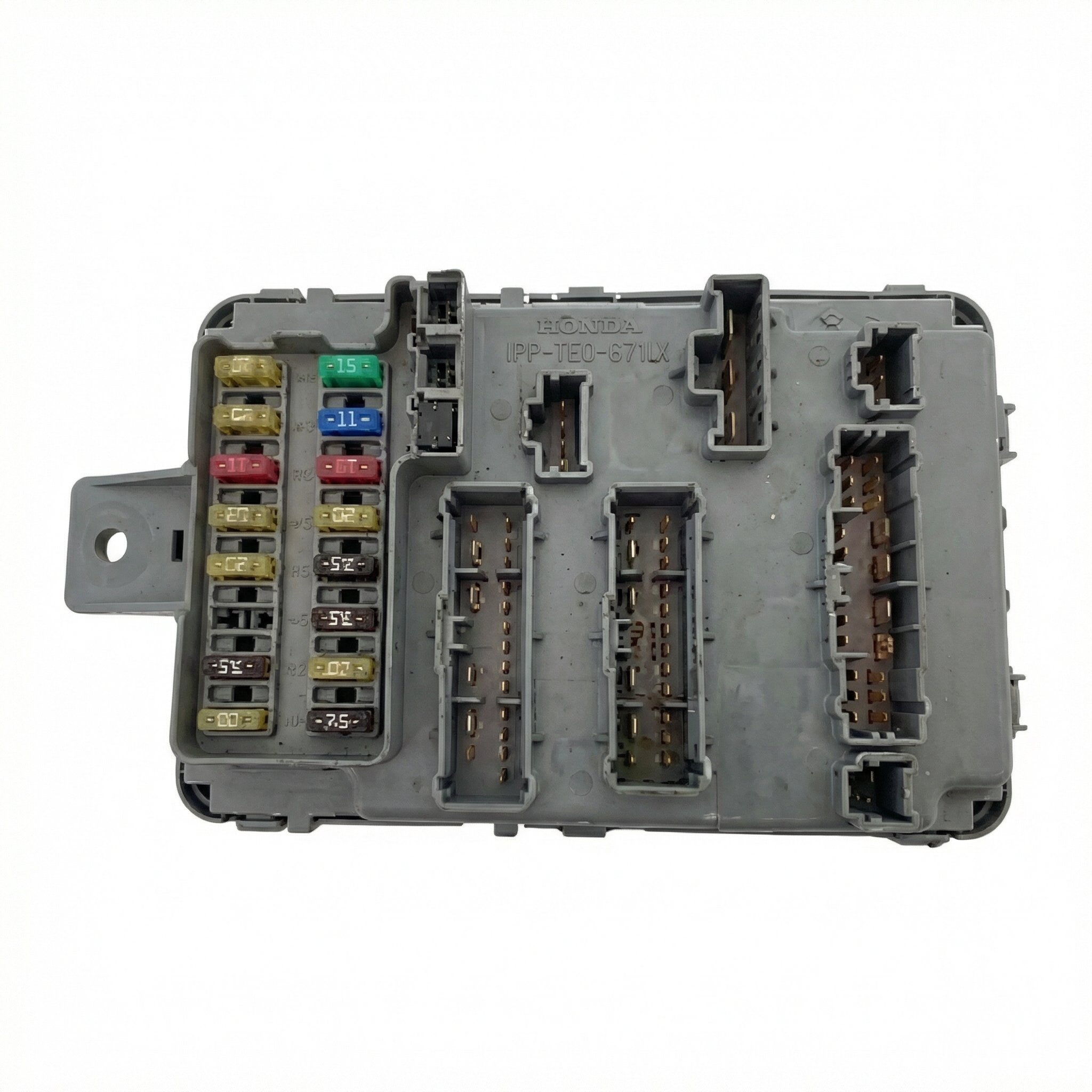
- Match the OEM part number EXACTLY. Do not deviate. V8 and I6 boxes are different.
- Inspect the underside where the main harness connectors plug in. Look for any signs of white or green corrosion, or melted plastic.
- If possible, choose a donor vehicle from a dry climate to minimize the chance of corrosion.
- Check the exterior of the box for cracks or signs of physical damage.
- Ask the salvage yard for a short warranty (e.g., 30-90 days) to ensure the part is functional.
Aftermarket brands forum-validated for this vehicle:
- ACDelco (OEM)
- Dorman (Often includes design improvements over the original)
Brands owners have reported issues with on this vehicle:
- No-name, unbranded units from online marketplaces should be avoided due to unknown quality control.
Real Owner Stories
Aggregated from forums and TSBs cited above. Mileages and costs reflect what owners reported in those sources.
2007 GMC Envoy Denali 5.3L
Symptoms: Vehicle had a no-start condition and was showing codes P1682 and P0689. The powertrain relay was not operating correctly.
What fixed it: The owner disassembled the fuse box, located a cracked internal copper trace, and repaired it by soldering it back together. The vehicle started and ran correctly after reinstallation.
Source hint: youtube_comment from C&J Mobile Automotive
Chevrolet Trailblazer SS
Symptoms: The vehicle would crank but not start, and had codes P1682, P0689, and P0443 stored.
What fixed it: The owner replaced the entire underhood fuse box, which resolved the issue.
Source hint: YouTube - Coverman66, 'Crank But Wont Start! Replacing A GM Fuse Box(code p1682, p0689, p0443)'
Saab 9-7X
Symptoms: The vehicle had a crank-no-start condition.
What fixed it: After proper testing, the problem was found to be a different electrical fault, not the common fuse box issue, highlighting the importance of diagnosis.
Source hint: GMTNation.com: A thread on GMTNation titled 'Problem Saab 9-7x Crank no start SOLVED'
GMC Envoy / GM Truck
Symptoms: Vehicle was setting a P1682 code.
What fixed it: The owner followed a guide to replace the ignition switch, which is a potential, though less common, cause for the code.
Source hint: GM-Trucks.com: A thread titled 'How-To: Ignition Switch Replacement/P1682 Repair'
Related OBD-II Codes
Frequently Asked Questions
My 2007 Envoy stalls when it gets hot and then won't start for an hour. Is this the common P1682 problem?
I have both P1682 and P0689 codes showing. What does this combination mean for my GMC Envoy?
Is the fuse box the only possible cause for a P1682 code?
If my fuse box is bad, can it be repaired, or do I have to buy a new one?
How can I do a quick check to see if it's just a bad relay causing the no-start?
Does a replacement Underhood Fuse Box need to be programmed to my Envoy?
Does this P1682 fuse box issue affect the Chevy Trailblazer too?
Helpful Videos
Used OEM Parts in Stock
New Aftermarket Parts Available


The information in this article is provided for general reference and educational purposes only. Vehicle specifications, procedures, and part compatibility can vary by production date, trim level, and region. Always consult your vehicle's factory service manual and verify part numbers before purchasing or performing repairs. Safety-critical components such as airbags, seat belts, and braking systems should be installed by a qualified professional.
- GMC Envoy:
- 🧭 Diagnostic Flowchart
- 🎬 Helpful Videos
- 🛍️ Shop This Part
- What's Unique About the 2002-2009 GMC Envoy
- Symptoms You May Notice
- Most Likely Causes
- Rare But Worth Checking
- Diagnosis Steps
- Parts You'll Likely Need
- Related Codes That Often Appear With This One
- Technical Service Bulletins (TSBs) & Recalls
- Platform-Specific Known Issues
- Mechanic-Grade Diagnostic Values
- Scan Tool Commands That Help
- Wiring & Ground Locations
- Real Owner Repair Stories
- Documented NHTSA Reports
- When the Usual Fixes Don't Work
- OEM Part Supersession History
- Model Year Variations Within This Range
- Used vs. New Parts: Buying Guide for This Vehicle
- Real Owner Stories
- 2007 GMC Envoy Denali 5.3L
- Chevrolet Trailblazer SS
- Saab 9-7X
- GMC Envoy / GM Truck
- Related OBD-II Codes
- Frequently Asked Questions
- 🎟️ Get 5% Off