

P1682 on 2010-2017 GMC Terrain: Ignition Voltage Fault Causes and Fixes
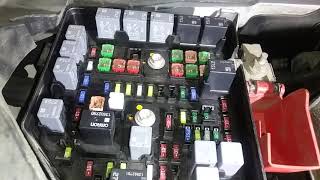
On a 2010-2017 GMC Terrain, code P1682 is almost always caused by a faulty relay or a poor connection in the underhood fuse box, not the ignition switch. A simple relay swap is the first and easiest check. The engine may not start, may stall, or may fail to shut off. GM Technical Service Bulletin 21-NA-032 points to a compromised wire crimp at terminal X3-H6 in the fuse box as a primary cause.
- Do not drive the vehicle; the engine can stall unexpectedly, creating a major safety hazard.
- Start your diagnosis by swapping the powertrain and/or run/crank relays in the underhood fuse box with known-good ones. This is the easiest and most common fix.
- If a relay swap doesn't work, the next most likely culprit is a poor connection inside the underhood fuse box itself.
- Do not replace the Mass Airflow (MAF) sensor if you also have a P0101 code; it is almost certainly a symptom of the P1682 electrical fault.
What's Unique About the 2010-2017 GMC Terrain
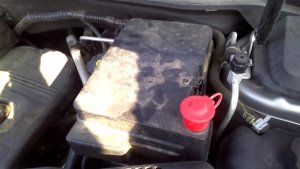
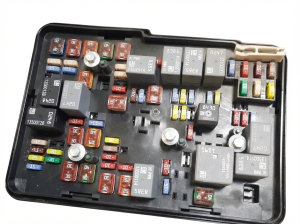
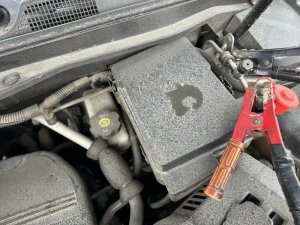
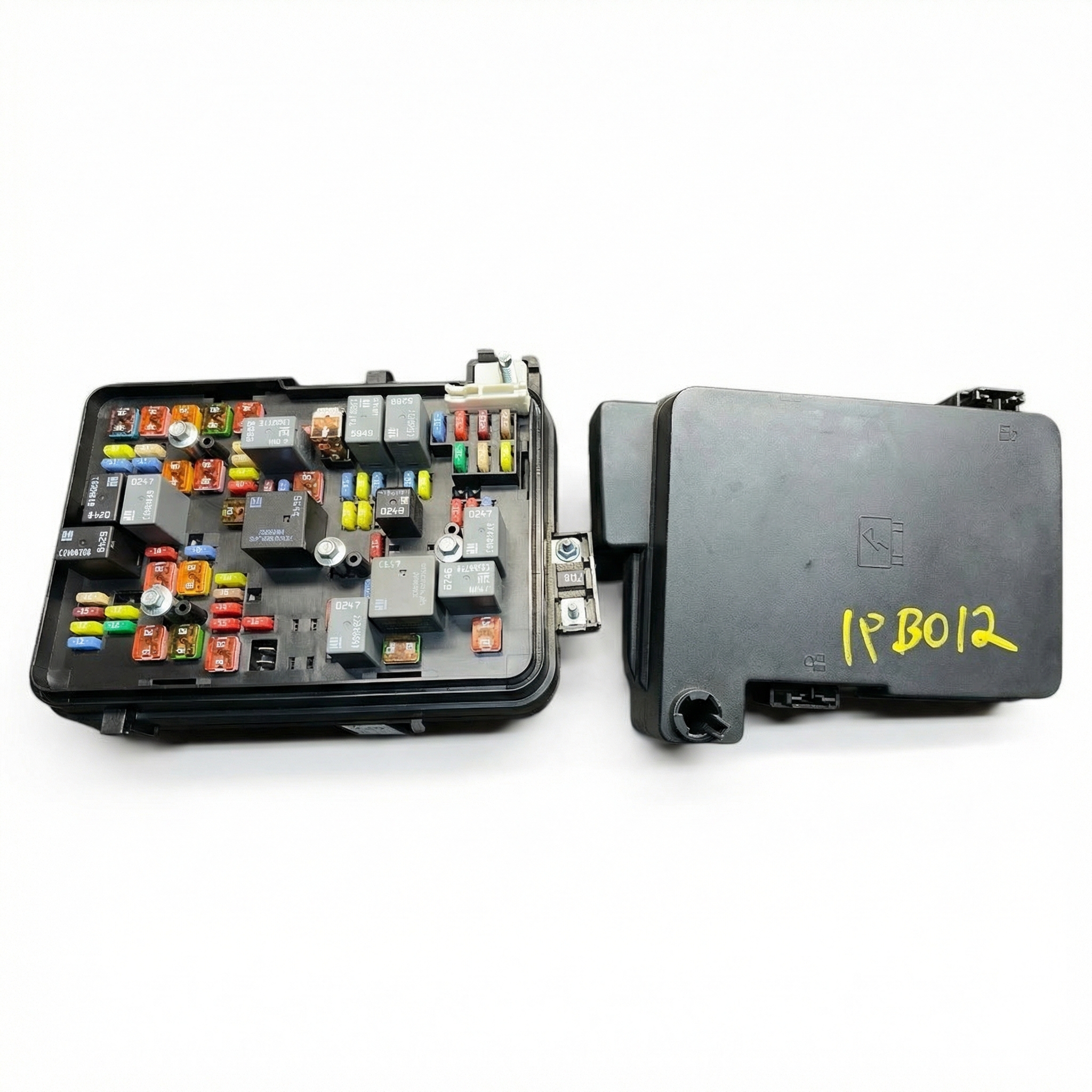
The GMC Terrain and its platform-mate, the Chevrolet Equinox, are well-known for developing P1682 due to issues in the underhood fuse box (also called the Underhood Bussed Electrical Center or UBEC). While a bad ignition switch can cause this code on many vehicles, on this specific platform, the root cause is far more likely to be a faulty relay, a loose fuse terminal, or a wiring problem inside the fuse box assembly itself. GM has issued Technical Service Bulletins (TSBs) like 21-NA-032 and 19-NA-276 that specifically identify poor terminal tension and fretting corrosion at connectors like X3 as the root cause.
Symptoms You May Notice
- Engine fails to start (crank-no-start)
- Engine stalls intermittently while driving
- Engine does not shut off with the ignition key
- Check Engine Light is illuminated
- "Reduced Engine Power" message appears on the dash
- Service StabiliTrak or Traction Control lights may appear
- Dead battery due to control modules remaining powered on
- Instrument cluster lights and warnings flicker randomly
- Replacing the Mass Airflow (MAF) sensor when code P0101 is also present. TSB 21-NA-032 explicitly warns against this, stating that the P0101 is a symptom of the P1682 electrical fault originating in the fuse box, not a separate problem.
Most Likely Causes
- Faulty Powertrain or Run/Crank Relay 🔴 High Probability → Shop Wiring Relay Relays are common failure points and are directly responsible for providing the two voltage signals the ECM monitors for this code. They are inexpensive and easy to access.
How to confirm: Swap the suspect relay (e.g., powertrain or run/crank) with an identical, known-good relay from a non-essential circuit (like the horn) in the same fuse box. If the problem goes away, the relay is bad.
Typical fix: Replace the faulty relay.
Est. part cost: $10-$30 - Poor Connection in Underhood Fuse Box (UBEC) 🔴 High Probability → Shop Fuse Box This platform is known for issues with terminal tension and internal wiring within the fuse box. Vibrations and heat cycles can cause fretting corrosion and loose connections over time. TSB 21-NA-032 specifically calls out a bad dual-crimp at connector X3, position H6, and TSB 19-NA-276 points to poor tension at terminal 51 of the same X3 connector.
How to confirm: Gently wiggle the 'ECM/Throttle' fuse (often a 15A fuse) while the engine is running. If the engine stumbles, stalls, or the code appears, it confirms a loose connection in the fuse box. A more thorough check involves disconnecting the battery, removing the fuse box, and inspecting the X3 connector on the underside for burnt pins or corrosion, especially at H6 and pin 51.
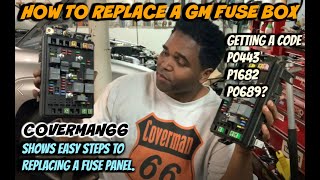
Typical fix: For a bad crimp or terminal, the specific wire can be repaired using a new terminal pin. If the fuse box itself is damaged or corroded, the entire UBEC assembly must be replaced. 🎬 See this step-by-step GM fuse box replacement walkthrough
Est. part cost: $5-$50 for terminal repair, $250-$500 for a new fuse box. - Blown Fuse 🟡 Medium Probability
How to confirm: Visually inspect and test all fuses related to the ECM, ignition, and powertrain circuits using a multimeter. Specifically check the 15A 'ECM/Throttle' fuse.
Typical fix: Replace the blown fuse and investigate the underlying cause of the overcurrent condition.
Est. part cost: $1-$5 - Faulty Ignition Switch ⚪ Low Probability → Shop Ignition Switch While a common cause on other vehicles, it is less frequent on this platform compared to fuse box issues. However, it is still a possibility.
How to confirm: Use a multimeter to test the voltage outputs of the ignition switch circuits in each key position (ACC, ON, CRANK) and compare them to the vehicle's wiring diagram specifications. A user on GM-Trucks.com documented this repair for a Silverado with the same code.
Typical fix: Replace the ignition switch. For a 2011 Silverado, the replacement part number was cited as GM Part# 22887691.
Est. part cost: $40-$100
Rare But Worth Checking
- Wiring Harness Damage: An open or short in the wiring between the ECM, fuse box, and ignition switch can cause this code. This usually results from physical damage or corrosion. TSB PIP5080A notes that connector terminals backing out can cause similar electrical issues on other GM trucks.
- Faulty Engine Control Module (ECM): → Shop Engine Control Module (ECM) This is very rare. Before condemning the ECM, all other possibilities (relays, fuses, wiring, connections) must be exhaustively ruled out. This is usually diagnosed when other related communication codes (U-codes) are also present.
Diagnosis Steps
- Read all fault codes from the ECM. Note any other codes that are present, especially P0689, P0101, or U-codes.
- Check for blown fuses in the underhood fuse box, specifically those labeled 'ECM', 'IGN', or 'Throttle'. The 'ECM/Throttle' 15A fuse is a key one to check.
- Swap the Powertrain Relay and/or Run/Crank relay with an identical, known-good relay from the same fuse box (e.g., horn or A/C relay). Clear the codes and see if the problem returns. If not, the relay was faulty.
- If the problem persists, start the engine (if possible) and gently wiggle the 'ECM/Throttle' 15A fuse. If this causes the engine to stall or stumble, the fuse box has an internal connection issue.
- If wiggling the fuse has no effect, perform a visual inspection. Disconnect the battery. Unclip and lift the fuse box to access the connectors underneath. Inspect connector X3, paying close attention to terminal H6 and terminal 51 for any signs of corrosion, heat damage (discoloration), or loose-fitting pins, as detailed in TSBs 21-NA-032 and 19-NA-276.
- If a faulty terminal is found, repair it using the appropriate terminal release tools and a new terminal pin. If the fuse box housing is melted or damaged, replace the entire UBEC assembly.
- If the fuse box and relays are confirmed to be good, use a multimeter and a wiring diagram to test the ignition switch for correct voltage signals on its output wires.
- If all components test good, the final step is to inspect the wiring harness for continuity and shorts between the ignition switch, fuse box, and ECM.
Parts You'll Likely Need
- Powertrain Relay / Run/Crank Relay — This is the most common and cheapest part to fail, causing the P1682 code. It's the first thing to check.
Trusted brands: ACDelco, Bosch, Standard Motor Products
OEM price range: $20-$40
Aftermarket price range: $10-$25 - Underhood Fuse Box (UBEC)
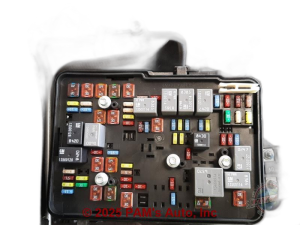
(OEM #22865685)— Internal connection failures within the fuse box are a very common cause of this code on the Terrain/Equinox platform, as documented by GM TSBs.
Trusted brands: ACDelco (OEM)
OEM price range: $350-$550
Aftermarket price range: $250-$400
Related Codes That Often Appear With This One
- P0689 — Stands for 'ECM/PCM Power Relay Control Circuit Low'. It often appears with P1682 because they share the same power relay and wiring in the underhood fuse box. TSB 19-NA-276 notes these two codes frequently appear together due to the same fuse box terminal fault.
- P0101 — Stands for 'Mass Air Flow (MAF) Circuit Range/Performance'. This code can be falsely triggered by the voltage instability caused by the P1682 fault. GM issued TSB 21-NA-032 specifically to address this combination, pointing to a wiring issue in the fuse box.
- U0100 — Stands for 'Lost Communication With ECM/PCM'. If the electrical fault causing P1682 is severe enough, it can interrupt power to the ECM entirely, causing it to lose communication with other modules on the vehicle.
Technical Service Bulletins (TSBs) & Recalls
- TSB 21-NA-032: Warns that DTC P0101 (MAF Sensor) appearing with P1682 is likely caused by a compromised dual-crimp wire connection at the X3 connector (position H6) of the underhood fuse box.
- TSB 19-NA-276: Addresses P1682 and P0689 caused by poor terminal tension on terminal 51 in the X3 connector of the underhood fuse box.
- Bulletin #PIP5729: Notes that technicians may find P1682 active or stored in history, potentially alongside P0101, P0689, P16A7, or P16BC.
- Bulletin #PIT5546G: Describes conditions such as a no-crank, crank-no-start, or the engine continuing to run with the ignition off, often setting code P1682.
- PIP5080A: While for a different issue (Service 4WD), this TSB illustrates a common GM problem of terminals backing out of connectors (like X109), causing intermittent electrical faults, a similar failure mechanism to the P1682 issue.
Platform-Specific Known Issues
- The 2010-2017 Terrain/Equinox platform is widely documented on forums and in mechanic videos as having a high incidence of P1682 caused by internal faults in the underhood fuse box, rather than the ignition switch.
- TSB 21-NA-032 specifically addresses P1682 appearing with P0101, warning technicians not to replace the MAF sensor and instead inspect the UBEC X3 connector at terminal H6.
- TSB 19-NA-276 points to poor terminal tension at terminal 51 of the X3 connector as a cause for P1682 and P0689.
- Bulletin #19NA276 provides repair information for a potential "Reduced Engine Power" message and/or engine stall when DTCs P1682 and/or P0689 are set.
Mechanic-Grade Diagnostic Values
- Voltage difference between 'Ignition 1 Voltage' and 'Engine Controls Ignition Relay Feedback' on a scan tool — expected: Less than 3.0 Volts. Failure: A difference greater than 3.0 Volts for more than a few seconds will set the code.
- Resistance of the ignition voltage circuit — expected: Less than 6.0 Ω. Failure: Resistance of 6.0 Ω or greater can cause the DTC to set.
- Engine Controls Ignition Relay (KR75) coil resistance — expected: 70-110 Ω or 200-250 Ω, depending on the application. Failure: A reading outside the specified range indicates a faulty relay.
- Engine Controls Ignition Relay (KR75) contact resistance — expected: Less than 2 Ω (when energized with jumper wires). Failure: A reading greater than 2 Ω indicates high internal resistance, requiring relay replacement.
- Voltage at the relay control circuit (terminal 85) — expected: Less than 1.0 V with ignition ON. Failure: Voltage greater than 1.0 V indicates a short to voltage or an open/high resistance in the control circuit.
Scan Tool Commands That Help
- GDS2 / Tech2 (or equivalent professional scan tool): Engine Controls (EC) Ignition Relay ON/OFF Command — Use this bidirectional command to manually energize and de-energize the powertrain relay. This allows a technician to isolate the problem by testing the control circuit and the load circuit independently without physically accessing the relay.
Wiring & Ground Locations
- X3 Connector — One of the large multi-pin connectors on the underside of the Underhood Fuse Box (UBEC).. This is the specific connector cited in GM TSBs 19-NA-276 (pin 51) and 21-NA-032 (pin H6) as the location for poor terminal tension and faulty wire crimps that directly cause code P1682.
- G103 — Located on the left front of the engine compartment, under the battery tray.. This is a major ground point for multiple modules, including the Body Control Module (BCM) and Instrument Panel Cluster (IPC). A poor connection here can cause widespread, intermittent electrical issues that could mimic a P1682 fault.
- G105 — For the 2.4L engine, it's at the top rear of the engine. For the 3.0L/3.6L V6, it's at the left rear of the engine.. This is a primary engine ground. While not directly tied to the ignition voltage sense circuits, a poor engine ground can cause voltage drops and electrical noise that may contribute to intermittent control module problems.
- Fuse Box Mounting Bolts — The bolts that secure the main electrical connectors to the bottom of the UBEC.. In at least one documented case, these bolts were found to be loose, causing an intermittent connection and a P1682 code. The fix was to remove, apply Loctite, and retighten the bolts.
Real Owner Repair Stories
- NHTSA ODI #11699625 — An owner reported the vehicle began showing "Engine Power Reduced" randomly without warning, causing the vehicle to lose power suddenly. The P1682 code appeared every time, causing the vehicle to jerk and lose acceleration.
- YouTube Commenter on 'Fixing P1682...' (GM Vehicle (model not specified, but common platform issue)) — Intermittent P1682 code for months, always happening when his wife was driving.
❌ Tried (didn't work) Initial diagnostics did not pinpoint the issue.
✅ What actually fixed it The bolts holding the main wire plugs to the bottom of the fuse box were loose. The owner removed the fuse box, inspected the pins, and reinstalled the bolts with Loctite, which permanently fixed the problem. - YouTube video 'Fixing P1682... on Chevy Traverse' (2013 Chevrolet Traverse LTZ) — Recurring P1682, instrument cluster lighting up, 'Traction Control Off', 'ABS Off' messages, reduced power, and intermittent stalling in the road.
❌ Tried (didn't work) Replacing the powertrain and ignition relays.
✅ What actually fixed it Replacing the entire underhood fuse block assembly fixed the issue completely for four years. When the problem returned, replacing the fuse block a second time resolved it again, confirming the fuse block as a wearable/failure-prone part. - YouTube video 'P1682 2015 Chevy Tahoe EASY FIX!!' (2015 Chevrolet Tahoe) — P1682 with 'Engine Power Reduced' message, eventually stalling the motor.
❌ Tried (didn't work) Replacing the alternator and throttle body at a GM dealer., Testing all fuses and relays with a standard relay tester (they all tested 'good').
✅ What actually fixed it A GM bulletin advised testing individual prongs on the ECM relay. This revealed a fault the relay tester missed. Replacing the ECM relay, despite it testing 'good' initially, fixed the crank-no-start condition. - YouTube video 'P1682 Ignition 1 switch circuit 2 [SOLVED]' (GMC Vehicle (likely Terrain/Equinox)) — P1682 code, engine stalling, no-start condition.
❌ Tried (didn't work) Searching for a fuse specifically labeled 'Ignition 1 Switch Circuit 2' (it doesn't exist).
✅ What actually fixed it The problem was a poor connection at the 15A 'ECM/Throttle' fuse in the underhood fuse box. The fuse itself was not blown, but wiggling it would cause the engine to stumble and the code to appear, proving the fault was in the fuse box terminals holding that fuse.
OEM Part Supersession History
20899629, 22819333→22865685— Part revision and consolidation by the manufacturer.
Heads up: Part number 22865685 is specified for 2011-2012 models with the 2.4L engine. Other years or the V6 engine may use a different fuse box part number. Always verify the part number against the vehicle's VIN.
Model Year Variations Within This Range
- 2011-2012: The specific OEM part number for the Underhood Fuse Box (UBEC) for the 2.4L engine is 22865685. While the failure mode is common across the 2010-2017 generation, the exact part number for other years (2010, 2013-2017) or for the V6 engine may be different. Cross-referencing by VIN is essential when ordering.
Diagnostic Flowchart
Other Known Issues on This Vehicle
Issues unrelated to this code that are worth knowing about as an owner of this generation:
- Excessive Oil Consumption (2.4L Ecotec) 🔴 High — Extremely common. Caused by faulty, low-tension piston rings that allow oil to enter the combustion chamber. Can lead to engine damage if oil levels are not checked frequently. (Ref: Subject of multiple class-action lawsuits and settlements for 2010-2013 models, though the issue persists in later years.)
- Timing Chain Stretch and Failure (2.4L Ecotec) 🔴 High — Very common, often occurring between 80,000 and 120,000 miles. Symptoms include a rattling noise on cold starts and codes like P0016/P0017. Failure can cause catastrophic engine damage. (Ref: GM issued Special Coverage Adjustment #12313C for the balance shaft chain on some 2010-2011 models.)
- Rear Main Seal Leak (2.4L Ecotec) 🟠 Medium — A frequent issue often caused by a clogged Positive Crankcase Ventilation (PCV) orifice in the intake manifold, which creates excess crankcase pressure that forces oil past the seal. (Ref: No specific recall, but a well-documented failure pattern. Repair is labor-intensive, costing $800-$2000+.)
- Service StabiliTrak / Traction Control Warnings 🟡 Low — Commonly reported. Can be caused by a wide range of issues from faulty wheel speed sensors or a bad steering angle sensor to electrical connection problems. Often triggers a "Reduced Engine Power" mode.
Used vs. New Parts: Buying Guide for This Vehicle
When a used part is the smart pick: A used Underhood Fuse Box (UBEC) is an excellent, cost-effective option for this repair. The part does not require any programming, making it a plug-and-play replacement. Given the high cost of a new OEM unit, a used part from a reputable salvage yard is a very smart choice.
Donor-vehicle mileage cap: roughly under 100000 miles for the part to have meaningful remaining life.
What to inspect on the donor part:
- MUST match the OEM part number on your original fuse box exactly. Do not buy based on visual similarity.
- Inspect the donor part thoroughly for any signs of water damage, such as white/green corrosion, water lines, or rust on any metal components.
- Check the underside where the main harnesses connect. The plastic should be clean and the pins should be straight and free of corrosion.
- Ask about the donor vehicle. A part from a vehicle that was in a rear-end collision is preferable to one from a vehicle with a long history of electrical problems or flood damage.
OEM-only on this vehicle (don't cheap out):
- Underhood Fuse Box (UBEC) - While a used OEM part is recommended, avoid unbranded, no-name aftermarket fuse boxes. The complexity and multi-layer internal circuits are difficult to replicate, and quality issues are common. Stick with a new or used genuine GM part.
Aftermarket brands forum-validated for this vehicle:
- Relays: ACDelco (OEM), Standard Motor Products (SMP), Bosch, Duralast
Brands owners have reported issues with on this vehicle:
- Generic, unbranded online marketplace relays. For a critical component like the powertrain or run/crank relay, spending a few extra dollars on a reputable brand is wise.
Real Owner Stories
Aggregated from forums and TSBs cited above. Mileages and costs reflect what owners reported in those sources.
2011 Chevrolet Silverado
Symptoms: Owner experienced P1682 and performed a step-by-step replacement of the ignition switch to resolve the circuit fault.
What fixed it: Replacement of the ignition switch (GM Part# 22887691).
Source hint: GM-Trucks.com - 'How-To: Ignition Switch Replacement/P1682 Repair'
2010-2017 GMC Terrain / Chevrolet Equinox
Symptoms: Engine stalls or stumbles specifically when the 'ECM/Throttle' 15A fuse is wiggled in its socket.
What fixed it: Repairing the internal connection fault within the underhood fuse box.
Source hint: YouTube - 'P1682 Ignition 1 switch circuit 2 [SOLVED]' by 'Car Faults'
Chevrolet Trailblazer SS
Symptoms: Vehicle threw codes P1682, P0689, and P0443 due to electrical interruptions.
What fixed it: Repair of an internal broken wire within the fuse box rather than replacing the entire unit.
Source hint: YouTube - 'GM Fuse Box Repair(code p1682, p0689, p0443) Dont Buy a New Box!' by 'Terrylsx'
GMC Acadia Owner Report
Symptoms: An owner reported that the vehicle began showing “Engine Power Reduced” randomly and losing power suddenly, with code P1682 appearing every time.
What fixed it: Diagnostic records indicate this is often tied to Ignition 1 Circuit/Relay failure.
Source hint: NHTSA ODI #11699625
Related OBD-II Codes
Frequently Asked Questions
My 2010-2017 GMC Terrain is showing P1682 and P0101; should I replace the MAF sensor?
Is there a specific fuse I should check on my GMC Terrain for the P1682 code?
What specific part of the fuse box is known to fail on the Terrain and Equinox platform?
Can a bad relay cause my Terrain to stay powered on even after I remove the key?
If I need to replace my ignition switch, is there a specific GM part number mentioned for this era of vehicles?
My Terrain shows 'Reduced Engine Power' and P1682. Is this related to the StabiliTrak light?
Helpful Videos
![P1682 Ignition 1 switch circuit 2 [SOLVED]](https://img.youtube.com/vi/KZFTjjczhPg/mqdefault.jpg)
We Have This Part in Stock

The information in this article is provided for general reference and educational purposes only. Vehicle specifications, procedures, and part compatibility can vary by production date, trim level, and region. Always consult your vehicle's factory service manual and verify part numbers before purchasing or performing repairs. Safety-critical components such as airbags, seat belts, and braking systems should be installed by a qualified professional.
- GMC Terrain:
- 🧭 Diagnostic Flowchart
- 🎬 Helpful Videos
- 🛍️ Shop This Part
- What's Unique About the 2010-2017 GMC Terrain
- Symptoms You May Notice
- Most Likely Causes
- Rare But Worth Checking
- Diagnosis Steps
- Parts You'll Likely Need
- Related Codes That Often Appear With This One
- Technical Service Bulletins (TSBs) & Recalls
- Platform-Specific Known Issues
- Mechanic-Grade Diagnostic Values
- Scan Tool Commands That Help
- Wiring & Ground Locations
- Real Owner Repair Stories
- OEM Part Supersession History
- Model Year Variations Within This Range
- Other Known Issues on This Vehicle
- Used vs. New Parts: Buying Guide for This Vehicle
- Real Owner Stories
- 2011 Chevrolet Silverado
- 2010-2017 GMC Terrain / Chevrolet Equinox
- Chevrolet Trailblazer SS
- GMC Acadia Owner Report
- Related OBD-II Codes
- Frequently Asked Questions
- 🎟️ Get 5% Off