

P1682 on 2003-2008 Isuzu Ascender: Ignition Circuit Fault Causes and Fixes
On a 2003-2008 Isuzu Ascender, code P1682 is most often caused by a faulty ignition switch or a failing underhood fuse box. A failing ignition switch is a common issue, but a failing fuse box with an internal broken wire is also a well-documented problem on this platform, often causing the engine to stall when hot and restart only after cooling down.
- Code P1682 on your Ascender means there's a critical power supply issue to the engine computer.
- Do not drive the vehicle, as it can stall unexpectedly at any time, creating a serious safety hazard.
- The two most likely causes are a bad ignition switch or a failing underhood fuse box. Do not assume it's the ECM.
- As a first diagnostic step, try swapping the powertrain relay with an identical one from a non-critical system (like the horn).
- If the vehicle stalls when hot but restarts after cooling down, the underhood fuse box is the most probable cause.
What's Unique About the 2003-2008 Isuzu Ascender
The Isuzu Ascender is part of the GM GMT360 platform, sharing its entire electrical system with the Chevrolet Trailblazer, GMC Envoy, Buick Rainier, Oldsmobile Bravada, and Saab 9-7X. For this platform, P1682 is a very common code with two extremely frequent culprits: the ignition switch itself, a known weak point, and the Underhood Bussed Electrical Center (UBEC), also known as the underhood fuse box. The multi-layered circuit board inside the fuse box can develop a hairline crack in a specific 20-gauge copper trace due to heat cycles and vibration. This crack creates an intermittent open circuit, causing stalls and no-start conditions, especially when the engine bay is hot. Owners often mistakenly replace other components before identifying the faulty ignition switch or the notorious fuse box issue.
Symptoms You May Notice
- Engine cranks but will not start
- Engine stalls while driving, often only when hot, and may restart after cooling down
- Check Engine Light is on
- Reduced Engine Power message displayed
- Intermittent no-start condition
- Other warning lights on the dash, like ABS or Traction Control
- Complete loss of electrical power intermittently
- Replacing the Engine Control Module (ECM) before thoroughly testing the ignition switch and fuse box. ECM failure is rare.
- Replacing the fuel pump because of a 'crank, no start' symptom.
- Replacing the Mass Airflow (MAF) sensor, especially if code P0101 is also present. GM TSB 21-NA-032 specifically warns that P1682 and P0101 together are often caused by a wiring issue in the fuse box connector, not a bad MAF sensor.
Most Likely Causes
- Faulty Ignition Switch 🔴 High Probability → Shop Ignition Switch The ignition switches used on the GMT360 platform are a well-documented, common failure item. The internal electrical contacts wear out over time, creating an unstable or missing voltage signal to the ECM.
How to confirm: While the vehicle is acting up, a technician can back-probe the ignition switch connector to check for proper voltage on the pink wires (Ignition 1) and white wire (Ignition 2). If voltage is low or absent when it should be present, the switch is likely faulty. A failing switch is a very common cause for a no-start condition on these vehicles.
Typical fix: Replace the ignition switch. This is a moderately difficult DIY job that involves removing the steering column covers. The ACDelco Professional part is often recommended. 🎬 Watch how to diagnose and replace the ignition switch
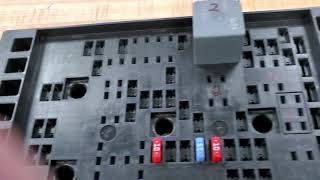
Est. part cost: $25-$60 - Failing Underhood Fuse Box (UBEC) 🔴 High Probability → Shop Fuse Box The multi-layered circuit board inside the fuse box can develop hairline cracks in its copper traces due to heat cycles and vibration. This creates an open circuit, often intermittently, cutting power to critical components like the powertrain relay. This is considered a design flaw of the GMT360 platform.
How to confirm: A classic symptom is the vehicle stalling when hot and restarting after it cools down for 30-60 minutes. When the no-start condition is active, check for power at the powertrain relay socket (often labeled #46). If key-on power is missing on the control side, the fuse box has an internal break. This is often confirmed when codes P1682 and P0689 appear together.
Typical fix: Replace the entire underhood fuse box with a new or used unit that matches the vehicle's engine and part number exactly. Some skilled owners repair the internal trace by disassembling 🎬 See how to replace the underhood fuse box the fuse box and soldering a jumper wire.
Est. part cost: $75-$250 - Faulty Powertrain or Run/Crank Relay 🟡 Medium Probability → Shop Wiring Relay Relays are simple electromagnetic switches that can fail with age and heat cycles, leading to intermittent power loss.
How to confirm: The easiest way to test is to swap the suspect relay (e.g., the powertrain relay) with an identical relay from a non-essential circuit, like the horn, and see if the problem resolves.
Typical fix: Replace the faulty relay. This is a very simple plug-and-play fix.
Est. part cost: $10-$30
Rare But Worth Checking
- Wiring Harness Issue: A break or short in the wiring between the ignition switch, fuse box, and ECM can cause this code. One specific TSB for later model GM trucks (21-NA-032) points to a compromised wire connection within one of the main fuse box connectors (X3, pin H6) that can cause P1682, highlighting the vulnerability of this area. A documented case on a 2009 Trailblazer found the break was in the yellow signal wire between the fuse box connector 🎬 Watch this diagnostic walkthrough of a stalling GMC Envoy (Pin D1) and the ECM connector (Pin 40).
- Loose Fuse Box Connections: The large connectors on the underside of the fuse box can become loose, or the bolts holding them can back out, causing poor connections and intermittent power loss. Wiggling fuses, particularly the 'ECM/Throttle' fuse (#5), may cause the engine to stall, confirming a poor internal connection within the fuse box itself.
Diagnosis Steps
- Read all diagnostic trouble codes from the ECM. Pay close attention to any other codes that are present, such as P0689, P0443, or P0101.
- Check all relevant fuses in the underhood fuse box, especially those labeled ECM, IGN, and powertrain. Pay special attention to the ECM/Throttle fuse (#5), wiggling it to check for a loose internal connection.
- Swap the powertrain relay and/or run/crank relay (e.g., #46) with a known good relay of the same type (e.g., from the horn circuit) to see if the symptoms change.
- If the problem is intermittent and happens when the engine is hot, suspect the underhood fuse box. Let the vehicle run until it stalls, then check for 12V+ at the control-side pin of the powertrain relay socket (Relay #46). If power is absent with the key on, the fuse box has an internal fault.
- Inspect the ignition switch. When the fault is active, check for consistent battery voltage on the pink wires (Ignition 1) and white wire (Ignition 2) at the ignition switch connector.
- If the above steps do not identify the issue, disconnect the battery and remove the underhood fuse box. Inspect the large connectors on the bottom for any signs of corrosion, melting, or burnt pins.
- Perform a continuity test on the yellow powertrain relay control wire between the under-fuse-box connector (Pin D1) and the ECM connector (Pin 40) to check for a break in the harness.
- If no external damage is found, the fuse box may need to be disassembled to inspect for a broken internal 20-gauge copper trace, a common failure on this platform. This break is often found near a specific curve in the trace.
- If all else fails, inspect the main chassis grounds, particularly G103 (on the cowl above the brake booster) and G105 (left front of the engine compartment), for corrosion and tightness.
Parts You'll Likely Need
- Ignition Switch
(OEM #ACDelco D1426D (Updated part for many GM vehicles, verify fitment))— This is one of the most common causes of P1682 due to high failure rates of the original part's internal contacts.
Trusted brands: ACDelco, Duralast, Standard Motor Products
OEM price range: $40-$60
Aftermarket price range: $25-$50 - Underhood Fuse Box (UBEC)
(OEM #Varies by year/engine (e.g., 15141559 for V8). Must match number on original unit.)— The second most common cause, due to internal circuit board traces breaking over time. A replacement is often the only reliable fix for intermittent stalling.
Trusted brands: ACDelco (New), Used OEM
OEM price range: $200-$400
Aftermarket price range: $75-$200 (Used) - Powertrain/Ignition Relay — A simple and inexpensive part to replace as a primary diagnostic step.
Trusted brands: ACDelco, Bosch
OEM price range: $15-$30
Aftermarket price range: $10-$20
Related Codes That Often Appear With This One
- P0689 — This code relates to the ECM/PCM Power Relay Sense Circuit Low Voltage. Since P1682 is often caused by a loss of power to this exact relay due to a broken trace in the fuse box, these two codes almost always appear together and strongly point to a faulty fuse box.
- P0443 — This code is for the EVAP Purge Solenoid Circuit. A failing fuse box can cause power supply issues to multiple circuits simultaneously, including the EVAP system components.
- P0101 — This code indicates a Mass Air Flow (MAF) sensor performance issue. GM TSB 21-NA-032 explicitly states that when P0101 appears with P1682, the cause is likely a wiring problem in the fuse box connector, not the MAF sensor itself.
Technical Service Bulletins (TSBs) & Recalls
- 21-NA-032: While for a later model GM truck, this TSB is highly relevant. It warns technicians not to replace the MAF sensor for a P0101 code if P1682 is also present, and instead inspect a specific wire connection in the fuse box connector (X3, pin H6). This reinforces the fuse box as the likely culprit.
Platform-Specific Known Issues
- The underhood fuse box is known to have internal copper traces break, causing intermittent stalling when hot that resolves after cooling down. This is a very common issue for the GMT360 platform.
- The ignition switch is a frequent failure point, causing a wide range of electrical issues including no-start conditions.
Mechanic-Grade Diagnostic Values
- Ignition 1 Voltage at Ignition Switch Harness — expected: Battery Voltage (12V+). Failure: Low or no voltage when key is in ON or START position.
- Ignition 2 Voltage at Ignition Switch Harness — expected: Battery Voltage (12V+). Failure: Low or no voltage when key is in ON or START position.
- Ignition 1 Voltage at PCM Connector C1, Pin 19 (Pink wire) — expected: Battery Voltage (12V+). Failure: Voltage significantly lower than battery voltage, or dropping out intermittently.
- Continuity of Powertrain Relay Control Wire — expected: < 1 Ohm. Failure: Open Link (O.L.) or high resistance between fuse box connector D1 and ECM connector C2, pin 40.
- Voltage at Powertrain Relay Socket (#46) Control Pin — expected: Battery Voltage (12V+) with key ON. Failure: No voltage when the engine is in a no-start state, indicating an internal fuse box break.
Wiring & Ground Locations
- G103 — On the cowl in the left rear of the engine compartment, above the brake booster.. This is a major ground point for the BCM, Instrument Panel Cluster (IPC), and Data Link Connector (DLC). A poor connection here can cause widespread, intermittent electrical faults that could mimic a P1682 code.
- G105 — At the left front of the engine compartment, often near the cooling fan relays.. This grounds several engine-related components. While less likely to be the primary cause, checking all major grounds is a key step in diagnosing elusive electrical issues.
- Fuse Box Connector Pin D1 — On one of the large connectors on the underside of the underhood fuse box.. This is the pin for the yellow signal wire that provides the ground signal from the ECM to control the powertrain relay. A break in the wire from this pin can cause a crank-no-start and P1682.
- PCM Connector C2, Pin 40 — On the second connector of the Engine Control Module (ECM).. This is the corresponding pin at the ECM for the yellow powertrain relay control wire. Testing continuity between this pin and the fuse box connector pin D1 is a definitive test for a broken wire in the harness.
- PCM Connector C1, Pin 19 — On the first connector of the Engine Control Module (ECM).. This is a primary 'Ignition 1 Voltage' input to the ECM. Probing this pink wire can confirm if the ECM is receiving one of the required power signals.
Real Owner Repair Stories
- YouTube user 'Alan Sunday' (2007 Trailblazer SS, 120,000 miles) — Cranks but won't start, especially when hot. Code P1682.
❌ Tried (didn't work) Replaced ignition switch, Replaced battery, Replaced powertrain and starter relays
✅ What actually fixed it Disassembled the underhood fuse box and found a broken 20-gauge copper trace inside. The owner soldered a new wire to bypass the break, which permanently fixed the issue. - YouTube user 'Shaun's Garage' (2009 Chevrolet Trailblazer) — Crank no start, code P1682.
❌ Tried (didn't work) Checked all related power wires and fuses, which tested good.
✅ What actually fixed it Found a break in the yellow signal wire between the fuse box connector (Pin D1) and the ECM connector (Pin 40). Running a new wire to bypass the break resolved the no-start condition. - YouTube user 'BLK_WILL_ SS' (Chevrolet Trailblazer SS) — Engine would stall at red lights or stop signs, especially when hot. Would have to wait 10 minutes before it would restart. Code P1682.
❌ Tried (didn't work) Initial diagnosis pointed towards common issues.
✅ What actually fixed it Replaced the entire underhood fuse box with a new unit. This was a direct plug-and-play fix that resolved the stalling. - YouTube user 'Car & Truck' (GMC Vehicle (likely GMT360 platform)) — Engine won't start or stalls while driving. Code P1682.
❌ Tried (didn't work) Checking fuses visually (they were not blown).
✅ What actually fixed it The problem was a loose connection where the 'ECM/Throttle' fuse (15A, position #5) plugs into the fuse box. Wiggling the fuse caused the symptoms to appear and disappear. The fix was to address the poor terminal tension in the fuse box, not the fuse itself.
OEM Part Supersession History
Varies (e.g., GM 15242754)→ACDelco D1426D— The original ignition switches had internal contacts that were prone to burning and corrosion. The updated part (often identifiable by a grey cover instead of all black) uses improved materials like tungsten for the contacts to increase durability and prevent voltage drops.
Heads up: The part number listed in Pass 2, D1462G, is often the ignition lock *housing*, not the electrical switch itself. The switch is the component that fails and must be replaced. Ensure you are buying the switch (e.g., D1426D or equivalent) and not just the housing.
Model Year Variations Within This Range
- 2003-2008: The underhood fuse box (UBEC) is specific to the engine type. The internal circuitry for the inline-6 (I6) engine is different from the V8 engine (5.3L or 6.0L). When replacing the fuse box, the part number must be matched exactly to the original unit to ensure compatibility.
Diagnostic Flowchart
Other Known Issues on This Vehicle
Issues unrelated to this code that are worth knowing about as an owner of this generation:
- Cracked Exhaust Manifold 🟠 Medium — Very common on the 4.2L I6 engine, often occurring after 80,000 miles. Can cause a loud ticking or exhaust leak noise, especially when cold. Replacement manifolds have also been known to crack. (Ref: A special coverage adjustment (warranty extension) was issued for some 2008-2009 models, but the issue affects all years.)
- Failing Fan Clutch 🟠 Medium — Common failure item, especially after 80,000 miles. Symptoms include a loud roaring noise from the engine (like a jet engine), overheating at idle or in traffic, and potential check engine codes.
- Faulty Instrument Cluster Stepper Motors 🟡 Low — Widespread issue across many GM vehicles of this era. Causes gauges (speedometer, tachometer, fuel, etc.) to stick, read incorrectly, or stop working altogether.
- Failing Throttle Body 🔴 High — A common problem that triggers the 'Reduced Engine Power' warning light and severely limits acceleration. Often accompanied by codes like P1516 or P2135.
- 4WD System Malfunctions 🟠 Medium — Failures of the front axle actuator, transfer case control module (TCCM), or the dash selector switch are common, leading to the 'Service 4WD' light and inability to switch between 2WD and 4WD modes.
- Fuel Level Sensor Failure 🟡 Low — A very common issue causing the fuel gauge to read incorrectly or show empty when the tank is full.
Used vs. New Parts: Buying Guide for This Vehicle
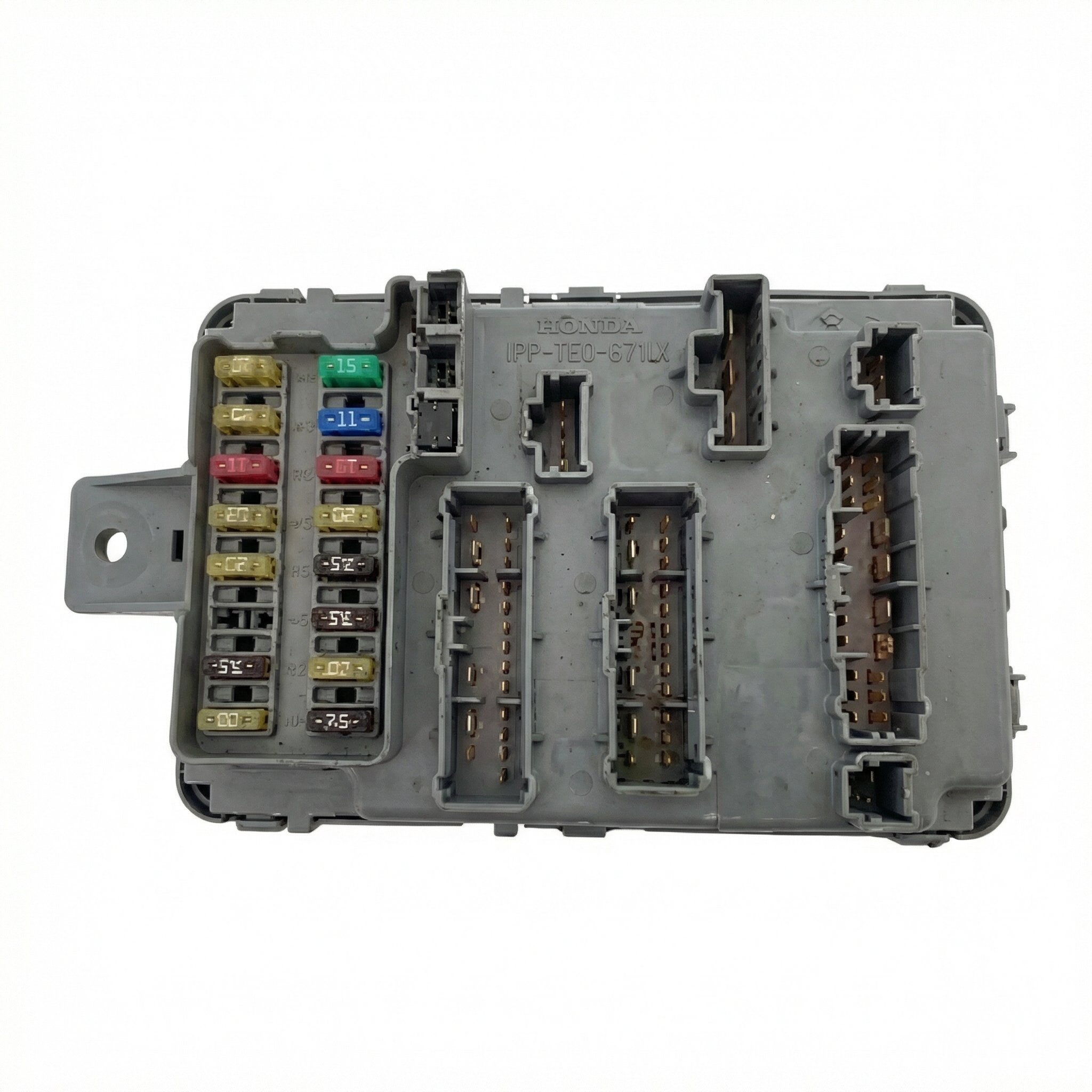
When a used part is the smart pick: A used underhood fuse box (UBEC) is a viable budget option, as they can sometimes be found for as little as $30 at a salvage yard. However, it is a significant gamble, as the GMT360 platform is known for this specific part failing, and a used unit may have the same internal broken trace or develop it soon after installation.
Donor-vehicle mileage cap: roughly under 80000 miles for the part to have meaningful remaining life.
What to inspect on the donor part:
- CRITICAL: The part number on the donor fuse box MUST exactly match the part number on your original unit. V8 and I6 fuse boxes are not interchangeable.
- Visually inspect all connectors on the bottom of the fuse box for any signs of melted plastic, corrosion, or burnt pins.
- If possible, check the donor vehicle's history for electrical problems or stalling.
- Avoid parts from vehicles with signs of flood or fire damage.
OEM-only on this vehicle (don't cheap out):
- Underhood Fuse Box (UBEC): While aftermarket versions may exist, a new OEM (ACDelco) unit is highly recommended as 'cheap insurance' against the well-known design flaw causing intermittent stalling.
Aftermarket brands forum-validated for this vehicle:
- Ignition Switch: ACDelco (Professional or GM Genuine), Standard Motor Products, Duralast.
- Ignition Coils: ACDelco, Delphi.
Brands owners have reported issues with on this vehicle:
- No-name, unbranded fuse boxes or ignition switches from online marketplaces should be avoided due to the critical safety function of these parts.
Real Owner Stories
Aggregated from forums and TSBs cited above. Mileages and costs reflect what owners reported in those sources.
2004 Isuzu Ascender 4.2L I6 — ~85000 miles
Symptoms: The vehicle would stall while driving, specifically when the engine was hot, and would only restart after cooling down. It also displayed a 'Reduced Engine Power' message.
What fixed it: Replacing the underhood fuse box (UBEC) due to a broken internal copper trace caused by heat cycles.
Source hint: TrailVoy.com / GMTNation.com forum threads
2005 Isuzu Ascender
Symptoms: Intermittent no-start condition where the engine would crank but not fire. The Check Engine Light was on with code P1682.
What fixed it: Replacement of the ignition switch. The internal electrical contacts had worn out, failing to send a stable voltage signal to the ECM.
Source hint: TrailVoy.com / GMTNation.com forum threads
Related OBD-II Codes
Frequently Asked Questions
My Ascender stalls when it gets hot but restarts after 45 minutes. Is this the fuse box issue?
Should I replace my MAF sensor if I have P1682 and P0101 together on my Isuzu?
Is there a specific relay I should check for the P1682 code?
Which ignition switch wires should I test to confirm a failure?
Can I repair the fuse box myself or do I have to buy a new one?
Are there specific ground points on the Ascender that cause electrical issues like P1682?
Helpful Videos
![P1682 Ignition 1 switch circuit 2 [SOLVED]](https://img.youtube.com/vi/KZFTjjczhPg/mqdefault.jpg)
Used OEM Parts in Stock
New Aftermarket Parts Available


The information in this article is provided for general reference and educational purposes only. Vehicle specifications, procedures, and part compatibility can vary by production date, trim level, and region. Always consult your vehicle's factory service manual and verify part numbers before purchasing or performing repairs. Safety-critical components such as airbags, seat belts, and braking systems should be installed by a qualified professional.
- Isuzu Ascender:
- 🧭 Diagnostic Flowchart
- 🎬 Helpful Videos
- 🛍️ Shop This Part
- What's Unique About the 2003-2008 Isuzu Ascender
- Symptoms You May Notice
- Most Likely Causes
- Rare But Worth Checking
- Diagnosis Steps
- Parts You'll Likely Need
- Related Codes That Often Appear With This One
- Technical Service Bulletins (TSBs) & Recalls
- Platform-Specific Known Issues
- Mechanic-Grade Diagnostic Values
- Wiring & Ground Locations
- Real Owner Repair Stories
- OEM Part Supersession History
- Model Year Variations Within This Range
- Other Known Issues on This Vehicle
- Used vs. New Parts: Buying Guide for This Vehicle
- Real Owner Stories
- 2004 Isuzu Ascender 4.2L I6 — ~85000 miles
- 2005 Isuzu Ascender
- Related OBD-II Codes
- Frequently Asked Questions
- 🎟️ Get 5% Off