

P1682 on 2005-2009 Saab 9-7X: Ignition Circuit Fault, Causes, and Fixes
On the Saab 9-7X, code P1682 is most often caused by a faulty underhood fuse block with an internal broken wire, not the ignition switch. This leads to stalling or a crank-no-start condition. Inspecting or replacing the fuse block is the most common fix.
- P1682 on a Saab 9-7X indicates a voltage mismatch in two ignition power feeds to the engine computer.
- Do not immediately assume the ignition switch is bad. The underhood fuse block is a more common point of failure for this code on this platform.
- The issue is often heat-sensitive, causing stalls when the engine is hot and resolving after it cools down.
- If code P0689 is also present, it is almost certainly a faulty underhood fuse block.
- This problem is shared across all vehicles on the GM GMT360 platform.
What's Unique About the 2005-2009 Saab 9-7X
The Saab 9-7X is a rebadged Chevrolet Trailblazer, built on GM's GMT360 platform. While P1682 on many GM vehicles points directly to a bad ignition switch, on this specific platform, the problem is very frequently a faulty Underhood Fuse Block (UBEC). An internal, 20-gauge solid copper wire trace is known to crack from heat and vibration, causing an intermittent open circuit that triggers the code, often leading to stalling when the engine bay is hot. Owners frequently replace the ignition switch only to have the problem return, because the fuse block was the real culprit all along. This is a well-documented issue across all GMT360 platform vehicles.
Symptoms You May Notice
- Engine cranks but will not start
- Sudden engine stalling, especially when hot, and won't restart until cooled down
- Check Engine Light illuminated
- Reduced Engine Power message on the instrument cluster
- No-crank, no-start condition in some cases
- Engine continues to run after turning the key off
- Replacing the ignition switch when the underhood fuse block is the actual point of failure.
- Replacing the ECM when the issue is a simple wiring or fuse block problem.
- Replacing the battery or starter without diagnosing the electrical fault first.
Most Likely Causes
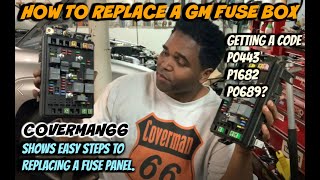
- Faulty Underhood Fuse Block (UBEC) 🔴 High Probability → Shop Fuse Box This is a well-documented failure point on the GMT360 platform. A specific, thin-gauge wire inside the multi-layer fuse block is known to fracture from repeated heat cycles and vibration, causing an intermittent open circuit. This failure is so common that multiple YouTube tutorials exist showing the exact location of the break.
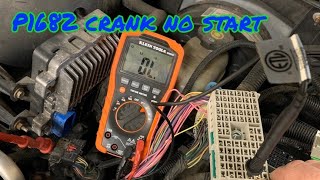
How to confirm: The issue often occurs when the 🎬 See a real-world Trailblazer P1682 diagnostic walkthrough engine bay is hot and resolves when it cools. Wiggling relays in the fuse block may temporarily cause or fix the issue. A definitive diagnosis requires removing the fuse block and testing for continuity on the affected circuit, or physically inspecting the internal wiring for breaks. Some owners report success by tapping on the fuse block when the no-start condition occurs.
Typical fix: Replacement of the entire underhood fuse block assembly. Some advanced DIYers have successfully disassembled the block to solder and repair the broken 20-gauge copper wire.
Est. part cost: $150-$400 - Faulty Ignition Switch 🟡 Medium Probability → Shop Ignition Switch The ignition switch is a common failure item on many GM vehicles from this era due to wear on its internal electrical contacts. However, for this specific code on this platform, it is often misdiagnosed when the fuse block is the real issue.
How to confirm: Use a scan tool to monitor ignition switch voltage parameters while turning the key. Wiggling the key in the ignition may also trigger the fault. Check for voltage drop on the pink wire from the ignition switch when the fault is present.
Typical fix: Replace the electrical portion of the ignition switch, which is located on the steering column.
Est. part cost: $30-$80 - Bad Powertrain or Run/Crank Relay ⚪ Low Probability → Shop Wiring Relay
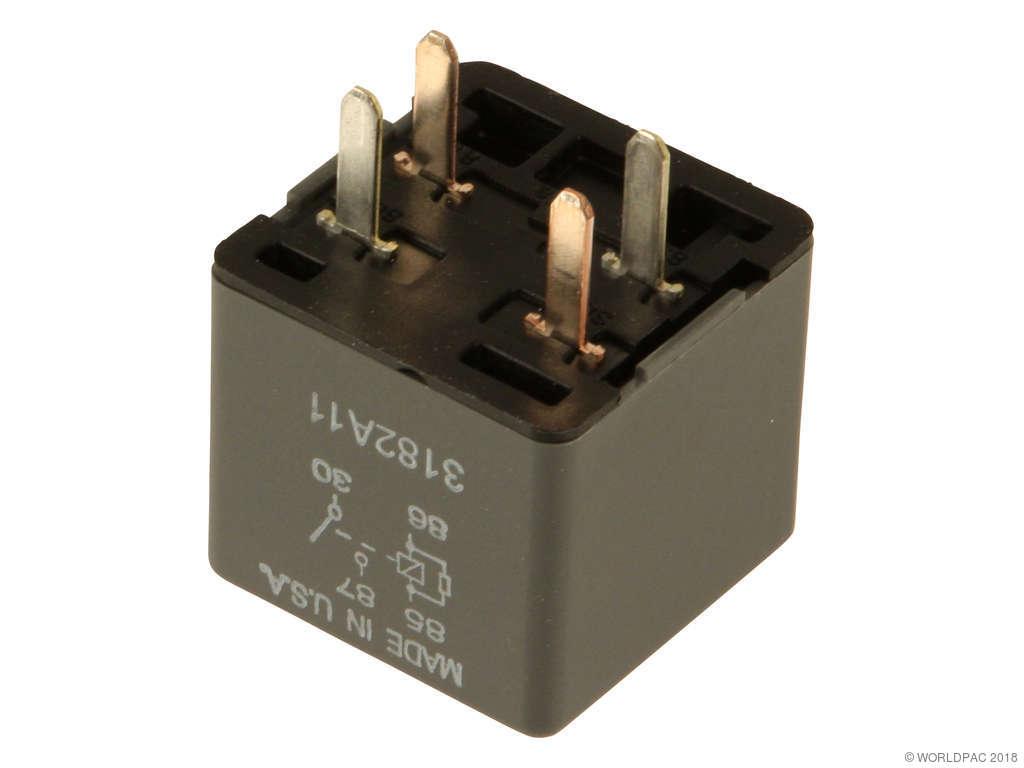
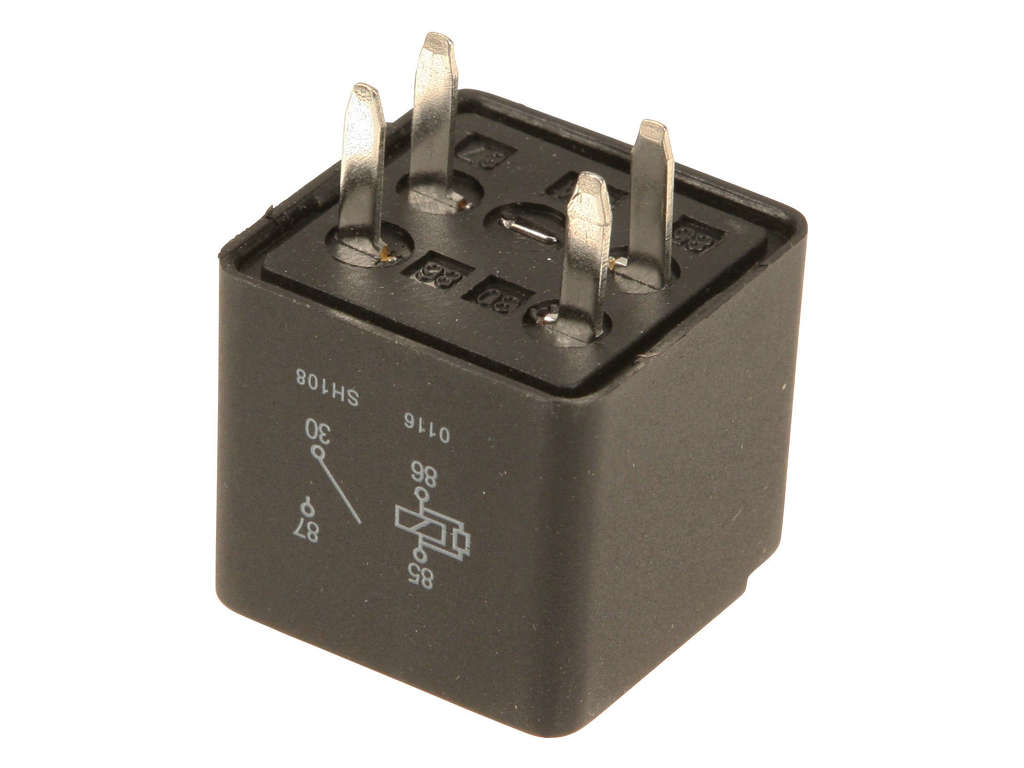
How to confirm: Swap the suspect relay (usually labeled PWR/TRN, IGN, or similar in the fuse box lid) with an identical, known-good relay from a non-essential system (like the horn or rear defogger) and see if the problem is resolved.
Typical fix: Replace the faulty relay.
Est. part cost: $10-$25
Rare But Worth Checking
- Broken or Corroded Wiring: A wire could be broken or shorted between the ignition switch, fuse block, and ECM. This is less common than component failure but can happen. A thorough visual inspection and continuity testing with a multimeter would be needed.
- Faulty Engine Control Module (ECM): → Shop Engine Control Module (ECM) This is extremely rare. The ECM should only be considered after all other possibilities, especially the fuse block and ignition switch, have been definitively ruled out.
Diagnosis Steps
- Check for any other stored DTCs. If P0689 is present, the underhood fuse block is the primary suspect.
- Start the vehicle. If it runs, try to reproduce the fault by wiggling the key in the ignition. If this causes stalling or warning lights, the ignition switch may be faulty.
- With the engine running or cranking, gently wiggle the relays in the underhood fuse block. If this causes the engine to stall, the fuse block has a bad internal connection.
- If the problem is intermittent (stalls when hot, restarts when cool), the fuse block is the most likely cause.
- As a simple diagnostic step, swap the Powertrain (PWR/TRN) relay with an identical relay from another circuit and see if the issue persists.
- When the no-start/stall condition is active, check for voltage at the ECM1 and IGN E fuses in the underhood fuse block. A loss of voltage points towards the fuse block or ignition switch.
- Inspect the terminals of the large connectors on the underside of the fuse block for any signs of corrosion, melting, or pushed-out pins.
- If all else fails, perform advanced diagnostics by testing for voltage and continuity at the ignition switch connector (pink wire) and the ECM connector to pinpoint the location of the voltage drop.
Parts You'll Likely Need
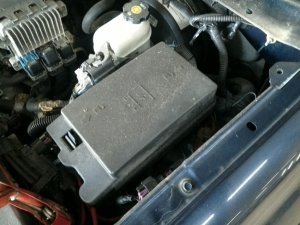
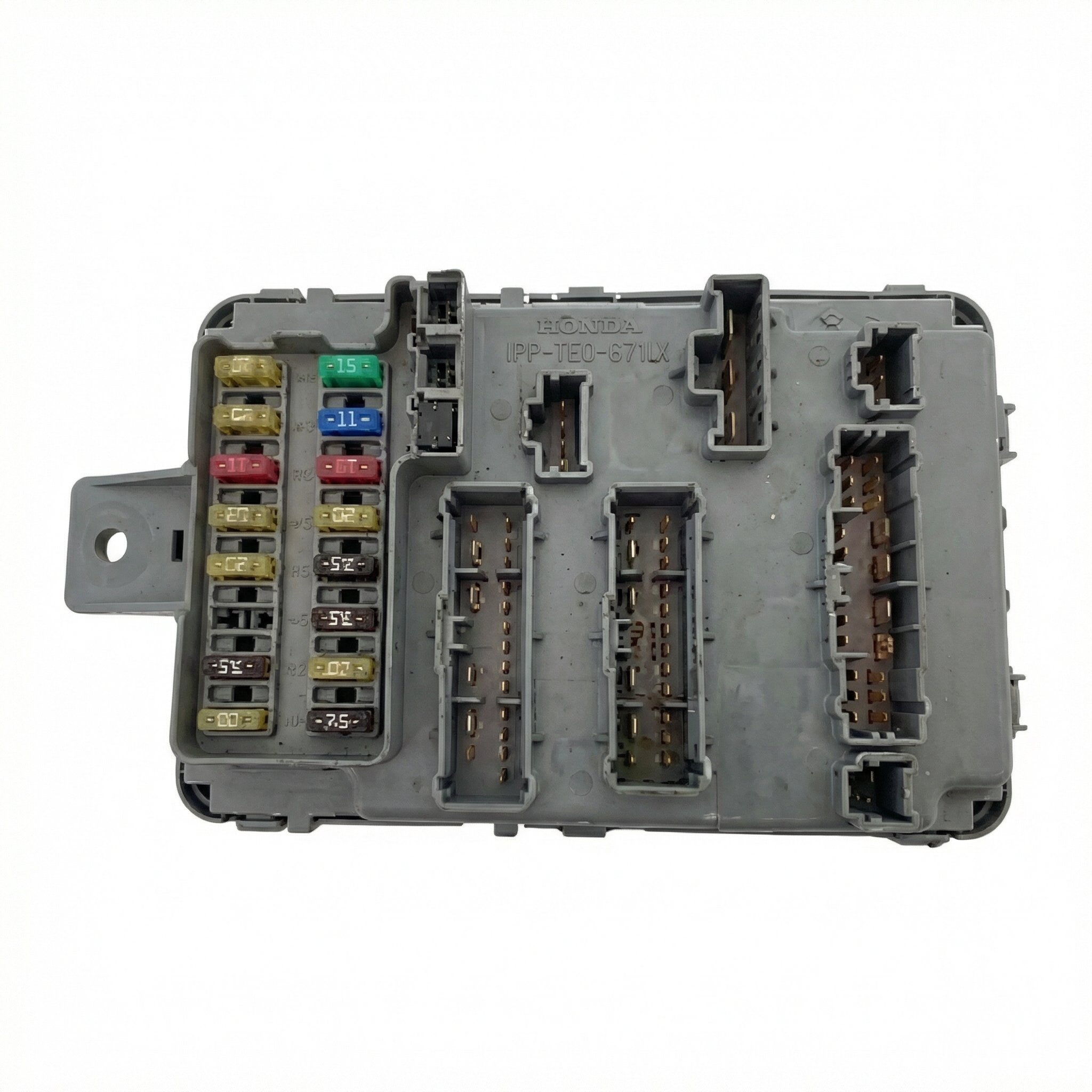
- Underhood Fuse Block
(OEM #15293339)— This is the most probable cause of P1682 on the GMT360 platform due to a common internal failure. The part number can vary by year and engine, so always verify with the vehicle's VIN.
Trusted brands: ACDelco, Dorman
OEM price range: $250-$400
Aftermarket price range: $150-$250 - Ignition Switch
(OEM #ACDelco D1462G (GM 15795321))— This is the second most likely cause and a common failure point on many GM vehicles. It is often misdiagnosed as the primary fault for this code on this platform.
Trusted brands: ACDelco, Standard Motor Products
OEM price range: $50-$80
Aftermarket price range: $30-$60
Related Codes That Often Appear With This One
- P0689 — This code for 'Engine Controls Relay Feedback Circuit Low Voltage' often appears with P1682 because the broken trace inside the fuse block that causes P1682 also supplies power to this relay circuit. Seeing both codes together strongly points to a faulty fuse block.
Technical Service Bulletins (TSBs) & Recalls
- While not for this specific platform, TSB 21-NA-032 for newer GM trucks highlights a similar P1682 issue caused by a compromised wire crimp in the fuse block connector, showing a pattern of similar failures in GM electrical centers.
Platform-Specific Known Issues
- The underhood fuse block on the GMT360 platform is susceptible to internal trace-wire cracking due to heat and vibration, leading to intermittent electrical faults like P1682.
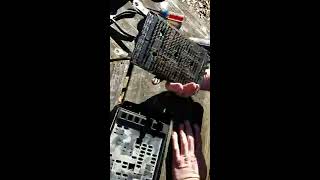
- Owner Repair Experience: An owner of a Trailblazer SS (which uses the same fuse block) documented the entire process of diagnosing the P1682 code, disassembling the fuse block by drilling out plastic rivets, 🎬 Watch this step-by-step fuse block disassembly guide locating the broken internal copper wire, and soldering it to fix the problem permanently instead of replacing the entire unit.
Mechanic-Grade Diagnostic Values
- Voltage difference between 'Ignition 1 Voltage' and 'Engine Controls Ignition Relay Feedback Signal' on a scan tool — expected: Less than 3.0 Volts. Failure: A difference greater than 3.0 Volts for more than one second will set the code.
- Resistance in the ignition voltage circuit or underhood fuse block — expected: Less than 6.0 Ω. Failure: A resistance of 6.0 Ω or greater can cause the DTC to set, indicating high resistance in the fuse block's internal traces or wiring.
- Voltage at the ECM ignition voltage circuit input pins (during active fault) — expected: 9-14 Volts (Battery Voltage). Failure: A reading of 0V on one of the two ignition circuits indicates an open or short to ground, likely from the fuse block.
Scan Tool Commands That Help
- Tech2 / GDS2: Live Data Monitoring — This is the primary diagnostic step. Monitor the 'Ignition 1 Voltage' and 'Engine Controls Ignition Relay Feedback Signal' parameters. A discrepancy between these two values confirms the fault condition the ECM is detecting.
- Tech2 / GDS2: DTC Information / Freeze Frame Data — Use this to confirm if P1682 is accompanied by P0689. The presence of both codes makes the underhood fuse block the primary suspect.
Wiring & Ground Locations
- G101 / G106 — G101 is on the lower front of the engine block; it is often connected via a jumper to G106 on the front frame cross rail under the crank pulley.. This is a primary ground point for the Engine Control Module (ECM) and Transmission Control Module (TCM). A poor connection here can cause a host of electrical issues, including power supply faults seen by the ECM.
- G103 — Located on the cowl in the engine compartment, typically above the brake booster.. This grounds many interior modules, including the Body Control Module (BCM) and the Data Link Connector (DLC). A fault here could cause communication issues or erratic behavior that might be confused with an ECM fault.
- Underhood Fuse Block (UBEC) Connectors — Multiple large multi-pin connectors on the underside of the fuse block, secured by bolts.. The bolts securing these main connectors can become loose, causing high resistance and intermittent connection for all circuits passing through them, which can trigger P1682. The internal broken trace that commonly causes this code is located between these connectors and the relays on top.
Real Owner Repair Stories
- Go-Parts / Trailvoy Forum User (2007 GMC Envoy Denali 5.3L (GMT360 Platform)) — No-start condition with codes P1682 and P0689 present. The powertrain relay was not functioning correctly.
❌ Tried (didn't work) Relay swapping
✅ What actually fixed it The owner disassembled the underhood fuse block, found a cracked internal copper trace, and soldered the trace to repair the connection. The vehicle started and ran correctly afterward. - Shaun's Garage (YouTube) (2009 Chevy Trailblazer) — Crank but no start condition, with code P1682.
❌ Tried (didn't work) Initial checks of relays and fuses.
✅ What actually fixed it After extensive testing with a multimeter and wiring diagrams, the owner identified an open circuit (broken wire) between the fuse block and the ECM. He cut the bad section of wire out and spliced in a new piece of wire to permanently fix the issue. - BLK_WILL_ SS (YouTube) (Chevrolet Trailblazer SS) — Engine would shut off while driving, triggering code P1682. Also experienced a crank-no-start.
❌ Tried (didn't work) Initially suspected the fuel pump.
✅ What actually fixed it The entire underhood fuse block was replaced with a new unit. This resolved the stalling and no-start condition.
OEM Part Supersession History
15293339→Varies— GM frequently updates parts. However, for fuse blocks, the exact part number must be matched.
Heads up: Due to the vast number of vehicle options (towing packages, engine size, etc.), the internal wiring of the fuse block differs. Using a fuse block with a non-matching part number, even from another 9-7X, will likely cause electrical problems. Always verify the correct part number for your specific VIN.
Diagnostic Flowchart
Other Known Issues on This Vehicle
Issues unrelated to this code that are worth knowing about as an owner of this generation:
- Failing Electronic Fan Clutch 🟠 Medium — Very common failure. The clutch can fail to engage, causing overheating at idle, or fail to disengage, causing excessive noise and reduced power. Onset can be anytime after 60,000 miles.
- Rear Air Suspension Failure 🟠 Medium — Common on models equipped with the optional air ride suspension (standard on 9-7X 5.3i and Aero). The rubber air springs develop leaks, or the compressor fails, causing the rear of the vehicle to sag. Many owners opt to replace the system with conventional coil springs.
- Faulty Instrument Cluster Stepper Motors 🟡 Low — Widespread across many GM vehicles from this era, including the GMT360 platform. Stepper motors for gauges (speedometer, tachometer, fuel, temp) fail, causing gauges to stick, read incorrectly, or not work at all. (Ref: There was a special coverage program, but it has long since expired for these vehicles.)
- Cracked Exhaust Manifold 🟠 Medium — Primarily affects the 4.2L inline-6 engine. The exhaust manifold is prone to cracking, causing an exhaust leak that is audible as a ticking noise, especially when the engine is cold.
- Driver Door Module Corrosion 🟡 Low — Common in regions that use road salt. Water can intrude into the driver's door and corrode the circuit board of the driver door module, causing erratic operation of power windows and locks. (Ref: NHTSA Action Number PE12013, GM Recall No. 12180)
Used vs. New Parts: Buying Guide for This Vehicle
When a used part is the smart pick: For this specific P1682 fault, a used Underhood Fuse Block (UBEC) is **NOT** a smart choice. The primary cause of failure is an internal cracked wire trace, which is a latent defect related to age and heat cycles. A used part is highly likely to have the same defect or fail shortly after installation. A used relay for temporary testing is acceptable.
What to inspect on the donor part:
- If a used fuse block must be sourced for an emergency, inspect for zero signs of heat damage (melted plastic) around relay sockets.
- Check all connector ports on the underside for any corrosion, bent pins, or water marks.
- Prioritize parts from vehicles in dry climates to minimize the risk of internal corrosion.
OEM-only on this vehicle (don't cheap out):
- Underhood Fuse Block (UBEC)
Aftermarket brands forum-validated for this vehicle:
- Bosch (for relays)
- Standard Motor Products (for relays and ignition switch)
Brands owners have reported issues with on this vehicle:
- Unbranded/white-box fuse blocks. While Dorman offers a replacement, owner feedback is mixed. Given the high labor involved and critical function, a new OEM (ACDelco / GM Genuine Parts) unit is the most reliable long-term solution.
Real Owner Stories
Aggregated from forums and TSBs cited above. Mileages and costs reflect what owners reported in those sources.
Chevrolet Trailblazer SS (GMT360 Platform)
Symptoms: The owner documented a P1682 code and performed a deep dive into the electrical center to find the root cause of the intermittent power loss.
What fixed it: Disassembled the fuse block by drilling out plastic rivets, located a broken 20-gauge internal copper wire, and soldered it back together for a permanent repair.
Source hint: vehicle_specific_issues - Owner Repair Experience
2002-2009 Chevrolet Trailblazer
Symptoms: Intermittent stalling and no-start conditions specifically linked to the P1682 code; often misdiagnosed as an ignition switch.
What fixed it: Replacement of the underhood fuse block (UBEC) after identifying a fractured internal trace-wire caused by heat and vibration.
Source hint: forum_citations - trailvoy.com / gmtnation.com
GM Silverado (Generic GM Ignition Reference)
Symptoms: P1682 code present.
What fixed it: Replacing the electrical portion of the ignition switch.
Source hint: forum_citations - https://www.gm-trucks.com/forums/topic/165038-how-to-ignition-switch-replacementp1682-repair/
Related OBD-II Codes
Frequently Asked Questions
My 2005-2009 Saab 9-7X stalls when the engine bay gets hot but restarts after cooling; is this the ignition switch?
Can I test the Underhood Fuse Block on my 9-7X without specialized tools?
Is there a specific TSB for the P1682 code on the Saab 9-7X platform?
My 9-7X instrument cluster gauges are sticking; is this related to the P1682 code?
I'm seeing 'Reduced Engine Power' on my Saab's dash along with P1682. What is the most likely fix?
Can I swap a relay to see if that fixes the P1682 no-start condition?
Helpful Videos
![P1682 Ignition 1 switch circuit 2 [SOLVED]](https://img.youtube.com/vi/KZFTjjczhPg/mqdefault.jpg)
Used OEM Parts in Stock
New Aftermarket Parts Available

The information in this article is provided for general reference and educational purposes only. Vehicle specifications, procedures, and part compatibility can vary by production date, trim level, and region. Always consult your vehicle's factory service manual and verify part numbers before purchasing or performing repairs. Safety-critical components such as airbags, seat belts, and braking systems should be installed by a qualified professional.
- Saab 9-7X:
- 🧭 Diagnostic Flowchart
- 🎬 Helpful Videos
- 🛍️ Shop This Part
- What's Unique About the 2005-2009 Saab 9-7X
- Symptoms You May Notice
- Most Likely Causes
- Rare But Worth Checking
- Diagnosis Steps
- Parts You'll Likely Need
- Related Codes That Often Appear With This One
- Technical Service Bulletins (TSBs) & Recalls
- Platform-Specific Known Issues
- Mechanic-Grade Diagnostic Values
- Scan Tool Commands That Help
- Wiring & Ground Locations
- Real Owner Repair Stories
- OEM Part Supersession History
- Other Known Issues on This Vehicle
- Used vs. New Parts: Buying Guide for This Vehicle
- Real Owner Stories
- Chevrolet Trailblazer SS (GMT360 Platform)
- 2002-2009 Chevrolet Trailblazer
- GM Silverado (Generic GM Ignition Reference)
- Related OBD-II Codes
- Frequently Asked Questions
- 🎟️ Get 5% Off