

P1682 on 2007-2009 Saturn Aura: Ignition Circuit Fault Causes and Fixes
On a 2007-2009 Saturn Aura, code P1682 is most often caused by a faulty underhood fuse block with internal connection problems. It can also be caused by a bad ignition switch or a failing relay. The most common symptom is the engine stalling or failing to start, and the fix is typically replacing the fuse block.
- P1682 means the engine computer is getting conflicting power signals, which is a serious fault that can cause stalling or a no-start condition.
- The most common cause on a 2007-2009 Saturn Aura is a faulty underhood fuse block. Do not be quick to replace the more expensive ECM.
- A simple and effective first diagnostic step is to swap the RUN/CRANK and Powertrain relays with known good ones.
- Wiggling the relays in the fuse block while trying to start the car can quickly help confirm a bad fuse block; if the car starts, the block is almost certainly the issue.
What's Unique About the 2007-2009 Saturn Aura
The Saturn Aura shares its GM Epsilon platform with vehicles like the Chevrolet Malibu and Pontiac G6, which are known for identical electrical issues leading to P1682. For this specific code, the underhood fuse block (UBEC) is a well-documented, primary point of failure across these models. Internal issues like fretting corrosion on terminals, cracked copper traces, or female terminals for the relays spreading apart cause intermittent power loss to the ECM. This leads to this code and symptoms like stalling or a no-start condition. While an ignition switch can be the cause, diagnosing the fuse block first is highly recommended for this platform due to its high failure rate.
Symptoms You May Notice
- Engine stalls while driving
- Engine will not start or has a crank-no-start condition 🎬 Watch: Real-world diagnosis of a Saturn Aura starting issue
- "Reduced Engine Power" message on the dashboard
- Check Engine Light is on
- Rough or unstable idle
- Transmission shifts harshly
- Battery drains or appears dead because a relay may stay energized
- Engine continues to run after turning the key off
- Replacing the battery. While a weak battery can cause many electrical problems, P1682 points to a specific voltage discrepancy between two circuits that a new battery will not fix.
- Replacing the alternator. The alternator is not directly related to the specific ignition circuits monitored for this code.
- Replacing the ECM prematurely. The ECM is expensive and rarely the root cause. It should be the last part to be considered for replacement.
Most Likely Causes
- Faulty Underhood Fuse Block (UBEC) 🔴 High Probability → Shop Fuse Box The fuse block on this GM platform is notorious for developing internal connection failures. Heat cycles and vibration cause the female terminals for the relays (especially the Run/Crank relay) to loosen, or cause internal copper traces to crack, creating an open circuit.
How to confirm: With the engine off, try wiggling the RUN/CRNK relay or the ECM fuse in the underhood fuse block while an assistant attempts to start the car. If this action allows the car to start or causes the fault to appear/disappear, the fuse block is the culprit. A voltage drop test across the relevant fuses and relay terminals can also confirm the issue. In one documented case, loose bolts holding the wire connectors to the bottom of the fuse box were the cause.
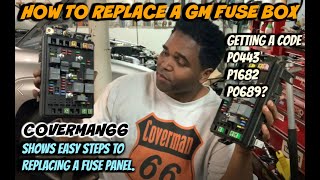
Typical fix: Replacement of the underhood fuse block is the most reliable fix. Some advanced DIYers have successfully repaired the block by tightening loose female terminals or soldering jumper wires to bypass cracked traces, but this requires disassembly of the unit. 🎬 Watch: Step-by-step GM fuse box replacement walkthrough
Est. part cost: $150-$400 - Defective Ignition Switch 🟡 Medium Probability → Shop Ignition Switch The ignition switch contains multiple electrical contacts that can wear out over time, causing an inconsistent voltage supply to the ECM's different circuits. While less common than the fuse block issue on this specific platform, it remains a possible cause.
How to confirm: Monitor the voltage on the ignition circuits at the ECM while wiggling the key in the ignition. If the voltage fluctuates or drops out, the switch is likely faulty. This requires using a multimeter and wiring diagrams. 🎬 See how to diagnose and solve this ignition circuit code
Typical fix: Replace the ignition switch. The GM part may have been superseded by an updated number like 22887691.
Est. part cost: $50-$150 - Failing Powertrain or Run/Crank Relay ⚪ Low Probability → Shop Wiring Relay
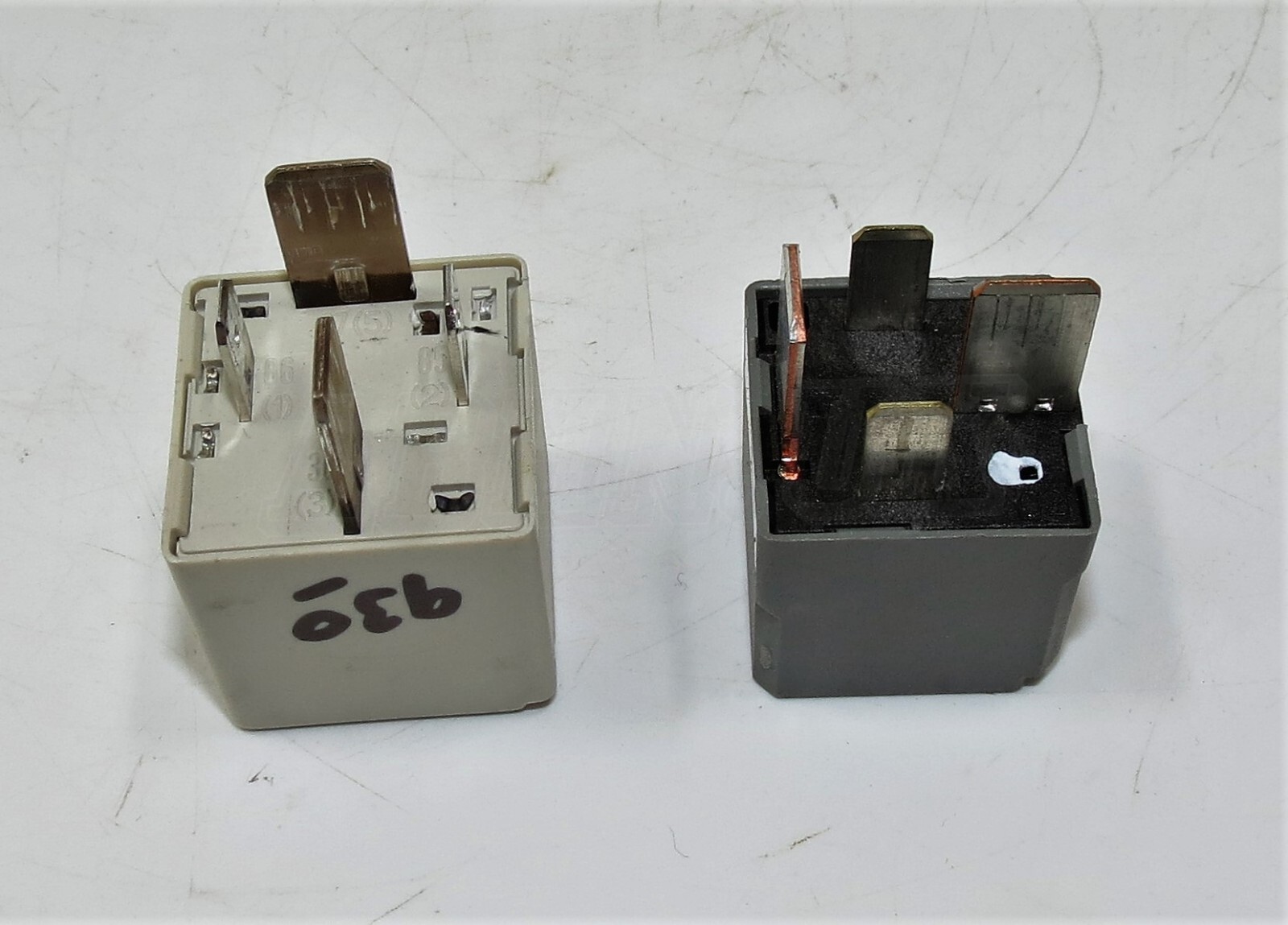
How to confirm: Swap the suspect relay (e.g., the RUN/CRNK or PWR/TRN relay) with an identical, known-good relay from a non-critical system (like the horn or A/C). If the problem is resolved, the original relay was faulty. This is a simple and effective first diagnostic step.
Typical fix: Replace the faulty relay.
Est. part cost: $10-$30 - Wiring Harness Issue ⚪ Low Probability
How to confirm: Visually inspect the wiring harness between the ignition switch, fuse block, and ECM for any signs of damage, corrosion, or loose connections. A continuity test with a multimeter would be needed to find a specific open or short in a wire. Pay close attention to the main connectors on the underside of the fuse block.
Typical fix: Repair the damaged section of the wiring harness.
Est. part cost: $5-$50
Rare But Worth Checking
- Faulty Engine Control Module (ECM): → Shop Engine Control Module (ECM) This is rarely the cause. The ECM is often the victim of faulty power inputs, not the source of the problem. All other possibilities, especially the fuse block and ignition switch, should be thoroughly ruled out before condemning the ECM.
Technical Service Bulletins (TSBs) & Recalls
- Manufacturer TSB Bulletin #PIT4649B notes that a "Service Engine Soon" MIL with P1682 may be accompanied by a battery draw or a no-start condition.
- Manufacturer TSB Bulletin #PIT4649D provides diagnostic tips for the P1682 code, specifically linking it to symptoms of battery draw and failure to start.
Diagnosis Steps
- Read the fault codes with an OBD-II scanner to confirm P1682 is present.
- Check for any other stored codes, particularly P0685, P0689, or P0101, as they strongly point towards a fuse block issue.
- Inspect the battery terminals and main ground connections to ensure they are clean and tight.
- Locate the underhood fuse block. Identify the RUN/CRANK and Powertrain (PWR/TRN) relays. Swap these relays with identical ones from non-critical circuits (e.g., horn) and see if the symptoms change. This is the easiest first step.
- While attempting to start the vehicle, gently wiggle the RUN/CRANK relay and the 'ECM' fuse within the fuse block. If this action allows the car to start, it strongly points to a faulty fuse block with a loose internal connection.
- If wiggling the relays has no effect, try wiggling the key in the ignition switch. If this causes the symptoms to appear or disappear, the ignition switch is a likely culprit.
- Using a scan tool, observe the 'Ignition 1 Voltage' and 'EC Ignition Relay Feedback' parameters with the key on, engine off. A difference greater than 3 volts confirms the fault condition.
- If a voltage discrepancy is confirmed, use a multimeter and a wiring diagram to measure the voltage at the two ignition input pins at the ECM connector. This will verify the voltage drop is reaching the computer.
- If one of the circuits has low or no voltage, trace it back through the fuse block and wiring to find the open or short. Inspect the connectors on the underside of the fuse block for corrosion or damage.
- If all wiring, relays, and the ignition switch test good, the underhood fuse block should be removed and inspected for internal corrosion or damage. Based on platform history, it remains the most probable cause even without visible damage.
- Only consider replacing the ECM after all other components have been proven to be working correctly.
Parts You'll Likely Need
- Underhood Fuse Block
(OEM #25883021, 25882988, 15859579, 25883019 (Part number varies by engine and model year, confirm with VIN).)— This is the most common failure point on the Saturn Aura and its platform mates for code P1682 due to internal connection failures.
Trusted brands: ACDelco (OEM), Dorman
OEM price range: $250-$450
Aftermarket price range: $150-$300 - Ignition Switch
(OEM #22887691 (Superseded part number))— A common secondary cause, the switch's internal contacts can wear out, causing the voltage discrepancy seen by the ECM.
Trusted brands: ACDelco, Standard Motor Products (SMP)
OEM price range: $80-$150
Aftermarket price range: $40-$90 - Ignition/Powertrain Relay — A cheap and easy part to replace as a diagnostic step. A failing relay can cause an open circuit.
Trusted brands: ACDelco, Bosch
OEM price range: $15-$30
Aftermarket price range: $10-$20
Related Codes That Often Appear With This One
- P0685 — This code relates to the ECM/PCM Power Relay Control Circuit. A fault in the fuse block or ignition switch that causes P1682 can easily disrupt this circuit as well.
- P0689 — This code indicates an issue with the ECM/PCM Power Relay Sense Circuit. It often appears with P1682 when the underlying cause is a faulty fuse block or relay.
- P0101 — On some GM vehicles, a wiring issue in the fuse block that causes P1682 can also trigger a MAF sensor code. TSB 21-NA-032 for other GM models specifically warns against replacing the MAF sensor when P1682 is also present.
Platform-Specific Known Issues
- A 2009 Saturn Aura owner on 2CarPros reported the 'Engine Power Reduced' message and limp mode with code P1682. The initial advice given was to inspect and swap the ignition 1 powertrain relay in the underhood fuse box as the first step.
- On SaturnFans.com, a user with a P1682 and stalling issues was advised that underhood fuse box problems and defective ignition switches are the most likely culprits, with a wiring schematic provided to aid in tracing the circuits back from the ECM.
- A YouTube video for a 2008 Saturn Aura with P1682 and starting issues demonstrated a fix that involved bypassing a faulty ground control from the computer to the relay by running a new jumper wire, after identifying a bad connection at the X1 connector under the fuse box.
Mechanic-Grade Diagnostic Values
- Voltage difference between 'Ignition 1 Voltage' and 'Engine Controls Ignition Relay Feedback' scan tool PIDs — expected: Less than 3 Volts. Failure: A difference greater than 3 Volts for one second or less.
- Resistance of ignition voltage circuit through the underhood fuse block — expected: Less than 6 Ω. Failure: A resistance of 6 Ω or greater will cause the DTC to set.
- Voltage at the control circuit of the affected relay (e.g., Run/Crank relay terminal 85) — expected: Less than 1 V with ignition ON. Failure: Voltage greater than 1 V indicates a short to voltage or an open/high resistance in the control circuit.
Scan Tool Commands That Help
- Tech2 / GDS2 or equivalent professional scan tool: Observe Live Data: 'Ignition 1 Voltage' and 'Engine Controls Ignition Relay Feedback' — This is the primary data observation used to confirm the fault condition that sets P1682. It allows the technician to see the voltage discrepancy as the ECM sees it in real-time. No specific bidirectional commands are typically used for this diagnosis; it is based on monitoring voltage inputs.
Wiring & Ground Locations
- Underhood Fuse Block Connectors (X1, X2, X3) — On the underside of the underhood fuse block in the engine compartment. The block must be unbolted and lifted to access them.. These are the main pass-through connectors for power and control signals. A specific failure has been documented at connector X1, pin A7 (brown wire), which is the ground control from the ECM for the relay. A bad connection here can cause the relay to malfunction, triggering P1682.
- G105 (Engine Ground) — For 2007 models: Under the left intake manifold, on the rear of the cylinder head. For 2009 2.4L models: Left front of the engine. For 2009 3.6L models: Center rear of the engine.. This is a primary engine ground. A poor connection here can cause unstable voltage references for various components, including the ECM, potentially contributing to voltage discrepancy codes.
- G106 (Engine/Transmission Ground) — For 2007 3.5L models: Rear of the engine, above the oil filter. For 2009 2.4L models: Rear of the engine, near the Park/Neutral Position (PNP) switch.. This ground is critical for the ECM and Transmission Control Module (TCM). A loose or corroded G106 can cause a wide range of powertrain electrical faults, including P1682.
- ECM/IGN Fuses — In the underhood fuse block. For a 2009 2.4L, these are specifically listed as 'ECM FUSE 13 10A' and 'ECM IGN FUSE 16 10A'.. These two fuses supply the separate ignition voltage circuits that the ECM monitors. A poor connection at these specific fuses (not necessarily a blown fuse) can cause the voltage drop that sets the code.
Real Owner Repair Stories
- YouTube user 'The Lo-fi Mofo' (2008 Pontiac G6 2.4L (Epsilon platform twin)) — Intermittent stalling at stoplights, then a final crank-no-start. Stalled when the run/crank relay was wiggled.
❌ Tried (didn't work) Replacing the run/crank relay. The new relay was also loose in the socket.
✅ What actually fixed it The female terminals for the run/crank relay inside the fuse box had spread apart, causing a poor connection. The owner used a small pick tool to carefully bend the terminals back together for a tight fit, which permanently resolved the issue. - YouTube user 'B.T.T' (2008 Saturn Aura 3.5L) — Crank-no-start, P1682 and P0685 codes. Relay was energizing by itself without the key in the ignition.
❌ Tried (didn't work) Initial diagnosis pointed towards a faulty relay or fuse box.
✅ What actually fixed it The ground control from the ECM to the relay was faulty. The problem was traced to a bad connection at the X1 connector, pin A7 (brown wire) under the fuse box. The fix was to run an external jumper wire to provide a solid ground to the relay's control circuit, bypassing the faulty connection in the fuse block connector. - Saturn Forum user 'sgtwolf89' (2009 Saturn Aura XE 2.4L) — Sudden hard idle, 'Reduced Engine Power' message, Check Engine Light with code P1682.
❌ Tried (didn't work) Replaced numerous fuses and relays, Replaced intake and exhaust VVT solenoids, Replaced PVC valve, Had ignition switch checked, Replaced the ECM
✅ What actually fixed it The user was in the process of diagnosing and had not posted a final fix, but the expert advice on the forum strongly identified the underhood fuse box as the culprit after all other common parts were replaced. The thread highlights the expensive and fruitless path of replacing other components before addressing the known fuse box issue.
OEM Part Supersession History
25883021→20822697— Standard part revision/update.
Heads up: Part number 25883021 is for 2009 Aura 2.4L models with California Emissions (RPO Code NU6). Part number 20822696 is for Federal Emissions models. Using the wrong emissions-specific fuse box can cause other issues. Both parts may be discontinued from GM but serve as the correct reference for finding used or remanufactured units.
Model Year Variations Within This Range
- 2007 vs 2009: The physical location of key ground points can change. For example, on the 2.4L engine, ground G105 is on the rear of the cylinder head in 2007 but moves to the left front of the engine for 2009. Always verify ground locations with a diagram specific to the model year and engine.
- 2007-2009: Fuse box part numbers are specific not only to the year and engine but also to the emissions package (Federal vs. California). Installing a fuse box from a vehicle with a different emissions package can lead to new, unrelated fault codes.
Diagnostic Flowchart
Other Known Issues on This Vehicle
Issues unrelated to this code that are worth knowing about as an owner of this generation:
- Broken 3-5-R Transmission Wave Plate 🔴 High — Very common in vehicles with the 6T70/6T75 6-speed automatic transmission. Failure often occurs between 60,000 and 120,000 miles, resulting in sudden loss of 3rd, 5th, and Reverse gears. (Ref: GM Special Coverage 14404B extended the warranty to 10 years/120,000 miles for this specific failure, though most vehicles are now past this period.)
- Premature Timing Chain Wear (3.6L V6) 🔴 High — Common on the 3.6L LY7 V6 engine. Stretched timing chains can cause a check engine light (codes P0008, P0017), rattling noises, and reduced engine performance. The issue was often linked to extended oil change intervals recommended by the original oil life monitor calibration. (Ref: GM issued customer satisfaction programs and updated oil life monitor software to recommend more frequent oil changes to mitigate wear.)
- Loss of Electric Power Steering (EPS) 🔴 High — A widespread issue where the electric power steering assist can suddenly fail, making the vehicle very difficult to steer. This can be intermittent. (Ref: Subject to GM Recall #14116 (NHTSA 14V153000) which addressed voltage fluctuations in the Body Control Module (BCM) connection that could cause this.)
- Brake Apply Sensor (BAS) Fluctuation 🟠 Medium — Increased resistance in the Body Control Module (BCM) connection can cause voltage fluctuations in the Brake Apply Sensor circuit. This can lead to issues like brake lights staying on or cruise control not working. (Ref: Subject to GM Recall #13036 (NHTSA 14V252000).)
- EVAP System Faults (Loose Gas Cap) 🟡 Low — Many owners report Check Engine Lights for EVAP codes like P0455 (Gross Leak) or P0461, which are often caused by a faulty or loose gas cap.
Used vs. New Parts: Buying Guide for This Vehicle
When a used part is the smart pick: For the primary failure part, the underhood fuse block, buying a used part is HIGHLY RISKY. The issue is often an internal manufacturing or design defect that a used part from a junkyard is likely to share or develop soon. A used part should only be considered as a last resort if a new or remanufactured unit is completely unavailable.
Donor-vehicle mileage cap: roughly under 50000 miles for the part to have meaningful remaining life.
What to inspect on the donor part:
- Verify the part number EXACTLY, including for the correct emissions package (Federal vs. California).
- Inspect the relay sockets, especially for the RUN/CRNK and PWR/TRN relays, for any signs of spread terminals or heat damage.
- Check the underside connectors for any corrosion, especially if the donor car shows signs of water leaks under the hood.
- Ask the salvage yard if they have any history on the donor vehicle (e.g., was it wrecked with low miles vs. scrapped for engine failure).
OEM-only on this vehicle (don't cheap out):
- Underhood Fuse Block: Given the high failure rate and internal nature of the fault, a new GM/ACDelco OEM part is the most reliable option to ensure you are not installing a part with the same inherent defect. A professionally remanufactured unit with a long warranty is the next best choice.
Aftermarket brands forum-validated for this vehicle:
- ACDelco (OEM)
Brands owners have reported issues with on this vehicle:
- Dorman: While Dorman produces a wide range of parts, forum discussions among professional mechanics and experienced DIYers often report a higher-than-average failure rate for their complex electronic components like fuse blocks and control modules.
- Unbranded/No-Name (eBay/Amazon): Be extremely cautious of cheap, unbranded fuse blocks from online marketplaces. They often have poor quality control and may use inferior internal components, leading to a quick repeat failure. There are also reports of counterfeit ACDelco parts being sold online.
Real Owner Stories
Aggregated from forums and TSBs cited above. Mileages and costs reflect what owners reported in those sources.
2009 Saturn Aura
Symptoms: The 'Engine Power Reduced' message appeared on the dashboard and the car entered limp mode with code P1682 stored.
What fixed it: The owner was advised to inspect and swap the ignition 1 powertrain relay in the underhood fuse box as the initial diagnostic step.
Source hint: 2CarPros.com: A post 'Engine Power Reduced, code p1682 - 2009 saturn aura'
2008 Saturn Aura
Symptoms: The vehicle experienced starting issues and a P1682 code.
What fixed it: Bypassing a faulty ground control from the computer to the relay by running a new jumper wire after identifying a bad connection at the X1 connector under the fuse box.
Source hint: YouTube video for a 2008 Saturn Aura with P1682 and starting issues
2007-2009 Saturn Aura
Symptoms: Intermittent electrical issues, including stalling and random warning lights.
What fixed it: The symptoms were identified as consistent with a failing underhood fuse block or BCM connection.
Source hint: Edmunds Car Forums: 'Saturn Aura Electrical / Computer Problems?'
Related OBD-II Codes
Frequently Asked Questions
My 2009 Saturn Aura is showing 'Reduced Engine Power' and stalling. What is the most likely first step for a DIY fix?
I suspect my Saturn Aura's underhood fuse block is failing. How can I confirm this without tools?
Is there a specific replacement part number for the ignition switch if that is causing my P1682 code?
Why does my Saturn Aura continue to run even after I turn the key to the off position?
Can a difference in voltage readings on my scan tool confirm the P1682 fault?
Are there other GM vehicles that share this specific fuse block issue with the Saturn Aura?
Helpful Videos
![P1682 Ignition 1 switch circuit 2 [SOLVED]](https://img.youtube.com/vi/KZFTjjczhPg/mqdefault.jpg)
Used OEM Parts in Stock
New Aftermarket Parts Available


The information in this article is provided for general reference and educational purposes only. Vehicle specifications, procedures, and part compatibility can vary by production date, trim level, and region. Always consult your vehicle's factory service manual and verify part numbers before purchasing or performing repairs. Safety-critical components such as airbags, seat belts, and braking systems should be installed by a qualified professional.
- Saturn Aura:
- 🧭 Diagnostic Flowchart
- 🎬 Helpful Videos
- 🛍️ Shop This Part
- What's Unique About the 2007-2009 Saturn Aura
- Symptoms You May Notice
- Most Likely Causes
- Rare But Worth Checking
- Technical Service Bulletins (TSBs) & Recalls
- Diagnosis Steps
- Parts You'll Likely Need
- Related Codes That Often Appear With This One
- Platform-Specific Known Issues
- Mechanic-Grade Diagnostic Values
- Scan Tool Commands That Help
- Wiring & Ground Locations
- Real Owner Repair Stories
- OEM Part Supersession History
- Model Year Variations Within This Range
- Other Known Issues on This Vehicle
- Used vs. New Parts: Buying Guide for This Vehicle
- Real Owner Stories
- 2009 Saturn Aura
- 2008 Saturn Aura
- 2007-2009 Saturn Aura
- Related OBD-II Codes
- Frequently Asked Questions
- 🎟️ Get 5% Off