

P1682 on 2002-2007 Saturn Vue: Ignition Circuit Fault Causes and Fixes
On a 2002-2007 Saturn Vue, code P1682 is most often caused by a faulty underhood fuse block or a failing ignition switch. These issues can lead to stalling or a no-start condition. The fuse block is a known weak point on this platform. Expect to pay $150-$400 for a new fuse block or $50-$100 for an ignition switch.
- P1682 means the engine computer is getting conflicting power signals, which is a serious issue that can cause stalling.
- The two most likely causes on a 2002-2007 Vue are a bad underhood fuse block or a faulty ignition switch.
- As a first step, try swapping the 'PWR/TRN' and 'RUN/CRNK' relays in the underhood fuse block with other identical relays to see if the problem resolves.
- Carefully wiggle the key in the ignition and the fuses/relays in the fuse block to see if you can replicate the problem, which will help pinpoint the faulty component.
- Do not immediately assume the battery or alternator is bad; this code points to a more specific circuit fault.
What's Unique About the 2002-2007 Saturn Vue
The first-generation Saturn Vue was built on the GM Theta platform, which it shares with the Chevrolet Equinox and Pontiac Torrent. This platform from this era is notorious for electrical issues, particularly with the Underhood Fuse Block (UBEC). Many owners have documented issues with internal corrosion and poor connections within the fuse block, leading to a variety of difficult-to-diagnose electrical problems, including P1682. Additionally, the Vue was included in major GM ignition switch recalls (NHTSA Campaign 14V490000 / GM Recall #14506), making the switch a primary suspect for any related code.
Symptoms You May Notice
- Engine stalls unexpectedly, sometimes while driving
- Engine cranks but will not start
- Intermittent no-start condition
- "Reduced Engine Power" message on the dash
- Check Engine Light is on
- Difficulty turning the key or key feels loose in the ignition
- Various warning lights flickering on the dash
- Replacing the battery or alternator. While a no-start can be a battery issue, P1682 points to a specific voltage discrepancy between two circuits, which is not typically caused by a weak battery alone.
Most Likely Causes
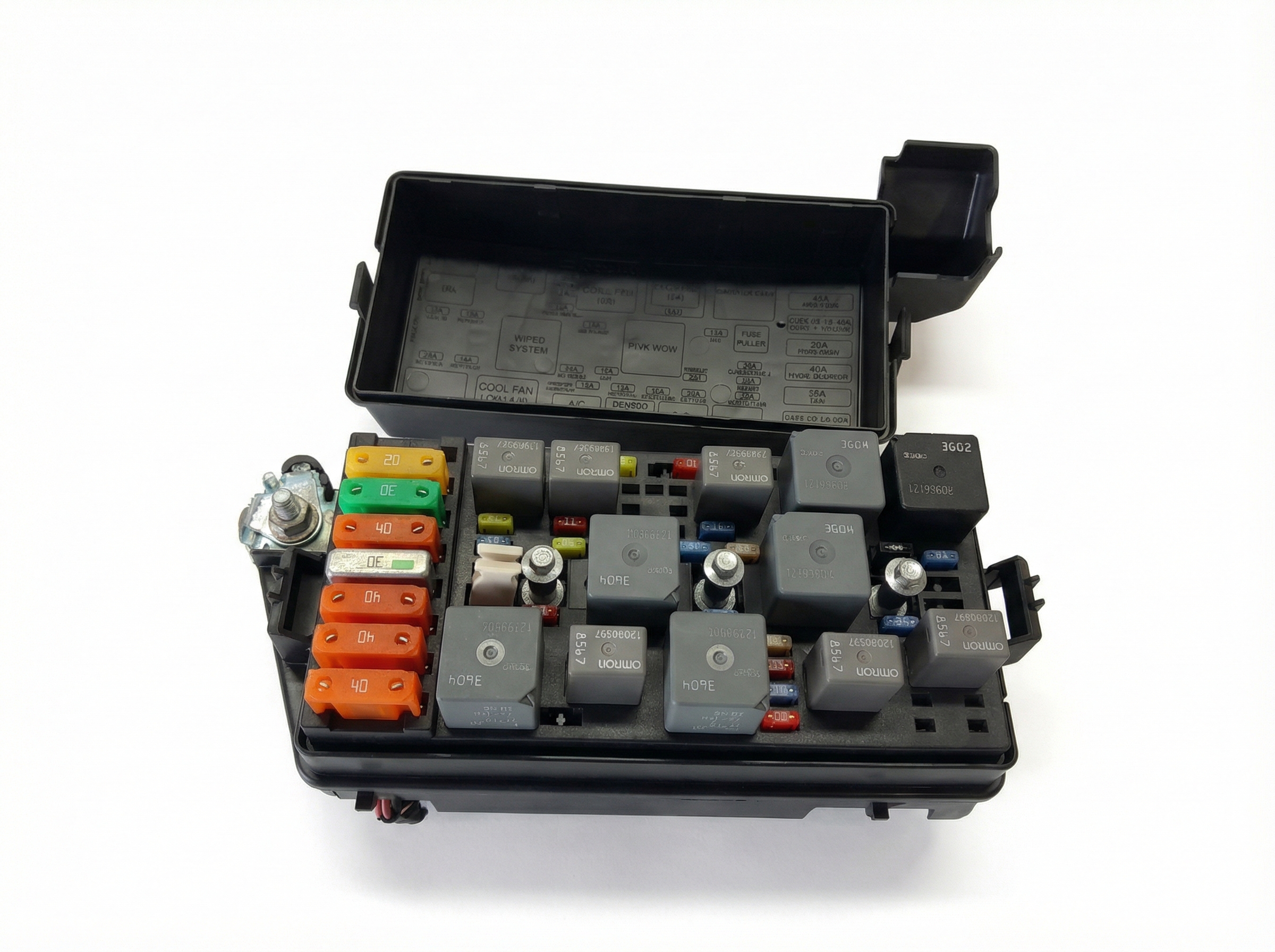
- Faulty Underhood Fuse Block (UBEC) 🔴 High Probability → Shop Fuse Box These fuse blocks are known to develop internal corrosion on the copper traces between board layers or have loose terminal connections for fuses and relays. Water intrusion is a known cause of this corrosion. This is a common failure point on the Vue and its platform mates, the Chevy Equinox and Pontiac Torrent.
How to confirm: With the key on, wiggle the ECM, PWR/TRN, and RUN/CRNK relays and fuses in the underhood block. If this causes the engine to stall or allows it to start, the fuse block has a bad internal connection. A visual inspection of the large connectors on the bottom of the fuse block (especially C1 and C2 per TSB #02-06-03-008) may show green/white corrosion or backed-out pins.
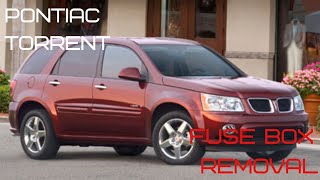
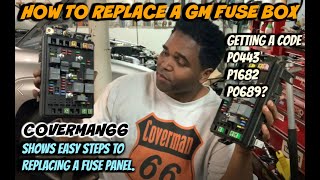
Typical fix: Replacement of the entire underhood fuse block assembly is the most reliable fix. 🎬 Watch: How a faulty fuse box causes P1682 and how to swap it Repairing internal traces by soldering jumpers is possible but not recommended for most DIYers.
Est. part cost: $150-$400 - Faulty Ignition Switch 🔴 High Probability → Shop Ignition Switch The Saturn Vue was part of the massive GM ignition switch recall (GM #14506). The internal contacts of the switch wear out, causing an unstable or intermittent voltage supply to the ECM and other modules, directly triggering the voltage discrepancy seen in P1682.
How to confirm: While the vehicle is running, gently wiggle the key in the ignition. If this causes the engine to stumble, stall, or makes the dashboard lights flicker, the ignition switch is likely faulty. A multimeter can also be used to back-probe the switch's output circuits to check for voltage drops when the key is turned.
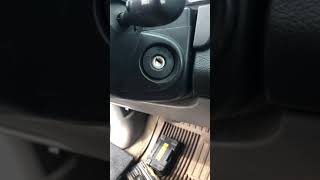
Typical fix: Replace the electrical portion of the ignition switch. 🎬 See this walkthrough on how to replace the ignition switch This was a recall item, so check with a GM dealer to see if your VIN is covered.
Est. part cost: $40-$100 - Bad Powertrain or Run/Crank Relay 🟡 Medium Probability → Shop Wiring Relay These relays handle high electrical loads and can fail over time. Since they directly control the two circuits monitored by the ECM for code P1682, their failure is a direct cause.
How to confirm: Locate the Powertrain (PWR/TRN) and Run/Crank (RUN/CRNK) relays in the underhood fuse block. Swap the suspect relay with an identical one from a non-critical circuit (like the horn or fog lamps) and see if the problem is resolved.
Typical fix: Replace the faulty relay. It's inexpensive and easy to do.
Est. part cost: $10-$25 - Wiring or Connector Issue ⚪ Low Probability GM TSB #02-06-03-008 specifically calls out the potential for loose terminals in the C1 and C2 connectors at the underhood fuse block on 2002-2003 models.
How to confirm: Visually inspect the wiring harness and connectors at the ignition switch, underhood fuse block, and ECM. Look for any signs of damage, chafing, melting, or corrosion. Pay close attention to the large connectors (C1, C2) on the bottom of the fuse block.
Typical fix: Repair the damaged section of wire or clean/replace the affected connector. Ensure all connector pins are fully seated.
Est. part cost: $5-$50
Rare But Worth Checking
- Poor Engine or Chassis Ground: A loose or corroded main ground strap can cause erratic voltage throughout the vehicle, potentially tricking the ECM into setting this code. Check the main ground connections from the battery to the chassis and from the engine block to the chassis, specifically G101, G103, and G105.
- Faulty Engine Control Module (ECM): → Shop Engine Control Module (ECM) This is extremely rare. The ECM is typically robust and sets this code due to bad information it receives. All other possibilities, especially the fuse block and ignition switch, must be ruled out before condemning the ECM.
Diagnosis Steps
- Scan for any other fault codes. Address power-related codes like P0689 or P0685 first if present.
- Perform the 'wiggle test': With the key in the 'ON' position, carefully wiggle the 'PWR/TRN' and 'RUN/CRNK' relays in the underhood fuse block. If wiggling a component causes a change in symptoms (e.g., allows the car to start, or causes it to stall), you have confirmed a loose internal connection in the fuse block.
- Swap the 'PWR/TRN' and 'RUN/CRNK' relays with identical relays from non-essential systems (e.g., horn) to rule out a simple relay failure.
- Test the ignition switch: Gently wiggle the key while the engine is running. If this causes stalling or flickering lights, the switch is the likely culprit.
- Check for GM Recall Status: Contact a GM dealership with your VIN to see if the ignition switch recall (GM #14506) is open for your vehicle.
- Inspect Fuse Block Connectors: Disconnect the battery. Unbolt and lift the underhood fuse block to inspect the large connectors on the underside (specifically C1 and C2) for any signs of green/white corrosion, melted plastic, or backed-out pins, as noted in TSB #02-06-03-008.
- Check for Water Intrusion: Look for evidence of water stains or moisture around the fuse block, which could indicate a leak from the cowl or windshield area promoting corrosion.
- Inspect Grounds: Check the main battery and chassis ground connections for tightness and corrosion. Specifically check G101 (left front of engine compartment), G103 (left side of engine compartment), and G105 (left rear of engine).
Parts You'll Likely Need
- Underhood Fuse Block — This is the most common failure point on the Saturn Vue and its platform mates for P1682, causing a wide range of electrical issues due to internal corrosion. Part numbers are year-specific and must be verified with VIN. Examples: 22685683 (2002-03), 15263971 (2004-05), 15796346 (2006-07).
Trusted brands: ACDelco, GM Genuine Parts
OEM price range: $250-$450
Aftermarket price range: $150-$300 - Ignition Switch
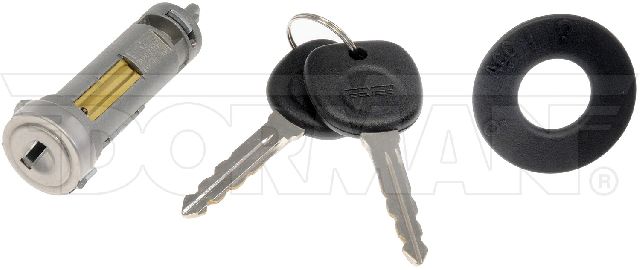
(OEM #95919456)— The electrical switch attached to the lock cylinder is a known weak point and was subject to recall GM #14506. It fails internally, causing voltage discrepancies.
Trusted brands: ACDelco, Standard Motor Products, Dorman
OEM price range: $70-$100
Aftermarket price range: $40-$70 - Ignition Lock Cylinder
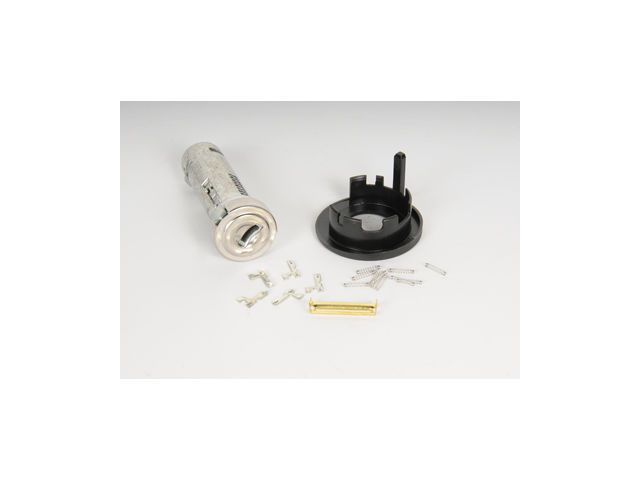
(OEM #15841209)— Often replaced along with the switch, especially if the key is difficult to turn or can be removed while running. This was the subject of NHTSA recall 14V490000.
Trusted brands: ACDelco, Dorman
OEM price range: $50-$80
Aftermarket price range: $30-$60 - Automotive Relay — The Powertrain or Run/Crank relays can fail, causing an immediate P1682. This is an easy and inexpensive part to replace as a diagnostic step.
Trusted brands: Bosch, ACDelco, Standard Motor Products
OEM price range: $15-$30
Aftermarket price range: $8-$20
Related Codes That Often Appear With This One
- P0689 — This code for 'ECM/PCM Power Relay Control Circuit Low' often appears with P1682 because both can be triggered by the same fault, typically a bad connection at the underhood fuse block or a failing relay.
- P0685 — Similar to P0689, this code for 'ECM/PCM Power Relay Control Circuit / Open' points to an issue in the power supply circuit controlled by the powertrain relay, a common source of P1682.
Technical Service Bulletins (TSBs) & Recalls
- TSB #02-06-03-008
- Bulletin #PIT4649B: A diagnostic tip for Saturn vehicles noting that a Service Engine Soon MIL with P1682 may be accompanied by a battery draw or a no-start condition.
- Bulletin #PIT4649D: Provides further diagnostic guidance for the P1682 code, specifically linking it to symptoms like battery draw and no-start scenarios.
Platform-Specific Known Issues
- Widespread issues with corrosion inside the underhood fuse block, particularly on the 3.0L V6 models, can cause this code along with other strange electrical behavior.
- The ignition switch and lock cylinder were part of a major safety recall by GM. Even if repaired under recall, these parts can fail again and are a primary cause of P1682.
Mechanic-Grade Diagnostic Values
- Voltage difference between 'Ignition 1 Voltage' and 'EC Ignition Relay Feedback Signal' on a scan tool. — expected: Less than 3 volts.. Failure: A voltage difference greater than 3 volts for more than 1-2 seconds.
- Voltage at the Pink wire at the ignition switch connector. — expected: Battery Positive Voltage (B+) with key in ON and START positions.. Failure: Voltage is low or drops out when wiggling the key, indicating a faulty ignition switch.
- Resistance of a standard 12V automotive relay coil (PWR/TRN or RUN/CRNK). — expected: Between 50 and 120 Ohms between pins 85 and 86.. Failure: Reading of 'OL' (open) or near 0 Ohms (shorted).
Scan Tool Commands That Help
- Tech2 or equivalent professional scanner: Live Data Parameter Viewing — Observe the 'Ignition 1 Voltage' and 'EC Ignition Relay Feedback Signal' PIDs. This is the primary way to confirm the ECM is seeing the voltage discrepancy that sets code P1682.
Wiring & Ground Locations
- Underhood Fuse Block (UBEC) — Left side of the engine compartment, near the battery.. This is the central hub for the PWR/TRN and RUN/CRNK relays and their circuits. Internal corrosion or broken traces within the block are the most common cause of P1682.
- G101 — Left front of the engine compartment.. This is a primary ground for the Engine Control Module (ECM). A poor connection here can cause erratic ECM behavior and voltage-related codes.
- G103 — At the left side of the engine compartment, on the cowl, sometimes above the brake booster.. This ground serves the Body Control Module (BCM) and other dash components. While not a direct cause, a bad ground here can contribute to widespread electrical issues.
- G105 — At the left rear of the engine.. This is another critical engine-area ground point that should be checked for tightness and corrosion.
- ECM (Engine Control Module) — On the intake manifold, under the ignition coil housing (2.2L L61).. This is the module that monitors the two ignition circuits and sets the code. All wiring and voltage checks ultimately lead to its connectors.
Real Owner Repair Stories
- YouTube user Alan Sunday, Trailblazer (similar GM platform) (2007 Trailblazer SS) — Cranks but no start when hot, code P1682.
❌ Tried (didn't work) Replacing the ignition switch, Replacing the battery, Replacing the Powertrain and Starter relays
✅ What actually fixed it Disassembled the underhood fuse block and found a broken 20-gauge solid copper wire trace inside. The wire was replaced, and the issue was resolved. - YouTube channel C&J's Mobile Automotive LLC, GMC Envoy (similar GM platform) (2007 GMC Envoy Denali 5.3L) — Stalling and shutting off when warm, no-start, codes P1682 and P0689.
❌ Tried (didn't work) Initial diagnosis pointed away from simple relay failure.
✅ What actually fixed it Disassembled the underhood fuse block and found a cracked copper trace leading to the powertrain relay. The trace was repaired by soldering it back together, which fixed the vehicle. - YouTube user, Saturn Outlook (similar GM platform) (Saturn Outlook) — Engine would not turn off even after removing the key.
❌ Tried (didn't work) Received professional repair estimates of $250-$350.
✅ What actually fixed it Replaced the ignition switch. The total cost of the part was $15 and it resolved the problem.
OEM Part Supersession History
22685683→22704486 (unconfirmed)— Likely a revision to address internal connection or corrosion issues.
Heads up: The fuse block part number is highly specific to the year range and engine. 22685683 is for 2002-2003 models. Using a block from a later year (e.g., 2006) will not work. Always verify the part number with the vehicle's VIN.
Model Year Variations Within This Range
- 2002-2004: These model years were subject to NHTSA recall 14V490000 (GM #14506) for a faulty ignition lock cylinder that could allow the key to be removed while the vehicle is not in 'Off'. This points to a known weakness in the ignition assembly for early models.
- 2006-2007: The Vue received a facelift for the 2006 model year, which included a redesigned interior and exterior cosmetic changes. The underhood fuse block part number also changed for these years, indicating potential electrical revisions.
Diagnostic Flowchart
Used vs. New Parts: Buying Guide for This Vehicle
When a used part is the smart pick: For the Underhood Fuse Block (UBEC), a used part can be a cost-effective solution given the high price of a new OEM unit. Since the failure is often due to corrosion or internal breaks, a part from a low-mileage, dry-climate donor vehicle is a good candidate.
Donor-vehicle mileage cap: roughly under 120000 miles for the part to have meaningful remaining life.
What to inspect on the donor part:
- Verify the part number on the used block exactly matches the original.
- Thoroughly inspect all connector ports on the bottom for any signs of white or green corrosion, or melted/burnt plastic.
- Check for signs of water staining or rust on or around the block, indicating it came from a water-damaged vehicle.
- If possible, choose a part from a vehicle in a dry, non-salt-belt state to minimize the chance of pre-existing corrosion.
OEM-only on this vehicle (don't cheap out):
- While not strictly required, using a GM Genuine or ACDelco OEM fuse block is highly recommended due to the complexity of the part and the critical role it plays. Poorly manufactured aftermarket units can introduce new, hard-to-diagnose electrical problems.
Aftermarket brands forum-validated for this vehicle:
- Standard Motor Products (SMP) for ignition switches.
- Dorman (for ignition switches and lock cylinders, but use with caution for fuse blocks).
Brands owners have reported issues with on this vehicle:
- Unnamed, no-brand 'white box' electrical components from online marketplaces should be avoided for critical parts like the ignition switch and fuse block.
Real Owner Stories
Aggregated from forums and TSBs cited above. Mileages and costs reflect what owners reported in those sources.
2004 Saturn Vue 2.2L — 160000 miles
Symptoms: The engine idled erratically and had very little power, as if in 'limp mode'. The check engine light was on with codes P1682 and P2101, and the engine would not rev over 3,000 RPM.
What fixed it: The owner did not report the final fix, but other forum members suggested the cause was likely a defective ignition switch or a fuse box issue related to an ignition relay ground.
Source hint: saturnfans.com
2006 Saturn Vue
Symptoms: The vehicle was experiencing a stalling issue and had set the P1682 diagnostic trouble code.
What fixed it: The owner performed the 'wiggle test' on the fuse block relays which confirmed a bad connection, and the issue was resolved by replacing the entire underhood fuse block.
Source hint: Saturnfans.com Forum - '2006 Vue P1682'
Saturn Vue 3.0L
Symptoms: The owner was investigating the cause of electrical problems and discovered significant green and white corrosion on the internal copper traces of the underhood fuse block.
What fixed it: The issue was traced to severe internal corrosion within the fuse block, confirming the common failure mode for this vehicle which requires replacement of the fuse block assembly.
Source hint: YouTube - 'Wiring Corrosion In The Fuse Block Problem 3 0 Litre Saturn Vue'
Related OBD-II Codes
Frequently Asked Questions
Is my 2002-2007 Saturn Vue part of the ignition switch recall that can cause code P1682?
My mechanic says the whole underhood fuse block needs to be replaced. Is this a common problem on the Vue?
How can I quickly check if my ignition switch is bad without any special tools?
What is the 'wiggle test' for the fuse block that I've read about online?
What does TSB #02-06-03-008 refer to for the P1682 code?
I swapped the PWR/TRN and RUN/CRNK relays but the problem is still there. What's next?
My Chevy Equinox has a P1682 code. Is the cause the same as on the Saturn Vue?
Helpful Videos
Used OEM Parts in Stock
New Aftermarket Parts Available



The information in this article is provided for general reference and educational purposes only. Vehicle specifications, procedures, and part compatibility can vary by production date, trim level, and region. Always consult your vehicle's factory service manual and verify part numbers before purchasing or performing repairs. Safety-critical components such as airbags, seat belts, and braking systems should be installed by a qualified professional.
- Saturn Vue:
- 🧭 Diagnostic Flowchart
- 🎬 Helpful Videos
- 🛍️ Shop This Part
- What's Unique About the 2002-2007 Saturn Vue
- Symptoms You May Notice
- Most Likely Causes
- Rare But Worth Checking
- Diagnosis Steps
- Parts You'll Likely Need
- Related Codes That Often Appear With This One
- Technical Service Bulletins (TSBs) & Recalls
- Platform-Specific Known Issues
- Mechanic-Grade Diagnostic Values
- Scan Tool Commands That Help
- Wiring & Ground Locations
- Real Owner Repair Stories
- OEM Part Supersession History
- Model Year Variations Within This Range
- Used vs. New Parts: Buying Guide for This Vehicle
- Real Owner Stories
- 2004 Saturn Vue 2.2L — 160000 miles
- 2006 Saturn Vue
- Saturn Vue 3.0L
- Related OBD-II Codes
- Frequently Asked Questions
- 🎟️ Get 5% Off