

OBD-II Code P1686: A Comprehensive Guide to Module Communication Errors
What P1686 means, why it triggers, and how to fix it for every major brand
- P1686 is a manufacturer-specific communication error that requires knowing your exact vehicle make to diagnose correctly.
- On Chrysler, Dodge, and Jeep vehicles, P1686 triggers a start-and-stall condition within 3 seconds due to a lost anti-theft signal.
- A faulty instrument cluster is the leading cause of P1686 on Chrysler products; always scan for a companion U0155 code before replacing the engine computer.
- On Chevrolet vehicles, P1686 indicates a failed Intake Air Temperature (IAT) sensor, while on Volkswagens, it signals a module programming error.
- A mail-in 'SKIM delete' service costing $100 to $200 is the most cost-effective permanent fix for older Chrysler vehicles experiencing this immobilizer fault.
What Does P1686 Mean?
P1686 is a manufacturer-specific code signaling a communication breakdown between your car's computers. On Chrysler, Dodge, and Jeep vehicles, the main engine computer (PCM) loses its connection with the anti-theft system (SKIM). Without the 'all clear' signal, the engine computer shuts the engine down moments after starting as a theft deterrent. For other brands, this code points to entirely different systems.
Technical definition: The formal definition of P1686 varies significantly by manufacturer. * **Chrysler, Dodge, Jeep:** No Sentry Key Immobilizer Module (SKIM) Bus Messages Received. * **Subaru:** Delivery Check Switch Circuit Malfunction. * **Isuzu:** Automatic Transmission To Engine Control Module Signal 'B' Input Low. * **GMC:** Immobilizer Key Collation NG (Not Good). * **MINI:** No Communication With Powertrain Control Module. * **Chevrolet:** Intake Air Temperature (IAT) Sensor Circuit Malfunction OR Lost Communication with Driving Support ECU. * **Volkswagen:** Control Module Programming Error / Internal Malfunction in ECM. * **Mazda:** Metering Oil Pump Control Circuit Low Flow Side Problem.
Can I Drive With P1686?
No — Do Not Drive. On Chrysler, Dodge, and Jeep vehicles, this code causes the engine to start and immediately shut off as an anti-theft measure, making driving impossible. On a Chevrolet, it causes poor engine performance and reduced fuel economy, while on a Subaru, it typically causes no drivability issues at all.
Common Causes
- Faulty Instrument Cluster (Very Common) — On Chrysler, Dodge, and Jeep vehicles, the instrument cluster acts as a central communication hub. Internal circuit board failures—typically bad solder joints—interrupt the signal between the SKIM and PCM, triggering the code.
- Blown Fuse (Common) — A blown fuse powering the instrument cluster, SKIM, or BCM brings down the entire communication line. On 2002 Dodge Rams, TSB #10023 specifically addresses updating the cluster fuse rating to prevent this.
- Failed Sentry Key Immobilizer Module (SKIM) (Common) — The SKIM reads the chip in your key and sends the security handshake signal to the PCM. If the module dies or loses power, no signal is sent.
- Damaged Wiring or Connectors (Common) — The wires forming the vehicle's communication network (PCI or CAN data bus) corrode, break, or short out. This frequently occurs at connectors behind the dashboard, near the steering column, or in the overhead console on Jeeps.
- Weak or Failing Battery (Less Common) — Low system voltage from a dying battery causes unpredictable communication errors between modules during startup, frequently triggering programming error faults on Volkswagen models.
- Damaged or Unprogrammed Key (Less Common) — Dropping or wetting the key damages its internal transponder chip. Using an unprogrammed replacement key also causes the security handshake to fail.
- Faulty Body Control Module (BCM) (Less Common) — The BCM is a critical computer on the data bus. An internal BCM failure disrupts all network communication, triggering P1686 as a secondary effect.
- Faulty Powertrain Control Module (PCM) (Rare) — PCM failure is rare. Mechanics frequently replace it unnecessarily when the actual fault lies in wiring, a fuse, or another network module. Rule out all other possibilities before condemning the PCM.
Symptoms
- Engine Starts and Immediately Stalls — The classic symptom for Chrysler/Dodge/Jeep vehicles. The engine fires up and runs for 2-3 seconds before shutting off, exactly as if the key were turned off.
- Instrument Cluster Gauges Inoperative or Erratic — The speedometer, tachometer, and other gauges drop to zero, behave erratically, or the odometer displays a 'no bus' error. 🎬 See how to troubleshoot a Dodge Ram 'No Bus' message This strongly indicates the cluster itself is the root cause.
- Security Light On or Flashing — The red dot or key symbol on the dashboard remains illuminated or flashes, indicating an active anti-theft system fault.
- Check Engine Light On — The Malfunction Indicator Lamp (MIL) illuminates, prompting the code scan.
- No-Crank or No-Start Condition — In severe cases, the security system fault prevents the starter motor from engaging at all.
Diagnostic Flowchart
Tap your situation to follow the diagnostic path that matches what you're seeing on this code.
Common Fixes & Costs
- Replace Blown Fuse — Parts: $1-$5, Labor: $0, ~0.1 hr book time (DIY)
- Instrument Cluster Repair — Parts: $0, Labor: $150-$250, ~1.5 hr book time (Intermediate)
- SKIM Delete Service — Parts: $0, Labor: $100-$200, ~0.8 hr book time (Intermediate)
- Instrument Cluster Replacement — Parts: $200-$600, Labor: $100-$250, ~2.5 hr book time (Professional)
- Replace SKIM Module — Parts: $50-$150, Labor: $100-$250, ~2.0 hr book time (Professional)
Used vs. New Parts: Buying Guide
When a used part is worth it: For an instrument cluster, buying a used part from a junkyard is highly discouraged. It has the incorrect mileage and its VIN will not match the vehicle's other computers, causing a flashing odometer and a no-start condition until reprogrammed. A professionally repaired or remanufactured cluster is a much better value, fixing common failure points and requiring no programming.
Donor-vehicle mileage cap: roughly under 80000 miles for the part to have meaningful remaining life.
Donor quality checklist:
- For a used cluster, you must match the part number exactly.
- Verify the donor vehicle's features (e.g., tachometer, EVIC display) match your own.
- Favor professional repair/rebuild services over junkyard parts to avoid programming issues and secure a warranty.
Decision logic:
- If Your original cluster is available → Send your original cluster for repair; this is the cheapest option and avoids all programming.
- If Your original cluster is destroyed or missing → Buy a professionally remanufactured cluster programmed to your VIN and mileage before shipping.
- If Budget is the absolute top priority and you accept high risk → A used cluster is a last resort; you MUST budget for professional programming, which many dealers refuse to do on used parts.
Warranty tradeoff: Used parts from a salvage yard typically have a 30-day warranty at best. Professional repair services and sellers of remanufactured clusters often provide a one-year or limited lifetime warranty.
Worst-case if a used part fails: $300-$600 if a used cluster is purchased and cannot be programmed or fails shortly after installation.
What Happens If You Wait — Timeline
- Immediate (Chrysler/Dodge/Jeep): Engine starts and stalls within 2-3 seconds. The vehicle is completely immobilized. The security indicator light on the dash is illuminated. (MPG impact: N/A (undrivable)% · Added cost: $75-$200 in potential towing fees.)
- 0-2 months (Chevy - IAT variant): Check Engine Light is on. The ECU uses a default air temperature value, resulting in a richer fuel mixture. You notice a 5-10% drop in fuel economy and slight rough idle. (MPG impact: 5-10%% · Added cost: $20-$100 in wasted fuel.)
- 2-6 months (Chevy - IAT variant): Fuel economy worsens, dropping by 10-15%. Inefficient combustion leads to carbon buildup on spark plugs and oxygen sensors. Engine hesitation occurs during acceleration. (MPG impact: 10-15%% · Added cost: $100-$300 in wasted fuel plus increased risk of failing an emissions test.)
- 6+ months (Chevy - IAT variant): Sustained rich running condition causes significant carbon fouling of spark plugs, premature failure of oxygen sensors, and potential damage to the catalytic converter. (MPG impact: 15-20%% · Added cost: $500+ in wasted fuel, plus potential costs for new O2 sensors ($150-$300) or catalytic converter replacement ($800+).)
Cost of Not Fixing It
- Immediate (Chrysler, Dodge, Jeep): Vehicle is undrivable. The engine starts and stalls after 2-3 seconds, leaving you stranded. This is an immediate functional failure. (Added cost: $75-$200 for towing, plus the cost of the necessary repair.)
- 0-6 months (Chevrolet - IAT variant): Reduced fuel economy by 5-15% due to incorrect air-fuel mixture calculations. Noticeable hesitation or rough engine performance. (Added cost: $50-$300 in wasted fuel over the period.)
- 6+ months (Chevrolet - IAT variant): Continued poor performance and fuel economy. High risk of long-term carbon buildup on valves and spark plugs from a consistently rich or lean fuel mixture. (Added cost: $500+ in additional fuel costs and potential for more extensive engine cleaning or repairs.)
Diagnosis Steps
- Check for Other Codes
Use an advanced OBD-II scanner capable of reading all modules. P1686 is often accompanied by U-series (network) codes. A U0155 (Lost Communication with Instrument Cluster) or U0141 (Lost Communication with BCM) directs you straight to the faulty module.
Tools: OBD-II Scanner (All-Module Capable) (Beginner) - Inspect Fuses
Check the cabin and under-hood fuse boxes. Look for blown fuses related to the Instrument Cluster, BCM, and Ignition/SKIM. Replacing a single blown fuse is the easiest and cheapest fix.
Tools: Fuse puller, Test light (Beginner) - Observe Instrument Cluster Behavior
Turn the key to the 'ON' position without starting the engine and watch the gauges. A dead, flickering, or 'no bus' cluster points to the cluster itself or its power supply as the primary suspect.
Tools: Ignition Key (Beginner) - Perform a Hard Reset
Disconnect both battery terminals and hold them together for 60 seconds. This drains residual power from the modules and clears temporary communication glitches.
Tools: Wrench for battery terminals (Beginner) - Inspect Wiring and Connectors
Visually inspect the wiring harnesses connected to the instrument cluster, steering column (SKIM), and PCM. Look for chafing, corrosion, or loose pins.
Tools: Flashlight, trim removal tools (Intermediate) - Test Data Bus Circuits (Advanced)
Using a multimeter, check the data bus voltages at the Data Link Connector (DLC). For a CAN bus, pins 6 (CAN-H) and 14 (CAN-L) should read approximately 2.5V with the key on. Voltage stuck near 5V, 12V, or 0V indicates a short.
Tools: Multimeter, vehicle wiring diagram (Advanced) - Check Bus Termination Resistance (Advanced)
With the battery disconnected, measure resistance between the two data bus lines at the DLC. A healthy network reads 60 Ohms. A reading of 120 Ohms means a terminating resistor is offline; infinite resistance means a broken wire.
Tools: Multimeter (Advanced) - Isolate the Faulty Module
If bus voltage or resistance is incorrect, disconnect modules one by one (cluster, BCM, radio, SKIM) and re-check the readings. When readings normalize, the last module disconnected is the culprit.
Tools: Multimeter, trim removal tools, wiring diagram (Advanced) - Test Chrysler PCI Bus Voltage (Advanced)
For older Chrysler vehicles using the single-wire PCI bus, check voltage at Pin 2 of the DLC with the key on. A healthy bus shows a fluctuating signal averaging 7.5V. A flatline at 0V or 12V indicates a short.
Tools: Digital Multimeter or Oscilloscope (Advanced) - Test GM IAT Sensor Resistance (Chevy Specific)
For Chevrolet vehicles, disconnect the IAT sensor and measure its resistance. Compare readings to a temperature chart (typically 3400 Ohms at 70°F). Infinite or near-zero readings confirm a failed sensor.
Tools: Multimeter, Temperature/Resistance Chart (Advanced) - Check Fuel Pressure (Chrysler Start/Stall)
A failing fuel pump mimics the start-and-stall symptom. Connect a fuel pressure gauge. If pressure is low or drops rapidly after the pump primes, you have a fuel delivery issue rather than a security fault.
Tools: Fuel Pressure Gauge (Advanced)
When This Code Triggers (Freeze-Frame Conditions)
- Engine Coolant Temp: 40-80°F (Matches Ambient) (The fault typically occurs during a cold start, before the engine warms up.)
- RPM: 700-1200 RPM (Code sets within 2-3 seconds of the engine starting, capturing initial idle RPM before the stall.)
- Vehicle Speed: 0 mph (The vehicle is stationary as the start/stall sequence happens before driving is possible.)
- Fuel System Status: Open Loop (The engine has not run long enough to enter closed loop fuel control.)
Related Codes
- P1685 — This is the code for 'SKIM Invalid Key' on Chrysler products. P1686 means the PCM can't hear the SKIM at all, while P1685 means the PCM heard the SKIM, but the key's transponder code was wrong.
- U0155 — Means 'Lost Communication With Instrument Panel Cluster'. If you see this alongside P1686 on a Chrysler, the cluster is the root problem. The cluster acts as a bridge; if it goes offline, the PCM cannot talk to the SKIM.
- U0141 — Means 'Lost Communication With Body Control Module'. If the BCM fails, it disrupts the entire data bus, causing other modules to lose communication and triggering P1686 as a secondary code.
- P0513 — A generic code for 'Incorrect Immobilizer Key'. P1686 indicates a complete loss of signal from the security module, whereas P0513 indicates the signal was received but the key was rejected.
- P1684 — A Chrysler-specific code meaning 'Battery Has Been Disconnected Within The Last 50 Starts'. It is purely informational, completely unrelated to P1686, and clears on its own.
Climate & Environmental Factors
- Temperature Extremes (Hot and Cold): Thermal cycling exacerbates pre-existing weak solder joints on the instrument cluster circuit board. In cold weather, solder contracts and causes an open circuit, leading to a 'no bus' error that disappears as the interior warms up.
- High Humidity: Moisture accelerates corrosion on wiring connectors, data bus junction blocks, and fuse panels. This increases circuit resistance, disrupting sensitive voltage signals on the data bus and causing communication errors.
How to Talk to a Mechanic About This Code
Say this: "I have a Chrysler/Jeep with a P1686 code and a start-and-stall symptom. I'd like a diagnostic focusing on the communication bus between the PCM, instrument cluster, and SKIM module. Please check for related 'U' codes and test bus integrity before recommending module replacement."
This signals you are an informed customer. It directs the shop toward a proper network diagnosis instead of guessing and replacing expensive parts like the PCM. It shows you understand common failure points and prevents costly shortcuts.
Avoid saying:
- 'My car won't stay running, can you fix it?'
- 'My check engine light is on, can you look at it?' (too vague — invites upsell)
- 'Just do whatever you think is best.'
Questions to ask before authorizing the repair:
- Did you find any other communication codes, like U0155 (lost communication with cluster)?
- What were the voltage and resistance readings on the data bus at the diagnostic connector?
- If recommending a module replacement, what specific tests confirmed the original part failed?
- Does your estimate include the necessary programming and key relearn procedures for the new module?
- What is the warranty on both parts and labor for this repair?
Where to Take It: Dealer vs Independent vs Chain
- Dealer:
A safe but very expensive option. Best for confirmed programming needs after an independent diagnosis.
Best for: Vehicles under warranty, Complex programming needs (new cluster or SKIM), When you've exhausted other options and need manufacturer-specific tools.
Downsides: Highest labor rates., More likely to replace an entire assembly (e.g., new $1000 cluster) rather than recommend a repair or a cheaper alternative like a SKIM delete. (Typical cost: +75% vs. baseline) - Independent Shop:
Best fit. A good independent diagnostician has seen this exact issue many times and knows to check fuses and the cluster first, saving you money.
Best for: Out-of-warranty vehicles where cost is a factor., Diagnosing common, well-documented issues like P1686., Shops specializing in electrical diagnostics.
Downsides: Quality and equipment vary greatly. Ensure the shop has advanced, all-system scan tools and experience with network issues. (Typical cost: +0% vs. baseline) - Chain Shop:
AVOID. This code requires a level of diagnostic expertise typically not found at a chain repair shop.
Best for: Simple, unrelated maintenance like oil changes or tires.
Downsides: Technicians generally lack specialized training and diagnostic tools for complex network/electrical issues. High potential for misdiagnosis. (Typical cost: -10% vs. baseline)
When to Walk Away From the Repair
If the estimated repair cost exceeds 50% of the car's private-party value, seriously consider not fixing it.
- Car worth $2700, fix is $250: Fix it. A mail-in cluster repair or SKIM delete is well below the threshold.
- Car worth $2700, fix is $1200: Walk away. A dealer-quoted cluster replacement is not economical.
- Car worth $15000, fix is $1200: Fix it. The repair cost is a small fraction of the vehicle's value.
What Scan Tool You Need for This Code
Minimum: Reads ALL vehicle modules (PCM, BCM, ABS, Cluster, etc.), not just generic OBD-II engine codes. This is necessary to see the 'U' codes accompanying P1686.
A cheap $20 scanner only reads the engine computer. It shows P1686 but misses the critical U0155 code that actually tells you where the problem is. You cannot properly diagnose this issue without an all-system scanner.
Budget: Innova 1000 / BlueDriver Pro (~$100) — Reads codes from all vehicle systems on Chrysler/Dodge/Jeep, allowing you to see crucial 'U' codes. Views live data to help diagnose.
Mid-range: Foxwell NT510 Elite for Chrysler (~$180) — Offers full system diagnostics and bidirectional controls. Allows you to actively test components, like commanding a gauge sweep on the instrument cluster, to see if it responds.
Professional: Autel MaxiCOM MK808 / MK906BT (~$500-1200) — Full bidirectional control and special functions. Crucially, these tools perform the 'Proxy Alignment' procedure required when a new module is installed in a Chrysler vehicle.
Rent vs buy: Rental scanners from auto parts stores are typically basic code readers and will NOT be sufficient. If you own an affected Chrysler product, buying a midrange scanner like the Foxwell NT510 is a wise investment.
How to Clear the Code After You Fix It
- Reconnect the battery if it was disconnected for the repair.
- Use an OBD-II scan tool to clear the P1686 and any related fault codes.
- Perform a complete drive cycle to allow the vehicle's readiness monitors to run and set to 'Ready'.
Drive cycle (~30 minutes): A generic Chrysler drive cycle includes: a cold start, 5 minutes of idling, 8 minutes of steady driving between 40-60 mph, followed by 3 minutes of idling.
Readiness monitors affected: Catalyst (CAT), Evaporative System (EVAP), Oxygen Sensor (O2S), Oxygen Sensor Heater (HTR)
Before emissions retest: drive at least 100 miles to fully set monitors.
Watch out for:
- Clearing the code with a scanner or battery disconnect does not fix the underlying problem; the code returns immediately if the fault persists.
- Taking the vehicle for an emissions test immediately after clearing codes results in an automatic failure due to readiness monitors being 'Not Ready'.
Will This Fail Emissions / State Inspection?
Yes — this code typically fails an OBD-II emissions inspection.
- California: An illuminated Check Engine Light is an automatic failure of the smog check. After repairs, a full drive cycle must be completed to set all readiness monitors before a retest is possible.
- New York: A vehicle fails the OBD-II emissions inspection if the Check Engine Light is on. For vehicles model year 2001 or newer, the test also fails if more than one readiness monitor is 'Not Ready'.
- Texas: In counties requiring emissions testing, an illuminated Check Engine Light results in an automatic inspection failure. After clearing codes, driving 50-100 miles is recommended to ensure readiness monitors are set.
Most Commonly Affected Vehicles
- Jeep Grand Cherokee (1999-2004) — Extremely common issue related to failed solder joints on the instrument cluster's circuit board. TSB 08-010-00 notes that P1686 sometimes sets erroneously and a battery disconnect temporarily resolves it.
- Dodge Ram 1500/2500 (2002-2005) — Prone to instrument cluster failures caused by heat and vibration, leading to a 'no bus' error. TSB #10023 addresses the correct fuse rating for the 2002 model cluster.
- Chrysler PT Cruiser (2001-2005) — Frequently experiences communication faults between the SKIM, instrument cluster, and PCM, leading to the classic start-and-stall symptom.
- Jeep Cherokee (XJ) (1998-2001) — The start-and-stall symptom from a failed SKIM module or related wiring is a well-documented problem on these models.
- Chevrolet Cruze (2011-2016) — Indicates a malfunction in the Intake Air Temperature (IAT) sensor circuit, causing poor engine performance and a check engine light.
- Volkswagen Jetta, Golf (2005-2015) — Sets a P1686 code for a 'Control Module Programming Error'. This occurs after a failed software update or from low battery voltage during startup.
- Hyundai Elantra (2011-2016) — A similar code, B1686, indicates a CAN bus signal fault where the A/C module is not receiving the vehicle speed signal.
- Subaru Forester, Impreza, Outback (2005-2012) — Appears when the 'Delivery Check' switch is faulty or left on. It typically causes no driving issues; the switch is located near the driver-side fuse panel.
Manufacturer-Specific Notes
- Chrysler/Dodge/Jeep: This code is almost always related to the SKIM system. The most common cause is a faulty instrument cluster interrupting the data bus, leading to a start-and-stall condition. Always check for cluster faults before replacing a PCM.
- Subaru: Points to the 'Delivery Check' system. It is a non-critical fault that turns on the Check Engine Light without other symptoms. The fix is locating and turning off this switch near the interior fuse panel.
- Chevrolet: On models like the Cruze, it indicates an issue with the Intake Air Temperature (IAT) sensor circuit. It is not related to the anti-theft system.
- Volkswagen: Defined as a 'Control Module Programming Error'. It appears after a failed programming attempt or is triggered by low battery voltage. The fix involves charging the battery and clearing or reprogramming the module.
- Isuzu: Indicates a low voltage signal from the transmission to the engine computer. It is a transmission-related electrical fault, not a security system issue.
Real Owner Stories
2002 Dodge Ram 1500, start-and-stall, gauges dead
Truck started and ran for 2-3 seconds, then died. The instrument cluster gauges were completely inoperative and the odometer displayed a 'no bus' error.
What they tried:
- Checked battery and grounds, no issues found.
- Replaced crankshaft position sensor, no change.
- Suspected a bad PCM.
Outcome: Discovered a blown 10A fuse (#22) for the instrument cluster in the under-dash fuse panel. Replacing the fuse restored power to the cluster, cleared the 'no bus' error, and the truck ran normally.
Lesson: Always check simple, cheap fixes first. A 'no bus' error combined with P1686 on a Chrysler product strongly points to a problem with the instrument cluster or its power supply. Check the specific fuse before suspecting expensive modules.
2000 Jeep Grand Cherokee, intermittent gauges and stalling
While driving, all dashboard gauges suddenly dropped to zero and warning lights illuminated. Sometimes the engine stalled. Codes P1686 and P1687 were present.
What they tried:
- Replaced battery and cleaned terminals, no change.
- Aggressively wiggled PCM connectors, which temporarily fixed it, leading to a misdiagnosis of a bad PCM.
Outcome: The actual problem was traced to bad solder joints on the main connector of the instrument cluster's circuit board. The owner sent the cluster to a mail-in repair service for $200, permanently fixing the issue.
Lesson: Intermittent gauge failure is a classic sign of failing solder joints inside the instrument cluster. Wiggling wires temporarily remakes a connection, misleading you into thinking the fault is the PCM. Professional cluster repair is the correct long-term solution.
1998 Jeep Cherokee XJ, start-and-stall after sitting
After sitting for the summer, the Jeep started, ran for a few seconds, and shut off. The security light remained on, and the scanner showed a pending P1686 code.
What they tried:
- Charged the dead battery.
- Cleaned battery terminals.
- Confirmed fuel pressure was good.
Outcome: The owner opted for a 'SKIM delete' service. They mailed the PCM to a programming service ($150) to disable the immobilizer. After reinstalling the PCM and disconnecting the SKIM module, the vehicle ran perfectly.
Lesson: For an older vehicle where the anti-theft system is a liability, a SKIM delete is a permanent and affordable fix. It eliminates the need to diagnose faulty keys, SKIM modules, or wiring.
2012 VW Tiguan, Check Engine Light, no driving issues
Check Engine Light came on with code P1686. The only noticeable symptom was the radiator fan running at full speed. There was no loss of power or starting problems.
What they tried:
- Took the vehicle to the dealer for diagnosis.
Outcome: The dealer diagnosed a failed Intake Air Temperature (IAT) sensor. On this VW, a failed IAT sensor defaults the engine management to a safe mode, running the cooling fan at high speed to prevent overheating. Replacing the sensor resolved the code.
Lesson: The same code has vastly different meanings on different brands. On a VW, P1686 relates to sensor inputs or module programming, not the anti-theft system. Secondary symptoms, like a loud fan, are crucial clues.
How to Prevent This Code From Triggering
- Maintain a healthy battery (Test annually after 3 years) — Low system voltage is a primary cause of random communication faults and module programming errors. A healthy battery provides stable power to all modules.
- Apply dielectric grease to key connectors (Once, or during any related repair) — Applying dielectric grease to the instrument cluster, PCM, and BCM connectors seals out moisture, preventing pin corrosion that leads to communication dropouts.
- Protect your transponder key (Daily habit) — The transponder chip is sensitive. Dropping the key on a hard surface or exposing it to water damages the chip, leading to immobilizer faults.
- Perform regular visual inspections of wiring (Every oil change) — Check for chafed wiring harnesses around the steering column and under the dash. Catching a short to ground early prevents module damage and bus crashes.
Frequently Asked Questions
Why does my Jeep start and then die after 3 seconds?
This is the anti-theft system working as designed, but based on bad information. The engine computer (PCM) is not receiving the correct security code from the immobilizer module (SKIM), so it shuts the engine down to prevent theft. The P1686 code tells you the communication link to the SKIM has been lost.
What are the most common mistakes when diagnosing P1686?
A frequent mistake on Chrysler vehicles is immediately replacing the PCM or SKIM module. The root cause is often a less expensive part, such as a faulty instrument cluster, a blown fuse, or a damaged wire. Always check for accompanying codes like U0155 before condemning an expensive computer.
Can I just bypass the SKIM module?
Yes, a 'SKIM delete' is a common, cost-effective solution. You mail your PCM to a specialized service that reprograms it to remove the SKIM function for $100-$200. Once reinstalled, the car ignores the missing security signal and starts normally, though it permanently disables the anti-theft feature.
Is P1686 an expensive code to fix?
It depends entirely on the root cause. The fix is sometimes as cheap as a $5 fuse. However, if the instrument cluster requires repair or replacement, the cost ranges from $150 for a mail-in repair to over $1,000 for a new, dealer-programmed cluster.
Will a new battery fix code P1686?
It might, especially on a Volkswagen where low voltage causes programming errors. A weak battery causes unpredictable electronic issues on any car. If your battery is over 4 years old, having it tested is a wise and inexpensive first step.
I tried a hard reset and it didn't work. What's next?
If a hard reset doesn't clear the communication glitch, the problem is a hard fault. Check all related fuses for the instrument cluster, ignition, and BCM. If the fuses are good, observe the instrument cluster; if it is dead or acting erratically, it is your prime suspect.
What is the difference between code P1686 and P1684 on a Chrysler?
They are completely different codes. P1686 is a critical communication failure with the security module that prevents the car from running. P1684 is a harmless informational code meaning the battery was disconnected within the last 50 engine starts, requiring no action.
Where is the SKIM module located?
On most Chrysler, Dodge, and Jeep vehicles, the SKIM is a small module located on the steering column. It mounts around the ignition lock cylinder and includes an antenna ring to read the transponder chip inside your key.
Key Takeaways
- P1686 is a manufacturer-specific communication error that requires knowing your exact vehicle make to diagnose correctly.
- On Chrysler, Dodge, and Jeep vehicles, P1686 triggers a start-and-stall condition within 3 seconds due to a lost anti-theft signal.
- A faulty instrument cluster is the leading cause of P1686 on Chrysler products; always scan for a companion U0155 code before replacing the engine computer.
- On Chevrolet vehicles, P1686 indicates a failed Intake Air Temperature (IAT) sensor, while on Volkswagens, it signals a module programming error.
- A mail-in 'SKIM delete' service costing $100 to $200 is the most cost-effective permanent fix for older Chrysler vehicles experiencing this immobilizer fault.
Helpful Videos
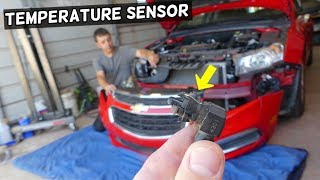
Shop the Parts Behind P1686
Below are the parts most often responsible for code P1686, ranked by how frequently each one is the actual culprit (per the diagnosis above). Tap any to see what we have for your vehicle.



The information in this article is provided for general reference and educational purposes only. Vehicle specifications, procedures, and part compatibility can vary by production date, trim level, and region. Always consult your vehicle's factory service manual and verify part numbers before purchasing or performing repairs. Safety-critical components such as airbags, seat belts, and braking systems should be installed by a qualified professional.
- 🧭 Diagnostic Flowchart
- 🎬 Helpful Videos
- 🛍️ Shop This Part
- What Does P1686 Mean?
- Can I Drive With P1686?
- Common Causes
- Symptoms
- Common Fixes & Costs
- Used vs. New Parts: Buying Guide
- What Happens If You Wait — Timeline
- Cost of Not Fixing It
- Diagnosis Steps
- When This Code Triggers (Freeze-Frame Conditions)
- Related Codes
- Climate & Environmental Factors
- How to Talk to a Mechanic About This Code
- Where to Take It: Dealer vs Independent vs Chain
- When to Walk Away From the Repair
- What Scan Tool You Need for This Code
- How to Clear the Code After You Fix It
- Will This Fail Emissions / State Inspection?
- Most Commonly Affected Vehicles
- Manufacturer-Specific Notes
- Real Owner Stories
- 2002 Dodge Ram 1500, start-and-stall, gauges dead
- 2000 Jeep Grand Cherokee, intermittent gauges and stalling
- 1998 Jeep Cherokee XJ, start-and-stall after sitting
- 2012 VW Tiguan, Check Engine Light, no driving issues
- How to Prevent This Code From Triggering
- Frequently Asked Questions
- Why does my Jeep start and then die after 3 seconds?
- What are the most common mistakes when diagnosing P1686?
- Can I just bypass the SKIM module?
- Is P1686 an expensive code to fix?
- Will a new battery fix code P1686?
- I tried a hard reset and it didn't work. What's next?
- What is the difference between code P1686 and P1684 on a Chrysler?
- Where is the SKIM module located?
- Key Takeaways
- 🎟️ Get 5% Off