

OBD-II Code P1687: Manufacturer-Specific Fault Guide
The Ultimate Guide to P1687: What it means, why it triggers, and how to fix it for good
- P1687 is a manufacturer-specific code that means 'No Bus' on Chrysler/Jeep, a failed Metering Oil Pump on Mazda RX-8, or a dead throttle body on MINI/BMW.
- On 1999-2004 Chrysler, Dodge, and Jeep vehicles, inspect and secure the main connector on the back of the instrument cluster before buying replacement parts.
- For Mazda RX-8 owners, P1687 triggers a 3,500 RPM limp mode; stop driving immediately to prevent catastrophic apex seal damage and a $4,000+ engine rebuild.
- Never replace a $500+ Powertrain Control Module (PCM) for a Chrysler 'No Bus' error without first testing the 5-volt reference circuit for a shorted $30 sensor.
What Does P1687 Mean?
P1687 is a manufacturer-specific code with distinct definitions based on your vehicle. For Chrysler, Dodge, and Jeep, it signals a communication breakdown between the instrument cluster and the Powertrain Control Module (PCM), displaying 'no bus' on the odometer. For Mazda RX-8s, it indicates a critical failure in the metering oil pump (MOP) circuit, which is vital for rotary engine lubrication. On MINI and BMW vehicles, it points to an electronic throttle body fault, specifically its inability to learn stop positions.
Technical definition: Because P1687 falls into the manufacturer-specific P1xxx range, the SAE/ISO definition varies. Chrysler/Dodge/Jeep defines it as 'No Cluster Bus Message' or 'No CCD Messages Received From The MIC'. Mazda defines it as 'Metering Oil Pump Control Circuit High Flow Side Problem'. MINI/BMW defines it as 'Electronic Throttle Control Monitor Level 2/3 Throttle Position Sensor Diagnostic Error'.
Can I Drive With P1687?
Yes, but with caution Driving with P1687 is a significant risk that varies by manufacturer. On Chrysler, Dodge, and Jeep vehicles, a communication failure causes sudden engine stalls at any speed, resulting in immediate loss of power steering and brakes. For Mazda RX-8s, the triggered 'limp mode' provides minimal engine lubrication; continued driving destroys apex seals and housings. For MINIs and BMWs, a throttle body fault causes sudden loss of acceleration. Tow the vehicle if critical gauges are dead or it enters reduced power mode.
Common Causes
- Damaged Wiring or Poor Connections (Very Common) — Chafed, corroded, or shorted wires in the harnesses leading to the instrument cluster, metering oil pump, or throttle body cause this code. Bad ground connections, particularly under the driver's side battery on Dodge Rams, are primary culprits.
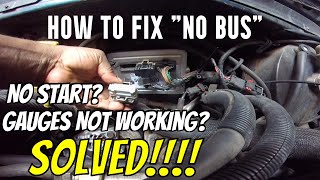
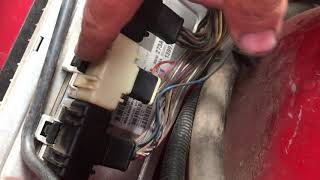
- Faulty Instrument Cluster (Chrysler/Dodge/Jeep) (Common) — Internal electronics and solder joints on the main cluster connector fail from heat and vibration, halting communication. This is a well-documented defect on 1999-2004 Jeep Grand Cherokees and early 2000s Dodge Rams. 🎬 Watch: Troubleshooting the 'No Bus' message on Dodge Rams.
- Faulty Throttle Body (MINI/BMW) (Common) — The electronic throttle body assembly's internal motor or position sensors fail. This prevents the engine computer from managing airflow, immediately triggering limp mode.
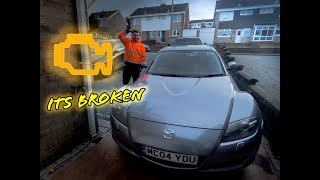
- Faulty Metering Oil Pump (Mazda RX-8) (Common) — The electronic metering oil pump or its internal position switch fails, stopping the PCM from controlling oil injection. This is a known failure point on 2004-2008 models. 🎬 See how to resolve RX-8 limp mode and OMP issues.
- Shorted 5-Volt Reference Circuit (Chrysler/Dodge/Jeep) (Less Common) — A sensor on the 5-volt reference circuit (like the Crankshaft or Throttle Position Sensor) shorts internally. This disrupts the entire data bus, causing a 'No Bus' message even though the cluster is fine.
- Faulty Totally Integrated Power Module (TIPM) (Less Common) — On 2006-2014 Chrysler, Dodge, and Jeep vehicles, the TIPM (fuse box) fails internally. This severs communication to the instrument cluster and triggers random electrical issues like self-activating wipers.
- Interference from Aftermarket Electronics (Less Common) — Improperly installed aftermarket radios, alarms, or remote starters disrupt the vehicle's data communication network.
- Faulty Powertrain Control Module (PCM) (Rare) — The main engine computer fails, losing its ability to communicate with other modules. Test all wiring and sensors before replacing this expensive component.
Symptoms
- Instrument Cluster Malfunction (Chrysler/Dodge/Jeep) — Gauges drop to zero, the odometer displays 'no bus', and the cluster goes blank.
- Engine Enters 'Limp Mode' — The vehicle severely reduces engine power and limits RPM to roughly 3,000-3,500 RPM to prevent damage (primary symptom for Mazda and MINI/BMW).
- Engine Stalling or No-Start Condition — The engine stalls unexpectedly or cranks without starting. This occurs when the instrument cluster fails to relay security data or a shorted sensor crashes the network.
- Check Engine Light and Warning Lights — The Check Engine Light illuminates. On Chrysler/Dodge/Jeep, airbag, ABS, and oil lights also illuminate due to communication loss.
- Scan Tool Communication Failure (scan-tool only — no driver-felt sign) — Diagnostic scan tools fail to communicate with the PCM. If connected, it displays a list of modules with 'U' (network) codes.
Diagnostic Flowchart
Tap your situation to follow the diagnostic path that matches what you're seeing on this code.
Common Fixes & Costs
- Repairing Damaged Wiring or Grounds — Parts: $5-$50, Labor: $150-$500, ~1.5 hr book time (Intermediate)
- Replacing or Repairing the Instrument Cluster (Chrysler/Dodge/Jeep) — Parts: $150-$400 (repair), $500-$800 (new/reman), Labor: $100-$250, ~1 hr book time (Intermediate)
- Replacing the Throttle Body Assembly (MINI/BMW) — Parts: $350-$750, Labor: $120-$200, ~1 hr book time (DIY)
- Replacing the Metering Oil Pump (Mazda RX-8) — Parts: $800-$1200, Labor: $1000-$1600, ~12 hr book time (Professional)
- Replacing the Totally Integrated Power Module (TIPM) (Chrysler/Dodge/Jeep) — Parts: $500-$1200, Labor: $100-$200, ~0.8 hr book time (Intermediate)
Used vs. New Parts: Buying Guide
When a used part is worth it: For electronic modules like an Instrument Cluster or TIPM, a used part from a reputable seller is cost-effective for older vehicles. Ensure the part number matches exactly.
Donor-vehicle mileage cap: roughly under 100000 miles for the part to have meaningful remaining life.
Donor quality checklist:
- Verify the donor vehicle was not scrapped due to flood or fire damage.
- Match the part number exactly; identical parts have different internal software.
- Mileage is stored in the cluster and will not match your vehicle's actual mileage.
- Prefer sellers offering at least a 30-90 day warranty.
Decision logic:
- If The part is a known high-failure item (e.g., Mazda MOP, early 2000s Chrysler clusters) → Favor a professionally remanufactured unit over a used one.
- If Vehicle is over 10 years old and the budget is tight → A used part from a low-mileage donor is a reasonable risk if the part number matches perfectly.
- If The part requires VIN programming to function (e.g., modern Instrument Clusters, TIPMs) → Factor in the cost of dealer programming for a used part.
Warranty tradeoff: Used parts have a 30-90 day warranty. Remanufactured parts offer 1-year to lifetime warranties. New OEM parts carry a 1-2 year warranty.
Worst-case if a used part fails: $500-$2000 if a used electronic module fails shortly after installation, requiring repeat labor and parts.
What Happens If You Wait — Timeline
- 0-1 month: Chrysler/Jeep: Intermittent 'no bus' message, gauges drop briefly. Mazda RX-8: Code sets and engine enters limp mode immediately. (MPG impact: 0-5%% · Added cost: $0)
- 1-4 months: Chrysler/Jeep: 'No bus' events increase, causing occasional stalls. Mazda RX-8: Continued driving in limp mode accelerates wear on apex seals and rotor housings. (MPG impact: 5-10%% · Added cost: $50-$150 in wasted fuel. Mazda internal engine damage begins.)
- 4-8 months: Chrysler/Jeep: 'No bus' is constant, vehicle will not start. Mazda RX-8: Noticeable compression loss, hard starting when hot, irreversible housing damage. (MPG impact: 10-20%% · Added cost: Chrysler/Jeep: Towing costs ($200-$500). Mazda: Engine rebuild required ($3,500-$7,000).)
- 8+ months: Chrysler/Jeep: Underlying short circuits damage other modules (TCM, ABS). Mazda RX-8: Catastrophic engine failure (loss of compression). (MPG impact: 20%+% · Added cost: Chrysler/Jeep: Multiple module replacement ($1,000-$2,500+). Mazda: Full engine replacement ($4,000-$7,000+).)
Cost of Not Fixing It
- Immediate: Chrysler/Dodge/Jeep: Sudden engine stall, loss of power steering/brakes. Mazda RX-8: Limp mode with inadequate lubrication. MINI: Sudden loss of throttle control. (Added cost: Potential for accident-related costs.)
- 1-3 months: Mazda RX-8: Continued driving with a faulty Metering Oil Pump destroys apex seals and rotor housings, leading to compression loss. (Added cost: $3,500-$7,000 for a complete engine rebuild.)
- 3+ months: Chrysler/Dodge/Jeep: Intermittent 'no bus' becomes a permanent no-start. The electrical short damages other modules on the data bus. (Added cost: $200-$1,500+ for towing, diagnostics, and multiple module replacements.)
Diagnosis Steps
- Check Battery, Grounds, and Fuses
Ensure the battery is fully charged (12.4V+ with engine off) and terminals are clean. Inspect and test all related fuses (Instrument Cluster, PCM, BCM). Clean the main chassis and engine ground straps to bare metal.
Tools: Multimeter, Fuse Puller, Wire brush, Basic hand tools (Beginner) - Inspect Wiring and Connectors
Visually inspect the wiring harness and connectors going to the affected component (instrument cluster, metering oil pump, or throttle body). Look for damage, corrosion, or loose pins. Secure the main connector on the back of Chrysler/Jeep instrument clusters.
Tools: Flashlight, Inspection mirror (Intermediate) - Disconnect Aftermarket Devices
Completely disconnect power and ground to any aftermarket radio, amplifier, remote starter, or alarm system. Clear the codes to see if P1687 returns.
Tools: Basic hand tools (Beginner) - Test the Throttle Body (MINI/BMW)
With a scan tool, monitor commanded vs. actual throttle position. Check for 5V reference and ground at the throttle body connector. An irregular voltage sweep indicates a failed throttle body.
Tools: Scan Tool, Multimeter, Vehicle-specific wiring diagram (Intermediate) - Advanced 5-Volt Reference Circuit Diagnosis (Chrysler/Dodge/Jeep)
If a 'no bus' condition is present, backprobe the 5V reference wire at the TPS or MAP sensor with the key on. If voltage is near 0V, unplug 5V sensors one by one. When the shorted sensor is unplugged, the meter will jump back to 5V.
Tools: Multimeter with backprobe pins, Vehicle-specific wiring diagram (Advanced) - Data Bus Network Integrity Test (Chrysler/Dodge/Jeep)
Disconnect the battery. At the Data Link Connector (DLC), measure resistance between Pin 3 (CCD Bus +) and Pin 11 (CCD Bus -). A healthy bus reads ~60 ohms. 120 ohms indicates an open circuit or missing module; 0 ohms indicates a short.
Tools: Multimeter, Vehicle-specific wiring diagram (Advanced) - Data Bus Voltage Test (Chrysler/Dodge/Jeep)
With the key on, measure voltage on the CCD bus wires at the DLC. Pin 3 should be ~2.49V and Pin 11 should be ~2.51V. If one wire is at 5V and the other is at 0V, termination is lost. If both are 0V or 5V, there is a short to ground or power.
Tools: High-impedance Multimeter (Advanced) - Test the Metering Oil Pump Circuit (Mazda RX-8)
Check the resistance of the metering oil pump motor coils at the MOP connector. Resistance between pins A, B, E, and F should be 22-42 ohms. Check for battery voltage at terminals C and D with the key on.
Tools: Multimeter, Vehicle-specific wiring diagram (Advanced) - Check for Technical Service Bulletins (TSBs)
Search manufacturer TSBs for your specific year and model. For example, Chrysler TSB 08-05-00 addresses intermittent 'No Bus' conditions on 2000 model year trucks via a PCM software update.
Tools: Online TSB database access (Beginner)
When This Code Triggers (Freeze-Frame Conditions)
- Engine Coolant Temp: 175-205°F (Fully warmed up. Faults often appear after driving for 10-15 minutes.)
- RPM: 0 or 1500-2500 (Triggers at key-on (no-start) or during steady-state cruise.)
- System Voltage: 11.8-12.5V or 13.5-14.5V (Faults trigger with low battery voltage at startup or unstable alternator voltage while running.)
- Vehicle Speed: 0 mph or 45-65 mph (Sets when stationary (startup) or during highway driving.)
Related Codes
- U0155 — The generic SAE code for 'Lost Communication With Instrument Panel Cluster'. P1687 is the manufacturer-specific equivalent. Seeing both confirms the PCM-to-cluster link is down.
- P1698 & P1694 — Chrysler codes for 'No CCD Message from TCM/PCM'. Seeing these with P1687 indicates a complete collapse of the data bus network. Check bus integrity and the 5V reference circuit.
- P1686 & P1688 (Mazda) — Mazda codes for MOP low flow and initial check failures. Seeing them with P1687 indicates a comprehensive failure of the MOP system requiring full system testing.
- P1125 & P0638 (MINI/BMW) — MINI/BMW codes for throttle position and actuator faults. When seen with P1687, the entire electronic throttle body assembly has failed and requires replacement.
Climate & Environmental Factors
- High Humidity / Rain: Moisture penetrates failing seals on connectors, fuse boxes (TIPM), or the instrument cluster, causing short circuits. This triggers intermittent 'no bus' faults and Mazda MOP failures.
- Extreme Cold/Heat Cycles: Repeated temperature changes break solder joints on the instrument cluster's printed circuit board (PCB), a primary cause of the 'no bus' issue on 1999-2004 Jeep Grand Cherokees.
How to Talk to a Mechanic About This Code
Say this: "I have a P1687 code and need a diagnostic appointment. On my [Chrysler/Jeep], it shows a 'no bus' error. On my [Mazda RX-8], it's in limp mode. On my [MINI/BMW], the EML light is on. Please check the wiring, grounds, and connectors before quoting a major component replacement."
Directs the shop to perform a proper diagnosis instead of guessing or replacing the most expensive part, saving you money on unnecessary repairs.
Avoid saying:
- 'My check engine light is on, can you just fix it?'
- 'The internet said to replace the computer.'
- 'Just do whatever you think is best.'
Questions to ask before authorizing the repair:
- For a Chrysler/Jeep 'no bus': Did you test the data bus resistance and voltage at the DLC?
- For a Chrysler/Jeep 'no bus': Did you confirm the 5-volt reference circuit is stable and not shorted?
- For a Mazda RX-8: Did you inspect the metering oil pump connectors for water and test the circuit's resistance?
- For a MINI/BMW: Did you test for power at the throttle body and attempt a throttle adaptation reset?
- Can you show me the damaged wiring or failed test results that condemn this specific part?
- What is the warranty on this specific repair, covering both part and labor?
Where to Take It: Dealer vs Independent vs Chain
- Dealer:
Best for: Vehicles under warranty., Complex electrical issues requiring brand-specific software for module programming (e.g., replacing a TIPM or instrument cluster).
Downsides: Highest labor rates., Defaults to replacing entire assemblies when a simpler wiring repair is possible. (Typical cost: +50% vs. baseline) - Independent Shop:
Best fit for most P1687 scenarios. Find a well-regarded independent shop with strong electrical diagnostic skills.
Best for: Out-of-warranty vehicles., Shops specializing in your vehicle's brand., Diagnosing common failures like bad grounds or wiring issues.
Downsides: Diagnostic skill varies widely; check reviews and ASE certifications., Lacks expensive manufacturer-specific diagnostic tools for very new cars. (Typical cost: +0% vs. baseline) - Chain Shop:
AVOID for P1687 diagnosis. The complexity of this code guarantees misdiagnosis by applying a generic definition.
Best for: Simple maintenance like oil changes or tires.
Downsides: High risk of misdiagnosis due to the manufacturer-specific nature of P1687., Technicians lack deep electrical diagnostic experience., High pressure to upsell services. (Typical cost: -10% vs. baseline)
When to Walk Away From the Repair
If the total estimated repair cost exceeds 50% of the car's current private-party market value, seriously consider not fixing it.
- Car worth $3000, fix is $2500: Walk away. The repair cost for a new metering oil pump on a Mazda RX-8 is not economical for a car of this value.
- Car worth $5000, fix is $800: Fix it. Replacing a faulty instrument cluster on a Dodge Ram is a reasonable cost to restore a reliable truck.
- Car worth $2500, fix is $1200: Borderline. If a Jeep Grand Cherokee needs a new TIPM, get a second opinion to confirm no cheaper wiring fix exists before proceeding.
What Scan Tool You Need for This Code
Minimum: A scanner that reads manufacturer-specific codes and views live data. A generic code reader misinterprets the code and fails to see related network ('U') codes.
A basic $20 reader only gives the 'P1687' number, not the critical manufacturer definition. You need live data from multiple modules and network communication status to diagnose this code.
Budget: BlueDriver Pro Scan Tool (~$100) — Reads manufacturer-specific codes for Chrysler, Mazda, and BMW/MINI to provide the correct definition. Reads ABS codes and views live data.
Mid-range: Autel MaxiCOM MK808S / Foxwell NT510 Elite (~$250-400) — Offers bi-directional control. Commands a throttle body reset on a MINI, views module status on the Chrysler data bus, and accesses deep system data.
Professional: Autel MaxiCOM MK900BT / Launch X431 Series (~$500-1200) — Provides full OE-level diagnostics. Performs advanced functions like module programming and coding necessary for TIPM, PCM, or instrument cluster replacements.
Rent vs buy: Free scan services at auto parts stores use basic readers insufficient for this code. Buying at least a budget-level scanner is a wise investment for effective DIY diagnosis.
How to Clear the Code After You Fix It
- Reconnect battery if disconnected for repair.
- Use an OBD-II scan tool to formally clear the diagnostic trouble code.
- Perform a drive cycle to allow readiness monitors to run self-tests.
Drive cycle (~30 minutes): After a cold start (sit for 8+ hours), idle for 2-3 minutes with electrical loads on. Drive for 15-20 minutes with a mix of city and highway speeds (steady 55-60 mph for 5 minutes). Cool down completely.
Readiness monitors affected: Comprehensive Component Monitor, Misfire Monitor, Catalyst Monitor, Evaporative System (EVAP) Monitor
Before emissions retest: drive at least 50 miles to fully set monitors.
Watch out for:
- Disconnecting the battery clears the code but resets all monitors to 'Not Ready', causing an automatic emissions failure.
- The code returns immediately if the underlying electrical fault is not repaired.
- Some vehicles require a manufacturer-specific drive cycle to set all monitors.
Will This Fail Emissions / State Inspection?
Yes — this code typically fails an OBD-II emissions inspection.
- California: An active P1687 is an automatic failure. For 2000+ gasoline vehicles, only the EVAP monitor is permitted to be 'Not Ready'.
- New York: An illuminated Check Engine Light and stored P1687 code results in an immediate emissions test failure.
- Texas: Vehicles fail if the Check Engine Light is on. After clearing, 2001+ vehicles cannot have more than one monitor 'Not Ready'.
Manufacturer-Specific Notes
- Chrysler/Dodge/Jeep: The instrument cluster is a critical gateway. Its failure prevents scan tool communication and causes a no-start because security data is blocked. A faulty TIPM mimics these exact symptoms.
- Mazda: Triggers a 3,500 RPM fail-safe 'limp mode' to protect the rotary engine from oil starvation. Repair costs are extremely high due to labor. Always check the MOP connector for water first.
- MINI / BMW: A failing throttle body causes a loud clicking or grinding noise at key-on as it attempts to self-calibrate. Cleaning carbon buildup and performing a scan tool reset sometimes resolves it.
- Jaguar: Relates to a 5V reference circuit issue or module communication failure. Diagnosis requires a Jaguar-specific scan tool (JLR SDD) to interpret the code correctly.
Real Owner Stories
2003 Dodge Ram 1500 with 'no bus' message
Owner experienced intermittent 'no bus' messages, with all gauges dropping to zero while driving.
What they tried:
- Replaced the battery, which did not solve the problem.
- Declined a mechanic's quote for a new instrument cluster.
- Checked the wiring harness behind the cluster.
Outcome: Found the main connector on the back of the instrument cluster was loose. Cleaning the contacts and securing it with a zip tie permanently resolved the 'no bus' message.
Lesson: Check physical connections before replacing electronic modules. The connector on the back of Chrysler/Dodge/Jeep clusters is a known weak point.
2006 Mazda RX-8 enters limp mode after rain
After driving through a rainstorm, the car went into limp mode (max 3,000 RPM) with code P1687.
What they tried:
- Suspected a failed Metering Oil Pump (MOP).
- Read that water intrusion into MOP connectors is common.
Outcome: Removed the passenger front wheel and found the lower MOP connector full of water. Drying it with compressed air and applying dielectric grease cleared the code and restored power.
Lesson: If P1687 appears on an RX-8 after wet conditions, dry the MOP electrical connectors before assuming the pump has failed.
2005 MINI Cooper S (R53) with intermittent limp mode
Car entered limp mode with codes P1687 and P1125 after a few miles of driving.
What they tried:
- Declined a high repair quote for a wiring harness.
- Attempted a throttle body reset procedure but heard no response from the throttle body.
Outcome: Purchased a new OEM throttle body for $350 and installed it in 10 minutes. This immediately fixed the problem and restored full power.
Lesson: On a MINI with P1687 and P1125, a failed throttle body is the culprit. A failed reset procedure confirms the throttle body is unresponsive.
Jeep Grand Cherokee (WJ) with 'no bus' and no-start
Vehicle intermittently failed to start, displaying the 'no bus' message.
What they tried:
- Mechanic replaced the instrument cluster and Crankshaft Position Sensor with no success.
- Tested the PCM, which was functional.
Outcome: A second mechanic performed a 5-volt reference circuit test. Unplugging sensors revealed a shorted Throttle Position Sensor (TPS) was crashing the data bus. Replacing the TPS fixed the issue.
Lesson: A shorted sensor on the 5-volt reference circuit causes identical 'no bus' symptoms. Diagnose this before replacing the cluster or PCM.
How to Prevent This Code From Triggering
- Clean and Protect Major Electrical Grounds (Every 2-3 years or 30,000 miles) — Corroded ground straps create high resistance, causing unstable voltages that corrupt data bus communication. Clean contact points to bare metal.
- Apply Dielectric Grease to Critical Connectors (When servicing or if exposed) — Dielectric grease on PCM, TIPM, Instrument Cluster, and MOP connectors prevents moisture corrosion, a primary cause of intermittent communication failures.
- Maintain Battery Health and Terminals (Annually) — A weak battery (below 12.4V) causes spurious communication codes. Clean terminals and replace 3-5 year old batteries to ensure stable voltage.
- Premix 2-Stroke Oil (Mazda RX-8) (Every fuel fill-up) — Adding 0.5 oz of high-quality 2-stroke oil per gallon of fuel provides supplemental lubrication, reducing wear that contributes to MOP codes and engine failure.
- Ensure Engine Undertray is Installed (Mazda RX-8) (Always) — The undertray protects the low-mounted Metering Oil Pump from road spray. Driving without it guarantees water intrusion into the MOP connector.
Frequently Asked Questions
What does 'no bus' on my Dodge/Jeep's odometer mean?
It means the instrument cluster lost communication with the Powertrain Control Module (PCM) over the CCD data network. This is the primary symptom of P1687 on Chrysler, Dodge, and Jeep vehicles.
Can a bad TIPM cause code P1687?
Yes. On 2006-2014 Chrysler, Dodge, and Jeep models, a failing TIPM severs widespread communication. Symptoms include P1687 alongside random electrical faults like the horn honking independently.
My mechanic replaced the instrument cluster, but the 'no bus' message is still there. What now?
The problem is in the wiring harness, a bad ground, or a shorted 5-volt sensor pulling the data bus down. Perform a pin-by-pin continuity check of the data bus wires. Do not replace the PCM until verifying the 5-volt reference circuit.
Can a bad battery or alternator cause P1687?
Yes. Modern vehicles require stable voltage. A weak battery (under 12.4V), corroded terminals, or a failing alternator corrupts data signals and triggers communication codes.
Can I just replace the fuse to fix P1687?
A blown instrument cluster fuse is a symptom of a larger short circuit. If a new fuse blows immediately, you have an underlying wiring fault that requires physical repair.
My mechanic says I need a new computer (PCM). Is that right?
A faulty PCM is a rare cause for P1687. Test all wiring, grounds, the 5-volt reference circuit, and the specific component (cluster, oil pump, throttle body) before condemning the computer.
The auto parts store told me P1687 means I have a bad oil pump, but I drive a Jeep. Is that correct?
The employee looked up the Mazda-specific definition. For a Jeep, P1687 indicates an instrument cluster communication problem, not the oil pump. Always use manufacturer-specific definitions for P1xxx codes.
Key Takeaways
- P1687 is a manufacturer-specific code that means 'No Bus' on Chrysler/Jeep, a failed Metering Oil Pump on Mazda RX-8, or a dead throttle body on MINI/BMW.
- On 1999-2004 Chrysler, Dodge, and Jeep vehicles, inspect and secure the main connector on the back of the instrument cluster before buying replacement parts.
- For Mazda RX-8 owners, P1687 triggers a 3,500 RPM limp mode; stop driving immediately to prevent catastrophic apex seal damage and a $4,000+ engine rebuild.
- Never replace a $500+ Powertrain Control Module (PCM) for a Chrysler 'No Bus' error without first testing the 5-volt reference circuit for a shorted $30 sensor.
Helpful Videos

Shop the Parts Behind P1687
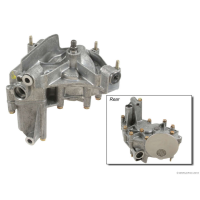
Below are the parts most often responsible for code P1687, ranked by how frequently each one is the actual culprit (per the diagnosis above). Tap any to see what we have for your vehicle.




The information in this article is provided for general reference and educational purposes only. Vehicle specifications, procedures, and part compatibility can vary by production date, trim level, and region. Always consult your vehicle's factory service manual and verify part numbers before purchasing or performing repairs. Safety-critical components such as airbags, seat belts, and braking systems should be installed by a qualified professional.
- 🧭 Diagnostic Flowchart
- 🎬 Helpful Videos
- 🛍️ Shop This Part
- What Does P1687 Mean?
- Can I Drive With P1687?
- Common Causes
- Symptoms
- Common Fixes & Costs
- Used vs. New Parts: Buying Guide
- What Happens If You Wait — Timeline
- Cost of Not Fixing It
- Diagnosis Steps
- When This Code Triggers (Freeze-Frame Conditions)
- Related Codes
- Climate & Environmental Factors
- How to Talk to a Mechanic About This Code
- Where to Take It: Dealer vs Independent vs Chain
- When to Walk Away From the Repair
- What Scan Tool You Need for This Code
- How to Clear the Code After You Fix It
- Will This Fail Emissions / State Inspection?
- Manufacturer-Specific Notes
- Real Owner Stories
- 2003 Dodge Ram 1500 with 'no bus' message
- 2006 Mazda RX-8 enters limp mode after rain
- 2005 MINI Cooper S (R53) with intermittent limp mode
- Jeep Grand Cherokee (WJ) with 'no bus' and no-start
- How to Prevent This Code From Triggering
- Frequently Asked Questions
- What does 'no bus' on my Dodge/Jeep's odometer mean?
- Can a bad TIPM cause code P1687?
- My mechanic replaced the instrument cluster, but the 'no bus' message is still there. What now?
- Can a bad battery or alternator cause P1687?
- Can I just replace the fuse to fix P1687?
- My mechanic says I need a new computer (PCM). Is that right?
- The auto parts store told me P1687 means I have a bad oil pump, but I drive a Jeep. Is that correct?
- Key Takeaways
- 🎟️ Get 5% Off