

P1703 on 2010-2012 Audi A5 Cabriolet: Mechatronic Fault Guide
P1703 on a 2010-2012 Audi A5 indicates the transmission control unit has reset, a classic sign of a failing Mechatronic unit. This is not a brake switch issue. The fix is typically a Mechatronic repair kit or full unit replacement, a professional job costing $1,500-$4,000.
- P1703 on your A5 is a serious transmission code, not a simple brake switch issue.
- The cause is almost always a failure within the S-Tronic transmission's Mechatronic unit.
- Symptoms include a 'Gearbox Malfunction' warning, limp mode, and jerky shifting.
- This is not a DIY-friendly repair. Seek a qualified independent Audi specialist or dealer.
- The fix involves either a Mechatronic repair kit or a full unit replacement, along with a transmission fluid service.
What's Unique About the 2010-2012 Audi A5 CABRIOLET
The 2010-2012 A5 Cabriolet uses the DL501 (also known as 0B5) S-Tronic dual-clutch transmission, which is known for issues with its Mechatronic unit. The Mechatronic is a complex module combining the TCM, sensors, and hydraulic solenoids into one assembly inside the transmission. P1703 is often one of the first indicators that this unit is beginning to fail electronically, a well-documented issue for this specific gearbox generation. A Technical Service Bulletin (TSB) from Audi acknowledges that P1703 can be stored in the transmission control module, confirming it as a recognized fault.
Diagnostic Flowchart
Tap your situation to follow the diagnostic path that matches what you're seeing on this vehicle.
Symptoms You May Notice
- "Gearbox Malfunction: you can continue to drive" message on the dashboard
- Flashing gear indicator (PRNDS) in the instrument cluster
- Transmission enters limp mode (stuck in a single gear, often 2nd or 3rd)
- Harsh or jerky shifting, especially when coming to a stop (2nd to 1st gear)
- Sudden loss of power while driving
- Inability to select Drive or Reverse, especially when the vehicle is warm
- Delayed engagement when shifting into Drive or Reverse
- Clunking noises during shifts
- Replacing the brake light switch. This is the most common misdiagnosis because P1703 means 'Brake Switch Fault' on many other manufacturers, like Ford. On this Audi, the brake switch is not the cause.
Most Likely Causes
- Failing Mechatronic Unit (TCM/Circuit Board) 🔴 High Probability → Shop Transmission Valve Body The internal circuit board of the DL501 Mechatronic unit is submerged in hot transmission fluid. Over time, heat cycles and vibrations can cause hairline cracks in solder joints or failure of electronic components, leading to resets and the P1703 code. Poor internal contacts on the circuit board are a known technical background for this failure.
How to confirm: A professional scan tool (VCDS/VAG-COM) is needed to read the fault codes directly from the transmission module (Address 02). The presence of P1703, especially alongside other communication or sensor faults (like P1735/P1736), points to the Mechatronic unit.
Typical fix: The Mechatronic unit must be removed. It can either be sent to a specialist for repair/rebuilding of the circuit board or replaced entirely with a repair kit or a full new unit.
Est. part cost: $800-$2500 - Failing Mechatronic Solenoids 🟡 Medium Probability The solenoids within the Mechatronic unit control hydraulic pressure for gear changes and clutch operation. They operate under high pressure and temperature and can fail electrically or mechanically, causing the TCM to register a major fault and trigger limp mode. The main pressure valve (N472) and clutch cooling valve solenoids are common failure points.
How to confirm: Specific fault codes for solenoid circuits (e.g., P174B, P174F, P179C) will usually accompany P1703. A scan tool can also be used to monitor solenoid performance. A multimeter can be used to check solenoid resistance values when the mechatronic unit is removed.
Typical fix: Replace the faulty solenoids using a Mechatronic repair kit. This is often done as a set while the unit is removed for service. The most common repair kits include the main solenoids.
Est. part cost: $400-$800 - Low or Degraded Transmission Fluid ⚪ Low Probability → Shop Transmission Assembly While less common as a direct cause for P1703, extremely low or old, burnt fluid can lead to overheating and erratic hydraulic pressure, which can stress the Mechatronic unit and contribute to its failure. Clutch wear products contaminating the shared oil circuit can accelerate wear on the valve body components.
How to confirm: Check the transmission fluid level and condition according to the manufacturer's procedure. This is a complex process on the S-Tronic and is best left to a professional. A fluid drain of a 2010 model at 80,000 miles showed significant degradation.
Typical fix: Perform a full S-Tronic transmission fluid and filter service. This is often done in conjunction with any Mechatronic repair. It is critical to use the correct OEM-spec fluid, as some additives can cause the plastic circuit plates to delaminate.
Est. part cost: $200-$400
Rare But Worth Checking
- Software Glitch (Communication Error):
Diagnosis Steps
- Scan the vehicle with an Audi-specific diagnostic tool like VCDS or similar. Check for codes in the Engine (01) and especially the Auto Trans (02) modules.
- Record all fault codes and their freeze-frame data. Note if P1703 appears with other codes related to solenoids (P174x), sensors (P173x), or communication (P0726, P17D8).
- Check the transmission fluid level and condition. This requires the vehicle to be level and the fluid at a specific temperature (35-45°C). This is typically a shop procedure.
- If the TSB 2025535/4 applies (no symptoms, code appeared after scan), clear the code and see if it returns. Consider a TCM software update if the issue persists.
- If fluid is correct and symptoms are present, the next step is diagnosing the Mechatronic unit itself. This involves testing the wiring harness to the transmission for integrity.
- If the harness is good, the fault is internal to the transmission, and the Mechatronic unit must be removed for inspection, testing, and repair or replacement.
Parts You'll Likely Need
- Mechatronic Repair Kit
(OEM #0B5398009F (supersedes A, B, C, D, E), 0B5398048D)— This is the most common fix, addressing failed solenoids and/or the circuit board without replacing the entire expensive valve body. These kits typically include the two PCB circuit boards, solenoids, and seals.
Trusted brands: Genuine Audi, BorgWarner, FCP Euro, ECS Tuning
OEM price range: $600-$1200
Aftermarket price range: $400-$800 - Mechatronic Unit (Complete)
(OEM #0B5927156E, 0B5927256B (part numbers vary by specific vehicle))— If the valve body is damaged or the circuit board is not repairable, a complete new or remanufactured unit is required. A dealer quote for a full replacement can be over $4,000.
Trusted brands: Genuine Audi
OEM price range: $2000-$3500
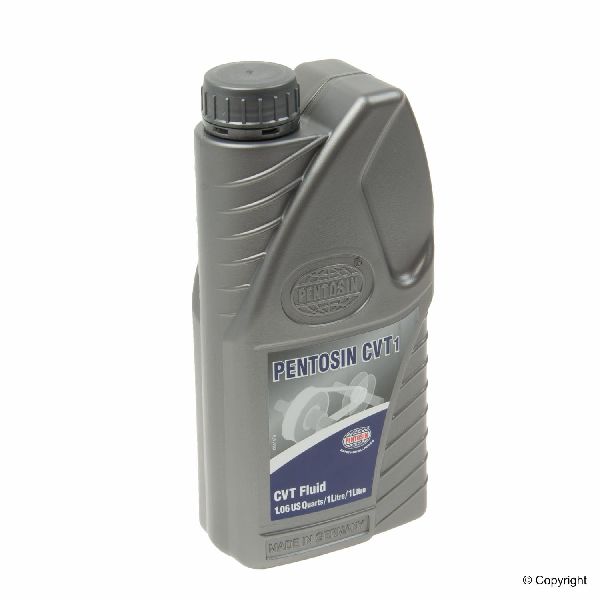
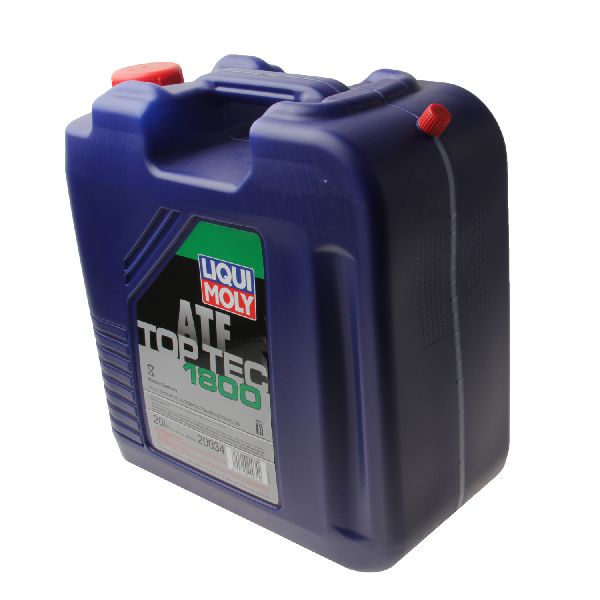
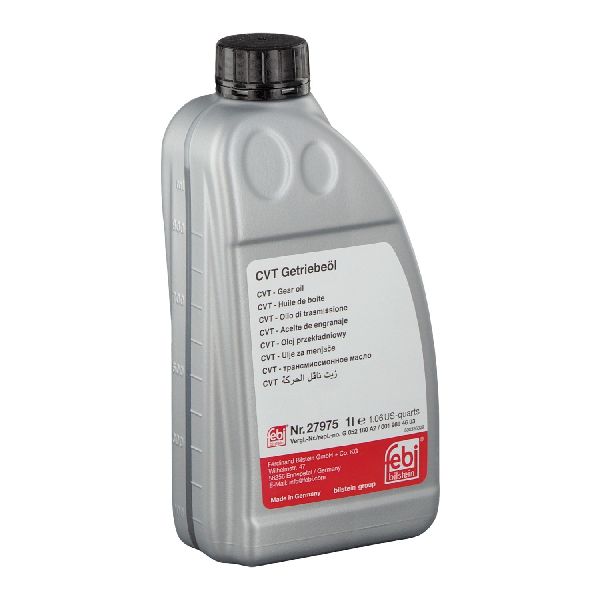
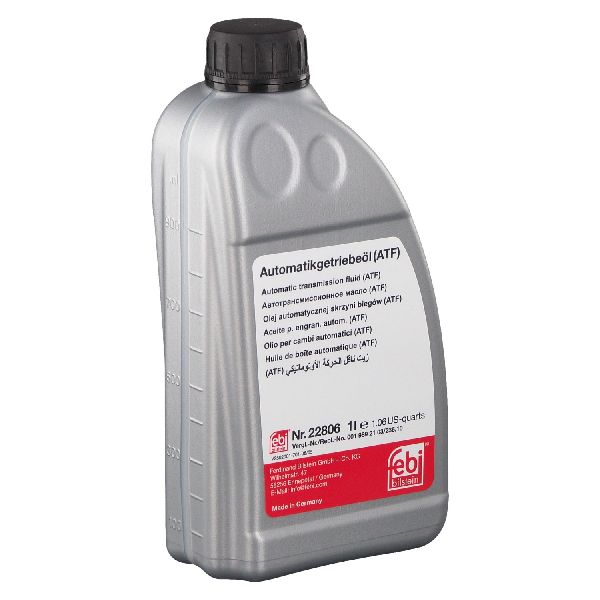
Aftermarket price range: $1500-$2500 - S-Tronic (DSG) Transmission Fluid
(OEM #G052529A2)— The fluid must be replaced any time the Mechatronic unit is serviced. Approximately 5-7 liters are needed for a drain and fill.
Trusted brands: Genuine Audi, Liqui Moly, Motul, Pentosin
OEM price range: $25-$35 per liter
Aftermarket price range: $18-$25 per liter
Related Codes That Often Appear With This One
- P17D8 — Torque Limitation because of Clutch Temperature. This often indicates the Mechatronic unit is struggling to control the clutches properly, leading to overheating and faults. It is a very common companion code to a failing Mechatronic circuit board.
- P1735 / P1736 — Position Sender for Clutch 1/2 Electrical Fault. These codes point directly to sensor failure on the Mechatronic circuit board, a common root cause for a TCM reset (P1703).
- U1111 — This is a generic communication fault code also mentioned in the NHTSA TSB 2025535/4. It indicates a loss of communication with a module, in this case, likely the TCM, reinforcing the 'control unit reset' definition of P1703.
- P0726 — RPM Signal of Engine Control Unit, Implausible Signal. This code is frequently logged alongside other Mechatronic failure codes and points to the internal circuit board failing.
Technical Service Bulletins (TSBs) & Recalls
- 37144620255354
Platform-Specific Known Issues
- The DL501 S-Tronic transmission in the B8 platform (2009-2016) has a widely recognized pattern of Mechatronic failures, often manifesting between 60,000 and 100,000 miles. The P1703 code is a strong indicator that this common failure is occurring.
- A lawsuit was filed concerning the reliability of DSG transmissions in 2010-2014 Audi S4, S5, S6, S7, and RS5 models, alleging defects causing rough shaking and violent jerking.
Mechanic-Grade Diagnostic Values
- Resistance of VFS Solenoids (N436, N440) — expected: 4.8 Ω (± 0.1 Ω) at 25°C / 77°F. Failure: A reading significantly outside this range indicates a faulty solenoid coil.
- Resistance of Clutch Oil Pressure Solenoids (N435, N439) - Gen 1 Valve Body — expected: 16.0 Ω (± 0.1 Ω) at 25°C / 77°F. Failure: A reading significantly outside this range indicates a faulty solenoid coil.
- Resistance of Clutch Oil Pressure Solenoids (N435, N439) - Gen 2 Valve Body — expected: 14.2 Ω (± 0.1 Ω) at 25°C / 77°F. Failure: A reading significantly outside this range indicates a faulty solenoid coil.
- Resistance of VBS Solenoids (N471, N472) — expected: 4.2 Ω (± 0.1 Ω) at 25°C / 77°F. Failure: A reading significantly outside this range indicates a faulty solenoid coil.
- Resistance of Gear Actuator Solenoids (N433, N434, N437, N438) — expected: 4.8 Ω (± 0.1 Ω) at 25°C / 77°F. Failure: A reading significantly outside this range indicates a faulty solenoid coil.
- Transmission Fluid Temperature for Basic Settings — expected: 40°C - 100°C (104°F - 212°F). Failure: Adaptation procedures may fail if the fluid is outside this temperature range. Some technicians report better success under 60°C (140°F).
Scan Tool Commands That Help
- VCDS or OBDeleven: Basic Settings (04) for Auto Trans (02) — This sequence is mandatory after replacing the Mechatronic unit or its components (solenoids, circuit board) to calibrate the new parts. Failure to perform this can result in harsh shifting or continued fault codes.
- VCDS or OBDeleven: 1. Erase counter for start and stop processes — First step in the basic settings sequence. Performed with Key On, Engine Off. This may not be supported on all vehicles.
- VCDS or OBDeleven: 2. Clutch valve calibration — Second step in the sequence. Performed with Engine On. This calibrates the new clutch control solenoids.
- VCDS or OBDeleven: 3. Distance sensor calibration — Third and final mandatory step. Performed with Engine On. This calibrates the gear position sensors. Clunking noises from the transmission are normal during this process.
Wiring & Ground Locations
- Main Mechatronic Connector — External connector on the transmission housing.. This is the primary 16-pin electrical interface for the entire Mechatronic unit. Corrosion or damage to this connector (Part # 420973716) can cause a wide range of communication faults, including a TCM reset.
- TCM Power Supply Fuses — In the B8 platform, fuses for the transmission are located in the fuse panel in the engine bay (plenum chamber) and the fascia fuse panel on the driver's side of the dashboard.. A blown or intermittent fuse can cause the TCM to lose power and reset, triggering a P1703 code. Checking these fuses is a primary step before condemning the Mechatronic unit.
- Main Chassis Grounds — Potential ground points for the TCM include the left side of the engine compartment (Designator 12), the left front cross member (G671), and behind the right kick panel (G638).. A poor ground connection for the TCM can cause voltage irregularities, leading to module resets and communication faults like P1703. Verifying ground integrity is a critical electrical diagnostic step.
Real Owner Repair Stories
- AliExpress Reviewer (2011 Audi Q5 3.2 FSI) — Hesitation, jerking, and eventual limp mode. Vehicle had been to three dealerships.
❌ Tried (didn't work) Multiple dealership diagnoses that resulted in quotes of $4,200 for a new OEM Mechatronic unit.
✅ What actually fixed it The owner purchased and installed a complete Mechatronic repair kit (including circuit board and valves) over a weekend, cleared the codes, and performed a relearn procedure. The car reportedly shifted smoother than before. - OBDeleven Forum User 'actros1848' (2010 Audi Q5 2.0 TDI with 0B5 S-Tronic) — Sudden strange pauses and jerks when changing gears while on a long trip. No fault codes were stored initially.
❌ Tried (didn't work) Initial scan showed no fault codes.
✅ What actually fixed it The owner used an OBDeleven tool to perform the full basic settings procedure (running all adaptation items one by one). After the adaptations, which took a long time and made audible noises, the transmission worked very smoothly again. - MHH Auto Forum User 'Shawnp' (Audi with 0B5 Transmission) — Fault code P17D5 (Valve 3 in partial transmission 2) after Mechatronic work.
❌ Tried (didn't work) Replacing the TCU did not solve the P17D5 code.
✅ What actually fixed it The P17D5 code was resolved by discovering a solenoid plunger dish was installed upside down, making the solenoid inoperable. This highlights the sensitivity of the repair process, where small mechanical errors can induce new electrical faults.
OEM Part Supersession History
0B5398009A, 0B5398009B, 0B5398009C, 0B5398009D, 0B5398009E→0B5398009F— Progressive updates to the Mechatronic repair kit, which includes the circuit boards/wiring harness and speed sensor, to improve reliability.
Heads up: The newest revision (F) is generally considered the most reliable and is the recommended replacement for all prior versions.
Model Year Variations Within This Range
- Unknown specific cutoff year: There are at least two generations of the DL501 valve body, identifiable by the resistance of the clutch oil pressure solenoids (N435, N439). Gen 1 solenoids measure ~16.0 Ω, while Gen 2 solenoids measure ~14.2 Ω at room temperature. Using the wrong solenoid type for the valve body generation could cause pressure regulation issues.
Helpful Videos

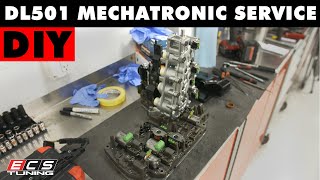

We Have This Part in Stock



The information in this article is provided for general reference and educational purposes only. Vehicle specifications, procedures, and part compatibility can vary by production date, trim level, and region. Always consult your vehicle's factory service manual and verify part numbers before purchasing or performing repairs. Safety-critical components such as airbags, seat belts, and braking systems should be installed by a qualified professional.
- Audi A5 CABRIOLET:
- 🧭 Diagnostic Flowchart
- 🎬 Helpful Videos
- 🛍️ Shop This Part
- What's Unique About the 2010-2012 Audi A5 CABRIOLET
- Symptoms You May Notice
- Most Likely Causes
- Rare But Worth Checking
- Diagnosis Steps
- Parts You'll Likely Need
- Related Codes That Often Appear With This One
- Technical Service Bulletins (TSBs) & Recalls
- Platform-Specific Known Issues
- Mechanic-Grade Diagnostic Values
- Scan Tool Commands That Help
- Wiring & Ground Locations
- Real Owner Repair Stories
- OEM Part Supersession History
- Model Year Variations Within This Range
- 🎟️ Get 5% Off