

P1707 on 2010-2015 Land Rover LR4: Stuck in Park & Transmission Fault Guide
P1707 on a Land Rover LR4 typically means the vehicle is stuck in Park or displays a 'Transmission Fault' message. The most common and easiest fix is to check the Emergency Park Release Lever (EPRL) under the cupholders to ensure it's fully locked down. If the fault only occurs in extreme cold, a transmission fluid and filter service is the likely solution.
- P1707 is a specific Land Rover code with two main causes: being stuck in Park or a cold-weather transmission fault.
- Before any expensive repairs, ALWAYS check that the Emergency Park Release Lever (under the cupholders) is fully locked down. This is a common, no-cost fix.
- If the 'Transmission Fault' message only appears on very cold days, the solution is likely a transmission service with an updated fluid pan/filter.
- A diagnostic scanner that can read the code's suffix (-72 or -77) is essential for an accurate diagnosis.
- Do not immediately assume the Transmission Control Module (TCM) is bad, as this is a rare and costly failure compared to the other documented causes.
What's Unique About the 2010-2015 Land Rover LR4

The Land Rover LR4 is unique regarding this code because there are two very distinct, well-documented causes tied to specific Technical Service Bulletins (TSBs). One is a simple mechanical oversight—the Emergency Park Release Lever being left unlocked after transport or service—which can prevent the vehicle from shifting out of Park. The other is a sensitivity issue where the transmission fluid becomes too thick in extreme cold (below 15°F / -10°C), preventing the system from disengaging the park mechanism. This latter issue is primarily documented for the 2014 models with the 8-speed automatic transmission but can affect other model years in similar conditions.
Diagnostic Flowchart
Tap your situation to follow the diagnostic path that matches what you're seeing on this vehicle.
Symptoms You May Notice

- Unable to shift the gear selector out of the Park position.
- A 'Transmission Fault' message is displayed on the instrument cluster.
- The gear selector indicator (e.g., 'R' for Reverse) may blink.
- Vehicle will not move when a gear is selected.
- Check Engine Light or transmission-specific warning light is illuminated.
- Rotary gear selector knob may be stuck in the raised position, even when the vehicle is off.
- Replacing the Transmission Control Module (TCM) or the entire valve body without first checking the simple mechanical fix of the Emergency Park Release Lever.
- Replacing the gear selector module before confirming the EPRL is locked and that the issue is not temperature-related.
Most Likely Causes

- Emergency Park Release Lever (EPRL) Not Locked Down 🔴 High Probability According to Land Rover TSB SSM72039, the lever is sometimes used during vehicle transport and may not be properly re-secured during the pre-delivery inspection (PDI), leading to a P1707-72 code.
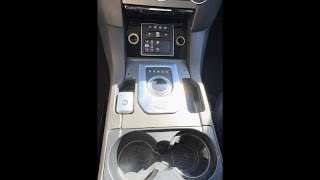
How to confirm: Remove the cupholder assembly in the center console. 🎬 Watch: How to access and use the emergency release strap. Locate the red strap for the EPRL. Ensure the lever mechanism it is attached to is pushed down and fully locked in its seated position. You may need to cycle it a few times to ensure it seats correctly.
Typical fix: Firmly push the EPRL mechanism down until it clicks and locks into place. No parts are required.
Est. part cost: $0 - High Transmission Fluid Viscosity in Extreme Cold 🟡 Medium Probability → Shop Transmission Assembly Per TSB LTB00685NAS1, in ambient temperatures of 15°F (-10°C) or lower, the transmission fluid can become too thick for the oil pump to generate enough pressure to release the park pawl, triggering a P1707-77 code.
How to confirm: The fault only occurs on initial start-up in very cold weather and may resolve on its own as the vehicle warms up. Sometimes, shifting to Drive first will allow the transmission to engage, clearing the fault and then allowing Reverse to be selected.
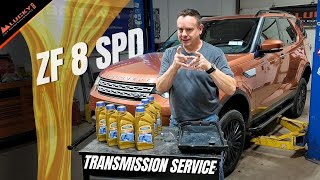
Typical fix: Follow the procedure in TSB LTB00685NAS1, which involves replacing the transmission fluid pan/filter assembly with an updated part and performing a fluid service. 🎬 See this walkthrough for a ZF 8-speed transmission fluid service.
Est. part cost: $250-$450
Rare But Worth Checking
- Faulty Gear Selector Module (GSM): The rotary gear selector itself contains electronics, a solenoid, and plastic components that can fail, causing the knob to get stuck or send incorrect signals. This is less common than the EPRL or fluid issues but a known failure point. It often throws code P176C-11 ('Transmission Range Selector Lock Control Error'). A user on landroverforums.com with a P1707-72 traced their issue to the GSM after confirming the brake switch was good and the EPRL was secure. Repair kits with more durable metal components are available. 🎬 Watch: How to replace the gear shift control module.
- Weak or Failing Battery: Land Rover electronics are notoriously sensitive to low voltage. An aging or weak battery can cause a cascade of seemingly unrelated electronic faults, including a 'Gearbox Fault' message. Before diving into expensive transmission diagnostics, it's wise to have the battery's health tested, especially if it is more than 4-5 years old.
- Brake Pedal Switch Failure: The system requires a signal from the brake pedal switch to allow the shifter to move out of Park. A faulty switch could prevent this. While it usually triggers other codes like P0504, it's a simple and inexpensive part to check. You can test this by having an assistant confirm the brake lights illuminate when you press the pedal. An owner on the forums noted their shift lock solenoid became very loud before failing, which can be diagnosed by listening for the click from the center console when pressing the brake with the ignition on.
- Faulty Transmission Control Module (TCM): → Shop Transmission Assembly While some workshop manuals may suggest a faulty TCM is the cause, this is an expensive last resort. It should only be considered after all other possibilities, including wiring, the EPRL, and the Gear Selector Module, have been thoroughly ruled out.
Diagnosis Steps
- Scan for Codes: Use a diagnostic tool capable of reading Land Rover-specific codes, including the two-digit suffix (e.g., -72 or -77), to confirm the exact fault.
- Check the EPRL: This is the most crucial first step. Remove the center console cupholders and locate the Emergency Park Release Lever's red strap. Verify the lever is fully seated and locked down. If it is loose, secure it, clear the codes, and re-test.
- Analyze Conditions for P1707-77: If the code is P1707-77, determine if it only occurs during cold starts in temperatures below 15°F (-10°C). If so, the issue is almost certainly the fluid viscosity as described in TSB LTB00685NAS1.
- Check Battery Health: Test the vehicle's battery. If it is over 4 years old or shows signs of weakness, consider replacing it, as low voltage can cause numerous electronic transmission faults on these vehicles.
- Inspect Brake Light Operation: Press the brake pedal and have an assistant confirm the brake lights illuminate. With the ignition on (engine off) and radio off, listen for an audible 'click' from the center console area when pressing the brake; this is the shift lock solenoid and confirms the brake switch is sending a signal.
- Inspect Wiring: If the above steps do not resolve the issue, inspect the wiring harness and connector at the transmission for any signs of damage, corrosion, or fluid contamination.
- Advanced Diagnostics: If the fault persists, further diagnosis will be needed to test the Gear Selector Module (GSM) and, as a final step, the Transmission Control Module (TCM). This is best performed by a qualified technician.
Parts You'll Likely Need

- Transmission Fluid Pan and Filter Kit
(OEM #LR065238 (supersedes LR023294))— This is the updated part number specified in TSB LTB00685NAS1 to resolve the cold-weather fault (P1707-77). The pan includes an integrated filter. The revised pan is stamped with '0501.220.614'.
Trusted brands: Land Rover (Genuine), ZF, Hengst
OEM price range: $300-$450
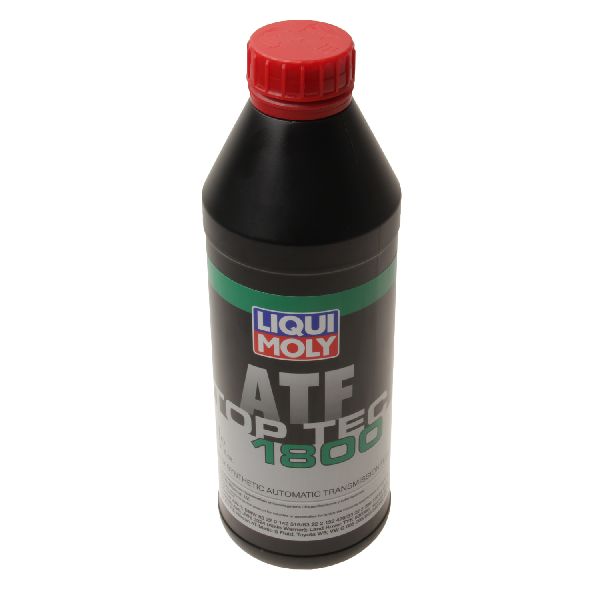
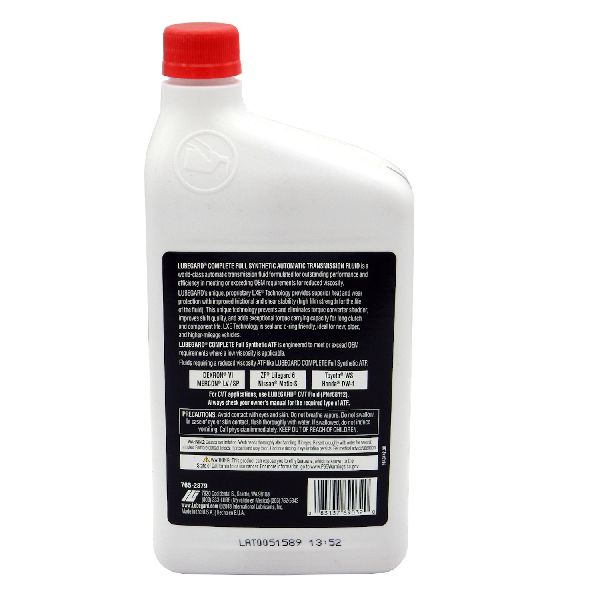
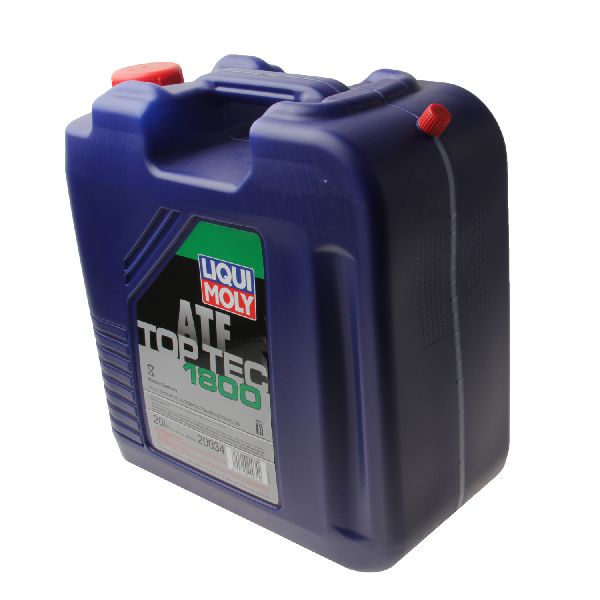
Aftermarket price range: $100-$250 - Automatic Transmission Fluid — Required when replacing the transmission pan/filter. The 8-speed ZF transmission in 2014-2015 models requires ZF Lifeguard 8 fluid or an equivalent approved fluid.
Trusted brands: ZF Lifeguard 8, Ravenol 8HP, Pentosin ATF 8
Related Codes That Often Appear With This One
- U0402 — This code means 'Invalid Data Received From Transmission Control Module'. It often appears with P1707 because the underlying transmission fault (like being unable to determine park/neutral status) causes the TCM to send implausible data to other modules on the vehicle's network.
- P176C-11 — This code for 'Transmission Range Selector Lock Control Error' points directly to a fault within the Gear Selector Module (GSM). It can appear alongside P1707 if the root cause is a failing rotary shifter mechanism.
Technical Service Bulletins (TSBs) & Recalls
- SSM72039: P1707-72 – 8 Speed Transmission Unable To shift Out Of Park.
- LTB00685NAS1: No Drive When Transmission Gear Selected on Cold Start (15°F / -10°C or Lower), triggering P1707-77.
Platform-Specific Known Issues
- TSB SSM72039 documents that code P1707-72 can be triggered simply by the Emergency Park Release Lever not being locked down, causing the vehicle to be stuck in Park.
- TSB LTB00685NAS1 identifies an issue on 2014 models (and other JLR models with the ZF 8-speed) where code P1707-77 is set in very cold temperatures due to high fluid viscosity, preventing the park pawl from releasing. The fix involves a new design of transmission pan/filter.
Mechanic-Grade Diagnostic Values
- ZF 8HP Variable Force Solenoid (VFS) Resistance — expected: Approximately 5.5 ohms. Failure: A reading significantly higher or lower than 5.5 ohms indicates a faulty solenoid.
- ZF 8HP On/Off Park Release Solenoid Resistance — expected: Approximately 25 ohms. Failure: A reading significantly different from 25 ohms suggests a problem with the park release or mechanical hold solenoid.
- CAN Bus Resistance at OBD-II Port — expected: 60 Ohms (between CAN High and CAN Low pins). Failure: A reading of 120 Ohms indicates an open circuit in the CAN backbone, possibly due to a failed terminating module like the ABS or Instrument Cluster. A reading of 0 Ohms indicates a short.
- CAN Bus Voltage at OBD-II Port — expected: Approximately 2.5 Volts on both CAN High and CAN Low lines (relative to ground). Failure: A low voltage (e.g., 1.3V) or a high voltage (e.g., 7.0V) on either line points to a module or wiring fault on the bus.
Hidden / Shadow Codes Worth Checking
- P1707-72: Actuator is stuck open. This is the most common variant, often linked to the Emergency Park Release Lever (EPRL) not being secured. A Land Rover TSB also notes that this code should be investigated under a separate procedure (SSM71813) and is distinct from CAN communication issues. (see via Land Rover-specific scan tool like SDD, GAP IID Tool, or high-end Autel/Snap-on scanners.)
- P1707-77: Commanded position not reachable. This variant is almost exclusively tied to TSB LTB00685NAS1 for high fluid viscosity in extreme cold. (see via Land Rover-specific scan tool like SDD, GAP IID Tool, or high-end Autel/Snap-on scanners.)
- P1707-74: Mechanical failure - actuator is slipping. This is a less common variant indicating a potential mechanical issue within the transfer case or transmission selection mechanism. (see via Land Rover-specific scan tool like SDD, GAP IID Tool, or high-end Autel/Snap-on scanners.)
Scan Tool Commands That Help
- Land Rover SDD (Symptom Driven Diagnostics): Configure existing module – Transmission control module — This function is used to re-establish communication and proper configuration between the TCM and other vehicle modules. TSB LTB01013NAS1 specifically calls for this procedure to resolve communication issues that can cause a 'Gearbox fault' message and prevent shifting out of Park.
- Land Rover SDD (Symptom Driven Diagnostics): Guided Diagnostics – Powertrain – Engine – Auto Stop-Start system — While not directly for P1707, issues with the Gateway module can cause widespread communication faults. Running the 'Configure existing module – Gateway module' function, often found within the stop-start diagnostic path, can resolve underlying network problems that may manifest as transmission faults.
Wiring & Ground Locations
- Main Battery Ground — The main battery negative cable connects directly to the body/chassis in the battery compartment, typically on the inner fender.. All electronic modules, including the TCM and GSM, rely on a solid ground connection. A poor main ground can cause low voltage issues and erratic electronic behavior, mimicking module failure.
- Center Console / Footwell Grounds — There are ground studs located in the left and right footwells, behind the trim panels.. The Gear Selector Module (GSM) is located in the center console. Its grounding path likely runs to one of the footwell ground points. Corrosion or a loose connection here could directly impact the GSM's operation and ability to communicate with the TCM.
- Transmission Main Connector — A large, round twist-lock connector on the side of the transmission housing. This is where the main vehicle harness connects to the internal Mechatronic unit (which houses the TCM).. This is the single most critical connection for the TCM. It is notoriously difficult to seat correctly after service. If not fully locked, it will cause a total loss of communication with the transmission, leading to a no-shift condition and multiple faults. Fluid leaks can also contaminate these pins.
Real Owner Repair Stories
- landroverforums.com user 'expedio2005' (2014 LR4) — Car stuck in park. Rotary knob pops up but will not turn. No error lights on the dash, brake lights work.
❌ Tried (didn't work) Hard reset by disconnecting the battery for 30 minutes., Touching positive and negative battery cables together., Starting the vehicle with headlights turned on (an LR3 trick).
✅ What actually fixed it The user disassembled the Gear Selector Module (GSM) following instructions from an Australian forum. By manipulating the internal lock mechanism, they were able to get the vehicle into gear to move it. They ultimately ordered and replaced the entire GSM assembly to permanently fix the issue. - Jaguar Forums user (working on a similar ZF 8HP system) (2014 Jaguar XFRS (with 8-speed transmission)) — After a transmission fluid service, the car was stuck in Neutral with a 'Gearbox Fault' and code P1707-72 (actuator stuck open). The selector knob was stuck up and would not turn.
❌ Tried (didn't work) Cycling the Emergency Park Release Lever (EPRL) multiple times.
✅ What actually fixed it The fault was temporarily reset by going underneath the vehicle and manually moving the selector arm on the side of the transmission back into the Park position. This suggests the internal park lock mechanism was not re-engaging electronically, forcing a manual reset. The final resolution was not posted, but this manual override step proved the fault was in the transmission's park command execution, not just the shifter.
OEM Part Supersession History
LR023294→LR065238— Updated design to address the cold weather fluid viscosity issue (P1707-77) as per TSB LTB00685NAS1. The revised pan is stamped with '0501.220.614'.
Model Year Variations Within This Range
- 2010-2013: These models use the 6-speed ZF 6HP28 transmission. While they can still experience 'stuck in park' issues due to a weak battery or faulty brake switch, they are not susceptible to the specific P1707-77 cold weather TSB or the 8-speed's EPRL issue. Faults are more likely related to the shifter linkage cable or the Mechatronic sleeve leaking.
- 2014-2015: These models use the 8-speed ZF 8HP transmission and are the primary subject of TSBs SSM72039 (P1707-72, EPRL issue) and LTB00685NAS1 (P1707-77, cold fluid issue). The rotary Gear Selector Module (GSM) is also a more common failure point on these later models.
Helpful Videos
We Have This Part in Stock
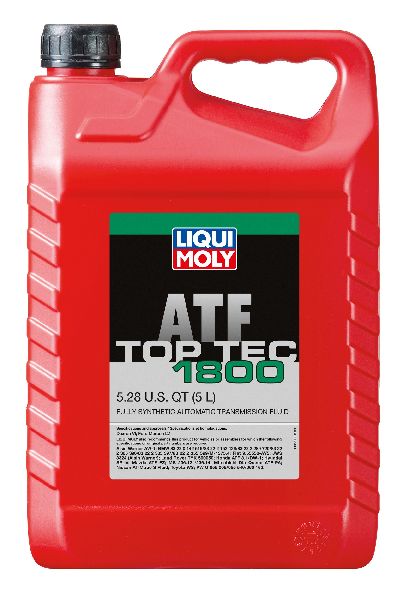


The information in this article is provided for general reference and educational purposes only. Vehicle specifications, procedures, and part compatibility can vary by production date, trim level, and region. Always consult your vehicle's factory service manual and verify part numbers before purchasing or performing repairs. Safety-critical components such as airbags, seat belts, and braking systems should be installed by a qualified professional.
- Land Rover LR4:
- 🧭 Diagnostic Flowchart
- 🎬 Helpful Videos
- 🛍️ Shop This Part
- What's Unique About the 2010-2015 Land Rover LR4
- Symptoms You May Notice
- Most Likely Causes
- Rare But Worth Checking
- Diagnosis Steps
- Parts You'll Likely Need
- Related Codes That Often Appear With This One
- Technical Service Bulletins (TSBs) & Recalls
- Platform-Specific Known Issues
- Mechanic-Grade Diagnostic Values
- Hidden / Shadow Codes Worth Checking
- Scan Tool Commands That Help
- Wiring & Ground Locations
- Real Owner Repair Stories
- OEM Part Supersession History
- Model Year Variations Within This Range
- 🎟️ Get 5% Off