

P1707 on 2013-2014 Land Rover Range Rover: Stuck in Park Causes and Fixes
On a 2013-2014 Range Rover, code P1707 usually means the vehicle is stuck in Park. The most common cause is the Emergency Park Release Lever (EPRL) not being fully locked down, which is often a no-cost fix. In very cold weather, the code can also be triggered by thick transmission fluid. Always check the simple EPRL fix before considering expensive repairs.
- If your 2013-2014 Range Rover is stuck in Park with a P1707 code, check the Emergency Park Release Lever under the cupholders first. It must be pushed down until it clicks.
- This is a well-documented issue by Land Rover, and checking the lever is a simple, no-cost diagnostic step that can save you from an expensive and unnecessary repair.
- If the problem only happens during very cold starts (below 15°F / -10°C), it is likely a different issue (P1707-77) related to transmission fluid viscosity, which is also documented in a TSB and fixed with a revised transmission pan.
- Do not authorize expensive repairs like replacing the TCM or the entire shifter assembly until the simple, known causes have been ruled out.
What's Unique About the 2013-2014 Land Rover RANGE ROVER

The L405 generation Range Rover uses a rotary dial electronic gear selector. As a backup, it has a mechanical Emergency Park Release Lever (EPRL) located under the cupholders. A unique quirk of this platform is that if this lever is used or disturbed (for example, during pre-delivery inspection, vehicle transport, or even interior detailing) and not correctly re-latched, it will prevent the vehicle from shifting out of Park and trigger the P1707-72 code. This issue is so common that Land Rover issued a specific technical bulletin (SSM72039) to address it.
Diagnostic Flowchart

Tap your situation to follow the diagnostic path that matches what you're seeing on this vehicle.
Symptoms You May Notice

- Unable to shift transmission out of Park.
- Vehicle is immobile.
- 'Transmission Fault' message displayed on the instrument cluster.
- The rotary gear selector knob may not rise from the console, or may be stuck in the 'up' position.
- The selected gear indicator (R, N, D) may flash on the shifter.
- A loud, pronounced click may be heard from the shift lock solenoid when attempting to shift.
- Replacing the Transmission Control Module (TCM) / Valve Body without first checking the EPRL status.
- Replacing the entire gear selector assembly when the issue is the EPRL or a brake switch.
- Performing expensive transmission work for the P1707-77 code without realizing it's a known cold-weather issue addressed by a revised fluid pan.
Most Likely Causes

- Emergency Park Release Lever (EPRL) Not Locked 🔴 High Probability As documented in Land Rover's Technical Service Bulletin SSM72039, the lever can be left unsecured during pre-delivery inspection or after being used to move the vehicle without power (e.g., towing). Forum users also report this can happen after interior cleaning or by a valet. The lever is exposed during transport and must be locked down before customer delivery.
How to confirm: Visually inspect the EPRL, which is a red strap or lever located under the center console cupholders. Ensure the lever is pushed down and fully locked into its secure position. There should be a distinct click when it locks. If it's even slightly raised, it will trigger the fault.
Typical fix: Securely lock the EPRL lever. This often requires no parts and simply involves pushing the lever firmly back into its stowed and locked position until it clicks. This resolves the P1707-72 fault.
Est. part cost: $0 - Thick Transmission Fluid in Extreme Cold 🟡 Medium Probability → Shop Transmission Assembly TSB LTB00685NAS1 notes that in ambient temperatures of 15°F (-10°C) or lower, the viscosity of the ZF-Lifeguard 8 transmission fluid can prevent the oil pump from building enough pressure to release the park pawl on a cold start.
How to confirm: This issue will only occur during a cold start in very low temperatures and will set the P1707-77 variant of the code. The vehicle may engage a gear after a delay or after being shifted between R, N, and D.
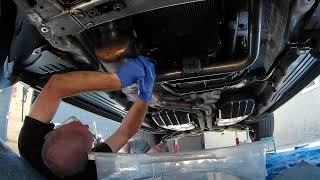
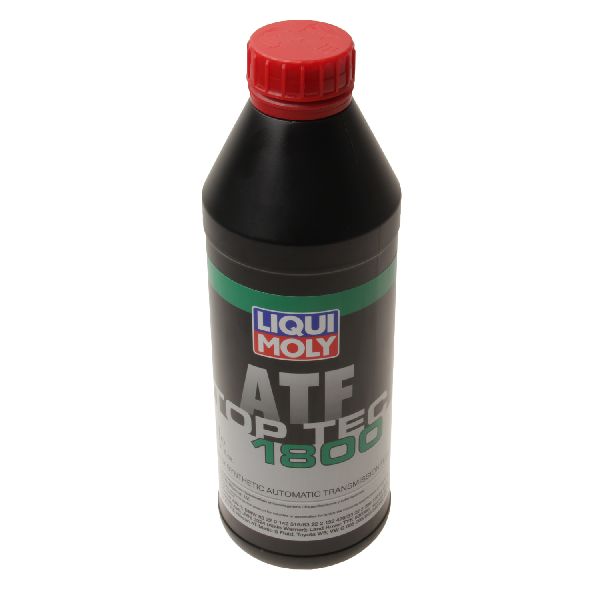
Typical fix: Land Rover issued a revised transmission fluid pan (part number LR065238) which supersedes the original part LR023294. This new pan has a revised filter/pickup design. The official fix is to replace the pan and perform a transmission fluid service. 🎬 See this step-by-step guide for a transmission oil change The TSB notes that the existing fluid can be reused if clean, but a fluid change is often performed at the same time.
Est. part cost: $200-$400 - Faulty Brake Pedal Switch ⚪ Low Probability Like many modern cars, the brake switch sends a critical signal to the TCM to allow the vehicle to shift out of Park. Failure is not specific to this platform but is a common cause for this symptom across many vehicles.
How to confirm: Check if the brake lights illuminate when the pedal is pressed. However, even if the lights work, the switch has multiple circuits and could still be faulty. A diagnostic tool can monitor the switch status as seen by the TCM. The switch is located above the brake pedal.
Typical fix: Replace the brake pedal switch. The part number is often XKB500110 for this platform.
Est. part cost: $30-$80
Rare But Worth Checking
- Faulty Transmission Control Module (TCM): → Shop Transmission Assembly While some workshop manuals may suggest replacing the TCM (which is integrated into the valve body) for P1707-72, this is an expensive last resort and should only be considered after all other simpler causes, especially the EPRL, have been exhaustively ruled out. A true internal TCM fault is rare compared to the EPRL issue.
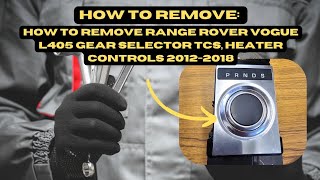
- Sticking Park Pawl or Shift Lock Solenoid: A mechanical issue within the transmission or a failing solenoid in the gear selector module can prevent the vehicle from shifting. Owners have sometimes reported an increasingly loud click from the shifter area before failure, which could indicate a failing solenoid. In some cases, the entire gear selector module (Part # LR090489) 🎬 Watch: How to remove the gear selector and center console may need to be replaced.
- Low Battery Voltage: Land Rover vehicles are notoriously sensitive to battery voltage. A weak or failing battery can cause a host of seemingly unrelated electronic faults, including transmission and shifter-related error messages. Before extensive diagnosis, ensure the battery is fully charged and passes a load test.
Diagnosis Steps
- Use a diagnostic scanner capable of reading Land Rover-specific codes to confirm P1707 and, critically, check for suffixes like -72 or -77.
- If P1707-72 is present, your first and most important step is to inspect the Emergency Park Release Lever (EPRL). Remove the cupholder insert in the center console and verify the red lever/strap is fully latched down. Push it down firmly until it clicks.
- If P1707-77 is present and the fault occurred in temperatures below 15°F (-10°C), the issue is almost certainly related to cold, thick transmission fluid as per TSB LTB00685NAS1.
- Check for proper brake light operation when the brake pedal is pressed to rule out a simple brake switch failure.
- Verify battery voltage and health. A weak battery can cause numerous electronic faults on this platform.
- If the EPRL is secure and the weather is not cold, inspect the wiring and connectors for the gear selector module and transmission.
- If the issue persists, further professional diagnosis of the shift lock solenoid within the gear selector, internal transmission components, or the TCM is required.
Parts You'll Likely Need
- Transmission Fluid Pan/Filter Assembly
(OEM #LR065238)— This is the revised part specified by Land Rover in TSB LTB00685NAS1 to fix the P1707-77 code in cold weather. It supersedes part LR023294.
Trusted brands: Land Rover (Genuine), ZF (OEM)
OEM price range: $250-$400
Aftermarket price range: $150-$250 - Brake Light Switch
(OEM #XKB500110)— A potential, though less common, cause for being unable to shift from Park.
Trusted brands: Land Rover (Genuine), Intermotor, Facet
OEM price range: $40-$60
Aftermarket price range: $20-$40
Technical Service Bulletins (TSBs) & Recalls
- SSM72039: P1707-72 - 8 Speed Transmission Unable To shift Out Of Park. Cause: EPRL (Emergency Park Release Lever) not locked down from PDI.
- LTB00685NAS1: P1707-77 - No Drive When Transmission Gear Selected on Cold Start. Cause: Transmission oil viscosity at cold temperatures.
Platform-Specific Known Issues
- TSB SSM72039: Explicitly calls out that P1707-72, causing an inability to shift from Park, is often due to the Emergency Park Release Lever (EPRL) not being locked down after a Pre-Delivery Inspection (PDI) or vehicle transport.
- TSB LTB00685NAS1: Addresses P1707-77, where a 'Transmission Fault' message appears and the vehicle won't move in very cold conditions (below 15°F / -10°C). The cause is identified as high oil viscosity preventing the park pawl from releasing. The fix involves installing a revised transmission fluid pan (LR065238).
Mechanic-Grade Diagnostic Values
- Park/Neutral Indicator Circuit Voltage (at TCM) — expected: Approx. 0-5 V (design dependent). Failure: A reading that is stuck high or low and does not change when shifting, or is outside the expected range.
- Park/Neutral Indicator Switch Resistance — expected: Near 0 Ω when closed (in a specific gear state). Failure: High resistance (OL) when the switch should be closed, or low resistance when it should be open.
Hidden / Shadow Codes Worth Checking
- P1707-74: Mechanical failure - actuator is slipping. This is a less common variant that points towards a mechanical issue in the transmission or transfer case selection mechanism, rather than the more common EPRL or cold fluid issues. (see via Land Rover-specific scan tool like JLR SDD, GAP IID Tool, or high-end Autel/Snap-on scanners.)
- P176C-11: Transmission Range Selector Lock Control Error. This code often appears with P1707-72 when the fault is in the gear selector module itself, rather than the EPRL or the transmission's TCM. It points to a circuit short to ground in the shifter's lock control. (see via Land Rover-specific scan tool like JLR SDD, GAP IID Tool, or high-end Autel/Snap-on scanners.)
Scan Tool Commands That Help
- JLR SDD / Pathfinder / High-End Aftermarket (e.g., Autel): Clear Transmission Adaptations — After replacing transmission components like the valve body (TCM) or the entire transmission, this function should be run to reset the learned shift strategies. It can also be attempted after a fluid service to encourage the system to re-learn with the new fluid properties.
- JLR SDD / Pathfinder: Configure New Module - Transmission Control Module — This is required when the TCM (valve body) is replaced. The new module must be programmed and coded to the vehicle's VIN and configuration.
Wiring & Ground Locations
- Automatic Transmission Switch Ground — A wiring diagram for the 2014 Range Rover shows a ground connection for the 'Automatic transmission switch' (the gear selector module) as part of a larger ground distribution diagram. While not providing a specific 'G' number in the available snippet, it confirms the component is grounded with other center console components.. A poor ground for the gear selector module could cause erratic behavior, including an inability to communicate its status to the TCM, potentially contributing to a P1707 fault.
Real Owner Repair Stories
- landroverworld.org forum user 'cannondale900' (2015 Land Rover LR4 SCV6 (platform-mate with same transmission/shifter)) — Unable to move the car out of Park, shifter dial stuck in the 'up' position. Initially set code P1707-72.
❌ Tried (didn't work) Replacing the brake light switch.
✅ What actually fixed it The user performed a 'manual shift lock hack' to make the car operable. The P1707-72 code cleared, but a new code, P176C-11, appeared. After testing the shift lock solenoid (which worked with a 9V battery), the user concluded the gear shifter module's circuit board was faulty and ordered a refurbished replacement module to resolve the issue. - landroverforums.com user 'TonyInIdaho' (2014 Land Rover LR4 with 99k miles (platform-mate)) — On a cold start (-20°F), received 'transmission fault' message. Shifter 'R' was blinking and vehicle would not move in Reverse or Neutral. Shifting to Drive allowed it to engage, and the fault cleared. Code P1707-77 was stored.
❌ Tried (didn't work) Initial forum suggestion was to replace the TCM/valve body.
✅ What actually fixed it The issue was identified as the known cold-weather problem described in TSB LTB00685NAS1. The user noted that the fix is to install the revised transmission pan/filter assembly, confirming the diagnosis from the TSB.
When the Usual Fixes Don't Work
- In one documented case on a platform-mate, a user with P1707-72 found that neither the EPRL nor the brake switch was the cause. Further diagnosis revealed an additional code, P176C-11, pointing to a fault within the gear selector module itself. The final fix was to replace the gear selector assembly, not the more expensive TCM that is sometimes indicated by the workshop manual for this code.
Helpful Videos

We Have This Part in Stock


The information in this article is provided for general reference and educational purposes only. Vehicle specifications, procedures, and part compatibility can vary by production date, trim level, and region. Always consult your vehicle's factory service manual and verify part numbers before purchasing or performing repairs. Safety-critical components such as airbags, seat belts, and braking systems should be installed by a qualified professional.
- Land Rover RANGE ROVER:
- 🧭 Diagnostic Flowchart
- 🎬 Helpful Videos
- 🛍️ Shop This Part
- What's Unique About the 2013-2014 Land Rover RANGE ROVER
- Symptoms You May Notice
- Most Likely Causes
- Rare But Worth Checking
- Diagnosis Steps
- Parts You'll Likely Need
- Technical Service Bulletins (TSBs) & Recalls
- Platform-Specific Known Issues
- Mechanic-Grade Diagnostic Values
- Hidden / Shadow Codes Worth Checking
- Scan Tool Commands That Help
- Wiring & Ground Locations
- Real Owner Repair Stories
- When the Usual Fixes Don't Work
- 🎟️ Get 5% Off