

P1715 on 2000-2010 Hyundai Elantra: Input Speed Sensor Failure Causes and Fixes
On a 2000-2010 Hyundai Elantra, code P1715 almost always means the automatic transmission's Input Speed Sensor (also called Pulse Generator 'A') has failed. This is a common issue causing harsh shifting and the transmission getting stuck in 3rd gear. Replacing the sensor is the typical fix, with the part costing between $20 and $60.
- P1715 on a 2000-2010 Elantra points directly to a problem with the transmission's Input Speed Sensor circuit.
- The most common fix is simply replacing the faulty Input Speed Sensor, which is an affordable and accessible part.
- Symptoms are serious for drivability (stuck in 3rd gear) but the code rarely indicates a major internal transmission failure.
- Always inspect the wiring and connector to the sensor for damage before replacing parts.
- Consider replacing both the input and output speed sensors at the same time as a preventative measure.
What's Unique About the 2000-2010 Hyundai Elantra
Unlike some other manufacturers where a P1715 code can signal a catastrophic internal transmission failure (especially in CVTs), on the 2000-2010 Elantra's conventional 4-speed automatic transmission, the issue is overwhelmingly just a faulty external sensor or its wiring. It's a common, well-documented failure point on these transmissions, but it's typically a simple and affordable component replacement rather than a sign of a doomed transmission.
Generation note: This guide covers the 3rd generation (XD, 2000-2006) and 4th generation (HD, 2007-2010) Hyundai Elantra. The meaning of the code and the common causes are consistent across these generations as they use similar conventional 4-speed automatic transmissions, such as the A4AF3 and A4BF3.
Symptoms You May Notice
- Check Engine Light is on
- Transmission gets stuck in one gear (usually 3rd gear)
- Harsh, erratic, or delayed shifting
- Sluggish acceleration, especially from a complete stop
- Reduced fuel economy
- Inability to shift into overdrive
- Replacing the entire transmission. Because the symptoms involve poor shifting, some may assume the transmission has failed internally, when it is most often just an inexpensive external sensor.
Most Likely Causes
- Failed Input Speed Sensor (Pulse Generator 'A') 🔴 High Probability The sensor is an electronic component that operates in a high-heat environment and can fail with age and mileage. It is the most common point of failure for this code on this platform.
How to confirm: After visually inspecting the wiring, replacing the sensor is the most common and direct diagnostic step. The part is relatively inexpensive. The sensor is located on top of the transmission housing, often underneath the air filter box and shift cable bracket.
Typical fix: Replace the Input Speed Sensor. It is often recommended to replace the Output Speed Sensor at the same time, as they are similar parts that fail under the same conditions.
Est. part cost: $20-$60 - Damaged Wiring or Connector 🟡 Medium Probability The wiring harness leading to the sensor is exposed to heat and vibration in the engine bay, which can cause wires to become brittle, frayed, or for the connector to become corroded or loose over time.
How to confirm: Visually inspect the wiring harness and the connector at the transmission for any signs of damage, corrosion, or loose pins. Wiggle the connector while the engine is running to see if it affects transmission behavior.
Typical fix: Repair the damaged section of wire or replace the connector pigtail.
Est. part cost: $10-$30 - Faulty Transmission Control Module (TCM) ⚪ Low Probability → Shop Transmission Assembly While not common, the TCM itself can fail, though it's rare for it to manifest as only a single sensor code.
How to confirm: This is typically diagnosed last. If a new sensor and verified wiring do not resolve the code, the TCM's circuits must be professionally tested.
Typical fix: Replace and reprogram the Transmission Control Module.
Est. part cost: $200-$800
Diagnosis Steps
- Read the trouble codes with an OBD-II scanner to confirm P1715 is present.
- Note any other transmission-related codes that are stored.
- Locate the Input Speed Sensor on the top of the transmission case. Access may require removing the engine cover and the air filter housing assembly.
- Carefully inspect the sensor's electrical connector and wiring harness for any signs of damage, corrosion, or loose connections.
- If the wiring appears intact, the most likely cause is the sensor itself.
- To replace, disconnect the electrical connector, remove the single 10mm bolt holding the sensor in place, and pull the sensor straight out.
- Install the new sensor, reconnect the connector, and reassemble the air filter housing.
- Clear the trouble codes with the scanner and perform a test drive to see if the code returns and if shifting behavior is normal.
- If the code returns, perform a continuity test on the wiring between the sensor and the TCM to rule out a hidden break in the wire.
- If wiring and the sensor are confirmed good, suspect a faulty TCM as the last resort.
Parts You'll Likely Need
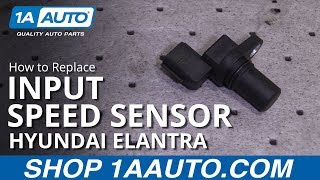
- Automatic Transmission Input Speed Sensor (Pulse Generator A)
(OEM #42620-39051)— This sensor is the most common failure point that triggers code P1715 on this vehicle.
Trusted brands: Hyundai OE, Standard Motor Products, WVE, Dorman (917-607), Autopart Premium
OEM price range: $50-$90
Aftermarket price range: $20-$60 - Automatic Transmission Output Speed Sensor (Pulse Generator B)
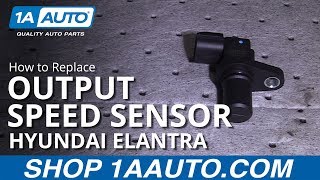
(OEM #42621-39052)— Often fails around the same time as the input sensor and is typically replaced with it as a preventative measure. 🎬 See how to replace the output speed sensor It is often sold together in a kit.
Trusted brands: Hyundai OE, Standard Motor Products, WVE, Dorman, Autopart Premium
OEM price range: $50-$90
Aftermarket price range: $20-$60
Related Codes That Often Appear With This One
- P0720 — This code is for the Output Speed Sensor. It may appear with P1715 if there is a shared wiring issue or if both sensors fail around the same time, which is common.
- P1529 — This is a companion code that simply means the TCM has requested the Engine Control Module (ECM) to turn on the Check Engine Light. It confirms a transmission fault has been registered and is very common to see alongside P1715.
- P0717 — This is the generic SAE version of the P1715 code, meaning 'Input/Turbine Speed Sensor 'A' Circuit No Signal'. Some scan tools may show this code instead of or in addition to the Hyundai-specific P1715.
Platform-Specific Known Issues
- Sensor Location and Access: The input speed sensor is located on the top of the transmission case. To access it, you typically need to remove the engine cover, the air intake snorkel, and the entire air filter box assembly. On some models, the shift cable bracket may also need to be unbolted and moved aside. The sensor itself is held in by a single 10mm bolt.
Mechanic-Grade Diagnostic Values
- Sensor reference voltage at harness connector (with sensor unplugged, key-on-engine-off) — expected: 5.0V ± 0.5V. Failure: No voltage or voltage outside the specified range points to a problem with the wiring or the Transmission Control Module (TCM), not the sensor itself.
- Input Speed Sensor internal resistance — expected: A specific resistance value is not consistently published by Hyundai for this part.. Failure: A reading of infinity (OL or open circuit) on a multimeter definitively confirms an internal failure of the sensor.
Scan Tool Commands That Help
- Hyundai GDS (Global Diagnostic System) or equivalent professional scan tool: Live Data > Auto Transaxle > Current Data > Input speed sensor — This is used to monitor the sensor's output in real-time while driving. The reading should increase smoothly with engine RPM. If the reading is zero, erratic, or drops out intermittently, it confirms a fault in the sensor or its circuit.
Wiring & Ground Locations
- Input Speed Sensor Connector — On top of the transmission housing, under the air filter box assembly. It is a 3-pin connector.. This is the primary connection point to inspect for corrosion, moisture, or physical damage. A poor connection here will cause a P1715 code even if the sensor is good.
- Transmission to Chassis Ground — Typically a black wire or strap bolted from the transmission case directly to the vehicle's frame rail or chassis in the engine bay.. A corroded, loose, or broken main transmission ground can cause a variety of erratic electronic issues, including faulty sensor readings. While not the most common cause for a single P1715 code, it is a critical check for any transmission electrical fault.
OEM Part Supersession History
42620-39050, 42620-39100→42620-39051— Standard part consolidation and revision by the manufacturer.
Diagnostic Flowchart
Other Known Issues on This Vehicle
Issues unrelated to this code that are worth knowing about as an owner of this generation:
- Front Subframe and Rear Suspension Corrosion 🔴 High — Common in regions that use road salt ('Salt Belt'). Can occur at any mileage but worsens with age. (Ref: Hyundai Recall 113 / NHTSA 13V-354. A class-action lawsuit was also settled regarding this issue.)
- Peeling White Paint 🟡 Low — Affects vehicles with white exterior paint, where the paint can delaminate and peel in large sheets. This is a known issue across many Hyundai models of this era and beyond. (Ref: Hyundai extended the paint warranty for this issue on many models, though specific coverage for these older Elantras may vary.)
- Crankshaft Position Sensor Failure 🟠 Medium — A common cause of no-start or stalling conditions. The sensor is a frequent failure item with age.
- Window Regulator Failure 🟡 Low — The cables or plastic components within the window regulators can break, causing a window to fall into the door or become inoperable.
Used vs. New Parts: Buying Guide for This Vehicle
When a used part is the smart pick: A used sensor from a reputable auto recycler is a reasonable option for this repair, especially for budget-conscious owners. The failure is electronic and not typically due to mechanical wear, so a part from a lower-mileage donor vehicle can be a reliable and cost-effective alternative to a new part.
Donor-vehicle mileage cap: roughly under 120000 miles for the part to have meaningful remaining life.
What to inspect on the donor part:
- Check for any physical damage to the sensor body or connector.
- Ensure the connector pins are clean, straight, and free of corrosion.
- Ask for the mileage of the donor vehicle if possible.
- Verify the part number on the used sensor matches the required OEM number (42620-39051) or its predecessors.
OEM-only on this vehicle (don't cheap out):
- Transmission Control Module (TCM)
Aftermarket brands forum-validated for this vehicle:
- Standard Motor Products (SMP)
- Dorman
- WVE
- NGK/NTK
Real Owner Stories
Aggregated from forums and TSBs cited above. Mileages and costs reflect what owners reported in those sources.
2001 Hyundai Elantra
Symptoms: Sudden 'clunk' while driving, transmission defaults to 3rd gear (limp mode), Check Engine Light on. Resetting the code by restarting the car would temporarily fix it.
What fixed it: Replaced the Input Speed Sensor. The user noted it was a 40-minute DIY job requiring removal of the airbox and a cable bracket to access.
Source hint: Hyundai Forum report cited in owner_reports
2004 Hyundai Elantra
Symptoms: Severe clunk when going into 3rd gear, particularly after the engine warmed up. The issue persisted after a transmission fluid service.
What fixed it: The owner was still seeking a final repair after replacing both sensors and the ECU did not resolve the issue.
Source hint: 2CarPros report cited in owner_reports
Related OBD-II Codes
Frequently Asked Questions
Where is the Input Speed Sensor located on my 2000-2010 Hyundai Elantra?
My Elantra is stuck in 3rd gear and won't shift into overdrive; is this related to P1715?
Is there a recall for the corrosion issues on this generation of Elantra?
Can I just clean the sensor, or does it need to be replaced?
Should I replace both transmission sensors at the same time?
Is the peeling white paint on my Elantra a known issue?
Helpful Videos
We Have This Part in Stock

The information in this article is provided for general reference and educational purposes only. Vehicle specifications, procedures, and part compatibility can vary by production date, trim level, and region. Always consult your vehicle's factory service manual and verify part numbers before purchasing or performing repairs. Safety-critical components such as airbags, seat belts, and braking systems should be installed by a qualified professional.
- Hyundai Elantra:
- 🧭 Diagnostic Flowchart
- 🎬 Helpful Videos
- 🛍️ Shop This Part
- What's Unique About the 2000-2010 Hyundai Elantra
- Symptoms You May Notice
- Most Likely Causes
- Diagnosis Steps
- Parts You'll Likely Need
- Related Codes That Often Appear With This One
- Platform-Specific Known Issues
- Mechanic-Grade Diagnostic Values
- Scan Tool Commands That Help
- Wiring & Ground Locations
- OEM Part Supersession History
- Other Known Issues on This Vehicle
- Used vs. New Parts: Buying Guide for This Vehicle
- Real Owner Stories
- 2001 Hyundai Elantra
- 2004 Hyundai Elantra
- Related OBD-II Codes
- Frequently Asked Questions
- 🎟️ Get 5% Off