

P1715 on 2011-2015 Kia Optima: Input Speed Sensor Causes and Fixes
On a 2011-2015 Kia Optima, the P1715 code almost always points to a failed transmission Input Speed Sensor. This can cause harsh, erratic shifting or get the car stuck in 'limp mode.' The fix is typically replacing the sensor, which is a moderately difficult DIY job requiring access to the transmission's valve body.
- P1715 on a 2011-2015 Kia Optima is NOT a catastrophic transmission failure, unlike on some other brands.
- The most common cause is a failed input/output speed sensor harness located inside the transmission on the valve body.
- The correct repair involves replacing this sensor harness (Part #46386-3B000 or its successor) and is a moderately difficult DIY job.
- Always check for related codes like P0720 (Output Speed Sensor) and P0717 (generic equivalent), as they often appear together.
- Do not let a shop convince you to replace the entire transmission for this code without first attempting the sensor replacement.
What's Unique About the 2011-2015 Kia Optima
While a P1715 code on other brands like Nissan often signals a catastrophic CVT transmission failure, that is not the case here. The 2011-2015 Kia Optima uses a conventional 6-speed automatic transmission (the A6MF1). For this specific platform, P1715 is a much more straightforward and less severe issue, typically isolated to the sensor itself or its wiring, rather than a major mechanical failure. The input and output speed sensors are commonly replaced together as a single harness assembly inside the transmission.
Symptoms You May Notice
- Harsh or erratic shifting
- Transmission getting stuck in one gear (typically 3rd gear, known as 'limp mode')
- Delayed engagement when shifting from Park to Drive or Reverse
- Check Engine Light illuminated
- Inability to use manual shift mode
- Flashing gear position indicator on the dashboard
- Reduced fuel efficiency
- Engine stalling when coming to a stop after high-speed driving
- Replacing the entire transmission when only the speed sensor or wiring is faulty.
- Replacing the valve body without first testing the speed sensor harness that attaches to it.
Most Likely Causes
- Failed Input Speed Sensor (Pulse Generator 'A') 🔴 High Probability Like many electronic sensors exposed to constant heat cycles and vibration within the transmission, the input speed sensor can fail over time. Hyundai/Kia transmissions of this era are known for this issue, and the input and output sensors are often integrated into a single harness that fails as a unit.
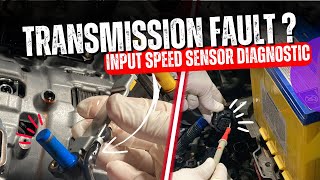
How to confirm: A diagnostic scan tool can monitor the live data 🎬 See how to diagnose and test the sensor wiring from the input speed sensor. If the reading is zero or erratic while the vehicle is in gear and moving, the sensor is likely faulty. Resistance tests can also be performed on the sensor itself once removed, comparing readings to factory specifications.
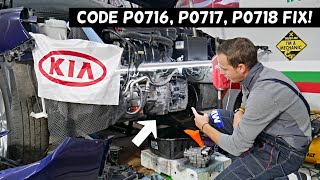
Typical fix: Replace the input/output speed sensor harness assembly. 🎬 Watch: How to locate and replace the speed sensor This part is located on the transmission valve body, requiring removal of the transmission pan for access.
Est. part cost: $50-$150 - Damaged Wiring Harness or Poor Connection 🟡 Medium Probability The wiring harness leading to and inside the transmission can become brittle or damaged from heat and vibration. The external connector is also susceptible to corrosion or moisture intrusion, leading to a poor signal.
How to confirm: Visually inspect the external transmission wiring harness and connector for any signs of damage, corrosion, or loose pins. Perform a continuity test on the wires between the sensor connector and the TCM.
Typical fix: Repair the damaged section of the harness or clean/replace the faulty connector. In some cases, the internal transmission harness containing the sensors needs to be replaced.
Est. part cost: $20-$200 - Low or Dirty Transmission Fluid ⚪ Low Probability → Shop Transmission Assembly While less common to directly cause a sensor circuit code, extremely low or degraded fluid can cause erratic transmission behavior that may, in some instances, be misinterpreted by the TCM or indicate a larger problem.
How to confirm: Check the transmission fluid level and condition according to the manufacturer's procedure. If the fluid is dark, burnt-smelling, or contains metallic particles, there may be a more severe internal issue.
Typical fix: Perform a transmission fluid drain and fill. If the fluid is severely degraded, a full flush may be considered, but this can sometimes cause issues on high-mileage transmissions.
Est. part cost: $100-$250
Rare But Worth Checking
- Faulty Transmission Control Module (TCM): → Shop Transmission Assembly This is extremely rare. The TCM should only be considered after all other possibilities, including sensors and wiring, have been exhaustively tested and ruled out. It is expensive and often requires programming.
Diagnosis Steps
- Connect an OBD-II scanner to confirm the P1715 code and check for any other related transmission codes like P0720 or P0717.
- Use the scanner's live data function to monitor the Transmission Input Speed Sensor reading while the engine is running and the transmission is in Drive (with the vehicle safely secured). An erratic or 0 RPM reading while the output shaft sensor shows speed indicates a problem.
- Inspect the main transmission wiring harness connector for damage, corrosion, or moisture. Clean and secure the connection if necessary.
- Check the transmission fluid level and condition. Low or burnt fluid can indicate other problems and should be addressed.
- If external wiring and fluid are okay, the next step is to test the sensor itself. This requires accessing the transmission's valve body.
- Safely raise and support the vehicle. Drain the transmission fluid and remove the transmission pan.
- Carefully remove the transmission valve body to access the input/output speed sensor assembly. This is a complex step; refer to a factory service manual.
- Visually inspect the internal harness for damage. Test the resistance of the input speed sensor and compare it to factory specifications (typically in the range of 200-400 ohms, but verify for the specific part).
- If the sensor tests bad, replace the sensor/harness assembly (Part No. 46386-3B000 or its successor).
- Reinstall the valve body with new gaskets, ensuring all bolts are torqued to the correct specification in the proper sequence. Install the transmission pan with a new gasket or sealant.
- Refill with the correct type and amount of Kia-specified automatic transmission fluid (e.g., SP-IV).
- Clear the trouble codes and perform a test drive, allowing the transmission to go through all gears to ensure it is shifting correctly.
Parts You'll Likely Need
- Transmission Input/Output Speed Sensor Harness
(OEM #46386-3B000)— This is the most common failure point for the P1715 code. The input and output sensors are integrated into a single harness that mounts to the valve body. The original part is often superseded.
Trusted brands: Hyundai/Kia Genuine, Dorman, Standard Motor Products (SC579)
OEM price range: $100-$150
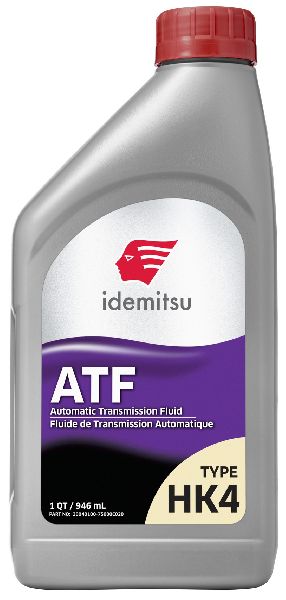
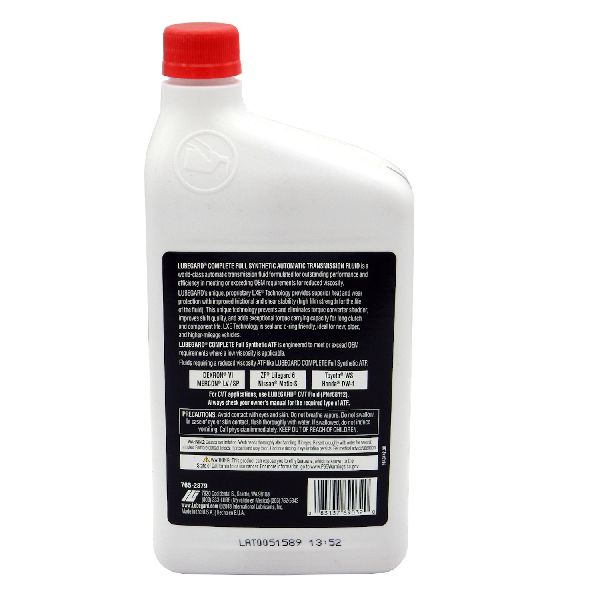
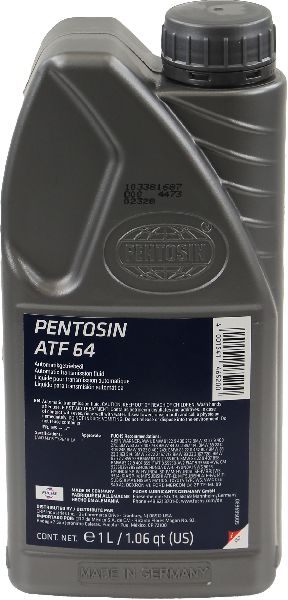
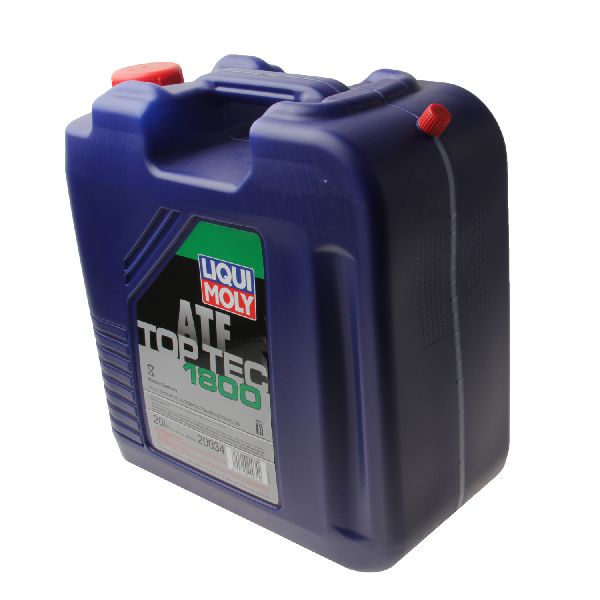
Aftermarket price range: $50-$90 - Automatic Transmission Fluid (ATF) — The transmission fluid must be drained to access the sensor and will need to be replaced. Use only the specified fluid, such as Hyundai/Kia SP-IV or a compatible equivalent. A drain and fill will require approximately 5 quarts.
Trusted brands: Kia/Hyundai Genuine SP-IV, Idemitsu H-Plus, Valvoline MaxLife ATF
OEM price range: $15-$25 per quart
Aftermarket price range: $8-$15 per quart - Transmission Pan Gasket
(OEM #45285-3B010)— It is best practice to replace the pan gasket anytime the transmission pan is removed to ensure a proper seal and prevent leaks.
Trusted brands: Hyundai/Kia Genuine, Fel-Pro
OEM price range: $20-$35
Aftermarket price range: $10-$20
Related Codes That Often Appear With This One
- P0720 — This code is for the Output Speed Sensor. The input and output sensors often fail around the same time or are part of the same wiring harness assembly within the transmission, causing both codes to appear.
- P0717 — This is the generic SAE equivalent of P1715, meaning 'Input/Turbine Speed Sensor 'A' Circuit No Signal'. Seeing both can confirm the nature of the fault.
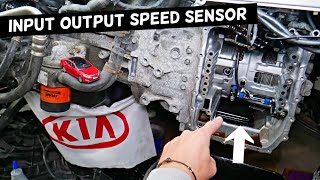
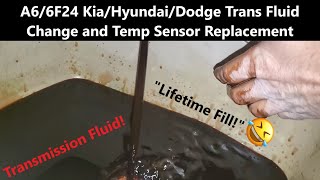
- P0711 — This code for the Transmission Fluid Temperature Sensor is very common to see alongside P1715, as this sensor is also integrated into the same internal wiring harness 🎬 Watch: Step-by-step internal harness replacement and fluid change that is the primary failure point.
Technical Service Bulletins (TSBs) & Recalls
- While no TSB specifically for P1715 was found, Kia has issued related TSBs for their 6-speed automatic transmissions, such as TSBTRA051R1, which addresses various shift solenoid electrical fault codes by replacing the solenoid pack/harness, indicating a known vulnerability in the internal electronic components of this transmission family.
Platform-Specific Known Issues
- A user on optimaforums.com described a 2012 Optima EX with codes P0717 and P0722 (Input and Output speed sensor faults) experiencing harsh shifting into 3rd gear limp mode. The fix was replacing the input/output sensor harness located on the valve body.
- Multiple YouTube videos by channels like 'World Mechanics' show the replacement process on a 2013 Kia Optima, confirming the sensors are on the valve body for the A6MF1 transmission and are replaced as a single harness.
Mechanic-Grade Diagnostic Values
- Input Speed Sensor (ISS) internal resistance — expected: 300-400 Ohms at 20°C (68°F). Failure: A reading that is significantly different, open (OL), or shorted (near 0 Ω).
- Sensor power supply voltage at external transmission connector — expected: Approximately 9.0V. Failure: No voltage or significantly lower voltage may indicate a wiring or TCM issue, not a sensor failure.
Scan Tool Commands That Help
- Kia GDS (or compatible advanced scanner like Autel): Resetting Auto T/A Values / Reset Adaptive Values — This function should be performed after replacing the speed sensor harness or any other transmission component. It clears the TCM's learned shift parameters, allowing it to relearn shift points and pressures with the new components, which is critical for preventing harsh shifting after the repair.
Wiring & Ground Locations
- TCU Fuse #1 (20A) — In the engine compartment fuse/relay box. It is labeled 'TCU' on the fuse panel diagram.. A blown fuse would cut power to the Transmission Control Module, potentially causing various transmission codes, including sensor circuit faults. While not a common cause for an isolated P1715, it's a fundamental check.
- Transmission Ground Strap — A braided strap connecting the transmission case to the vehicle's chassis/frame rail.. A corroded or loose main transmission ground can cause a floating ground, leading to erratic sensor readings and unpredictable electronic behavior. This should be inspected for integrity, especially on vehicles from rust-prone regions.
Real Owner Repair Stories
- Car Talk Community Forum User (2001 Kia Optima (older model, but demonstrates the same P0715/P1715 fault pattern)) — Check engine light on, car would barely move from a stop, harsh jerking when shifting gears.
❌ Tried (didn't work) Getting advice from multiple dealerships who were unsure of the cause.
✅ What actually fixed it The user was advised to follow the diagnostic tree for code P0715 (the generic equivalent), which involves testing the sensor's voltage and signal. The ultimate fix for these symptoms is almost always the replacement of the input speed sensor itself, which was the implied solution.
OEM Part Supersession History
46386-3B000→46386-3B900— Standard part revision and improvement by the manufacturer.
Heads up: The new part number (46386-3B900) is a direct replacement for the old one and is fully compatible. There are no known issues with using the superseded part.
Model Year Variations Within This Range
- 2011-2015: The A6MF1 transmission used in the 2.0L Turbo Optima did not have significant internal electronic changes during this period that would affect the diagnosis of P1715. The same sensor harness part is used across these model years.
Diagnostic Flowchart
Other Known Issues on This Vehicle
Issues unrelated to this code that are worth knowing about as an owner of this generation:
- Theta II Engine Failure (Rod Bearing) 🔴 High — Widespread across the 2011-2019 model years. Failure can occur at any mileage but is more common between 60,000 and 120,000 miles. Symptoms include engine knocking, oil consumption, and potential seizure. (Ref: NHTSA Recalls 20V750, 20V751; Subject of a class-action lawsuit resulting in a lifetime warranty extension for the engine short block for affected VINs.)
- Steering Column Flexible Coupler Wear 🟠 Medium — Very common. A clicking or clunking noise from the steering column when turning the wheel, especially at low speeds or when stopped. The rubber coupler disintegrates over time. (Ref: Kia Customer Satisfaction Program CS1604 extended the warranty for this part to 10 years/unlimited mileage.)
- Engine Compartment Fire Risk (HECU) 🔴 High — Affects a wide range of Kia models, including the 2011-2015 Optima. An electrical short in the Hydraulic Electronic Control Unit (HECU) for the anti-lock brakes can occur, posing a fire risk even when the car is parked. (Ref: NHTSA Recall 21V-137 (and others). Owners are advised to park outside and away from structures until the recall repair is performed.)
- Cracked Low-Pressure Fuel Hose 🔴 High — Affects 2013-2014 Optima models with GDI engines. The fuel hose can deteriorate and crack due to engine heat, leading to a fuel leak and increasing the risk of fire. (Ref: NHTSA Recall 20V-101)
Used vs. New Parts: Buying Guide for This Vehicle
When a used part is the smart pick: For this specific repair, buying a used sensor harness is NOT recommended. The failure mode is typically due to heat and vibration causing the internal electronics or wiring to become brittle and fail. A used part from a junkyard has been subjected to the same conditions and has an unknown remaining lifespan, making it a risky choice.
What to inspect on the donor part:
- Not applicable as a used part is not advised.
OEM-only on this vehicle (don't cheap out):
- While not strictly 'OEM-only', using a genuine Hyundai/Kia sensor harness is the safest bet for longevity and compatibility. The price difference between OEM and reputable aftermarket is often small enough to justify the peace of mind.
Aftermarket brands forum-validated for this vehicle:
- Standard Motor Products (SMP) is generally regarded as a reliable OE-quality equivalent.
- Dorman is also a common option and can be a cost-effective choice, with some users reporting good experiences with their transmission sensors.
Brands owners have reported issues with on this vehicle:
- Avoid unbranded, no-name parts from online marketplaces. These often have high failure rates and may not meet OE specifications, leading to a repeat repair. Forum discussions frequently warn against the 'cheapest possible' parts for electronic components.
Real Owner Stories
Aggregated from forums and TSBs cited above. Mileages and costs reflect what owners reported in those sources.
2012 Kia Optima EX
Symptoms: Harsh shifting into 3rd gear limp mode; codes P0717 and P0722 present.
What fixed it: Replacing the input/output sensor harness located on the valve body.
Source hint: optimaforums.com thread titled 'P0717-P0722 Transmission Speed Sensor'
2013 Kia Optima 2.0L Turbo
Symptoms: Faulty input/output speed sensors on the A6MF1 transmission.
What fixed it: Replacement of the sensors as a single harness assembly located on the valve body.
Source hint: YouTube channel 'World Mechanics' repair video
Related OBD-II Codes
Frequently Asked Questions
Is there a specific TSB for the P1715 code on my 2011-2015 Kia Optima?
What part number do I need to fix the input speed sensor issue on my Optima?
Can I just replace the sensor, or do I have to replace the whole harness?
My Optima is stuck in 3rd gear and won't shift; is this related to P1715?
Does the P1715 code mean I need a whole new transmission?
Are there other major issues I should watch for on my 2011-2015 Optima while fixing this?
Helpful Videos
We Have This Part in Stock


The information in this article is provided for general reference and educational purposes only. Vehicle specifications, procedures, and part compatibility can vary by production date, trim level, and region. Always consult your vehicle's factory service manual and verify part numbers before purchasing or performing repairs. Safety-critical components such as airbags, seat belts, and braking systems should be installed by a qualified professional.
- Kia Optima:
- 🧭 Diagnostic Flowchart
- 🎬 Helpful Videos
- 🛍️ Shop This Part
- What's Unique About the 2011-2015 Kia Optima
- Symptoms You May Notice
- Most Likely Causes
- Rare But Worth Checking
- Diagnosis Steps
- Parts You'll Likely Need
- Related Codes That Often Appear With This One
- Technical Service Bulletins (TSBs) & Recalls
- Platform-Specific Known Issues
- Mechanic-Grade Diagnostic Values
- Scan Tool Commands That Help
- Wiring & Ground Locations
- Real Owner Repair Stories
- OEM Part Supersession History
- Model Year Variations Within This Range
- Other Known Issues on This Vehicle
- Used vs. New Parts: Buying Guide for This Vehicle
- Real Owner Stories
- 2012 Kia Optima EX
- 2013 Kia Optima 2.0L Turbo
- Related OBD-II Codes
- Frequently Asked Questions
- 🎟️ Get 5% Off