

P1715 on 2004-2006 Nissan Maxima: Input Speed Sensor Causes and Fixes
On a 2004-2006 Maxima, code P1715 usually points to a faulty transmission input speed sensor (turbine sensor) or a failing pressure control solenoid inside the transmission. Start by checking the sensor and its wiring before suspecting more complex internal transmission issues. This is a conventional automatic, not a CVT, so this code does not automatically mean a catastrophic failure.
- P1715 on a 2004-2006 Maxima is NOT the same as on a newer Nissan with a CVT. It does not automatically mean the transmission is destroyed.
- The most likely causes are a faulty input speed sensor (OEM P/N: 31935-8E006) or a failing pressure control solenoid in the valve body.
- Replacing the input speed sensor can be a difficult DIY job due to its poor accessibility.
- If the sensor and wiring are good, the next logical step is to inspect the solenoids in the valve body, which is a more involved repair.
What's Unique About the 2004-2006 Nissan Maxima
The 2004-2006 Nissan Maxima (A34 generation) uses a conventional 4-speed (RE4F04B) or 5-speed (RE5F22A) automatic transmission, not the Continuously Variable Transmission (CVT) found in many later Nissans. On CVT models, P1715 is an infamous code that almost always signals a catastrophic internal belt failure. For this Maxima with its conventional automatic, the cause is more likely to be a simple faulty sensor, a wiring issue, or a failing solenoid within the valve body, making it a potentially less severe and less expensive repair.
Symptoms You May Notice
- Harsh, erratic, or delayed shifting
- Transmission slipping between gears
- Vehicle getting stuck in a single gear (fail-safe or 'limp' mode)
- Inability to shift into gear from Park
- Check Engine Light is on
- Flare or hesitation on the 2-3 upshift
- Harsh downshifts when coming to a stop
- Assuming the transmission needs to be replaced immediately. Unlike on Nissan's CVT models where P1715 is a very bad sign, on this conventional automatic the cause is often a much simpler and cheaper component like a sensor or solenoid.
Most Likely Causes
- Faulty Input Speed Sensor (Turbine Revolution Sensor) 🔴 High Probability Sensors can fail electronically over time due to heat cycles and vibration. The location on the transmission case exposes it to harsh conditions.
How to confirm: After checking wiring, test the sensor's resistance with a multimeter against factory specifications. A reading outside the specified range indicates a failed sensor. An advanced scan tool can also monitor the sensor's live data for dropouts.
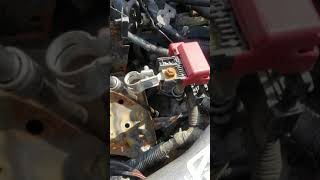
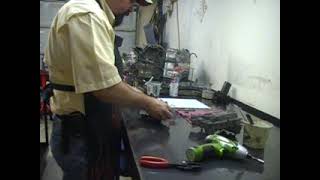
Typical fix: Replace the input speed sensor. On this Maxima, there are two speed sensors; the input sensor (also called Turbine Revolution Sensor) is located on the main case, often in a difficult-to-reach spot. 🎬 Watch: How to locate and replace the input speed sensors.
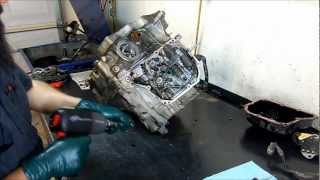
Est. part cost: $40-$120 - Failing Transmission Pressure Control Solenoid / Valve Body Issue 🟡 Medium Probability → Shop Transmission Valve Body The Aisin-Warner RE5F22A transmission is known for issues with its linear solenoids, particularly the line pressure control solenoid, which can wear out or stick due to contaminated fluid. This wear causes erratic line pressure, leading to harsh shifts and codes like P1715.
How to confirm: This requires a professional scan tool to monitor solenoid operation and line pressure. Diagnosis often involves dropping the transmission valve body cover to inspect or test the solenoids directly. A sticking solenoid plunger is a common finding.
Typical fix: Replace the faulty linear solenoid pack or the entire valve body. Solenoid kits from brands 🎬 See this walkthrough on repairing the transmission solenoids. like Rostra are a common repair. This is a complex job that involves draining the transmission fluid and removing the valve body cover.
Est. part cost: $200-$600 - Damaged Wiring or Poor Electrical Connection ⚪ Low Probability Corrosion on grounding points is a known issue. The main battery ground cable runs from the battery to the frame and then to the transmission; this cable is known to corrode and break, especially the section leading to the transmission. This can cause a host of electrical issues, including erratic sensor readings.
How to confirm: Visually inspect the wiring harness leading to the input speed sensor for any signs of chafing, melting, or corrosion. Pay special attention to the main ground strap from the battery to the transmission case, which is located under the airbox and battery tray. Check the connector for a secure fit and clean contacts.
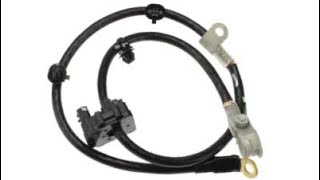
Typical fix: Repair the damaged section of the harness or clean/replace the connector. Replace the main ground cable (OEM P/N: 24080-8Y100) if it is corroded 🎬 Watch: How to replace a corroded battery ground cable. or broken.
Est. part cost: $10-$50 - Low or Contaminated Transmission Fluid ⚪ Low Probability → Shop Transmission Assembly
How to confirm: Check the transmission fluid level and condition using the dipstick. The fluid should be at the correct level, pink/red in color, and not have a burnt smell. Dark fluid with metal particles indicates a severe internal problem.
Typical fix: If the fluid is low, top it off with Nissan Matic-K fluid and check for leaks. If the fluid is old but not severely contaminated, a fluid and filter change may help, but it is unlikely to fix a persistent P1715 code on its own.
Est. part cost: $50-$150
Rare But Worth Checking
- Faulty Transmission Control Module (TCM): → Shop Transmission Assembly This is very rare. The TCM should only be considered after all other possibilities, including sensors, wiring, and mechanical components, have been thoroughly ruled out. The TCM is located behind the right side of the dashboard.
Diagnosis Steps
- Check the transmission fluid level and condition. If the fluid is dark, burnt, or contains metal shavings, suspect a major internal failure.
- Scan for other trouble codes. Prioritize diagnosis of any U-codes (communication), or engine codes like P0335, P0340, or P0345 before P1715.
- Visually inspect the wiring harness and connector for the input speed sensor. Look for any damage, corrosion, or loose connections.
- Inspect the main transmission ground points. The primary ground cable runs from the negative battery terminal to the chassis and then to a bolt on the transmission case, under the battery tray. This cable is a known failure point due to corrosion. Also check grounds near the headlights and on the intake manifold.
- If wiring appears intact, test the input speed sensor's internal resistance with a multimeter. Compare the reading to the manufacturer's specification (typically around 2500-3500 ohms, but verify with a service manual). An out-of-spec reading confirms a bad sensor.
- If the sensor tests good, use an advanced scan tool to monitor the live data from the input and output speed sensors while driving. Illogical readings or dropouts point to an intermittent sensor or wiring issue.
- If sensor data seems plausible but the code persists, investigate the transmission valve body. Test the resistance of the linear solenoids (SLT, SLS, SLU). They should all have a resistance of approximately 5.3 ohms when checked. A significant deviation indicates a failed solenoid.
- If solenoid resistance is good, the issue is likely mechanical (sticking plunger). This requires removing the valve body cover for inspection and likely replacement of the solenoid pack.
- If all sensors, wiring, and solenoids are confirmed to be working correctly, the final possibility is a fault within the Transmission Control Module (TCM).
Parts You'll Likely Need
- Transmission Input Speed Sensor (Turbine Revolution Sensor)
(OEM #31935-8E006)— This is the most direct and common cause for the P1715 code on this non-CVT transmission. This part number supersedes 31935-8E002 and 31935-8E004.
Trusted brands: Nissan (OEM), Hitachi, NGK/NTK, Beck/Arnley
OEM price range: $80-$150
Aftermarket price range: $40-$100 - Transmission Valve Body Solenoid Kit — A known issue points to a faulty pressure control solenoid causing this code on the RE5F22A transmission. Solenoids are often replaced as a pack.
Trusted brands: Rostra (P/N: 52-9036), Sonnax (Zip Kit P/N: AW55-50SN-ZIP)
OEM price range: $400-$700
Aftermarket price range: $200-$450
Related Codes That Often Appear With This One
- P0797 - Pressure Control Solenoid 'C' Stuck On: Often seen with P1715, this code points more directly to a failing solenoid within the valve body.
- P0335, P0340, P0345 - Crankshaft/Camshaft Position Sensor Codes: A failure of the crank or cam sensors can put the RE5F22A transmission into failsafe mode, even without direct transmission codes. Diagnostic procedures for P1715 often recommend diagnosing these engine codes first.
Technical Service Bulletins (TSBs) & Recalls
- NTB18-077: While this TSB applies to later CVT models, it confirms that Nissan pairs the P1715 code with pressure solenoid codes (like P0776) to diagnose internal transmission issues.
- ATRA Technical Bulletin #1295: This bulletin notes that on the RE5F22A, engine codes for crank/cam sensors (P0335, P0340, P0345) can put the transmission in failsafe mode without any transmission-specific codes being stored.
Platform-Specific Known Issues
- Difficult Input Speed Sensor Access: On the 5-speed RE5F22A transmission, the input speed sensor is notoriously difficult to access. It is located on the side of the transmission case, tucked under the throttle body, intake manifold, and various brackets. Many owners report having to remove the air intake system and throttle body to gain enough clearance to reach the sensor and its single retaining bolt.
- Corroding Main Ground Cable: The main ground cable (P/N 24080-8Y100) that connects the battery negative terminal to the chassis and then to the transmission case is a frequent point of failure. Corrosion can cause the cable to break completely, leading to a host of electrical problems including hard starting and erratic transmission behavior that can trigger false sensor codes.
Mechanic-Grade Diagnostic Values
- Resistance of Linear Solenoids (SLT, SLS, SLU) — expected: Approximately 5.3 Ohms. Failure: A reading significantly higher or lower than 5.3 Ohms indicates a faulty solenoid winding.
- Line Pressure at Idle (after Rostra solenoid replacement/adjustment) — expected: 5 - 7 PSI. Failure: Pressure dropping below 5 PSI can cause engagement issues and harsh shifts. Adjustment is made via a small screw on the solenoid.
Scan Tool Commands That Help
- Nissan CONSULT: Work Support / Active Test — The factory scan tool can be used to perform active tests on individual solenoids, commanding them on and off to check for response, which can help isolate a single sticking or electrically failed solenoid without removing the valve body.
Wiring & Ground Locations
- Main Transmission Ground — A cable runs from the negative battery terminal, to the chassis frame under the battery tray, and then to a bolt on the transmission case.. This is a critical ground for the transmission's electrical systems. It is known to corrode and break, causing erratic behavior and potentially false sensor codes like P1715.
- Engine Bay Grounds — There are several key grounds in the engine bay: one behind the right headlight near the washer fluid reservoir, one below the airbox, and one near the left headlight.. Poor grounding at any of these points can introduce electrical noise and cause issues with sensor readings processed by the ECM and TCM.
- TCM Location — The Transmission Control Module (TCM) is located behind the right side of the dashboard.. This is the location to check for the main TCM connector and wiring if a module or wiring fault is suspected after all external components have been checked.
Real Owner Repair Stories
- YouTube channel 'Automatic Transmission' (2004 Nissan Maxima with RE5F22A transmission) — Harsh upshifts and downshifts, particularly when warm. Vehicle drives well when cold.
❌ Tried (didn't work) The vehicle was brought from another shop that had already replaced the solenoids with aftermarket Rostra units, but the problem persisted.
✅ What actually fixed it The technician diagnosed sticking plungers inside the new solenoids. He disassembled the solenoids, cleaned them, and reinstalled them. He also found that the valve body had been worked on before. The final fix involved a combination of cleaning the solenoids and properly adjusting the line pressure solenoid to achieve 5-7 PSI at idle. - maxima.org forum member (6th Gen Maxima (2004-2008)) — Hard starting in cold weather, gas gauge needle getting stuck.
❌ Tried (didn't work) Cleaning the positive battery terminal, which was corroded.
✅ What actually fixed it The owner found the main ground cable was completely broken between the frame connection point and the transmission. After removing the airbox and battery tray to access it, he replaced the broken section with a new 4-gauge cable and cleaned all connection points. This resolved the starting and electrical issues.
OEM Part Supersession History
31935-8E002, 31935-8E004→31935-8E006 (Input/Turbine Sensor)— Part revision and consolidation by Nissan.31935-8E005→31935-8E007 (Output Speed Sensor)— Part revision and consolidation by Nissan.
Heads up: The input (8E006) and output (8E007) sensors are not interchangeable, though they may look similar.
Model Year Variations Within This Range
- 2004 vs 2005-2006: The valve body for the RE5F22A transmission is different. 2004 models do not use a spring on the B5 Control Valve, while 2005 and later models do. Installing a 2005+ valve body into a 2004 Maxima without removing this spring will cause extremely harsh downshifts.
- 2004-2006: These Maximas could be equipped with either a 4-speed (RE4F04B) or a 5-speed (RE5F22A) automatic transmission. The P1715 code and its common causes (especially valve body solenoid failure) are primarily associated with the 5-speed RE5F22A. The transmission type can be identified by a plate on the firewall.
Diagnostic Flowchart
Other Known Issues on This Vehicle
Issues unrelated to this code that are worth knowing about as an owner of this generation:
- Premature Timing Chain Guide & Tensioner Wear 🔴 High — Commonly occurs after 100,000 miles. Presents as a whining or rattling/slapping noise from the front of the engine, especially on cold starts. (Ref: While no specific recall exists, this is a widely documented failure of the VQ35DE engine.)
- Automatic Transmission Failure (General) 🔴 High → Shop Transmission Assembly — Widespread reports of harsh shifting, slipping, and complete failure, often occurring around 90,000-100,000 miles. This is a broader issue than just the P1715 code and can involve internal clutch packs or other components.
- Camshaft and Crankshaft Position Sensor Failure 🟠 Medium — These sensors are known to fail, causing stalling, hard starting (especially when warm), and rough running. Failure of these sensors can also put the transmission into fail-safe (limp) mode. (Ref: Nissan issued TSB #NTB04-063 related to camshaft position sensor problems.)
- Power Steering Pump Leaks 🟠 Medium — The power steering pump is prone to leaking, causing a whining noise and a mess in the passenger-side front of the engine bay.
- Ignition Coil Failure 🟡 Low — Failure of one or more ignition coils is common, leading to a rough running engine and a flashing check engine light. It's often recommended to replace all coils and spark plugs at once.
Used vs. New Parts: Buying Guide for This Vehicle
When a used part is the smart pick: A complete, low-mileage used valve body from a reputable salvage yard can be a cost-effective alternative to buying new solenoids, especially if you suspect issues beyond just the solenoids (e.g., sticking valves, worn bores). A used transmission assembly may also be viable if the donor vehicle has documented low mileage and no history of transmission problems.
Donor-vehicle mileage cap: roughly under 120000 miles for the part to have meaningful remaining life.
What to inspect on the donor part:
- Verify the exact transmission model (RE5F22A) and model year of the donor vehicle to avoid parts incompatibility (especially the 2004 vs 2005+ valve body difference).
- Ask for the VIN of the donor car to check its history.
- When buying a used valve body, inspect the solenoids for any signs of tampering or damage.
- Check the color and smell of the transmission fluid from the donor car, if possible. Dark, burnt fluid is a major red flag.
OEM-only on this vehicle (don't cheap out):
- Transmission Fluid: Strictly use Nissan Matic-K or a fully compatible equivalent. Using generic ATF can cause shifting problems.
- Main Ground Cable: Given the low cost of a new OEM cable (P/N 24080-8Y100) and its high failure rate from corrosion, using a new part is strongly recommended over a used one.
Aftermarket brands forum-validated for this vehicle:
- Rostra: Widely used and recommended on forums for replacement linear solenoid kits (P/N 52-9036).
- Sonnax: Offers comprehensive 'Zip Kits' (P/N AW55-50SN-ZIP) that include upgraded valves and seals to address known wear points in the valve body, often considered a more robust repair than just replacing solenoids.
Brands owners have reported issues with on this vehicle:
- Unbranded, generic sensors and solenoids from online marketplaces can have high failure rates. While some may work, sticking to known brands like Rostra, Sonnax, or OEM is a safer bet for a complex transmission repair.
Real Owner Stories
Aggregated from forums and TSBs cited above. Mileages and costs reflect what owners reported in those sources.
2004-2006 Nissan Maxima
Symptoms: P1715 and harsh shifting.
What fixed it: The input speed sensor (part 31935-8E006) was the fix, but it was a nightmare to get to. Had to remove the entire intake snorkel and throttle body.
Source hint: maxima.org: Multiple threads discuss the P1715 code...
2004 Nissan Maxima
Symptoms: shifting issues
What fixed it: A stuck pressure control solenoid in the valve body was identified as the culprit.
Source hint: YouTube - 'AW55-50SN / RE5F22A Transmission - The Symptoms - The Repair' by Automatic Transmission
2004-2006 Nissan Maxima
Symptoms: hard starting and erratic transmission behavior that can trigger false sensor codes
What fixed it: Replacing the corroded main ground cable (P/N 24080-8Y100) that connects the battery to the chassis and transmission case.
Source hint: vehicle_specific_issues: Corroding Main Ground Cable
Related OBD-II Codes
Frequently Asked Questions
How difficult is it to replace the input speed sensor on my 2005 Nissan Maxima?
My Maxima has a P1715 code and is also hard to start. Are these problems related?
I have engine codes like P0335 along with P1715. Which should I fix first?
What is the part number for the input speed sensor that causes the P1715 code?
What kind of transmission fluid should I use in my 2004-2006 Maxima?
Is the P1715 code also a common problem on the Nissan Quest or Altima?
Helpful Videos
We Have This Part in Stock



The information in this article is provided for general reference and educational purposes only. Vehicle specifications, procedures, and part compatibility can vary by production date, trim level, and region. Always consult your vehicle's factory service manual and verify part numbers before purchasing or performing repairs. Safety-critical components such as airbags, seat belts, and braking systems should be installed by a qualified professional.
- Nissan Maxima:
- 🧭 Diagnostic Flowchart
- 🎬 Helpful Videos
- 🛍️ Shop This Part
- What's Unique About the 2004-2006 Nissan Maxima
- Symptoms You May Notice
- Most Likely Causes
- Rare But Worth Checking
- Diagnosis Steps
- Parts You'll Likely Need
- Related Codes That Often Appear With This One
- Technical Service Bulletins (TSBs) & Recalls
- Platform-Specific Known Issues
- Mechanic-Grade Diagnostic Values
- Scan Tool Commands That Help
- Wiring & Ground Locations
- Real Owner Repair Stories
- OEM Part Supersession History
- Model Year Variations Within This Range
- Other Known Issues on This Vehicle
- Used vs. New Parts: Buying Guide for This Vehicle
- Real Owner Stories
- 2004-2006 Nissan Maxima
- 2004 Nissan Maxima
- 2004-2006 Nissan Maxima
- Related OBD-II Codes
- Frequently Asked Questions
- 🎟️ Get 5% Off