

OBD-II Code P1716: Turbine/Input Speed Sensor Circuit Malfunction
What P1716 means, why it triggers, and how to fix it
- Verify your manufacturer's specific definition for P1716 before replacing parts, as it means a transmission sensor failure on Nissans but a steering angle sensor error on Hyundais.
- On 2003-2012 Nissan and Infiniti vehicles, P1716 almost always requires replacing or re-soldering the Transmission Control Module (TCM) located inside the transmission oil pan.
- Do not drive with an active P1716 code for more than a few days; the resulting harsh shifts and high RPMs will destroy your catalytic converter, adding $1,500+ to your repair bill.
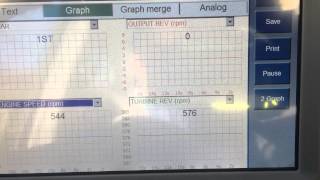
- Diagnose the sensor by using an advanced scan tool to monitor live data; a faulty input speed sensor will read 0 RPM while the engine is revving.
What Does P1716 Mean?
P1716 indicates your vehicle's Transmission Control Module (TCM) detects an erratic, illogical, or missing signal from the transmission input speed sensor. This sensor, often called the turbine revolution sensor, measures the rotational speed of the transmission's input shaft. The TCM compares this input speed to the output speed to verify gear ratios and control shift timing. Without this data, the transmission cannot shift smoothly.
Technical definition: P1716 is a manufacturer-specific code with no universal SAE/ISO definition. For Nissan/Infiniti, it means 'Turbine Revolution Sensor Circuit Malfunction 🎬 Watch: Diagnosing P1716 on Nissan trucks and SUVs'. For Ford, it indicates an 'SSC Inductive Signature Malfunction'. For Subaru, it means 'ATF TEMP. SENSOR 2 CIRCUIT LOW'. For Hyundai, it points to a 'Steering Wheel Angle Sensor Signal (CAN Error) 🎬 See how to calibrate the steering angle sensor on Hyundais', and for Volkswagen, it indicates an ABS wheel speed sensor communication error.
Can I Drive With P1716?
Yes, But With Caution. You can drive, but limit trips to short, low-speed drives to a repair shop. The transmission shifts harshly, gets stuck in a single gear (limp mode), or causes the engine to stall, creating a safety hazard. Driving continuously with high RPMs because the transmission refuses to shift into top gear overheats the engine and destroys the catalytic converter, adding $1,200-$2,500 to your repair cost.
Common Causes
- Failed Turbine Revolution Sensor / Input Speed Sensor (Very Common) — The sensor itself is the most frequent point of failure. Heat and vibration cause this electronic part to wear out or fail suddenly, sending an incorrect or dead signal to the computer.
- Cracked TCM/Valve Body Circuit Board (Common) — On units where the TCM mounts to the valve body inside the transmission (extremely common in Nissan/Infiniti), heat and vibration cause hairline cracks in the circuit board or solder joints for the sensor pins. This creates an intermittent connection often misdiagnosed as a total TCM failure.
- Damaged Wiring or Connectors (Common) — The wires leading to the sensor fray, corrode, or short out due to heat, vibration, or road debris. The connector plug also loosens or fills with fluid. A U1000 CAN communication code frequently accompanies P1716 when wiring is the culprit.
- Low, Dirty, or Incorrect Transmission Fluid (Common) — Low fluid levels cause slipping and overheating that trigger this code. Old, degraded fluid contains microscopic metal shavings that accumulate on the magnetic tip of the sensor, blinding it. Using non-OEM specified fluid alters hydraulic pressure, causing shifting errors the TCM flags as a sensor fault.
- Faulty Transmission Control Module (TCM) (Less Common) — The computer receiving the sensor's signal fails entirely. On many modern vehicles, the speed sensor integrates directly into the TCM, requiring complete module replacement when the sensor dies.
- Faulty ABS Module or Wheel Speed Sensor (Less Common) — On Volkswagen and Dodge vehicles, the ABS module triggers P1716 when it receives an implausible signal from a wheel speed sensor, completely unrelated to the transmission.
- Internal Transmission Mechanical Failure (Rare) — A mechanical issue inside the transmission, such as a failing clutch pack, a stuck valve, or a faulty solenoid, causes speed readings that defy the TCM's logic, triggering the code.
Symptoms
- Check Engine Light / AT Check Light On — The dashboard illuminates the Check Engine Light. Infiniti models frequently display a flashing 'AT Check' light.
- Harsh or Erratic Shifting — The transmission bangs violently into gear, shifts at the wrong times, or slips between gears. This is most noticeable when the transmission is cold.
- Transmission Stuck in Gear (Limp Mode) — The transmission defaults to a single gear (often 3rd or 4th) and refuses to shift into overdrive, resulting in poor acceleration and screaming high RPMs at highway speeds.
- Engine Stalling — The vehicle stalls when coming to a stop because the transmission fails to disengage the torque converter lock-up clutch.
- Poor Fuel Economy — Because the transmission cannot shift into its highest gear, the engine runs at excessively high RPMs, burning significantly more fuel.
- Manual Shift Mode Disabled — Vehicles equipped with manual or sport shifting modes disable this feature entirely while the P1716 code is active.
Diagnostic Flowchart
Tap your situation to follow the diagnostic path that matches what you're seeing on this code.
Common Fixes & Costs
- Replace Transmission Input/Turbine Speed Sensor — Parts: $50-$150, Labor: $150-$250, ~1.5 hr book time (Intermediate)
- Replace Transmission Control Module (TCM) / Valve Body Assembly — Parts: $800-$1500, Labor: $300-$500, ~4 hr book time (Professional)
- Repair/Re-solder TCM Circuit Board — Parts: $10-$30, Labor: $300-$600, ~4.5 hr book time (Advanced)
- Repair Damaged Wiring or Connector — Parts: $10-$50, Labor: $120-$250, ~2 hr book time (Intermediate)
- Drain and Refill Transmission Fluid — Parts: $70-$150, Labor: $80-$120, ~1.2 hr book time (DIY)
Used vs. New Parts: Buying Guide
When a used part is worth it: For the common Nissan/Infiniti RE5R05A failure, a used TCM/Valve Body assembly makes sense only if the vehicle has over 120k miles, the budget is tight, and the part comes from a reputable dismantler with a warranty.
Donor-vehicle mileage cap: roughly under 80000 miles for the part to have meaningful remaining life.
Donor quality checklist:
- Verify the donor vehicle's VIN to ensure software/calibration versions match.
- Avoid parts from vehicles that suffered from the known radiator/coolant contamination issue (SMOD).
- Ensure the seller offers at least a 90-day functional warranty.
Decision logic:
- If Vehicle is < 80K miles OR the cost difference is less than $500 → Buy a new or remanufactured OEM part. The longer warranty outweighs the small savings.
- If Vehicle is > 150K miles AND budget is the primary concern → A tested, warranted used part is a reasonable risk.
- If The part is a known wear item with an electronic failure mode (like the TCM) → Strongly favor new, remanufactured, or a specialist repair of your original unit over a used part.
Warranty tradeoff: Used parts typically carry a 30-90 day part-only warranty. New aftermarket parts offer 1-year to limited lifetime warranties. New OEM parts carry a 1-year/12,000-mile warranty.
Worst-case if a used part fails: $500-$900 if a used part fails after the warranty period, representing repeated labor costs.
What Happens If You Wait — Timeline
- 0-1 month: Check Engine Light illuminates. Intermittent harsh shifts occur, often when cold. The transmission occasionally gets stuck in a single gear ('limp mode'). (MPG impact: 5-15%% · Added cost: $0-$100 in wasted fuel)
- 1-3 months: Symptoms become consistent. The transmission frequently locks in a lower gear, causing engine RPMs to scream at highway speeds. Fuel economy plummets. (MPG impact: 15-30%% · Added cost: $100-$300 in wasted fuel)
- 3-6 months: Sustained high RPMs cause the catalytic converter to overheat and fail. Constant hard shifts destroy transmission mounts and driveshaft joints. (MPG impact: 15-30%% · Added cost: $1200-$2800 (Catalytic converter, mounts))
- 6+ months: Catastrophic internal transmission failure. Incorrect hydraulic pressures burn out the clutch packs, requiring a complete transmission rebuild or replacement. (MPG impact: N/A (Vehicle may not be drivable)% · Added cost: $2500-$5000+ (Transmission rebuild/replacement))
Cost of Not Fixing It
- 0-1 month: Noticeable 10-25% drop in fuel economy due to the transmission being stuck in a lower gear. Unsafe and unpredictable shifting. (Added cost: $50-$150 in wasted fuel)
- 1-6 months: Sustained high RPMs cause the catalytic converter to overheat and fail. Continued harsh shifting destroys drivetrain mounts and axles. (Added cost: $1200-$2800 (Catalytic Converter and Mounts))
- 6+ months: Catastrophic internal transmission failure. Incorrect line pressure burns out clutch packs, requiring a full transmission rebuild. (Added cost: $2500-$5000+ (Transmission Rebuild))
Diagnosis Steps
- Verify Code Definition
Confirm what P1716 means for your specific vehicle's make, model, and year. A P1716 on a Nissan is a transmission issue, while on a Hyundai it is a steering system issue. Misinterpreting the code guarantees a costly misdiagnosis.
Tools: Vehicle-specific repair manual or reliable online database (Beginner) - Scan for Other Codes
Use an OBD-II scanner to check for stored codes. Codes related to other speed sensors (P0720), solenoids (P0735), or communication (U1000) pinpoint the problem. Write down all codes and freeze frame data before clearing them.
Tools: OBD-II Scanner (Beginner) - Analyze Live Sensor Data (Pro Tip)
Use an advanced scan tool to monitor live data from the Turbine/Input Speed Sensor (PID: TURBINE REV). While driving, the input speed sensor data must rise and fall smoothly with engine RPM in gear. Sudden drops to zero, erratic jumps, or a flat line indicate a sensor or circuit failure.
Tools: Advanced scan tool with live data capabilities (Intermediate) - Check Transmission Fluid
Check the transmission fluid level and condition. The fluid must sit at the 'Full' mark when hot, appear reddish-pink, and not smell burnt. Dark, burnt, or low fluid indicates an internal problem causing the sensor fault.
Tools: Rag or paper towel (Beginner) - Inspect Wiring and Connectors
Visually inspect the wiring harness going to the transmission speed sensor(s). Look for melting, corrosion, or loose connections. Unplug the connector and check for bent pins or fluid contamination. On early Infiniti G35s, check the main TCM ground wires on the timing chain cover.
Tools: Flashlight, safety glasses, inspection mirror (Intermediate) - Test the Sensor's Resistance
If the sensor is externally accessible, disconnect it and use a digital multimeter set to Ohms (Ω). The resistance between its two pins must fall within the service manual's specific range (often 250-600 Ω). A reading of infinity (open circuit) or near-zero (short circuit) confirms a dead sensor.
Tools: Digital multimeter, vehicle-specific repair manual (Intermediate) - Test the Sensor's Circuit Voltage
Check for proper voltage and ground at the sensor's connector with the key on. A 3-wire Hall-effect sensor requires a 5V or 12V reference, a ground, and a signal wire. A missing reference voltage or ground points directly to a wiring or TCM problem.
Tools: Digital multimeter, wiring diagram (Advanced) - Perform a Scope Test on the Signal Wire
Use an oscilloscope to back-probe the sensor's signal wire. A healthy magnetic pickup sensor produces a clean AC sine wave that increases in frequency and amplitude with speed. A flatline signal when the shaft is spinning confirms a dead sensor or open circuit.
Tools: Oscilloscope, wiring diagram (Advanced) - Inspect the TCM/Valve Body Circuit Board
On Nissan/Infiniti models with the RE5R05A transmission, if external tests pass, drop the transmission pan and valve body to access the TCM. Inspect the TCM's circuit board for hairline cracks in the solder joints where the sensor pins connect. Re-soldering these joints fixes the issue without replacing the module.
Tools: Basic hand tools, soldering iron, magnifying glass (Professional)
When This Code Triggers (Freeze-Frame Conditions)
- Engine Coolant Temp: 180-205°F (82-96°C) (The fault often occurs after the vehicle fully warms up, though Nissan TCM cracks frequently trigger when cold.)
- Engine RPM: 1800-2800 RPM (The code frequently sets during steady-state cruising or light acceleration, not during hard acceleration or at idle.)
- Vehicle Speed: 40-65 mph (65-105 km/h) (Triggered at highway speeds when the transmission attempts to shift into or maintain top gear.)
- Engine Load: 25-50% (The fault appears under moderate engine load, consistent with maintaining speed on a flat road.)
Related Codes
- P0717 — P0717 means 'Input/Turbine Speed Sensor 'A' Circuit No Signal.' It sets when the TCM receives absolutely zero signal, indicating a complete electrical failure. P1716 is broader, including intermittent signals or illogical readings. A scan tool shows a flat 0 RPM for P0717, but shows erratic readings for P1716.
- P0720 — P0720 refers to a malfunction in the 'Output Speed Sensor Circuit.' The computer compares input (P1716) and output (P0720) signals to determine gear ratio. A scan tool watching live data reveals which sensor is failing by showing erratic or zero readings on the faulty circuit.
- P0735 — P0735 means 'Gear 5 Incorrect Ratio.' This code is an effect, not a cause. It triggers when the TCM commands 5th gear, but the ratio calculated from the faulty input speed sensor doesn't match. P1716 directly causes P0735.
- U1000 — U1000 is a CAN communication code indicating modules are not talking correctly. It frequently appears alongside P1716 on Nissan/Infiniti models. Seeing both codes together strongly suggests the root cause is a wiring harness issue, a poor ground, or a failing TCM disrupting network communication.
Climate & Environmental Factors
- Cold Weather: Cold temperatures frequently trigger or worsen P1716 symptoms, especially on Nissan and Infiniti vehicles. Cold causes metal components and solder joints to contract, opening hairline cracks in the TCM's circuit board. Once the transmission fluid warms up and expands the metal, the electrical connection restores, causing symptoms to disappear until the next cold start.
- High Heat: Sustained high operating temperatures from towing or aggressive driving accelerate the breakdown of electronic components like sensors and TCMs. Heat degrades transmission fluid, leading to contamination that blinds the magnetic speed sensor.
- Humidity / Moisture: High humidity accelerates corrosion on external wiring connectors and ground points. Moisture intrusion into a connector shorts the sensor's signal, causing erratic readings and triggering the code.
How to Talk to a Mechanic About This Code
Say this: "I have a P1716 code on my [Make, Model]. I've researched that for this specific vehicle, it means [insert manufacturer-specific meaning, e.g., 'a faulty turbine speed sensor' for a Nissan, or 'a steering angle sensor error' for a Hyundai]. I'd like to schedule a diagnostic to confirm the fault is in that system and test the specific components."
This signals you are an informed consumer. It directs the technician to the correct system, preventing them from wasting time checking the transmission on a Hyundai. It also reduces the likelihood of a shop attempting to upsell a major repair when a simple sensor is the cause.
Avoid saying:
- 'My check engine light is on, can you just fix it?' (Invites expensive, unnecessary part replacements).
- 'I think I need a new transmission.' (Leads a dishonest shop to sell you a very expensive repair you don't need).
- 'Just do whatever you think is best.' (Gives up all control over the repair process and cost).
Questions to ask before authorizing the repair:
- Did you confirm the specific definition of P1716 for my vehicle's VIN?
- Can you show me the live data from the scan tool that points to the failure (e.g., the input speed sensor dropping to zero)?
- Did you test the sensor's wiring, connector, and resistance before concluding the sensor or module itself has failed?
- For a Nissan/Infiniti, if the TCM is the issue, is it possible to repair the circuit board instead of replacing the entire valve body assembly?
- What is the warranty on the parts and labor for this specific repair?
Where to Take It: Dealer vs Independent vs Chain
- Dealer:
A safe but expensive option. Recommended if the vehicle is under warranty or if a new TCM requires dealer-exclusive programming. Question any recommendation for a full component replacement without clear diagnostic proof.
Best for: Vehicles still under a powertrain or extended warranty., Complex issues where specialized tools or programming are required (e.g., flashing a new TCM)., Owners who prioritize OEM parts and are less sensitive to cost.
Downsides: Significantly higher labor rates, often 40-50% more than independent shops., More likely to recommend a complete assembly replacement ($1500+) rather than a targeted repair like re-soldering the TCM ($500). (Typical cost: +50% vs. baseline) - Independent Shop:
Best fit, especially a shop that specializes in transmissions or your vehicle's brand. They diagnose accurately and offer more repair options, such as TCM circuit board repair.
Best for: Out-of-warranty vehicles where cost is a major factor., Diagnosing common, well-documented problems like the Nissan/Infiniti P1716 TCM failure., Getting a second opinion on a dealer's expensive quote.
Downsides: Quality and expertise vary widely; you must vet the shop's reputation and certifications., A general repair shop lacks the specific experience of a transmission specialist for internal work. (Typical cost: +0% vs. baseline) - Chain Shop:
Avoid for diagnosis. The risk of misdiagnosing a manufacturer-specific code like P1716 is very high. Do not rely on them to figure out the root cause.
Best for: Simple, routine maintenance like oil changes or brake jobs.
Downsides: Technicians often lack the deep diagnostic experience for complex or manufacturer-specific codes., High pressure to meet sales targets leads to upselling and misdiagnosis. (Typical cost: -10% vs. baseline)
When to Walk Away From the Repair
If the estimated repair cost exceeds 40-50% of the car's current private-party market value, seriously consider selling or trading in the vehicle instead of repairing it.
- Car worth $4000, fix is $1700: Walk away. The repair cost is a significant portion of the car's value. It is not a sound financial decision unless the car is in otherwise perfect condition.
- Car worth $12000, fix is $450: Fix it. This repair is a small fraction of the vehicle's value and is necessary for its proper function.
- Car worth $2500, fix is $1500: Walk away. The repair cost is over half the car's value. Put that money towards a replacement vehicle.
What Scan Tool You Need for This Code
Minimum: A scanner that reads manufacturer-specific codes and displays live data from multiple vehicle systems (Engine, Transmission, ABS, SRS). You must be able to see live RPM data from the transmission sensors.
A basic $20 code reader only shows the 'P' code. It cannot see the live data needed to confirm a sensor failure, nor can it read the 'C' codes from the ABS or steering modules that trigger P1716 on Hyundais and VWs.
Budget: BlueDriver Bluetooth Pro (~$99) — Connects to your smartphone and reads engine, transmission, ABS, and airbag codes. It graphs live data from the input and output speed sensors to see which one is failing.
Mid-range: Foxwell NT510 Elite / Innova 5610 (~$150-350) — Offers bidirectional controls. This is critical for a Hyundai P1716, as it performs the Steering Angle Sensor (SAS) calibration required after a repair. It also performs TCM adaptive relearns.
Professional: Autel MaxiCOM MK808 / XTOOL D7 (~$450-700) — Provides full bidirectional control and OE-level diagnostics. Necessary if you need to perform advanced functions like programming a new Transmission Control Module (TCM) to the vehicle's VIN.
Rent vs buy: A free scan at a parts store confirms the code, but their loaner tools lack the live data needed for a proper P1716 diagnosis. Buying a tool like the BlueDriver is a mandatory investment for DIY diagnosis.
How to Clear the Code After You Fix It
- Use an OBD-II scan tool to clear all diagnostic trouble codes (DTCs).
- Ensure the fuel tank is between 30% and 70% full for the EVAP monitor to run correctly.
- Perform a complete OBD-II drive cycle to allow all readiness monitors to run their self-tests.
Drive cycle (~30 minutes): Start with a cold engine. Idle in Drive for 2-3 minutes. Drive for 15 minutes in mixed stop-and-go traffic. Accelerate to and maintain a steady speed of 55-60 mph for 5-10 minutes. Decelerate without using the brakes and allow the vehicle to cool down.
Readiness monitors affected: Transmission Component Monitor, Comprehensive Component Monitor, Catalyst Monitor, Oxygen (O2) Sensor Monitor
Before emissions retest: drive at least 100 miles to fully set monitors.
Watch out for:
- Disconnecting the battery clears the code but resets all readiness monitors to 'incomplete', causing an automatic emissions test failure.
- The code returns immediately if the underlying electrical or mechanical fault remains unfixed.
- Monitors like EVAP have highly specific temperature and fuel level requirements to set.
Will This Fail Emissions / State Inspection?
Yes — this code typically fails an OBD-II emissions inspection.
- California: An active Check Engine Light for P1716 is an automatic smog check failure. After repair, all readiness monitors must be 'Ready' to pass the retest.
- New York: The NYS DMV inspection includes an OBD-II scan. An active P1716 code causes an automatic emissions failure.
- Texas: Vehicles fail the OBDII test if the Check Engine Light is on for any diagnostic trouble code, including P1716.
Most Commonly Affected Vehicles
- Nissan Altima, Maxima, Frontier, Xterra, Pathfinder (2005-2012) — Extremely common on models with the RE5R05A transmission. The turbine speed sensor integrates into the TCM inside the transmission pan. A full valve body/TCM replacement is the dealer fix, but circuit board repair is a proven alternative.
- Infiniti G35, FX35, M35 (2003-2008) — Shares the RE5R05A transmission with Nissan, leading to the same high frequency of P1716 failures related to the TCM assembly. The issue frequently appears intermittently in cold weather.
- Hyundai Tucson, Elantra, Sonata (2005-2015) — On Hyundai models, P1716 indicates a 'Steering Wheel Angle Sensor Signal (CAN Error)'. Diagnosis must focus entirely on the steering system and CAN bus communication, not the transmission.
- Volkswagen Golf, Jetta, Passat (2006-2016) — For VW, P1716 points to an 'implausible signal' from a wheel speed sensor, typically the front right (G45). The issue lies within the ABS system, requiring a new wheel speed sensor.
- Chevrolet Traverse, various (2010-2018) — P1716 indicates 'Reverse Pressure Switch High Voltage' on some models, though the generic equivalent P0716 is more common for input speed sensor performance issues.
- Subaru Outback, Forester, Legacy (2000-2010) — P1716 refers to a problem with a secondary ATF temperature sensor circuit ('ATF TEMP. SENSOR 2 CIRCUIT LOW'), requiring diagnosis of the fluid temperature sensor, not the speed sensor.
- Ford Ranger, Explorer, Mustang (1998-2011) — Ford defines P1716 as an 'Inductive Signature Chip Communication Malfunction' or 'Shift Solenoid C Inductive Signature Fault'. Diagnosis involves checking the resistance of Shift Solenoid C.
- Dodge Intrepid, Dakota, Caravan (1998-2007) — P1716 indicates a communication failure between the main computer and a wheel speed sensor, shifting diagnosis to the ABS system.
Manufacturer-Specific Notes
- Nissan / Infiniti: The Turbine Revolution Sensor integrates directly into the Transmission Control Module (TCM) inside the transmission. A sensor failure requires replacing the entire TCM/Valve Body assembly. However, a common failure point is cracked solder joints on the TCM circuit board, which specialists repair for a fraction of the cost of a new part.
- Ford / Mazda: P1716 points to an 'SSC Inductive Signature Malfunction' or 'Shift Solenoid 'C' Mechanical Fault,' requiring diagnosis of the transmission's shift solenoids and their electrical circuits, not an input speed sensor.
- Subaru: P1716 indicates a fault in the 'ATF Temperature Sensor 2 Circuit,' requiring diagnosis of the fluid temperature sensor and its wiring.
- Hyundai: P1716 stands for 'Steering Wheel Angle Sensor Signal (CAN Error)'. Diagnosis must focus on the steering angle sensor and its communication over the CAN bus network, completely ignoring the transmission.
- Volkswagen: P1716 means an implausible signal from an ABS wheel speed sensor. This is distinct from the transmission's internal sensors and requires replacing the faulty wheel speed sensor.
Real Owner Stories
2005 Infiniti G35 (~205k miles) with intermittent harsh shifting
The 'AT Check' light blinked, and the car shifted violently from 1-2 and 2-3 when cold. After warming up, the problem disappeared. The code returned immediately after being cleared.
Outcome: The owner dropped the valve body to have a specialist repair the cracked solder joints on the TCM circuit board, saving hundreds over a remanufactured valve body.
Lesson: On Nissan/Infiniti vehicles, intermittent harsh shifting that improves when warm is a classic symptom of a cracked solder joint on the TCM. Circuit board repair is significantly cheaper than replacing the assembly.
2010 Hyundai Elantra with ESC/EPS lights on
The 'ESC Off' and 'EPS' warning lights illuminated. The dealer diagnosed codes pointing to the steering angle sensor (SAS), which triggers P1716 on this model.
Outcome: The owner purchased an advanced bidirectional scan tool to perform the required Steering Angle Sensor calibration, successfully clearing the codes.
Lesson: For Hyundai vehicles, P1716 points to the steering system. After physical repairs, a specific SAS calibration using a bidirectional scan tool is mandatory to clear the codes.
2003 Infiniti G35 5AT with limp mode and multiple transmission codes
After replacing the transmission with a used unit, code P1716 appeared a year later, causing hard shifts and preventing 5th gear engagement. The owner drove like this for 6 months, getting terrible fuel economy.
Outcome: The owner faced another costly valve body replacement because the P1716 pointed to the internal turbine sensor on the used replacement transmission.
Lesson: Driving for an extended period with P1716 destroys fuel economy and prevents passing emissions tests. Used replacement transmissions carry a high risk of inheriting the same common TCM failures.
How to Prevent This Code From Triggering
- Perform regular transmission fluid drain-and-fills (Every 30,000-60,000 miles) — Clean fluid lubricates components, removes wear metals that contaminate magnetic sensors, and maintains hydraulic pressure. It is the single most critical factor in preventing transmission failures.
- Install an external transmission cooler (Nissan/Infiniti RE5R05A) (Once, as a preventative upgrade) — The factory radiator has an internal cooler that fails, leaking coolant into the transmission fluid. This contamination destroys the TCM and clutches. An external cooler bypasses the radiator entirely.
- Address battery and ground issues promptly (As needed) — Modern transmissions rely heavily on electronics. A weak battery or corroded ground straps cause low voltage and communication errors that trigger false sensor codes.
- Avoid aggressive driving habits (Daily habit) — Harsh acceleration and frequent heavy towing increase heat and stress on internal transmission components, accelerating wear and leading to premature failure.
Frequently Asked Questions
What is a turbine revolution sensor?
It is the transmission input speed sensor. It counts how fast the input shaft spins, telling the computer the speed of the engine's power entering the transmission. This data dictates exactly when the transmission shifts gears.
What are the most common misdiagnosis mistakes for P1716?
The biggest mistake is assuming P1716 means the same thing on all cars, leading mechanics to replace transmission sensors on Hyundais when the code actually refers to the steering angle sensor. Another error is replacing the entire $1,500 TCM on a Nissan when the fault is a repairable $300 circuit board solder joint. Always verify the manufacturer-specific definition first.
Can I fix P1716 myself?
If the cause is low fluid or an externally mounted sensor, confident DIYers can complete the repair. However, on common vehicles like Nissan and Infiniti, the sensor is integrated into the valve body inside the transmission pan. This requires dropping the valve body and programming the new module, a job best left to professionals.
Can cold weather cause a P1716 code?
Yes, cold weather frequently triggers this code on Nissan and Infiniti vehicles. Cold temperatures cause metal components to contract, opening hairline cracks in the TCM's circuit board and breaking the electrical connection. Once the transmission fluid warms up and expands the metal, the connection restores and symptoms temporarily disappear.
Will clearing the code make the problem go away?
No. Clearing the code temporarily turns off the check engine light, but it returns as soon as the computer detects the fault again, usually within a few miles. You must repair the underlying mechanical or electrical issue.
How much does it cost to fix P1716?
Costs vary widely based on the vehicle and root cause. Replacing an external sensor costs $200-$400, while repairing a Hyundai steering angle sensor runs $400-$600. Replacing an internal TCM/Valve Body assembly on a Nissan or Infiniti typically costs $1,100 to $2,000.
Why does my car shift so hard with this code?
Without a reliable input speed signal, the transmission computer cannot calculate the correct time to shift gears. To protect the internal clutches from slipping and burning up, the computer defaults to maximum hydraulic line pressure. This maximum pressure causes the transmission to slam abruptly into gear.
Can a bad battery cause a P1716 code?
Yes, a weak battery causes low system voltage, which triggers false communication and sensor codes across multiple modules. Always test your battery and alternator before beginning expensive transmission diagnostics. If voltage drops too low during cranking, the TCM logs erroneous faults.
Key Takeaways
- Verify your manufacturer's specific definition for P1716 before replacing parts, as it means a transmission sensor failure on Nissans but a steering angle sensor error on Hyundais.
- On 2003-2012 Nissan and Infiniti vehicles, P1716 almost always requires replacing or re-soldering the Transmission Control Module (TCM) located inside the transmission oil pan.
- Do not drive with an active P1716 code for more than a few days; the resulting harsh shifts and high RPMs will destroy your catalytic converter, adding $1,500+ to your repair bill.
- Diagnose the sensor by using an advanced scan tool to monitor live data; a faulty input speed sensor will read 0 RPM while the engine is revving.
Helpful Videos

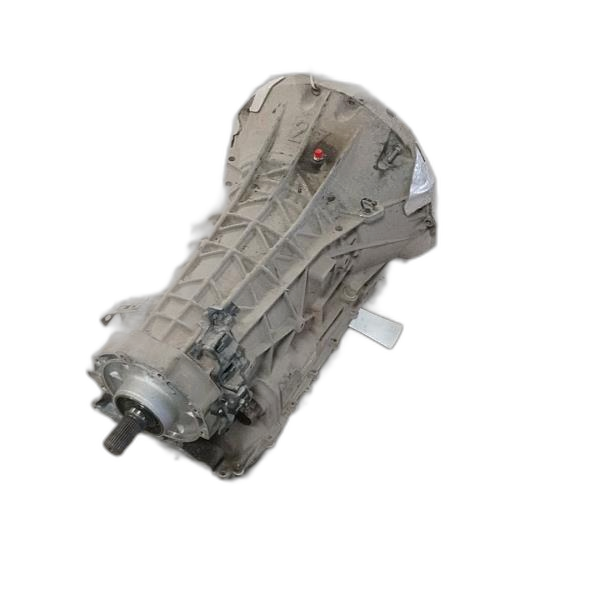
Shop the Parts Behind P1716
Below are the parts most often responsible for code P1716, ranked by how frequently each one is the actual culprit (per the diagnosis above). Tap any to see what we have for your vehicle.



The information in this article is provided for general reference and educational purposes only. Vehicle specifications, procedures, and part compatibility can vary by production date, trim level, and region. Always consult your vehicle's factory service manual and verify part numbers before purchasing or performing repairs. Safety-critical components such as airbags, seat belts, and braking systems should be installed by a qualified professional.
- 🧭 Diagnostic Flowchart
- 🎬 Helpful Videos
- 🛍️ Shop This Part
- What Does P1716 Mean?
- Can I Drive With P1716?
- Common Causes
- Symptoms
- Common Fixes & Costs
- Used vs. New Parts: Buying Guide
- What Happens If You Wait — Timeline
- Cost of Not Fixing It
- Diagnosis Steps
- When This Code Triggers (Freeze-Frame Conditions)
- Related Codes
- Climate & Environmental Factors
- How to Talk to a Mechanic About This Code
- Where to Take It: Dealer vs Independent vs Chain
- When to Walk Away From the Repair
- What Scan Tool You Need for This Code
- How to Clear the Code After You Fix It
- Will This Fail Emissions / State Inspection?
- Most Commonly Affected Vehicles
- Manufacturer-Specific Notes
- Real Owner Stories
- 2005 Infiniti G35 (~205k miles) with intermittent harsh shifting
- 2010 Hyundai Elantra with ESC/EPS lights on
- 2003 Infiniti G35 5AT with limp mode and multiple transmission codes
- How to Prevent This Code From Triggering
- Frequently Asked Questions
- What is a turbine revolution sensor?
- What are the most common misdiagnosis mistakes for P1716?
- Can I fix P1716 myself?
- Can cold weather cause a P1716 code?
- Will clearing the code make the problem go away?
- How much does it cost to fix P1716?
- Why does my car shift so hard with this code?
- Can a bad battery cause a P1716 code?
- Key Takeaways
- 🎟️ Get 5% Off