

OBD-II Code P1719: A Manufacturer-Specific Transmission Fault
The Ultimate Guide: What P1719 Means, Why It Triggers, and How to Fix It for Honda, Ford, Subaru & More
- Code P1719 is a manufacturer-specific fault; it means a failed pressure switch on a Honda, a bad lock-up solenoid on a Subaru, or a faulty speed sensor on a Ford.
- For Honda and Acura models from 2001-2008, replacing the 3rd and 4th gear clutch pressure switches resolves P1719 in over 80% of cases.
- Subaru owners facing P1719 can often avoid an $800 valve body replacement by soldering in a $55 aftermarket lock-up duty solenoid.
- Driving more than 10 miles in 'limp mode' with a flashing 'D' light overheats the transmission, turning a $150 sensor fix into a $2,500 rebuild.
- Always verify transmission fluid level and condition first; low or burnt fluid drops hydraulic pressure and triggers P1719 before any electronic parts actually fail.
What Does P1719 Mean?
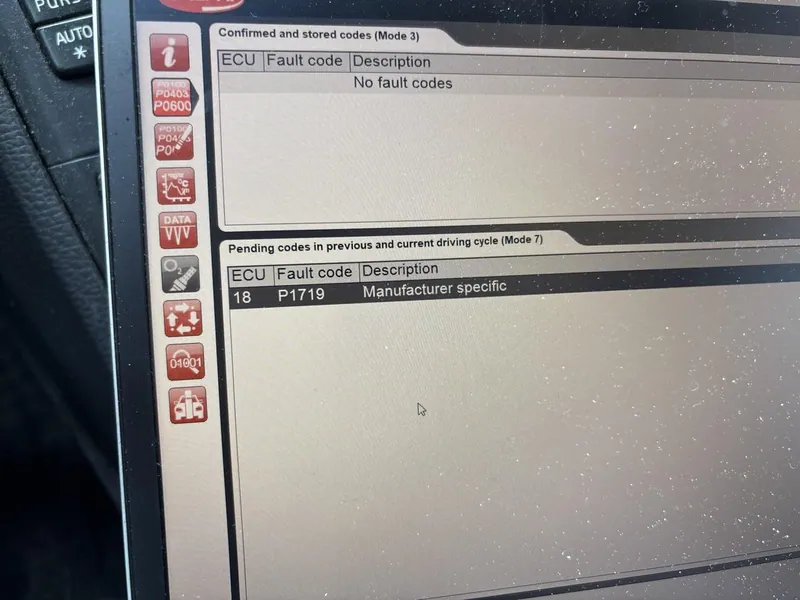
P1719 is a manufacturer-specific code. For Honda and Acura, it indicates a malfunction in the 4th clutch transmission fluid pressure switch circuit. The Powertrain Control Module (PCM) receives an incorrect electrical signal, causing gear state confusion. For Ford, Subaru, or Chevrolet, this code points to entirely different components, such as speed sensors, lock-up solenoids, or anti-lock brake system errors.
Technical definition: Honda/Acura defines P1719 as 'Problem in Shift Control System' or '4th Clutch Transmission Fluid Pressure Switch Circuit Malfunction'. Ford defines it as 'Engine Torque Signal' or 'Overdrive Drum Speed Sensor Malfunction'. Subaru defines it as 'Abnormal current for lock-up duty solenoid'.
Can I Drive With P1719?
Yes, But With Caution. You can drive the vehicle, but it is strongly discouraged. The transmission enters 'limp mode,' locking it in a single gear and limiting your speed. Continuing to drive more than a few miles turns a simple $150 sensor fix into catastrophic transmission failure, potentially costing over $2,500 for a rebuild. Ignoring the issue also dumps unburned fuel into the exhaust, destroying the catalytic converter and adding $800-$2,500 to the repair bill.
Common Causes


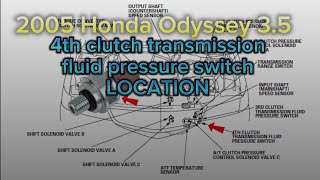
- Failed Clutch Transmission Fluid Pressure Switch (Honda/Acura) (Very Common) — This is the most frequent cause for this code on affected Honda and Acura models. The electronic switch wears out over time and stops sending the correct pressure signal. The 3rd and 4th gear switches typically fail around the same time. 🎬 See this video to find the 4th clutch switch location.
- Low, Dirty, or Incorrect Transmission Fluid (Common) — Transmission fluid generates hydraulic pressure. Low, degraded (brown/burnt), or incorrect fluid (using generic instead of Honda ATF DW-1) drops pressure and triggers the code before any electronic parts actually fail.
- Failing Lock-Up Duty Solenoid (Subaru) (Common) — On Subaru vehicles with CVT transmissions (TR580/TR690), P1719 indicates a faulty torque converter lock-up solenoid, which fails electrically or becomes clogged with internal debris.
- Faulty Internal Speed Sensor (Ford) (Common) — On Ford and Lincoln models, this code points to a failure of an internal transmission speed sensor, such as the Overdrive Drum Speed Sensor, requiring internal transmission access.
- Damaged Wiring or Connector (Less Common) — Wires leading to the pressure switch or sensor fray, corrode, or break from engine heat and vibration. Loose or contaminated connector pins cause an intermittent signal drop.
- Clogged Transmission Fluid Passages (Less Common) — Metallic debris and clutch material in old transmission fluid clog small passages or shift solenoid screens, restricting fluid flow and causing pressure-related codes.
- Faulty Transmission Control Module (TCM) (Rare) — The computer controlling the transmission fails internally. This is the absolute last item to suspect after exhaustively ruling out all wiring, fluid, and sensor possibilities.
Symptoms

- Flashing 'D' (Drive) Light — On Honda and Acura vehicles, the 'D' or 'D5' light on the gear indicator flashes to signal a transmission-specific fault. 🎬 Watch: Why the D light flashes and how to fix it.
- Harsh or Delayed Shifting — The transmission slams into gear, hesitates before shifting, or struggles to shift into or out of a specific gear (often 4th gear on Hondas).
- Transmission Stuck in Gear (Limp Mode) — The transmission enters a 'fail-safe' mode, locking into a single gear (often 2nd or 3rd) to prevent further damage and limit vehicle speed.
- Check Engine Light On — The Malfunction Indicator Lamp (MIL) illuminates on the dashboard.
- Reduced Fuel Economy (also visible on scanner) — When the transmission cannot shift into higher gears or the torque converter fails to lock up, the engine runs at higher RPMs, decreasing fuel efficiency by 5-15%.
Diagnostic Flowchart

Tap your situation to follow the diagnostic path that matches what you're seeing on this code.
Common Fixes & Costs
- Replace 4th (and/or 3rd) Clutch Pressure Switch (Honda/Acura) — Parts: $30-$110, Labor: $75-$150, ~0.8 hr book time (DIY)
- Transmission Fluid Drain and Fill — Parts: $40-$120, Labor: $80-$250, ~0.8 hr book time (DIY)
- Replace Lock-Up Duty Solenoid (Subaru) — Parts: $50-$150, Labor: $200-$400, ~2.5 hr book time (Intermediate)
- Repair Damaged Wiring or Connector — Parts: $10-$50, Labor: $100-$300, ~1.5 hr book time (Intermediate)
- Replace Overdrive Drum Speed Sensor (Ford/Lincoln) — Parts: $80-$150, Labor: $300-$550, ~4 hr book time (Professional)
Used vs. New Parts: Buying Guide
When a used part is worth it: For the most common P1719 fixes (pressure switches, solenoids), buying used is strongly discouraged. These are electronic wear items, and the low cost of a new part outweighs the risk of a used part failing prematurely.
Donor-vehicle mileage cap: roughly under 50000 miles for the part to have meaningful remaining life.
Donor quality checklist:
- Verify the exact part number, as visually similar parts are not interchangeable.
- Ask for the donor vehicle's mileage; lower is always better.
- Avoid parts from vehicles scrapped due to transmission failure or from high-corrosion areas.
Decision logic:
- If The part is an electronic sensor or solenoid (e.g., pressure switch, lock-up solenoid) → Buy new (OEM or reputable aftermarket). The reliability and warranty are worth the small extra cost.
- If Vehicle is over 150,000 miles and repair budget is under $100 → A used part is a high-risk but acceptable option, but expect a significantly shorter lifespan.
- If The part requires significant labor to install (e.g., internal sensor, valve body solenoid) → Always buy new to avoid paying for the same labor twice when the used part fails.
Warranty tradeoff: Used parts from a salvage yard typically come with a 30-90 day functional warranty. New aftermarket parts usually offer a 1-year to limited lifetime warranty. New OEM parts offer a 1-year warranty.
Worst-case if a used part fails: $300-$800 if a used part fails after installation, primarily due to the cost of repeating the labor.
What Happens If You Wait — Timeline
- 0-1 month: Intermittent flashing 'D' light or Check Engine Light. An occasional harsh shift, barely noticeable. Code is stored as 'pending' or 'confirmed'. Vehicle briefly enters and exits limp mode. (MPG impact: 0-2%% · Added cost: $0)
- 1-3 months: Flashing 'D' light is constant. Harsh shifts become frequent and noticeable, especially when warm. Vehicle enters limp mode more readily, limiting speed to ~40 mph. Noticeable hesitation when accelerating. (MPG impact: 5-10%% · Added cost: $50-$150 in wasted fuel and increased wear on clutch packs.)
- 3-6 months: Sustained incorrect hydraulic pressure and harsh shifting causes accelerated wear on internal clutch packs and seals. Transmission fluid becomes dark and smells burnt. Inefficient shifting causes the engine to run rich, damaging the catalytic converter. (MPG impact: 10-15%% · Added cost: $800-$2,500 (potential catalytic converter replacement))
- 6+ months: Catastrophic failure. Clutch packs are completely burnt, and metal debris circulates throughout the transmission, destroying hard parts like gears and the torque converter. The vehicle refuses to move. (MPG impact: N/A (vehicle likely undrivable)% · Added cost: $2,500-$4,500+)
Cost of Not Fixing It
- 0-1 month: Harsh shifting, flashing 'D' light, and a 5-10% drop in fuel economy. The vehicle unpredictably enters limp mode, creating a safety hazard. (Added cost: $0)
- 1-6 months: Incorrect hydraulic pressures cause excessive wear on clutch packs and internal seals. Inefficient engine operation overheats and damages the catalytic converter. (Added cost: $800-$2500)
- 6+ months: Catastrophic internal transmission failure. Burnt clutches and damaged hard parts require a complete transmission rebuild. (Added cost: $2500+)
Diagnosis Steps
- Scan for Codes
Use an OBD-II scanner to confirm P1719 is present and check for related codes. A code like P0700 always appears with transmission faults and simply signals that the TCM requested the check engine light.
Tools: OBD-II Scanner (Beginner) - Check Transmission Fluid
Check the transmission fluid level and condition using the dipstick. The fluid must be at the correct level, reddish-pink, and free of burnt odors. Ensure the exact OEM fluid type is in use.
Tools: Rag/Paper Towel (Beginner) - Check for Technical Service Bulletins (TSBs)
Search for TSBs related to P1719 for your specific vehicle. Manufacturers release bulletins for known issues with specific fixes, saving hours of diagnostic time. (e.g., Honda TSB 08-030).
Tools: Online Access (Beginner) - Inspect the Relevant Wiring and Connector
Locate the suspect component (e.g., 4th clutch pressure switch on a Honda, lock-up solenoid on a Subaru). Visually inspect the electrical connector and wiring for damage, corrosion, fluid contamination, or loose pins.
Tools: Flashlight (Beginner) - Test the Circuit at the Connector
Disconnect the component and use a multimeter to check for proper voltage and ground at the connector with the key in the 'ON' position. You should find a reference voltage (often 5V) and a solid ground.
Tools: Multimeter (Intermediate) - [Pro Tip] Test Honda/Acura Pressure Switch Functionality
Remove the pressure switch. With a multimeter set to continuity, check its state (open or closed). Use a hand-held vacuum/pressure pump to apply light pressure to the switch port. The continuity reading must change. If it doesn't, the switch is dead.
Tools: Socket/Wrench Set, Multimeter, Hand-held Pressure Pump (Advanced) - [Pro Tip] Test Subaru Lock-Up Solenoid Resistance
For Subaru TR580/TR690 CVTs, access the lock-up solenoid in the valve body and measure its resistance with a multimeter. A known good solenoid reads approximately 10-13.5Ω. A reading outside this range confirms a failed solenoid.
Tools: Multimeter, Socket/Wrench Set (Advanced) - [Advanced] Analyze Scan Tool Live Data PIDs
Using an advanced scan tool, monitor manufacturer-specific PIDs. For a Honda, monitor the '4th Clutch Pressure Switch' PID; it must change state when shifting into 4th gear. For a Subaru, monitor 'TCC Slip Speed' and 'TCC PWM Solenoid %'.
Tools: Advanced OBD-II Scanner (Advanced) - [Advanced] Honda Pressure Switch Voltage Drop Test
Honda pressure switches are 'pull-down' switches. The TCM sends a 5V reference. When open (no pressure), the scan tool reads 5V. When hydraulic pressure closes the switch to ground, voltage drops to near 0V. If voltage remains high when engaged, the switch or wiring is faulty.
Tools: Multimeter, Back-probe kit (Advanced) - Perform a Transmission Fluid Pressure Test
Connect a specialized pressure gauge to the transmission's test ports to measure actual hydraulic pressure. This definitively confirms if the problem is mechanical (low pressure from a bad pump) or electrical (bad sensor). For a Honda 5-speed, line pressure at idle is 130-140 PSI.
Tools: Transmission Pressure Gauge Set (Advanced)
When This Code Triggers (Freeze-Frame Conditions)
- Engine Coolant Temp: 180-200°F (The fault typically sets when the engine is fully warmed up.)
- RPM: 1500-2500 (Occurs during steady-state cruising or light acceleration when a shift is commanded.)
- Engine Load: 30-60% (Corresponds to normal cruising conditions, not heavy acceleration or towing.)
- Vehicle Speed: 35-55 mph (The code frequently triggers during a shift into a higher gear (like 4th gear on a Honda) at highway speeds.)
Related Codes
- P0700 — A generic request from the TCM to turn on the check engine light. It always appears with a transmission code like P1719. Diagnose P1719, and P0700 resolves automatically.
- P0873 — Honda/Acura code for 'Transmission Fluid Pressure Switch C Circuit High'. If present with P1719, the 4th clutch pressure switch is definitively the culprit.
- P0730 — Incorrect Gear Ratio. A symptom of the P1719 fault. P1719 points to the control circuit failure; P0730 confirms the mechanical shift failed.
- P0740 — Torque Converter Clutch Circuit. On a Subaru, a P1719 fault (bad lock-up solenoid) directly causes a P0740 code.
Climate & Environmental Factors
- Cold Weather: Extreme cold thickens transmission fluid, slowing pressure build-up on startup. This causes hesitation and triggers a pressure switch code if the expected pressure isn't reached within a set time.
- High Humidity / Moisture: Moisture accelerates corrosion on electrical connectors. Water ingress creates short circuits or high resistance, causing intermittent false signals that trigger P1719.
How to Talk to a Mechanic About This Code
Say this: "I have a [Year/Make/Model] with a P1719 code and a flashing 'D' light. I've researched this, and it commonly points to a faulty 4th gear pressure switch. I'd like to schedule a diagnostic to confirm the switch or circuit is the problem before replacing parts."
This signals to the shop that you are an informed customer. It directs them to the most probable cause, saving diagnostic time and preventing them from suggesting a costly, unnecessary transmission rebuild. It establishes that you expect a specific diagnosis, not just part-swapping.
Avoid saying:
- 'My check engine light is on, can you just fix it?'
- 'The car is shifting weird, I think the transmission is going bad.'
- 'Just do whatever you think is necessary.'
Questions to ask before authorizing the repair:
- How did you confirm the component failed? Did you test the switch/solenoid/sensor and its wiring, or are you recommending replacement based on the code alone?
- If you're recommending a fluid change, is the fluid level low or is the condition poor?
- For a Honda/Acura, are you also recommending replacing the 3rd gear pressure switch as a preventative measure?
- What is the warranty on the parts and labor for this specific repair?
Where to Take It: Dealer vs Independent vs Chain
- Dealer:
Recommended for complex internal P1719 faults (Ford, some Subarus) or warranty work. Overkill and too expensive for a simple Honda/Acura pressure switch replacement.
Best for: Vehicles still under the powertrain warranty., Complex internal repairs on newer cars where manufacturer-specific tools and software are essential (e.g., Ford internal speed sensor)., If a related Technical Service Bulletin (TSB) or recall is active.
Downsides: Highest labor rates, often 1.5-2x more than independent shops., Defaults to replacing a larger assembly (like a whole valve body) when only a smaller component has failed. (Typical cost: +50% vs. baseline) - Independent Shop:
Best choice for the most common P1719 cause (Honda/Acura pressure switch). A trusted independent transmission specialist is ideal for an out-of-warranty Subaru valve body or Ford internal repair.
Best for: Out-of-warranty vehicles where the cause is well-known, like a Honda/Acura pressure switch., Owners looking for a better price and more personalized service., Finding a transmission specialist for non-dealer rebuilds or complex solenoid work.
Downsides: Quality and expertise vary greatly; vetting the shop's reputation and certifications (like ASE) is crucial., Lacks the latest manufacturer-specific diagnostic tools for very new models. (Typical cost: +0% vs. baseline) - Chain Shop:
AVOID for P1719 diagnosis and repair. The risk of misdiagnosis or using the wrong fluid is too high. This code requires more expertise than a typical chain shop provides.
Best for: Basic fluid changes, but only if you ensure they use the exact OEM-specified fluid.
Downsides: Technician skill varies dramatically., High pressure to upsell services like unnecessary flushes., Not equipped for or experienced with internal transmission diagnostics or repairs. (Typical cost: -10% vs. baseline)
When to Walk Away From the Repair
If the estimated repair cost for the P1719 fault exceeds 40-50% of your car's private-party value, pause and consider alternatives.
- Car worth $4500, fix is $250: Fix it. This is a minor repair on a Honda/Acura and is far below the threshold.
- Car worth $6000, fix is $1200: Borderline. This repair cost (typical for a Subaru valve body) is 20% of the car's value. It's worth fixing if the rest of the car is in good shape, but get a second opinion first.
- Car worth $3000, fix is $1800: Walk away. The repair cost is 60% of the car's value. It is not economical to proceed.
What Scan Tool You Need for This Code
Minimum: A scanner that reads manufacturer-specific transmission codes and displays live data PIDs (Parameter IDs) for the transmission control module.
A basic $20 code reader only shows the P1719 code. It cannot show the live data needed for diagnosis, such as the on/off state of a pressure switch or the resistance of a solenoid. You will be forced to guess and replace parts.
Budget: BlueDriver Pro Scan Tool (~$100) — Connects to your smartphone via Bluetooth. It reads and clears transmission codes and displays manufacturer-specific live data, like the status of Honda's pressure switches. It's an excellent tool for a serious DIYer to confirm the diagnosis before buying parts.
Mid-range: Foxwell NT510 Elite (~$180) — This handheld unit comes with one free manufacturer-specific software package. It offers deep, dealer-level diagnostics, including reading live transmission sensor data and performing bidirectional controls to command a component like a solenoid to function.
Professional: Autel MaxiCOM MK808BT (~$450-600) — A professional-grade tablet scanner offering full-system diagnostics, extensive live data graphing, and a wide range of service functions. Its speed and depth of data are superior for diagnosing complex or intermittent issues.
Rent vs buy: For a one-time, simple fix like a Honda pressure switch, auto parts stores lend basic scanners for free. However, since proper diagnosis of P1719 requires live data, renting is not ideal. Buying a tool like the BlueDriver or Foxwell NT510 is a worthwhile investment.
How to Clear the Code After You Fix It
- Use an OBD-II scan tool to clear the P1719 and any related fault codes.
- Perform a complete transmission drive cycle to allow the readiness monitors to run.
- Rescan the vehicle to confirm no codes have returned.
Drive cycle (~30 minutes): A full drive cycle is required to reset readiness monitors. A typical Honda cycle involves: 1) Cold start and idle for 3 minutes. 2) Drive at a steady 25 mph for 3 minutes. 3) Accelerate to a steady 55 mph and hold for 5 minutes. 4) Decelerate without using the brakes for 10 seconds. 5) Perform 15 minutes of mixed city driving. 6) Park and turn off the engine.
Readiness monitors affected: Comprehensive Component Monitor, Catalyst Monitor, Evaporative System Monitor
Before emissions retest: drive at least 100 miles to fully set monitors.
Watch out for:
- Disconnecting the battery clears the code but resets all readiness monitors to 'Not Ready', guaranteeing an emissions test failure.
- The code returns immediately if the underlying mechanical or electrical fault is not properly repaired.
- Failing to complete the full, specific drive cycle for the vehicle brand leaves monitors as 'Not Ready'.
Will This Fail Emissions / State Inspection?
Yes — this code typically fails an OBD-II emissions inspection.
- California: An active Check Engine Light for P1719 is an automatic smog check failure. After repair, a full drive cycle must be completed to set all readiness monitors to 'Ready' before a retest passes.
- New York: The NYS DMV emissions inspection includes an OBD-II scan. An illuminated MIL (Check Engine Light) results in an automatic failure.
- Texas: In counties requiring emissions testing (like Harris, Dallas, Tarrant), an active P1719 code causes the vehicle to fail the inspection.
Most Commonly Affected Vehicles
- Honda Odyssey (2002-2008) — Extremely common issue. The 4th and 3rd gear pressure switches are the primary culprits. Mechanics replace both simultaneously as preventative maintenance.
- Acura MDX (2001-2006) — Shares the same 5-speed automatic transmission design with the Odyssey and Pilot, making it highly prone to the same pressure switch failures.
- Honda Pilot (2003-2008) — The automatic transmission in these model years is well-known for pressure switch issues that trigger P1719 and cause a flashing 'D' light.
- Honda Accord (V6) (2003-2007) — V6 models used a 5-speed automatic transmission that frequently experiences pressure switch failures, leading to harsh 3-4 shifts.
- Acura TL (2000-2006) — Highly susceptible to automatic transmission problems, with pressure switch failure being a primary cause for shift-related codes like P1719.
- Subaru Outback / Forester / Crosstrek (2010-2019) — On models with the TR580 or TR690 CVT, P1719 points to a failed torque converter lock-up solenoid inside the valve body.
- Ford Fusion (2007-2012) — P1719 indicates an issue with an internal transmission speed sensor (TSS) or a general engine torque signal error, not a pressure switch.
- Lincoln Navigator (2007-2009) — Triggers a wrench light and P1719 for 'Overdrive Drum Speed Sensor Malfunction', an internal transmission component requiring significant labor to access.
- Ford Mondeo (2007-2014) — Associated with shuddering and loss of power, where P1719 points to a torque signal or internal speed sensor fault.
Manufacturer-Specific Notes
- Honda / Acura: This code is famously linked to a failed 3rd or 4th gear clutch pressure switch on 5-speed automatic transmissions from the early-to-mid 2000s. The fix is a simple, externally accessible switch replacement.
- Ford / Lincoln: P1719 means 'Engine Torque Signal' error or 'Overdrive Drum Speed Sensor Malfunction', an issue related to internal transmission speed sensors or communication, not an external pressure switch.
- Subaru: P1719 points to an 'Abnormal current for lock-up duty solenoid', indicating an electrical issue with the torque converter's lock-up system in the TR580/TR690 CVT.
- Chevrolet: P1719 is defined as 'ABS Base Brake Closed Solenoid Circuit Open', a fault related to the anti-lock brake system, not a typical transmission shift problem.
- Hyundai: P1719 indicates 'Lost Communication With ECM', a network issue between the engine and transmission control modules.
- Volkswagen / Audi: P1719 (or VW code 18127) means 'Functionality limited due to Engine Control Module' and indicates the transmission module detected a problem originating in the engine controller.
- Dodge: P1719 means 'Skip Shift Solenoid Circuit' on manual transmissions or 'Chassis System Dedicated Bus Sensor 1 Malfunction', triggered by low voltage to a yaw sensor.
Real Owner Stories
2008 Honda Odyssey at 115K miles - The Easy Fix
Flashing 'D' light and harsh shifting between 3rd and 4th gears, especially after highway driving. P1719 code confirmed with a basic scanner.
What they tried:
- Checked transmission fluid, which was full but slightly dark.
- Purchased both the 3rd (28610-RAY-013) and 4th (28600-RAY-013) clutch pressure switches.
Outcome: Replaced both switches in under an hour using a 22mm deep socket. The 4th gear switch was the primary culprit. Cleared codes, and the flashing 'D' light and harsh shifting resolved. Total cost was $90 for two OEM switches.
Lesson: For Honda/Acura 5-speeds, P1719 is very frequently a pressure switch. Replacing both the 3rd and 4th gear switches simultaneously is a cheap and effective preventative measure.
2014 Subaru Outback 2.5i at 175K miles - The Aftermarket Gamble
Check Engine Light, AT OIL TEMP light, and disabled cruise control. Code P1719 pointed to the lock-up duty solenoid. Vehicle had significant underbody rust.
What they tried:
- A local shop quoted over $1,200 to replace the entire valve body, as Subaru does not sell the solenoid individually.
- Owner attempted a DIY repair using a Dorman aftermarket solenoid (part #926-323) for $55.
Outcome: The owner successfully replaced only the failed solenoid by removing the valve body cover, soldering the new part onto the harness, and reassembling. The repair resolved the codes. Total cost was under $100.
Lesson: On high-mileage Subarus where a full valve body replacement is not economical, replacing just the failed lock-up solenoid with an aftermarket part is a viable budget-friendly solution.
2007 Ford Fusion V6 AWD - The Misdiagnosis Trap
Occasional odd shifts followed by a brief burning smell. Check Engine Light was on for a P0420 code, but a scan revealed a pending P1719. The P1719 code returned after being cleared.
What they tried:
- Owner took the car to a transmission shop assuming a major issue.
- Another mechanic suggested that on this Ford model, P1719 is 'Engine Torque Signal' and is triggered by other sensor issues.
- The owner checked the sensor connected to the air filter box and found it was loose.
Outcome: After properly seating the sensor on the air filter housing, the P1719 code did not return. The shifting weirdness was the transmission computer reacting to an incorrect engine torque signal.
Lesson: Never assume P1719 means the same thing across brands. On many Fords, it's a communication or engine signal code. Check for simple sensor or wiring issues before assuming an expensive internal transmission fault.
How to Prevent This Code From Triggering
- Perform regular transmission fluid changes with OEM fluid. (Every 30,000 miles for Honda/Acura; 3-year/36,000 miles for Subaru CVT.) — Frequent changes remove clutch material and keep the fluid's lubricating and hydraulic properties optimal, preventing solenoid and switch failures.
- Install an auxiliary transmission cooler. (Once, especially if you tow, carry heavy loads, or live in a hot climate.) — Heat is the number one enemy of automatic transmissions. An auxiliary cooler keeps fluid temperatures stable, preventing fluid breakdown, seal hardening, and electronic component failure.
- Always come to a complete stop before shifting from Drive to Reverse (and vice versa). (Daily habit.) — Shifting while the vehicle is moving puts immense stress on the drivetrain, including the transmission bands and clutches. This simple habit dramatically reduces wear and tear.
- Use the parking brake every time you park, especially on an incline. (Daily habit.) — Relying only on the 'Park' position puts the entire weight of the vehicle on the parking pawl. Using the handbrake first secures the vehicle and takes the stress off the transmission internals.
- For Honda/Acura, consider installing an inline external transmission filter. (Once.) — Since the factory filter inside many Honda transmissions is not serviceable without a full teardown, adding an external filter traps harmful clutch material and debris, keeping internal components cleaner.
Frequently Asked Questions
Can I fix P1719 myself?
Yes, if the cause is the common clutch pressure switch on a Honda or Acura, it is a very DIY-friendly repair requiring basic hand tools. For other makes like Ford or Subaru where internal components are the cause, tow the vehicle to a transmission specialist.
What happens if I ignore P1719 or limp mode?
Ignoring this code leads to severe and expensive transmission damage. Continued harsh shifting burns out clutches and damages internal components, resulting in a full transmission rebuild costing thousands.
Is a P1719 fix expensive?
It varies wildly by manufacturer. A bad pressure switch on a Honda is affordable, typically under $250 for parts and labor. An internal speed sensor on a Ford or a valve body solenoid on a Subaru costs $500 to $800+ due to higher labor charges.
Why is my 'D' light flashing?
On Honda and Acura vehicles, a flashing 'D' light is the transmission's specific check engine light. It alerts you that the Transmission Control Module detected a fault and puts the car in limp mode to prevent damage.
Can I drive with a flashing 'D' light?
It is strongly discouraged. While the car is drivable in limp mode, you should only drive it a short distance to a repair shop to avoid causing much more expensive internal damage.
Will changing the transmission fluid fix a P1719 code?
It fixes the issue only if the cause is low or extremely dirty fluid. More often, the code is caused by a failed electronic component. However, performing a drain and fill is excellent preventive maintenance during any transmission repair.
I replaced the pressure switch on my Honda, but the P1719 code came back. What now?
Check these four things: 1) Ensure you replaced the correct switch, as the 3rd and 4th gear switches look identical. 2) Inspect the wiring connector for hidden breaks or corrosion. 3) Replace the other pressure switch, as they fail around the same time. 4) Verify you used OEM-specified transmission fluid.
What is the most common misdiagnosis for P1719?
The most common mistake is assuming the code has the same meaning across all brands. A technician replaces a pressure switch on a Ford when the code actually points to a speed sensor.
Does P1719 always mean a bad transmission?
No. In many cases, especially on Honda and Acura vehicles, it points to a small, inexpensive, and easily replaceable external sensor. Addressing it promptly prevents major transmission damage.
Key Takeaways
- Code P1719 is a manufacturer-specific fault; it means a failed pressure switch on a Honda, a bad lock-up solenoid on a Subaru, or a faulty speed sensor on a Ford.
- For Honda and Acura models from 2001-2008, replacing the 3rd and 4th gear clutch pressure switches resolves P1719 in over 80% of cases.
- Subaru owners facing P1719 can often avoid an $800 valve body replacement by soldering in a $55 aftermarket lock-up duty solenoid.
- Driving more than 10 miles in 'limp mode' with a flashing 'D' light overheats the transmission, turning a $150 sensor fix into a $2,500 rebuild.
- Always verify transmission fluid level and condition first; low or burnt fluid drops hydraulic pressure and triggers P1719 before any electronic parts actually fail.
Helpful Videos
Shop the Parts Behind P1719
Below are the parts most often responsible for code P1719, ranked by how frequently each one is the actual culprit (per the diagnosis above). Tap any to see what we have for your vehicle.


The information in this article is provided for general reference and educational purposes only. Vehicle specifications, procedures, and part compatibility can vary by production date, trim level, and region. Always consult your vehicle's factory service manual and verify part numbers before purchasing or performing repairs. Safety-critical components such as airbags, seat belts, and braking systems should be installed by a qualified professional.
- 🧭 Diagnostic Flowchart
- 🎬 Helpful Videos
- 🛍️ Shop This Part
- What Does P1719 Mean?
- Can I Drive With P1719?
- Common Causes
- Symptoms
- Common Fixes & Costs
- Used vs. New Parts: Buying Guide
- What Happens If You Wait — Timeline
- Cost of Not Fixing It
- Diagnosis Steps
- When This Code Triggers (Freeze-Frame Conditions)
- Related Codes
- Climate & Environmental Factors
- How to Talk to a Mechanic About This Code
- Where to Take It: Dealer vs Independent vs Chain
- When to Walk Away From the Repair
- What Scan Tool You Need for This Code
- How to Clear the Code After You Fix It
- Will This Fail Emissions / State Inspection?
- Most Commonly Affected Vehicles
- Manufacturer-Specific Notes
- Real Owner Stories
- 2008 Honda Odyssey at 115K miles - The Easy Fix
- 2014 Subaru Outback 2.5i at 175K miles - The Aftermarket Gamble
- 2007 Ford Fusion V6 AWD - The Misdiagnosis Trap
- How to Prevent This Code From Triggering
- Frequently Asked Questions
- Can I fix P1719 myself?
- What happens if I ignore P1719 or limp mode?
- Is a P1719 fix expensive?
- Why is my 'D' light flashing?
- Can I drive with a flashing 'D' light?
- Will changing the transmission fluid fix a P1719 code?
- I replaced the pressure switch on my Honda, but the P1719 code came back. What now?
- What is the most common misdiagnosis for P1719?
- Does P1719 always mean a bad transmission?
- Key Takeaways
- 🎟️ Get 5% Off